Visitor Insights
Visiting Kasuga Grand Shrine
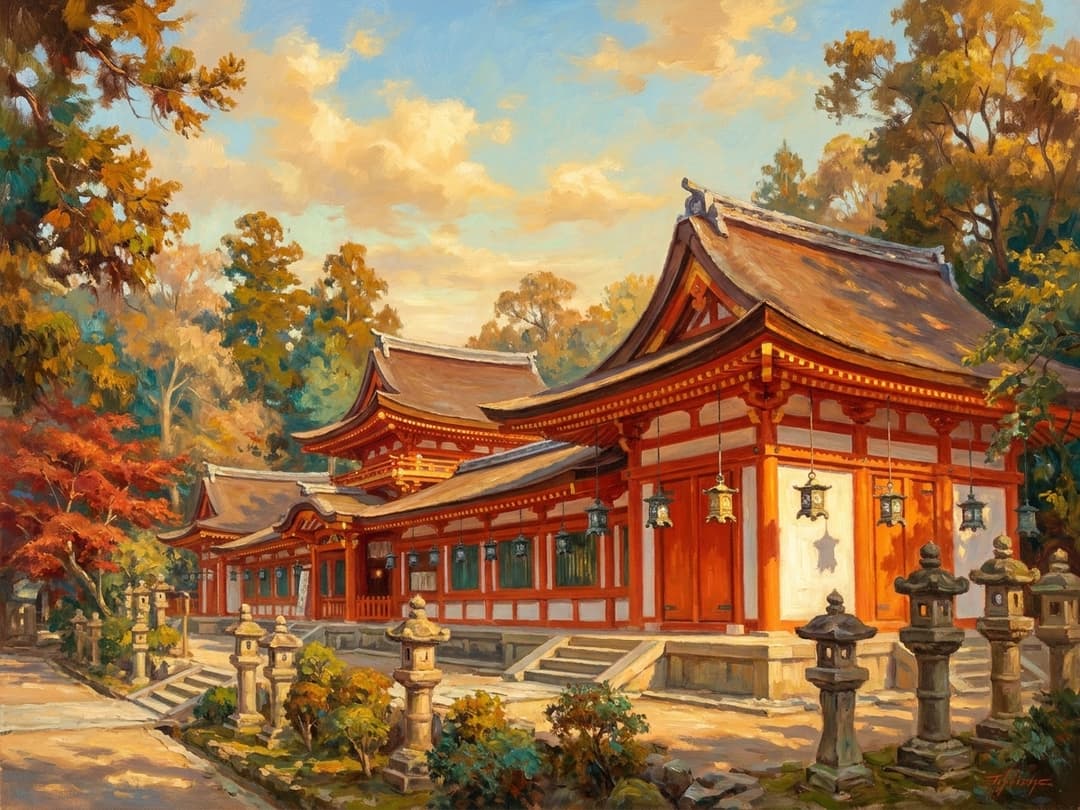
Kasuga Grand Shrine provides a serene journey through forested paths framed by thousands of moss-draped stone lanterns. Roaming sacred deer greet pilgrims throughout the outer precinct, while the inner vermilion cloisters offer contemplative views of classical Heian-period sacred architecture. Visitors can observe living morning liturgies and explore centuries of devotional offerings.
Highlights
- Wandering among thousands of antique stone lanterns along the wooded approaches.
- Gazing at the vibrant vermilion Middle Gate and its suspended bronze lanterns.
- Experiencing the atmospheric darkened illumination chamber inside the Fujinami-no-ya.
- Encountering gentle wild sika deer protected as divine messengers of the kami.
Things to Know
- Outer precinct grounds are open free of charge from early morning to dusk.
- A paid special admission ticket is required to enter the inner sanctuary cloister.
- Gravel pathways require sturdy walking shoes, especially when visiting auxiliary forest shrines.
- Do not feed the sacred sika deer anything other than designated rice-bran crackers.
Location
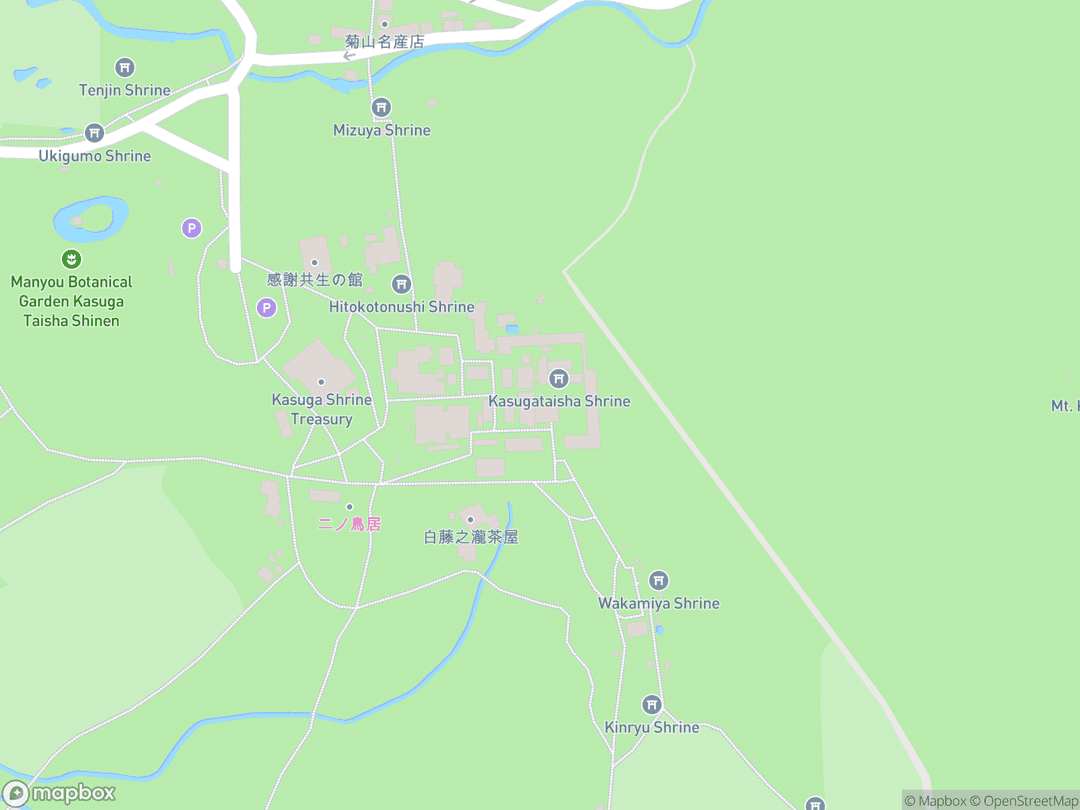
160 Kasugano-cho, Nara-shi, Nara Prefecture 630-8212, Japan
Hours: 6:30 AM to 5:30 PM (March-October), 7:00 AM to 5:00 PM (November-February); Special Cloister: 8:30 AM to 4:00 PM
Getting There: Take the Nara City Loop Bus from Kintetsu-Nara or JR Nara Station to Kasuga Taisha Honden stop, or enjoy a 25-minute scenic stroll through Nara Park.
Get DirectionsTips for Your Visit
Arrive for Morning Purification
Visit before 9:00 AM to witness shrine maidens performing morning rites and enjoy the misty cedar pathways in quiet solitude.
Lantern Illumination Hall
Enter the historic Fujinami-no-ya storehouse to experience the ethereal beauty of glowing lanterns illuminated year-round.
Respect the Sacred Deer
Bow gently before offering deer crackers to observe the traditional greeting ritual practiced by local deer.
About
Kasuga Grand Shrine, founded in 768 CE, stands as one of Japan's most revered Shinto sanctuaries and the ancestral shrine of the influential Fujiwara clan. Situated at the foot of sacred Mount Mikasa in Nara, it exemplifies the deep Shinto understanding of musubi—the sacred, creative vitality connecting the kami, nature, and human ancestry in an unbroken continuum.
Unlike secular spaces, the shrine complex maintains harmony through perpetual rituals of purification (harae) and cyclical renewal. It enshrines four primary kami, including the celestial pacifier Takemikazuchi, honoring their covenant of divine protection over the ancient capital of Heijo-kyo and the realm.
Surrounded by the untouched Kasugayama Primeval Forest and protected herds of sacred sika deer, Kasuga established the enduring Kasuga-zukuri architectural archetype. For centuries it anchored Kami-Buddhist syncretism, remaining today a vital monument of living ancestral veneration.
Gallery
Symbolic Elements
The temple's exterior features intricate carvings, each rich with spiritual meaning:

Divine Sika Deer
Revered as heavenly messengers ever since Takemikazuchi arrived in Nara upon a white stag.

Kasuga Stone Lanterns
Carved stone lanterns symbolizing communal devotion and spiritual illumination dispelling darkness.

Hanging Bronze Lanterns
Intricately cast hanging lanterns gifted by samurai lords and commoners across centuries.

Vermilion Cinnabar Lacquer
Vibrant scarlet finish warding off malevolent influences while evoking the vitality of the sun.

Sand-Dragging Wisteria
Sacred botanical heraldry of the Fujiwara lineage blooming in cascades touching the gravel floor.

Chigi Forked Roof Finials
Obliquely cut ridge timbers whose skyward vertical angles mark masculine divine celestial presence.

Kasuga Torii Gate
A distinctive vermilion wooden gateway marking the spiritual boundary between profane and sanctified space.
Interesting Facts
Shrine carpenters built the Naoraiden cloister around an 800-year-old cedar, piercing the roof rather than felling the sacred tree (Tier A).
Kasuga boasts approximately 3,000 stone and bronze lanterns, the largest concentration of historic lanterns anywhere in Japan (Tier B).
An imperial hunting and logging ban decreed in 841 CE has kept the adjacent Kasugayama Primeval Forest untouched for over 1,180 years (Tier A).
Under historical regional edicts prior to modern law, intentionally killing one of Kasuga's divine deer was punishable by capital execution (Tier B).
The Fujinami-no-ya hall features a darkened mirrored interior where antique bronze lanterns remain lit year-round for visitors (Tier A).
The sacred Sunazuri no Fuji wisteria vine has bloomed by the South Gate for over eight centuries with cascades touching the ground (Tier B).
Between 768 and 1863, the inner sanctums were completely rebuilt 60 times under the periodic renewal rite called Shikinen Sengu (Tier A).
More than 3,000 branch shrines across Japan trace their theological lineage and architectural prototype directly to Kasuga Taisha (Tier B).
Common Questions
Why are sika deer considered sacred at Kasuga Taisha?
According to sacred tradition, the deity Takemikazuchi arrived riding a divine white deer, elevating all precinct deer to protected messengers of the kami.
What is Kasuga-zukuri architecture?
It is an ancient Shinto building style featuring a gabled roof with a front portico extending downward over the entrance.
How many lanterns are there at Kasuga Grand Shrine?
The precinct preserves roughly 3,000 lanterns, comprising 2,000 stone lanterns along pathways and 1,000 hanging bronze lanterns.
Can non-Shinto visitors enter the shrine?
Yes, visitors of all cultural backgrounds are welcome to tour the cloisters and offer respectful prayers at the worship halls.
When are all the shrine's lanterns lit?
All lanterns are lit during the Setsubun Mantoro in February and the Obon Chugen Mantoro in August.
Featured Stories
The Celestial Journey of Takemikazuchi
710
According to sacred tradition, the celestial thunder deity Takemikazuchi journeyed from eastern Kashima Shrine to Nara upon a radiant white stag to protect the realm. Upon reaching Mount Mikasa, the deity took residence above the capital, establishing an eternal bond with the Fujiwara lineage. To this day, wild sika deer roam freely across the sanctuary grounds, protected as divine attendants of the founding kami.
Source: Kasuga Taisha Shrine Records
The Sacred Cedar Through the Eaves
1200
When expanding the shrine's prayer corridors during the Kamakura era, master carpenters encountered an eight-hundred-year-old sacred cedar tree standing directly along the planned foundation. Revering the living kami dwelling within the ancient timber, the builders refused to fell it. Instead, they cut an opening through the roof eaves of the Naoraiden hall, allowing the tree to continue growing freely through the architecture.
Source: Shrine Chronicles and Architectural Surveys
The Splendor of the Mantoro Illuminations
1400
Beginning in the Muromachi era, aristocrats, shogunal generals, and everyday commoners joined together to dedicate stone and hanging bronze lanterns as votive prayers. During the seasonal Mantoro festivals, thousands of wick candles are lit simultaneously by hand at dusk. The glowing lanterns turn the dark forest cloisters into a sea of sacred light, uniting centuries of devotion into a single unbroken prayer.
Source: Nara Cultural Heritage Documentation
Timeline
Initial Summit Veneration
Fujiwara no Fuhito enshrines the martial deity Takemikazuchi atop Mount Mikasa to protect the new capital Heijo-kyo.
MilestoneSanctuary Formal Dedication
Empress Shotoku and Fujiwara no Nagate complete the formal four-shrine sanctuary complex on the western slope.
DedicationPrimeval Forest Decree
An imperial edict strictly prohibits tree felling and hunting across Mount Kasuga, preserving an ancient virgin ecosystem.
MilestoneImperial Shrine Elevation
Kasuga Taisha is incorporated into national liturgy and named among the elite Twenty-Two Imperial Shrines.
MilestonePeriodic Renewal Established
The twenty-year cyclical reconstruction system known as Shikinen Sengu is formally codified.
EventKami-Buddhist Syncretism Integration
The shrine merges liturgically with nearby Buddhist temple Kofuku-ji under the honji suijaku doctrine.
EventWakamiya Shrine Established
Auxiliary Wakamiya Shrine is constructed to enshrine Ame-no-Oshikumone, launching the On-Matsuri festival the following year.
MilestoneProliferation of Devotional Lanterns
Aristocrats, shoguns, and samurai establish a widespread tradition of dedicating carved stone and bronze lanterns.
EventTokugawa Shogunal Patronage
Tokugawa Ieyasu bestows substantial land grants and architectural repairs following the unification of Japan.
EventSeparation of Kami and Buddhas
The Meiji government edict severs Kasuga from Kofuku-ji, dismantling its Buddhist pagoda and reforming it as State Shinto.
RenovationUNESCO World Heritage Inscription
The sanctuary and surrounding primeval forest are inscribed as a World Heritage Site under Historic Monuments of Ancient Nara.
MilestoneSixtieth Shikinen Zotai Cycle
Craftsmen complete the 60th periodic restoration cycle, renewing cypress bark roofs and vermilion cinnabar lacquer.
RenovationHistory by Decade
710s — The Sacred Mountain
Following the establishment of Heijo-kyo as Japan's imperial capital, Fujiwara no Fuhito enshrines the thunder deity Takemikazuchi atop Mount Mikasa. The sacred peak becomes a cosmic anchor safeguarding the court from misfortune and civil discord.
760s — Formal Sanctuary Consecration
Empress Shotoku and Senior Minister Fujiwara no Nagate consolidate four complementary kami on Mount Mikasa's western hillside. Dedicated on November 9, 768, the sanctuary establishes the standardized four-shrine parallel plan.
840s — Imperial Ecological Decree
In 841 CE, an imperial decree bans logging, hunting, and land clearance across Mount Kasuga and its primeval forest. This landmark decree establishes one of East Asia's earliest continuous wildlife and forest sanctuaries.
940s — Codification of Cyclical Rebirth
The imperial court formalizes the Shikinen Sengu rite, requiring the four main sanctums to be completely rebuilt every twenty years. This continuous ritual cycle renews sacred spiritual energy and ensures the uninterrupted transmission of master woodworking skills.
1130s — Wakamiya and Matsuri Traditions
The auxiliary Wakamiya Shrine is erected on the grounds in 1135 to alleviate regional famine and disease through divine intercession. In 1136, the shrine inaugurates the Kasuga Wakamiya On-Matsuri, creating an enduring annual festival of sacred arts.
1580s — Shogunal Patronage and Devotion
Prominent warlords including Toyotomi Hideyoshi and Tokugawa Ieyasu bestow vast agricultural estates and ornate lanterns onto the sanctuary. Kasuga cements its national prestige as a vital protector of civil stability and martial honor.
1860s — The Edict of Separation
The Meiji Restoration institutes the formal separation of Shinto and Buddhism in 1868, severing Kasuga from neighboring Kofuku-ji. Buddhist pagodas and altars on the grounds are removed, reorganizing Kasuga as a premier imperial shrine.
1990s — Global Cultural Recognition
In 1998, UNESCO inscribes Kasuga Grand Shrine as a World Heritage Site within the Historic Monuments of Ancient Nara. The designation celebrates the shrine's intact architectural lineage and the pristine Kasugayama forest preserve.
2010s — The Sixtieth Periodic Restoration
Kasuga Taisha celebrates its 60th Shikinen Zotai cycle between 2015 and 2016. Master joiners restore timber elements, re-shingle cypress bark roofs, and reapply natural cinnabar lacquer to preserve the sanctuary for future generations.
Architecture & Facilities
Kasuga Grand Shrine represents the definitive monument of Kasuga-zukuri, an indigenous Shinto architectural tradition that harmonizes geometric timber joinery with the living curves of the ancient forest. The four identical sanctuary pavilions face south in an unbroken parallel row, utilizing single-bay gabled footprints with sweeping curved porticos that celebrate organic asymmetry and celestial reverence.
Building Materials
Japanese Cypress Timber
Harvested hinoki heartwood forms round columns and precision joinery crossbeams resting safely on elevated stone plinths.
Layered Cypress Bark
Dense stacks of hand-shaved hiwadabuki bark pinned with bamboo nails form organic, curved gabled roofs.
Vermilion Cinnabar Lacquer
Natural mineral lacquer coats exterior wooden framing to repel malevolent forces and shield timber from humidity.
White Lime Plaster
Chalk-white shikkui lime plaster infills exterior wall panels to provide luminous visual contrast against the vermilion timbers.
Interior Features
First Sanctum (Ichino-miya)
Enshrines Takemikazuchi within a sanctified cedar chamber holding sacred mirrors and divine vestments.
Second Sanctum (Nino-miya)
Dedicated to Futsunushi and decorated with traditional gilded bronze metalwork and painted timber joinery.
Third Sanctum (Sanno-miya)
Houses ancestral liturgist Ame-no-Koyane within an inner chamber honoring liturgical lineage.
Fourth Sanctum (Shino-miya)
Enshrines Himegami within an elevated timber sanctuary celebrating divine maternal protection.
Temple Grounds
The shrine precinct encompasses 298 hectares spanning Mount Kasuga and the Kasugayama Primeval Forest. Gravel avenues lined with two thousand stone lanterns wind beneath ancient Japanese cedars, while vermilion corridors encircle the inner sanctums.
Additional Facilities
The grounds include the Kasuga Taisha Museum displaying national treasure armor, the Fujinami-no-ya lantern hall, and the Manyo Botanical Garden.
Religious Significance
In Shinto theology, sacred shrines are not inert monuments, but consecrated thresholds where the realm of the kami (kamiyo) and human existence interweave. Kasuga Grand Shrine articulates this sacred relationship through the veneration of living divine presences inhabiting the sacred mountain landscape, sustaining the spiritual vitality (musubi) and harmony (wa) of the realm and ancestral continuum.
To maintain cosmic balance, ancestral continuity, and imperial peace through regular purification rites and reciprocal devotion with resident kami.
Sacred Ordinances
Harae (Ritual Purification)
Rites using salt, fresh spring water, and sacred paper streamers to disperse spiritual stagnancy and restore cosmic clarity.
Shikinen Zotai (Cyclical Restoration)
Periodic dismantling and faithful restoration of sacred halls to preserve architectural craftsmanship and maintain divine spiritual freshness.
Matsuri (Devotional Offerings)
Ceremonial presentation of seasonal harvest foods, sacred sakaki branches, and classical music to honor the resident kami.
Honji Suijaku and Historical Syncretism
For nearly a millennium before the Meiji era, Kasuga operated hand-in-hand with Kofuku-ji in Kami-Buddhist syncretism. The four Shinto kami were worshipped as compassionate local manifestations of universal Buddhas, demonstrating the fluid spiritual synthesis characteristic of medieval Japan.
Sanctuary of the Sacred Grove
The Kasugayama Primeval Forest is considered an extension of the shrine body (shintai). Preserved through unbroken religious prohibitions against tree felling, the living grove demonstrates an ecological theology where pristine nature embodies divine presence.
Sources & Research
Every fact on Temples.org is backed by verified Sources & Research. Each piece of information is rated by source tier and confidence level.
View All Sources (6)
| Field | Source | Tier | Retrieved |
|---|---|---|---|
| About & Historical Background | Kasuga Taisha Shrine Office (opens in a new tab) | A | 2026-02-16 |
| Historical Timeline | Kasuga Taisha Shrine Office (opens in a new tab) | A | 2026-02-16 |
| Architecture & Facilities | UNESCO World Heritage Centre (opens in a new tab) | B | 2026-02-16 |
| National Treasures and Collections | Kasuga Taisha Museum (opens in a new tab) | A | 2026-02-16 |
| Historic Monuments of Ancient Nara | Nara Prefectural Government (opens in a new tab) | B | 2026-02-16 |
| Archaeological and Botanical Research | Nara National Research Institute for Cultural Properties (opens in a new tab) | B | 2026-02-16 |