Visitor Insights
Visiting Meiji Shrine
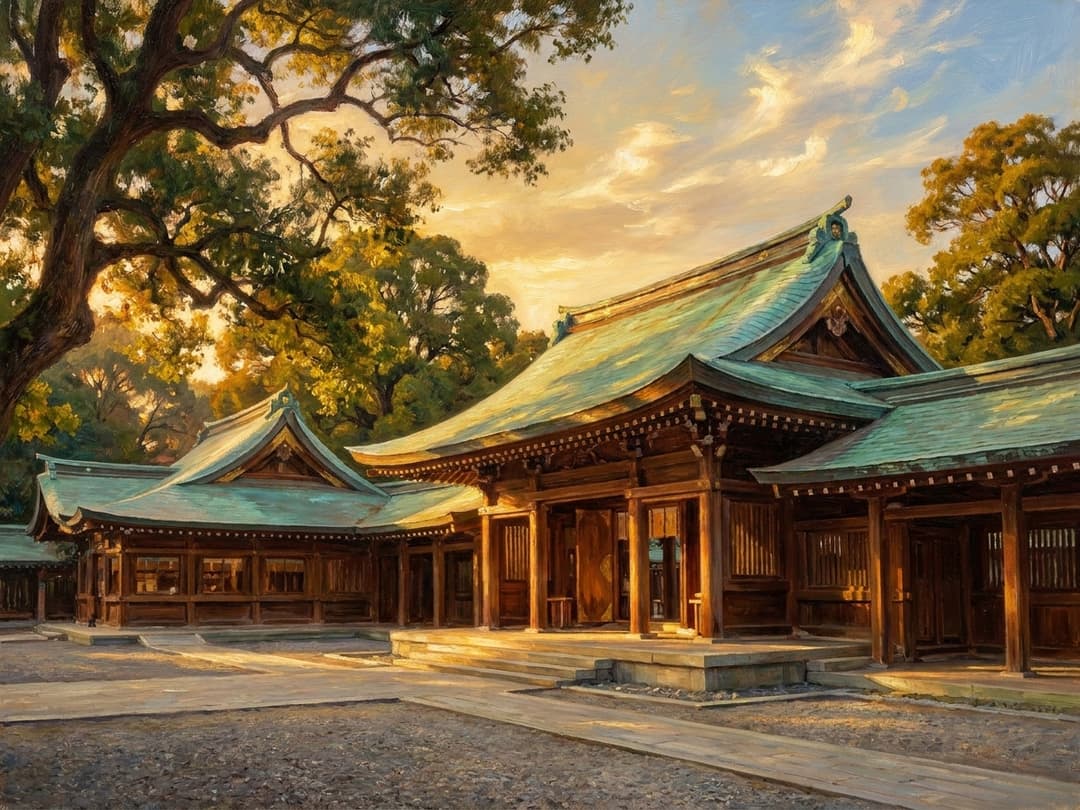
Meiji Shrine offers a serene spiritual retreat shielded from the dense urban energy of Tokyo by a dense evergreen forest. Visitors progress along wide, pebble-strewn approaches beneath colossal cedar torii gates to reach the serene inner worship courtyard. Ritual etiquette centers on natural reverence, quiet reflection, and simple Shinto purification customs.
Highlights
- Towering O-Torii gate crafted from ancient Taiwanese cypress timber.
- Vibrant ceremonial display of donated sake barrels and Burgundy wine casks.
- Historic Meoto Kusu paired camphor trees bound with a sacred straw rope.
- Peaceful Iris Garden featuring Kiyomasa's natural spring water well.
Things to Know
- The extensive gravel approach requires a comfortable ten-minute walk from station gates.
- Strict silence and modesty are expected near the inner worship pavilions.
- Photography is expressly prohibited facing directly inside the sacred Honden sanctuary.
- Grounds close precisely at sunset as signaled by the rhythmic ringing of shrine bells.
Location
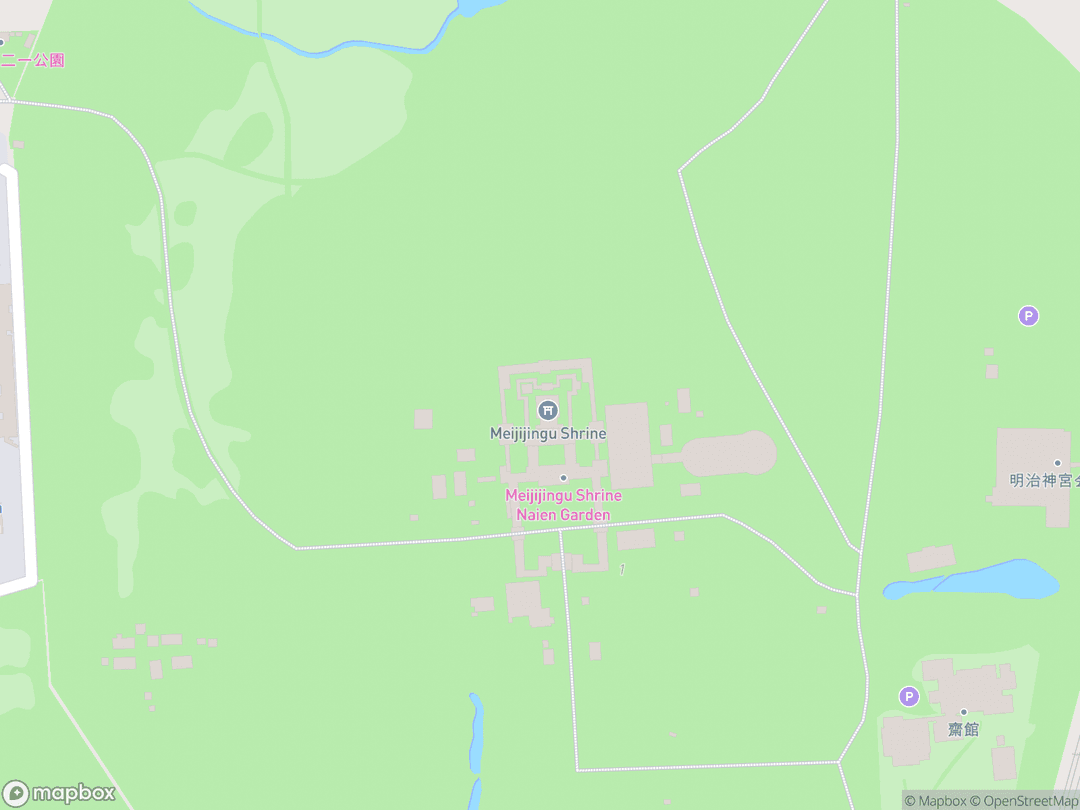
1-1 Yoyogikamizonochō, Shibuya-ku, Tokyo 151-8557, Japan
Hours: Open daily from sunrise to sunset (approx. 5:00 AM – 6:00 PM summer; 6:40 AM – 4:20 PM winter); admission is free.
Getting There: Located immediately adjacent to Harajuku Station on the JR Yamanote Line and Meiji-jingumae Station on the Tokyo Metro Chiyoda and Fukutoshin lines.
Get DirectionsTips for Your Visit
Walk Along the Outer Edges
Tradition dictates walking along the sides of the gravel approach because the center path (seichū) is reserved for the passage of the kami.
Perform Ritual Water Purification
Pause at the water basin (temizuya) before entering the sanctuary to rinse both hands and rinse your mouth using the provided long-handled wooden ladles.
Master the Classical Shrine Prayer
Approach the offering box, toss a five-yen coin for auspicious fortune, bow twice deeply to ninety degrees, clap crisply twice, pray silently, and conclude with a final deep bow.
Write an Ema Votive Tablet
Purchase a small wooden prayer plaque near the central courtyard to record your aspirations before hanging it beneath the sacred camphor trees.
About
Meiji Shrine (Meiji Jingū) is Japan's preeminent imperial Shinto shrine, dedicated to the deified spirits (mitama) of the 122nd Emperor of Japan, Emperor Meiji, and his consort, Empress Shōken. Consecrated in 1920 in the vibrant heart of Tokyo, the shrine honors the monarch whose transformative reign navigated Japan from feudal seclusion into the modern era while preserving its ancient spiritual soul.
Rooted in the ancient Shinto understanding of natural vital energy and cosmic harmony, the tradition honors the sacred essence (kami) present throughout the physical universe. Meiji Jingū embodies this spiritual vision through its monumental, self-sustaining sacred forest (chinju no mori). Hand-planted with over 100,000 trees donated across the nation, the woodland was engineered to thrive perpetually without human maintenance.
Rising amidst seventy hectares of pristine evergreen canopy, the sanctuary structures exemplify the classical Nagare-zukuri architectural style rendered in unvarnished native cypress. Destroyed during World War II air raids, the entire complex was faithfully reconstructed in 1958 through nationwide voluntary donations, remaining an enduring sanctuary of national renewal, inner purification, and peaceful contemplation.
Gallery
Symbolic Elements
The temple's exterior features intricate carvings, each rich with spiritual meaning:
O-Torii Grand Gate
This colossal wooden gate marks the sacred boundary where pilgrims bow to leave mundane life behind.

Imperial Chrysanthemum Crest
The sixteen-petal imperial emblem confirms direct ancestral ties to the Imperial House of Japan.

Shimenawa Sacred Straw Ropes
Braided rice-straw ropes hung with zigzag paper streamers designate purified spaces inviolable to spiritual corruption.

Meoto Kusu Husband-and-Wife Trees
Two bound camphor trees represent marital fidelity, harmonious family life, and blessed relationships.

Kazaridaru Sake Barrels
Ornamental straw-wrapped barrels honor the seasonal rice harvest offered by domestic sake brewers.

Bordeaux and Burgundy Wine Barrels
French wine casks reflect Emperor Meiji's philosophy of embracing foreign knowledge while honoring native ethics.

Tamajari River Gravel
Walking across coarse pebbles purges erratic thoughts and slows the pilgrim's physical and mental pace.

Ema Votive Plaques
Small wooden tablets convey handwritten personal prayers and heartfelt gratitude directly to the divine spirits.
Interesting Facts
The entire dense woodland surrounding the shrine was completely artificially engineered beginning in 1915 from over 100,000 donated saplings. (Tier A)
Shrine sweepers collect fallen leaves daily and return them directly to the woodland floor so the ecosystem sustains itself without chemical fertilizers. (Tier A)
The moist evergreen canopy formed a natural firebreak during the 1923 Great Kantō Earthquake, saving an estimated 50,000 citizens sheltered within. (Tier B)
Meiji Shrine is the only major Shinto shrine in Japan exhibiting a permanent grand installation of French oak wine casks alongside traditional sake barrels. (Tier A)
The towering main torii gate was built using a 1,500-year-old Taiwanese cypress found at an altitude of 3,300 meters on Mount Danda. (Tier A)
The inner Iris Garden was originally designed and planted by Emperor Meiji in the 1890s as a private refuge to comfort Empress Shōken. (Tier A)
Kiyomasa's Well in the inner garden maintains an unvarying pure flow of natural spring water at fifteen degrees Celsius throughout all four seasons. (Tier B)
During the three-day New Year Hatsumōde pilgrimage, more than three million worshippers visit the shrine, making it Japan's most frequented holy site. (Tier A)
Common Questions
Who is enshrined at Meiji Shrine?
The shrine is dedicated to the deified spirits of Emperor Meiji and his consort, Empress Shōken.
Is Emperor Meiji buried at this shrine?
No, the Emperor's physical remains are entombed at the Fushimi Momoyama Imperial Mausoleum located south of Kyoto.
Why are French wine barrels displayed on the shrine grounds?
They commemorate Emperor Meiji's progressive adoption of Western ideas and his fondness for European wine alongside Japanese traditions.
Is there an admission fee to visit Meiji Shrine?
Admission to the shrine precinct and outer grounds is entirely free to all visitors throughout the year.
Can visitors attend traditional Shinto weddings here?
Visitors frequently witness solemn bridal processions crossing the courtyard, though the wedding ceremonies inside remain private.
Featured Stories
The Miracle of an Engineered Forest
November 1915
Foresters and botanists gathered in 1915 to transform desolate military fields into an eternal woodland sanctuary for Tokyo. Citizens from every province contributed over one hundred thousand saplings, carefully selected so broadleaf evergreens would gradually establish a self-sustaining ecological climax. Today, the pristine woodland flourishes entirely unassisted by chemical fertilizers or artificial intervention.
Source: Meiji Jingu Forest Management Records
The Shield of the Kantō Inferno
September 1, 1923
When the devastating Great Kantō Earthquake sparked catastrophic firestorms across Tokyo, burning embers swept directly toward the young shrine. The broad, moisture-laden foliage of the densely planted camphors and oaks formed a natural firebreak that completely checked the flames. Over fifty thousand fleeing residents sought shelter inside the grove, discovering refuge beneath its protective boughs.
Source: Tokyo Historical Society Archives
Rebuilding Through Citizen Devotion
October 31, 1958
After Allied bombing raids leveled the wooden sanctuary in 1945, the newly formed private religious body faced insurmountable financial obstacles without state patronage. Across the country, millions of citizens organized voluntary grassroots donation drives to purchase sacred Kiso cypress timbers. The reconstructed sanctuary rose in 1958 as a testament to the resilient spiritual devotion of the Japanese people.
Source: Meiji Jingu Reconstruction Committee
Timeline
Passing of Emperor Meiji
Emperor Meiji passes away at age fifty-nine, prompting nationwide citizen petitions to construct a permanent memorial sanctuary in Tokyo.
MilestoneImperial Shrine Decree
An official imperial rescript designates the Yoyogi iris estate as the future sacred precinct of Meiji Jingū.
MilestoneInitial Enshrinement (Chinzasai)
Priests conduct solemn consecration rites to formally enshrine the deified spirits of the Emperor and Empress in the completed sanctuary.
DedicationGreat Kantō Earthquake Refuge
The young sacred forest withstands catastrophic regional urban infernos, providing shelter and safety for tens of thousands of displaced refugees.
EventSanctuary Wartime Destruction
Allied air strikes ignite and destroy the wooden sanctuary structures, though imperial sacred relics are successfully safeguarded underground.
EventEnactment of the Shinto Directive
Allied occupation authorities sever official state ties, transitioning Meiji Jingū into an independent, privately sustained religious corporation.
MilestonePost-War Sanctuary Rebuilding
Reconstruction of the main shrine precinct using pure Japanese cypress finishes following a massive nationwide voluntary fundraising campaign.
DedicationEcological Climax Attainment
A botanical survey confirms that the sacred forest reached its self-sustaining climax state decades ahead of original scientific estimates.
MilestoneOpening of the Meiji Jingu Museum
A museum designed by architect Kengo Kuma opens to display sacred imperial carriages, calligraphic scrolls, and ceremonial regalia.
MilestoneCentennial Enshrinement Anniversary
Shrine officiants mark one hundred years of continuous worship with ritual Bugaku court dances and imperial offerings.
DedicationHistory by Decade
1910s — Consecration and Planning
Following the deaths of Emperor Meiji and Empress Shōken, the Japanese government commissioned the construction of a permanent national memorial. Visionary landscape architects drafted an innovative 150-year forestry blueprint to cultivate a self-sustaining sacred forest using volunteer labor and nationwide sapling donations.
1920s — Enshrinement and Disaster
The shrine officially opened on November 1, 1920, with grand imperial enshrinement ceremonies that drew hundreds of thousands of worshippers. Just three years later, the newly established forest proved its practical resilience by providing a miraculous firebreak that shielded thousands during the 1923 earthquake.
1940s — War and Reorganization
Incendiary air raids destroyed the main sanctuary structures in April 1945, though sacred imperial relics survived in an underground vault. Later that year, the Allied Shinto Directive legally severed state sponsorship, transforming the imperial shrine into a private religious corporation.
1950s — National Reconstruction
A nationwide voluntary fundraising council collected contributions across Japan to rebuild the sacred sanctuary structures. On October 31, 1958, priests dedicated the reconstructed Nagare-zukuri sanctuary, marking a powerful milestone in post-war cultural recovery.
1960s–1970s — International Prominence
The 1964 Tokyo Olympics brought millions of international travelers through the adjacent Yoyogi facilities, elevating the shrine's global profile. By its fiftieth anniversary in 1970, botanists confirmed that the engineered forest had achieved its climax canopy decades ahead of schedule.
2010s–2020s — Centennial Renewal
The precinct underwent comprehensive copper roof restorations ahead of its 2020 centennial celebration. The acclaimed Meiji Jingu Museum opened in 2019, inaugurating a modern exhibition home for imperial treasures while maintaining traditional spiritual observances.
Architecture & Facilities
Meiji Jingū embodies the Nagare-zukuri (flowing style) architectural tradition, characterized by an asymmetrical gabled roof where the front slope extends outward in a dignified, graceful curve. Designed by Chūta Itō, the sanctuary strictly employs Shiraki-zukuri (unpainted timberwork), foregoing lacquer or ornate polychrome decoration to honor the innate purity and aromatic texture of native Japanese cypress.
Building Materials
Hinoki Japanese Cypress
Sourced from the historic Kiso imperial forests in Nagano Prefecture to ensure sacred purity and exceptional grain density.
Alishan Taiwanese Cypress
Harvested from thousand-year-old trees in Taiwan to carve the monumental timbers of the soaring main torii gates.
Copper Shingle Roofing
Thousands of overlapping copper sheets that weather naturally over decades into an earthen sea-green verdigris canopy.
Tamajari River Pebbles
Coarse rounded riverbed gravel laid across processional paths to ritually cleanse pilgrims through rhythmic auditory footsteps.
Interior Features
Outer Worship Hall (Ge-haiden)
A wide cypress portico where public worshippers cast coins and offer bow-and-clap prayers.
Inner Worship Hall (Nai-haiden)
An elevated ceremonial sanctuary reserved for priests and imperial emissaries during solemn rituals.
Prayer Recitation Hall (Norito-den)
The timber pavilion connecting the sanctuary where Shinto liturgical poems are formally intoned.
Main Sanctuary (Honden)
The innermost sacred chamber housing the deified spirits of the Emperor and Empress behind protective wooden fences.
Temple Grounds
The seventy-hectare sacred precinct comprises an engineered climax evergreen forest interlaced with wide pebble avenues, historic ceremonial iris ponds, and shaded courtyard corridors designed to facilitate quiet spiritual transit away from metropolitan Tokyo.
Additional Facilities
The complex includes the Meiji Jingu Museum designed by Kengo Kuma, the Kaguraden sacred dance hall, and the historic Meiji Memorial Picture Gallery in the outer grounds.
Religious Significance
Within traditional Shinto understanding, existence is a vital, animated continuum where sacred cosmic vitality (musubi) manifests through natural balance, ancestral continuity, and reverent ritual purity.
To serve as the sacred spiritual dwelling where the deified souls of Emperor Meiji and Empress Shōken bestow peace, benevolence, and prosperity upon humanity.
Sacred Ordinances
Temizu (Water Ablution)
The ritual purification of hands and mouth with pristine water to remove spiritual pollution before approaching the divine.
Ni-rei, Ni-hakushu, Ichi-rei (Two Bows, Two Claps, One Bow)
The classical prayer sequence expressing humility, awakening the divine presence, and concluding with deep gratitude.
Hatsumōde (New Year Shrine Visit)
The sacred initial pilgrimage of the year to express gratitude for past protection and receive divine blessings for the year ahead.
The Theology of Mitama and Imperial Kami
Shinto recognizes that extraordinary virtuous ancestors become protective spirits (kami) who continue to watch over the community. Emperor Meiji and Empress Shōken are venerated not as omnipotent creators, but as loving ancestral guardians who guide the nation toward wisdom, mutual harmony, and cultural vitality.
The Forest as Living Cosmic Harmony
Unlike manicured gardens shaped by human aesthetic whim, the sacred forest (chinju no mori) was intentionally designed to yield completely to natural cosmic law. By allowing fallen leaves and decomposing branches to nourish the soil without human pruning, the shrine manifests the harmonious rhythm of perpetual natural renewal in accordance with the way of the kami (kannagara no michi).
Sources & Research
Every fact on Temples.org is backed by verified Sources & Research. Each piece of information is rated by source tier and confidence level.
View All Sources (8)
| Field | Source | Tier | Retrieved |
|---|---|---|---|
| About & Historical Background | Meiji Jingu Shrine Office (opens in a new tab) | A | 2026-03-30 |
| Religious Significance & Deities | Association of Shinto Shrines (Jinja Honcho) (opens in a new tab) | A | 2026-03-30 |
| Imperial History & Mausoleum Records | Imperial Household Agency (opens in a new tab) | A | 2026-03-30 |
| Architecture & Structural Preservation | Agency for Cultural Affairs of Japan (opens in a new tab) | A | 2026-03-30 |
| Visitor Insights & Cultural Etiquette | Tokyo Convention & Visitors Bureau (opens in a new tab) | B | 2026-03-30 |
| Precinct Forest Ecology & Heritage | Japan National Tourism Organization (opens in a new tab) | A | 2026-03-30 |
| Architectural History of Chuta Ito | Academic Studies in Japanese Architecture (opens in a new tab) | B | 2026-03-30 |
| Sanctuary Rebuilding & Modern History | Japan Guide Travel Reference (opens in a new tab) | C | 2026-03-30 |