Visitor Insights
Visiting Nikkō Tōshō-gū
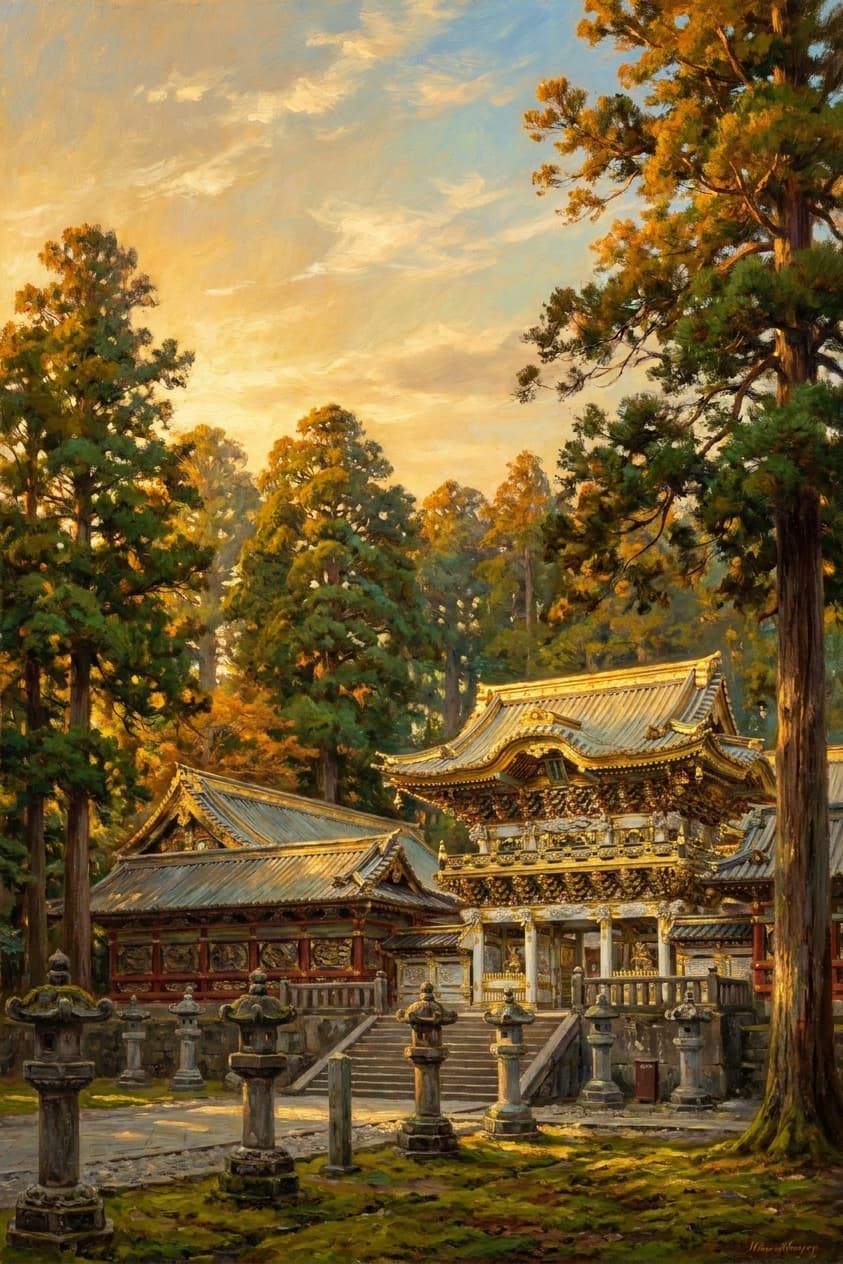
Visiting Nikkō Tōshō-gū offers an immersive encounter with Japan's most ornate architectural shrine complex surrounded by giant cedar trees. Visitors ascend terraced stone pathways through monumental gates into quiet courtyards of gold, lacquer, and detailed wood sculpture. The upper precinct culminates in a moss-lined forest stairway leading to the serene bronze tomb of Tokugawa Ieyasu.
Highlights
- Gazing upon the 508 individual carvings of the Yōmeimon Gate.
- Examining the iconic Three Wise Monkeys frieze at the Sacred Stable.
- Finding the Sleeping Cat carving sheltering above the inner mausoleum gate.
- Climbing the 207 stone steps through old-growth cedars to the bronze Okumiya stupa.
- Listening to the resonant acoustic 'dragon roar' beneath the ceiling of the Honjidō.
Things to Know
- The climb to the Okumiya mausoleum requires traversing uneven, steep stone stairs that can be slippery when wet.
- Shoes must be removed before entering the inner worship halls and the Honjidō pavilion.
- Photography is strictly prohibited inside the sacred inner chambers of the Haiden and Honden.
- Arrive right at opening to experience the morning mist filtering through the cedar canopy before tour crowds arrive.
Location
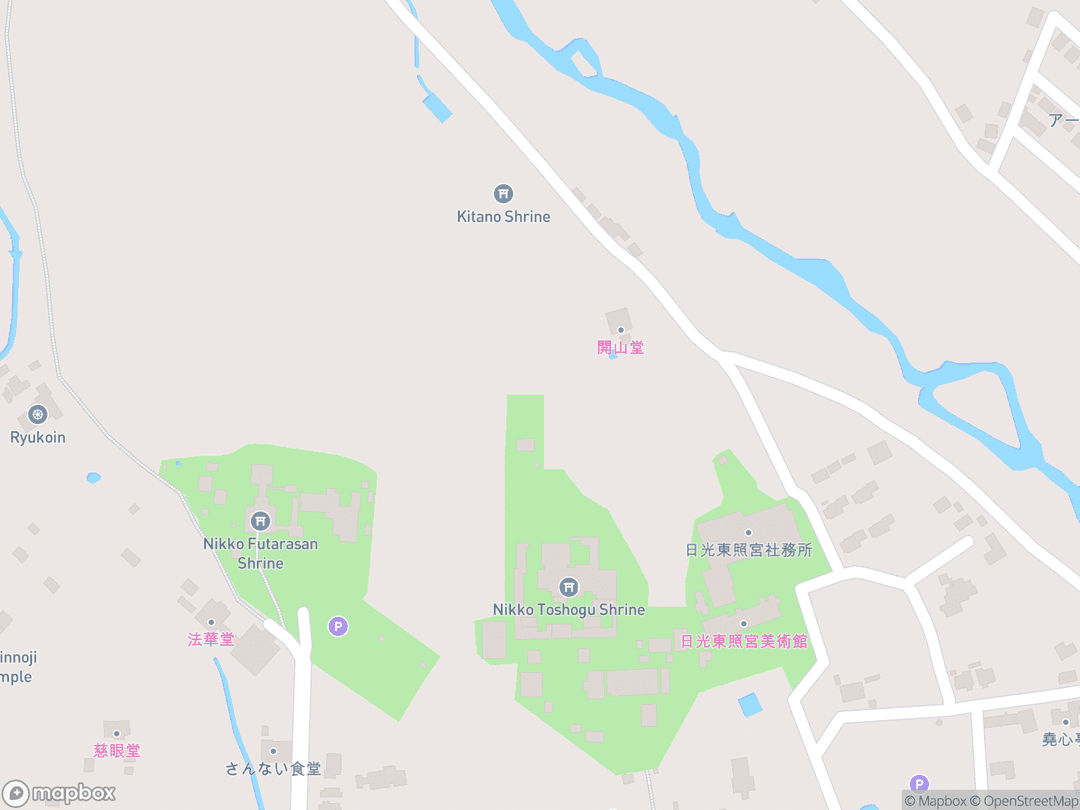
2301 Sannai, Nikko, Tochigi Prefecture 321-1431, Japan
Hours: April to October: 9:00 AM – 5:00 PM; November to March: 9:00 AM – 4:00 PM (Last entry 30 minutes before closing)
Getting There: Take the Tobu Limited Express Spacia from Asakusa to Tobu-Nikko Station, then take the Tobu World Heritage Loop Bus to Omotesando.
Get DirectionsTips for Your Visit
Wear Comfortable Footwear
The historical shrine complex features extensive cobblestone terraces and over 200 stone steps leading to the inner mausoleum.
Visit During Morning Hours
Morning light provides excellent visibility for appreciating the delicate paintwork and gold relief on the Yōmeimon Gate.
Combined Shrine Pass
Purchase a combined admission ticket at the gate to access the shrine grounds, the treasure museum, and adjacent sacred pavilions.
About
Nikkō Tōshō-gū stands as the pinnacle of early Edo period sacred architecture, nestled within the ancient cryptomeria forests of Tochigi Prefecture. Rooted in Taoic and Shinto reverence for sacred landscapes, the sanctuary honors the sacred energies of Mount Nantai while serving as the mausoleum for Tokugawa Ieyasu, founder of the Tokugawa Shogunate.
Unlike the austere unpainted timber characteristic of early Shinto sanctuaries, Tōshō-gū embodies Sannō Ichijitsu Shinto, an esoteric synthesis merging Shinto kami devotion with Buddhist metaphysics and Daoist directional cosmology. Through this theological system, Ieyasu was deified as Tōshō Daigongen, the Great Deity Illuminating the East.
Constructed in its monumental form during the 1630s under the Third Shogun Tokugawa Iemitsu, the complex features 55 buildings embellished with over 5,000 intricate woodcarvings, multi-layered lacquer, and radiant gold leaf. The complex sits on a cosmic axis aligned with the North Star, positioning the deified Shogun as the perpetual celestial guardian of Japan.
Gallery
Symbolic Elements
The temple's exterior features intricate carvings, each rich with spiritual meaning:

Three Wise Monkeys (Sanzaru)
Carved upon the Sacred Stable, these monkeys personify the moral precept to see, hear, and speak no evil.
The Sleeping Cat (Nemuri-neko)
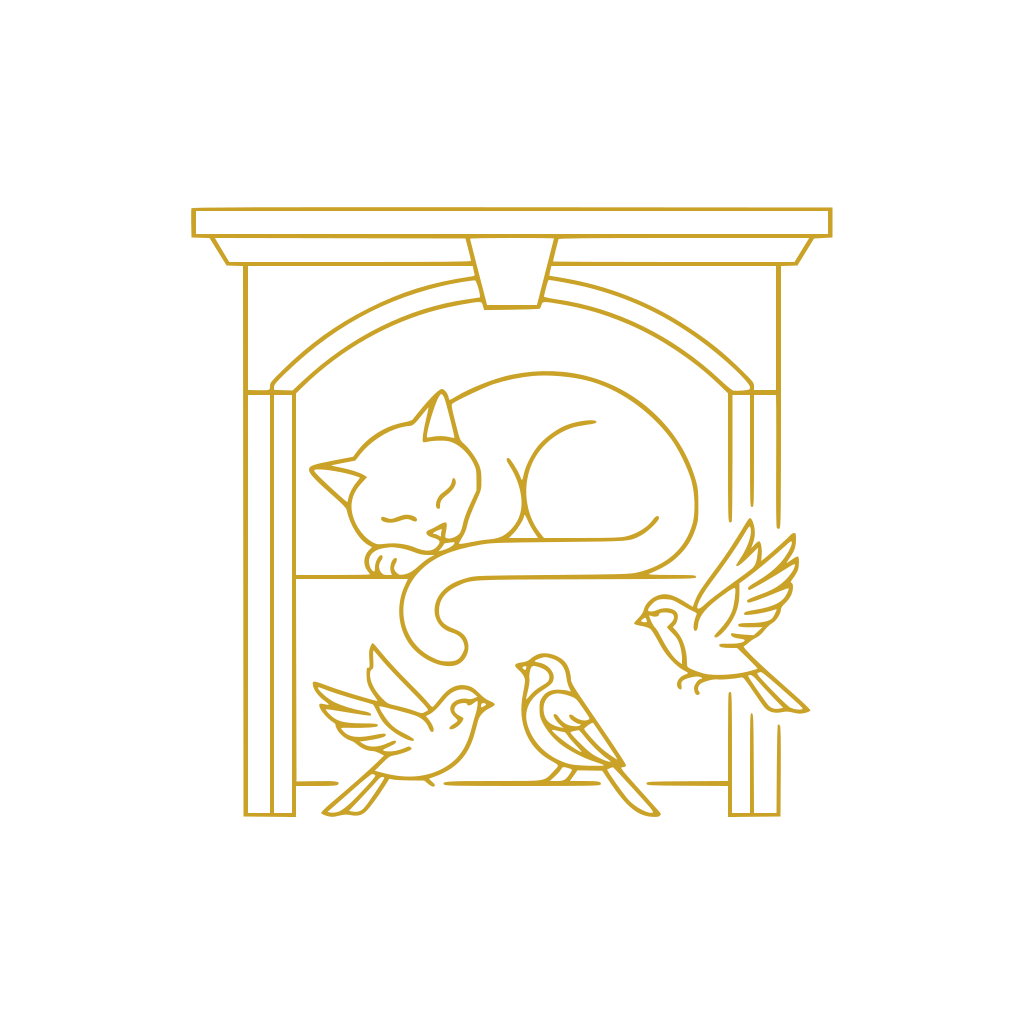
Perched above the mausoleum entryway, this slumbering feline resting alongside sparrows symbolizes the arrival of national peace.

The Inverted Pillar (Mayoke-no-Hashira)
An intentionally reversed spiral pattern on a main pillar averts cosmic hubris by leaving the building incomplete.

The Baku Nightmare Eater
Mythological chimeras that feed on bad dreams and iron weapons are carved above portals to signify an era without war.

The Suspended Shinbashira
A dynamic central cypress pillar hung from chains inside the pagoda acts as an early seismic shock damper.

Celestial North Star Axis
The primary architectural alignment maps to Polaris, anchoring Tokugawa Ieyasu as an astral protector of the realm.
White Gofun Lacquer
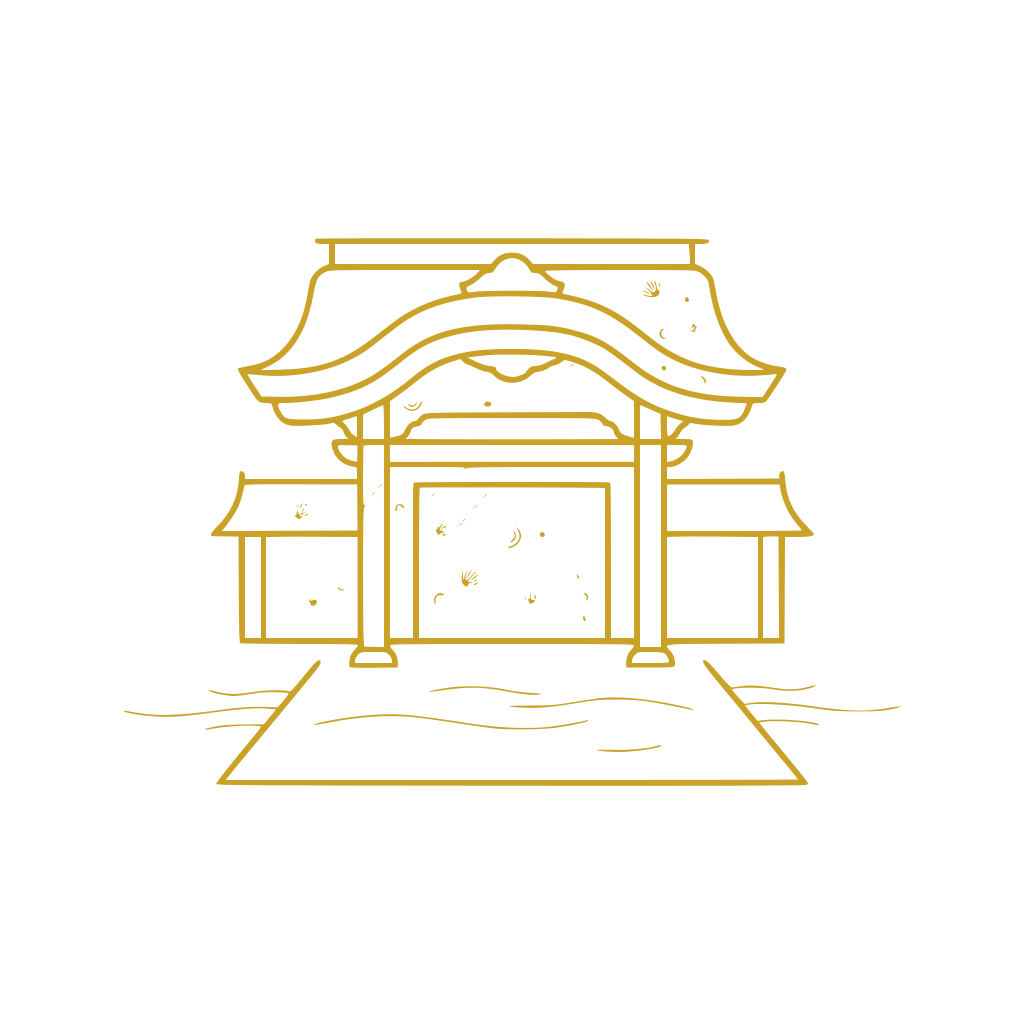
Pulverized oyster-shell coating applied across the Karamon Gate radiates an unblemished, luminous purity across the courtyard.

The Crying Dragon (Honjidō Ceiling)
A monumental sumi ink dragon painted on curved ceiling slats generates an acoustic ringing resonance when struck below.
Interesting Facts
Comprehensive surveys show the complex holds 5,173 individual wooden sculptures across all structures rather than on the Yōmeimon alone. (Tier A)
The entire shrine axis aligns directly toward the North Star when viewed from the Shogun's former palace in Tokyo. (Tier B)
The great rebuilding of 1636 was completed in just 17 months through the mobilization of 15,000 master artisans. (Tier A)
The approach to the shrine features the world's longest tree-lined avenue, guarded by over 12,000 ancient Japanese cedars. (Tier B)
The five-story pagoda utilizes a suspended central timber pendulum that dampens earthquake vibrations without rigid foundation sockets. (Tier A)
One white pillar on the Yōmeimon Gate was deliberately carved upside-down to prevent perfection from inviting misfortune. (Tier B)
A Dutch East India Company bronze lantern from 1643 stands in the courtyard, gifted during Japan's period of national isolation. (Tier B)
Statesman Itagaki Taisuke persuaded warring factions to spare the shrine from artillery destruction during the 1868 Boshin War. (Tier A)
Striking wooden blocks under the painted dragon ceiling of the Honjidō creates a reverberating acoustic hum known as the dragon's roar. (Tier B)
Common Questions
Who is enshrined at Nikkō Tōshō-gū?
The shrine enshrines Tokugawa Ieyasu, the founder of the Tokugawa Shogunate, deified as Tōshō Daigongen.
What is the meaning behind the Three Wise Monkeys carving?
The monkey carvings illustrate the classical life precept to see no evil, hear no evil, and speak no evil.
Why is one pillar on the Yōmeimon Gate carved upside down?
The pillar was deliberately inverted based on the belief that perfection invites decline, ensuring the structure remains perpetually unfinished.
Can visitors view the actual tomb of Tokugawa Ieyasu?
Visitors can climb 207 stone steps to the quiet Okumiya sanctuary where Ieyasu's bronze stupa tomb stands.
Featured Stories
The Deification of Tokugawa Ieyasu
April 8, 1617
On his deathbed, Tokugawa Ieyasu instructed that his remains be permanently enshrined among the sacred peaks of Nikkō to guard the nation. Overseen by the Tendai abbot Tenkai, Ieyasu was posthumously elevated to Tōshō Daigongen, uniting Shinto ancestral spirit veneration with Buddhist cosmic protection. His enshrinement established a sacred spiritual anchor directly north of the capital city of Edo.
Source: Nikko Toshogu Shrine Records
The Great Kan'ei Rebuilding
May 1, 1636
Seeking to create an eternal monument to the founder of the shogunate, Third Shogun Tokugawa Iemitsu commissioned a total reconstruction of the shrine. Master carpenter Kōra Munehiro orchestrated over 15,000 artisans who completed 55 structures in just seventeen months. The resulting masterwork turned a rustic mountain sanctuary into Japan's most lavishly gilded sacred complex.
Source: Government of Japan Cultural Properties Archives
Saving the Sanctuary in the Boshin War
May 10, 1868
During the upheaval of the Meiji Restoration, loyalist Tokugawa samurai made their final northern stand within the shrine grounds. Imperial commander Itagaki Taisuke negotiated an honorable surrender, warning that turning sacred national treasures into an artillery target would bring international shame. His diplomatic intervention saved centuries of woodcarvings and gilded architecture from destruction.
Source: Tochigi Historical Preservation Society
Timeline
Passing of Tokugawa Ieyasu
The unifier of early modern Japan passes away at Sunpu Castle leaving instructions to be entombed at Nikkō.
MilestoneInitial Enshrinement
Ieyasu's remains are re-interred at Nikkō and the divine title Tōshō Daigongen is bestowed by Imperial decree.
DedicationStart of Kan'ei Rebuilding
Third Shogun Tokugawa Iemitsu launches the monumental overhaul of the complex under master builder Kōra Munehiro.
MilestoneCompletion of the Golden Complex
The rebuilt sanctuary is consecrated with an Imperial envoy after 17 months of work by 15,000 artisans.
DedicationElevation to Tōshō-gū Status
Emperor Go-Kōmyō elevates the site to the prestigious imperial rank of Tōshō-gū.
MilestoneDonation of the Five-Story Pagoda
Daimyo Sakai Tadakatsu donates the original multi-tiered pagoda to complete the shrine entrance.
MilestoneReconstruction of the Pagoda
Following a fire, the pagoda is rebuilt featuring an innovative suspended central pillar damping system.
RenovationPeaceful Surrender at Nikkō
Itagaki Taisuke negotiates the peaceful evacuation of Tokugawa forces, saving the shrine from war.
MilestoneNational Treasure Designation
Key structures including the Yōmeimon, Karamon, and Honden receive National Treasure status.
MilestoneUNESCO World Heritage Inscription
The sanctuary is formally inscribed on the UNESCO World Heritage list as part of the Shrines and Temples of Nikkō.
MilestoneCompletion of Yōmeimon Restoration
A major multi-year restoration revives the gate's 508 carvings and original mineral pigment finishes.
RenovationHistory by Decade
1610s — Founding and Deification
Build a small chapel at Nikkō and enshrine me as a deity; I will guard the peace of the realm.
Following the passing of Tokugawa Ieyasu in 1616, his body was transferred to Nikkō in the spring of 1617. Emperor Go-Mizunoo conferred the divine title Tōshō Daigongen, establishing the initial sanctuary under the direction of Abbot Tenkai.
1630s — The Great Kan'ei Rebuilding
Tokugawa Iemitsu initiated a nationwide mobilization of master craftsmen to rebuild the entire compound between 1634 and 1636. Master builder Kōra Munehiro integrated Chinese decorative motifs, layered urushi lacquer, and extensive gilding into the Gongen-zukuri plan.
1650s — Erection of the Sacred Pagoda
In 1650, regional daimyo Sakai Tadakatsu commissioned the original five-story pagoda near the entrance gate. The addition completed the spatial harmony of Buddhist ritual structures within the sacred Shinto shrine grounds.
1680s — Growth of the Cedar Avenue
Tens of thousands of Japanese cedars planted along the pilgrimage corridors by Matsudaira Masatsuna matured into a towering living canopy. This monumental approach protected walking pilgrims from mountain winds while marking the sacred threshold.
1810s — Reconstruction and Seismic Innovation
After an 1815 fire consumed the original pagoda, daimyo Sakai Tadamichi financed its rebuilding in 1818. Carpenters incorporated an advanced suspended shinbashira timber, transforming the central spine into an innovative counterweight during earthquakes.
1860s — Survival and Separation
The sanctuary survived potential destruction during the 1868 Boshin War through calm negotiations. Meiji-era decrees separating Shinto from Buddhism partitioned Nikkō into three institutions, though Tōshō-gū retained its syncretic pagoda and bell towers.
1950s — National Treasure Designation
In 1951, Japan's Cultural Properties Protection Law designated the Yōmeimon, Karamon, and Honden as National Treasures. This began decades of systematic documentation and traditional conservation supported by national preservation trusts.
1990s — World Heritage Inscription
UNESCO inscribed the Shrines and Temples of Nikkō onto the World Heritage list in December 1999. The inscription celebrated the site as a masterpiece of architectural ingenuity harmonized with an ancient sacred forest.
2010s — Heisei Era Grand Renovation
A comprehensive four-year restoration of the Yōmeimon Gate concluded in 2017 at a cost of 1.2 billion yen. Specialists restored 508 individual carvings and renewed centuries-old oyster-shell lacquer using Edo-period techniques.
Architecture & Facilities
Nikkō Tōshō-gū is the quintessential masterpiece of Gongen-zukuri architecture, characterized by an H-shaped floor plan that connects the primary sanctuary and worship hall via an intermediate stone corridor under a unified roof system. Departed from minimalist Shinto timber designs, it combines early Edo Karamon craftsmanship, Chinese Zen bracket complexes, multi-layered urushi lacquer, and over 240,000 sheets of gold leaf.
Building Materials
Japanese Hinoki Cypress
Selected seasoned cypress timber forms the primary structural framing, bracket clusters, and carved lintels.
Urushi Lacquer and Gofun
Dozens of hand-rubbed urushi coats and pulverized oyster-shell gofun pigment provide weatherproofing and brilliant white highlights.
Gold Leaf and Mercury Amalgam
Hundreds of thousands of genuine gold sheets cover decorative relief work, beam ends, and metal ridge ornamentation.
Cyclopean Andesite Masonry
Dry-laid volcanic andesite and granite blocks form massive retaining platforms that stabilize the steep mountain terraces.
Interior Features
Honden (Inner Sanctuary)
The innermost gilded chamber where the divine spirit of Tōshō Daigongen resides upon elevated sacred platforms.
Haiden (Hall of Worship)
The grand outer hall decorated with Kanō school wall murals where Shinto priests and dignitaries conduct rituals.
Ishi-no-ma (Stone Corridor)
The lowered stone-paved intermediate passage that connects the worship hall to the sanctuary without stepping outside.
Honjidō (Crying Dragon Hall)
A sacred hall with a cypress-slat ceiling featuring a painted ink dragon that produces unique acoustic echoes.
Temple Grounds
The shrine precinct is organized into ascending terraced courtyards carved into the mountain slope, surrounded by thousands of centuries-old cryptomeria trees. Stone stairways, granaries, and bronze lanterns lead visitors gradually from the lower Torii gate up toward the secluded mausoleum.
Additional Facilities
The complex includes the Nikkō Tōshō-gū Treasure Museum, the Sacred Stable, the Sutra Library, and traditional rest pavilions.
Religious Significance
Nikkō Tōshō-gū stands as the central sanctuary of Sannō Ichijitsu Shinto, where ancestral reverence, nature veneration, and celestial geometry coalesce into a unified sacred space.
To serve as the permanent resting sanctuary and divine station of Tōshō Daigongen, safeguarding peace, stability, and harmony across the realm.
Sacred Ordinances
Temizu Purification
Pilgrims wash their hands and rinse their mouths at the granite water pavilion to cleanse spiritual impurities before entering.
Norito Invocations
Shinto priests recite formal ritual prayers expressing gratitude and petitioning the kami for protection and prosperity.
Sennin Gyōretsu Procession
A ceremonial reenactment of Ieyasu's funeral convoy featuring one thousand armored samurai warriors during the Spring Grand Festival.
Kagura Offerings
Ritual sacred dances performed on the shrine's open-air Kagura-den stage to honor and entertain the enfolded kami.
The Cosmic Alignment with the North Star
Positioned directly north of modern Tokyo, the shrine's architectural axis faces Polaris. In Daoist and Shinto cosmology, the North Star represents the immovable pivot of heaven, aligning the deified Tokugawa Ieyasu as an eternal celestial guardian watching over the nation.
Shinbutsu-shūgō and Syncretic Devotion
The shrine exemplifies the historic fusion of Shinto kami worship and Buddhist philosophy. Under the honji suijaku doctrine, Ieyasu is venerated as an avatar of Yakushi Nyorai, the Healing Buddha, manifested in Shinto form to preserve worldly peace.
Sources & Research
Every fact on Temples.org is backed by verified Sources & Research. Each piece of information is rated by source tier and confidence level.
View All Sources (8)
| Field | Source | Tier | Retrieved |
|---|---|---|---|
| About & Historical Background | Nikko Toshogu Official Shrine Registry (opens in a new tab) | A | 2026-03-30 |
| Architecture & Engineering | Government of Japan Public Relations Office (opens in a new tab) | A | 2026-03-30 |
| About & Historical Background | UNESCO World Heritage Centre (opens in a new tab) | B | 2026-03-30 |
| Timeline & Construction | Ministry of Foreign Affairs of Japan (opens in a new tab) | A | 2026-03-30 |
| Visitor Insights & Access | Nikko City Tourism Association (opens in a new tab) | A | 2026-03-30 |
| Visitor Insights & Facilities | Japan-Guide Travel Media (opens in a new tab) | D | 2026-03-30 |
| Featured Stories & Heritage | Samurai Archives History Project (opens in a new tab) | C | 2026-03-30 |
| Architecture & Symbolic Elements | National Library Research Collections (opens in a new tab) | B | 2026-03-30 |