Visitor Insights
Visiting Sensō-ji Temple
Visiting Sensō-ji Temple offers a captivating journey through Tokyo's rich history and spiritual heritage. The temple grounds exude a serene atmosphere, contrasting with the bustling Nakamise-dori leading to the main hall. Visitors can expect to witness traditional practices, admire stunning architecture, and immerse themselves in the cultural significance of this ancient Buddhist temple.
Highlights
- Explore Nakamise-dori, a vibrant shopping street with traditional crafts and snacks.
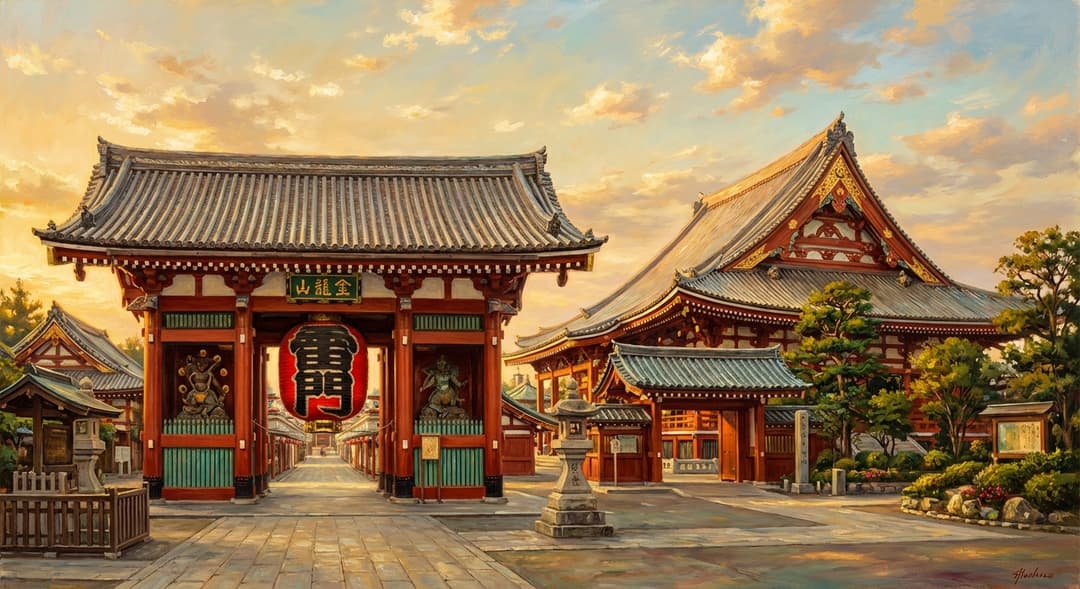
- Witness the grandeur of the Kaminarimon (Thunder Gate) and its iconic red lantern.
- Purify yourself with incense smoke at the Jōkō-dō Incense Cauldron.
Things to Know
- The temple can be crowded, especially during peak hours and festivals.
- Dress respectfully when visiting the temple grounds.
- Be mindful of the local customs and traditions.
Location
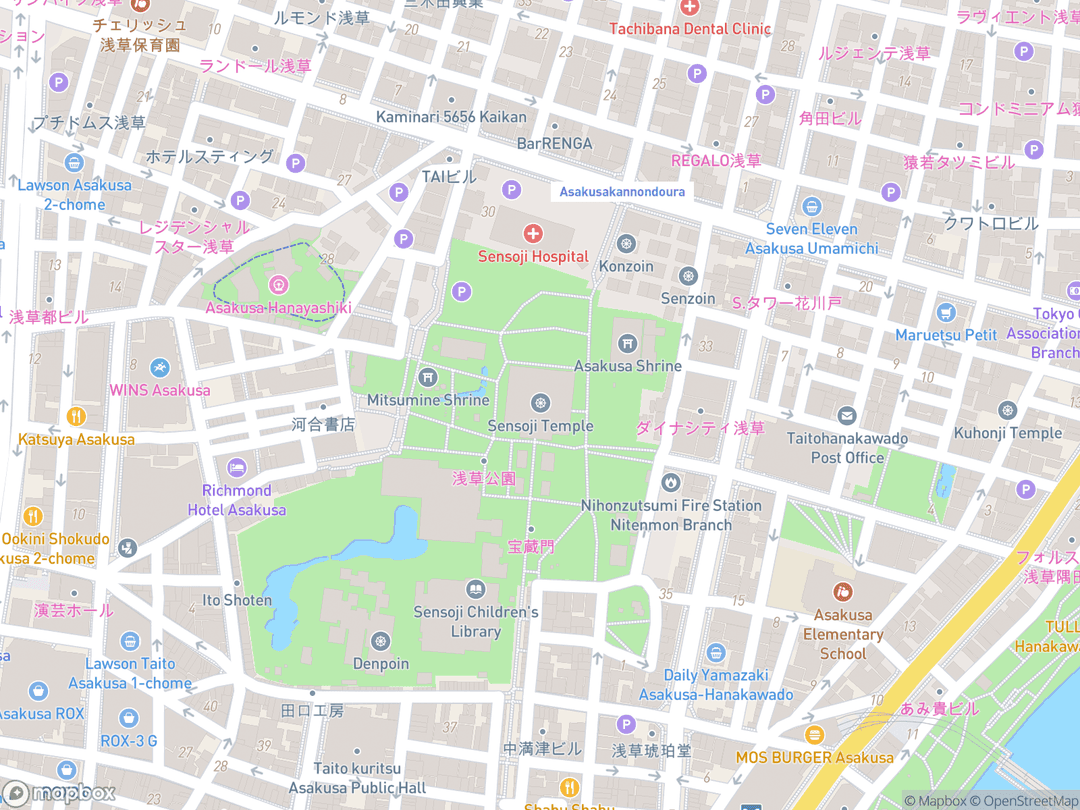
2-3-1 Asakusa, Taitō-ku, Tokyo, Japan
Hours: Main Hall: 6:00 AM to 5:00 PM (6:30 AM to 5:00 PM from October to March); Temple Grounds: Always open
Getting There: The closest stations to Sensō-ji Temple are Tokyo Metro Ginza Line, Toei Asakusa Line, Tobu Sky Tree Line, and Tsukuba Express Asakusa Station. It is a 5-minute walk from any of these stations.
Get DirectionsTips for Your Visit
Visit Early
Arrive early in the morning to avoid the crowds and experience a more peaceful atmosphere.
Try Local Snacks
Sample traditional Japanese snacks and sweets along Nakamise-dori.
About
According to the Japan National Tourism Organization, Sensō-ji Temple (also known as Asakusa Kannon Temple) is Tokyo's oldest temple, dating back to 645 AD, and stands as a significant Buddhist landmark dedicated to Kannon Bosatsu, the Bodhisattva of compassion.
According to legend, the temple's origins trace back to 628 AD when two fishermen, the brothers Hinokuma Hamanari and Takenari, discovered a statue of Kannon in the Sumida River. Despite their attempts to return the statue to the river, it kept returning to them. Haji no Nakatomo, the village headman, recognized the statue's sanctity, converted to Buddhism, and turned his home into a small temple to enshrine the Kannon.
Over the centuries, Sensō-ji has undergone numerous reconstructions due to fires, earthquakes, and war. The temple has been rebuilt nearly 20 times, with significant periods of support and expansion, especially after Tokugawa Ieyasu designated Sensō-ji as an official place of prayer for the shogunate in 1590. Today, Sensō-ji stands as a symbol of resilience and spiritual significance, attracting over 30 million visitors annually.
Gallery
Symbolic Elements
The temple's exterior features intricate carvings, each rich with spiritual meaning:

Kannon (Avalokiteśvara)
The Bodhisattva of compassion, Kannon is the central figure of worship at Sensō-ji. Kannon embodies the Buddhist ideal of selfless care for others, offering solace, guidance, and support to those who seek her aid. The statue discovered in the Sumida River is believed to be a manifestation of Kannon's divine presence.

Kaminarimon (Thunder Gate)
The iconic entrance to Sensō-ji, the Kaminarimon features a large red lantern and statues of Fujin (god of wind) and Raijin (god of thunder). The gate symbolizes protection and good fortune, welcoming visitors to the sacred grounds. The lantern's bright red color is believed to ward off evil spirits and bring blessings to those who pass through the gate.

Fujin and Raijin
The gods of wind and thunder, Fujin and Raijin, guard the Kaminarimon, protecting the temple from natural disasters. Fujin is depicted with a bag of wind, while Raijin carries drums that create thunder. Their presence symbolizes the temple's resilience against the elements and the power of nature.

Nio Statues
Guardian deities protecting the Hozomon Gate, the Nio statues are fierce figures that ward off evil spirits and protect the temple's sacred treasures. These muscular figures are symbols of strength and determination, representing the unwavering commitment to defend the Buddhist faith. Their imposing presence serves as a reminder of the importance of vigilance and protection.

Five-Storied Pagoda
The five-storied pagoda represents the five elements of the universe in Buddhist cosmology: earth, water, fire, wind, and sky. Each level of the pagoda symbolizes a different element, representing the interconnectedness of all things. The pagoda serves as a visual reminder of the Buddhist teachings on the nature of reality.

Incense
Burning incense is a common practice for purification at Sensō-ji. The smoke is believed to cleanse the body and spirit, bringing health and wisdom. Visitors often waft the incense smoke over themselves as a symbolic act of purification, seeking blessings and protection from the divine.

Nakamise-dori
A vibrant shopping street leading to the temple, Nakamise-dori is lined with traditional shops selling crafts, snacks, and souvenirs. The street provides a lively and engaging experience for visitors, offering a glimpse into traditional Japanese culture. The shops have been a part of the temple experience for centuries, providing a unique blend of commerce and spirituality.

Hozomon Gate
The inner gate to the temple complex, Hozomon Gate, houses Buddhist scriptures and is guarded by Nio statues. This gate serves as a transition point between the outer world and the inner sanctum of the temple. The scriptures housed within the gate represent the wisdom and teachings of Buddhism, while the Nio statues provide protection and ward off evil influences.
Interesting Facts
Sensō-ji is Tokyo's oldest temple, founded in 645 AD.
The temple is dedicated to Kannon, the Bodhisattva of compassion.
Legend says the temple was founded after two fishermen discovered a statue of Kannon in the Sumida River in 628 AD.
Sensō-ji is one of the most widely visited religious sites in the world, attracting over 30 million visitors annually.
The Kaminarimon's large red lantern weighs approximately 700 kilograms.
Nakamise-dori, the shopping street leading to the temple, is over 200 meters long and has a history of several centuries.
The five-story pagoda represents the five elements of the universe.
Tokugawa Ieyasu designated Sensō-ji as the temple where prayers of the shogunate would be offered.
The temple has been rebuilt nearly 20 times due to fires, earthquakes, and war.
The Sanja Matsuri, the annual festival of the Asakusa Shrine, is held in May and is the biggest event in the Sensō-ji Temple area.
Common Questions
What is Sensō-ji Temple known for?
Sensō-ji Temple is known as Tokyo's oldest temple, dedicated to Kannon, the Bodhisattva of compassion. It is famous for its iconic Kaminarimon (Thunder Gate), Nakamise-dori shopping street, and its rich history and cultural significance.
How do I get to Sensō-ji Temple?
The closest stations to Sensō-ji Temple are Tokyo Metro Ginza Line, Toei Asakusa Line, Tobu Sky Tree Line, and Tsukuba Express Asakusa Station. It is a 5-minute walk from any of these stations.
What are the opening hours of Sensō-ji Temple?
The Main Hall of Sensō-ji Temple is open from 6:00 AM to 5:00 PM (6:30 AM to 5:00 PM from October to March). The temple grounds are always open.
Is there an admission fee to enter Sensō-ji Temple?
No, admission to Sensō-ji Temple is free.
What is the significance of the Kaminarimon lantern?
The large red lantern at the Kaminarimon symbolizes good luck and is believed to ward off evil spirits. It is an iconic symbol of Sensō-ji Temple.
Featured Stories
The Discovery of Kannon
628
In the year 628 AD, two fishermen brothers, Hinokuma Hamanari and Takenari, cast their nets into the Sumida River, unaware of the profound discovery that awaited them. Instead of the usual catch, they hauled in a small, golden statue of Kannon, the Bodhisattva of compassion. Despite their repeated attempts to return the statue to the river, it miraculously reappeared in their nets each time.
Recognizing the divine significance of this event, the brothers sought the counsel of Haji no Nakatomo, the village headman, a man of wisdom and spiritual insight. Haji no Nakatomo, deeply moved by the story and the statue's unwavering presence, recognized the sacred nature of Kannon. He converted to Buddhism and dedicated his life to enshrining and venerating the statue.
Transforming his own home into a humble temple, Haji no Nakatomo became the first caretaker of the Kannon statue, laying the foundation for what would become the revered Sensō-ji Temple. This act of devotion marked the beginning of a spiritual legacy that would endure for centuries, drawing countless pilgrims and visitors to the sacred site.
Source: Sensō-ji Temple Official Website
Tokugawa Ieyasu's Patronage
1590
In 1590, a pivotal moment in Sensō-ji's history arrived with the rise of Tokugawa Ieyasu, the founder and first shōgun of the Tokugawa shogunate of Japan. Ieyasu, recognizing the temple's spiritual significance and strategic location, designated Sensō-ji as an official place of prayer for the shogunate. This act of patronage marked a turning point for the temple, ushering in an era of unprecedented support and expansion.
With the backing of the Tokugawa shogunate, Sensō-ji experienced a surge in resources and influence, enabling the construction of new buildings, the renovation of existing structures, and the enhancement of its religious and cultural offerings. The temple became a focal point for both spiritual devotion and political power, attracting a diverse array of worshippers and dignitaries.
Tokugawa Ieyasu's decision to embrace Sensō-ji solidified the temple's place as a prominent landmark in Edo (present-day Tokyo), contributing to its enduring legacy as a symbol of resilience, spiritual solace, and cultural heritage. The shogunate's support ensured the temple's continued prosperity and its ability to serve the needs of the community for generations to come.
Source: History Hit
Rebuilding After the War
1945–1958
The firebombing of Tokyo during World War II in 1945 brought devastation to Sensō-ji Temple, reducing much of its historic structures to ashes. The destruction was a profound loss for the community, threatening to erase centuries of cultural and spiritual heritage. However, the spirit of Sensō-ji and its devotees remained unbroken, igniting a fervent desire to rebuild and restore the temple to its former glory.
Following the war, a dedicated team of architects, craftsmen, and volunteers embarked on a monumental task of reconstruction, meticulously recreating the temple's iconic buildings and preserving its traditional architectural style. The rebuilding process was a testament to the resilience and determination of the Japanese people, who poured their hearts and souls into the project.
In 1958, the Main Hall was finally rebuilt, marking a triumphant moment in Sensō-ji's history. The restored temple stood as a symbol of hope and renewal, reaffirming its role as a spiritual sanctuary and a beacon of cultural identity. The rebuilt Sensō-ji welcomed visitors from around the world, offering solace, inspiration, and a connection to Japan's rich past.
Source: Japan Travel
Timeline
Discovery of Kannon Statue
Brothers Hinokuma Hamanari and Takenari discover a statue of Kannon in the Sumida River, leading to the temple's founding.
MilestoneTemple Completion
Sensō-ji Temple is completed near the site where the statue was found, becoming Tokyo's oldest temple.
MilestoneFirst Kaminarimon Built
The Kaminarimon (Thunder Gate) is first built by Taira no Kinmasa, a military commander.
MilestoneOfficial Place of Prayer
Tokugawa Ieyasu designates Sensō-ji as an official place of prayer for the shogunate, marking a period of support and expansion.
MilestoneNitenmon Gate Built
The Nitenmon Gate is constructed as part of the temple complex.
MilestoneFirst Fire Destruction
Buildings within the Sensō-ji complex are destroyed by fire, requiring reconstruction efforts.
EventSecond Fire Destruction
Buildings within the Sensō-ji complex are again destroyed by fire, necessitating further reconstruction.
EventFive-Story Pagoda Rebuilt
The five-story pagoda is rebuilt, contributing to the temple's architectural grandeur.
RenovationMain Hall Rebuilt
The main hall is rebuilt, maintaining the temple's central place of worship.
RenovationNakamise Shops Established
Shops that would become 'Nakamise' are established on the main approach to the temple, enhancing the visitor experience.
EventKaminarimon Burns Down
The Kaminarimon burns down, necessitating its later reconstruction.
EventSeparation of Shinto and Buddhism
The Meiji government orders the separation of Shinto and Buddhism, impacting the temple's administration.
EventDestruction During WWII
Much of the temple is destroyed during the World War II firebombing of Tokyo, leading to extensive rebuilding efforts.
EventTemple Independence
The temple becomes independent after the war, formerly associated with the Tendai sect of Buddhism.
MilestoneMain Hall Rebuilt
The Main Hall is rebuilt, restoring the temple's primary worship space.
RenovationKaminarimon Rebuilt
The Kaminarimon is rebuilt with donations from Konosuke Matsushita, the founder of Panasonic.
RenovationArchitecture & Facilities
Sensō-ji Temple's architecture showcases a blend of traditional Japanese Buddhist styles, influenced by centuries of design and reconstruction. The temple's structures predominantly feature wood construction, tiled roofs, and ornate metal accents. The most apparent characteristic of the Main Hall is its dramatically sloping roof that is quite tall compared to that of other temples, creating a visually striking silhouette against the Tokyo skyline.
Building Materials
Wood
Predominantly used for the construction of the main structures, including the Main Hall, pagoda, and gates, wood provides a natural and aesthetically pleasing element to the temple's architecture.
Tiled Roofs
The roofs of Sensō-ji's buildings are covered with traditional Japanese tiles, providing protection from the elements and adding to the temple's visual appeal. The tiles are often glazed, creating a shimmering effect that enhances the overall aesthetic.
Metal Accents
Ornate metal accents are incorporated throughout the temple complex, including decorative elements on the roofs, gates, and lanterns. These metal details add a touch of elegance and sophistication to the temple's architecture.
Paper and Metal Lanterns
The Kaminarimon's iconic lantern is made from paper and metal, creating a striking visual feature that welcomes visitors to the temple. The lantern is illuminated at night, casting a warm glow over the entrance.
Interior Features
Main Hall (Kannondo)
The main hall dedicated to Kannon, featuring a dramatically sloping roof and housing the sacred statue of the Bodhisattva of compassion. The interior is adorned with intricate carvings, paintings, and religious artifacts, creating a serene and spiritual atmosphere.
Hozomon Gate
The inner gate to the temple complex, housing Buddhist scriptures and guarded by Nio statues. The gate serves as a transition point between the outer world and the inner sanctum of the temple, providing a sense of reverence and anticipation.
Five-Storied Pagoda
A towering pagoda representing the five elements of the universe: earth, water, fire, wind, and sky. The interior of the pagoda is often decorated with religious symbols and artwork, creating a space for contemplation and reflection.
Jōkō-dō Incense Cauldron
A large incense cauldron where visitors can purify themselves with the smoke, believing it cleanses the body and spirit. The act of burning incense is a common practice for purification and seeking blessings.
Temple Grounds
The temple grounds feature meticulously maintained gardens, pathways, and open spaces, creating a serene and inviting atmosphere for visitors. The grounds are designed to promote contemplation and reflection, offering a respite from the bustling city outside.
Additional Facilities
The Asakusa Shrine is located within the temple grounds, along with the Denpoin Garden, a traditional Japanese garden. The Nakamise-dori shopping street stretches approximately 250 meters from the Kaminarimon to the Hozomon Gate, featuring nearly 90 shops. A large incense cauldron (Jōkō-dō) is situated in front of the Main Hall for purification rituals.
Religious Significance
Sensō-ji Temple holds profound religious significance as a center for Buddhist worship and a symbol of compassion and spiritual solace. The temple is dedicated to Kannon, the Bodhisattva of compassion, who embodies the Buddhist ideal of selfless care for others.
The core spiritual purpose of Sensō-ji is to provide a place for individuals to connect with Kannon, seek blessings, and cultivate compassion and wisdom. The temple serves as a sanctuary for prayer, meditation, and acts of devotion.
Sacred Ordinances
Prayer and Devotion
Visitors offer prayers and express their devotion to Kannon, seeking guidance, healing, and protection. The act of prayer is a central practice at Sensō-ji, allowing individuals to connect with the divine and express their hopes and desires.
Incense Offering
Burning incense is a common practice for purification and seeking blessings. Visitors waft the incense smoke over themselves as a symbolic act of cleansing and spiritual renewal.
Omikuji (Fortune Telling)
Visitors draw omikuji (fortune slips) to receive guidance and insight into their future. The omikuji provide a glimpse into the potential outcomes of various situations, offering advice and encouragement.
The Significance of Kannon
In Buddhism, compassion is a central tenet, emphasizing the alleviation of suffering and the pursuit of enlightenment for all beings. Kannon, as the embodiment of compassion, represents this ideal, offering solace, guidance, and support to those who seek her aid. The temple serves as a place where individuals can connect with these principles through prayer, meditation, and acts of devotion.
Similar Temples
Sources & Research
Every fact on Temples.org is backed by verified Sources & Research. Each piece of information is rated by source tier and confidence level.
View All Sources (8)
| Field | Source | Tier | Retrieved |
|---|---|---|---|
| About & Historical Background | Sensō-ji Temple (opens in a new tab) | A | 2024-01-02 |
| About & Historical Background | Japan National Tourism Organization (opens in a new tab) | A | 2024-01-02 |
| Architectural Description | Japan-Guide.com (opens in a new tab) | B | 2024-01-02 |
| Cultural Significance | JRailPass (opens in a new tab) | B | 2024-01-02 |
| Visitor Information | Nakamise Shopping Street Association (opens in a new tab) | A | 2024-01-02 |
| Architectural Description | Live Japan (opens in a new tab) | B | 2024-01-02 |
| About & Historical Background | Sensō-ji Temple Official Guide (opens in a new tab) | B | 2024-01-02 |
| Historical Context | Sensō-ji Temple English (opens in a new tab) | C | 2024-01-02 |