Visitor Insights
Visiting Tōdai-ji
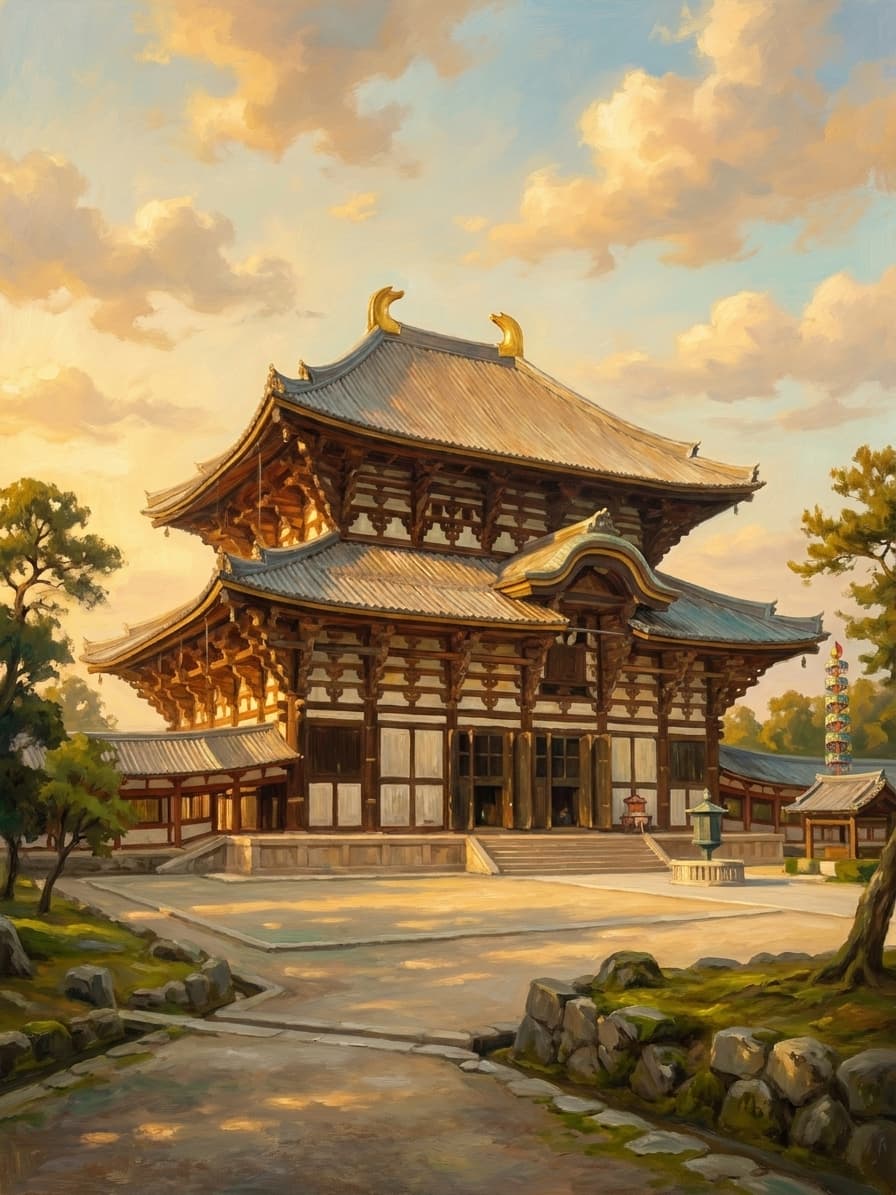
Visiting Tōdai-ji offers an awe-inspiring encounter with monumental Dharmic timber architecture and ancient sculpture. The precinct includes both bustling central plazas populated by sacred deer and contemplative hillside sanctuaries.
Highlights
- Marvel at the monumental bronze Rushana Buddha seated in the Great Buddha Hall.
- Walk beneath the soaring Daibutsu-yō timber brackets of the towering Nandaimon gate.
- Take in panoramic views of Nara from the open wooden terrace of Nigatsu-dō.
- Inspect the eighth-century openwork celestial musicians on the octagonal bronze lantern.
Things to Know
- Daibutsuden and inner temple halls require paid admission tickets for entry.
- The outer temple grounds and the veranda of Nigatsu-dō remain accessible day and night.
- Free-roaming sacred deer can be aggressive when seeking roasted rice crackers.
- Expect heavy crowds during midday peak hours and spring sakura season.
Location
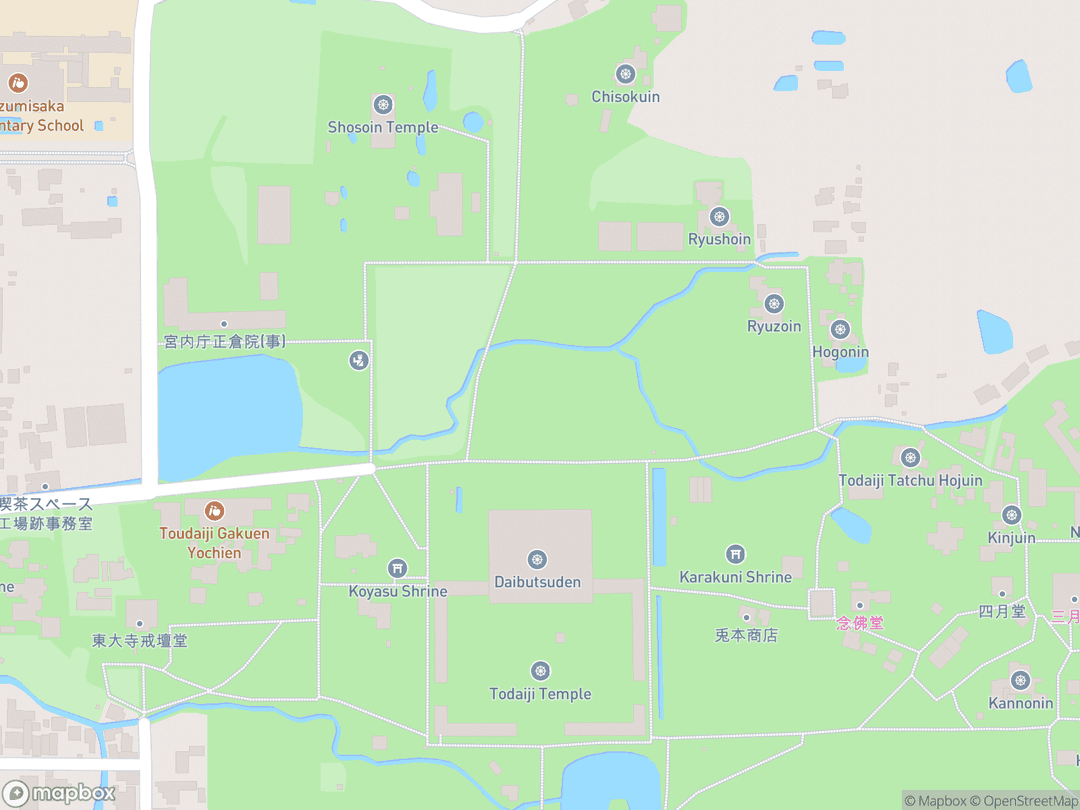
406-1 Zōshichō, Nara, Nara Prefecture 630-8211, Japan
Hours: 07:30 - 17:30 (April to October); 08:00 - 17:00 (November to March)
Getting There: Take the Nara City Loop Bus from JR or Kintetsu Nara Station to the Daibutsuden Kasugataisha-mae stop, or walk 20 minutes east through Nara Park.
Get DirectionsTips for Your Visit
Arrive at Morning Opening
Enter at 07:30 to experience the Great Buddha Hall in tranquil morning light before tour crowds arrive.
Climb to Nigatsu-dō at Sunset
Ascend the stone hillside stairs to Nigatsu-dō in the late afternoon for expansive sunset vistas over the Nara basin.
Observe Reverent Etiquette
Remove hats upon entering sanctuary halls, refrain from photography in restricted worship zones, and speak quietly.
About
Tōdai-ji is the renowned head temple of the Kegon school of Mahāyāna Buddhism, rooted in the shared Dharmic pursuit of spiritual liberation. Founded in the eighth century by Emperor Shōmu, the sanctuary serves as the administrative apex of Japan's historic provincial temple network.
The complex centers upon the monumental Daibutsuden, one of the world's largest traditional timber structures. Inside sits the colossal bronze Rushana Buddha, personifying the cosmic wisdom and universal interconnectedness articulated in the sacred Avatamsaka Sūtra.
Having weathered catastrophic wartime burnings and earthquakes, Tōdai-ji was repeatedly resurrected across the Kamakura and Edo periods through monumental public devotion. Today, this UNESCO World Heritage Site stands as an active locus of Dharmic worship and sacred architectural mastery.
Gallery
Symbolic Elements
The temple's exterior features intricate carvings, each rich with spiritual meaning:

Rushana Buddha
The supreme cosmic Buddha representing the absolute Dharmakāya from which all physical universes emanate.

Abhaya Mudrā
The raised right hand of the Buddha dispelling worldly fear and offering divine reassurance to sentient beings.

Engraved Lotus Petals
Bronze petals incised with diagrams of the Lotus Treasury World illustrating infinite interlocking realms.

Kongōrikishi Guardians
Fierce temple gate sentinels sounding the cosmic beginning and end through the sacred syllables 'A' and 'Un'.

Gilded Shibi
Fish-tail roof ridge ornaments derived from ancient Indian talismans to summon rainfall and prevent fire.

Celestial Lantern Musicians
Openwork bronze reliefs of bodhisattvas offering heavenly music to celebrate the proclamation of the Dharma.

Pillar Nostril Aperture
A narrow hollow opening symbolizing spiritual rebirth and good fortune for pilgrims who squeeze through it.

Sacred Shika Deer
Revered animal messengers symbolizing the harmonious coexistence of indigenous kami with Buddhist sanctity.
Interesting Facts
Casting the original bronze colossus in the eighth century nearly exhausted the fiscal reserves of imperial Japan (Tier A).
The grand Eye-Opening Ceremony in 752 was officiated by Bodhisena, a Buddhist master hailing from southern India (Tier A).
The Shuni-e water and fire ceremony at Nigatsu-dō has been performed without interruption every year since 752 (Tier A).
Master sculptors Unkei and Kaikei carved the 8.4-meter wooden guardian statues in Nandaimon in just 69 days (Tier B).
Due to timber shortages, the 1709 Daibutsuden was reconstructed one-third narrower than the eighth-century original (Tier B).
Attic timber framing concealed imported British steel trusses during structural restoration between 1906 and 1913 (Tier B).
A crawl-through aperture in a wooden pillar at the hall rear matches the exact dimensions of the Buddha's nostril (Tier B).
Following a 1567 wartime blaze, the Great Buddha sat exposed to weathering without a protective hall for over a century (Tier A).
Common Questions
Why was the Great Buddha of Nara originally constructed?
Emperor Shōmu commissioned the statue in 743 to invoke spiritual protection against epidemics, crop failures, and political rebellions.
Who consecrated the Great Buddha at its dedication?
Bodhisena, a South Indian Buddhist monk who traveled via China, performed the Eye-Opening Ceremony on May 26, 752.
Is the current Great Buddha Hall the original eighth-century building?
No, the current structure was completed in 1709 after earlier halls were destroyed by fires in 1180 and 1567.
Why do wild deer roam freely throughout the temple grounds?
The deer are revered as sacred messengers of the adjacent Kasuga Taisha shrine, protected through ancient Buddhist-Shinto harmony.
Featured Stories
The Cosmic Consecration of 752
May 26, 752
On a radiant spring morning, thousands of dignitaries gathered as Indian master Bodhisena dipped an immense brush in ink to paint the pupils of the Great Buddha. Long silk cords trailed from his brush into the hands of the assembled multitude, symbolically uniting all participants with the cosmic awakening of Vairochana.
Source: Tōdai-ji Temple Administrative Office
The Miracle of Mutsu Gold
749
With the colossal bronze casting complete, imperial craftspeople faced a desperate crisis due to the total absence of domestic gold needed to gild the colossus. The timely discovery of Japan's first alluvial gold in northern Mutsu Province was hailed as divine affirmation, enabling the monumental gilding to proceed.
Source: Agency for Cultural Affairs of Japan
Chōgen and the Great Reconstruction
1199
Following the catastrophic destruction of the temple during the Genpei War, the elderly monk Chōgen undertook an arduous nationwide campaign to collect timber and funds. Introducing bold architectural innovations from Song China, he oversaw the creation of the monumental Nandaimon gate to renew the sacred sanctuary.
Source: Nara National Research Institute for Cultural Properties
Timeline
Founding of Kinshōsen-ji
Emperor Shōmu establishes the mountain temple nucleus following the death of his infant prince.
MilestoneImperial Edict for the Great Buddha
Emperor Shōmu decrees the construction of the colossal Vairochana Buddha to protect the nation.
MilestoneRelocation to Nara
The building project officially transfers to the Yamato basin and adopts the name Tōdai-ji.
EventGold Discovery in Mutsu
Alluvial gold is discovered in northern Japan, providing the precious metal required to gild the statue.
MilestoneEye-Opening Ceremony
South Indian monk Bodhisena officiates the consecration ceremony of the colossal bronze Buddha.
DedicationFoundation of Shōsō-in
Empress Kōmyō dedicates the late Emperor Shōmu's treasures, establishing the imperial storehouse.
MilestoneEarthquake Repairs
An earthquake fells the head of the Great Buddha, prompting extensive imperial restorations.
RenovationDestruction in the Genpei War
Taira clan forces set fire to the temple complex, destroying the Daibutsuden and damaging the Buddha.
EventCompletion of Nandaimon
Monk Chōgen oversees the reconstruction of the monumental Great South Gate in the Daibutsu-yō style.
MilestoneSengoku Era Conflagration
Urban warfare between rival samurai factions ignites a conflagration that consumes the medieval hall.
EventDedication of Current Hall
The third Daibutsuden is dedicated under Tokugawa Shogunate sponsorship after a nationwide fundraising campaign.
DedicationUNESCO Inscription
Tōdai-ji is inscribed as a UNESCO World Heritage Site among the Historic Monuments of Ancient Nara.
MilestoneHistory by Decade
740s — Imperial Decree and Cosmic Vision
Emperor Shōmu issued the historic 743 edict commanding the construction of the Great Buddha to unify Japan under Buddhist protection amid famine and disease. With the aid of popular monk Gyōki, civilian laborers and resources were mobilized to clear the site and initiate massive bronze pours.
750s — Consecration and Imperial Treasures
The colossal bronze Vairochana was consecrated on May 26, 752, in an international celebration officiated by the Indian monk Bodhisena. Following Emperor Shōmu's death in 756, Empress Kōmyō dedicated hundreds of his personal treasures, establishing the famous Shōsō-in imperial storehouse.
1180s–1200s — War, Ruin, and Kamakura Renewal
During the Genpei War in 1180, Taira forces burned Tōdai-ji to the ground, melting the Buddha's head and destroying ancient halls. Monk Shunjōbō Chōgen directed a heroic reconstruction effort, introducing the innovative Daibutsu-yō architectural style and commissioning the iconic Niō guardian sculptures.
1560s–1700s — Warring States Desolation and Edo Rebirth
In 1567, battle conflagrations destroyed the medieval Daibutsuden, leaving the Buddha exposed to the elements for over a century. Priest Kōkei rallied nationwide donations during the late seventeenth century, culminating in the 1709 dedication of the present Great Buddha Hall backed by the Tokugawa Shogunate.
1900s–1980s — Industrial Engineering and Modern Preservation
The Great Meiji Repair integrated imported British structural steel trusses into the attic to stabilize the sagging, heavy tiled roof. Subsequent Shōwa-era restorations retrofitted concealed seismic engineering and fire-suppression systems, ensuring the ancient sanctuary survives for future generations.
Architecture & Facilities
Tōdai-ji displays a layered architectural lineage combining eighth-century Tenpyō symmetry, twelfth-century Daibutsu-yō structural joinery, and eighteenth-century Edo-period eclecticism. The massive Daibutsuden rests on a granite terrace with interlocking wooden brackets and an undulating karahafu gable, exemplifying monumental Japanese sacred timber framing.
Building Materials
Japanese Cypress (Hinoki)
Dense, aromatic cypress was selected for foundational framing and monumental exterior structural posts.
Japanese Cedar (Sugi)
Stout cedar trunks were laminated with iron bands during the Edo reconstruction to form composite pillars.
Cast Statuary Bronze
A durable copper-tin-lead alloy forms the massive multi-tiered casting of the colossal Great Buddha.
Ceramic Roof Tiles
Over one hundred thousand heavy fired clay tiles shield the cavernous roof structure from harsh weather.
Interior Features
Vairochana Sanctum
The cavernous central nave is dominated by the fifteen-meter seated bronze Rushana Buddha upon its lotus throne.
Kokūzō Bodhisattva Shrine
Flanking the central colossus, this gilded wooden statue personifies boundless cosmic wisdom and memory.
Nyoirin Kannon Shrine
Positioned beside the Buddha, this serene gilded figure embodies compassion and the fulfillment of spiritual wishes.
Kōmokuten and Tamonten Statues
Towering wooden guardian figures protect the rear sanctum corners, brandishing weapons against spiritual delusion.
Temple Grounds
The sprawling precinct extends across Nara Park, featuring gravel courtyards, stone lantern avenues, and forested pathways roamed by sacred deer.
Additional Facilities
The modern Tōdai-ji Comprehensive Cultural Center and Museum houses priceless temple treasures, scrolls, and statuary within climate-controlled exhibition galleries.
Religious Significance
Within the Dharmic spiritual family, Tōdai-ji represents the pinnacle of Mahāyāna cosmic metaphysics, translating the teachings of the Avatamsaka Sūtra into monumental architecture.
The temple serves as an architectural mandala and ritual center dedicated to world peace, universal enlightenment, and the alleviation of suffering.
Sacred Ordinances
Kaigan Kuyō (Eye-Opening Rite)
A transformative Dharmic consecration rite where painting the pupils of a sacred image imbues the sculpture with living spiritual essence.
Shuni-e (Omizutori)
A continuous two-week repentance ritual performed every March, featuring torchlight purifications and drawing sacred well water for national renewal.
Pradaksina (Circumambulation)
The devotional practice of walking clockwise around the monumental Vairochana to honor the cosmic body of the Buddha.
The Interpenetrating Kegon Cosmos
Kegon philosophy proclaims that every phenomenon in existence mutually reflects and contains every other phenomenon without obstruction. The central figure of Vairochana personifies this boundless web of interconnected life, anchoring terrestrial society to cosmic harmony.
The Temple as Mount Meru
In Dharmic cosmology, the physical temple mirrors Mount Meru at the center of the universe. Tōdai-ji was designed to manifest this axis mundi, channeling celestial order into earthly governance and offering refuge for all living beings.
Sources & Research
Every fact on Temples.org is backed by verified Sources & Research. Each piece of information is rated by source tier and confidence level.
View All Sources (8)
| Field | Source | Tier | Retrieved |
|---|---|---|---|
| About & Historical Background | Tōdai-ji Temple Administrative Office (opens in a new tab) | A | 2026-02-18 |
| Heritage Status & Architecture | UNESCO World Heritage Centre (opens in a new tab) | B | 2026-02-18 |
| Architecture & Structural History | Encyclopaedia Britannica (opens in a new tab) | B | 2026-02-18 |
| Buddhist Rituals & Deities | Nara National Museum (opens in a new tab) | A | 2026-02-18 |
| Regional Cultural Heritage | Nara Prefectural Government (opens in a new tab) | A | 2026-02-18 |
| Archaeological Surveys & History | Nara National Research Institute for Cultural Properties (opens in a new tab) | B | 2026-02-18 |
| National Treasures Catalog | Agency for Cultural Affairs of Japan (opens in a new tab) | A | 2026-02-18 |
| Visitor Information & Access | Japan National Tourism Organization (opens in a new tab) | A | 2026-02-18 |