Visitor Insights
Visiting Yasaka Shrine
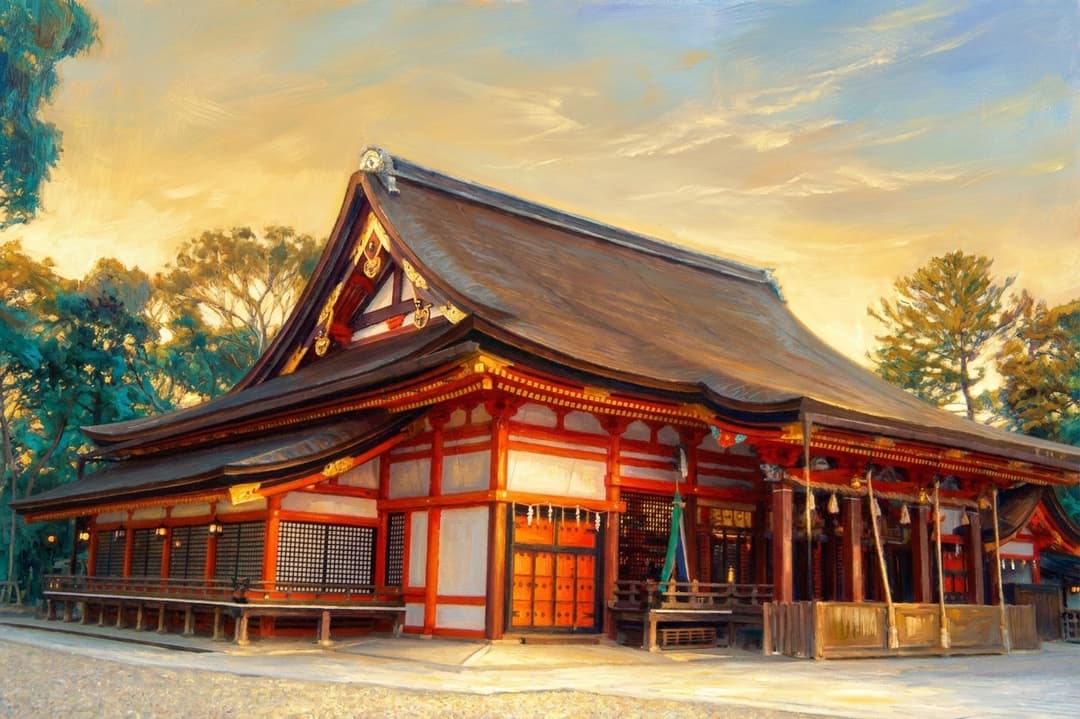
Yasaka Shrine provides an inviting spiritual sanctuary at the threshold of the historic Gion entertainment district. Visitors can wander through vibrant vermilion courtyards day or night beneath illuminated lanterns.
Highlights
- Vibrant Nishiromon West Gate overlooking Shijo-dori
- Hundreds of glowing lanterns decorating the Maidono dance stage
- Sacred beauty water spring at Utsukushigozen-sha sub-shrine
Things to Know
- The grounds remain open 24 hours daily with free public admission
- Amulet offices and stamp counters operate from 9:00 AM to 5:00 PM
- Night bell ringing was recently restricted to preserve evening quiet
Location
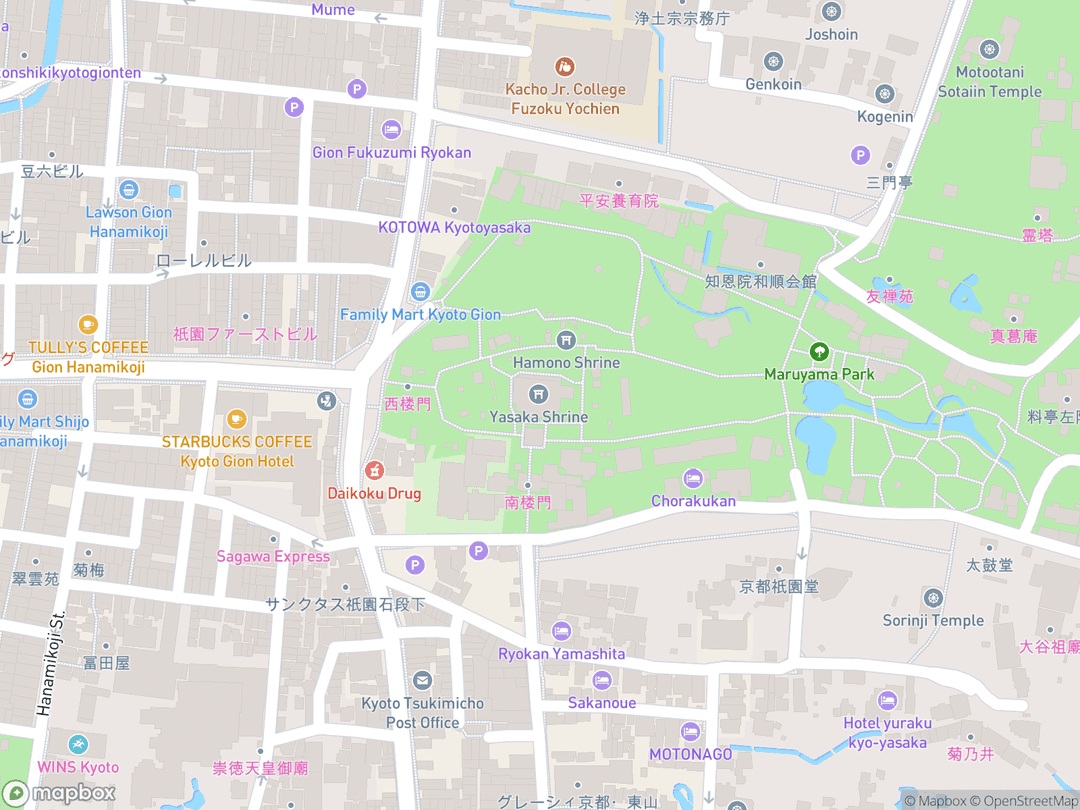
625 Gionmachikitagawa, Higashiyama-ku, Kyoto 605-8311, Japan
Hours: Open 24 hours daily; amulet counter open 9:00 AM to 5:00 PM
Getting There: Five-minute walk from Gion-Shijo Station on the Keihan Main Line or Kyoto City Bus 206 to the Gion stop.
Get DirectionsTips for Your Visit
Evening Exploration
Visit after dusk when the Maidono dance stage lanterns cast a golden glow across the courtyards.
Beauty Water Blessing
Apply a few drops of holy spring water from Utsukushigozen-sha to your skin for purifying blessings.
About
Yasaka Shrine, historically celebrated as Gion Shrine, stands as one of Kyoto's most venerable spiritual sanctuaries at the eastern terminus of Shijo-dori in the historic Gion district. Established in the mid-seventh century, this sacred Shinto sanctuary serves as the head shrine for roughly 2,300 affiliated branch shrines across Japan.
Rooted in Japan's indigenous Shinto traditions, the shrine harmonizes devotion to divine spirits (kami) with cyclical rhythms of purification and renewal. Dedication centers upon Susanoo-no-Mikoto, the powerful deity of storms and the sea, whose divine intervention has protected Kyoto from epidemics and misfortune for centuries.
The shrine complex forms the cultural epicenter of the world-renowned Gion Matsuri, inaugurated during a catastrophic plague in 869 AD. Today, Yasaka Shrine seamlessly unites profound sacred rituals, ancient architectural splendor, and vibrant neighborhood traditions that enliven the spirit of Kyoto.
Gallery
Symbolic Elements
The temple's exterior features intricate carvings, each rich with spiritual meaning:

Vermilion Nishiromon
The commanding two-story western entrance gate marks the spiritual threshold separating city bustle from sacred ground.

Maidono Stage Lanterns
Hundreds of hanging lanterns represent the patron support and continuous prayers of Kyoto's commercial guilds.
Hinoki Bark Roof
Dense layers of natural cypress bark symbolize Shinto reverence for primeval forest materials and organic beauty.

Beauty Water Spring
Natural holy spring water flowing beside Utsukushigozen-sha represents inward purification and aesthetic grace.
Stone Torii Arch
The ancient stone gateway delineates the formal perimeter boundary of divine sanctuary grounds.

Votive Heart Ema
Small wooden prayer plaques inscribed with personal petitions represent living communication between worshippers and kami.

Sacred Suzu Bell Ropes
Braided ropes and resonant metal bells purify human thought and signal reverence when invoking divine attention.
Interesting Facts
Yasaka Shrine serves as the administrative and spiritual head for about 2,300 branch sanctuaries across Japan (Tier A).
Kyoto locals affectionately refer to the complex as 'Gion-san' or 'Yasaka-san' across daily conversations (Tier B).
The famed Gion Matsuri festival celebrated every July traces its sacred roots directly to rituals here in 869 AD (Tier A).
A specialized auxiliary shrine called Utsukushigozen-sha attracts cosmetics professionals and visitors praying for beauty (Tier B).
Okuninushi Shrine within the complex offers specialized prayers and amulets for romantic matchmaking and marriage (Tier B).
Folklore asserts that an ancient Dragon's Cave beneath the sanctuary extends subterraneously across the city to Toji Temple (Tier B).
Rhythmic hand clapping against the eastern hall pillars is reputed to echo like the roar of a celestial dragon (Tier B).
The historic Tadamori Lantern commemorates Emperor Shirakawa discovering a dedicated monk rather than a suspected monster (Tier B).
Common Questions
What deities are enshrined at Yasaka Shrine?
The primary deity is Susanoo-no-Mikoto, enshrined alongside his consort Kushinadahime-no-Mikoto and eight offspring spirits.
Is there an admission fee to enter the shrine grounds?
No, the shrine grounds remain free and accessible to the public at all hours.
Why is the Gion Matsuri celebrated here?
The festival began here in 869 AD as a purification ritual to end a devastating epidemic across Kyoto.
What is unique about the shrine's architecture?
The main hall employs the rare Gion-zukuri style, joining the sanctuary and worship hall beneath one giant cypress-bark roof.
What is the significance of the lanterns on the central stage?
Hundreds of white lanterns honor local Kyoto merchant houses and geiko districts that sponsor shrine ceremonies.
Featured Stories
Quelling the Ninth-Century Plague
869
During the summer of 869, Kyoto suffered an excruciating pestilence that claimed countless citizens across the capital. Emperor Seiwa dispatched imperial courtiers to erect sixty-six halberds at Shinsen-en garden and parade the divine palanquins of Gion Shrine. When the sickness promptly retreated, the grateful capital established the sacred rite as the eternal foundation for the Gion Matsuri.
Source: Yasaka Shrine Historical Archives
The Legend of the Tadamori Lantern
1100s
On a rain-swept autumn night, Emperor Shirakawa believed he saw a horned demon prowling the shadowed woods of Gion Shrine. He dispatched warrior Taira no Tadamori to execute the fiend, but Tadamori carefully inspected the figure first. Discovering merely an aging monk quietly carrying oil to illuminate shrine lanterns, Tadamori's prudent composure won imperial praise and preserved the famed stone lantern.
Source: Shrine Chronicles and Heike Monogatari
The 1868 Restoration Transformation
1868
For nearly a millennium, Buddhist monks and Shinto priests had coexisted within the sanctuary, honoring Susanoo under the syncretic identity of Gozu Tenno. With the Meiji Restoration's formal separation decree, the complex dissolved its Buddhist monastery ties, consecrated pure Shinto rites, and took the official name Yasaka Shrine to inaugurate a modern era of stewardship.
Source: Kyoto Cultural Heritage Records
Timeline
Initial Enshrinement
Shrine chronicles record envoy Irishi dedicating an altar to Susanoo-no-Mikoto.
MilestoneOrigin of Gion Matsuri
Imperial rites performed during a severe epidemic initiate the legendary Gion festival tradition.
EventMonastic Settlement
Buddhist monk Ennyo establishes early syncretic worship practices at the sanctuary site.
MilestoneImperial Messenger List
Emperor Murakami orders imperial envoys to bring periodic offerings directly to the sanctuary.
MilestoneFormal Court Inclusion
Emperor Ichijo formally integrates Gion Shrine into the court list of high guardian shrines.
MilestoneOnin War Revival
Shrine rituals and city processions undergo revitalization after devastation during civil strife.
RenovationWest Tower Gate Rebuilt
The two-story Nishiromon gate is reconstructed into its lasting historical form.
RenovationMain Sanctuary Construction
Shogun Tokugawa Ietsuna finances the monumental reconstruction of the unified main hall.
MilestoneMeiji Separation Decree
The site is formally renamed Yasaka Shrine following the official separation of Shinto and Buddhism.
EventNational Treasure Designation
Japan designates the seventeenth-century main hall as an official National Treasure.
MilestoneNight Bell Preservation
Shrine officials restrict nighttime prayer bell ropes to preserve shrine sanctity and quiet.
EventHistory by Decade
650s–860s — Early Origins and Imperial Intercession
Sacred chronicles trace the enshrinement of Susanoo-no-Mikoto to mid-seventh-century envoys from the Korean kingdom of Goguryeo. The site quickly evolved into a powerful healing sanctuary as Kyoto expanded its urban perimeter. When a devastating plague struck the capital in 869, imperial ceremonies here permanently tied the shrine's deities to citywide protection.
870s–1460s — Medieval Heian and Kamakura Flourishing
Throughout the Heian and Kamakura periods, the complex functioned as Gion-kan'o-ji, blending Esoteric Buddhist rites with native Kami worship. Emperors Murakami and Ichijo added the sanctuary to prestigious court registries, securing ongoing imperial tribute. Merchant guilds in the neighboring district became active patrons, anchoring civic prosperity to shrine festival rites.
1460s–1650s — War, Renewal, and Tokugawa Patronage
The devastating Onin War incinerated vast portions of Kyoto and temporarily suspended the annual festival processions. Resilient townsfolk revived the ceremonies around 1500, reaffirming the shrine's role as the cultural heart of the metropolis. In 1654, Shogun Tokugawa Ietsuna funded the magnificent reconstruction of the main sanctuary complex.
1860s–1940s — Modern Separation and National Prominence
The 1868 Meiji Restoration ordered the strict separation of Shinto and Buddhist practices, prompting the complex to adopt the name Yasaka Shrine. The site was classified as a prestigious imperial shrine (Kanpei-taisha), establishing modern administrative frameworks. Despite rapid urbanization, the shrine maintained its role as the cultural anchor of Higashiyama.
1950s–Present — Postwar Preservation and Global Recognition
In the postwar era, Yasaka Shrine emerged as one of Japan's most recognizable cultural landmarks, drawing millions of pilgrims and international travelers. In 2020, Japan designated the 1654 main hall as a National Treasure in recognition of its unique architectural synthesis. Today, the shrine balances heritage conservation with vibrant ongoing religious worship.
Architecture & Facilities
The architecture of Yasaka Shrine exemplifies the distinct Gion-zukuri (or Yasaka-zukuri) style, an ingenious structural tradition that integrates the inner sanctuary (honden) and the outer worship hall (haiden) beneath a single monumental hip-and-gable roof structure covered in natural cypress bark.
Building Materials
Hinoki Bark Shingles
Thick layers of hand-harvested Japanese cypress bark form the resilient traditional thatched roof.
Vermilion Lacquered Timber
Durable Japanese cedar and cypress framework is protected with vibrant mineral-based vermilion lacquer.
Granite Foundation Stones
Massive dressed local granite blocks elevate structural timber pillars safely above ground moisture.
Brass and Gilded Iron Fittings
Polished metal bands and ornamental fixtures reinforce primary post joints across the worship halls.
Interior Features
Honden (Inner Sanctuary)
The enclosed sacred room houses the concealed seats of Susanoo-no-Mikoto and associated deities.
Haiden (Worship Chamber)
A spacious ceremonial hall allows priests and worshippers to present offerings and prayers.
Maidono (Sacred Dance Stage)
An open pavilion stage situated in the center courtyard hosts classical sacred dances and musical rites.
Noritoya (Invocation Chamber)
The transitional chamber links inner and outer spaces for reciting sacred Shinto liturgies.
Temple Grounds
The forested sacred grounds extend eastward into Maruyama Park, featuring wide gravel avenues, multiple stone torii gates, picturesque sub-shrines, and stone lantern clusters beneath ancient weeping cherry trees.
Additional Facilities
The shrine precinct encompasses administrative offices, an official amulet dispensary, a sacred purification water pavilion, and the modern Tokiwa Hall for cultural banquets and weddings.
Religious Significance
Within Shinto belief and practice, sacred reverence sanctifies the harmonious coexistence of humanity, nature, and divine spirits (kami). Yasaka Shrine serves as a pivotal nexus of spiritual purification, where cosmic balance is periodically restored through ritual cleanliness, offerings, and seasonal festivals that dispel malevolent influences from the community.
To invoke divine protection against pestilence, purify spiritual pollution, and ensure peace, beauty, and communal prosperity.
Sacred Ordinances
Harai (Ritual Purification)
Priestly water and wand rites cleanse physical and spiritual impurities from worshippers before approaching divine presence.
Kagura (Sacred Dance)
Traditional music and ritualized dance performances offered on the Maidono stage entertain and placate the deities.
Norito (Liturgical Invocations)
Formal archaic prayers recited by Shinto priests conveying human petitions and gratitudes to the kami.
Susanoo-no-Mikoto and Disease Dispelling
In classical Shinto mythology, Susanoo-no-Mikoto commands immense power over tempests, oceans, and natural forces. His fearsome vitality makes him uniquely capable of repelling malevolent epidemics and unseen contagions. By establishing his veneration in the capital, early Kyoto leaders harnessed divine potency to protect citizens against catastrophic urban plagues.
Gion Faith and Cosmological Harmony
The Gion belief system historically integrated cosmological awareness with native kami veneration. Periodic purification rituals align seasonal transitions with cosmic balance, shielding human society against discordant natural forces. The vibrant pageantry of the Gion Matsuri demonstrates this continuing quest for civic equilibrium through sacred joy and communal harmony.
Sources & Research
Every fact on Temples.org is backed by verified Sources & Research. Each piece of information is rated by source tier and confidence level.
View All Sources (10)
| Field | Source | Tier | Retrieved |
|---|---|---|---|
| Official Shrine History & Deities | Yasaka Jinja Shrine Office (opens in a new tab) | A | 2026-03-31 |
| Shrine Architecture & National Treasure Record | Japan National Tourism Organization (opens in a new tab) | A | 2026-03-31 |
| National Treasure Main Hall History | Nippon Communications Foundation (opens in a new tab) | B | 2026-03-31 |
| Gion Matsuri Origins & Cultural Heritage | Japan Experience Cultural Group (opens in a new tab) | B | 2026-03-31 |
| Shrine Architecture and History | Japan Guide Travel Media (opens in a new tab) | B | 2026-03-31 |
| Gion Faith and Susanoo Enshrinement | Sacred Destinations Heritage Project (opens in a new tab) | B | 2026-03-31 |
| Gion Historic District & Transit Access | Japan Rail Pass Travel Services (opens in a new tab) | D | 2026-03-31 |
| Higashiyama Cultural Walking Guide | Voyapon Travel Media (opens in a new tab) | D | 2026-03-31 |
| Visitor Etiquette & Night Rules | Tokyo Weekender Cultural News (opens in a new tab) | B | 2026-03-31 |
| Kyoto Shrine Legends & Folklore | WAmazing Japan Sightseeing Guide (opens in a new tab) | D | 2026-03-31 |