Visitor Insights
Visiting Monrovia Liberia Temple
The Monrovia Liberia Temple is currently in its planning and approval phase, meaning construction has not yet commenced and the site is not open to the public. Once completed, the temple grounds will serve as a peaceful, beautifully landscaped sanctuary open to visitors of all faiths. Prior to its formal dedication, a public open house will be held, allowing the general public to tour the sacred interior. Following dedication, the interior will be reserved for faithful members, but the exterior gardens will remain a quiet place for reflection and prayer.
Highlights
- Peaceful, beautifully landscaped grounds featuring native West African flora
- Future public open house offering interior tours to all visitors
- Quiet reflection areas and paved walkways for meditation
- Ancillary facilities planned to accommodate traveling patrons
Things to Know
- Currently in planning stages; interior access is not yet available
- Dry season (November to April) will offer the best weather for outdoor visits
- Respectful attire is encouraged when walking the temple grounds
- Local FamilySearch Centers remain open for public genealogical research
Location
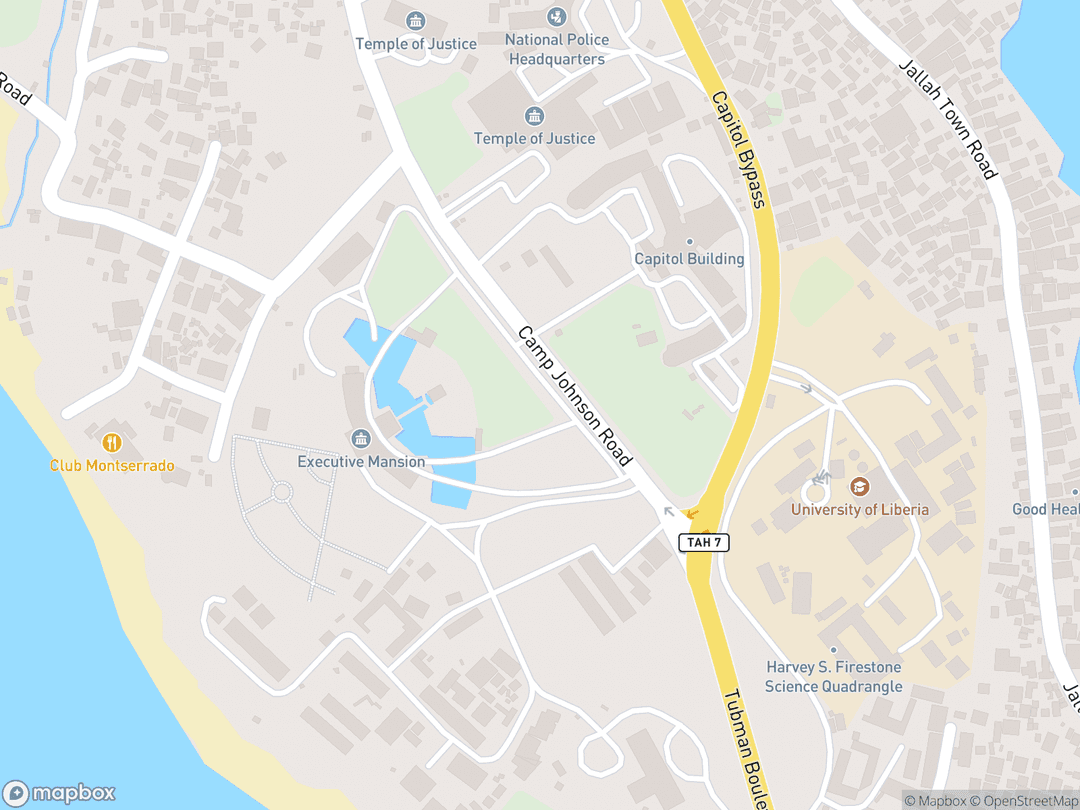
Monrovia, Montserrado, Liberia
Hours: Grounds will be open daily from sunrise to sunset upon completion. Temple services hours to be determined.
Getting There: Located in or near Monrovia, Liberia. Exact transit and parking details will be published once the official site is selected and construction begins.
Get DirectionsTips for Your Visit
Utilize FamilySearch Centers
While waiting for the temple's completion, visit the local FamilySearch Centers in Monrovia to research your family history and prepare names for future temple ordinances.
Watch for Open House Announcements
Keep an eye on official Church news channels for the announcement of the public open house, which is a once-in-a-generation opportunity to see the temple interior.
About
According to The Church of Jesus Christ of Latter-day Saints, the Monrovia Liberia Temple, announced by President Russell M. Nelson on October 3, 2021, is the first temple to be constructed in the West African nation of Liberia. For decades, Liberian Latter-day Saints have demonstrated extraordinary faith, navigating civil unrest and health crises while remaining anchored in their Christian discipleship. The future temple represents the culmination of their devotion, bringing the sacred ordinances of the Restoration directly to a people who have long traveled great distances to access these holy rites.
Rooted in the ancient Abrahamic tradition of establishing a dedicated, physical sanctuary for communion with the Divine, the temple is a literal House of the Lord. Like the biblical tabernacles and temples of old, this modern structure will be set apart from the world as a place of holiness, peace, and instruction. Within its walls, patrons will participate in covenants that bind them to Jesus Christ, reflecting a shared Christian heritage of seeking closer alignment with God's will and securing the promise of eternal life.
The temple's presence in Monrovia is a testament to the rapid maturation of the local Church, which grew from a single letter written by a schoolteacher in 1985 to a thriving community of over 23,000 members. As planning and approval phases progress, the temple stands as a symbol of spiritual refuge and renewal. It promises to serve not only as a center for sacred ordinances but also as a physical landmark of peace and stability in a region that has triumphed over historical adversity.
Interesting Facts
The Monrovia Liberia Temple will be the very first Latter-day Saint temple constructed in the Republic of Liberia.
The Church's presence in Liberia was sparked by a schoolteacher writing a letter to Temple Square after getting the address from a local police officer.
Before official missionaries arrived, early believers organized themselves as 'The Temple of Christ's Church' to study the Book of Mormon.
During the Liberian Civil Wars, local members kept the congregations running entirely on their own after foreign missionaries were evacuated.
Liberian Saints who fled the civil war as refugees helped establish the first LDS congregations in neighboring West African nations.
During the 2013–2015 Ebola outbreak, local members partnered with international agencies to distribute critical food and sanitation supplies.
Despite the COVID-19 pandemic, the Church in Liberia experienced a massive surge in growth, adding 5,000 members between 2020 and 2022.
When the temple was announced in October 2021, local congregations watching the broadcast in Monrovia erupted in tears and cheers of joy.
In February 2024, Apostles Elder Bednar and Elder Kearon presented the President of Liberia with a stained-glass replica of the Tree of Life.
The new temple will eliminate a grueling 700-mile journey to the Accra Ghana Temple, which was financially impossible for many local families.
Common Questions
When will the Monrovia Liberia Temple be completed?
An official groundbreaking and completion date have not yet been announced. The temple is currently in the planning and approval phase, during which architectural designs are finalized and local permits are secured.
Who will be allowed to visit the temple once it is built?
During the public open house prior to dedication, anyone from the public is welcome to tour the temple interior. After dedication, the interior is reserved for members holding a temple recommend, but the beautiful exterior grounds will remain open to all.
Why is the temple significant for Liberian Latter-day Saints?
Currently, members in Liberia must travel over 700 miles to the Accra Ghana Temple to participate in sacred ordinances. The Monrovia temple will eliminate this immense financial and logistical travel burden, allowing local Saints to worship regularly.
What architectural style will the temple have?
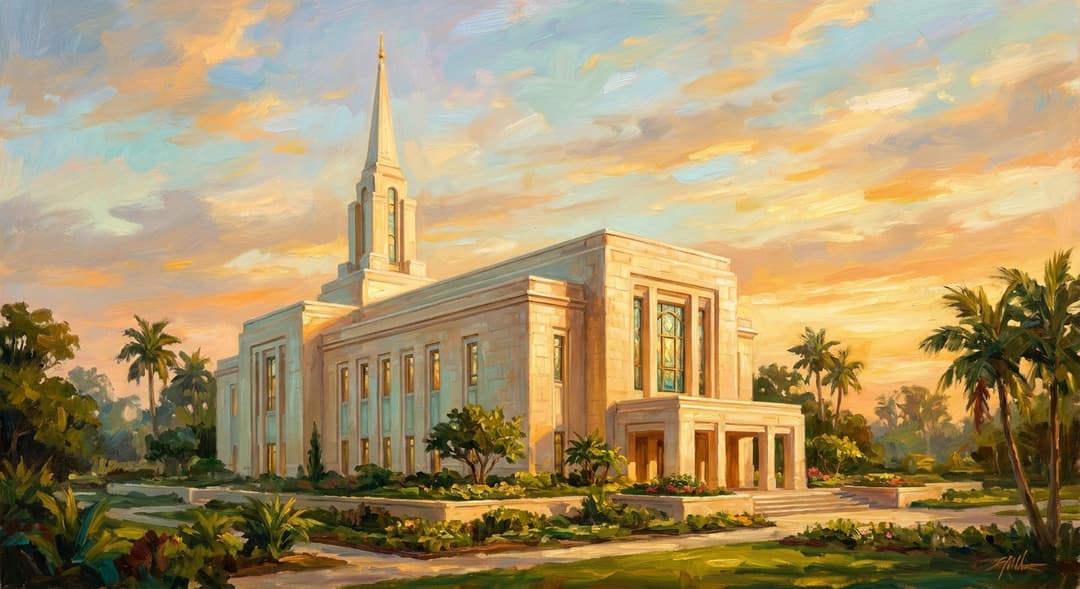
While official renderings have not been released, it is expected to feature a modern, single-spire design adapted to Liberia's tropical climate, utilizing durable materials to withstand high humidity and heavy rainfall.
How can I research my family history before the temple opens?
You can visit the local FamilySearch Centers in Monrovia, such as the Point Four center in New Kru Town. These centers are free and open to the public, offering access to extensive genealogical databases and research assistance.
Featured Stories
A Schoolteacher's Letter to Temple Square
1985
The entire history of the Church in Liberia was set in motion by a single, faithful act of curiosity. In 1985, a schoolteacher in Monrovia named Joe C. Jarwhel met a Liberian police official who had recently returned from a training convention in Salt Lake City, Utah. Intrigued by the official's description of Temple Square, Jarwhel obtained the address and wrote a letter seeking more information about the faith. The letter was forwarded to the Church's International Mission, resulting in a copy of the Book of Mormon being sent to Liberia. This single book sparked an informal study group that laid the foundation for the first official baptisms just two years later.
Source: Church History Department Global Histories
Faith Sustained Through the Fires of Civil War
1989–2003
When the First Liberian Civil War erupted in December 1989, foreign missionaries were evacuated, leaving the infant congregations entirely in the hands of local members. Despite the extreme perils of the conflict, local leaders demonstrated extraordinary resilience, holding services in secret home groups and ministering to scattered members. Many Saints who fled the violence as refugees carried their faith into neighboring countries, helping to establish the first congregations in nations like Ivory Coast and Guinea. When the wars finally ended in 2003, the Church emerged not only intact but spiritually strengthened, with membership having grown significantly during the years of isolation.
Source: Church History Department Global Histories
An Apostolic Gift of the Tree of Life
February 2024
In February 2024, Apostles Elder David A. Bednar and Elder Patrick Kearon traveled to West Africa, making a historic stop in Monrovia to meet with the newly elected President of Liberia, Joseph Boakai. During this high-profile diplomatic meeting, the Apostles presented the President with a personalized copy of the Book of Mormon and a beautiful, custom-crafted stained-glass replica of the Tree of Life. This gift was highly symbolic, representing the spiritual heritage and eternal family values that the future Monrovia temple will bring to the nation. The meeting reinforced the deep mutual respect between the Church and the Liberian government as planning for the temple continues.
Source: Church Newsroom
Timeline
Joe C. Jarwhel Writes to Temple Square
A Liberian schoolteacher obtains the address of Temple Square from a police officer and writes a letter seeking information, initiating the Church's history in Liberia.
EventFirst Formal Doctrinal Teachings Begin
Thomas Peihopa, a Latter-day Saint from New Zealand working in Monrovia, contacts Jarwhel's study group and begins teaching formal doctrines.
EventFirst Full-Time Missionaries Arrive
J. Duffy Palmer and his wife, Jocelyn, arrive in Monrovia as the first full-time missionaries assigned to Liberia.
MilestoneFirst Baptisms and Branches Organized
John Tarsnoh and 47 others are baptized, and the first two branches are organized in the Monrovia area.
EventLiberia Monrovia Mission Organized
The Liberia Monrovia Mission is formally created to oversee the rapid expansion of the faith across the country.
MilestoneFirst District Organized in Monrovia
The first district is organized in Monrovia just before the outbreak of the First Liberian Civil War in December.
EventMission Temporarily Closed Due to Civil War
Due to escalating violence, the Liberia Monrovia Mission is closed, and responsibilities are temporarily transferred to Ghana.
EventFirst Stake Organized in Monrovia
Signifying spiritual resilience, the Monrovia Liberia Stake is created as the first stake in the nation.
MilestoneCivil War Ends and Rebuilding Begins
The Second Liberian Civil War ends, allowing the Church to rebuild damaged meetinghouses and stabilize congregations.
EventLiberia Monrovia Mission Recreated
The Liberia Monrovia Mission is formally recreated, signaling a return to full missionary operations.
MilestoneMissionaries Evacuated Due to Ebola Outbreak
The Church evacuates all 274 missionaries due to the Ebola outbreak; local members step up to lead humanitarian relief efforts.
EventMission Reopened and Missionaries Return
The Liberia Monrovia Mission is reopened as the epidemic subsides, and full-time missionaries return to the country.
EventTemple Announced by President Nelson
During General Conference, President Russell M. Nelson announces the Monrovia Liberia Temple, the first in the nation.
MilestoneApostolic Visit by Elders Bednar and Kearon
Apostles David A. Bednar and Patrick Kearon visit Liberia, meeting with the nation's President and local congregations.
EventLocal Membership Surpasses 23,200
The Church in Liberia continues its rapid growth, reaching over 23,200 members organized across 80 congregations.
MilestoneHistory by Decade
1980s — The Seeds of Restoration
The origins of the Church in Liberia began in 1985 when Joe C. Jarwhel, a schoolteacher in Monrovia, wrote a letter to Temple Square seeking information. This led to the arrival of the Book of Mormon and the formation of an informal study group called the "Temple of Christ's Church." In 1986, a Latter-day Saint from New Zealand, Thomas Peihopa, began teaching the group formal doctrines. The first official missionaries, J. Duffy Palmer and his wife Jocelyn, arrive in July 1987, leading to the baptism of 48 individuals in August. The Liberia Monrovia Mission was organized in 1988 to support the rapid growth.
1990s — Faith Amidst Conflict
The outbreak of the First Liberian Civil War in late 1989 forced the evacuation of foreign missionaries and the temporary closure of the Liberia Monrovia Mission in 1991. Despite the devastating conflict, local Liberian Saints kept the faith alive. Meeting in small home groups and ministering to one another under perilous conditions, they demonstrated remarkable resilience. Many members who fled to neighboring countries as refugees helped establish the first congregations there, spreading the gospel amidst tragedy. By the end of the decade, local membership had grown to nearly 2,700.
2000s — Rebuilding and Reorganization
The turn of the century brought organizational maturity with the creation of the first stake in Liberia—the Monrovia Liberia Stake—in June 2000. The end of the Second Liberian Civil War in 2003 ushered in a period of sustained peace, allowing the Church to rebuild damaged meetinghouses and stabilize congregations. The decade was marked by intensive local leadership training and steady growth, with national membership surpassing 5,000 by 2009.
2010s — Rapid Growth and Humanitarian Service
The Liberia Monrovia Mission was formally recreated in July 2013, signaling a return to full missionary operations. However, the 2014 West Africa Ebola outbreak presented a severe trial, leading to the evacuation of missionaries. Local members stepped up, partnering with international humanitarian organizations to distribute food, sanitation supplies, and hygiene education. Following the epidemic's end, missionaries returned in 2015, and the Church experienced rapid growth, establishing multiple new stakes across the country.
2020s — Prophetic Announcement and Modern Milestone
Despite the global challenges of the COVID-19 pandemic, the Church in Liberia experienced unprecedented growth, adding approximately 5,000 new members in just two years. On October 3, 2021, President Russell M. Nelson announced the Monrovia Liberia Temple, sparking widespread celebration among local Saints. In February 2024, Apostles Elder David A. Bednar and Elder Patrick Kearon visited Liberia, meeting with the nation's President and reinforcing the spiritual significance of the upcoming temple.
Architecture & Facilities
The Monrovia Liberia Temple is anticipated to feature a modern, elegant single-spire design, drawing inspiration from neoclassical and simplified modern architectural traditions. This style emphasizes clean vertical lines, drawing the eye upward to symbolize the soul's ascent toward God and the alignment of earthly covenants with heavenly promises. The design is carefully adapted to harmonize with the local urban landscape of Monrovia while maintaining the sacred, distinct character of a House of the Lord.
Building Materials
Exterior Cladding
High-quality, moisture-resistant granite cladding or precast concrete panels treated to withstand Liberia's intense tropical climate, heavy annual rainfall, and high humidity.
Art Glass Windows
Custom-designed art glass windows that filter the bright West African sunlight, incorporating local symbolic motifs and patterns that reflect the region's natural beauty.
Interior Finishes
Premium materials including imported stone, high-quality hardwoods, and custom brass fixtures, selected to create a reverent, beautiful, and durable sacred space.
Structural Foundation
Reinforced concrete engineering designed to provide long-term structural stability and resistance to seismic activity and regional weathering.
Interior Features
Celestial Room
A quiet, beautifully appointed space symbolizing the peace and harmony of the celestial kingdom, where patrons can pray, meditate, and feel close to God.
Ordinance Rooms
Instruction rooms equipped with beautiful murals and comfortable seating, where patrons participate in the presentation of the plan of salvation.
Sealing Rooms
Sacred rooms featuring an altar where couples and families are united for eternity, symbolizing the binding power of covenants across generations.
Baptistry Font
A sacred font resting upon the backs of twelve sculptured oxen, designed for proxy baptisms on behalf of deceased ancestors.
Temple Grounds
The temple complex will be designed as a spiritual oasis, featuring beautifully landscaped grounds with native Liberian flora, paved walkways, quiet reflection areas, and shade-providing trees to offer a peaceful environment for visitors.
Additional Facilities
The site is expected to accommodate an ancillary building providing patron housing, an arrival center, and administrative offices to support members traveling long distances.
Religious Significance
The Monrovia Liberia Temple is a literal House of the Lord, continuing the ancient biblical tradition of dedicating a physical, sacred space entirely to God. This connects modern worship with the broader Abrahamic heritage of seeking divine communion in a set-apart sanctuary.
The core spiritual purpose of the temple is to provide a sacred space where members can make eternal covenants with God and participate in saving ordinances that bind families together for eternity.
Sacred Ordinances
The Endowment
A sacred ceremony where patrons receive instruction on the plan of salvation and make personal covenants to follow Jesus Christ and keep His commandments.
Eternal Marriage and Sealings
An ordinance performed in sealing rooms where couples and families are united for eternity, enabling family relationships to transcend death.
Baptism for the Dead
A proxy ordinance where members are baptized on behalf of deceased ancestors, ensuring that all of God's children have the opportunity to accept the gospel.
A Covenant Connection to Jesus Christ
Every ordinance and covenant performed within the temple is centered on the Atonement of Jesus Christ. By participating in these sacred rites, members strengthen their personal relationship with the Savior, seeking to embody His teachings of love, service, and redemption in their daily lives.
The Gathering of Israel in West Africa
The establishment of a temple in Monrovia represents a significant milestone in the gathering of Israel. It provides local Saints with direct access to the highest blessings of the Restoration, empowering them to build up the kingdom of God in their homeland.
Sources & Research
Every fact on Temples.org is backed by verified Sources & Research. Each piece of information is rated by source tier and confidence level.
View All Sources (3)
| Field | Source | Tier | Retrieved |
|---|---|---|---|
| Timeline & Historical Milestones | The Church of Jesus Christ of Latter-day Saints (opens in a new tab) | A | 2026-02-19 |
| Visitor Insights & Current Status | ChurchofJesusChristTemples.org (opens in a new tab) | C | 2026-02-19 |
| Timeline & Historical Milestones | ChurchofJesusChristTemples.org (opens in a new tab) | C | 2026-02-19 |