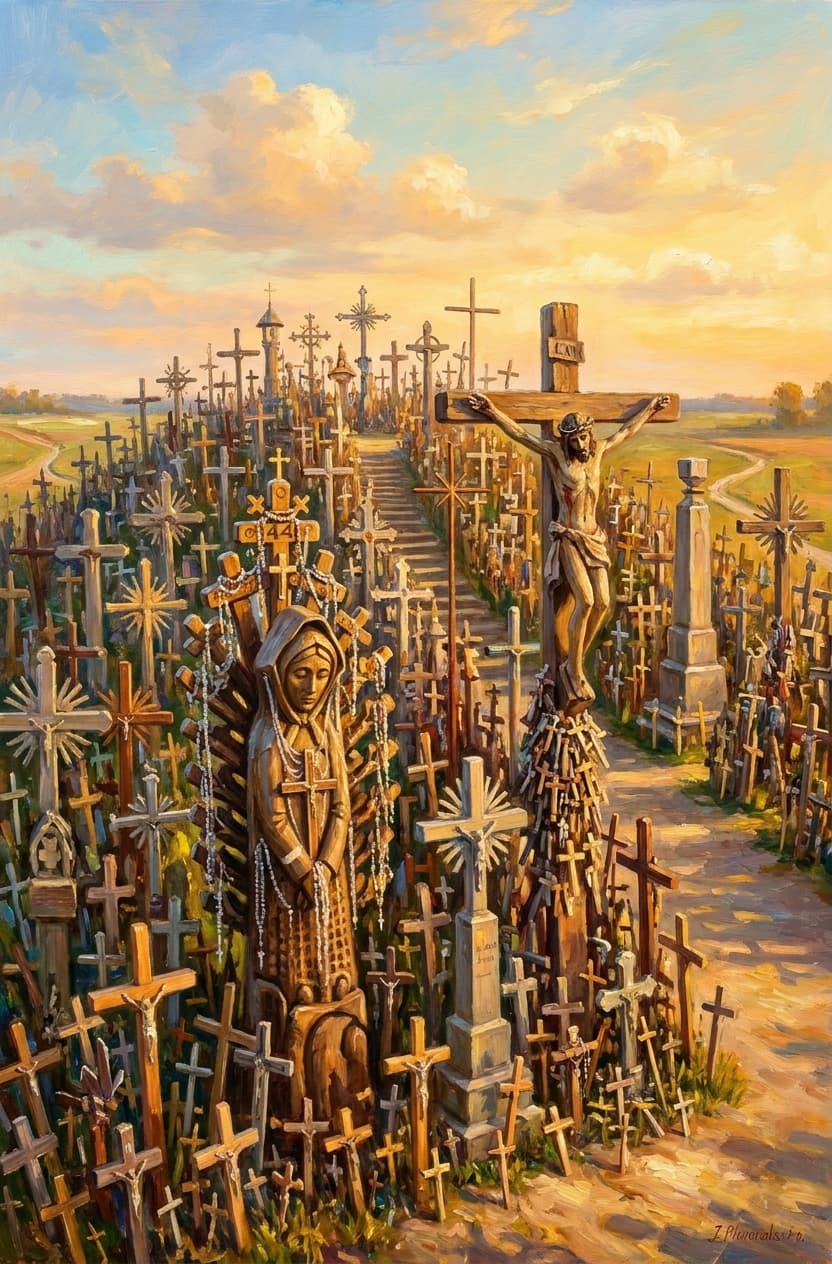
Visitor Insights
Visiting Hill of Crosses
The sanctuary provides an awe-inspiring sensory experience where thousands of hanging rosaries click in the Baltic wind. Visitors encounter an outdoor holy mound welcoming continuous reflection, prayer, and personal votive offerings.
Highlights
- Ascend the central timber staircase flanked by hundreds of thousands of devotional crosses.
- Contemplate the Papal Crucifix blessed and gifted by Pope John Paul II in 1993.
- Visit the nearby Franciscan Hermitage featuring a glass altar wall framing the holy hill.
- Experience the UNESCO-recognized art of Lithuanian cross-crafting (kryždirbystė).
Things to Know
- Dress warmly with windproof layers as northern Lithuanian plains can be brisk.
- Wear comfortable, sturdy walking shoes for wooden stairways and natural dirt footpaths.
- Maintain respectful quiet throughout the grounds as an active Catholic sanctuary.
Location
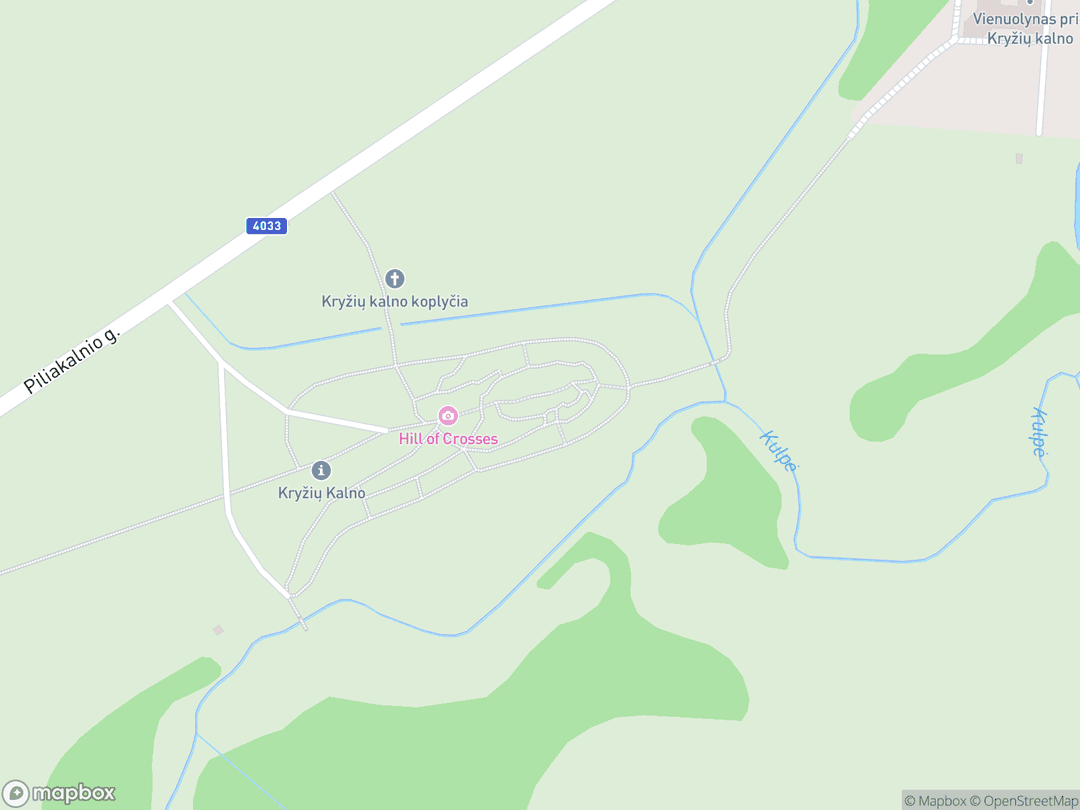
Jurgaičių kaimas, Meškuičių seniūnija, LT-81439 Šiaulių rajonas, Lithuania
Hours: Open 24 hours daily, 365 days a year; Visitor Centre open daily 9:00 AM to 6:00 PM.
Getting There: Located 12 km north of Šiauliai along the A12 highway; reachable by regional bus to Domantai stop followed by a 2 km walk.
Get DirectionsTips for Your Visit
Bringing a Cross
Pilgrims may bring their own wooden crosses or purchase handcrafted pieces at the visitor center to place on the hill.
Acoustic Whispers
Pause along the pathways on breezy afternoons to listen to the resonant clicking of wooden and metal rosary beads.
Franciscan Chapel
Walk 300 meters southwest along the paved path to participate in quiet contemplation at the Franciscan Hermitage.
About
The Hill of Crosses (Kryžių kalnas) stands as one of the Christian world's most evocative open-air pilgrimage sanctuaries. Located atop a medieval earthwork mound in northern Lithuania, it embodies the ancient Abrahamic tradition of turning elevated ground into a place of covenant, lamentation, and divine encounter. Over two centuries of imperial occupation and totalitarian oppression, believers transfigured this Iron Age hill fort into a living forest of crosses.
Within Roman Catholic devotion, the site represents the pinnacle of votive offering (ex-voto) and the Communion of Saints. Rather than a formal cathedral designed by an architect, the sanctuary was built entirely by ordinary pilgrims who planted crucifixes in remembrance of unburied insurgents, deported families, and personal prayers for healing. Each cross serves as a tactile petition, turning an instrument of imperial execution into an enduring symbol of redemption and resurrection.
Despite multiple covert attempts by Soviet authorities to bulldoze and incinerate the mound between 1961 and 1975, pilgrims consistently returned under cover of night to re-erect their markers of faith. Pope John Paul II sanctified this witness during his apostolic visit on September 7, 1993, consecrating the hill as a universal symbol of spiritual resilience. Today, Lithuania's cross-crafting tradition is preserved here as a UNESCO Masterpiece of Intangible Cultural Heritage.
Gallery
Symbolic Elements
The temple's exterior features intricate carvings, each rich with spiritual meaning:
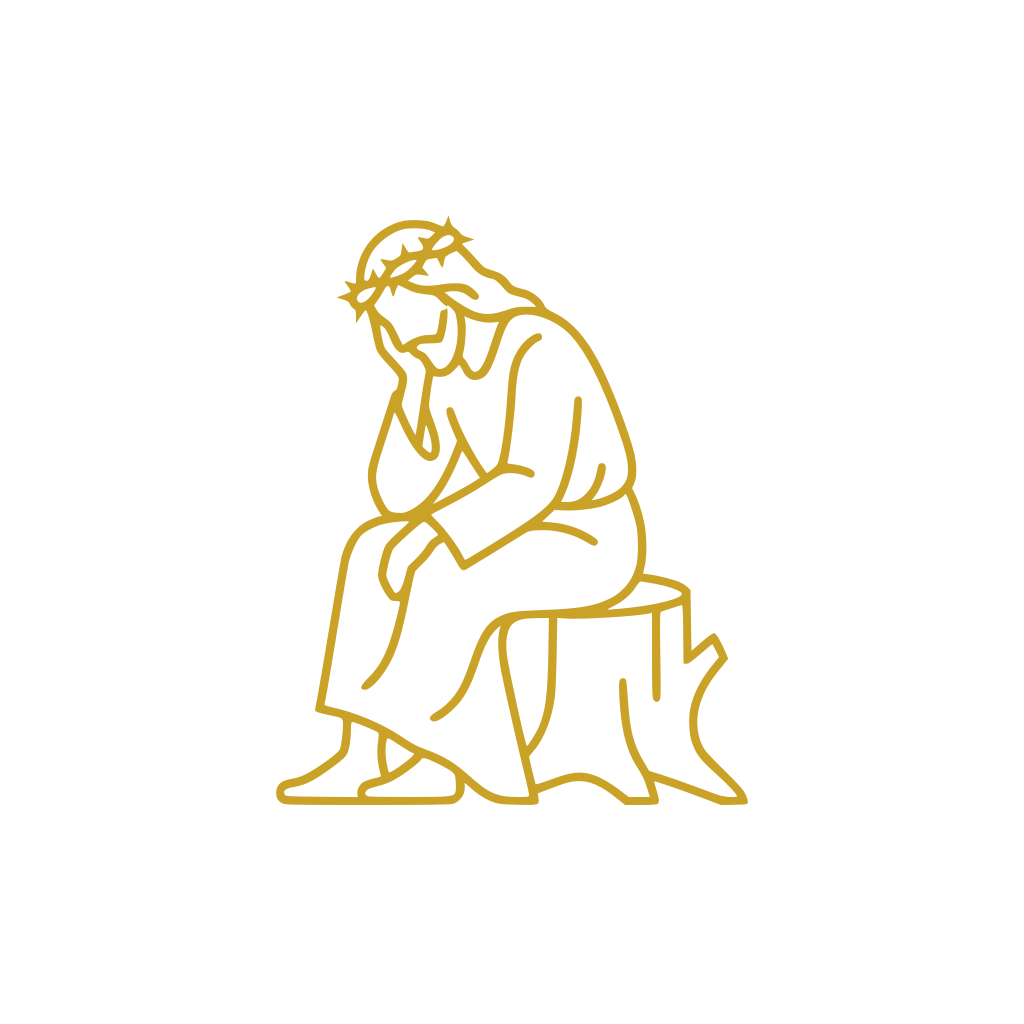
Rūpintojėlis (Pensive Christ)
Depicts the weary, thorn-crowned Christ seated upon a stump, contemplating the trials and griefs of humanity.
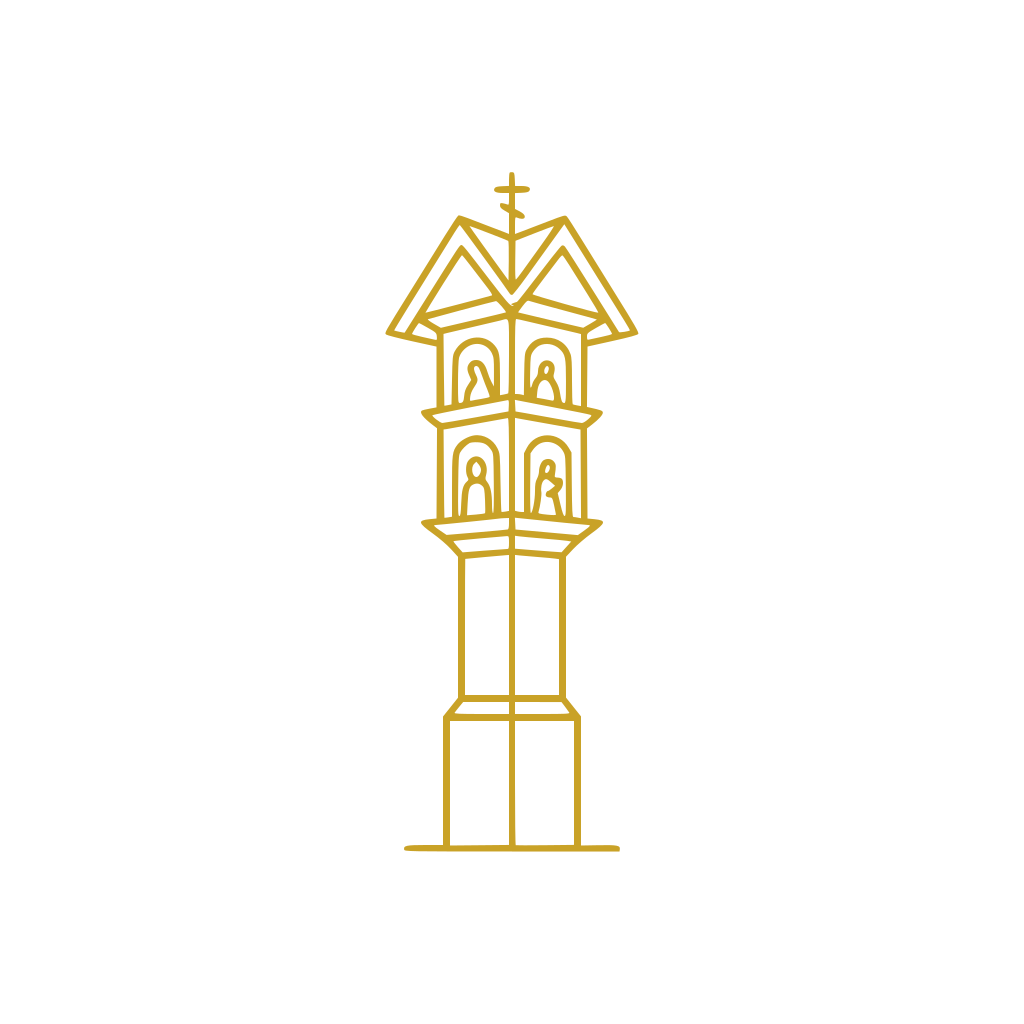
Koplytstulpis (Pillar Shrine)
A traditional multi-tiered wooden column housing miniature wooden carvings of patron saints and Mary.
Stogastulpis (Roof-Pillar)
A tall carved pole topped with layered umbrella-style conical roofs protecting sacred folk statuettes.
Saulutė (Sunburst Cross)
A wrought-iron finial combining Christian cruciform geometry with radiant Baltic solar line work.
Papal Crucifix
A large oak and bronze crucifix set on granite, commemorating Pope John Paul II's 1993 apostolic blessing.
Hanging Rosary Festoons
Draped strings of devotional beads representing the unceasing prayers of the faithful to the Virgin Mary.
Ex-Voto Votive Plaques
Hammered brass and carved plates testifying to miraculous healings and divine intercession across generations.
Deportee Memorial Crosses
Carved timber posts inscribed with Siberian Gulag camp locations honoring Lithuanian freedom fighters.
Interesting Facts
Soviet authorities bulldozed and incinerated the sanctuary four times, but locals replanted crosses overnight every time (Tier A).
The ancient folk craft of Lithuanian cross-crafting (*kryždirbystė*) is inscribed on UNESCO's Intangible Heritage list (Tier B).
Breezes flowing through hundreds of thousands of suspended rosaries create a continuous whispering acoustic sound (Tier A).
A cross thanking God for saving Pope John Paul II from assassination was secretly erected twelve years before his visit (Tier A).
Pope John Paul II declared that Europe is spiritually united between the holy mounts of La Verna in Italy and Kryžių kalnas (Tier A).
Folk legends say an ancient church swallowed by the earth during a storm rings its bells beneath the hill at midnight (Tier C).
In the late 1970s Soviet engineers drew plans to flood the hill under an artificial reservoir, but the project failed (Tier B).
Dozens of sovereign nations and international armed forces have erected formal diplomatic memorial crosses on the site (Tier A).
Common Questions
Why do pilgrims leave crosses on the hill?
Pilgrims place crosses as Catholic votive offerings (ex-voto) expressing gratitude, petitioning God for healing, or honoring deceased loved ones.
How many crosses are currently on the hill?
Surveys estimate between 200,000 and 250,000 crosses, shrines, crucifixes, and hanging rosaries covering the mound.
Is there an admission fee to visit?
Access to the hill and Franciscan chapel is completely free, with a modest municipal parking fee applied for maintenance.
Can anyone place a cross on the hill?
Yes, visitors of any background are welcome to plant personal wooden crosses respectfully within designated areas.
What is the best time of year to visit?
May through October provides pleasant walking weather, while the major feast of the hill takes place on the last Sunday of July.
Featured Stories
The Night Crosses of Operation Defiance
April 5, 1961
When Soviet military bulldozers leveled five thousand crosses in April 1961, authorities believed public faith was extinguished. Under cover of darkness, local parishioners trekked across spring marshlands to plant fresh crucifixes in the fresh tracks. By sunrise, the mound had begun its miraculous rebirth as an unyielding altar of spiritual resistance.
Source: Diocese of Šiauliai Heritage Archives
The Assassin Thanksgiving Vow
May 13, 1981
Immediately following the assassination attempt on Pope John Paul II in Rome, Lithuanian Catholics clandestinely erected a large memorial cross upon the hill. Inscribed with prayers of gratitude to Our Lady of Fátima for preserving the pontiff's life, the cross stood undisturbed through the regime's twilight. Twelve years later, the Pope himself knelt in prayer before this very tribute.
Source: Vatican Apostolic Pilgrimage Records
The Glass Window of St. Francis
July 8, 2000
Responding directly to Pope John Paul II's request, Franciscan friars built a quiet hermitage three hundred meters from the mound. In place of a traditional painted altarpiece, architects installed a towering glass wall behind the sanctuary altar. Every celebration of the Holy Mass visually incorporates the silhouette of the Hill of Crosses into the Eucharistic liturgy.
Source: Lithuanian Franciscan Province of St. Casimir
Timeline
Medieval Castle Destroyed
Crusader forces burn the wooden Semigallian fortress on the Jurgaičiai mound to the ground.
EventFirst Memorial Crosses
Relatives erect crosses to honor fallen insurgents denied burial after the failed November Uprising.
MilestoneFirst Written Documentation
Šiauliai treasurer Maurikijus Griškevičius records twenty standing crosses erected following miraculous healings.
EventDefiance of Tsarist Ban
Locals plant crosses under cover of night after Tsarist decrees ban public roadside Catholic crosses.
EventDevotional Flourishing
The lifting of Tsarist religious bans sparks an influx of large folk-carved crosses upon the summit.
MilestoneForest Brothers & Deportees
Believers place secret crosses memorializing anti-Soviet partisans and thousands exiled to Siberian gulags.
EventSoviet Bulldozing Operation
Soviet forces bulldoze and burn more than five thousand crosses in an effort to destroy the site.
EventNighttime Resurrections
After four major Soviet demolitions, devout citizens rebuild the forest of crosses repeatedly under cover of darkness.
MilestoneSinging Revolution Census
Volunteers tally fifty-five thousand crosses as religious freedom is reclaimed during national resurgence.
EventPapal Visit of John Paul II
Pope John Paul II celebrates Holy Mass for one hundred thousand pilgrims and blesses a great wooden crucifix.
DedicationFranciscan Hermitage Consecrated
The monastery requested by the Pope is consecrated with a cornerstone blessed from Mount La Verna.
DedicationUNESCO Heritage Inscription
Lithuanian cross-crafting and symbolism is proclaimed a Masterpiece of Oral and Intangible Heritage of Humanity.
MilestoneHistory by Decade
1100s–1300s — The Medieval Border Fortress
The Jurgaičiai mound served as an essential fortified hill fort overlooking the marshy Kulpė River valley. Built by local Semigallian and Samogitian tribes, it defended the Baltic frontier against aggressive raids by Livonian and Teutonic crusaders until the fortress was burned in 1348.
1830s–1860s — The Crucible of Insurgency
Following the failed November Uprising of 1831 and January Uprising of 1863, Tsarist authorities forbade proper Christian burials for fallen Lithuanian rebels. Families secretly planted memorial crosses on the abandoned fortress mound, establishing the site as a sanctuary of mourning and hope.
1890s–1910s — Resistance to Tsarist Russification
Despite Tsarist confiscations and bans on Catholic wayside shrines, hundreds of crosses rose across the summit through clandestine nighttime efforts. The lifting of imperial publishing and worship bans in 1904 opened the way for master woodcarvers to transform the hill into an artistic landmark.
1920s–1930s — Independence and National Pilgrimage
During Lithuania's interwar independence, the Hill of Crosses emerged as a premier national pilgrimage destination. Open-air Eucharistic liturgies and celebrations on the feast of the Exaltation of the Holy Cross drew tens of thousands of faithful citizens from every province.
1940s–1950s — Gulag Deportations and Forest Brothers
Amid the terror of Soviet re-occupation, mass Siberian deportations, and partisan warfare, the mound became a sacred memorial cemetery. Relatives planted crosses marked with the names of exiled loved ones and fallen Forest Brothers who had no known graves in their homeland.
1960s–1970s — Soviet Bulldozers and Night Resurrections
Soviet authorities launched extensive operations to raze, incinerate, and bulldoze the sanctuary in 1961, 1973, and 1975. Undeterred by KGB surveillance, devout believers continuously rebuilt the holy site by planting hundreds of crosses under cover of night.
1980s — The Singing Revolution
As the Baltic independence movement gathered strength, Lithuanians openly gathered on the hill to restore its monuments without fear of arrest. By 1989, an official municipal inventory tallied over fifty-five thousand standing and miniature crosses crowning the mound.
1990s — Apostolic Blessing and National Independence
Following the restoration of Lithuanian statehood, Pope John Paul II visited the mound on September 7, 1993, declaring it a profound witness of faith to Europe. The Lithuanian government designated the hill and its archaeological buffer zone as a National Cultural Monument.
2000s–Present — Global UNESCO Heritage Sanctuary
In 2001, UNESCO inscribed traditional Lithuanian cross-crafting on its global representative intangible heritage list. The consecration of the nearby Franciscan Hermitage and continuous pilgrim offerings have preserved this dynamic landscape of prayer into the twenty-first century.
Architecture & Facilities
The Hill of Crosses represents a vernacular Catholic open-air landscape sanctuary defined by participatory folk architecture and Baltic cross-crafting (kryždirbystė). Lacking formal structural walls, its soaring architectural impact is created collectively by hundreds of thousands of hand-crafted timber, metal, and stone crosses interwoven over natural glacial topography.
Building Materials
Lithuanian Bog Oak and Pine
Dense native timbers hand-hewn by regional cross-crafters to form weather-resistant monumental wayside pillars.
Hand-Forged Wrought Iron
Artisanal blacksmith metalwork shaping decorative openwork solar aureoles and radiant finials (saulutės).
Polished Red Granite
Durable foundation stone quarried to support monumental plinths including the 1993 Papal Crucifix base.
Devotional Glass and Amber
Personal rosaries and amber pendants festooned across timber arms that catch the shifting northern light.
Interior Features
Central Pilgrim Boardwalk
Treated timber walkway and staircase providing organized circulation through the dense forest of devotional crosses.
Summit Ridge Saddles
High earthen crests where monumental multi-tiered shrines converge in layered tiers reaching four meters high.
Franciscan Hermitage Chapel
Modern cloistered sanctuary featuring a massive panoramic glass wall framing the sacred mound behind the altar.
Hermitage Meditative Cloister
Peaceful red-brick monastic courtyard providing sixteen cells for contemplative spiritual retreat.
Temple Grounds
The 0.46-hectare sacred archaeological core is flanked by the meandering Kulpė River, featuring scenic walkways, meadow buffer zones, and a modern municipal visitor complex.
Additional Facilities
The nearby visitor center provides informational exhibits, gift shops offering handcrafted crosses, accessible parking, and sanitary facilities.
Religious Significance
The Hill of Crosses occupies a sacred position within Abrahamic theology and Catholic spirituality, manifesting how a physical hill can become an altar of covenant and collective memory. Rooted in the Christian understanding of the Crucifixion as the ultimate triumph of life over death, the sanctuary unites personal human suffering with the redemptive sacrifice of Jesus Christ.
To offer a consecrated space for Catholic votive prayer, intercession for departed souls, and national thanksgiving for spiritual freedom.
Sacred Ordinances
Votive Offering (Ex-Voto)
The placement of hand-carried crosses, plaques, and rosaries expressing petitions, penance, or gratitude to God.
The Holy Mass
Eucharistic celebrations conducted on open-air altars during major feasts and inside the Franciscan Hermitage chapel.
Intercession for the Dead
Devotional prayers for departed ancestors, unburied insurgents, and deceased deportees through the Communion of Saints.
Kryždirbystė as Living Liturgy
The traditional craft of woodcarving in Lithuania functions as an authentic spiritual discipline. By synthesizing Catholic cruciform iconography with historic Baltic tree motifs, carvers transform ordinary timber into a sacramental witness of hope and cosmic renewal.
The Papal Hermitage of St. Francis
Established under the patronage of Pope John Paul II, the Franciscan Hermitage serves as a spiritual bridge connecting Lithuania to the holy mountain of La Verna in Italy, maintaining continuous contemplative intercession for European peace.
Sources & Research
Every fact on Temples.org is backed by verified Sources & Research. Each piece of information is rated by source tier and confidence level.
View All Sources (8)
| Field | Source | Tier | Retrieved |
|---|---|---|---|
| About & Historical Background | Diocese of Šiauliai (opens in a new tab) | A | 2026-02-18 |
| Religious Significance & Hermitage | Order of Friars Minor Lithuanian Province of St. Casimir (opens in a new tab) | A | 2026-02-18 |
| Papal Visit of John Paul II | The Holy See (opens in a new tab) | A | 2026-02-18 |
| National Monument Registry | Department of Cultural Heritage under the Ministry of Culture of Lithuania (opens in a new tab) | A | 2026-02-18 |
| Intangible Cultural Heritage Inscription | UNESCO Intangible Cultural Heritage (opens in a new tab) | B | 2026-02-18 |
| Ethnographic & Architectural Survey | Vilnius University Press (opens in a new tab) | B | 2026-02-18 |
| Historical Timeline & Archeology | Vytautas Magnus University (opens in a new tab) | B | 2026-02-18 |
| Visitor Information & Regional Administration | Šiauliai Tourism Information Centre (opens in a new tab) | D | 2026-02-18 |