Visitor Insights
Visiting Sri Subramaniar Swamy Devasthanam, Batu Caves
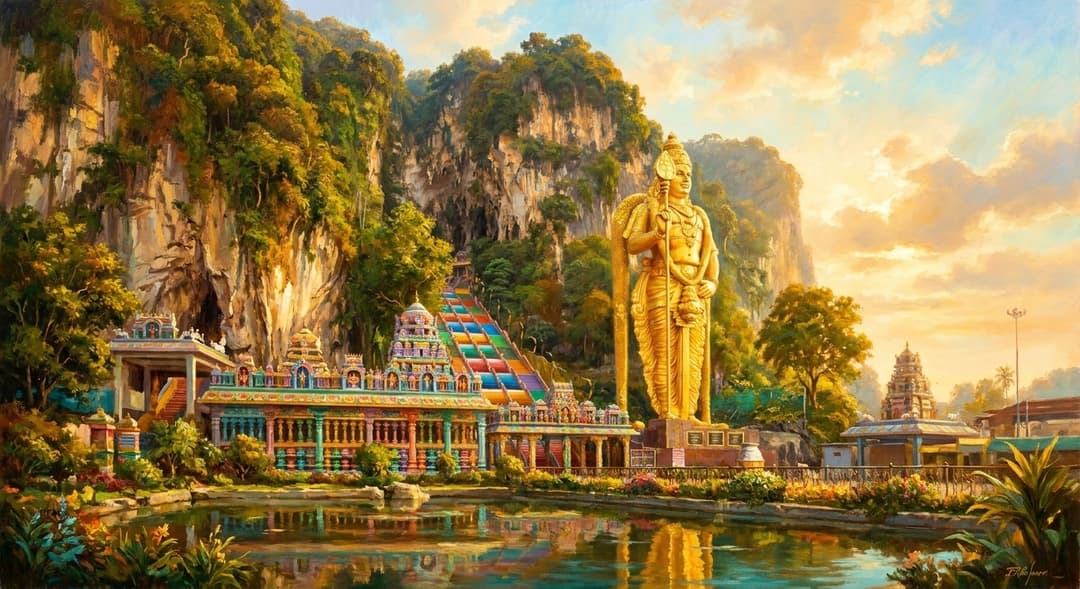
Visiting Batu Caves offers an encounter with living Hindu devotion framed by towering 400-million-year-old limestone formations. Pilgrims and travelers scale the 272 vibrant steps to reach cavernous sanctums filled with burning incense, chanting, and classical Dravidian shrines. Early morning visits ensure cooler temperatures and an intimate experience of morning rituals before crowds arrive.
Highlights
- Ascending the 272 vibrant rainbow-hued steps flanked by limestone karst precipices.
- Beholding the 42.7-meter gilded statue of Lord Murugan at the base plaza.
- Experiencing morning puja ceremonies inside the 100-meter-high Cathedral Cave.
- Exploring the colorful Ramayana Cave dioramas fronted by the 15-meter Hanuman statue.
Things to Know
- Shoulders and knees must remain covered; sarongs are available for hire at the entrance.
- Macaque monkeys forage along the staircase and will snatch visible food, drinks, and loose items.
- Footwear is permitted on the steps but must be removed before entering sanctum shrines.
- Climbing 272 steps in tropical humidity requires adequate hydration and physical pacing.
Location
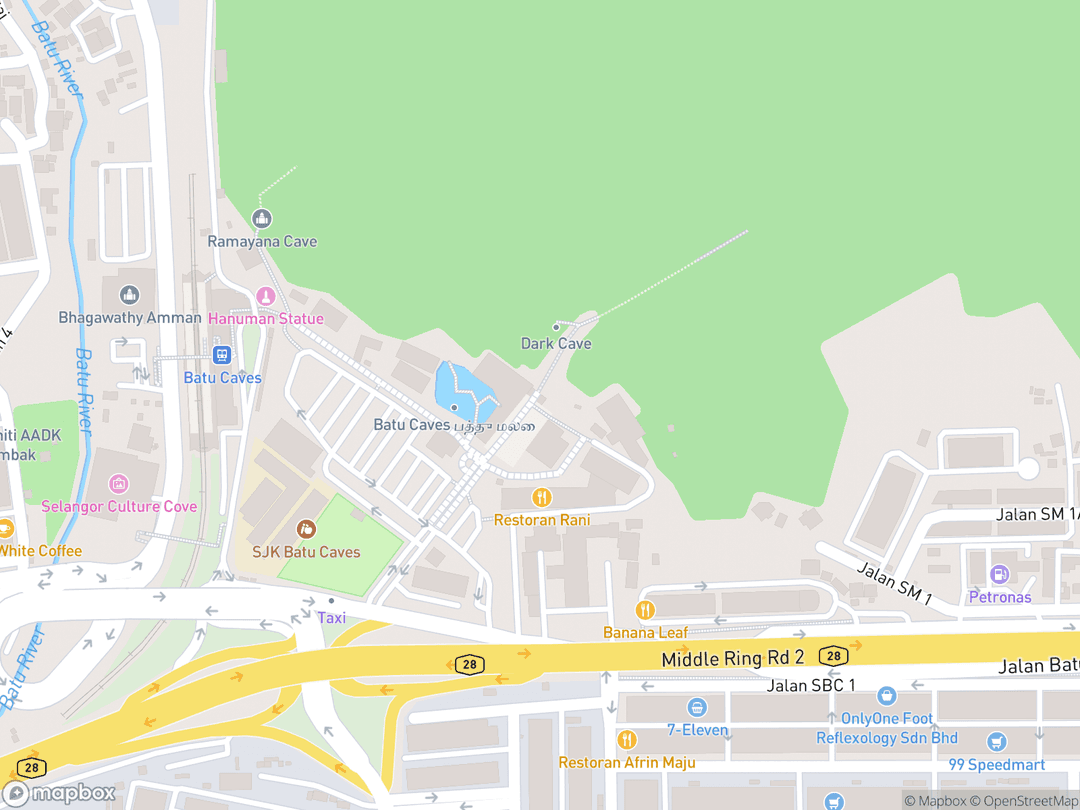
Gombak, 68100 Batu Caves, Selangor, Malaysia
Hours: Complex and Temple Cave open daily from 6:00 AM to 9:00 PM.
Getting There: Directly accessible via the KTM Komuter train from KL Sentral to Batu Caves Komuter Station.
Get DirectionsTips for Your Visit
Arrive at Dawn
Reach the staircase by 7:00 AM to avoid direct tropical sun and observe traditional morning prayers.
Secure Belongings from Monkeys
Stow water bottles, sunglasses, and snacks inside zipped backpacks to avoid opportunistic macaques.
Respect Sacred Thresholds
Remove footwear outside inner shrine enclosures within the upper cavern before approaching priests.
Dress Modestly
Wear clothing extending past shoulders and knees to comply with temple sanctuary guidelines.
About
Set within a 400-million-year-old limestone hill in Selangor, Malaysia, Batu Caves is one of the most revered Hindu pilgrimage shrines outside India. The temple complex honors Lord Murugan, expressing the sacred topography of Dharmic spiritual traditions where natural caverns symbolize interior sanctuaries.
Established as a Hindu sacred site in 1891 by Tamil community leader K. Thamboosamy Pillay, the cavern entrance mirrored the sacred profile of the divine Vel. Over a century, the site evolved into a global pilgrimage destination, framed by a colossal golden statue and a 272-step staircase.
Today, the complex serves as an active place of daily Shaivite and Kaumaram worship, welcoming millions during the annual Thaipusam festival. The soaring karst chambers combine classical Dravidian craftsmanship with tropical geology, symbolizing the spiritual ascent of the soul toward divine realization.
Gallery
Symbolic Elements
The temple's exterior features intricate carvings, each rich with spiritual meaning:

The Vel (Divine Lance)
Represents transcendent wisdom piercing through cosmic illusion and ignorance.

Mayil (The Sacred Peacock)
Serves as the divine mount of Lord Murugan, symbolizing ego destruction and cosmic balance.

Seval (The Rooster Standard)
Adorns the deity's battle flag, signifying spiritual awakening and the herald of divine dawn.

The 272 Ascent Steps
Embodies the arduous spiritual climb required to transcend worldly attachments before reaching divinity.
Karst Skylight (Doline)
Illuminates the subterranean interior, symbolizing the descent of divine illumination into the soul.

Rainbow Color Spectrum
Expresses divine vibrancy and an inclusive welcome to all seekers climbing into the sanctuary.
Lord Hanuman Statue
Stands at the Ramayana Cave portal to represent selfless devotion and protective strength.

Kavadi (Ascetic Offering)
Carried by pilgrims during Thaipusam as a physical manifestation of debt and spiritual sacrifice.
Interesting Facts
The limestone formations comprising Batu Caves are approximately 400 million years old, far predating the evolution of dinosaurs. (Tier B)
Standing 42.7 meters tall, the gilded entrance monument was the tallest statue of Lord Murugan in the world from 2006 to 2022. (Tier A)
Construction of the entrance statue required 350 tons of steel, 1,550 cubic meters of concrete, and 300 liters of gold paint from Thailand. (Tier A)
The ascent has evolved through three generations, from bamboo ladders to a 1920 wooden flight and the 1940 concrete staircase. (Tier A)
In August 2018, the 272 steps were transformed with a vibrant 13-shade rainbow paint scheme ahead of the Kumbhabhishekam ceremony. (Tier C)
The adjacent Dark Cave shelters the critically endangered Liphistius batuensis trapdoor spider, an ancient living fossil found nowhere else. (Tier B)
Prior to Hindu consecration in 1891, Chinese agriculturalists commercially harvested centuries of accumulated bat guano for fertilizer. (Tier B)
The annual Thaipusam pilgrimage begins with an eight-hour barefoot procession accompanying a consecrated silver chariot from Kuala Lumpur. (Tier A)
Welcoming visitors to the Ramayana Cave on the western edge of the site is an imposing 15-meter statue of Lord Hanuman. (Tier C)
Common Questions
Is there an admission fee to enter the main Temple Cave?
Admission to the main Temple Cave is free, though modest fees apply for Ramayana Cave and Cave Villa.
What is the dress code for visiting Batu Caves?
Visitors must cover their shoulders and knees, and footwear must be removed before entering inner shrine areas.
How many steps lead up into the main cavern?
Visitors must climb 272 concrete steps to reach the entrance of Cathedral Cave.
What is the best way to travel to Batu Caves from Kuala Lumpur?
The KTM Komuter train runs directly from KL Sentral to the Batu Caves Komuter Station at the entrance.
Why are monkeys common along the staircase?
Native crab-eating macaques live on the limestone cliffs and forage along the staircase for food.
Featured Stories
Thamboosamy Pillay's Sacred Vision
1891
While exploring the Gombak limestone hills in 1891, Tamil merchant-leader K. Thamboosamy Pillay noted that the soaring cavern mouth resembled the pointed head of Lord Murugan's sacred lance. Inspired by this natural resonance, he consecrated the cave as an enduring mountain sanctuary for Tamil laborers across the peninsula. His installation of the consecrated Vel transformed an ancient geological formation into a major global spiritual hub.
Source: Historical Records of the Sri Maha Mariamman Temple Devasthanam
Erecting the Colossal Murugan Monument
January 29, 2006
Constructing the 42.7-meter gilded monument at the foot of the cliff required three years of relentless engineering. Chief sculptor R. Radhakrishnan directed 15 master artisans from India, assembling 350 tons of structural steel and 1,550 cubic meters of concrete. Unveiled during Thaipusam 2006, the radiant golden icon established the sanctuary as an unmistakable beacon of Hindu heritage in Southeast Asia.
Source: Sri Maha Mariamman Devasthanam Engineering Archives
The Inaugural Thaipusam Chariot Pilgrimage
1892
In 1892, devotees launched the first formal Thaipusam procession, carrying Murugan's sacred image 15 kilometers on foot from central Kuala Lumpur. Escorted by traditional percussion and oil lanterns through untamed jungle paths, pilgrims reached the limestone threshold after a rigorous overnight journey. This sacred trek established an enduring annual tradition that now draws over a million pilgrims each year.
Source: Malaysian Tamil Heritage Documentation
Timeline
Scientific Documentation
William Temple Hornaday and British colonial officials survey and scientifically map the Batu Caves karst system.
MilestoneSanctum Consecration
Merchant-leader K. Thamboosamy Pillay formally consecrates Batu Caves as a sacred Hindu shrine honoring Lord Murugan.
DedicationFirst Thaipusam Gathering
Devotees observe the inaugural Thaipusam festival at the cavern with a ceremonial chariot procession from Kuala Lumpur.
EventWooden Staircase Construction
The temple committee constructs the first wooden staircase of 272 steps up the sheer limestone cliff face.
MilestoneConcrete Staircase Inauguration
A permanent reinforced concrete dual staircase opens to accommodate surging numbers of visiting pilgrims.
MilestoneElectrification of Cathedral Cave
Electrical wiring and floodlighting are installed across Cathedral Cave to illuminate subterranean evening rituals.
RenovationEcological Conservation Initiatives
Malaysian conservationists establish habitat protection policies for troglobitic species inhabiting the adjacent Dark Cave.
MilestoneCentenary of Thaipusam
The devasthanam commemorates the centenary of Thaipusam celebrations at the limestone sanctuary.
EventMonument Construction Commences
Master sculptors from India begin structural engineering work on the monumental Lord Murugan statue at the forecourt.
component.timeline.groundbreakingColossal Murugan Unveiling
Officials consecrate the 42.7-meter gilded Lord Murugan statue during the annual Thaipusam festival.
DedicationRainbow Staircase Transformation
The temple unveils the 272 concrete steps painted in a vibrant 13-shade rainbow spectrum ahead of Kumbhabhishekam.
RenovationEscalator Infrastructure Announcement
Temple trustees announce engineering plans for a dual-track escalator system to assist elderly and disabled pilgrims.
MilestoneArchitecture & Facilities
Classical South Indian Dravidian temple architecture adapted organically into a tropical karst limestone cave matrix, showcasing polychrome stucco sculptures, ornate vimana sanctum towers, and monumental civic statuary.
Building Materials
Crystalline Limestone
Natural 400-million-year-old karst bedrock forms the soaring vaults and sheer exterior cliff faces.
Reinforced Concrete
Modern structural concrete anchors the monumental 272-step staircase and cavern pathways.
Structural Steel
Over 350 tons of internal steel framework support the colossal Lord Murugan entrance statue.
Traditional Mortar and Stucco
Polychrome mortar formulations form the intricate deities adorning internal vimanas and external gopurams.
Weather-Resistant Gold Pigment
More than 300 liters of specialized gold paint from Thailand protect the primary statue surface.
Interior Features
Sri Subramaniar Swamy Sanctum
The primary Dravidian-style vimana inside Cathedral Cave enshrines Lord Murugan alongside his consorts Valli and Deivanai.
Upper Cavern Doline
A secondary elevated natural chamber where an open ceiling aperture pours natural daylight onto attendant altars.
Ramayana Cave Gallery
An adjacent cavern chamber fitted with illuminated dioramas portraying the narrative of the Valmiki Ramayana.
Cave Villa Sanctuaries
Lower limestone alcoves exhibiting painted statues and tranquil waterways depicting classical Tamil literature.
Temple Grounds
The temple base spans a paved public forecourt oriented toward the east, framed by a multi-tiered Dravidian Raja Gopuram, landscaped lotus ponds, ancillary shrines, and pedestrian plazas connecting to transit terminals.
Additional Facilities
Visitor infrastructure includes administrative offices, shoe depository pavilions, public washrooms, cultural souvenir stalls, vegetarian dining halls, and accessibility ramps across the lower plaza.
Religious Significance
In Dharmic and Tamil Shaivite traditions, natural caves represent the hridaya-guha, the interior sanctuary of the heart where humanity communes with supreme consciousness. At Batu Caves, this ancient concept manifests physically, establishing a sacred mountain pilgrimage center in Southeast Asia dedicated to Lord Murugan.
To serve as a consecrated abode where seekers transcend worldly illusions through penance, prayer, and divine realization under the grace of Lord Murugan.
Sacred Ordinances
Puja and Arati
Daily liturgical offerings of sacred fire, incense, water, and chanting performed by consecrated priests.
Abhishekam
Ceremonial bathing of the consecrated deity murtis with milk, sandalwood paste, honey, and sacred waters.
Thaipusam Vows and Kavadi Aattam
Ascetic penance involving physical mortification, fasting, and carrying weighted wooden or metal structures to fulfill spiritual vows.
Pradakshina
Devotional circumambulation of the sanctum shrines performed by pilgrims seeking divine blessing and focus.
The Vel as the Instrument of Liberation
Within Kaumaram theology, Murugan's Vel represents jnana shakti—transcendent spiritual wisdom. The divine lance dispels the cosmic forces of ignorance, ego, and illusion, guiding devotees from interior darkness toward self-illumination.
Thaipusam and the Trans-Peninsular Pilgrimage
The annual festival commemorates the divine gift of the Vel. Pilgrims undertake rigorous fasts and journey barefoot alongside the consecrated silver chariot from Kuala Lumpur to the caves, demonstrating radical devotion and psychological transcendence.
Sources & Research
Every fact on Temples.org is backed by verified Sources & Research. Each piece of information is rated by source tier and confidence level.
View All Sources (9)
| Field | Source | Tier | Retrieved |
|---|---|---|---|
| About & Historical Background | Encyclopaedia Britannica (opens in a new tab) | B | 2026-03-31 |
| Colossal Murugan Monument | New Straits Times (opens in a new tab) | A | 2026-03-31 |
| Visitor Insights & Access | Batu Caves Tours (opens in a new tab) | D | 2026-03-31 |
| Architecture & Caverns | Backpack & Snorkel Travel Guides (opens in a new tab) | D | 2026-03-31 |
| Ritual Protocols & Etiquette | The Real Traveler (opens in a new tab) | D | 2026-03-31 |
| Timeline & Staircase History | Tsem Rinpoche Buddhist Foundation (opens in a new tab) | C | 2026-03-31 |
| Sanctum Origins & Founder | Alchetron Encyclopedia (opens in a new tab) | C | 2026-03-31 |
| Visitor Experience & Transportation | Trip.com Travel Insights (opens in a new tab) | D | 2026-03-31 |
| Rainbow Steps & Modern History | We Go With Anuar (opens in a new tab) | D | 2026-03-31 |