Visitor Insights
Visiting Ganga Talao
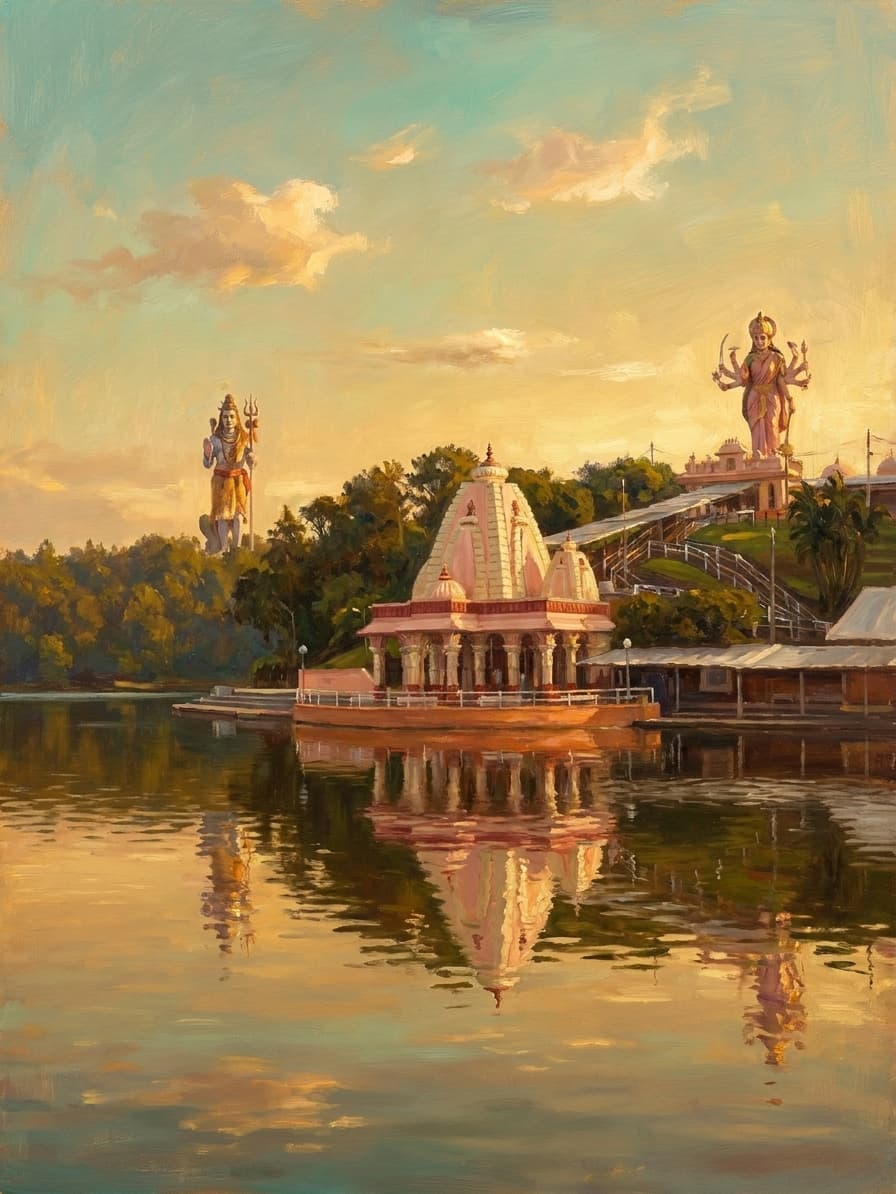
Visiting Ganga Talao provides a serene encounter with natural highland beauty and vibrant devotional practice centered around an extinct volcanic caldera. The cool montane climate often brings ethereal mist that shrouds the colossal murtis of Shiva and Durga along the crater rim. Modest attire is required, and visitors must remove shoes before stepping onto temple platforms.
Highlights
- Twin 33-meter colossal statues of Mangal Mahadev and Durga Maa guarding the entrance.
- Lakeside ghats where devotees perform traditional arati, tarpan, and water offerings.
- Sri Kashi Vishwanath Mandir featuring traditional North Indian shikharas.
- Tranquil indigenous highland forest surrounding an ancient volcanic crater.
Things to Know
- Weather changes rapidly in the highlands; carry rain protection and light layers.
- Remove footwear and leather accessories before entering temple sanctums.
- Swimming and fishing in the consecrated crater waters are strictly prohibited.
- Beware of native macaque monkeys and avoid displaying open food items.
Location
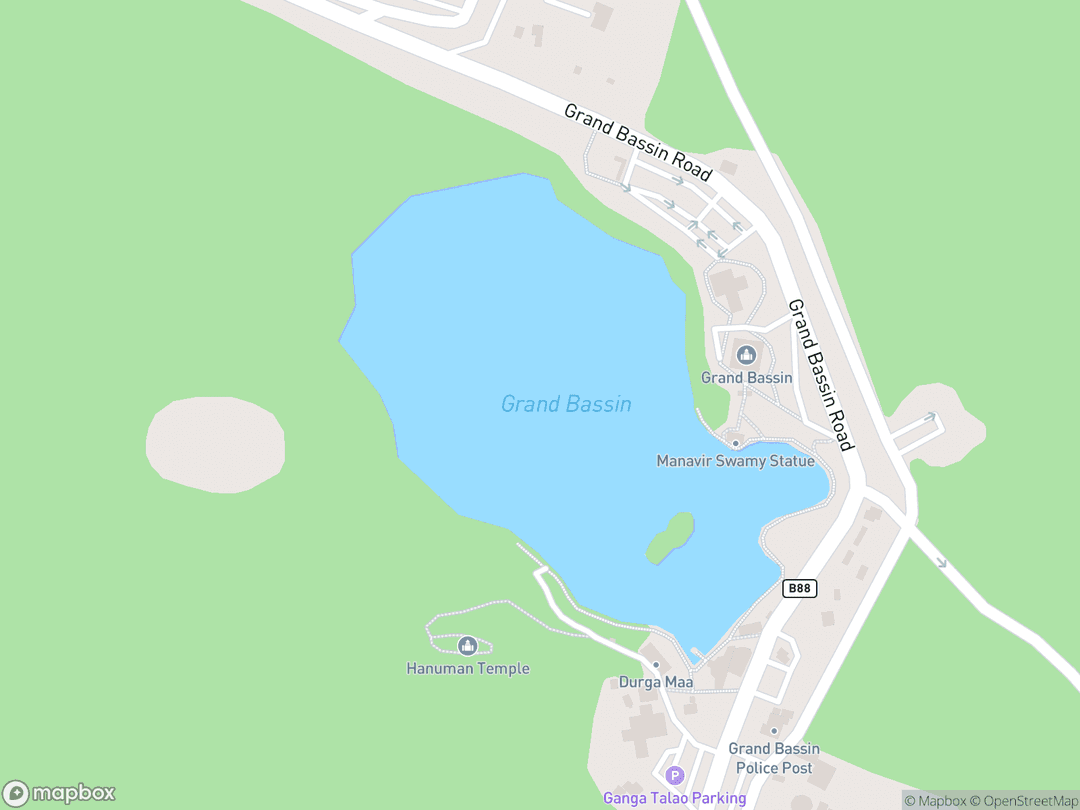
Grand Bassin Road, Savanne District, Mauritius
Hours: Sanctuary grounds open 24 hours; temple shrines open 06:00 to 18:00 daily.
Getting There: Located in the Savanne District accessible via Grand Bassin Road by taxi, private car, or organized island tour.
Get DirectionsTips for Your Visit
Arrive Early for Atmosphere
Visit before 09:00 to witness morning mist lifting from the lake while devotees conduct peaceful morning prayers.
Respect Footwear Boundaries
Designated shoe racks are provided near all mandir steps; walk barefoot or in socks across the sanctum areas.
Pack Weather Protection
The crater sits at high elevation, making it considerably cooler and rainier than coastal resort areas.
About
Ganga Talao, also known as Grand Bassin, is a sacred crater lake nestled in the mountainous southwest highlands of Mauritius. Situated 550 meters above sea level within an extinct volcanic caldera, the sanctuary functions as a vital spiritual center for the island nation's Hindu community and broad Dharmic traditions.
In 1897, an indentured laborer and priest, Pandit Jhummon Giri Gossagne Napal, experienced a divine vision that revealed the waters of the celestial river Ganga flowing into this secluded mountain lake. The following year witnessed the inaugural barefoot pilgrimage across the island, establishing a living devotional tradition that endures today.
In 1972, the sanctuary's spiritual identity was permanently sealed when holy water from the Ganges River in Varanasi was ceremonially poured into the lake. Today, surrounded by indigenous montane forests, stepped stone ghats, vibrant mandirs, and colossal statues of Lord Shiva and Goddess Durga, Ganga Talao stands as an emblem of sacred geography transposed across oceans.
Gallery
Symbolic Elements
The temple's exterior features intricate carvings, each rich with spiritual meaning:

Ganga Jal Infusion
The consecrated lake waters symbolize the metaphysical continuity of the River Ganges across the ocean.

108-Foot Height
The height of the Shiva and Durga colossi embodies the 108 sacred cosmic divisions revered in Dharmic traditions.

Trishula
The trident held by Mangal Mahadev signifies divine mastery over creation, preservation, and dissolution.

Kanwar Shrines
Elaborate bamboo and mirror structures carried by pilgrims represent personal ascetic sacrifice and devotion.

Shiva Lingam
The black stone lingam in the lakeside sanctum represents the unmanifest transcendent absolute.

Lakeside Ghats
Stepped stone embankments recreate the sacred bathing steps of Varanasi along the volcanic crater rim.

Simha Vahana
The lion mount beneath Goddess Durga symbolizes fearlessness, righteous power, and victory over inner disharmony.
Interesting Facts
Over 400,000 pilgrims converge on the lake annually during Maha Shivaratri, representing one of the largest Hindu gatherings outside Asia (Tier A).
The lake rests inside an extinct basaltic volcanic crater estimated to reach depths of up to 18 meters (Tier B).
Consecrated Ganges water brought directly from Varanasi was ceremonially poured into the caldera in 1972 to christen it Ganga Talao (Tier A).
Visiting heads of state from India routinely travel to the sanctuary to offer holy waters into the lake (Tier A).
The 33-meter Mangal Mahadev statue is an architectural twin of the Sursagar Lake Shiva colossus in Vadodara, Gujarat (Tier B).
Giant freshwater eels inhabiting the lake are protected by law and revered by pilgrims as spiritual guardians (Tier B).
Devotees handcraft massive bamboo shrines called kanwars and carry them on foot over 60 kilometers to the crater (Tier A).
Ganga Talao functions as an ecumenical sanctuary uniting Bhojpuri, Tamil, Telugu, and Marathi traditions in shared worship (Tier B).
Common Questions
Is Ganga Talao a natural or man-made lake?
It is a natural lake formed within the caldera of an extinct volcano that filled with rainwater over millennia.
Why is the lake considered sacred to Hindus?
Following a vision in 1897, the lake was consecrated with holy water from the Ganges River in India in 1972.
Can non-Hindus visit Ganga Talao?
Visitors of all backgrounds are welcome to explore the lake and temples respectfully free of charge.
What is the significance of the 33-meter statues?
Standing 108 feet tall, they honor Lord Shiva and Goddess Durga, reflecting a sacred cosmological number in Dharmic thought.
Featured Stories
The Prophetic Dream of Pandit Gossagne
1897
In 1897, an indentured priest named Pandit Jhummon Giri Gossagne Napal dreamt that the sacred River Ganga emerged from a secluded mountain lake in southern Mauritius. Undertaking a demanding trek through dense indigenous wilderness, he discovered the crater of Grand Bassin and recognized it from his spiritual vision. His discovery inspired the first community pilgrimage, transposing the sacred hydrology of India onto Mauritian soil.
Source: Hindu Maha Sabha Mauritius
The 1972 Consecration with Ganga Jal
1972
To formally complete the spiritual link between the ancestral homeland and the diaspora, religious elders arranged for consecrated Ganga Jal to be flown directly from Varanasi to Mauritius. High priests poured the sacred waters into Grand Bassin during a historic ceremony, officially naming the sanctuary Ganga Talao. The rite spiritually transformed the volcanic caldera into an authentic extension of the mother river.
Source: Hindu Maha Sabha Mauritius
The Crafting of the Giant Colossi
2007
Indian master sculptor Matu Ram Verma oversaw the intricate construction of the 33-meter Mangal Mahadev statue using advanced concrete and metallic plaster cladding. Designed as a mirror image of his famous statue at Sursagar Lake in Gujarat, the towering figure was later joined by an equally grand murti of Goddess Durga. Together, these monumental icons stand watch over the mountain approach, welcoming arriving pilgrims.
Source: Hindu Maha Sabha Mauritius
Timeline
Prophetic Dream of Pandit Gossagne
Pandit Jhummon Giri Gossagne Napal envisions holy Ganges waters filling a secluded mountain lake in Mauritius.
MilestoneInaugural Maha Shivaratri Pilgrimage
Indentured sugar plantation laborers complete the first barefoot cross-island pilgrimage to Grand Bassin.
EventEstablishment of Hindu Maha Sabha
The Hindu Maha Sabha forms to manage pilgrimage logistics and petition colonial authorities for civic rights.
MilestonePublic Holiday Recognition
British colonial authorities officially declare Maha Shivaratri a recognized public holiday across the colony.
EventConsecration of Sri Kashi Vishwanath Mandir
The first permanent stone temple opens on the lake's northern edge to serve arriving pilgrims.
DedicationInfusion of Holy Ganga Jal
Sacred Ganges water from Varanasi is mixed into the lake, officially renaming the water body Ganga Talao.
DedicationCompletion of Mangal Mahadev Statue
Sculptors complete the monumental 33-meter reinforced concrete statue of Lord Shiva.
MilestoneSthapan of Shiva Colossus
Priests perform the formal spiritual consecration of the 108-foot Mangal Mahadev statue.
DedicationKumbh Mela Water Offering
Visiting dignitaries pour consecrated waters from India's Maha Kumbh Mela directly into the lake.
EventInauguration of Durga Maa Murti
A companion 33-meter monumental statue of Goddess Durga riding a lion is consecrated at the entrance.
DedicationHistory by Decade
1890s — Vision and First Pilgrimage
The celestial waters of Jahnavi have found their home among the southern mountains.
Pandit Jhummon Giri Gossagne Napal experienced a vision revealing sacred waters at Grand Bassin in 1897. The following year, a small group of indentured laborers undertook the inaugural barefoot walk to the crater for Maha Shivaratri.
1920s–1930s — Institutional Recognition
The Hindu Maha Sabha was established in 1925 to coordinate pilgrimage routes and safeguard the sacred caldera. Sustained petitions led the British colonial government to designate Maha Shivaratri as an official holiday in 1938.
1960s–1970s — Mandir Construction and Naming
The permanent Sri Kashi Vishwanath Mandir was consecrated along the water's edge in 1966. In 1972, holy water from the Ganges River in India was ceremonially mixed into the lake, officially establishing the name Ganga Talao.
2000s–Present — Monumental Statues and Global Sanctuary
The 33-meter Mangal Mahadev colossus was consecrated in 2008, followed by the Durga Maa statue in 2017. Ganga Talao now hosts over 400,000 pilgrims annually while maintaining strict ecological protections over its crater waters.
Architecture & Facilities
The architecture of Ganga Talao harmonizes traditional North Indian Nagara temple elements with modern diaspora civic design, centered within the natural amphitheater of an extinct volcanic caldera. Brightly painted multi-tiered towers adorned with auspicious finials contrast against mist-laden native forests, while stepped stone ghats integrate sacred water rituals directly with the landscape.
Building Materials
Basalt Masonry
Local volcanic basalt forms durable embankments, steps, and retaining walls along the crater rim.
Reinforced Concrete Core
Engineered concrete provides essential structural stability for the 33-meter colossal statues against cyclonic winds.
Metallic Composite Cladding
Copper-bronze finished plaster shields the massive devotional sculptures from persistent highland humidity.
Ceramic Tiling
Weather-resistant glazed tiles pave the lakeside pathways, ghat steps, and open assembly halls.
Interior Features
Sri Kashi Vishwanath Sanctum
The primary shrine houses a consecrated black stone Shiva Lingam positioned beneath a continuous water-dripping brass vessel.
Goddess Durga Shrine
A brightly painted side sanctum features an eight-armed image of the Divine Mother adorned in silk vestments.
Lord Hanuman Mandir
A dedicated niche honors the embodiment of selfless service and devotion, facing toward the central Shiva altar.
Lord Ganesha Sanctum
An auspicious entrance shrine honors the remover of obstacles where pilgrims offer initial prayers before descending to the ghats.
Temple Grounds
Lakeside stone pathways connect shaded pavilions, floating prayer platforms, and brass oil-lamp stations along the crater rim.
Additional Facilities
Extensive pilgrim reception halls, volunteer kitchens, shoe depository counters, and modern ecological drainage systems line the perimeter.
Religious Significance
Within Dharmic philosophy, natural water bodies are revered as tīrthas—spiritual crossing points between mundane existence and liberation. Ganga Talao embodies this ancient tradition by recreating the sacred geography of the River Ganges for the indentured diaspora in Mauritius.
The complex serves as a sacred haven for ritual purification, spiritual devotion, and communal solidarity across diverse Hindu lineages.
Sacred Ordinances
Jal Abhisheka
Devotees collect consecrated water from the lake to bathe the Shiva Lingam during personal and communal worship.
Tarpan & Arati
Pilgrims offer morning prayers, light brass lamps, and present sanctified water to honor deities and ancestral spirits.
Kanwar Yatra
Devotees undertake multi-day barefoot pilgrimages carrying handcrafted wooden shrines to express gratitude and ascetic dedication.
The Concept of Transposed Geography
Cut off from ancestral roots across the ocean, indentured workers sacralized this highland volcanic crater, viewing its pristine waters as an authentic manifestation of Mother Ganga.
Sources & Research
Every fact on Temples.org is backed by verified Sources & Research. Each piece of information is rated by source tier and confidence level.
View All Sources (5)
| Field | Source | Tier | Retrieved |
|---|---|---|---|
| About & Historical Background | Hindu Maha Sabha Mauritius (opens in a new tab) | A | 2026-03-30 |
| Visitor Insights & Sacred Sites Geography | Sacred Places India (opens in a new tab) | C | 2026-03-30 |
| Cultural Significance & Community Traditions | Île Maurice Info (opens in a new tab) | C | 2026-03-30 |
| Visiting Information & Regional Access | Mauritius Attractions (opens in a new tab) | D | 2026-03-30 |
| Highland Microclimate & Visitor Guidelines | Mauritius Guided Tours (opens in a new tab) | D | 2026-03-30 |