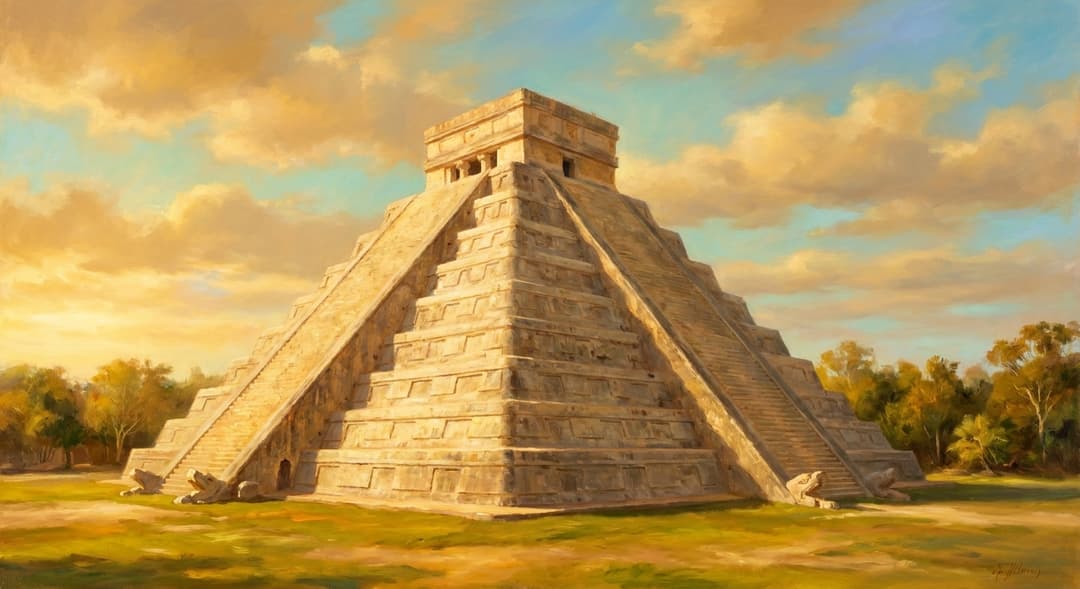
Visitor Insights
Visiting Temple of Kukulcán
Visitors experience one of the greatest surviving ceremonial complexes of the ancient Americas, set amid the tropical limestone forests of Yucatán. Exploring the surrounding esplanade reveals exceptional acoustic phenomena and monumental stone sculptures framing the four cardinal stairways.
Highlights
- Witnessing the equinoctial serpent light-and-shadow projection on the northern balustrade.
- Hearing the distinctive quetzal bird acoustic echo produced by clapping at the staircase base.
- Viewing the colossal carved serpent heads guarding the foot of the northern stairway.
Things to Know
- Climbing the pyramid exterior and entering interior chambers is strictly prohibited by INAH.
- The open ceremonial esplanade offers no shade, requiring sun protection and ample water.
Location
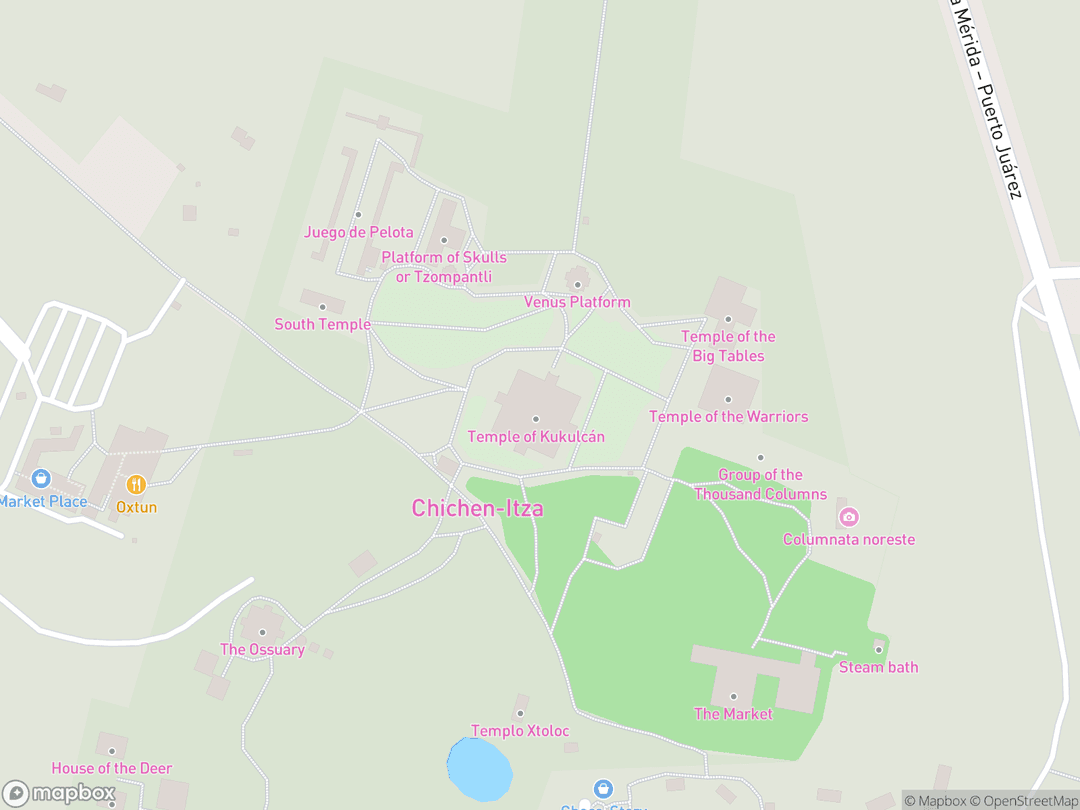
Zona Arqueológica de Chichén Itzá, Carr. Costera del Golfo km 120, 97751 Tinum, Yucatán, Mexico
Hours: Monday through Sunday, 8:00 AM to 5:00 PM (Last admission at 4:00 PM)
Getting There: Located off Highway 180D, 120 km east of Mérida and 200 km west of Cancún, accessible by ADO express buses and the Tren Maya Chichén Itzá station.
Get DirectionsTips for Your Visit
Arrive at Opening
Arrive before 8:00 AM to experience the pyramid in cool temperatures and avoid large coastal tour excursions.
Hire Certified Local Guides
Engage an official bilingual INAH guide at the visitor center entrance to understand the complex Maya calendrical mathematics.
About
The Temple of Kukulcán, colloquially known as El Castillo, stands as the theological and civic center of the ancient pre-Columbian city of Chichén Itzá. Built by Maya master builders between the ninth and twelfth centuries, the radial step pyramid honors the feathered serpent deity Kukulcán.
Conceived as a living architectural mountain, the sanctuary links the terrestrial human realm with celestial movements and the subterranean watery underworld. Its four cardinal staircases, precise mathematical layout, and orientation encapsulate the sacred Maya calendar cycles.
Today, this UNESCO World Heritage monument remains an extraordinary testament to Indigenous scientific knowledge, archaeoastronomy, and ritual engineering in Mesoamerica.
Gallery
Symbolic Elements
The temple's exterior features intricate carvings, each rich with spiritual meaning:

Feathered Serpent Balustrade
Colossal open-jawed serpent heads flank the northern stairway, anchoring the descent of the sky deity into the earth.

Calendar Round Terraces
Fifty-two carved panels across the tiered facades signify the fifty-two-year cycle synchronizing the solar and divinatory calendars.

Four Radial Staircases
Four ninety-one-step axial stairways align with the cardinal directions, uniting the 365 days of the solar year.

Subterranean Cenote Portal
The underlying water-filled cave embodies Xibalba, the watery underworld womb from which life emerges.
Red Jaguar Throne
An inner sanctum throne encrusted with jade disks symbolizes royal authority and the nocturnal journey of the underworld sun.
Chacmool Offering Altar
A recumbent stone figure holding an offering plate receives copal incense and sacred gifts for the rain gods.

Sacred Witz Mountain
Nine horizontal tiers represent the stratified underworld levels, forming an artificial sacred mountain of sustenance.

Quetzal Acoustic Resonance
Acoustically tuned staircases produce high-frequency chirps echoing the divine resplendent quetzal messenger.
Interesting Facts
The pyramid is structured like a Russian nesting doll, concealing two older intact pyramids within its exterior stone shell (Tier A).
UNAM geophysicists proved in 2015 that the monument sits directly above an active twenty-meter-deep water cenote (Tier A).
Clapping at the northern staircase base triggers a reflected echo accurately mimicking the chirp of a quetzal bird (Tier B).
A hidden inner temple sanctuary preserves a limestone jaguar throne painted in cinnabar and inlaid with 73 jade disks (Tier A).
Combining ninety-one steps on each of the four stairways with the summit platform produces 365 steps for the solar year (Tier A).
The late afternoon equinox sun creates an illusion of a descending light serpent along the northern balustrade (Tier B).
Original interior lintels carved from native zapote wood remain structurally sound after more than nine centuries (Tier A).
The temple's orientation aligns with the sun's zenith passage on May 23 and July 19, signaling seasonal planting (Tier B).
Common Questions
Can visitors climb the Temple of Kukulcán?
No, climbing the monument was permanently prohibited in 2006 to preserve the ancient stone steps and ensure visitor safety.
What creates the serpent shadow during the equinox?
The late afternoon sun projects the terrace corners onto the northern balustrade, forming seven undulating triangles of light that meet the carved serpent head.
Why does clapping create a bird chirp echo?
The specific spacing and angle of the stone staircase treads cause acoustic diffraction mimicking the sacred quetzal bird call.
What lies inside the pyramid?
The outer pyramid encloses two older nested pyramids, including an inner sanctuary containing a carved Chacmool and a cinnabar-painted jade jaguar throne.
Featured Stories
The Discovery of the Red Jaguar
1936
In 1936, Mexican archaeologists tunneling deep within the dark belly of the pyramid broke through into a sealed, silent room untouched for centuries. Resting before them was a striking limestone throne sculpted as a snarling jaguar, coated in vibrant scarlet cinnabar and glittering with seventy-three polished jade disks. The pristine feline altar stood exactly where Maya priests had left it before encasing the inner sanctuary in stone.
Source: Instituto Nacional de Antropología e Historia
The Descent of the Sun Serpent
March 21, 1970
For decades, locals whispered of a celestial spirit that crawled down the pyramid stairs when seasons shifted. When archaeoastronomers systematically measured the phenomenon during the 1970s equinox, they confirmed the ancient builders had calculated the angles with astounding precision. As the late afternoon sun sank, seven diamonds of light slipped down the northern rail to animate the colossal stone serpent head.
Source: UNAM Institute of Astronomy
Echoes of the Sacred Bird
1998
Acoustic engineer David Lubman noticed that a simple handclap in front of the northern staircase produced an uncanny chirp rather than a normal echo. Subsequent sonogram analysis proved the stepped risers reflect acoustic waves in exact rhythmic diffraction that replicates the chirp of the resplendent quetzal. Maya pilgrims standing in the broad plaza were enveloped by the disembodied voice of their most sacred bird.
Source: Acoustical Society of America
Timeline
Construction of Substructure II
Early Maya builders erect a ten-meter stepped shrine directly over an active subterranean limestone cenote.
MilestoneConstruction of Substructure I
Architects encase the earlier temple inside a twenty-meter pyramid housing the Red Jaguar Throne and a stone Chacmool.
MilestoneErection of the Outer Pyramid
Itzá builders complete the final radial pyramid visible today, dedicating it to the state cult of Kukulcán.
DedicationRegional Shift to Mayapán
Chichén Itzá loses administrative hegemony but endures as a celebrated regional pilgrimage destination.
EventSpanish Encampment at Chichén Itzá
Conquistador Francisco de Montejo establishes a temporary garrison among the ruins, dubbing the pyramid El Castillo.
EventDocumentation by Stephens and Catherwood
Explorer John Lloyd Stephens publishes detailed descriptions and lithographs of the overgrown pyramid.
EventCarnegie Institution Restorations
Archaeologists led by Sylvanus Morley begin multi-year excavations clearing vegetation from the northern and western faces.
RenovationDiscovery of the Red Jaguar Chamber
Mexican archaeologists excavate interior tunnels beneath the northern stairs, uncovering the intact inner temple and throne.
MilestoneUNESCO World Heritage Inscription
The Pre-Hispanic City of Chichén Itzá is formally inscribed upon the UNESCO World Heritage List.
MilestonePermanent Closure to Climbing
INAH permanently closes the pyramid stairways to pedestrian climbing to protect fragile limestone masonry.
EventSubterranean Cenote Detection
UNAM geophysicists identify a deep phreatic sinkhole situated twenty meters directly beneath the pyramid base.
MilestoneHistory by Decade
ca. 600–800 — The Puuc Origins
During the Late Classic period, Maya builders erected Substructure II directly over a natural water cavern. This early sanctuary utilized refined Puuc-style masonry to honor ancestral water spirits.
ca. 850–1000 — The Toltec Synthesis
Chichén Itzá emerged as a bustling regional capital uniting Yucatán merchants with Central Mexican cultural currents. Architects enclosed the earlier shrine inside Substructure I, introducing warrior pillars and the Red Jaguar chamber.
ca. 1000–1150 — The Golden Age of Kukulcán
The exterior pyramid was completed as the theological centerpiece of the pan-Mesoamerican cult of Kukulcán. Thousands of pilgrims gathered on the vast northern plaza during solar events to witness sacred state ceremonies.
ca. 1200–1500 — Pilgrimage and Persistence
Even after civic power migrated west to Mayapán, the pyramid remained an active regional sanctuary. Priests and devotees continued traversing sacred causeways to present offerings at the pyramid and nearby Sacred Cenote.
1530s–1920s — Colonization and Overgrowth
Spanish forces briefly occupied the ruins, leaving the structure surrounded by dense tropical brush. In the nineteenth century, foreign explorers documented the vegetation-covered ruins, stimulating initial scientific excavations.
1930s–Present — Conservation and Global Wonder
Twentieth-century tunneling by Mexican researchers revealed the nested substructures beneath the steps. Following its 1988 World Heritage inscription, the pyramid underwent rigorous conservation, cementing its status as an architectural wonder.
Architecture & Facilities
The Temple of Kukulcán represents the monumental Maya-Toltec or Modified Florescent architectural style, seamlessly blending Late Classic Maya vaulted construction and stone relief carving with Central Mexican Toltec motifs, warrior iconography, and radial stepped geometry.
Building Materials
Yucatan Karst Limestone
Quarried locally from surrounding limestone beds and shaped into fine ashlar facing stones.
Sascab Mortar
Traditional lime-based mortar manufactured by burning local limestone and mixing it with mineral sand.
Zapote Heartwood Lintels
Extremely dense, decay-resistant timber of Manilkara zapota supporting heavy interior spans across doorways.
Burnished Lime Stucco
Polished exterior plaster originally enriched with natural mineral pigments to seal masonry against rains.
Interior Features
Summit Sanctuary Antechamber
An outer vestibule entered through a portico supported by two monumental carved feathered serpent columns.
Inner Holy of Holies
A vaulted chamber once accessed exclusively by high priests conducting private offerings and incense burnings.
Substructure I Jaguar Chamber
A subterranean inner room preserving the vermilion-painted stone throne inlaid with seventy-three jade disks.
Chacmool Vestibule
An intermediate interior portal enshrining a sculpted limestone offering figure clutching an abdominal bowl.
Temple Grounds
The pyramid commands the Great Plaza, connected via a ancient paved stone sacbe causeway to the natural Sacred Cenote.
Additional Facilities
An INAH visitor service pavilion provides ticketing facilities, an interpretive cultural museum, and certified guide services.
Religious Significance
In Mesoamerican Indigenous theology, the cosmos is an interconnected, living web spanning thirteen celestial realms, the mortal earth, and nine watery layers of the underworld.
To serve as the cosmic axis mundi where human ritual maintains balance between celestial cycles, seasonal rains, and underworld creation waters.
Sacred Ordinances
Equinoctial Hierophany
A communal solar rite greeting the descent of Kukulcán to fertilize the earth for upcoming agricultural planting.
Copal and Blood Offerings
Ceremonial burning of copal tree resin and self-sacrificial bloodletting atop the pyramid to nourish sky deities.
Cenote Hydrological Petitions
Processions carrying offerings down the sacred sacbe road to invoke Chaac, the rain god residing in underground waters.
The Cosmic Mountain (Witz)
Indigenous Maya theology regards the stepped pyramid as a living sacred mountain holding life-giving water and ancestral vitality.
The Plumed Serpent
Kukulcán unites the subterranean earth symbolized by the serpent with celestial spirit embodied by the resplendent quetzal.
Sources & Research
Every fact on Temples.org is backed by verified Sources & Research. Each piece of information is rated by source tier and confidence level.
View All Sources (9)
| Field | Source | Tier | Retrieved |
|---|---|---|---|
| Archaeological Overview & Heritage Inscription | UNESCO World Heritage Centre (opens in a new tab) | B | 2026-02-16 |
| Official Monument Records & Conservation | Instituto Nacional de Antropología e Historia (INAH) (opens in a new tab) | A | 2026-02-16 |
| Geophysical Studies & Cenote Discovery | Universidad Nacional Autónoma de México (UNAM) (opens in a new tab) | B | 2026-02-16 |
| Archaeoastronomical Survey and Alignment | Society for American Archaeology (opens in a new tab) | B | 2026-02-16 |
| Pyramid Acoustics and Wave Diffraction | Acoustical Society of America (opens in a new tab) | B | 2026-02-16 |
| Yucatan Cultural History and Regional Chronology | Gobierno del Estado de Yucatán (opens in a new tab) | A | 2026-02-16 |
| Chichén Itzá Exploration and Excavations | Carnegie Institution of Washington (opens in a new tab) | B | 2026-02-16 |
| Chichén Itzá Visitor Guidelines and Access Policies | INAH Chichén Itzá Archaeological Zone (opens in a new tab) | A | 2026-02-16 |
| Preservation of Pre-Columbian Timber Lintels | Getty Conservation Institute (opens in a new tab) | B | 2026-02-16 |