Visitor Insights
Visiting Templo Mayor
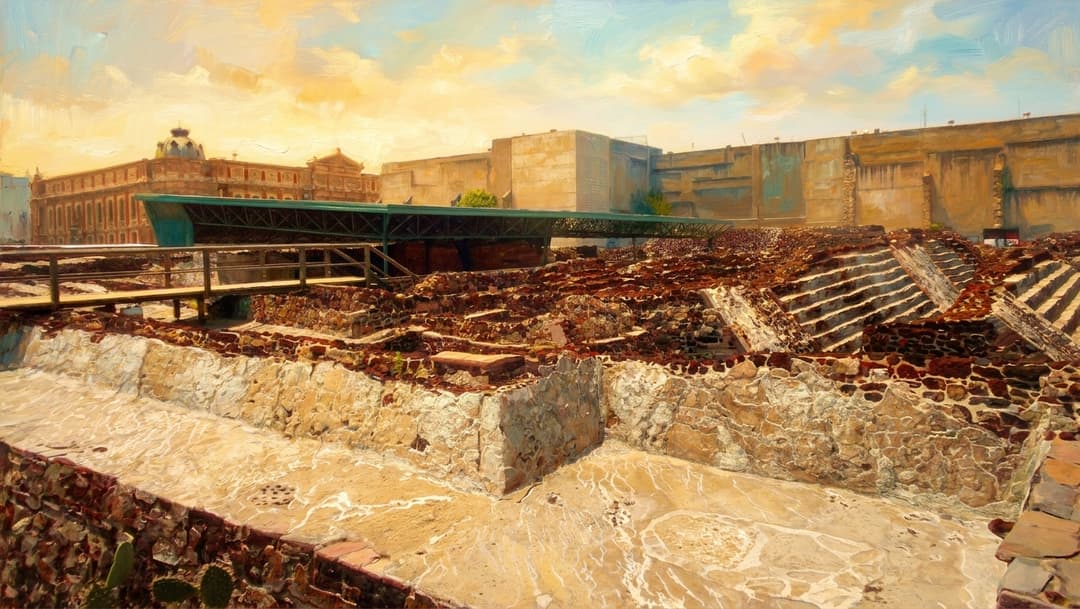
Visitors can explore the open-air archaeological site via elevated wooden walkways before touring the eight indoor galleries of the Museo del Templo Mayor. The site displays pristine early structural layers alongside thousands of excavated ritual offerings and monumental stone carvings.
Highlights
- Intact 14th-century Stage II shrines preserved deep within the pyramid core.
- Colossal stone monolith of the dismembered moon goddess Coyolxauhqui.
- Extensive collection of ritual offerings including jade masks, obsidian, and marine specimens.
- Adjacent House of the Eagles featuring stone benches and altar carvings.
Things to Know
- Outdoor walkways have minimal shade, so sun protection is recommended.
- Elevated ramps provide full wheelchair accessibility throughout the site and museum.
- Photography is permitted without flash; commercial equipment requires a permit.
Location
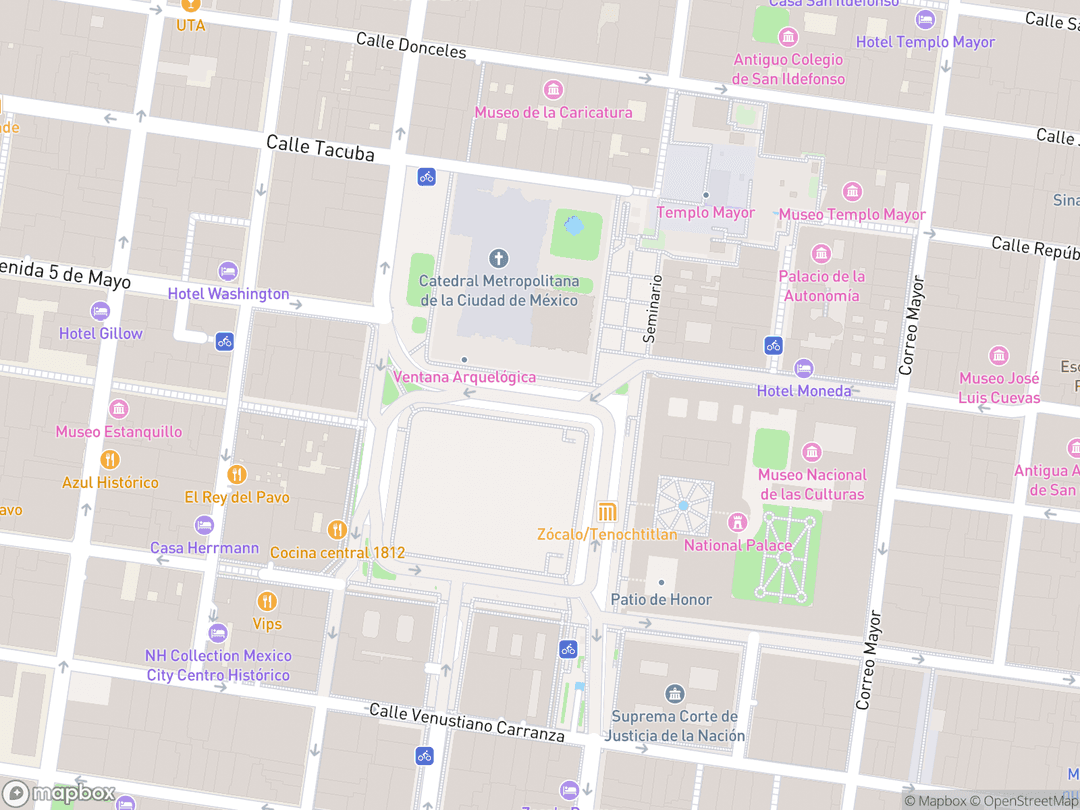
Calle Seminario 8, Centro Histórico de la Ciudad de México, Cuauhtémoc, 06060 Mexico City, CDMX, Mexico
Hours: Tuesday through Sunday: 9:00 AM – 5:00 PM (Closed Mondays)
Getting There: Take Metro Line 2 (Blue Line) to Zócalo/Tenochtitlan Station and exit toward the northeast corner of the Zócalo plaza.
Get DirectionsTips for Your Visit
Visit Early in the Day
Arrive right at 9:00 AM on weekdays to tour the outdoor ruins in cooler weather before crowds assemble.
Combine with the Zócalo Walk
Pair your visit with the nearby Mexico City Metropolitan Cathedral, which was constructed using stones quarried from the fallen temple.
About
The Templo Mayor, known in Nahuatl as Huēyi Teōcalli ('Great Temple'), stood at the absolute physical and spiritual heart of Tenochtitlan. Constructed around 1325 CE on a marshy island in Lake Texcoco, it served as the principal sanctuary of the Mexica (Aztec) Empire until its destruction during the Spanish Conquest in 1521.
The temple featured a distinctive twin-pyramid design topped by two independent sanctuaries. The southern shrine was dedicated to Huitzilopochtli, deity of war and the sun, while the northern shrine was dedicated to Tlaloc, deity of rain and agriculture. This dual arrangement unified the twin economic and ideological pillars of the Aztec state.
Over two centuries, successive Aztec emperors expanded the pyramid seven distinct times using a superposition construction technique, enclosing older structures within larger stone layers. Today, the excavated archaeological ruins and the accompanying Museo del Templo Mayor offer an unprecedented window into Mesoamerican ritual, cosmology, and imperial architecture.
Gallery
Symbolic Elements
The temple's exterior features intricate carvings, each rich with spiritual meaning:

Huitzilopochtli Shrine
The southern summit sanctuary painted in fiery red and white to honor the god of war and the solar cycle.
Tlaloc Shrine
The northern summit sanctuary painted in blue and teal to signify rainfall, moisture, and agricultural fertility.

Coyolxauhqui Monolith
A monumental carved stone disk illustrating the vanquished moon goddess at the foot of the southern staircase.

Coatepec Snake Mountain
The architectural representation of the mythical snake mountain where Huitzilopochtli defeated his cosmic siblings.
Wall of Serpents
A perimeter coatepantli wall adorned with sculpted stone serpent heads defining the sacred enclosure boundary.

Sacrificial Stone
A convex volcanic basalt techcatl positioned on the upper platform for state ritual offerings.
Skull Rack Altar
A specialized tzompantli altar decorated with carved stone skulls symbolizing cosmic renewal and state authority.
House of the Eagles
A neo-Toltec ceremonial hall used by high-ranking warrior elites for meditation and ritual preparation.
Interesting Facts
The temple was built on a marshy island, causing it to sink repeatedly into the lakebed over the centuries. (Tier A)
Electrical utility workers accidentally rediscovered the buried ruins while digging a cable ditch in 1978. (Tier A)
During equinoxes, the sun rises directly in the physical gap between the two summit sanctuaries. (Tier A)
Archaeologists have excavated over 14,000 intact ritual offerings beneath the courtyard floors. (Tier A)
Ritual offerings included marine life brought from both the Pacific and Atlantic oceans. (Tier A)
Mexica priests buried ancient Olmec and Teotihuacan artifacts inside the temple as prized relics. (Tier A)
Stones from the destroyed pyramid were reused to build the adjacent Mexico City Metropolitan Cathedral. (Tier A)
In 2006, archaeologists discovered a 12-ton earth goddess sculpture named Tlaltecuhtli at the site. (Tier A)
Common Questions
What does Templo Mayor mean?
Templo Mayor is Spanish for 'Main Temple', while its original Nahuatl name was Huēyi Teōcalli, meaning 'Great Temple'.
Why are there two shrines at the top?
The dual shrines honors Huitzilopochtli (god of war and sun) and Tlaloc (god of rain and agriculture).
How was the temple rediscovered?
Utility workers uncovered the massive stone monolith of Coyolxauhqui in 1978, triggering full site excavations.
Is the site wheelchair accessible?
Elevated ramps provide full wheelchair accessibility throughout the ruins and museum galleries.
Featured Stories
The Unexpected Discovery of 1978
February 21, 1978
For over four centuries, the exact location of the Templo Mayor remained buried beneath the busy streets of colonial Mexico City. On a February night in 1978, utility workers digging an electrical trench struck a heavy carved stone six meters underground. That stone proved to be the iconic 8.5-ton Coyolxauhqui monolith, triggering the landmark official excavation that brought the ancient sacred precinct back to light.
Source: Instituto Nacional de Antropología e Historia (INAH)
The Rededication Ceremony of 1487
1487
In 1487, Emperor Ahuitzotl completed Stage VI, the grandest expansion of the Templo Mayor. To mark the rededication, ambassadors, dignitaries, and tributary leaders from across Mesoamerica gathered for four days of elaborate feasts and state ceremonies. The monumental scale of the new pyramid established Tenochtitlan as the undisputed geopolitical and ritual epicenter of the region.
Source: Proyecto Templo Mayor / INAH
The Equinox Solar Alignment
1325–1521
The double staircase of the western facade was precisely calibrated by Mexica architects to align with seasonal solar movements. During the spring and autumn equinoxes, an observer standing in the central plaza below watched the morning sun rise directly between the twin shrines of Tlaloc and Huitzilopochtli, visually demonstrating the harmony between rain and war in the cosmic order.
Source: Eduardo Matos Moctezuma, Archeological Excavations Report
Timeline
City Foundation & Stage I Shrine
The Mexica establish Tenochtitlan and construct the initial mud shrine dedicated to Huitzilopochtli.
MilestoneCompletion of Stage II Stone Temple
A permanent stone twin-pyramid is constructed, establishing preserved shrines for both Huitzilopochtli and Tlaloc.
MilestoneStage III Triple Alliance Expansion
Emperor Itzcoatl expands the pyramid following the formation of the Aztec Triple Alliance.
MilestoneStage IVa Integration
Motecuhzoma I adorns the facade with monumental basalt braziers and painted stucco plaster.
RenovationPlacement of the Coyolxauhqui Monolith
Axayacatl oversees Stage IVb lateral expansion and installs the massive Coyolxauhqui stone disk.
MilestoneGrand Rededication of Stage VI
Ahuitzotl hosts a historic four-day rededication ceremony attended by regional leaders.
DedicationStage VII Final Embellishments
Motecuhzoma II adds fine courtyard paving stones and upgrades inner sanctuary chambers.
RenovationFall of Tenochtitlan & Dismantling
Spanish forces and native allies capture the city, ordering the complete dismantling of the pyramid.
EventRediscovery of Coyolxauhqui
Electrical utility workers unearth the Coyolxauhqui monolith six meters below street level.
MilestoneInauguration of Museo del Templo Mayor
The official museum opens to display artifacts recovered from the systematic excavations.
DedicationDiscovery of Tlaltecuhtli Monolith
Archaeologists uncover a 12-ton monolith depicting the earth deity Tlaltecuhtli near the site.
MilestoneHistory by Decade
1320s — Foundation of the First Shrine
Following their arrival on the island of Tenochtitlan in 1325, the Mexica erected a simple shrine made of mud and wood to honor Huitzilopochtli. This humble structure established the sacred core around which the imperial capital would grow.
1370s–1390s — Stone Construction & Dual Shrines
During the reigns of early rulers Acamapichtli and Huitzilihuitl, Stage II was built entirely in stone. This layer contained complete summit sanctuaries for both Huitzilopochtli and Tlaloc, which remain remarkably preserved inside the excavated core today.
1430s — The Triple Alliance Expansion
After defeating Azcapotzalco and forming the Aztec Triple Alliance, Emperor Itzcoatl commissioned Stage III in 1431. The enlarged pyramid footprint was faced with fine masonry steps and guarded by carved stone warrior sculptures.
1450s–1470s — Imperial Monumentality
Under Motecuhzoma I and Axayacatl, Stages IVa and IVb integrated monumental basalt serpent heads, stone braziers, and the monumental Coyolxauhqui disk. These additions reinforced the mythic narrative of Snake Mountain across the facade.
1480s — Maximum Footprint & Rededication
Ahuitzotl directed the construction of Stage VI, reaching the temple's maximum footprint of 84 by 77 meters. Surrounding walls of serpents, skull racks, and elite warrior halls were added during this peak imperial phase.
1500s–1520s — Final Touches & Destruction
Motecuhzoma II completed Stage VII with polished paving floors and interior shrine upgrades shortly before Hernán Cortés arrived in 1519. Following the 1521 siege of Tenochtitlan, the pyramid was dismantled to supply building stone for colonial Mexico City.
1970s–Present — Rediscovery and Preservation
The accidental discovery of the Coyolxauhqui monolith in 1978 launched the Proyecto Templo Mayor under Eduardo Matos Moctezuma. Thirteen colonial buildings were cleared to reveal the ruins, culminating in the opening of the Museo del Templo Mayor in 1987.
Architecture & Facilities
The Templo Mayor was built in the Late Postclassic Mexica Imperial architectural style, characterized by a stepped twin-pyramid platform that supported two side-by-side summit sanctuaries. Utilizing a superposition construction technique, successive rulers encased older temple layers inside expanded outer shells of stone, creating seven distinct structural stages over two centuries.
Building Materials
Tezontle Volcanic Stone
A lightweight, porous red basalt used for structural core filling and lightweight platform walls.
Andesite & Basalt
Dense volcanic stone carved into stair steps, corner quoins, and monumental sculptures.
Lime Stucco Mortar
Polished lime plaster used to coat stone walls and serve as a smooth canvas for polychrome murals.
Mineral Pigments
Natural pigments including cinnabar red, Maya blue, and yellow ochre applied to architectural features.
Interior Features
Sanctuary of Huitzilopochtli
The southern summit chamber housing the sacred wooden idol of the war god.
Sanctuary of Tlaloc
The northern summit chamber housing the sacred effigy of the rain deity.
Offering Chambers
Subterranean stone boxes sealed beneath floor levels containing rich ritual offerings.
House of the Eagles
An adjacent ceremonial hall equipped with carved benches and altars for elite ritual preparation.
Temple Grounds
The temple anchored a 400-meter walled Sacred Precinct containing skull racks, snake walls, braziers, and ritual plazas.
Additional Facilities
The site features elevated visitor walkways and the 8-room Museo del Templo Mayor displaying over 14,000 artifacts.
Religious Significance
In Mexica theology, the Templo Mayor served as the axis mundi—the physical center of the universe where the underworld, earth, and sky converged. By uniting the shrines of Huitzilopochtli and Tlaloc atop a single mound, the pyramid expressed the essential cosmic dualism of Aztec state religion.
To maintain cosmic order, honor the patron deities of war and rain, and ensure the continuous cycle of solar light and agricultural renewal.
Sacred Ordinances
Equinox Alignment Rites
Solar observation ceremonies celebrating seasonal transitions as the sun rose between the twin shrines.
Ritual Offerings (Nextlahualli)
Deposition of precious goods, ocean specimens, and jade objects in stone chambers to nourish the earth.
Rain Rites (Atlcahualo)
Ceremonies conducted at the Tlaloc sanctuary to ensure seasonal rain and harvest fertility.
The Cosmic Axis and Sacred Geography
The temple's physical layout mapped the cardinal directions and mythic mountains into the urban grid of Tenochtitlan.
Dual Theology of War and Sustenance
The twin sanctuaries visually balanced military conquest with agricultural production, the two foundations of Aztec empire.
Sources & Research
Every fact on Temples.org is backed by verified Sources & Research. Each piece of information is rated by source tier and confidence level.
View All Sources (8)
| Field | Source | Tier | Retrieved |
|---|---|---|---|
| About & Historical Background | Instituto Nacional de Antropología e Historia (INAH) (opens in a new tab) | A | 2026-02-18 |
| UNESCO World Heritage Inscription | UNESCO World Heritage Centre (opens in a new tab) | B | 2026-02-18 |
| Museum Overview & Exhibits | Museo del Templo Mayor (opens in a new tab) | A | 2026-02-18 |
| Archaeological Excavations & Reports | Secretaría de Cultura de México (opens in a new tab) | A | 2026-02-18 |
| Encyclopedia History & Architecture | Encyclopædia Britannica (opens in a new tab) | B | 2026-02-18 |
| Field Reports & Discoveries | Archaeology Magazine / Archaeological Institute of America (opens in a new tab) | B | 2026-02-18 |
| Mesoamerican Ritual & History | World History Encyclopedia (opens in a new tab) | B | 2026-02-18 |
| Proyecto Templo Mayor Research | INAH Boletines de Investigación (opens in a new tab) | A | 2026-02-18 |