Visitor Insights
Visiting Teotihuacan Pyramids
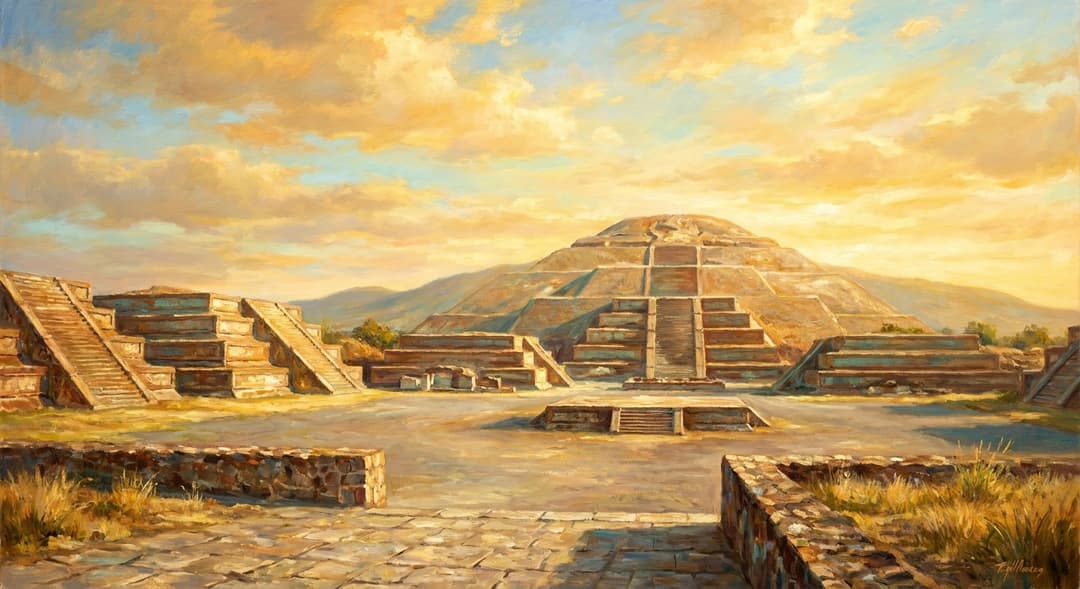
Visiting Teotihuacan offers an extraordinary encounter with Mesoamerica's ancient past. Visitors walk along the vast Avenue of the Dead and explore grand plazas framed by monumental pyramid bases.
Highlights
- Walking the monumental Avenue of the Dead procession route.
- Standing in the expansive Plaza of the Moon framing Cerro Gordo mountain.
- Exploring the intricately carved Palace of Quetzalpapalotl.
- Viewing ancient polychrome mural fragments preserved in situ.
Things to Know
- Climbing the upper tiers of the Sun and Moon pyramids is permanently prohibited.
- The site has minimal shade, so full sun protection and water are essential.
- Arrive at 8:00 AM opening to avoid large afternoon tour groups and heat.
Location
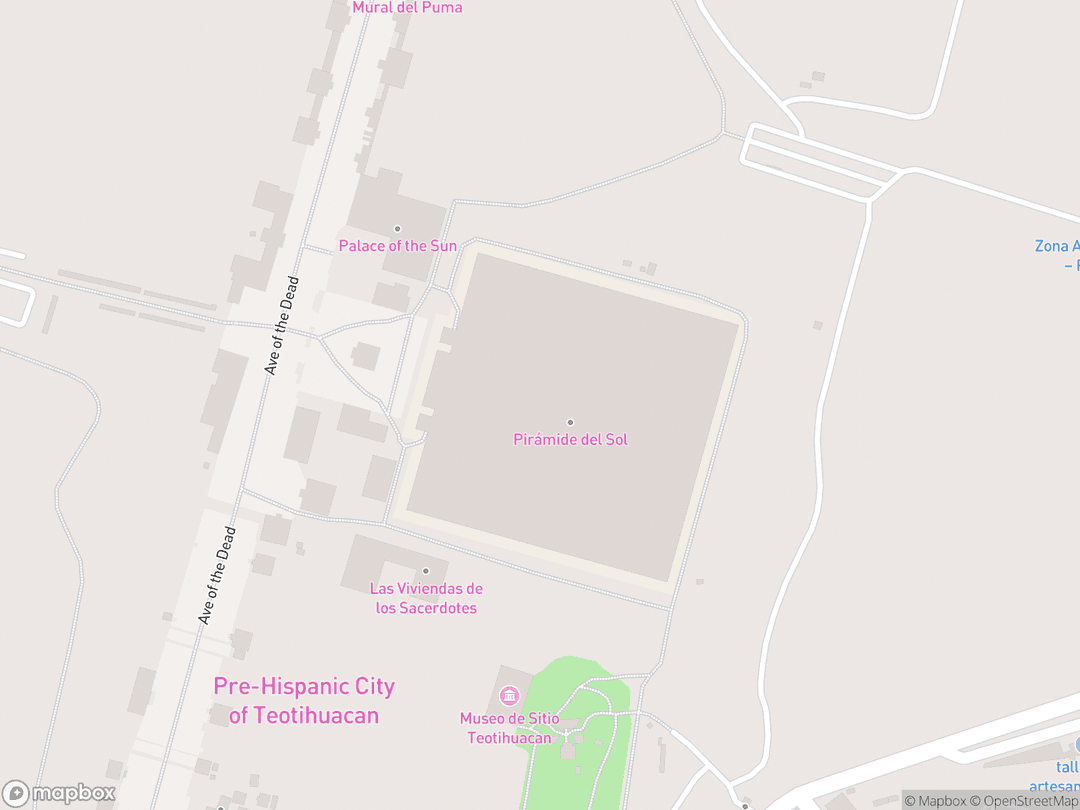
Ecatepec - Pirámides km 22, Zona Arqueológica de Teotihuacán, 55800 Teotihuacán de Arista, State of Mexico, Mexico
Hours: Open daily 8:00 AM to 5:00 PM; site museums operate 9:00 AM to 4:30 PM.
Getting There: Direct buses run every 15 minutes from Terminal Central de Autobuses del Norte in Mexico City directly to Gates 1 and 2.
Get DirectionsTips for Your Visit
Beat the Midday Sun
Enter through Gate 1 or Gate 2 at 8:00 AM to explore the main avenues in cool morning light before heat peaks.
Visit Site Museums First
Explore the indoor INAH site museums early to view original obsidian weapons, sacrificial burial goods, and scale models.
Wear Sturdy Walking Shoes
The archaeological park spans over two kilometers of exposed gravel paths and uneven ancient cobblestones.
About
Teotihuacan stands as one of the most awe-inspiring archaeological urban complexes of the ancient world. Established around 100 BCE in the Valley of Mexico, this multi-ethnic metropolis grew into the dominant cultural, religious, and economic superpower of Mesoamerica. At its peak between 100 CE and 550 CE, the city housed over 100,000 residents across a meticulously planned grid.
The ceremonial core of the city is anchored by two colossal structures: the Pyramid of the Sun and the Pyramid of the Moon. Rising along the monumental Avenue of the Dead, these massive stepped pyramids functioned as living cosmic mountains where rituals connected the earthly realm, the heavens, and the subterranean underworld.
Though burned and abandoned around 550 CE, Teotihuacan remained a place of reverence for later cultures. Century after century, the Aztecs made royal pilgrimages to its majestic ruins, bestowing its modern Nahuatl name meaning 'Place Where Gods Were Born'. Today, it stands protected as a UNESCO World Heritage Site.
Gallery
Symbolic Elements
The temple's exterior features intricate carvings, each rich with spiritual meaning:
The Sacred Lava Cave
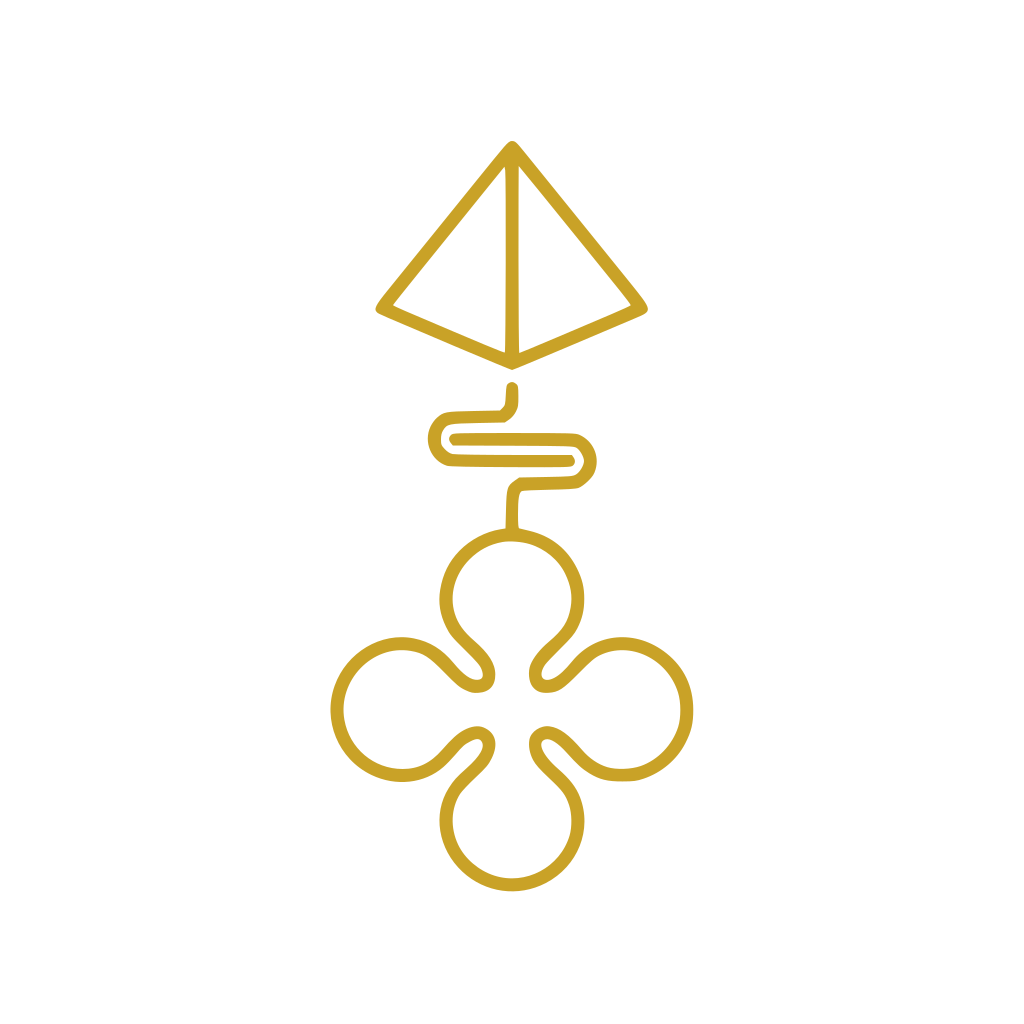
A 100-meter subterranean cave ending in a four-lobed cloverleaf formation directly beneath the Pyramid of the Sun represents the primordial womb of creation.
Talud-Tablero Profiling
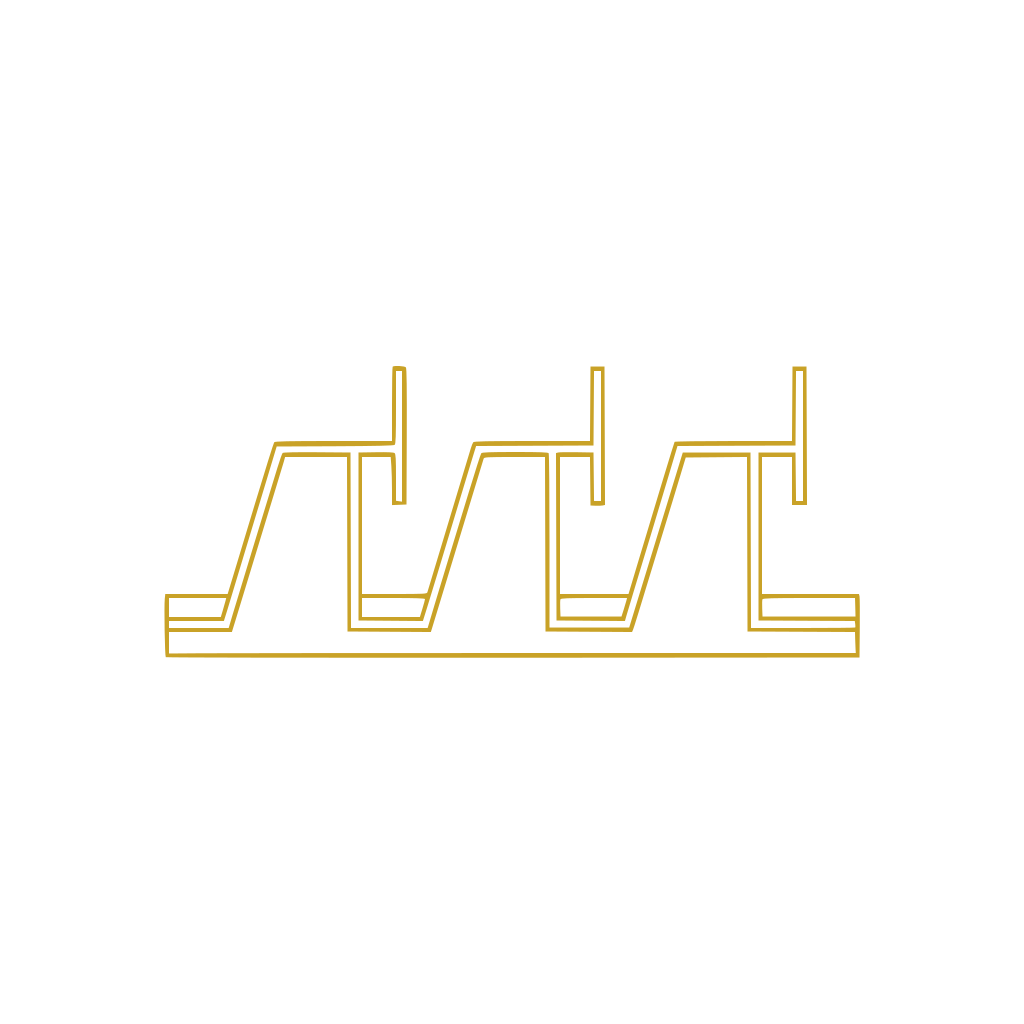
The alternating sloped wall and cantilevered panel profile creates rhythmic shadow plays and structural resistance against earthquakes.
Mountain Silhouette Mimicry
The Pyramid of the Moon was constructed to directly mirror the natural contours of Cerro Gordo mountain behind it.
The Great Goddess Headdress
Depicted wearing a feathered nosepiece and water-pouring tree, the supreme water deity represents terrestrial fertility and life.
Feathered Serpent Heads
Stone carvings synthesizing quetzal bird plumes and rattlesnake heads symbolize atmospheric water and divine political authority.

Hematite Red Murals
Vibrant red lime plaster frescoes painted on pyramid facades represented sacred currents of blood, life, and divine energy.
Sacrificial Predator Remains
Burial vaults within pyramid layers contained skeletons of jaguars, eagles, and pumas representing solar predator energy.
Green Obsidian Mirrors
Polished volcanic glass mirrors mass-produced in urban workshops served as scrying tools to communicate with spirits.
Interesting Facts
By total physical volume (~1.18 million cubic meters), the Pyramid of the Sun is the third-largest ancient pyramid in the world. (Tier A)
Because the Pyramid of the Moon was built on higher natural ground, the summits of both pyramids sit at equal geographic altitudes. (Tier A)
No named royal tombs or dynastic ruler portraits have ever been discovered at Teotihuacan. (Tier B)
Teotihuacan was a cosmopolitan city featuring multi-ethnic foreign residential quarters like the Zapotec and Maya precincts. (Tier B)
The economy was powered by an industrial monopoly on sharp green obsidian tools exported across Mesoamerica. (Tier B)
At its peak, almost every building was coated in smooth lime plaster and painted in vibrant red frescoes. (Tier B)
Archaeologists discovered pools of liquid mercury intended to represent an underworld river beneath the complex. (Tier A)
The city grid was oriented 15.5 degrees east of north to align with key solar calendar dates. (Tier B)
Destruction fires during the city's collapse were targeted specifically at elite temples atop the pyramids. (Tier B)
Common Questions
Can visitors climb the Pyramids of the Sun and Moon?
Climbing the upper staircases of both pyramids is permanently prohibited to protect structural integrity.
Who built Teotihuacan?
Teotihuacan was built by the Teotihuacano culture, a multi-ethnic pre-Aztec civilization whose exact ruling lineage remains unknown.
Why did the Aztecs name it Teotihuacan?
The Aztecs discovered the abandoned city centuries later and named it Teotihuacan, meaning 'Place Where Gods Were Born'.
How tall is the Pyramid of the Sun?
The Pyramid of the Sun stands at a structural height of 65.5 meters (215 feet).
How far is Teotihuacan from Mexico City?
It is located approximately 40 kilometers (25 miles) northeast of Mexico City, about an hour away by public bus.
Featured Stories
Discovery of the Secret Cloverleaf Cave
1971
In 1971, archaeologists made a historic discovery near the base of the Pyramid of the Sun. They uncovered a natural 100-meter lava tube ending in a four-chambered cloverleaf cave directly beneath the pyramid center. This subterranean chamber proved that the ancient builders erected the pyramid as a sacred capstone over the primordial womb of life.
Source: INAH Archaeological Records
Unlocking the Sacrificial Burial Vaults
1998
A joint Mexican and American excavation team spent years tunneling into the core of the Pyramid of the Moon. They uncovered six layered burial vaults containing sacrificed foreign captives, apex predators, and exquisite jade statuettes. These discoveries revealed how each architectural expansion was consecrated with elaborate royal rituals.
Source: Arizona State University Research Dossier
Liquid Mercury Beneath the Pyramids
2014
During micro-robotic exploration of sealed subterranean tunnels, archaeologists discovered pools of liquid mercury. The reflective liquid metal was engineered to represent a shimmering underworld lake reflecting the cosmic night sky. This discovery highlighted the extraordinary technological capabilities of ancient Teotihuacano ritual specialists.
Source: INAH Research Reports
Timeline
Initial Urban Settlement
Agricultural communities consolidate into a planned urban nucleus in the Teotihuacan valley.
MilestonePyramid of the Sun Construction Begins
Builders begin erecting the core of the Pyramid of the Sun directly over a sacred volcanic cave.
MilestonePyramid of the Sun Completion
The Pyramid of the Sun reaches its full height of 65.5 meters.
MilestoneExpansion of Pyramid of the Moon
Architects complete major additions to the Pyramid of the Moon and Plaza of the Moon.
MilestoneFinal Architectural Phase
The Pyramid of the Moon reaches its final height of 43 meters through its seventh build phase.
MilestoneGreat Internal Fire Event
Fires destroy elite administrative buildings, leading to the collapse of central governance.
EventAztec Pilgrimages Begin
Aztec rulers discover the ancient ruins and incorporate them into Fifth Sun creation mythologies.
EventCentennial Archaeological Excavations
Leopoldo Batres conducts the first government restorations at the Pyramid of the Sun.
EventDiscovery of Subterranean Cave
Archaeologists discover the 100-meter subterranean cave beneath the Pyramid of the Sun.
EventUNESCO World Heritage Inscription
UNESCO officially inscribes Teotihuacan on the World Heritage list.
MilestoneLiquid Mercury Discovery
Researchers find pools of liquid mercury inside sealed subterranean tunnels.
EventHistory by Decade
100 BCE — Urban Origin and Volcanic Displacement
Following catastrophic volcanic eruptions in the southern Basin of Mexico, displaced populations moved north into the Teotihuacan valley. Builders established an orthogonal urban grid aligned to astronomical calendar dates.
100 CE — Erection of the Pyramid of the Sun
Construction began on the massive core of the Pyramid of the Sun directly above a natural subterranean lava tube. Builders compacted over one million cubic meters of earth and stone behind volcanic scoria retaining walls.
200 CE — Expansion of the Pyramid of the Moon
Architects completed the initial build phases of the Pyramid of the Moon at the northern terminus of the Avenue of the Dead. Surrounding plazas were laid out to accommodate vast public ritual gatherings.
400 CE — The Metropolitan Peak
Teotihuacan reached its architectural zenith, housing over 100,000 multi-ethnic residents. The Pyramid of the Moon achieved its final height of 43 meters through seven super-positioned construction stages.
550 CE — The Great Internal Destruction
A intense fire destroyed elite administrative complexes and shrines atop the primary pyramids. Internal social revolt or ecological crisis triggered the rapid collapse of central urban governance.
1300 — Aztec Discovery and Mythological Rebirth
Nahuatl-speaking Aztecs arrived at the majestic ruined city and named it Teotihuacan. They integrated its colossal pyramids into their creation mythology as the sacred birthplace of the Fifth Sun.
1910 — Centennial Restorations
Pioneer archaeologist Leopoldo Batres directed major restoration efforts at the Pyramid of the Sun ahead of Mexico's Independence Centennial. Early scientific surveys established modern Mexican archaeology at the site.
1987 — World Heritage Listing
UNESCO inscribed the Pre-Hispanic City of Teotihuacan as a World Heritage Site. The designation recognized its exceptional architectural planning and influence on Mesoamerican civilization.
2014 — High-Tech Subterranean Exploration
Advanced LiDAR scanning and micro-robotics revealed new sealed tunnels, burial chambers, and liquid mercury deposits beneath the city's ceremonial core.
Architecture & Facilities
Teotihuacano monumental civic-religious architecture is defined by its signature talud-tablero wall profiling, strict orthogonal grid planning, and harmonious integration with the surrounding natural landscape. Structures featured stepped platforms coated in smooth lime stucco and painted in vibrant hematite red pigments.
Building Materials
Tezontle Scoria Stone
Porous red volcanic scoria stone carved into facade blocks for pyramid exterior walls.
Compaction Rubble and Adobe
Millions of cubic meters of river cobbles, clay, and unbaked adobe bricks forming structural cores.
Lime Stucco Plaster
Smooth exterior lime plaster painted with natural mineral red hematite pigments.
Basalt Blocks
Dense volcanic rock utilized for heavy foundation courses and retaining walls.
Interior Features
Subterranean Cloverleaf Cave
A natural 100-meter volcanic tube terminating in four chambers directly beneath the Pyramid of the Sun.
Pyramid of the Moon Burial Vaults
Seven super-positioned structural layers containing elite sacrificial tombs and ritual offerings.
Tunnels of Quetzalcoatl
Underground ritual passages containing offerings of obsidian, jade, and liquid mercury.
Palace of Quetzalpapalotl Courtyard
Enclosed elite ceremonial complex featuring stone pillars carved with feathered butterflies.
Temple Grounds
Spanning over 20 square kilometers, the complex features the 2.4-kilometer Avenue of the Dead connecting the Plaza of the Moon, the Pyramid of the Sun, and the Ciudadela enclosure.
Additional Facilities
Includes two official INAH site museums, archaeological conservation laboratories, visitor service centers, resting facilities, and regulated artisan craft markets.
Religious Significance
Teotihuacan was engineered as a living cosmic map where human architecture bridged the earthly realm with heavenly powers and the subterranean underworld.
To serve as an axis mundi where elite state rituals maintained cosmological balance, agricultural rain cycles, and divine political order.
Sacred Ordinances
Water and Rain Invocations
Rites directed toward the Great Goddess and Storm God to ensure agricultural abundance and rain.
Solar Equinox Rites
Ritual observances aligned with solar movements along the eastern horizon and zenith days.
Sacrificial Consecration Rituals
Elaborate burial offerings of captives, animals, and jade to sanctify architectural expansion phases.
Axis Mundi and Sacred Mountains
The pyramids functioned as artificial mountains framing natural peaks, capturing rain clouds and grounding cosmic energy.
The Underworld Portal
Natural and carved subterranean caves beneath the pyramids represented Chicomoztoc, the ancestral womb of creation.
Sources & Research
Every fact on Temples.org is backed by verified Sources & Research. Each piece of information is rated by source tier and confidence level.
View All Sources (8)
| Field | Source | Tier | Retrieved |
|---|---|---|---|
| About & Historical Background | Instituto Nacional de Antropología e Historia (INAH) (opens in a new tab) | A | 2026-03-30 |
| Architecture & Urban Layout | UNESCO World Heritage Centre (opens in a new tab) | B | 2026-03-30 |
| Symbolic Elements & Sacred Geography | Encyclopaedia Britannica (opens in a new tab) | B | 2026-03-30 |
| Subterranean Tunnels & Excavations | Arizona State University Teotihuacan Research Laboratory (opens in a new tab) | B | 2026-03-30 |
| Pyramid of the Moon Sacrifice Vaults | Science Magazine (opens in a new tab) | B | 2026-03-30 |
| Visitor Insights & Travel Information | Secretaría de Cultura de México (opens in a new tab) | A | 2026-03-30 |
| Chronology & Archaeological Survey | National Geographic Society (opens in a new tab) | B | 2026-03-30 |
| Iconography & Religious Significance | The Metropolitan Museum of Art (opens in a new tab) | B | 2026-03-30 |