Visitor Insights
Visiting Shwedagon Pagoda
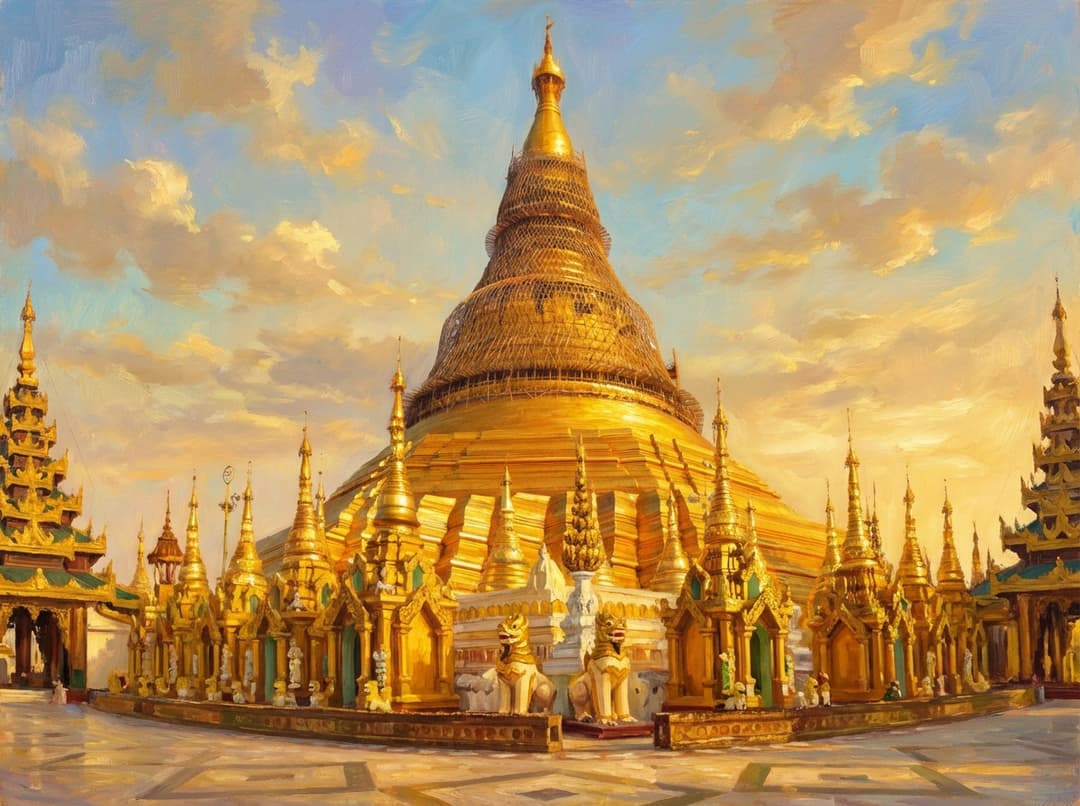
Visiting the Shwedagon Pagoda is a truly awe-inspiring experience. The sheer scale and golden brilliance of the stupa are captivating, especially when illuminated by the sun. Expect a serene and spiritual atmosphere, with monks chanting and devotees offering prayers. Remember to dress modestly, remove your shoes before entering, and be prepared to be amazed by the beauty and history of this sacred site.
Highlights
- Witness the golden splendor of the Shwedagon Pagoda.
- Explore the numerous shrines and pavilions surrounding the main stupa.
- Observe the rituals and traditions of Buddhist worship.
Things to Know
- Modest dress is required (trousers or knee-length shorts/skirts and t-shirts with elbow-length sleeves).
- Visitors must be barefoot.
- Photography is allowed, but avoid using flash inside the shrines.
Location
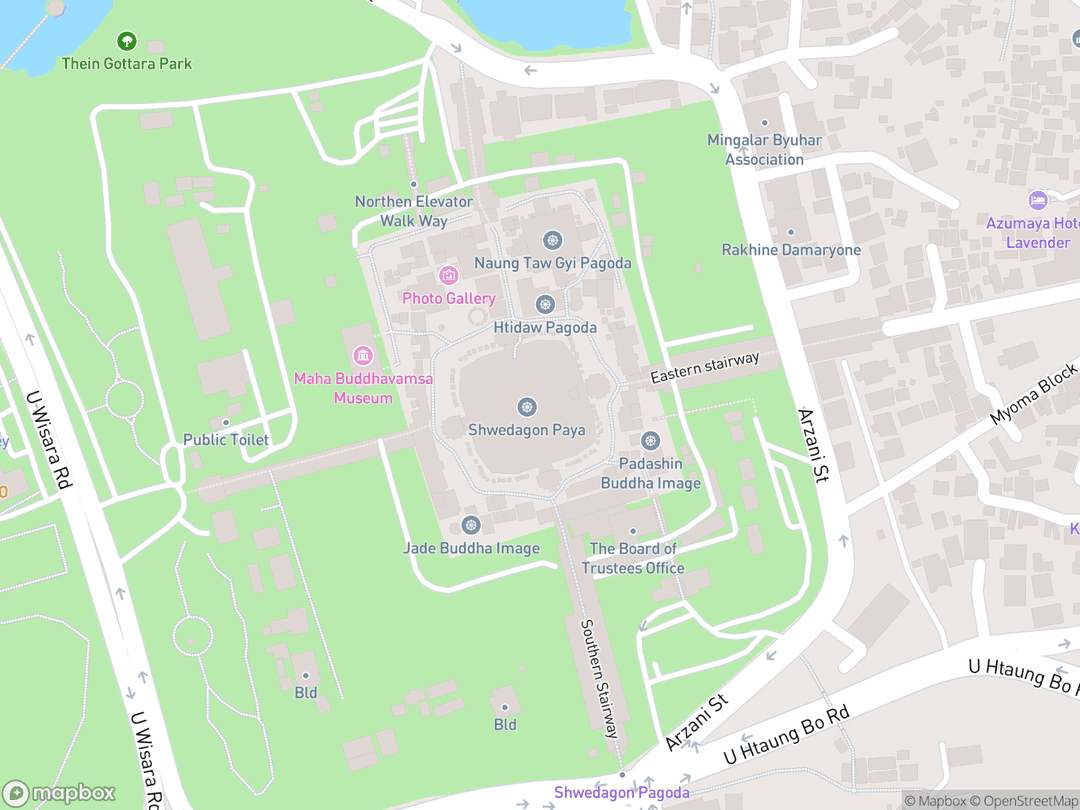
Shwedagon East Gate, West of the Royal Lake, Yangon, 11201, Myanmar
Hours: Open daily from 4:00 AM to 10:00 PM. Last admission is at 9:45 PM. Open 24 hours on special holidays.
Getting There: Taxis are readily available in Yangon.
Get DirectionsAbout
The Shwedagon Pagoda, officially named Shwedagon Zedi Daw, is a magnificent golden stupa that dominates the skyline of Yangon, Myanmar. Revered as the most sacred Buddhist site in the country, it attracts pilgrims and visitors from around the world. The pagoda is believed to enshrine relics of the four previous Buddhas of the present kalpa (era), including the staff of Kakusandha, the water filter of Konagamana, a piece of the robe of Kassapa, and eight strands of hair from Gautama.
Legend claims the pagoda is over 2,600 years old, making it the oldest Buddhist stupa in the world, although archaeological evidence suggests construction between the 6th and 10th centuries AD. Over the centuries, the pagoda has been expanded, renovated, and gilded, reaching its current height of 99 meters (325 ft) without the crown umbrella, and 112 meters (367 ft) with the spire.
The Shwedagon Pagoda is not only a religious monument but also a repository of Myanmar's cultural heritage. Its architecture, sculpture, and arts reflect the rich history and traditions of the country. The pagoda has been a focal point for both military occupation and political resistance, symbolizing the resilience and spirit of the Myanmar people. Visitors are captivated by the sheer beauty and spiritual atmosphere of this iconic landmark.
Gallery
Symbolic Elements
The temple's exterior features intricate carvings, each rich with spiritual meaning:

Relics of the Four Buddhas
The pagoda is believed to contain relics of the four previous Buddhas of the present kalpa (era). These relics include the staff of Kakusandha, the water filter of Konagamana, a piece of the robe of Kassapa, and eight strands of hair from the head of Gautama. These relics contribute to the pagoda's immense spiritual significance.

Planetary Posts
Eight small shrines, located on each of the eight corners of the main stupa, represent the seven days of the week (Wednesday is split into two, am and pm). Each shrine has a Buddha image, and devotees offer flowers, prayer flags, and water at these posts, seeking blessings and guidance.

Octagonal Base
The octagonal base of the pagoda represents stability and grounding in spiritual practice. This shape symbolizes the eightfold path in Buddhism, which leads to enlightenment. The solid foundation of the pagoda reflects the importance of a strong spiritual base in one's life.

Bell-Shaped Dome
The bell-shaped dome signifies enlightenment and the journey towards spiritual awakening. This architectural feature is a common element in Buddhist stupas, representing the potential for all beings to achieve enlightenment through the practice of Buddhist teachings and meditation.

Spire
The spire embodies aspiration and the quest for higher understanding. Rising high above the dome, the spire symbolizes the pursuit of knowledge and the desire to reach a higher state of consciousness. It serves as a reminder of the ultimate goal of spiritual practice.
Gold
The gold covering the pagoda symbolizes the purity of the Buddha's teachings and the enlightenment that can be attained through practicing these teachings. The shimmering gold reflects the radiant wisdom and compassion of the Buddha, inspiring devotees to follow the path to enlightenment.

Chinthes
Mythical lion-like creatures, known as Chinthes, serve as protectors of the sacred grounds. These guardian figures stand at the entrances, symbolizing the protection of the Buddhist faith and the warding off of evil influences. They represent strength, courage, and vigilance in safeguarding the sacred space.
Interesting Facts
Legend claims the Shwedagon Pagoda is over 2,600 years old, making it the oldest Buddhist stupa in the world.
The pagoda is covered with hundreds of gold plates, and the top of the stupa is encrusted with 4,531 diamonds.
The largest diamond on the stupa is 76 carats.
The Shwedagon Pagoda is also known as the "Great Golden Mountain Stupa".
The practice of donating gold to the pagoda started in the 15th century by Queen Shin Sawbu, who donated her weight in gold.
The pagoda has been damaged and rebuilt multiple times due to earthquakes.
The Shwedagon Pagoda is a repository of the best in Myanmar heritage – architecture, sculpture, and arts.
The pagoda's layout is intricate, occupying almost 50 hectares.
The Shwedagon Pagoda has been a focal point for military occupation and political resistance.
Yangon's zoning regulations cap the maximum height of buildings at 127 meters above sea level to ensure the Shwedagon's prominence in the city's skyline.
The formal name of the Shwedagon Pagoda is Shwedagon Zedi Daw, which translates as The Great Golden Mountain Stupa.
The Shwedagon Pagoda is believed to enshrine bodily relics of the historical Buddha, Gautama, as well as relics associated with the three other most recent previous Buddhas.
The Shwedagon Pagoda is considered the most sacred Buddhist site in Myanmar.
Common Questions
What is the significance of the Shwedagon Pagoda?
The Shwedagon Pagoda is the most sacred Buddhist site in Myanmar, believed to enshrine relics of the four previous Buddhas. It is a major pilgrimage destination and a symbol of Myanmar's cultural heritage.
What is the dress code for visiting the Shwedagon Pagoda?
Modest dress is required. Trousers or knee-length shorts/skirts and t-shirts with elbow-length sleeves are expected. Visitors must be barefoot.
What are the opening hours of the Shwedagon Pagoda?
The Shwedagon Pagoda is open daily from 4:00 AM to 10:00 PM. Last admission is at 9:45 PM. It is open 24 hours on special holidays.
How much does it cost to enter the Shwedagon Pagoda?
The entrance fee is $8 per person.
What is the best time to visit the Shwedagon Pagoda?
Weekdays are quieter. Early morning or late afternoon offer better light and cooler temperatures.
Related Stories
Explore the rich history, traditions, and people connected to this sacred site.
Featured Stories
Queen Shin Saw Pu's Generous Donation
1453–1472
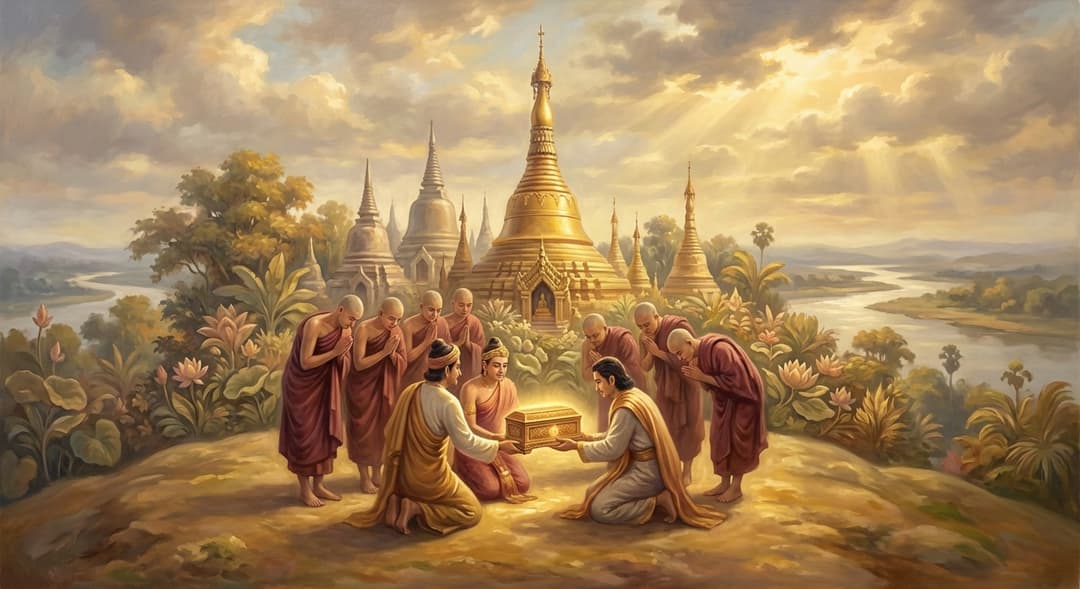
Queen Shin Saw Pu, a Mon ruler of the 15th century, played a pivotal role in shaping the Shwedagon Pagoda into the magnificent structure it is today. She not only raised the height of the pagoda to 40 meters but also initiated the tradition of gilding the structure with gold, a practice that continues to this day.
In an act of profound devotion, Queen Shin Saw Pu donated her own weight in gold to the pagoda, symbolizing her unwavering commitment to Buddhism and her desire to create a lasting legacy of faith. This act of generosity inspired countless others to contribute to the pagoda's upkeep and enhancement, ensuring its continued splendor for centuries to come.
Source: steemit.com
The Loss of the Great Bell of Dhammazedi
1608
In 1608, the Shwedagon Pagoda faced a grave threat when the Portuguese adventurer Filipe de Brito e Nicote plundered the sacred site. Driven by greed, he attempted to melt down the Great Bell of Dhammazedi, a massive bronze bell that had been donated to the pagoda centuries earlier.
As Brito attempted to transport the bell across the Bago River, disaster struck. The bell, along with Brito's ship, sank to the bottom of the river, lost forever. This tragic event serves as a reminder of the vulnerability of cultural treasures and the importance of protecting them from those who seek to exploit them.
Source: Historical Archives.org
The Pagoda as a Center of Political Resistance
20th Century
Throughout the 20th century, the Shwedagon Pagoda became a focal point for political activity during the Myanmar independence movement. The pagoda's sacred grounds provided a space for activists to gather, organize, and voice their opposition to colonial rule.
The pagoda's symbolic significance as a representation of Myanmar's cultural identity and spiritual values made it a powerful symbol of resistance. Despite facing persecution and repression, the activists remained steadfast in their commitment to achieving independence, drawing strength and inspiration from the pagoda's enduring presence.
Source: yangongui.de
Timeline
Construction of the original pagoda
The original pagoda is estimated to have been constructed by the Mon people during this time.
MilestoneKing Binnya U raises the pagoda to 18 m (59 ft)
King Binnya U of Martaban-Hanthawaddy raised the pagoda to a height of 18 meters.
MilestoneRepairs to the pagoda are recorded
Records indicate that repairs were made to the pagoda during this year.
RenovationQueen Shin Saw Pu raises the height to 40 m (130 ft) and gilds the structure
Queen Shin Saw Pu raised the height of the pagoda to 40 meters and gilded it with gold. She also donated her weight in gold to the pagoda.
MilestoneShwedagon Pagoda becomes a famous pilgrimage site
The Shwedagon Pagoda becomes the most famous Buddhist pilgrimage site in Burma.
EventFilipe de Brito e Nicote plunders the pagoda
The Portuguese adventurer Filipe de Brito e Nicote plundered the Shwedagon Pagoda, attempting to melt down the Great Bell of Dhammazedi.
EventEarthquake causes severe damage
An earthquake caused severe damage, bringing down the top of the stupa.
EventKing Hsinbyushin raises the pagoda to its current height
King Hsinbyushin raised the pagoda to its current height of 99 m (325 ft).
MilestoneBritish forces seize the pagoda
British forces seized and occupied the Shwedagon Pagoda during the First Anglo-Burmese War, using it as a fortress.
EventBritish forces occupy the pagoda again
The British again occupied the pagoda during the Second Anglo-Burmese War, remaining for 77 years.
EventKing Mindon Min donates a new hti (crown umbrella)
King Mindon Min donated a new hti (crown umbrella) to the pagoda.
MilestoneEarthquake causes minor damage
A major earthquake caused only minor damage to the pagoda.
EventMain stupa is fully refurbished
After a minor earthquake, the main stupa was fully refurbished.
RenovationConsidered for UNESCO World Heritage Site nomination
The Shwedagon Pagoda was considered for nomination as a UNESCO World Heritage Site.
EventSources & Research
Every fact on Temples.org is backed by verified Sources & Research. Each piece of information is rated by source tier and confidence level.
View All Sources (11)
| Field | Source | Tier | Retrieved |
|---|---|---|---|
| About & Historical Background | sacred-destinations.com (opens in a new tab) | B | 2024-02-29 |
| Location & Address | 2markers.com (opens in a new tab) | D | 2024-02-29 |
| Historical Timeline | UNESCO (opens in a new tab) | B | 2024-02-29 |
| Architectural Description | Study.com (opens in a new tab) | C | 2024-02-29 |
| Interesting Facts | sonasia-holiday.com (opens in a new tab) | D | 2024-02-29 |
| Architectural Description & Height | yangongui.de (opens in a new tab) | D | 2024-02-29 |
| Symbolic Elements | steemit.com (opens in a new tab) | C | 2024-02-29 |
| Visitor Information | swedishnomad.com (opens in a new tab) | D | 2024-02-29 |
| Visitor Information | thutatravel.com (opens in a new tab) | D | 2024-02-29 |
| Opening Hours | theshwedagonpagoda.com (opens in a new tab) | D | 2024-02-29 |
| Shwedagon Pagoda of the Four Sacred Relics | shwedagonpagoda.org.mm (opens in a new tab) | A | 2024-02-29 |