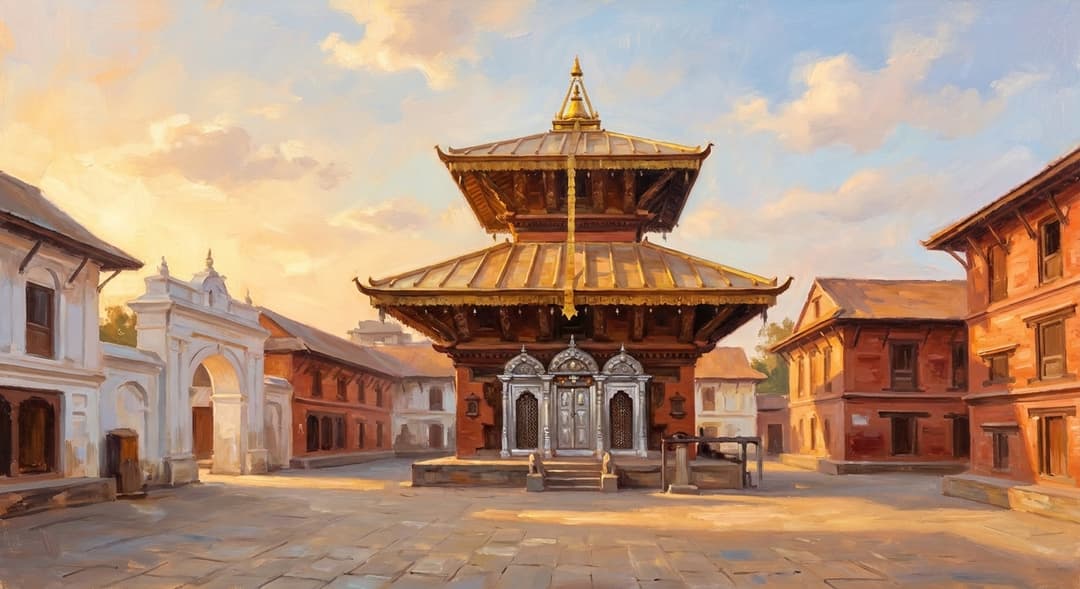
Visitor Insights
Visiting Pashupatinath Temple
The temple complex offers a transformative spiritual experience rooted in ancient Himalayan ritual traditions. Visitors witness active devotion, sacred evening river ceremonies, and the solemn reality of open-air Bagmati cremations.
Highlights
- Witness the mesmerizing Bagmati Sandhya Aarti every dusk along the riverbank.
- Observe the massive recumbent brass Nandi Bull guarding the western gateway.
- Explore over five hundred ancient subsidiary shrines across the lush hills.
- View the historic wooden roof struts carved with celestial deities.
Things to Know
- Only practicing Hindus are permitted inside the inner courtyard and main sanctum.
- Non-Hindu guests have full access to eastern river terraces and surrounding hills.
- Photography is strictly forbidden within the central courtyard enclosure.
- Expect massive devotional crowds during the sacred Maha Shivaratri festival.
Location
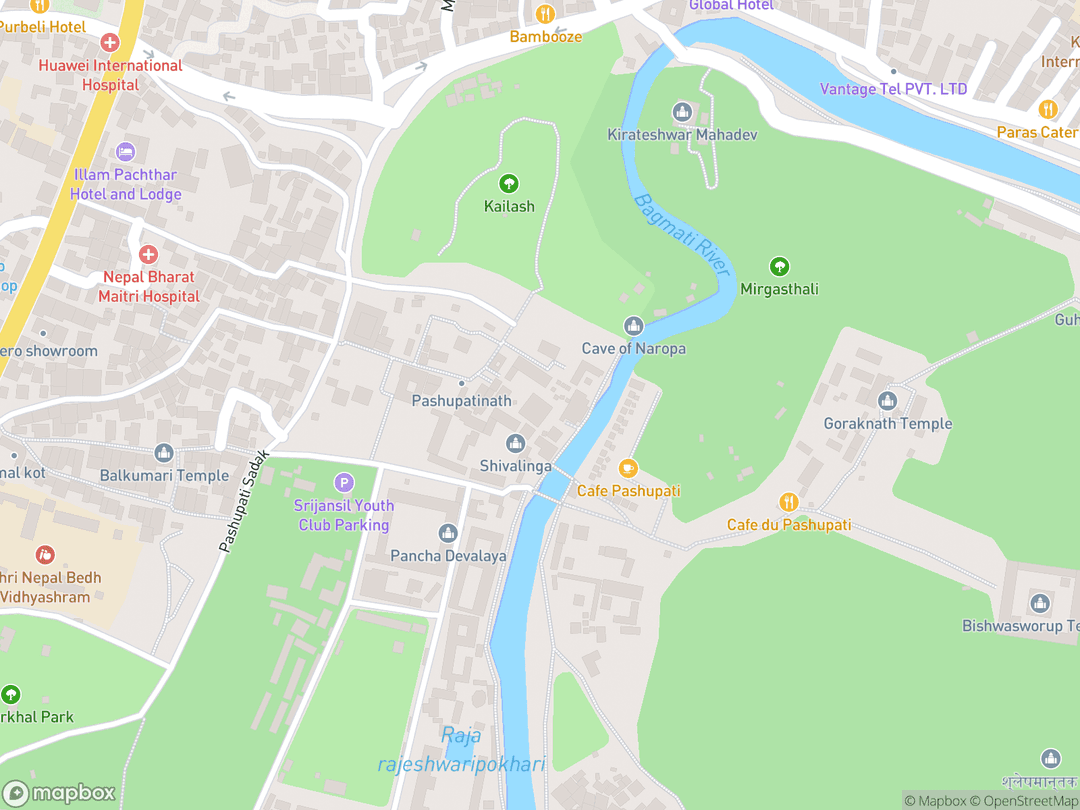
Pashupati Nath Road, Gaushala, Kathmandu 44600, Bagmati Province, Nepal
Hours: Daily 4:00 AM to 12:00 PM and 5:00 PM to 9:00 PM; riverbank grounds open continuously.
Getting There: Located five kilometers northeast of central Kathmandu and two kilometers from Tribhuvan Airport; alight at Gaushala Chowk.
Get DirectionsTips for Your Visit
Evening Aarti
Arrive across the riverbank by 5:30 PM to secure prime viewing for the daily musical Bagmati Sandhya Aarti.
Respectful Attire
Dress modestly with shoulders and knees fully covered, and remove leather goods before entering perimeter boundaries.
Cremation Ghat Etiquette
Maintain reverent silence and avoid taking close-up photographs near ongoing funeral pyres at Arya Ghat.
Footwear Guidance
Wear easily removable slip-on shoes as footwear must be deposited before entering the paved sacred precincts.
About
Pashupatinath Temple stands as the preeminent sanctuary of Shiva across the Himalayan region, seated majestically along the sacred Bagmati River. As a fundamental pillar of the broader Dharmic continuum, the sacred complex mirrors the cosmic axis where earthly existence converges with divine transcendence.
Originating in the Licchavi period and rebuilt into its present two-tiered gilded pagoda format in the late seventeenth century, the complex anchors Shaivite devotion across South Asia. The inner sanctum shelters a revered four-faced black stone Mukhalinga, manifesting the cosmic functions of creation, preservation, destruction, and spiritual release.
The temple grounds integrate active devotional puja with open-air cremation platforms along Arya Ghat, continually dramatizing the cyclical transit of mortal souls through worldly existence toward ultimate liberation. The holy sanctuary remains an enduring UNESCO World Heritage site and an irreplaceable jewel of Newar master craftsmanship.
Gallery
Symbolic Elements
The temple's exterior features intricate carvings, each rich with spiritual meaning:

Panchamukha Linga
The five-faced black chlorite lingam embodies the five primordial elements and cosmic creative acts.

Golden Gajur
The gilded pinnacle finial acts as a spiritual conduit focusing cosmic energy directly into the sanctum.

Tundal Roof Brackets
Carved wooden struts depicting the Mother Goddesses provide structural support while warding off negative forces.

Silver Torana Portals
Repousse silver tympanums over the four gateways depict Chepu devouring ego before devotees cross the threshold.

Colossal Brass Nandi
The massive recumbent bull illustrates the devoted human soul living in surrender to cosmic consciousness.

Arya Ghat Pyres
Continuous open-air funeral fires along the Bagmati physically confront pilgrims with mortal impermanence.

Two-Tiered Pagoda Roofs
Sweeping gilded copper roofs reflect classic Newar pagoda architecture ascending toward the heavens.
Interesting Facts
Only five qualified South Indian Vedic Brahmins serve as inner sanctum priests by unbroken tradition (Tier A).
The primary pagoda survived the catastrophic 2015 Gorkha earthquake with zero structural damage (Tier B).
Himalayan lore considers Pashupatinath the divine bull head complementary to Kedarnath's hump in India (Tier B).
Every royal monarch of the Nepalese Shah dynasty received open-air funeral rites at Arya Ghat (Tier A).
Legend says the holy lingam was discovered after the celestial cow Kamadhenu watered it with milk (Tier C).
A massive gold drainage basin weighing more than one hundred kilograms was installed in 2022 (Tier B).
The riverbanks serve as a vital gathering center for wandering tantric Aghori ascetics (Tier B).
The complex forms a sacred tantric polarity with the Guhyeshwari Shakti Peetha downstream (Tier B).
Common Questions
Can non-Hindu visitors enter the main Pashupatinath sanctum?
No, entrance into the main courtyard is strictly reserved for practicing Hindus.
Why are the chief priests recruited from South India?
The tradition was codified by Adi Shankaracharya in the ninth century to prevent local political influence.
What is the best location for non-Hindu visitors to view the temple?
The elevated stone terraces across the eastern bank of the Bagmati River offer panoramic sightlines.
What does the name Pashupatinath signify?
It translates as 'Lord of Sentient Beings', celebrating Shiva's grace in liberating souls from worldly bonds.
Are cameras permitted inside the inner courtyard?
Cameras and smartphones are strictly prohibited within the inner sanctum courtyard.
Featured Stories
The Discovery of the Luminous Lingam
5th century
Ancient chronicles relate that the celestial cow Kamadhenu descended daily to an unremarkable mound, irrigating the soil with her milk. Intrigued cowherds carefully excavated the earth and uncovered the radiant black stone Mukhalinga shining with divine light. King Supuspa Deva immediately raised the valley's first wooden shrine to enshrine the self-manifested deity.
Source: Gopalarajavamsavali Chronicles
The Enduring Southern Lineage
820
Upon visiting the Kathmandu Valley during his spiritual tour, Adi Shankaracharya established a lasting mandate that only Karnataka scholars could serve as chief priests. This custom was instituted to shield the sanctuary's spiritual rituals from local dynastic rivalry and palace turmoil. For over a millennium, these chosen Bhattas have conducted the daily sanctum rituals undisturbed.
Source: Pashupati Area Development Trust Historical Archives
Survival Amidst Earth's Tremors
April 25, 2015
When the violent 7.8 magnitude Gorkha earthquake shook Nepal, ancient temples throughout Kathmandu collapsed into dust within seconds. Miraculously, Pashupatinath's primary pagoda stood firm without structural fracture, continuing its daily sacred worship uninterrupted. Devotees hailed its preservation as a testament both to Newar timber joinery and divine protection.
Source: UNESCO Post-Disaster Heritage Assessment
Timeline
Licchavi Foundation
Early chronicles and King Manadeva epigraphs validate the establishment of the sacred royal shrine.
MilestoneAdi Shankaracharya Reforms
The revered philosopher establishes Vedic liturgical standards and mandates South Indian Bhatta priests.
EventBengal Sultanate Incursion
Forces under Sultan Shamsuddin Ilyas Shah invade the Kathmandu Valley and damage the original lingam.
EventConsecration of Four-Faced Lingam
King Jayasthiti Malla reconsecrates the sanctum with the current four-faced black stone Mukhalinga.
MilestonePagoda Superstructure Reconstruction
Queen Mother Riddhilakshmi and King Bhupalendra Malla complete the reconstructed two-tiered gilded pagoda.
DedicationSilver Portals Bestowed
King Girvan Yuddha Bikram Shah enriches the four cardinal portals with ornate embossed silver plating.
RenovationUNESCO Inscription
The holy complex is inscribed as an essential monument zone of the Kathmandu Valley World Heritage site.
MilestonePADT Established
The Pashupati Area Development Trust is chartered to conserve more than five hundred peripheral monuments.
MilestonePriestly Tradition Restored
The Supreme Court of Nepal preserves the centuries-old lineage of South Indian Vedic Bhatta priests.
EventResilience in Gorkha Earthquake
The primary pagoda survives the devastating 7.8 Mw earthquake completely structurally intact.
EventGold Jalhari Installation
A ceremonial golden drainage basin weighing over one hundred kilograms is installed inside the sanctum.
RenovationHistory by Decade
450s–500s — The Licchavi Dawn
Under King Supuspa Deva and subsequent Licchavi rulers, the first formal multi-tiered sanctuary was erected around the self-manifested lingam. Epigraphs of King Manadeva confirm that Pashupati was recognized as the guardian protector of the sovereign realm.
800s–850s — Shankaracharya's Reforms
The philosopher Adi Shankaracharya arrived in the valley and reorganized temple administration. He established rigorous Vedic ritual protocols and mandated South Indian Bhattas as perpetual chief officiants.
1340s–1360s — Incursion and Reconsecration
In 1349, Sultan Shamsuddin Ilyas Shah of Bengal sacked the valley and shattered the original Licchavi stone lingam. King Jayasthiti Malla commissioned Newar sculptors to carve and reconsecrate the present four-faced black stone Mukhalinga in 1360.
1690s — Rebuilding the Golden Pagoda
Following extensive timber damage caused by termites, Queen Mother Riddhilakshmi and King Bhupalendra Malla completely rebuilt the temple. Between 1692 and 1697, indigenous master Newar artisans completed the current two-story gilded pagoda.
1970s–1980s — Global Heritage Conservation
The site gained worldwide prominence with its 1979 inscription into the UNESCO World Heritage register. In 1986, the royal charter created the Pashupati Area Development Trust to oversee more than five hundred surrounding monuments.
2010s–Present — Earthquakes and Preservation
The primary temple miraculously survived the violent 2015 Gorkha earthquake unscathed while adjacent pavilions underwent conservation. In 2022, an ornate gold water basin was cast and consecrated around the sacred central lingam.
Architecture & Facilities
Pashupatinath is the paramount example of classical Nepalese Newar pagoda architecture, manifesting a two-tiered stepped square pyramid set upon multi-layered granite plinths. Its structural logic harmonizes dense fired brickwork with intricately carved sal timber, crowned by sweeping gilded copper roofs that evoke sacred Himalayan peaks.
Building Materials
Sal Timber Framework
Dense Shorea robusta timber forms the load-bearing beams and intricately carved figurative roof brackets.
Gilded Copper Roofs
Beaten copper sheets coated in gold leaf cover the sweeping eaves to withstand heavy monsoon downpours.
Silver Portal Repousse
Ornate silver sheeting beaten with relief figures of guardian divinities sheathes each cardinal doorway.
Dachi Appa Brickwork
Traditional kiln-fired glossy clay bricks bonded with historic mud mortar compose the thick structural walls.
Interior Features
Garbhagriha
The square stone sanctum holds the central four-faced lingam illuminated solely by burning oil lamps.
Chaturmukha Mukhalinga
The primary one-meter black stone lingam displays four finely carved cardinal divine faces beneath a rounded dome.
Silver Yoni Basin
The stone pedestal drainage basin collects consecrated offerings of milk, water, and bilva leaves.
Western Threshold
The primary western portal serves as the main ceremonial entryway for the South Indian Bhatta priests.
Temple Grounds
The complex spans 264 hectares along the Bagmati River, encompassing stepped stone cremation ghats, colonnaded pilgrim rest houses, the Guhyeshwari shrine, and over five hundred stone votive lingam pavilions.
Additional Facilities
The site features traditional pilgrim dharamsalas, medical dispensary stations, administrative guthi offices, and riverside ceremonial viewing decks.
Religious Significance
Within the Dharmic continuum, Pashupatinath serves as an energetic threshold bridging transient samsaric existence with liberation. Shaivite theology regards Shiva here as Pashupati—the divine shepherd who removes the cords of worldly bondage from seeking souls.
To provide a consecrated portal for worship, ancestral rites, and spiritual liberation from the cycle of rebirth.
Sacred Ordinances
Daily Mukhalinga Puja
Elaborate morning and evening sanctum ablutions conducted with milk, honey, sandalwood, and bilva leaves.
Bagmati Sandhya Aarti
A dusk choral offering of oil lamps, conch blasts, and sacred Vedic hymns along the sacred riverbank.
Antyeshti Funeral Rites
Open-air riverside cremation rituals performed at Arya Ghat to release the subtle body into the elements.
The Five Manifestations of Shiva
Each face of the Mukhalinga governs a cosmic element and direction: Tatpurusha faces east (air), Sadyojata west (earth), Vamadeva north (water), Aghora south (fire), while Ishana faces upward (space).
The Living Continuum of Samsara
By joining daily temple worship directly with smoking cremation pyres along the Bagmati, Pashupatinath continuously confronts pilgrims with impermanence, pointing the spirit toward transcendence.
Major Festivals
Maha Shivaratri
February or March (Phalguna Krishna Chaturdashi)
The paramount festival attracting hundreds of thousands of pilgrims and sadhus from across Nepal and India.
Haritalika Teej
August or September (Bhadra Shukla Tritiya)
A major festival where tens of thousands of women dressed in crimson gather to offer prayers for family well-being.
Balachaturdashi
November or December (Marga Krishna Chaturdashi)
A nocturnal vigil where devotees scatter seven sacred grains along holy forest paths for departed forebears.
Sources & Research
Every fact on Temples.org is backed by verified Sources & Research. Each piece of information is rated by source tier and confidence level.
View All Sources (8)
| Field | Source | Tier | Retrieved |
|---|---|---|---|
| About & Historical Background | Pashupati Area Development Trust (opens in a new tab) | A | 2026-03-30 |
| Architecture & Facilities | UNESCO World Heritage Centre (opens in a new tab) | B | 2026-03-30 |
| Historical Timeline | Government of Nepal National Portal (opens in a new tab) | A | 2026-03-30 |
| Visitor Insights & Operating Hours | Kathmandu Metropolitan City Official Portal (opens in a new tab) | A | 2026-03-30 |
| Priestly Traditions & Governance | Encyclopaedia Britannica (opens in a new tab) | B | 2026-03-30 |
| Religious Significance & Festivals | Ministry of Culture, Tourism and Civil Aviation Nepal (opens in a new tab) | A | 2026-03-30 |
| Archaeological Assessment & Earthquakes | Department of Archaeology Nepal (opens in a new tab) | B | 2026-03-30 |
| Ghat Customs & Bagmati Rituals | Nepal Tourism Board (opens in a new tab) | B | 2026-03-30 |