Visitor Insights
Visiting Portuguese Synagogue
Visiting the Portuguese Synagogue offers a unique glimpse into the rich history and cultural heritage of Amsterdam's Sephardic Jewish community. The synagogue's stunning architecture, intricate interior, and historical significance make it a must-see destination for visitors interested in Jewish history, religious architecture, and the cultural diversity of Amsterdam.
Highlights
- Explore the synagogue's grand interior, illuminated by hundreds of candles.
- Discover the Ets Haim Library, the oldest functioning Jewish library in the world.
- Learn about the history of the Sephardic Jewish community in Amsterdam.
Things to Know
- The synagogue is closed on Saturdays, Jewish holidays, and special events.
- Gentlemen are requested to wear a provided yarmulke (cap) inside the Esnoga.
- Photography is allowed in some areas of the synagogue, but flash photography is prohibited.
Location
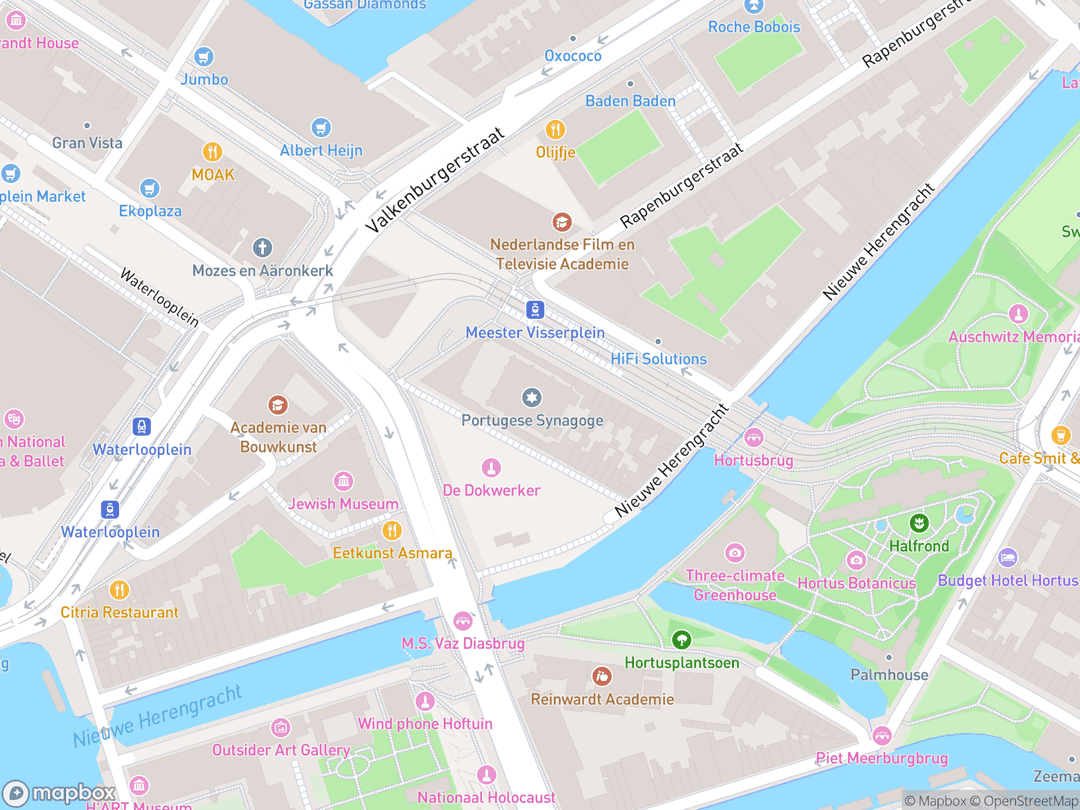
Mr. Visserplein 3, 1011 RD Amsterdam, Netherlands
Hours: Sunday to Friday. April to October: 10:00 AM to 5:00 PM (closes at 4:00 PM on Fridays). November to March: 10:00 AM to 4:00 PM (closes at 2:00 PM on Fridays).
Getting There: From Amsterdam Central, take tram 14 or metro lines 51, 53 or 54 to Waterlooplein.
Get DirectionsAbout
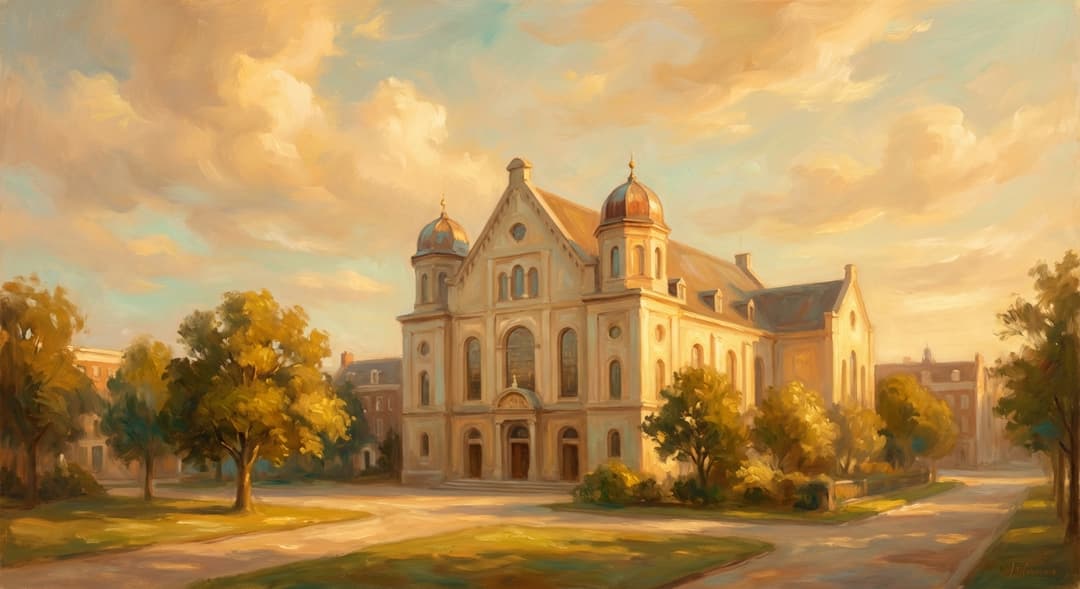
The Portuguese Synagogue, also known as Esnoga or Snoge, stands as a magnificent testament to the rich history and enduring legacy of the Sephardic Jewish community in Amsterdam. Constructed in the 17th century, during the Dutch Golden Age, it served as a beacon of religious freedom and cultural expression for Jews who had sought refuge from persecution in Spain and Portugal. The synagogue's grand architecture and intricate interior reflect the community's prosperity and its commitment to preserving its traditions.
The decision to build the Esnoga in 1665 marked a pivotal moment for the Amsterdam Sephardic community, which had grown to become one of the largest and most influential Jewish communities in Europe. The synagogue's design, inspired by the plans for King Solomon's Temple, symbolized the community's aspirations for spiritual elevation and its connection to its ancestral roots. The construction process, which began in 1671 and concluded in 1675, was a testament to the community's collective effort and its unwavering dedication to creating a sacred space for worship and communal gathering.
Throughout its history, the Portuguese Synagogue has served as a center for Jewish learning, cultural exchange, and religious observance. It has witnessed both periods of prosperity and times of adversity, including the dark days of World War II, when the synagogue's treasures were threatened by Nazi persecution. Despite these challenges, the synagogue has persevered, remaining a vibrant symbol of Jewish identity and a cherished landmark in the heart of Amsterdam. Today, it continues to serve as a functioning house of prayer, a museum, and a venue for cultural events, welcoming visitors from around the world to experience its unique atmosphere and learn about its remarkable history.
Gallery
Symbolic Elements
The temple's exterior features intricate carvings, each rich with spiritual meaning:

The Ark (Aron Kodesh)
The ark, located in the southeast corner and facing Jerusalem, houses the Torah scrolls, which contain the Five Books of Moses. The Torah is the most sacred text in Judaism, and the ark symbolizes the presence of God and the covenant between God and the Jewish people.

The Tebah (Bimah)
The tebah, or bimah, is a raised platform from which the Torah is read and prayers are led. Its placement opposite the ark signifies the importance of communal reading and understanding of Jewish law and the central role of the rabbi in interpreting and transmitting Jewish tradition.

Twelve Columns
The women's gallery is supported by twelve columns, representing the twelve tribes of Israel. This symbolizes the unity and historical continuity of the Jewish people, connecting the present generation to its ancient roots and shared heritage.

Candles
The synagogue is illuminated by hundreds of candles in brass chandeliers, creating a unique and awe-inspiring atmosphere. Light is a symbol of divine presence, joy, and celebration in Judaism, representing the illumination of the soul and the pursuit of knowledge and understanding.

Inscription
The inscription above the entrance is from Psalm 5:8: 'In the abundance of Thy loving kindness will I come into Thy house'. This inscription expresses the community's devotion to God and its gratitude for the opportunity to worship in His house, seeking His guidance and protection.

Sand Floor
The floor is covered with fine sand, a traditional Dutch practice used to absorb dust and moisture and muffle noise. This practice reflects the community's adaptation to its environment and its commitment to maintaining a clean and peaceful space for worship.

Absence of Electricity
The synagogue's deliberate absence of electricity and reliance on candlelight preserves its historical character and creates a unique atmosphere that transports visitors back in time. This choice reflects a commitment to tradition and a desire to maintain the synagogue's original ambiance.

Red Brick Exterior
The synagogue's exterior is made of large red bricks, a common building material in Amsterdam during the 17th century. The red brick exterior provides a sense of warmth and solidity, blending seamlessly with the surrounding architecture and reflecting the community's integration into Dutch society.
Interesting Facts
The Amsterdam Sephardic community was one of the largest and richest Jewish communities in Europe during the Dutch Golden Age.
The synagogue was intended to be the largest in the world at the time of its construction.
The inscription above the entrance includes the date 1672, the year the building was intended to be completed, but construction was delayed due to war.
The interior of the synagogue has remained completely intact, with no electricity or heating, and is lit by hundreds of candles.
The floor is covered with fine sand, a traditional Dutch practice used to absorb dust and moisture and muffle noise.
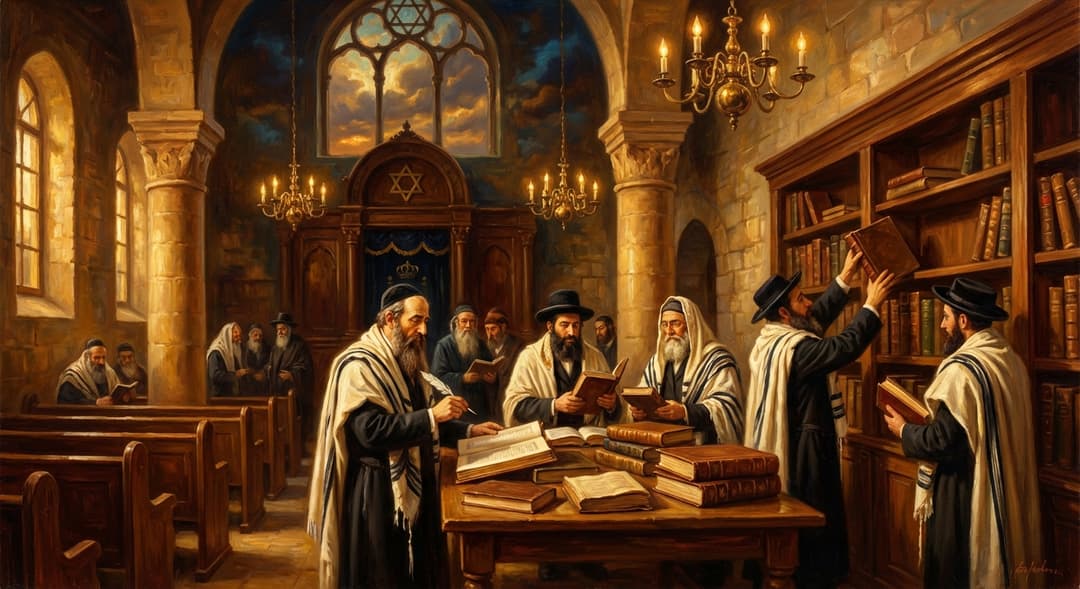
The Ets Haim Library, located within the synagogue complex, is the oldest functioning Jewish library in the world.
The library contains 560 manuscripts and 30,000 printed works.
The synagogue played a crucial role during World War II, safeguarding Jewish ritual items from the Nazis.
The Portuguese Synagogue is part of the Jewish Cultural Quarter, which also includes the Jewish Museum, the Jewish Museum Junior, the Hollandsche Schouwburg, and the Dutch National Holocaust Museum.
Candlelight concerts are held in the synagogue, creating a unique and memorable experience.
The synagogue is still used for weekly services, preserving its religious significance and cultural heritage.
Common Questions
What is the Portuguese Synagogue also known as?
The Portuguese Synagogue is also known as the Esnoga or Snoge, which means "synagogue" in Ladino, the traditional Judaeo-Spanish language of Sephardi Jews.
When was the Portuguese Synagogue built?
The Portuguese Synagogue was built between 1671 and 1675, during the Dutch Golden Age, a period of great prosperity and cultural flourishing in the Netherlands.
What is the architectural style of the Portuguese Synagogue?
The Portuguese Synagogue showcases Baroque architecture, characterized by its grand scale, ornate details, and dramatic use of light and shadow. The design was based on plans for King Solomon's Temple.
What are the opening hours of the Portuguese Synagogue?
The Portuguese Synagogue is open from Sunday to Friday. From April to October, it is open from 10:00 AM to 5:00 PM (closes at 4:00 PM on Fridays). From November to March, it is open from 10:00 AM to 4:00 PM (closes at 2:00 PM on Fridays). It is closed on Saturdays, Jewish Holidays, and special events.
How can I get to the Portuguese Synagogue?
From Amsterdam Central, you can take tram 14 or metro lines 51, 53 or 54 to Waterlooplein, which is a short walk from the Portuguese Synagogue.
Related Stories
Explore the rich history, traditions, and people connected to this sacred site.
Featured Stories
The Dedication Ceremony
August 2, 1675
The dedication of the Portuguese Synagogue on August 2, 1675, was a momentous occasion for the Amsterdam Sephardic community. After years of planning and construction, the grand synagogue finally opened its doors, welcoming congregants to a sacred space that reflected their prosperity, faith, and cultural identity. The ceremony was a lavish affair, attended by community leaders, prominent citizens, and representatives from the Dutch government.
The day began with prayers and blessings, followed by the ceremonial opening of the ark and the reading of the Torah. The synagogue was filled with music, song, and joyous celebration, as the community expressed its gratitude for the completion of its magnificent house of worship. The dedication ceremony marked a new chapter in the history of the Amsterdam Sephardic community, solidifying its position as a center for Jewish learning, culture, and religious observance.
The dedication was followed by eight days of celebrations, underscoring the significance of the event and the community's deep connection to its new synagogue. The Portuguese Synagogue quickly became a symbol of Jewish resilience, cultural pride, and religious freedom, attracting visitors from around the world and inspiring generations to come.
Source: https://www.jck.nl/en/location/portuguese-synagogue
Safeguarding Ritual Items During World War II
1940s
During the dark days of World War II, the Portuguese Synagogue played a crucial role in safeguarding Jewish ritual items from the Nazis. As the threat of persecution loomed, community leaders worked tirelessly to protect the synagogue's treasures, including Torah scrolls, silver ornaments, and other sacred objects. These items were carefully hidden within the synagogue complex, concealed from the prying eyes of the occupying forces.
The community's efforts to protect its cultural heritage were fraught with danger, as any act of defiance could have resulted in severe consequences. Despite the risks, community members remained steadfast in their commitment to preserving their traditions and protecting their sacred objects from desecration. The successful concealment of these items ensured that the synagogue's legacy would endure, even in the face of unimaginable adversity.
After the war, the hidden treasures were recovered, and the synagogue was restored to its former glory. The story of the community's courage and resilience during World War II serves as a powerful reminder of the importance of preserving cultural heritage and standing up against oppression.
Source: https://www.esnoga.com/
The Return of the Ets Haim Library Collection
2000
The return of the Ets Haim Library collection to Amsterdam in 2000 marked a joyous homecoming for a priceless collection of Jewish texts and manuscripts. During World War II, the library's contents had been shipped to Germany by the Nazis, threatening the survival of a vital part of Jewish cultural heritage. After the war, the collection was recovered, but it remained in Jerusalem for several decades, awaiting its eventual return to Amsterdam.
The repatriation of the Ets Haim Library collection was a complex and emotional process, involving negotiations between the Dutch government, the Jewish community, and the Israeli authorities. Finally, in 2000, the books were returned to Amsterdam, where they were welcomed with great fanfare and celebration. The return of the collection symbolized the resilience of the Jewish community and its unwavering commitment to preserving its cultural heritage.
Today, the Ets Haim Library stands as a testament to the enduring power of knowledge and the importance of safeguarding cultural treasures for future generations. The library's collection continues to inspire scholars, students, and visitors from around the world, ensuring that the legacy of Amsterdam's Sephardic Jewish community will live on for centuries to come.
Source: https://www.huji.ac.il/en
Timeline
Sephardic Jews Seek Refuge in Amsterdam
Sephardic Jews, facing persecution in Spain and Portugal, seek refuge in Amsterdam, establishing three Jewish communities.
MilestoneThree Jewish Communities Merge
The three Jewish communities merge to form Talmud Torah, the Portuguese-Israelite Community.
MilestoneDecision to Build a New Synagogue
The Jewish community decided to build a new synagogue to accommodate its growing population and enhance its religious and cultural life.
MilestoneAcquisition of the Site
The Sephardic Jewish community acquired the site for the new synagogue, marking a significant step towards realizing its vision of a grand house of worship.
MilestoneConstruction Begins
Construction began on April 17, with Elias Bouwman as the architect, signaling the start of a transformative project that would shape the community's identity.
component.timeline.groundbreakingCompletion and Opening of the Esnoga
The Esnoga was completed and opened on August 2 with a grand ceremony, marking a momentous occasion for the Amsterdam Sephardic community.
DedicationAmsterdam Becomes a Center for Jewish Learning
Amsterdam becomes a center for Jewish learning and the West-Sephardic world, attracting scholars, artists, and intellectuals from across Europe.
EventWindows Replaced and New Door Built
The windows were replaced, and a wooden, double-entrance door was built, reflecting the community's ongoing efforts to maintain and improve its sacred space.
RenovationDavid Montezinos Bequeaths His Collection
Librarian David Montezinos bequeathed his private collection to Ets Haim, which was then renamed Ets Haim/Livraria Montezinos, enriching the library's holdings and solidifying its reputation as a center for Jewish scholarship.
EventLibrary Contents Shipped to Germany
During World War II, the library's contents were shipped to Germany by the Nazis, threatening the survival of a priceless collection of Jewish texts and manuscripts.
EventServices Resume at the Esnoga
Services resumed at the Esnoga shortly after the liberation of the Netherlands, marking a triumphant return to normalcy and a reaffirmation of the community's faith.
EventLibrary Collection Returned
The library collection was returned from Germany after the war, a miraculous recovery that preserved a vital part of Jewish cultural heritage.
EventWinter Synagogue Redesigned
The former Ets Haim seminary auditorium was redesigned as a winter synagogue, and central heating and electric lighting were added, enhancing the comfort and functionality of the space.
RenovationCore Collection Housed in Jerusalem
The trustees of Ets Haim were forced to house the valuable core collection with the Jewish National and University Library in Jerusalem, a temporary measure to ensure the safety and preservation of the collection.
EventBooks Returned to Amsterdam
The books were returned to Amsterdam, marking a joyous homecoming and a renewed commitment to preserving Jewish cultural heritage in the Netherlands.
EventEts Haim Added to UNESCO's Memory of the World Register
The Ets Haim library was added to UNESCO's Memory of the World International Register, recognizing its significance as a repository of Jewish cultural heritage and a testament to the enduring power of knowledge.
MilestoneRestoration Project
A major renovation restored the building complex to its original form, preserving its architectural integrity and enhancing its appeal to visitors from around the world.
RenovationManuscripts Digitized
In partnership with the National Library of Israel, a majority of the manuscripts were digitized and made available online, expanding access to Jewish cultural heritage and promoting scholarly research.
Event350th Anniversary Celebration
The synagogue celebrated its 350th anniversary, a momentous occasion that highlighted its enduring legacy and its continued relevance as a center for Jewish life and culture.
EventArchitecture & Facilities
Dutch Baroque architecture designed by Elias Bouwman with contributions from city architect Daniel Stalpaert, inspired by the biblical plans for King Solomon's Temple. The red-brick exterior, completed in 1675, presents a restrained Dutch classical facade with arched windows and a prominent gabled roofline. The interior features a grand barrel-vaulted nave supported by twelve stone columns representing the twelve tribes of Israel, with a women's gallery running along three sides. The sanctuary is illuminated solely by over 1,000 candles in brass chandeliers and candelabras — the synagogue has never been fitted with electric lighting. Floors are covered with fine sand, a traditional Dutch practice to absorb dust, moisture, and muffle footsteps. The carved wooden Hechal (ark) faces southeast toward Jerusalem, with the Tebah (reading platform) placed at the opposite end. The complex includes the Ets Haim/Livraria Montezinos — the oldest functioning Jewish library in the world (UNESCO Memory of the World) — a winter synagogue, courtyard, and community offices.
Religious Significance
Portuguese Synagogue stands as a landmark of Jewish religious heritage, representing the enduring commitment of the Jewish people to communal worship, Torah study, and the preservation of sacred tradition across centuries of diaspora. Synagogues serve as the spiritual heart of Jewish communities — places where the Torah is read, prayers are recited, and the bond between God and the people of Israel is renewed through ancient liturgy that connects each generation to its ancestors.
The synagogue serves three essential functions in Jewish life: as a Beit Tefilah (house of prayer), where daily and Shabbat services maintain the rhythm of Jewish worship; as a Beit Midrash (house of study), where Torah and Talmud are studied and debated; and as a Beit Knesset (house of assembly), where the community gathers for celebrations, mourning, and mutual support. It is the institution that has sustained Jewish identity and practice through millennia of exile and dispersion.
Sacred Ordinances
Shabbat Services
Weekly Sabbath services, held from Friday evening through Saturday, are the spiritual centerpiece of Jewish communal life. The congregation gathers for Kabbalat Shabbat (welcoming the Sabbath), Shacharit (morning prayer), the Torah reading, and Musaf (additional prayer), creating a sacred rhythm of rest, worship, and renewal.
Torah Reading
The public reading of the Torah scroll is the most sacred act of Jewish worship. The Torah is divided into weekly portions (parashot) that are read in sequence over the course of a year, ensuring that the entire Five Books of Moses are heard by the congregation annually. The Torah scroll itself is handwritten on parchment by a trained scribe (sofer) and is treated with profound reverence.
Daily Prayer Services
Traditional Jewish practice calls for three daily prayer services — Shacharit (morning), Mincha (afternoon), and Ma'ariv (evening). These services, which require a minyan (quorum of ten adults), maintain the constant Jewish dialogue with God and echo the ancient Temple sacrifices that were offered at similar times.
Life-Cycle Ceremonies
The synagogue hosts and sanctifies major life events including bar and bat mitzvahs, weddings, and memorial services. These ceremonies weave individual lives into the fabric of communal memory and sacred tradition, marking each milestone with prayer, Torah, and the blessings of the community.
Diaspora and Resilience
This synagogue stands as a powerful symbol of Jewish resilience and the determination to maintain religious identity across centuries of migration, persecution, and cultural pressure. The history of this community reflects the broader story of the Jewish diaspora — the capacity to rebuild sacred spaces, reconstitute communities, and transmit tradition from generation to generation despite the most challenging circumstances. Every prayer recited within these walls echoes the faith of ancestors who refused to abandon their covenant with God.
Torah and Community
At the heart of synagogue worship is the Torah — the sacred scroll containing the Five Books of Moses that has served as the foundation of Jewish law, ethics, and identity for over three thousand years. The synagogue is where Torah comes alive through public reading, interpretation, and debate. The tradition of communal Torah study reflects the Jewish conviction that divine wisdom is not the province of a priestly class but belongs to the entire people, and that every generation must wrestle with the text anew to discover its meaning for their own time.
Sources & Research
Every fact on Temples.org is backed by verified Sources & Research. Each piece of information is rated by source tier and confidence level.
View All Sources (6)
| Field | Source | Tier | Retrieved |
|---|---|---|---|
| Portuguese Synagogue History | Jewish Cultural Quarter (opens in a new tab) | B | 2024-01-30 |
| Portuguese Synagogue Details | Amsterdam Tips (opens in a new tab) | D | 2024-01-30 |
| Portuguese Synagogue Overview | Esnoga (opens in a new tab) | C | 2024-01-30 |
| Portuguese Synagogue Information | Amsterdam Sights (opens in a new tab) | B | 2024-01-30 |
| Portuguese Synagogue Article | M for Amsterdam (opens in a new tab) | C | 2024-01-30 |
| Portuguese Synagogue Article | Portuguese Jewish News (opens in a new tab) | A | 2024-01-30 |