Visitor Insights
Visiting Gurdwara Panja Sahib
Gurdwara Panja Sahib welcomes visitors and pilgrims worldwide with open hospitality and daily community meals. Guests must dress modestly, remove footwear, and cover their heads before entering the sacred precincts.
Highlights
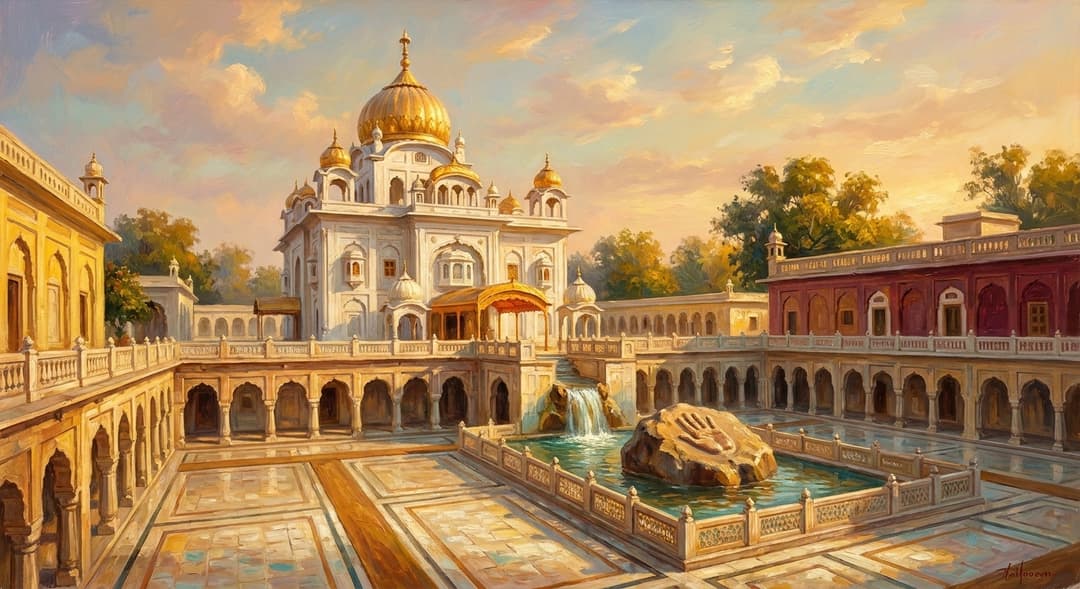
- Revering the sacred rock bearing Guru Nanak's handprint
- Taking a holy dip in the crystal-clear natural sarovar spring
- Partaking in fresh communal langar served continuously
- Exploring the historic Sikh-Mughal domed courtyard complex
Things to Know
- Head coverings and modest attire are strictly mandatory for all visitors
- Shoes and socks must be deposited at the entrance cloaking area
- Special security clearance or permits may be required for foreign passport holders
- Photography is restricted inside the primary inner sanctum
Location
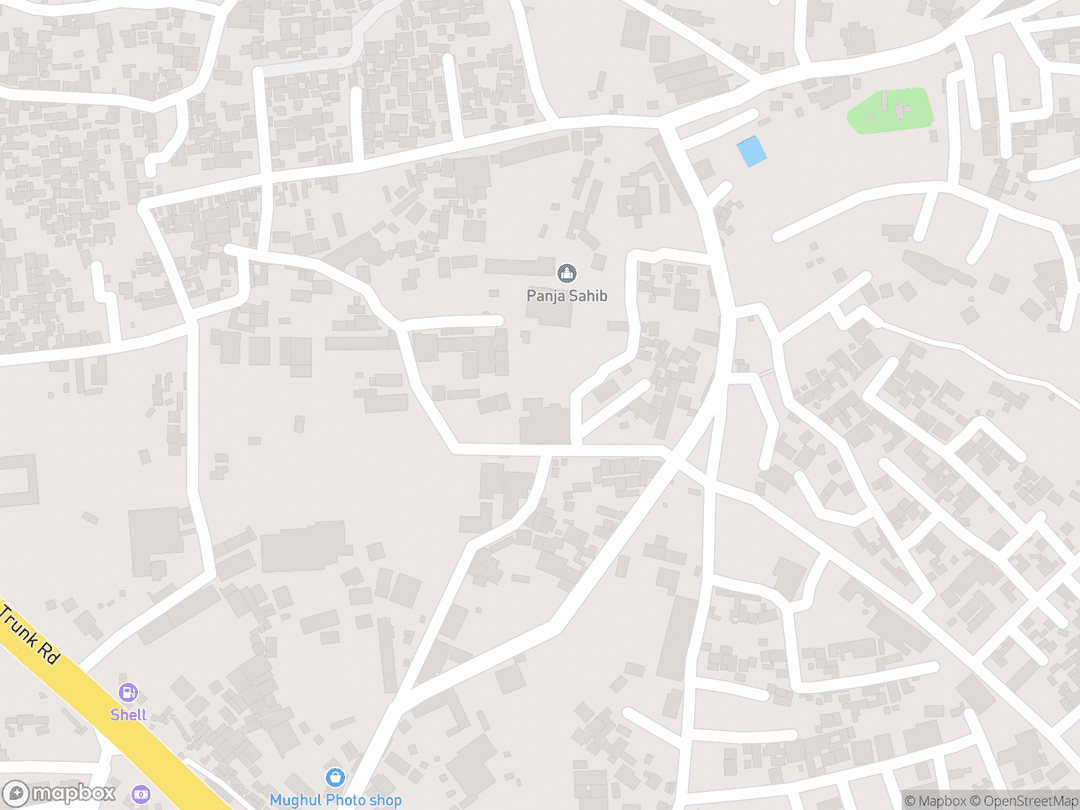
Hasan Abdal, Attock District, Punjab, Pakistan
Hours: Open daily from 4:00 AM to 9:00 PM for darshan and prayers
Getting There: Located in Hasan Abdal, roughly 48 kilometers northwest of Rawalpindi and accessible via the N-5 National Highway or M-1 Motorway.
Get DirectionsTips for Your Visit
Head Coverings
Carry a clean scarf to cover your head, or borrow one available at the entrance.
Sarovar Etiquette
Use designated changing areas and bathe respectfully in the sacred spring-fed waters.
Langar Participation
All visitors are welcomed to sit as equals on the floor and receive blessed meals in the dining hall.
About
Gurdwara Panja Sahib is one of the most sacred pilgrimage shrines in Sikhism, located in Hasan Abdal, Pakistan. Belonging to the Dharmic spiritual family, the complex commemorates the historic visit of Guru Nanak Dev Ji in 1521 alongside his companion Bhai Mardana.
The Gurdwara centers on a sacred boulder bearing the distinct impression of Guru Nanak's right palm. Devotees visit from across the globe to honor the triumph of divine humility, justice, and compassion over spiritual pride and worldly arrogance.
Surrounded by flowing spring waters and expansive courtyards, the complex features historic Sikh Empire architecture established by Maharaja Ranjit Singh and General Hari Singh Nalwa. It remains an active sanctuary of selfless service, hospitality, and universal brotherhood.
Gallery
Symbolic Elements
The temple's exterior features intricate carvings, each rich with spiritual meaning:

The Panja (Handprint)
The revered indentation on stone represents Guru Nanak's triumph over arrogance through divine compassion.

Sacred Spring (Chashma)
The perennial freshwater spring symbolizes miraculous sustenance and the continuous flow of divine grace.

Sarovar (Holy Pool)
The expansive reflection pool facilitates spiritual purification through sacred bathing.

Nishan Sahib
The triangular saffron Sikh flag proclaims sovereignty, protection, and universal hospitality to all travelers.

Fluted Gilded Domes
Ornate rooftop domes fuse Mughal and Sikh architectural aesthetics to celebrate spiritual majesty.

Guru Granth Sahib Sanctum
The elevated central throne houses the eternal living scripture of the Sikh faith.

Langar Hall
The egalitarian dining facility embodies the fundamental Sikh principles of selfless service and radical equality.

Jharokha Balconies
Intricately carved overhanging balconies reflect traditional Punjabi craftsmanship and watchful hospitality.
Interesting Facts
The name Panja Sahib originates from the physical palm print left by Guru Nanak upon a granite boulder. (Tier A)
Fresh, crystalline spring water continuously gushes from behind the sacred imprinted rock directly into the pool. (Tier A)
A school of mahseer fish swims peacefully inside the holy sarovar fed by the natural limestone spring. (Tier B)
Seventh-century Chinese Buddhist monk Xuanzang documented the very same sacred freshwater spring in his travel memoirs. (Tier B)
General Hari Singh Nalwa was instrumental in commissioning the fortress-like structure surrounding the holy site in the nineteenth century. (Tier A)
The 1922 Saka Panja Sahib became an international symbol of nonviolent resistance when volunteers halted a military train to feed prisoners. (Tier A)
A hilltop shrine overlooking the complex commemorates the Persian mystic Wali Qandhari who encountered Guru Nanak. (Tier B)
The facility operates a massive community dining hall constructed to feed over one thousand pilgrims at a single sitting. (Tier B)
During the annual festival of Vaisakhi, thousands of Sikh diaspora pilgrims converge on the complex from worldwide destinations. (Tier A)
Common Questions
Why is the shrine called Gurdwara Panja Sahib?
The name refers to the sacred boulder embedded in the sanctuary that bears the physical handprint ('panja') of Guru Nanak.
Can non-Sikh visitors enter Gurdwara Panja Sahib?
Yes, visitors of all cultural and religious backgrounds are warmly welcomed provided they observe modesty and head coverings.
What is the historical significance of the spring water?
The crystal spring emerged miraculously when Guru Nanak lifted a stone, providing fresh water to the parched community.
What occurred during the Saka Panja Sahib of 1922?
Devoted Sikhs blocked a train with their bodies to ensure starving political prisoners were served langar, resulting in two martyrs.
Are meals provided at the Gurdwara?
Yes, the communal langar kitchen provides freshly cooked vegetarian meals free of cost to all visitors daily.
Featured Stories
The Subduing of Wali Qandhari
1521
When the ascetic Wali Qandhari denied drinking water to Bhai Mardana and rolled a giant boulder down the hill, Guru Nanak halted the rock with his outstretched hand. The miraculous event caused freshwater to bubble up at Nanak's feet while Qandhari's mountain spring dried up. Humbled by the display of divine humility and grace, the ascetic descended the mountain to seek forgiveness and spiritual truth.
Source: Shiromani Gurdwara Parbandhak Committee
The Sovereign Tribute of Hari Singh Nalwa
1830
During the flourishing era of the Sikh Empire, legendary General Hari Singh Nalwa commemorated the miraculous encounter by ordering the construction of a permanent gurdwara. He secured royal patronage from Maharaja Ranjit Singh to expand the sanctuary around the sacred boulder and channel the spring into an orderly sarovar. The grand fortress-like complex provided sanctuary, free nourishment, and safety to thousands of traveling caravans across the Grand Trunk Road.
Source: Sikh Historical Records
The Martyrdom of Saka Panja Sahib
October 30, 1922
During the Guru Ka Bagh agitation, colonial authorities routed a train packed with starving Sikh political prisoners through Hasan Abdal railway station without stopping for water or sustenance. Determined to serve the prisoners, Bhai Karam Singh and Bhai Partap Singh laid across the railway tracks after stationmasters ignored their pleas. Their supreme sacrifice brought the train to a halt, enabling the local community to nourish every prisoner aboard.
Source: Shiromani Gurdwara Parbandhak Committee
Timeline
Arrival of Guru Nanak
Guru Nanak Dev Ji and Bhai Mardana arrive in Hasan Abdal during their third missionary journey.
MilestoneThe Handprint Imprinted
Guru Nanak imprints his right palm upon the falling boulder hurled by Wali Qandhari.
EventSikh Empire Hegemony
Maharaja Ranjit Singh consolidates authority over Punjab and extends imperial patronage to the shrine.
EventConstruction Under Hari Singh Nalwa
General Hari Singh Nalwa commissions the building of the permanent gurdwara complex and sacred sarovar.
component.timeline.groundbreakingExpansion of Sarai Quarters
Perimeter residential arcades are erected to shelter traveling merchants and pilgrims.
RenovationSGPC Management Assumed
The Shiromani Gurdwara Parbandhak Committee assumes administrative custody of the holy site.
MilestoneSaka Panja Sahib Sacrifice
Two Sikh devotees achieve martyrdom while halting a train to feed imprisoned coreligionists.
EventTwo-Story Hostel Completion
A comprehensive structural expansion encloses the courtyard with a two-story pilgrim inn.
RenovationPartition and Government Protection
Custodianship of the complex transfers to the Pakistani Evacuee Trust Property Board.
MilestoneKhalsa Tercentenary Assembly
Pilgrims from across the world gather at the gurdwara to celebrate the 300th anniversary of the Khalsa.
EventNew Langar Hall Opened
A modern multi-story dining hall is inaugurated to accommodate over one thousand diners at a time.
Renovation550th Prakash Purab Celebrations
Thousands of international pilgrims congregate to honor the 550th birth anniversary of Guru Nanak.
EventHistory by Decade
1520s — Divine Encounter and Foundation
Truth is the highest virtue, but higher still is truthful living.
In the summer of 1521, Guru Nanak Dev Ji traveled through the Gandhara region accompanied by his rabab-playing companion Bhai Mardana. When denied water by a hilltop ascetic, Guru Nanak uncovered a natural spring, causing the ascetic's mountain reservoir to run dry. Halting a retaliatory boulder with his palm, Guru Nanak sanctified the site as an enduring testimony to humility.
1830s — Sikh Imperial Expansion
Under the authority of Maharaja Ranjit Singh, Sikh imperial general Hari Singh Nalwa developed the location into a stately fortified shrine. Master builders channeled the perennial spring into a formal stone sarovar and constructed the first grand multistoried gurdwara. The site was granted royal jagirs and land endowments to maintain perpetual langar for travelers.
1920s — Resistance and the Saka Incident
How can we eat our bread while our imprisoned brethren pass our threshold starved and thirsty?
The Gurdwara Reform Movement brought Panja Sahib under the democratic custody of the Shiromani Gurdwara Parbandhak Committee in 1920. On October 30, 1922, the station witnessed the legendary Saka Panja Sahib, where unarmed Sikhs sacrificed their lives to stop a prisoner train for langar service. This watershed act galvanized nationwide resistance against colonial administration.
1940s–1950s — Partition and Custodianship
Following the 1947 Partition of the subcontinent, the gurdwara remained in Pakistani territory and came under the care of the Evacuee Trust Property Board. Despite regional demographic shifts, the complex was protected and preserved as an invaluable national heritage monument. Diplomatic protocols eventually established regulated visa corridors for visiting Sikh pilgrimage delegations.
2010s–Present — Modern Infrastructure and Pilgrimage
Extensive modernization projects in the 2010s saw the construction of a state-of-the-art langar complex capable of seating over one thousand guests. The Pakistan Sikh Gurdwara Prabandhak Committee oversaw structural preservation to accommodate swelling numbers during Vaisakhi and Guru Nanak's birth celebrations. Today, the shrine remains a vibrant beacon of peace and interfaith harmony.
Architecture & Facilities
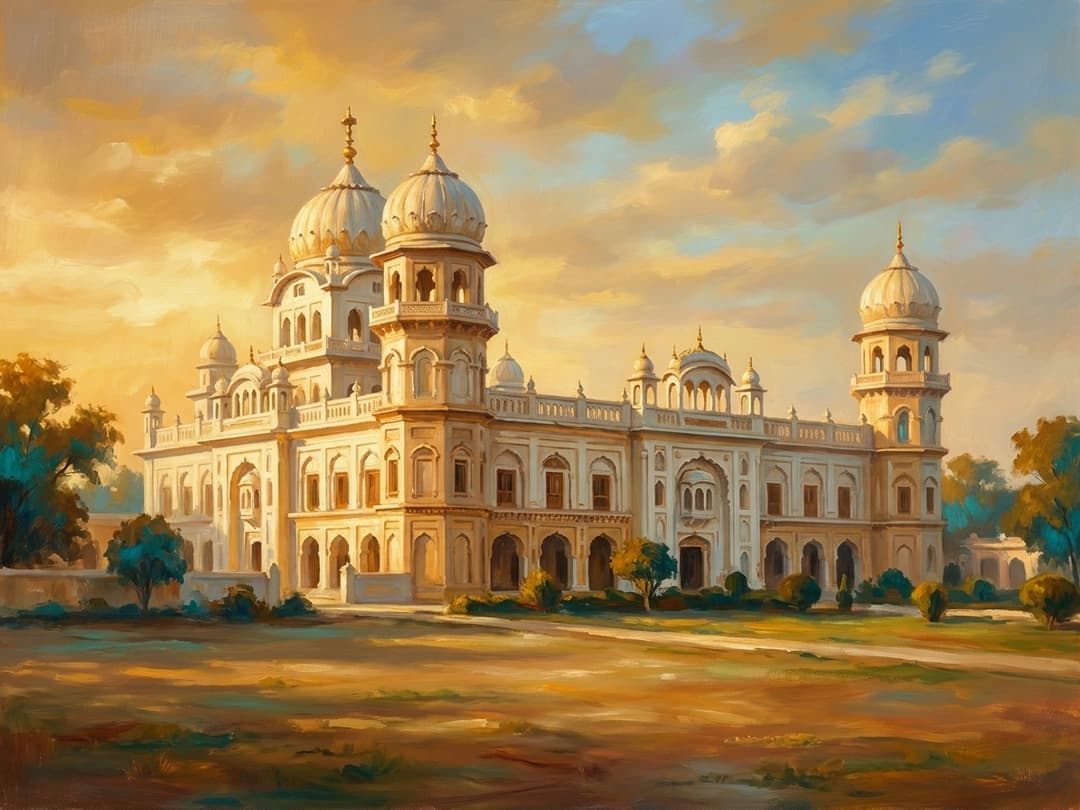
The architecture of Gurdwara Panja Sahib blends traditional Sikh monumental design with Mughal palace aesthetics, characterized by scalloped arches, fluted domes, and symmetry organized around a central aquatic basin.
Building Materials
Chiniot Limestone
Finely dressed regional limestone forms the robust load-bearing foundation and protective water basin.
Lime Surkhi Plaster
Traditional hydraulic mortar provides enduring weather-resistant waterproofing across domes and perimeter arcades.
Gilded Copper Sheeting
Embossed golden metal adorns the crowning cupolas and architectural spires above the main sanctum.
White Marble
Polished natural marble paves the circumambulatory parikrama surrounding the sacred sarovar.
Interior Features
Darbar Hall
The primary assembly hall where worshippers gather for devotional kirtan before the Guru Granth Sahib.
Panja Sanctum
The intimate rock-cut chamber housing the natural boulder preserved with Guru Nanak's hand impression.
Langar Dining Complex
An expansive communal hall engineered to host more than one thousand seated pilgrims during community feasts.
Palki Pavilion
A meticulously carved wooden canopy inlaid with brass and gold leaf that shelters the sacred scriptures.
Temple Grounds
The gurdwara grounds span several terraced acres, centered on the glistening sarovar pool and flanked by two-story pilgrim guest rooms, landscaped pathways, and open gathering plazas.
Additional Facilities
The complex incorporates a multi-story sarai accommodation block for international pilgrims, medical aid stations, registration centers, and administrative offices managed by the PSGPC.
Religious Significance
Within the Dharmic spiritual family, Sikhism emphasizes oneness with the Supreme Reality (Ik Onkar) achieved through meditation, honest labor, and selfless service to humanity. Gurdwara Panja Sahib serves as a vibrant physical testament to these ideals, illustrating how spiritual attainment must express itself through divine mercy rather than prideful isolation.
The sanctuary exists to honor Guru Nanak's victory of compassion over pride, protect the miraculous life-giving spring, and provide a welcoming place of universal fellowship and prayer for all people.
Sacred Ordinances
Prakash and Sukhasan
The ceremonial morning opening and evening retirement of the holy scripture, the Guru Granth Sahib.
Akhand Path and Kirtan
Continuous devotional singing and unbroken recitations of divine hymns that harmonize the gurdwara environment.
Langar (Free Kitchen)
The sacred duty of preparing and distributing sanctified food to all visitors without social or economic distinction.
Ishnan (Sacred Bathing)
The ritual immersion in the holy sarovar for physical and spiritual rejuvenation.
The Handprint of Compassion
The handprint (panja) embedded on the stone symbolizes the core Sikh doctrine that divine humility and remembrance of the Creator triumph over self-righteous asceticism and mundane arrogance.
Universal Hospitality Across Borders
As one of the preeminent historical gurdwaras located in modern Pakistan, Panja Sahib serves as a crucial spiritual bridge uniting Sikhs worldwide with their foundational geographical roots.
Similar Temples
Sources & Research
Every fact on Temples.org is backed by verified Sources & Research. Each piece of information is rated by source tier and confidence level.
View All Sources (9)
| Field | Source | Tier | Retrieved |
|---|---|---|---|
| Historical Timeline & Founding | Shiromani Gurdwara Parbandhak Committee (opens in a new tab) | A | 2026-03-30 |
| About & Religious Significance | Discover Sikhism (opens in a new tab) | A | 2026-03-30 |
| Religious Practices & Guru Granth Sahib | Northern Territory Government (opens in a new tab) | A | 2026-03-30 |
| Architecture & Modern Expansion | Dawn Media Group (opens in a new tab) | B | 2026-03-30 |
| Historical Photographs & Heritage | Paper Jewels Project (opens in a new tab) | B | 2026-03-30 |
| Sacred Rock & Spring Background | DV Network (opens in a new tab) | B | 2026-03-30 |
| Saka Panja Sahib Historical Account | IAS Gyan (opens in a new tab) | B | 2026-03-30 |
| Visitor Insights & Access | Sikh Heritage Tours (opens in a new tab) | D | 2026-03-30 |
| Visitor Experience & Logistics | Indo Pak Tours (opens in a new tab) | D | 2026-03-30 |