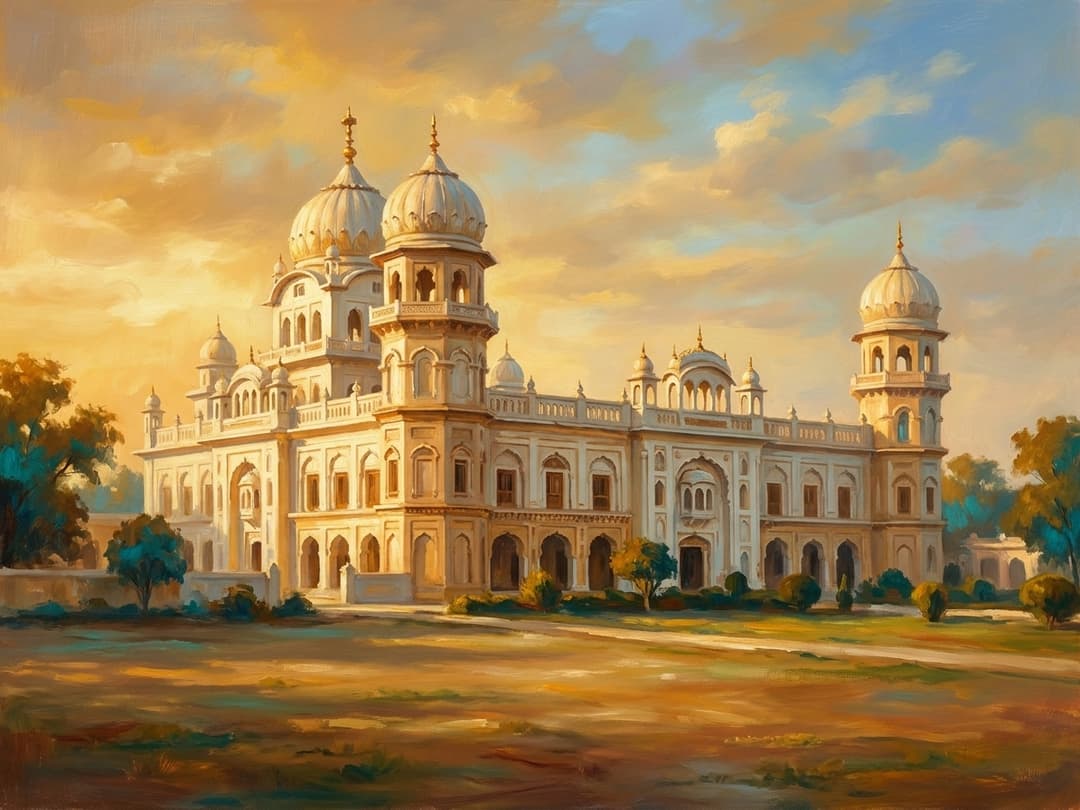
Visitor Insights
Visiting Nankana Sahib
Visiting Nankana Sahib offers a deeply spiritual and culturally enriching experience. Pilgrims and tourists alike are drawn to the city's sacred sites, particularly Gurdwara Janam Asthan, the birthplace of Guru Nanak Dev Ji. The atmosphere is serene and reverent, with devotees engaging in prayer, hymns, and acts of selfless service. Visitors should be prepared to dress modestly and respect local customs, immersing themselves in the traditions and values that define Sikhism.
Highlights
- Visit Gurdwara Janam Asthan, the most revered site marking Guru Nanak's birthplace.
- Participate in the langar, the community kitchen offering free meals to all visitors.
- Explore other historical gurdwaras in the city, each commemorating significant events in Guru Nanak's life.
Things to Know
- Dress modestly and respectfully when visiting the gurdwaras.
- Be mindful of local customs and traditions.
- Check travel advisories and restrictions between India and Pakistan before planning your visit.
Location

Nankana Sahib District, Punjab, Pakistan
Hours: Open daily, with specific hours varying for each gurdwara.
Getting There: Nankana Sahib is approximately 75 km west of Lahore and is accessible by road.
Get DirectionsTips for Your Visit
Plan Ahead
Check travel advisories and restrictions between India and Pakistan before planning your visit.
Dress Modestly
Dress modestly and respectfully when visiting the gurdwaras.
About
Nankana Sahib, located in the Punjab province of Pakistan, is a city of profound spiritual and historical significance for Sikhs around the world. It is revered as the birthplace of Guru Nanak Dev Ji, the founder of Sikhism, who was born here in 1469. The city is home to several gurdwaras that commemorate events in Guru Nanak's life, with Gurdwara Janam Asthan marking the exact site of his birth.
Nankana Sahib serves as a central pilgrimage site, attracting devotees from across the globe who seek to connect with the origins and teachings of Sikhism. The spiritual atmosphere of Nankana Sahib is deeply embedded with the principles of Sikhism, emphasizing the oneness of God, the equality of all human beings, and selfless service.
The city's rich history and the presence of numerous sacred sites make it a beacon of hope and inspiration for generations. Visitors to Nankana Sahib can experience the deep-rooted traditions and values that define Sikhism, fostering a sense of unity and devotion.
Gallery
Symbolic Elements
The temple's exterior features intricate carvings, each rich with spiritual meaning:

Gurdwara Janam Asthan
Gurdwara Janam Asthan marks the exact location of Guru Nanak's birth and is the most revered site in Nankana Sahib. It symbolizes the beginning of Sikhism and the divine presence of Guru Nanak.

Langar Hall
The Langar Hall represents the Sikh tradition of offering free meals to all visitors, embodying the principle of equality and selfless service. It symbolizes the unity and community spirit of Sikhism.

Sarovar Sahib
The Sarovar Sahib, or holy water pool, is a sacred element of the Gurdwara complex, symbolizing purity and spiritual cleansing. Devotees often bathe in the Sarovar to purify their minds and bodies.

Nishan Sahib
The Nishan Sahib, the Sikh flag, is a symbol of Sikh identity and sovereignty, representing the values of courage, sacrifice, and devotion. It flies high at Gurdwara Nankana Sahib, signifying the presence of the Sikh community.

Embossed Metalwork
The entrance gate of Gurdwara Janam Asthan features embossed metalwork depicting scenes from Guru Nanak's life, illustrating key moments and teachings. These artistic representations serve as visual reminders of Guru Nanak's divine journey.

White Marble
The 'birth-room' of Guru Nanak features white marble, symbolizing purity, peace, and spiritual enlightenment. The use of white marble enhances the sacred atmosphere of the room, creating a serene space for prayer and reflection.

Arches
The arches within Gurdwara Janam Asthan represent architectural beauty and spiritual elevation, framing the sacred spaces and guiding the eyes upward. They symbolize the connection between the earthly and the divine.

Chandelier
The chandelier in the 'birth-room' of Guru Nanak symbolizes divine light and illumination, casting a radiant glow over the sacred space. It represents the enlightenment and spiritual guidance provided by Guru Nanak's teachings.
Interesting Facts
Nankana Sahib was previously known as Rai-Bhoi-Di-Talwandi.
The town was renamed Nankana Sahib by Rai Bular Bhatti in honor of Guru Nanak.
Besides Gurdwara Janam Asthan, Nankana Sahib has several other important shrines, including Gurdwara Patti Sahib and Gurdwara Bal Leela.
The Nankana Sahib Massacre in 1921 was a key event in the Gurdwara Reform Movement.
The population of Nankana Sahib in 2023 was approximately 130,041.
Nankana Sahib is the only city in Pakistan where Sikhs are the largest minority religion.
The district of Nankana Sahib has a literacy rate of 63.12%.
Thousands of Sikhs visit Nankana Sahib each year to celebrate the birth anniversary of Guru Nanak.
Guru Nanak's grandson, Baba Dharam Chand, initially built a one-room structure marking the Guru's birthplace.
The entrance gate of Gurdwara Janam Asthan features embossed metalwork depicting scenes from Guru Nanak's life.
The Gurdwara complex includes spaces for religious activities, a langar hall (community kitchen), and residential quarters for pilgrims.
The 'birth-room' of Guru Nanak features white marble, arches, and a chandelier.
The complex includes a holy water pool (Sarovar Sahib).
Nankana Sahib was raised to district status in 2005 to promote development.
The Pakistan government announced plans to establish a university on Sikh religion and culture at Nankana Sahib in 2007.
Common Questions
What is the significance of Nankana Sahib?
Nankana Sahib is revered as the birthplace of Guru Nanak Dev Ji, the founder of Sikhism, making it one of the most sacred sites for Sikhs worldwide. The city is home to several gurdwaras that commemorate events in Guru Nanak's life, with Gurdwara Janam Asthan marking the exact site of his birth.
How can I get to Nankana Sahib?
Nankana Sahib is approximately 75 km west of Lahore in the Punjab province of Pakistan and is accessible by road. Pilgrims and tourists can hire taxis or use bus services to reach the city.
What is the best time to visit Nankana Sahib?
The best time to visit Nankana Sahib is year-round, with precautions recommended during the hot summer months. The weather is most pleasant during the spring and autumn seasons.
What should I wear when visiting the gurdwaras in Nankana Sahib?
When visiting the gurdwaras in Nankana Sahib, it is important to dress modestly and respectfully. Both men and women should cover their heads with a scarf or turban, and clothing should be conservative.
What is the langar tradition in Sikhism?
The langar is a community kitchen that offers free meals to all visitors, regardless of their religion, caste, or background. It embodies the Sikh principle of equality and selfless service, providing a space for people to come together and share a meal.
Featured Stories
The Birth of Guru Nanak Dev Ji
1469
In the year 1469, Guru Nanak Dev Ji, the founder of Sikhism, was born in the town of Talwandi, now known as Nankana Sahib. His birth was marked by miraculous events, signifying his divine mission to spread the message of unity, equality, and selfless service. The exact site of his birth is now commemorated by Gurdwara Janam Asthan, the most revered shrine in Nankana Sahib.
Guru Nanak's teachings emphasized the oneness of God and the importance of living a life of honesty, compassion, and devotion. He challenged the prevailing social and religious norms of his time, advocating for the equality of all human beings, regardless of their caste, creed, or gender. His message resonated with people from all walks of life, laying the foundation for the Sikh faith.
Source: https://discoversikhism.com
The Nankana Sahib Massacre of 1921
February 20, 1921
The Nankana Sahib Massacre, which occurred on February 20, 1921, remains a poignant chapter in Sikh history. During the Gurdwara Reform movement, a group of peaceful Sikh protestors gathered at Gurdwara Janam Asthan to demand the removal of corrupt Mahants (caretakers) who had taken control of the shrine. Tragically, the protestors were ambushed and brutally murdered by the Mahants and their armed supporters.
Over 130 Akali Sikhs lost their lives in the massacre, their sacrifice becoming a symbol of the struggle for Gurdwara reform and the liberation of Sikh shrines from corrupt control. The event galvanized the Sikh community and led to the passage of the Sikh Gurdwara Act in 1925, which ended the Mahant control of Gurdwaras and paved the way for their management by elected Sikh committees.
Source: https://indianexpress.com
The Renovation by Maharaja Ranjit Singh
1819-20
During the reign of Maharaja Ranjit Singh in the early 19th century, Gurdwara Nankana Sahib underwent significant renovations and enhancements, reflecting the Maharaja's deep reverence for Guru Nanak Dev Ji and his commitment to promoting Sikhism. The Maharaja commissioned skilled artisans and craftsmen to beautify the Gurdwara, adding intricate designs, marble work, and embossed metalwork.
The renovated Gurdwara became a magnificent symbol of Sikh architecture and devotion, attracting pilgrims from far and wide. Maharaja Ranjit Singh's patronage played a crucial role in preserving and promoting the legacy of Guru Nanak Dev Ji, ensuring that Nankana Sahib remained a central pilgrimage site for Sikhs for generations to come. The architectural elements added during this period continue to inspire awe and reverence among visitors.
Source: https://heritageofpakistan.org
Timeline
Guru Nanak Dev Ji Born
Guru Nanak Dev Ji, the founder of Sikhism, was born in Talwandi, now known as Nankana Sahib.
MilestoneGurdwara Nankana Sahib Constructed
The Gurdwara Nankana Sahib was originally constructed by Sikhs during the Mughal era.
MilestoneGuru Hargobind Visits
Guru Hargobind is believed to have paid homage to the town.
EventMaharaja Ranjit Singh Renovates Gurdwara
Maharaja Ranjit Singh renovated the Gurdwara Nankana Sahib, enhancing its structure and significance.
RenovationNankana Sahib Massacre
The Nankana Sahib Massacre occurred during the Akali movement, resulting in the deaths of over 130 Akali Sikhs.
EventSikh Gurdwara Act Passed
The Sikh Gurdwara Act was passed, ending the Mahant control of Gurdwaras.
MilestonePartition of India
The Partition of India led to a decline in the Sikh population in Nankana Sahib.
EventNankana Sahib Raised to District Status
Nankana Sahib was raised to district status to promote development.
MilestoneUniversity Planned
The Pakistan government announced plans to establish a university on Sikh religion and culture at Nankana Sahib.
MilestoneMassacre Memorial Built
A memorial for the 1921 massacre was built.
MilestoneKartarpur Corridor Discussions
Discussions surrounding the Kartarpur Corridor, facilitating visa-free travel for Sikh pilgrims to Kartarpur Sahib, gained momentum, indirectly impacting the accessibility and significance of Nankana Sahib.
EventKartarpur Corridor Inauguration
The Kartarpur Corridor was officially inaugurated, allowing Sikh pilgrims from India to visit Gurdwara Darbar Sahib Kartarpur without a visa, enhancing regional religious tourism and awareness of Sikh heritage sites like Nankana Sahib.
EventCOVID-19 Pandemic Impact
The COVID-19 pandemic led to temporary restrictions on pilgrimage and tourism, affecting the flow of visitors to Nankana Sahib and prompting adjustments in gurdwara management and safety protocols.
EventCentennial of Nankana Sahib Massacre
The centennial of the Nankana Sahib Massacre was commemorated, with events and discussions focusing on remembrance, justice, and the historical significance of the event within the broader context of Sikh history.
EventHistory by Decade
Pre-15th Century
The locality was originally known as Raipur, founded by a Hindu ruler named Raja Vairat. It was later destroyed during Muslim conquests.
Delhi Sultanate Period
A town was founded by Rai Bhoi, a Rajput of Bhati stock, and was known as Rai-Bhoi-Di-Talwandi.
1460s
In 1469, Guru Nanak Dev Ji was born in Talwandi.
Late 15th - Early 16th Century
Rai Bular Bhatti, Rai Bhoi's great-grandson, renamed the town Nankana Sahib in honor of Guru Nanak.
Around 1600 CE
The Gurdwara Nankana Sahib was originally constructed by Sikhs during the Mughal era.
1810s-1820s
Maharaja Ranjit Singh renovated the Gurdwara Nankana Sahib.
1920s
The Nankana Sahib Massacre occurred during the Akali movement, resulting in the deaths of over 130 Akali Sikhs. The Sikh Gurdwara Act was passed, ending the Mahant control of Gurdwaras.
Religious Significance
Nankana Sahib holds unparalleled religious significance for Sikhs as the birthplace of Guru Nanak Dev Ji, the founder of Sikhism. The city and its gurdwaras serve as a constant reminder of Guru Nanak's teachings of unity, equality, and selfless service.
The core spiritual purpose of Nankana Sahib is to provide a place for Sikhs to connect with the origins of their faith, to honor the life and teachings of Guru Nanak Dev Ji, and to reaffirm their commitment to the principles of Sikhism.
Sacred Ordinances
Prayer (Ardas)
Prayer, or Ardas, is a central practice in Sikhism, offering a way for devotees to express their devotion, seek guidance, and connect with the Divine. At Nankana Sahib, prayers are offered daily at the gurdwaras, creating a spiritual atmosphere of reverence and contemplation.
Hymn Singing (Kirtan)
Hymn singing, or Kirtan, is an integral part of Sikh worship, involving the recitation of sacred verses from the Guru Granth Sahib, the holy scripture of Sikhism. Kirtan is performed at Nankana Sahib, filling the air with melodious sounds and fostering a sense of community and devotion.
Selfless Service (Seva)
Selfless service, or Seva, is a fundamental principle of Sikhism, encouraging devotees to contribute to the well-being of others and to serve the community without expecting anything in return. At Nankana Sahib, Seva is practiced through various activities, such as preparing and serving meals in the langar, cleaning the gurdwaras, and assisting pilgrims.
The Guru Granth Sahib
The Guru Granth Sahib, the holy scripture of Sikhism, is treated with utmost reverence at Nankana Sahib, symbolizing the divine guidance and wisdom of the Gurus. The scripture is recited daily at the gurdwaras, providing spiritual nourishment and inspiration to devotees.
Sources & Research
Every fact on Temples.org is backed by verified Sources & Research. Each piece of information is rated by source tier and confidence level.
View All Sources (11)
| Field | Source | Tier | Retrieved |
|---|---|---|---|
| Introduction & Historical Significance | dvnetwork.org (opens in a new tab) | A | 2024-01-03 |
| Introduction & Gurdwara Janam Asthan | ANI News (opens in a new tab) | A | 2024-01-03 |
| Location & Punjab Province | Government of Punjab, Pakistan (opens in a new tab) | A | 2024-01-03 |
| Guru Nanak's Birth & Nankana Sahib Massacre | The Indian Express (opens in a new tab) | A | 2024-01-03 |
| Guru Nanak's Birth & Sikhism Origins | Gettysburg College (opens in a new tab) | A | 2024-01-03 |
| Visitor Information & Gurdwara Complex | Heritage of Pakistan (opens in a new tab) | A | 2024-01-03 |
| Coordinates of Nankana Sahib | LatLong.net (opens in a new tab) | A | 2024-01-03 |
| Coordinates of Nankana Sahib | LatLong.info (opens in a new tab) | A | 2024-01-03 |
| Historical Timeline & Gurdwara Construction | Discover Sikhism (opens in a new tab) | C | 2024-01-03 |
| Architectural Description & Religious Activities | Graana.com (opens in a new tab) | C | 2024-01-03 |
| Nankana Sahib Massacre & Akali Movement | Youlin Magazine (opens in a new tab) | C | 2024-01-03 |