Visitor Insights
Visiting Machu Picchu
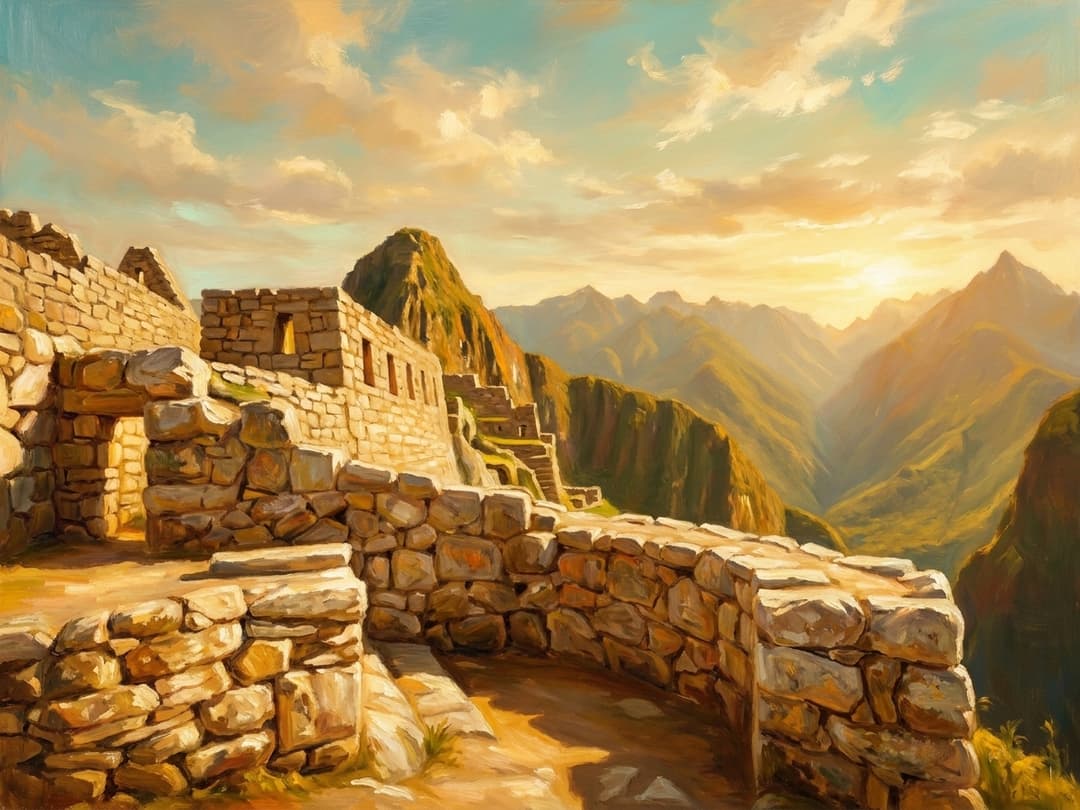
Visiting Machu Picchu offers a breathtaking encounter with classical Inca architecture set against vertical Andean peaks. The sanctuary requires careful logistical preparation, scheduled entry permits, and respect for fragile prehistoric masonry.
Highlights
- Marvel at the mortarless granite joinery of the Temple of the Sun and Sacred Plaza.
- Gaze across the cloud-draped citadel from the panoramic Upper Guardhouse terrace.
- Observe solar alignments and sacred mountain vistas at the monolithic Intihuatana stone.
- Inspect the complex stone water channel and sixteen cascading imperial fountains.
Things to Know
- High altitude can cause shortness of breath; acclimatize in Cusco or Ollantaytambo beforehand.
- Entrance tickets are strictly timed and must be booked several months in advance.
- Visitors must follow rigid one-way circuits accompanied by an authorized tour guide.
- Single-use plastics, metal-tipped trekking poles, and large daypacks are strictly prohibited.
Location
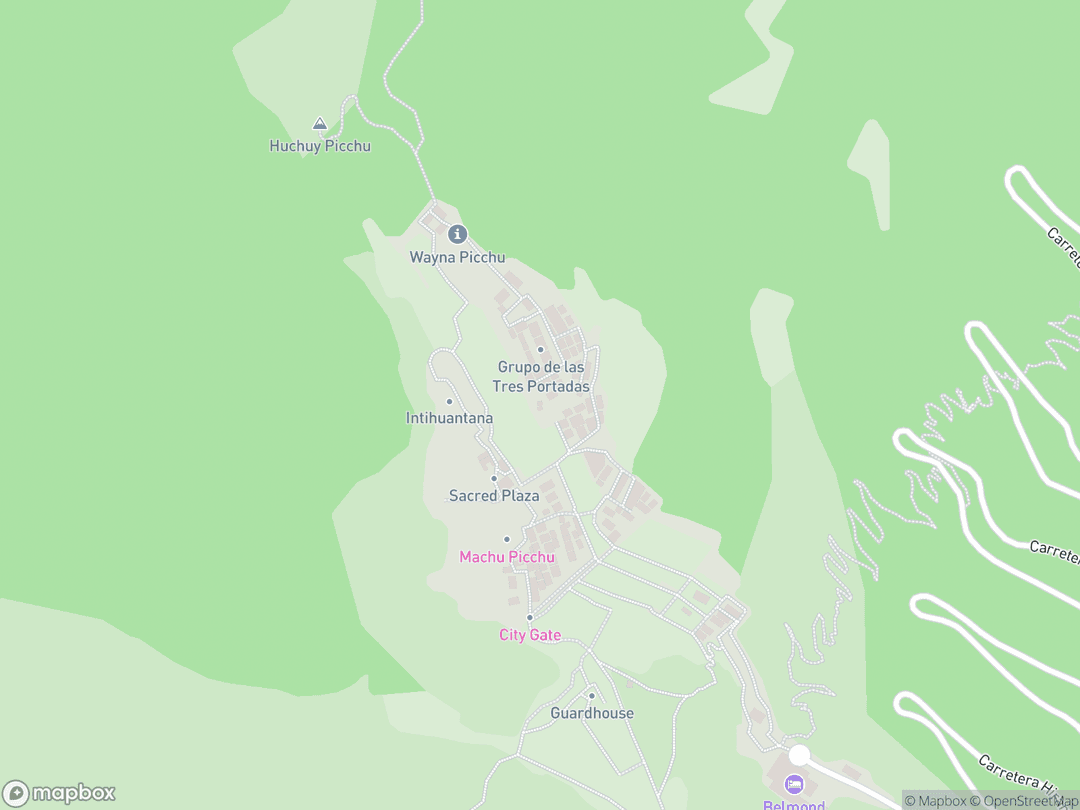
Machupicchu District, Urubamba Province, Department of Cusco, Peru
Hours: Daily from 06:00 to 17:30 (Scheduled entry windows)
Getting There: Take the train to Aguas Calientes, followed by a 25-minute shuttle bus or a steep two-hour hike to the entrance gate.
Get DirectionsTips for Your Visit
Book Permits Early
Citadel admissions and mountain summit permits sell out months ahead, particularly during the dry season from May to October.
Acclimatize in the Sacred Valley
Spend your first two days at lower elevations like Urubamba or Ollantaytambo before ascending the ruins to minimize altitude sickness.
Pack Rain Protection
Mountain weather shifts rapidly in the high cloud forest, making a sturdy rain jacket and gripped walking shoes essential year-round.
About
Machu Picchu is a fifteenth-century Inca royal citadel perched high in the Andes Mountains above the Sacred Valley. Commissioned by Emperor Pachacuti, the sanctuary seamlessly integrates precision dry-stone architecture with the natural granite bedrock of the surrounding cloud forest.
The complex functioned as an imperial estate, religious sanctuary, and astronomical observatory aligned with cardinal peaks known as Apus. Its master stonecutters erected temples and astronomical markers to revere the sun god Inti and Mother Earth, Pachamama.
Abandoned during the Spanish conquest of the Inca Empire, the mountain settlement remained hidden from colonial authorities for centuries. Today, it stands as a celebrated UNESCO World Heritage Site and an enduring testament to ancient Andean engineering and sacred landscape cosmology.
Gallery
Symbolic Elements
The temple's exterior features intricate carvings, each rich with spiritual meaning:
Intihuatana Stone
A carved bedrock gnomon used by Inca astronomers to tether the sun during winter and summer solstices.

Chakana Stepped Cross
An Andean geometric motif symbolizing the tripartite universe encompassing the sky, earth, and ancestral underworld.

Temple of the Condor
Natural rock outcrops shaped into soaring wings flanking a carved floor head representing the celestial messenger.

Trapezoidal Gateways
Distinctive inward-tapering portals designed to absorb seismic energy while marking passage into sacred enclosures.

The Sacred Rock
A colossal upright monolith carved to mirror the exact silhouette of Mount Yanantin across the gorge.

Astronomical Mirror Basins
Shallow circular mortars carved into bedrock that reflected night skies for observing stellar transits.

Living Bedrock Foundations
Polished ashlar masonry built seamlessly atop natural boulders to honor the living spirit of Pachamama.
Interesting Facts
Mortar-free granite blocks vibrate and resettle tightly during earthquakes, preventing structural collapse through seismic engineering. (Tier A)
Engineers invested over sixty percent of construction labor underground in retaining ballast and gravel drainage channels. (Tier A)
Radiocarbon analysis of human remains proves the site was active as early as 1420 CE, earlier than colonial records claimed. (Tier B)
Paleogenomic studies show the citadel's artisans came from diverse ethnic homelands across the entire Inca Empire. (Tier B)
The central carved spire of the Intihuatana casts no shadow at noon during the vernal and autumnal equinoxes. (Tier A)
Peruvian explorer Agustín Lizárraga reached the ruins and left a charcoal inscription nine years before Hiram Bingham. (Tier A)
Two water-filled stone basins in the residential sector served as reflective mirrors to observe lunar and planetary transits. (Tier B)
The entire citadel remains completely invisible from the Urubamba River canyon floor directly below. (Tier A)
Megalithic blocks weighing over twenty tons were moved and dressed without draught animals or the mechanical wheel. (Tier A)
Common Questions
Why was Machu Picchu built in such an inaccessible location?
The Inca considered the high mountain ridge sacred because it connects directly with surrounding divine mountain spirits known as Apus.
Was Machu Picchu ever discovered by Spanish conquistadors?
No, Spanish forces never located the sanctuary, leaving its sacred dry-stone temples spared from deliberate destruction.
How were the massive granite stones moved without wheels?
Inca laborers moved megalithic blocks using bronze levers, wooden rollers, earthen ramps, and sheer human muscle.
Can visitors hike up to the citadel from the town below?
Yes, travelers can either climb a steep stone footpath in roughly ninety minutes or take an authorized switchback shuttle bus.
Why are the windows and doorways built in a trapezoidal shape?
Trapezoidal openings distribute structural weight efficiently and provide exceptional stability against seismic shockwaves.
Featured Stories
The Sovereign Retreat of Pachacuti
1440
Following his military victories and the founding of the Inca Empire, Emperor Pachacuti commissioned Picchu as a personal royal retreat and astronomical center. Imperial masons transformed a razor-sharp mountain saddle into a sanctuary where royalty could commune directly with solar and mountain deities. The estate sustained an elite community of artisans, priests, and court attendants surrounded by cloud forest peaks.
Source: Ministerio de Cultura del Perú
Agustín Lizárraga and the Charcoal Inscription
July 14, 1902
Nine years before international expeditions brought global attention to the site, local Peruvian farmer Agustín Lizárraga led an exploration through dense subtropical vegetation. Scaling the overgrown terraces, he discovered the magnificent masonry of the Temple of the Three Windows and scribed his name in charcoal on the wall. Hiram Bingham noted this historical inscription in his diary when local farmers guided him to the citadel in 1911.
Source: Universidad Nacional de San Antonio Abad del Cusco
The Repatriation of Imperial Relics
2010
For nearly a century, thousands of archaeological artifacts excavated from the citadel's burial caves remained curated abroad. Following extensive bilateral accords between Peru and international institutions, tens of thousands of ceramic vessels, bronze implements, and skeletal remains returned home. They now reside permanently in Cusco at the Casa Concha Museum, preserved under the guardianship of indigenous scholars.
Source: UNSAAC-Yale International Center
Timeline
Terracing and Foundation Engineering
Imperial engineers reshape the mountain saddle with subsurface drainage ballast and agricultural terraces.
component.timeline.groundbreakingEstablishment of the Royal Estate
Emperor Pachacuti establishes the complex as a sacred estate for his royal lineage corporation.
DedicationSuccession of the Panaca
Following Pachacuti's death, his royal lineage assumes administration and ceremonial maintenance of the sanctuary.
MilestoneRegional Epidemics
European infectious diseases precede Spanish arrival, destabilizing imperial courts across Tawantinsuyu.
EventCitadel Abandonment
Residents peacefully depart the estate as imperial supply networks collapse during the Spanish conquest.
EventFall of Vilcabamba
The Neo-Inca resistance falls to Spanish forces, leaving the overgrown ridge hidden from colonial extirpators.
MilestoneCartographic Documentation
German engineer Herman Göhring marks the peaks of Machu Picchu and Huayna Picchu on regional survey maps.
MilestoneExploration by Agustín Lizárraga
Peruvian explorer Agustín Lizárraga investigates the ruins and leaves an inscription in the principal temple.
MilestoneBingham Guided to Citadel
Melchor Arteaga guides Hiram Bingham III to the ruins, initiating international scientific clearing seasons.
MilestoneUNESCO Inscription
The sanctuary receives UNESCO World Heritage status for outstanding cultural and natural significance.
MilestoneArtifact Repatriation Accord
Excavated ceramic, metal, and osteological collections return to Peru for conservation in Cusco.
MilestoneAMS Radiocarbon Revision
Direct bone dating establishes human occupation beginning two decades earlier than colonial chronicle estimates.
MilestoneHistory by Decade
1420s–1440s — Imperial Construction
Under Emperor Pachacuti, imperial architects quarried local granodiorite along active geological fault lines. Hundreds of tiered retaining terraces stabilized steep slopes against tropical deluges, creating a self-sustaining royal enclave.
1450s–1520s — Ceremonial and Royal Life
Machu Picchu operated as a bustling center of state diplomacy, ritual astronomy, and high-altitude farming. Royal retainers and specialized craftsmen from across Tawantinsuyu maintained temples and harvested sacred coca and maize.
1530s–1570s — Eclipse and Peaceful Departure
The Spanish conquest of Cusco severed imperial patronage and communications across the Sacred Valley. Inhabitants vacated the mountain redoubt without burning or destruction, allowing cloud forest vegetation to conceal the masonry from conquistadors.
1900s–1910s — Rediscovery and Scientific Documentation
Peruvian expeditions led by Agustín Lizárraga documented the ruins before Hiram Bingham conducted clearing operations in 1911. Global publications sparked worldwide fascination with Inca engineering and mountain cosmology.
1980s–Present — Conservation and Heritage Preservation
Peruvian authorities and UNESCO established strict protective boundaries across thirty-two thousand hectares of Andean sanctuary. Advanced LiDAR mapping and paleogenomic science continue to reveal the engineering sophistication of ancient builders.
Architecture & Facilities
Machu Picchu represents the pinnacle of Classical Imperial Inca dry-stone architecture, defined by organic integration with surrounding topography, inward-leaning seismic walls, and trapezoidal openings. Masonry blocks were dressed with hammerstones to interlock perfectly without mortar, creating structures that absorb seismic shocks while harmonizing with bedrock outcrops.
Building Materials
Vilcabamba Granodiorite
White-to-gray igneous granite quarried directly along mountain fault lines on the ridge.
River Andesite and Diorite
Hard volcanic stones gathered from the Urubamba River canyon to fashion hammerstones.
Subsurface Ballast and Loam
Stratified layers of gravel, sand, and fertile agricultural soil imported from valley floors.
Ichu Grass and Timber Rafters
Thick thatch roofing bundled over sturdy hardwood rafters secured to carved stone pegs.
Interior Features
Temple of the Sun (El Torreón)
A semi-circular tower enclosing carved living bedrock with windows aligned to solstice sunrises.
The Royal Crypt
A subterranean cavern below the solar tower adorned with stepped-altar stone reliefs.
Principal Temple
A monumental three-walled hall on the Sacred Plaza built from megalithic granite ashlar blocks.
Temple of the Three Windows
An imposing eastern facade featuring three trapezoidal apertures overlooking the canyon below.
Temple Grounds
More than seven hundred stone-faced terraces climb the slopes, served by an engineered 749-meter canal feeding sixteen sequential stone fountains.
Additional Facilities
A comprehensive site museum, administrative checkpoints, visitor transit pavilions, and conserved trail systems accommodate international pilgrims.
Religious Significance
To the Inca civilization, Machu Picchu was a sacred bridge where terrestrial life converged with the celestial deities and living mountain spirits.
The sanctuary served as an imperial astronomical observatory and ritual palace honoring the Sun, celestial constellations, and ancestral Apus.
Sacred Ordinances
Inti Raymi Solar Veneration
Solstice rites celebrated the sun god Inti through astronomical alignments and offerings to ensure seasonal fertility.
Pago a la Pachamama
Ritual offerings of coca leaves, chicha, and precious textiles placed directly upon bedrock to sustain Mother Earth.
Ancestor Mummy Veneration
Royal lineage mummies were curated in sacred crypts and brought forth during festivals to counsel living leaders.
Cosmic Landscape Alignments
The citadel's temples align precisely with cardinal mountain peaks, establishing a sacred geographic nexus that linked human governance to divine Andean nature.
Sources & Research
Every fact on Temples.org is backed by verified Sources & Research. Each piece of information is rated by source tier and confidence level.
View All Sources (9)
| Field | Source | Tier | Retrieved |
|---|---|---|---|
| Citadel Regulations & Cultural Administration | Ministerio de Cultura del Perú (opens in a new tab) | A | 2026-03-30 |
| Sanctuary Natural & Cultural Protected Area | Servicio Nacional de Áreas Naturales Protegidas por el Estado (opens in a new tab) | A | 2026-03-30 |
| Excavation Archives & Repatriated Collections | Universidad Nacional de San Antonio Abad del Cusco (opens in a new tab) | A | 2026-03-30 |
| Official Sanctuary Visitor Logistics | PromPerú (opens in a new tab) | A | 2026-03-30 |
| World Heritage List Inscription Documentation | UNESCO World Heritage Centre (opens in a new tab) | B | 2026-03-30 |
| AMS Radiocarbon Dating and Chronology Research | Cambridge University Press (opens in a new tab) | B | 2026-03-30 |
| Paleogenomics & Population Origin Studies | Science Advances (opens in a new tab) | B | 2026-03-30 |
| Bioarchaeological Analysis & Health Records | National Institutes of Health (opens in a new tab) | B | 2026-03-30 |
| Seismic Engineering & Structural Fault Modeling | ResearchGate Scientific Network (opens in a new tab) | B | 2026-03-30 |