Visitor Insights
Visiting Qorikancha
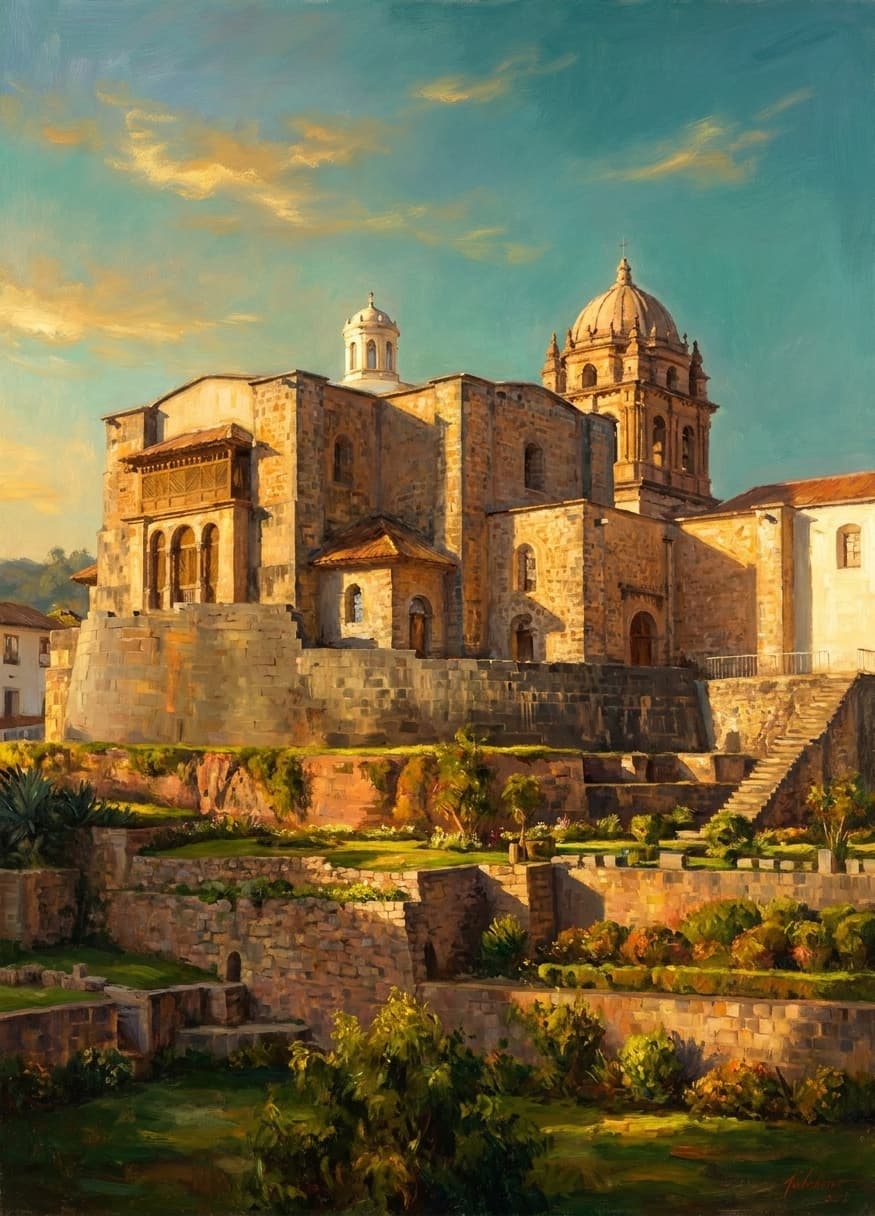
Visitors experience a rare juxtaposition of Inca imperial stonework and Spanish colonial baroque architecture. The surviving temple halls showcase mortarless joinery, while the cloister galleries exhibit historical art from the Cusqueña School.
Highlights
- Masterful curved retaining wall below the Dominican church apse
- Surviving shrines dedicated to the Sun, Moon, Stars, and Rainbow
- Trapezoidal niches and seismic mortarless interlocking stone joints
- Underground site museum exhibiting excavation artifacts and mummies
Things to Know
- Acclimate to Cusco's high elevation before ascending stairs
- Interior museum halls restrict flash photography and tripods
- Modest clothing is recommended inside the active Dominican convent
- Bilingual guides are available near the ticketing entrance
Location
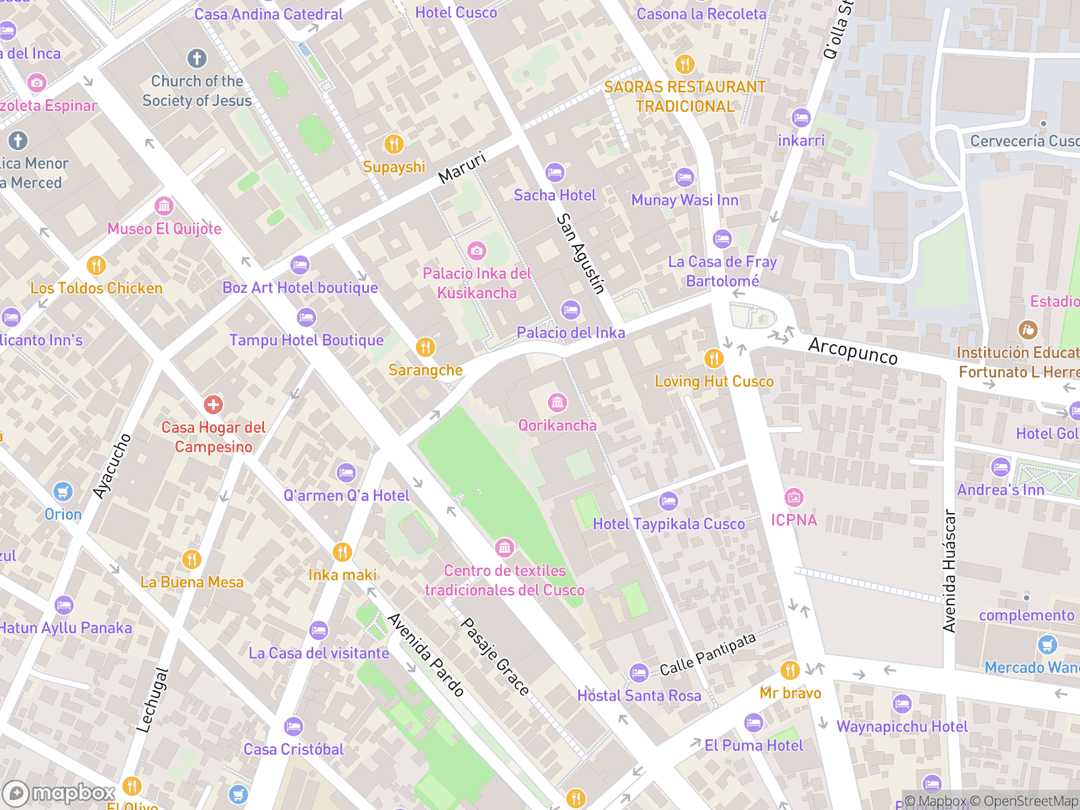
Plazoleta Santo Domingo s/n & Av. El Sol, Historic Center, Cusco, Peru
Hours: Monday through Saturday 8:30 AM to 5:30 PM, Sunday 2:00 PM to 5:30 PM
Getting There: Located two blocks south of the Plaza de Armas along Avenida El Sol; accessible on foot or via registered city taxi.
Get DirectionsTips for Your Visit
Optimal Lighting
Visit in the late afternoon when raking sunlight illuminates the subtle beveling of the andesite masonry.
Combined Entry
The underground site museum requires the Cusco Tourist Ticket, while the upper convent charges a separate direct fee.
Guided Exploration
Hiring an accredited on-site guide helps identify hidden astronomical alignment windows and seismic stone joints.
About
Qorikancha stood as the supreme sanctuary of the Inca Empire, functioning as the theological, political, and astronomical heart of Tawantinsuyu. Dedicated primarily to Inti, the sun god, the compound was originally founded around 1200 CE as Intikancha before Emperor Pachacuti transformed it into an imperial masterpiece of dry-stone ashlar masonry.
Its exterior walls and internal sanctuaries were historically sheathed in plates of solid gold and silver that reflected the celestial bodies. Within its halls, priests preserved the ancestral mummies of past Inca emperors and carried out sophisticated solar observations that guided the agricultural calendar across the empire.
Following the Spanish conquest in the sixteenth century, the upper halls were dismantled and the Catholic Convent of Santo Domingo was erected upon the Inca foundations. Repeated seismic events destroyed the colonial church while leaving the mortarless Inca foundations completely unharmed, preserving a dramatic architectural testament to ancient engineering.
Gallery
Symbolic Elements
The temple's exterior features intricate carvings, each rich with spiritual meaning:

Punchao Sun Effigy
The supreme golden solar idol contained the cremated heart ashes of deceased Inca emperors.

Parabolic Curved Wall
The compound curved andesite wall embodies the pinnacle of Inca stone-cutting precision.

Trapezoidal Niches
Inward-sloping wall openings distributed roof loads evenly while cradling sacred ceremonial offerings.

Ceque Radial Matrix
Sacred sightlines extended across the empire, organizing time, water rights, and pilgrimage sites.

Golden Corn Garden
Sculpted metal crops and livestock celebrated divine agricultural abundance granted by the sun.
Royal Mallqui Mummies
Preserved sovereigns were treated as living divine intermediaries who counseled reigning rulers.

Astronomical Window
Carved openings funneled solstice morning rays directly onto the central golden altar.

Octagonal Stone Font
A ceremonial water basin in the courtyard mirrored stellar transits for temple astronomers.
Interesting Facts
Massive earthquakes in 1650 and 1950 leveled the colonial superstructure while leaving the mortarless Inca walls completely intact. (Tier A)
Spanish conquistadors pried approximately seven hundred sheets of pure gold from the temple walls to fund Atahualpa's ransom. (Tier A)
The temple served as the cosmological center from which forty-two invisible ceque lines radiated to connect 328 sacred shrines. (Tier B)
A life-sized artificial garden of gold once contained solid-metal corn stalks, grazing llamas, and native flowers on the terraces. (Tier B)
Mummified Inca rulers were kept seated on golden thrones inside the temple and carried out daily to dine with living nobility. (Tier A)
The sacred gold sun effigy known as Punchao was smuggled into the jungle redoubt of Vilcabamba before its capture by the Spanish. (Tier B)
The western curved wall was calibrated with extreme astronomical precision to track solstices and govern the Andean planting cycle. (Tier B)
The site represents an overt architectural palimpsest where a Spanish Dominican convent rests directly upon pre-Columbian foundations. (Tier A)
Common Questions
Why did the Inca walls withstand earthquakes that collapsed the church?
The walls feature mortarless interlocking joints, inward-sloping faces, and mortise-and-tenon sockets that dissipate seismic energy.
Was the temple completely covered in real gold?
Historical chronicles confirm an exterior horizontal band of hammered gold wrapped the building, with interior walls paneled in sheet metal.
What was the purpose of the ceque system anchored at Qorikancha?
It organized a sacred imperial landscape grid connecting 328 regional shrines for pilgrimage routes, social hierarchy, and irrigation cycles.
What is celebrated at Qorikancha during modern Inti Raymi?
Every June 24, actors portraying the Sapa Inca and his retinue deliver the initial invocations to the sun god on the lower terraces.
Featured Stories
The Sovereign Mummies of the Sun
1490
Rather than being entombed beneath the earth, deceased Inca emperors were mummified and enthroned on golden chairs within Qorikancha's solar sanctuary. Attendant panacas brought them daily meals, poured chicha offerings into golden vessels, and carried them to the courtyard during state festivals. This practice underscored the Andean belief that ancestral sovereigns remained active divine participants in imperial politics.
Source: Historical chronicles of Pedro Cieza de León and Juan de Betanzos
The Great Stripping of the Gold
March 15, 1533
When the captive Inca emperor Atahualpa promised to fill a room with gold in exchange for his life, Spanish soldiers were dispatched to Cusco to collect the ransom. At Qorikancha, the conquistadors pried roughly seven hundred sheets of hammered gold from the sanctuary walls using metal crowbars. The plundered metal was promptly melted down into bullion, erasing priceless imperial metallurgical masterpieces.
Source: Colonial accounts of Pedro Pizarro and Garcilaso de la Vega
The Enduring Foundations of 1950
May 21, 1950
A devastating magnitude earthquake violently shook Cusco, bringing down the colonial plaster and tile superstructures of the Convento de Santo Domingo. When the dust cleared, the hidden Inca chambers and curved retaining walls stood completely undamaged beneath the rubble. The subsequent restoration peeled back ruined colonial additions, re-exposing the pristine pre-Columbian masonry to modern view.
Source: UNESCO Restoration Reports for Cusco Archaeological Monuments
Timeline
Founding of Intikancha
Legendary founder Manco Cápac establishes a thatched solar shrine at the confluence of Cusco's rivers.
MilestonePachacuti's Imperial Transformation
Pachacuti rebuilds the compound with Imperial coursed ashlar masonry and renames it Qorikancha.
MilestoneEnrichment under Túpac Yupanqui
The tenth Sapa Inca enriches the sacred precinct with golden garden sculptures and ceremonial spoils.
EventConsolidation of the Ceque System
Imperial priests formalize the forty-two ritual sightlines radiating outward from the temple courts.
MilestoneStripping of the Gold Sheathing
Spanish conquistadors pry hundreds of beaten gold plates from the exterior walls to fulfill Atahualpa's ransom.
EventPizarro Enters Cusco
Spanish forces capture the sacred city and thoroughly plunder the remaining gold and silver effigies.
EventGrant to the Dominican Order
Juan Pizarro wills the site to the Order of Preachers, initiating convent construction over the Inca ruins.
MilestoneThe Great Cusco Earthquake
A violent seismic shock levels the colonial church while leaving the underlying Inca masonry undamaged.
EventBaroque Convent Reconstruction
The Dominicans complete a grand baroque rebuilding featuring carved cedar ceilings and Cusqueña canvases.
RenovationSecond Major Seismic Exposure
Another major earthquake collapses colonial walls, revealing pristine Inca chambers preserved inside the structure.
EventUNESCO World Heritage Inscription
The complex is inscribed on the World Heritage List as an integral component of the historic City of Cusco.
MilestoneRevival of Inti Raymi Esplanade Rites
Modern celebrations institutionalize the opening invocations of the Festival of the Sun on the lower temple lawn.
EventHistory by Decade
1200s — The Founding of Intikancha
Manco Cápac commanded that the house of the Sun should be built in the place called Intikancha.
Manco Cápac established the initial solar compound between the Saphy and Tullumayo rivers. The sanctuary was known as Intikancha and consisted of simple thatched structures made of fieldstone and mud mortar. It served as the central ritual dwelling for the solar cult of the early Cusco chieftaincy.
1430s–1440s — Imperial Reconstruction under Pachacuti
He caused the house of the Sun to be rebuilt with stone of such marvelous workmanship that it astonished all who saw it.
Following the defeat of the Chanca confederation, Emperor Pachacuti completely redesigned Cusco into the symbolic form of a puma. Intikancha was designated as the anatomical center of life generation, completely demolished, and rebuilt with imperial ashlar stone. The ruler renamed the sanctuary Qorikancha and wrapped its exterior walls in heavy bands of hammered gold.
1530s — Spanish Plunder and Desecration
Conquistadors dispatched by Francisco Pizarro stripped the temple of its sheet metal and golden garden statues to fulfill Atahualpa's ransom. In late 1533, Spanish forces permanently occupied Cusco, desecrated the solar altars, and confiscated the compound as private war spoils. Juan Pizarro acquired the property before deeding it to the Dominican friars upon his death.
1650s — Seismic Trial and Baroque Rebirth
On March 31, 1650, a catastrophic earthquake destroyed the early colonial church and convent built atop the Inca temples. The mortarless ashlar masonry beneath withstood the shockwaves without cracking or shifting. Architect Francisco Becerra's design was subsequently rebuilt in an elaborate Cusqueña baroque style, blending Catholic cloisters with ancient foundations.
1950s — The 1950 Earthquake and Rediscovery
A violent seismic event struck Cusco on May 21, 1950, causing severe structural collapse across the colonial Dominican monastery. The failure of the European masonry uncovered hidden Inca chambers, lintels, and niches that had remained concealed behind plaster for four centuries. International preservation teams initiated scientific restorations that intentionally emphasized the surviving Inca architecture.
1980s–Present — World Heritage and Cultural Revival
UNESCO declared the historic center of Cusco a World Heritage Site in 1983, recognizing Qorikancha as a premier cultural monument. Archaeological investigations throughout the 1990s uncovered subterranean canals, offerings, and the foundation of the underground site museum. The esplanade now hosts the annual opening ceremony of Inti Raymi every June.
Architecture & Facilities
Qorikancha represents the absolute zenith of Imperial Inca Ashlar Masonry, characterized by finely cut, slightly convex andesite blocks arranged in uniform horizontal courses. The stones were fitted entirely without mortar using hidden interior sockets and channels, with walls inclined slightly inward to provide exceptional seismic resilience.
Building Materials
Rumiqolqa Volcanic Andesite
Fine-grained dark volcanic stone quarried 35 kilometers southeast of Cusco and dressed to tight joints.
Hammered 24-Karat Gold Sheathing
Thick beaten gold plates that historically encircled the exterior and interior perimeter of the sun chamber.
Huaccoto Basalt
Durable volcanic basalt utilized in subterranean foundations and load-bearing terrace retaining structures.
Beaten Silver Plate
Polished silver sheathing applied across the Temple of the Moon to capture and reflect pale lunar rays.
Interior Features
Temple of the Sun (Intiwasi)
The primary sanctuary that housed the golden sun effigy and royal mummies surrounded by double-jamb niches.
Temple of the Moon (Killawasi)
A silver-lined sanctuary honoring Mama Killa that served as the ritual seat of the Coya empress.
Chamber of the Stars (Chaskawasi)
A dedicated astronomical shrine honoring the planet Venus, the Pleiades, and celestial constellations.
Temple of the Rainbow (K'uychiwasi)
A decorated ceremonial hall dedicated to meteorological phenomena and the optical spectrum of sunlight.
Temple Grounds
The sacred precinct encompasses terraced hillside gardens stepped down toward Avenida El Sol, linked by underground water conduits and ceremonial stone staircases leading to the lower esplanade.
Additional Facilities
The subterranean Museo de Sitio Qorikancha displays excavated pottery, textiles, and cranial trepanations, while the upper cloister houses the Dominican Convent museum.
Religious Significance
In the Inca cosmological framework, Qorikancha was the supreme axis mundi where the upper divine realm (Hanan Pacha), the earthly world (Kay Pacha), and the ancestral interior (Uku Pacha) converged. As the primary dwelling of Inti, it radiated celestial power throughout the four quarters of Tawantinsuyu.
To serve as the spiritual anchor of the Inca universe, orchestrating solar worship, royal ancestral veneration, and the empire-wide ceque landscape.
Sacred Ordinances
Inti Raymi Solar Rites
Winter solstice ceremonies invoking divine light to restore life and fertility to the Andean earth.
Capacocha Imperial Offerings
High-state consecration ceremonies channeling blessings from Cusco outward along the ceque lines.
Mallqui Ancestral Veneration
Daily feeding and libation rituals performed for the preserved bodies of deceased royal sovereigns.
Water Mirror Observations
Astronomical tracking of stellar transits reflected in open octagonal stone basins in the courtyard.
The Ceque Ritual Matrix
Radiating from Qorikancha like spokes from a wheel were forty-two sacred sightlines known as ceques. These lines organized 328 distinct sacred huacas—including springs, mountain summits, and battlefields—linking religious veneration directly to practical agricultural irrigation schedules and territorial governance.
The Golden Sanctuary of Inti
The inner sanctuary of Inti featured an orientation engineered to capture the winter solstice dawn. When the sun crested the mountains, its light illuminated the central golden disc, reflecting brilliant light into every corner of the polished stone chamber to signify the divine presence of the solar deity.
Sources & Research
Every fact on Temples.org is backed by verified Sources & Research. Each piece of information is rated by source tier and confidence level.
View All Sources (9)
| Field | Source | Tier | Retrieved |
|---|---|---|---|
| About & Historical Background | UNESCO World Heritage Centre (opens in a new tab) | B | 2026-03-30 |
| Architecture & Masonry Details | Budapest University of Technology and Economics (opens in a new tab) | B | 2026-03-30 |
| Visitor Insights & Site Hours | Ticket Machu Picchu (opens in a new tab) | D | 2026-03-30 |
| Historical Timeline & Inception | CuscoPeru Travel Guide (opens in a new tab) | D | 2026-03-30 |
| Architectural Description & Shrines | Kenko Adventures (opens in a new tab) | D | 2026-03-30 |
| Symbolic Elements & Ceque System | Illa Kuntur Travel (opens in a new tab) | D | 2026-03-30 |
| Featured Stories & Spanish Chronicles | Viajero Tours (opens in a new tab) | D | 2026-03-30 |
| Religious Significance & Solstice Alignments | Salkantay Trekking (opens in a new tab) | D | 2026-03-30 |
| Encyclopedia Historical Context | Encyclopaedia Britannica (opens in a new tab) | B | 2026-03-30 |