Visitor Insights
Visiting Wawel Cathedral
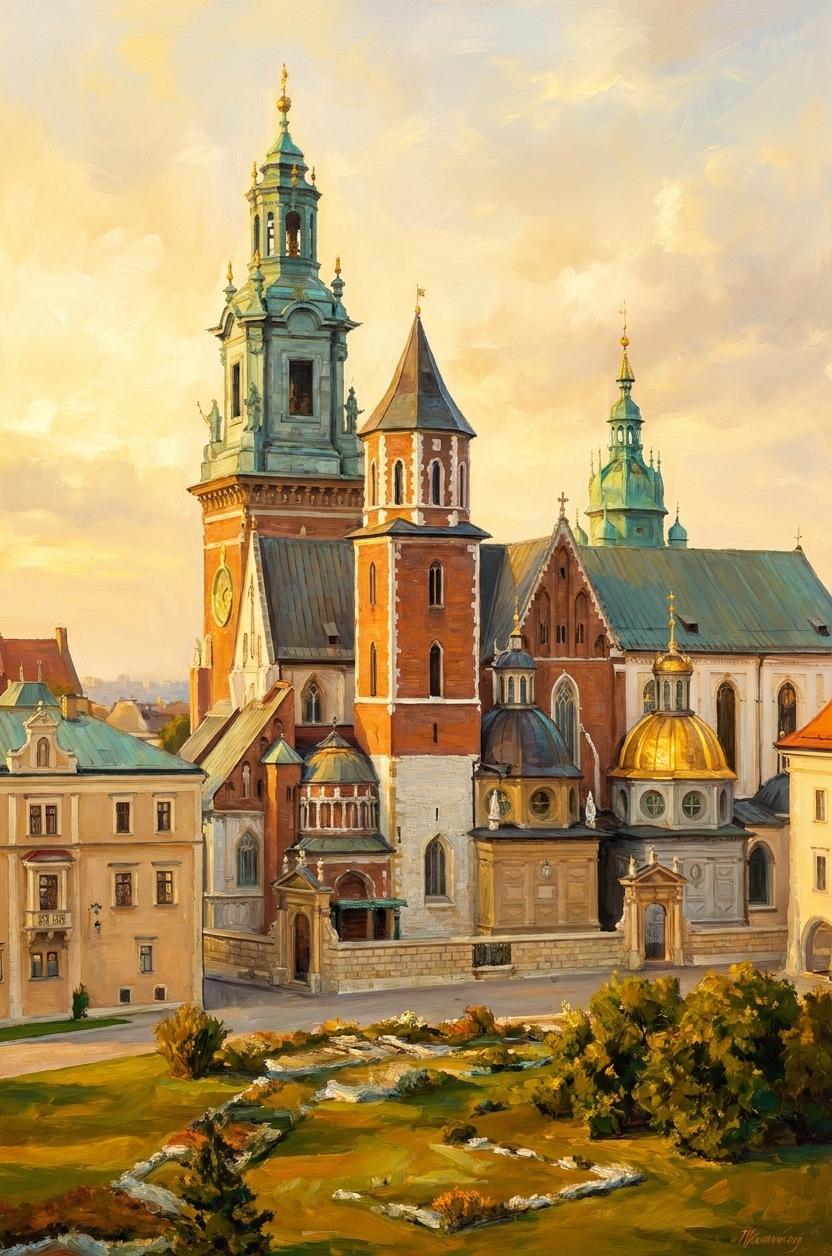
Wawel Cathedral is an active Roman Catholic house of prayer, a coronation basilica, and a historic necropolis. Visitors can explore the central nave freely outside of scheduled liturgies, while access to the Royal Crypts, Sigismund Bell Tower, and Cathedral Museum requires a timed admission ticket. Modest dress covering shoulders and knees is strictly enforced at all entry portals.
Highlights
- Venerate the silver reliquary sarcophagus of Saint Stanislaus at the central Ara Patriae.
- Climb the Sigismund Bell Tower to examine the massive sixteenth-century royal bell.
- Admire the pure Renaissance proportions and gilded dome of the Sigismund Chapel.
- Descend into the twelfth-century Romanesque St. Leonard Crypt beneath the nave.
Things to Know
- Sanctuary visits are paused during Holy Mass and major liturgical services.
- Photography and videography are strictly prohibited inside the basilica, crypts, and towers.
- The Sigismund Bell Tower and subterranean crypts require navigating steep, narrow stone staircases.
- Strict ecclesiastical dress code requires covered shoulders and knees for all visitors.
Location
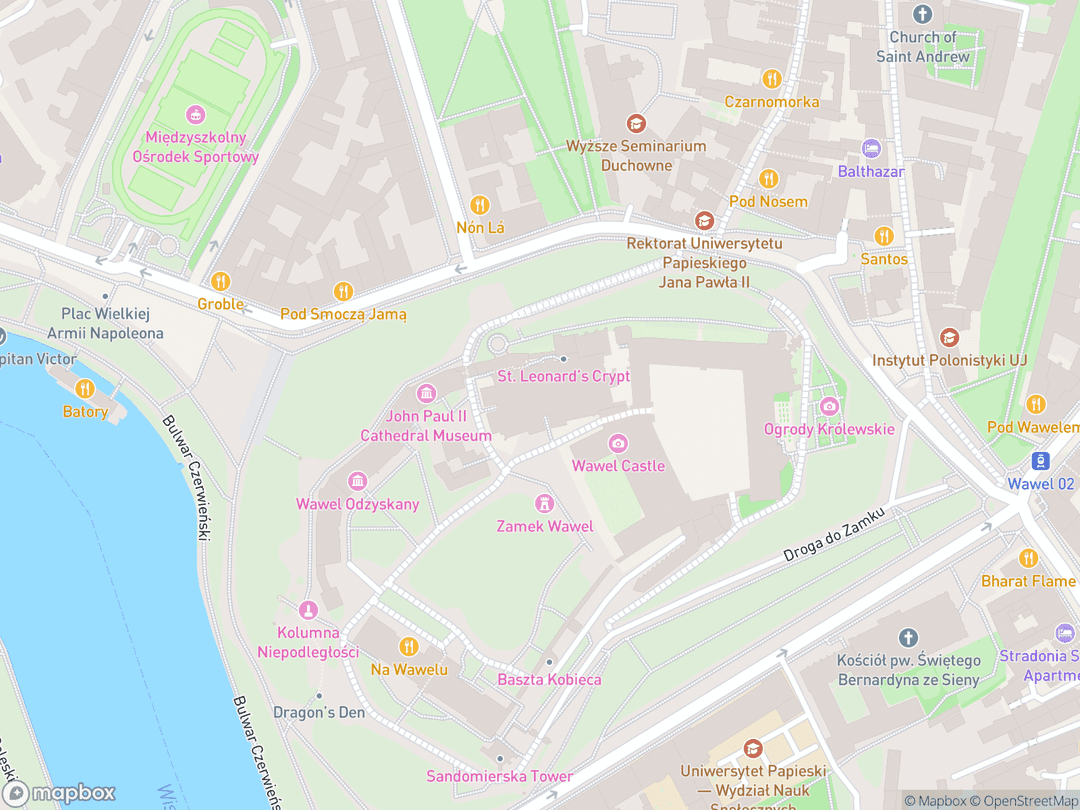
Wawel 3, 31-001 Kraków, Małopolska, Poland
Hours: Monday–Saturday: 9:00 AM – 5:00 PM; Sunday: 12:30 PM – 5:00 PM (Winter closing at 4:00 PM)
Getting There: Take tram lines 1, 8, 13, 18, or 20 to the Wawel stop, then walk five minutes uphill through the Castle ramparts.
Get DirectionsTips for Your Visit
Arrive at Opening
Enter at 9:00 AM on weekday mornings to experience the nave before tour groups arrive.
Advance Crypt Tickets
Book museum and bell tower access in advance during summer pilgrimage months.
Appropriate Attire
Keep shawls or light jackets on hand to meet modesty rules before entering.
About
Wawel Cathedral stands as Poland's premier national sanctuary and the archiepiscopal seat of the Archdiocese of Kraków. Rooted in the ancient Abrahamic tradition of consecrated ground mediating heaven and earth, the basilica mirrors the biblical archetype of a sacred precinct housing holy relics and divine presence.
Constructed in its current Gothic form during the fourteenth century atop earlier Romanesque foundations, the cathedral preserves unbroken apostolic succession dating back to the Congress of Gniezno in 1000. For over four centuries, it served as the exclusive coronation venue for Polish sovereigns.
At the liturgical heart of the basilica rests the Ara Patriae (Altar of the Fatherland), containing the silver reliquary of Saint Stanislaus of Szczepanów. The shrine links Catholic Eucharistic theology with national identity, offering intercession for unity, covenant fidelity, and spiritual rebirth.
Beyond its royal and episcopal roles, the cathedral houses a vast subterranean necropolis holding Poland's monarchs, military commanders, and national bards. In 1946, Father Karol Wojtyła—the future Pope Saint John Paul II—celebrated his first Mass in its historic crypt.
Gallery
Symbolic Elements
The temple's exterior features intricate carvings, each rich with spiritual meaning:

Ara Patriae (Altar of the Fatherland)
Baroque canopy and silver sarcophagus representing divine reunification and holy patronage over the land.
Sigismund Chapel Gilded Dome
Fish-scale gilded cupola symbolizing the Heavenly Jerusalem and the spiritual zenith of the realm.

Prehistoric Megafauna Bones
Chained Pleistocene bones hanging at the gate as a medieval testament to God's dominion over primeval creation.
Piast White Eagle Keystones
Carved Gothic vault bosses asserting sacred royal stewardship and divine protection over the presbytery.
Russo-Byzantine Frescoes
Eastern Christian iconography within the Holy Cross Chapel manifesting ecumenical unity across the Commonwealth.

Tomb of Casimir IV
Veit Stoss's evocative red marble monument embodying late-Gothic contemplation of mortality and eternal salvation.
Black Crucifix of Queen Jadwiga
Fourteenth-century Gothic crucifix where Christ historically counseled the young queen toward heroic sacrifice.

The Royal Sigismund Bell
Monumental bronze bell rung during pontifical transitions and monumental national moments.
Interesting Facts
Massive prehistoric whale, mammoth, and rhinoceros bones hang chained above the main entrance to ward off evil and honor creation. (Tier A)
Thirty-seven Polish sovereigns were crowned in Wawel Cathedral between 1320 and 1734. (Tier A)
Ringing the 12.6-ton royal Sigismund Bell requires a synchronized fraternity of twelve licensed ringers. (Tier A)
Poland's greatest Romantic poets, Adam Mickiewicz and Juliusz Słowacki, are entombed within the Crypt of the National Bards. (Tier A)
Pope John Paul II celebrated his first private Holy Masses as a newly ordained priest in St. Leonard's Crypt on All Souls' Day 1946. (Tier A)
The glossy black stone used throughout royal tombs is actually local bituminous limestone quarried in nearby Dębnik. (Tier B)
According to pious tradition, Christ spoke aloud from the Gothic Black Crucifix to guide young Queen Saint Jadwiga in 1385. (Tier B)
Wawel Cathedral was among the pioneering group of twelve global monuments inscribed on the inaugural UNESCO World Heritage List in 1978. (Tier B)
The cathedral displays eighteen distinct subsidiary chapels built across six centuries by Italian, German, and Polish masters. (Tier A)
Common Questions
Is Wawel Cathedral an active Roman Catholic church?
Yes, it is the active archcathedral of the Archdiocese of Kraków with daily celebrations of Holy Mass.
Can visitors enter the cathedral free of charge?
Entry to the main nave for prayer is free, though tickets are required for the Royal Crypts and Sigismund Bell Tower.
Are photographs permitted inside Wawel Cathedral?
Photography and filming are strictly prohibited throughout the sanctuary interior, crypts, and towers.
Is the cathedral wheelchair accessible?
The ground floor nave is ramp-accessible, but historical stairways prevent wheelchair access to the crypts and bell tower.
Featured Stories
The Royal Coronation Rite
January 20, 1320
When Duke Władysław the Elbow-high knelt before Wawel's high altar in 1320, he initiated a four-hundred-year tradition of royal anointing on Wawel Hill. Thirty-seven monarchs received their sacred crowns in the Gothic choir, pledging their reigns to the protection of God and Saint Stanislaus. These solemn liturgies firmly welded the destiny of the Polish crown to the cathedral sanctuary.
Source: Archcathedral Parish of Saints Stanislaus and Wenceslaus
The Peal of the Sigismund Bell
July 13, 1521
In July 1521, twelve master bell-ringers hauled the massive counterweights of the newly hoisted Sigismund Bell, sending deep bronze chimes rolling across Kraków. Cast by Hans Beham from royal spoils, the bell immediately became the voice of Poland's sovereign conscience. For five centuries, it has sounded exclusively during papal passing, royal births, and solemn national celebrations.
Source: Wawel Royal Castle State Art Collections
The Hidden Treasures of Hans Frank's Occupation
1939
When Nazi Governor-General Hans Frank seized Wawel Hill as his personal headquarters during World War II, cathedral clergy moved swiftly to protect its heritage. Courageous sacristans secreted away Peter von der Rennen's silver reliefs, liturgical vessels, and royal regalia into concealed wall cavities behind side altars. Their daring stewardship kept the nation's holiest artifacts intact until liberation in 1945.
Source: Archdiocese of Kraków
Timeline
Bishopric Established
The Diocese of Kraków is formally established during the historic Congress of Gniezno.
MilestoneMartyrdom of Saint Stanislaus
Bishop Stanislaus of Szczepanów is executed following a severe dispute with King Bolesław II.
MilestoneSecond Cathedral Consecration
The Romanesque cathedral commissioned by Duke Władysław I Herman is solemnly consecrated.
DedicationCanonization of Saint Stanislaus
Pope Innocent IV canonizes Bishop Stanislaus in Assisi, establishing Wawel as a national pilgrimage shrine.
EventCatastrophic Fire
A major conflagration destroys the Romanesque nave, prompting the design of a larger Gothic basilica.
EventCoronation of Władysław the Elbow-high
Władysław I is crowned at Wawel, establishing the cathedral as the permanent coronation site of Poland.
MilestoneGothic Cathedral Consecrated
Archbishop Jarosław Bogoria Skotnicki consecrates the Gothic basilica in the presence of Casimir the Great.
DedicationSigismund Bell Installed
The twelve-ton royal bell cast by Hans Beham is hoisted into the defensive tower and rung for the first time.
MilestoneSigismund Chapel Completed
Florentine architect Bartolommeo Berrecci finishes the Renaissance dynastic mausoleum for King Sigismund I.
MilestoneSilver Sarcophagus Installed
Peter von der Rennen completes the monumental repoussé silver coffin for Saint Stanislaus.
MilestoneFirst Mass of Karol Wojtyła
The future Pope John Paul II celebrates his three inaugural Masses in the St. Leonard Crypt.
EventUNESCO Inscription
Wawel Cathedral is inscribed on the initial UNESCO World Heritage List as part of Kraków's historic core.
MilestoneHistory by Decade
1000s–1080s — Foundation and Martyrdom
Following the Congress of Gniezno in 1000, Duke Bolesław the Brave established Kraków's first stone cathedral dedicated to Saint Wenceslaus. In 1079, conflict between King Bolesław the Generous and Bishop Stanislaus ended in the bishop's tragic martyrdom. This traumatic event elevated the sanctuary into the spiritual heart of Poland's ecclesiastical identity.
1090s–1140s — The Romanesque Basilica
Following fire damage, Duke Władysław I Herman and Bolesław III Wrymouth commissioned a grand Romanesque cathedral with twin chancels. The subterranean St. Leonard Crypt was completed around 1100, providing an austere vaulted sanctuary for liturgical prayer. The entire Romanesque basilica was formally consecrated in 1142, co-dedicated to Saint Stanislaus.
1250s–1360s — Canonization and Gothic Reconstruction
Pope Innocent IV canonized Saint Stanislaus in 1253, and his relics were translated to the center of the cathedral. After a devastating fire in 1305, Bishop Nanker initiated construction of the current Gothic structure. The triple-aisled basilica was solemnly consecrated on March 28, 1364, under the patronage of King Casimir III the Great.
1510s–1530s — Renaissance Golden Age
King Sigismund I the Old commissioned Florentine master Bartolommeo Berrecci to design a magnificent Renaissance dynastic mausoleum. Completed in 1533, the Sigismund Chapel introduced luminous Italian classical forms and a gilded scale cupola to Northern Europe. In 1521, the monumental Sigismund Bell was hoisted into the cathedral tower to peal for royal milestones.
1650s–1700s — Baroque Renewal and the Silver Shrine
Following catastrophic plundering during the Swedish Deluge, King John II Casimir led a sweeping artistic restoration of the church. Master silversmith Peter von der Rennen crafted a repoussé silver sarcophagus for Saint Stanislaus beneath Giovanni Trevano's Baroque baldachin. Giovanni Battista Gisleni subsequently constructed the contrasting Baroque Vasa Chapel beside the Renaissance royal mausoleum.
1790s–1910s — The Partition Sanctuary
With the loss of Polish independence during the Partitions, Wawel Cathedral transformed into a sacred national pantheon. Subterranean chambers were expanded to inter military heroes Tadeusz Kościuszko and Prince Józef Poniatowski alongside ancient sovereigns. In 1890, Romantic poet Adam Mickiewicz was entombed in the crypt, establishing culture and literature as spiritual fortresses.
1930s–1970s — Wartime Survival and Pope John Paul II
Marshal Józef Piłsudski was entombed beneath the Silver Bell Tower in 1935 prior to the dark years of German wartime occupation. Sacristans successfully concealed sacred vessels and the silver reliquary within hidden architectural vaults throughout the war. On November 2, 1946, newly ordained Father Karol Wojtyła celebrated his first Mass in St. Leonard's Crypt, serving here as archbishop until his 1978 papal election.
Architecture & Facilities
Wawel Cathedral presents a classical fourteenth-century Polish Gothic basilical core enveloped by an organic accretion of eighteen specialized Romanesque, Renaissance, Baroque, and Neoclassical subsidiary chapels. Constructed in three vaulted aisles with an integrated transept, an ambulatory choir, and three flanking towers, the cathedral reflects seven centuries of architectural evolution and liturgical veneration.
Building Materials
Jurassic Limestone
Local Kraków-Częstochowa ashlar blocks provide the structural foundations and core masonry support.
Pińczów Limestone
Fine grey-green stone utilized for intricate interior ribs, sculptural moldings, and delicate tracery.
Dębnik Black Marble
Bituminous local limestone polished to an obsidian sheen for high-status dynastic sarcophagi.
Gilded Copper Tiles
Hand-hammered fish-scale metal sheets clad the luminous octagonal cupola of the Sigismund Chapel.
Interior Features
Presbytery and High Altar
Casimir the Great's Gothic choir showcases quadripartite rib vaulting framing Francesco Placidi's Baroque high altar.
Confession of Saint Stanislaus
A monumental Baroque canopy sheltering Peter von der Rennen's repoussé silver reliquary sarcophagus.
Sigismund Chapel
An Italian High Renaissance mausoleum with coffered domed ceiling and royal dynastic tombs.
St. Leonard Crypt
An intact twelfth-century Romanesque vaulted chamber resting upon eight cylindrical limestone columns.
Temple Grounds
The cathedral crowns the fortified limestone promontory of Wawel Hill overlooking the Vistula River, directly adjoining the Renaissance Royal Castle arcaded courtyard and historic outer defenses.
Additional Facilities
The Cathedral Museum operates in adjacent historic buildings, housing sacred liturgical vessels, royal coronation regalia, and centuries of episcopal vestments.
Religious Significance
In the Catholic theological tradition, Wawel Cathedral embodies the biblical temple as a physical sanctuary where God dwells among His people. Through unbroken apostolic succession and the Eucharistic liturgy, it serves as the spiritual fountainhead for the Catholic Church in Poland.
To serve as the archiepiscopal cathedral of Kraków, a sanctuary of Eucharistic worship, and the resting place of Poland's patron saint.
Sacred Ordinances
Holy Sacrifice of the Mass
Daily celebrations of the Holy Eucharist offered upon the high altar and confession altars.
Sacrament of Penance
Regular confessionals open to pilgrims seeking sacramental absolution and spiritual reconciliation.
Royal Coronation Rite
Historic sacramental anointing and solemn coronation of thirty-seven Polish monarchs before the altar.
Prayers for the Faithful Departed
Continual liturgical suffrages and requiem masses offered for monarchs, bishops, and national heroes.
The Sanctuary of Saint Stanislaus
The tomb of Bishop Stanislaus represents the spiritual heart of the Polish nation. In medieval theology, the miraculous rejoining of his severed body prefigured the divine reunification of fractured Polish lands, cementing the altar as a beacon of national unity.
The Eucharistic Seat of Kraków Bishops
From Saint Stanislaus to Karol Wojtyła, Wawel's episcopal cathedra embodies unbroken apostolic ministry, shepherding generations through periods of sovereign triumph, severe partition, and modern ideological oppression.
Sources & Research
Every fact on Temples.org is backed by verified Sources & Research. Each piece of information is rated by source tier and confidence level.
View All Sources (8)
| Field | Source | Tier | Retrieved |
|---|---|---|---|
| About & Historical Background | Archcathedral Parish of Saints Stanislaus and Wenceslaus (opens in a new tab) | A | 2026-02-23 |
| Architecture & Structural Topology | Małopolska Institute of Culture (opens in a new tab) | B | 2026-02-23 |
| Heritage Status & Conservation | UNESCO World Heritage Centre (opens in a new tab) | B | 2026-02-23 |
| Diocesan History & Apostolic Succession | Archdiocese of Kraków (opens in a new tab) | A | 2026-02-23 |
| Monument Registry & Architectural Classification | National Institute of Cultural Heritage (opens in a new tab) | A | 2026-02-23 |
| Statutory Protection & Presidential Decrees | Chancellery of the Sejm (opens in a new tab) | A | 2026-02-23 |
| Visitor Insights & Access Operations | Official Portal of the City of Kraków (opens in a new tab) | B | 2026-02-23 |
| Royal Castle Complex & Hill History | Wawel Royal Castle State Art Collections (opens in a new tab) | B | 2026-02-23 |