Visitor Insights
Visiting Saint Basil's Cathedral
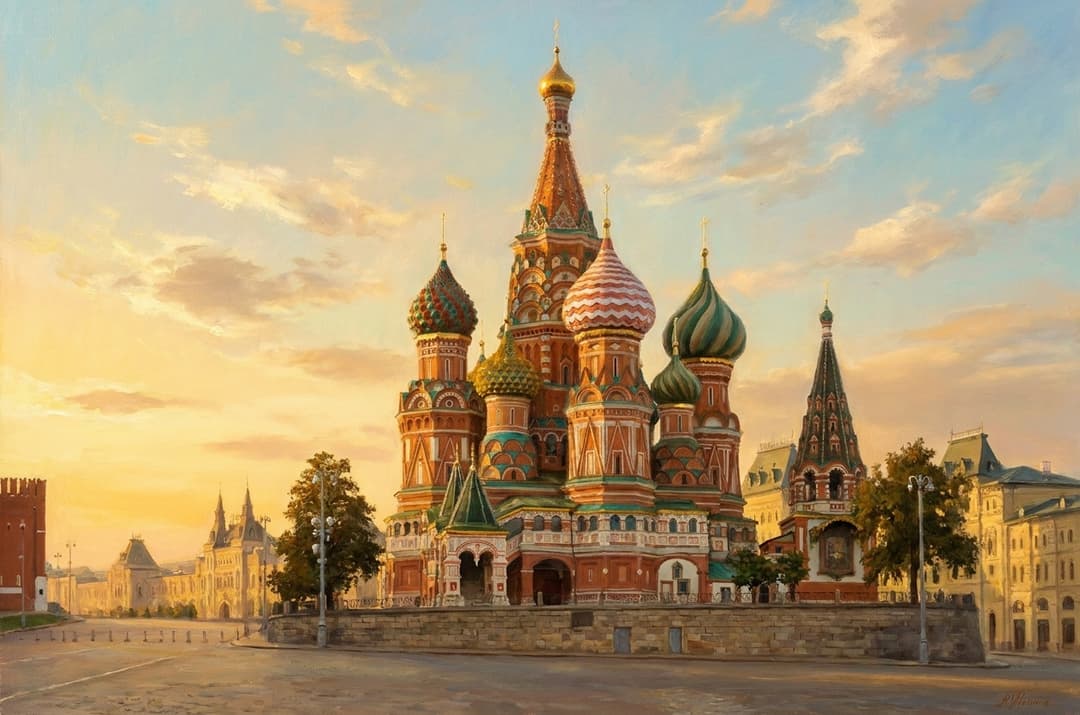
Visiting Saint Basil's Cathedral reveals an intimate interior network of nine discrete chapels linked by painted brick ambulatories. Guests climb steep medieval spiral stairs to explore historic iconostases and soaring tent-roof vaults.
Highlights
- Original 16th-century dedication fresco uncovered inside the central lantern drum
- Intricate 17th-century floral tempera murals lining the vaulted ambulatories
- Gilded silver reliquary shrine of Saint Basil the Blessed in the northeast chapel
- Acoustic ceramic resonator pots embedded directly into the central vault masonry
Things to Know
- Steep and narrow medieval spiral staircases prevent wheelchair and stroller access
- Red Square is occasionally closed without advance notice for state ceremonies
- Modest dress covering shoulders and knees is recommended within active chapels
Location
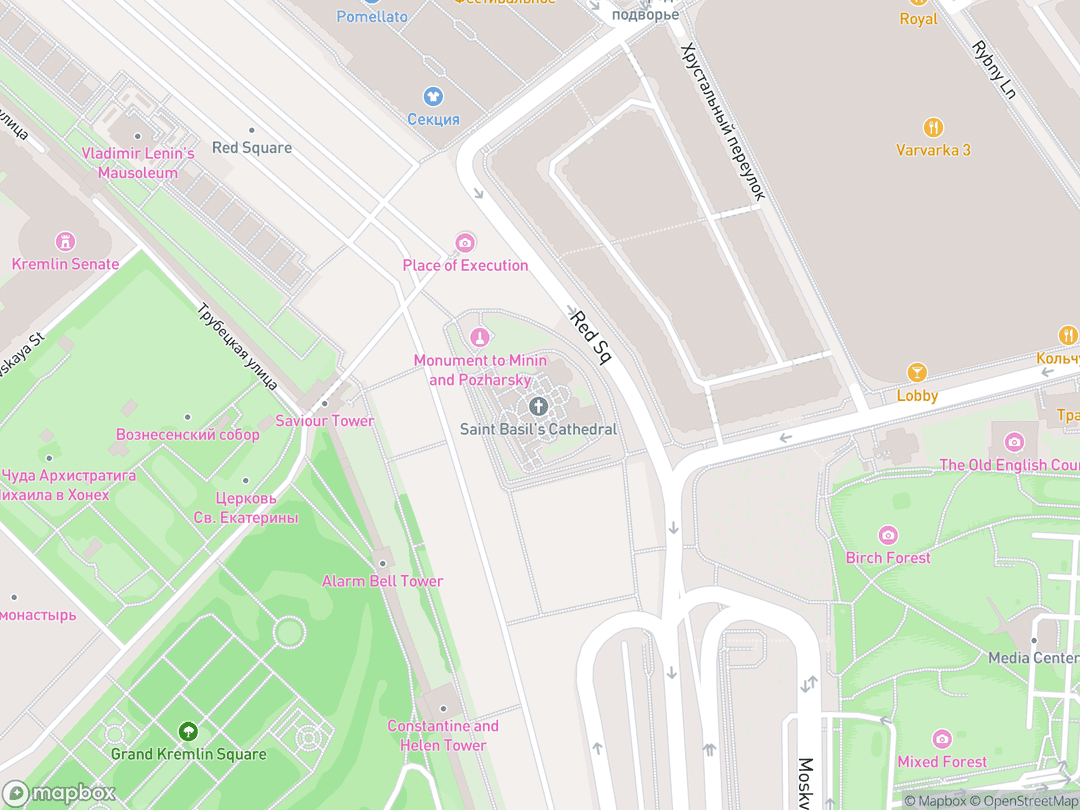
Red Square 2, 109012 Moscow, Russian Federation
Hours: Open daily 10:00 to 18:00 (June–August) and 11:00 to 17:00 (September–May); closed the first Wednesday of each month.
Getting There: Located at the southern end of Red Square, within short walking distance of Okhotny Ryad, Teatralnaya, Ploshchad Revolyutsii, and Kitay-Gorod metro stations.
Get DirectionsTips for Your Visit
Arrive at Morning Opening
Enter right when ticket offices open to explore the narrow single-file corridors before tour groups arrive.
Optimal Photography Timing
Capture western facade illumination from Red Square in the morning and southern river views during golden hour.
Experience Liturgical Acoustics
Attend Sunday morning Divine Liturgy in Saint Basil's Chapel to experience choir singing amplified by acoustic pots.
About
Commissioned by Tsar Ivan IV to commemorate the capture of Kazan in 1552, Saint Basil's Cathedral—officially the Cathedral of the Intercession on the Moat—stands at the geographic and spiritual heart of Moscow. Consecrated on July 12, 1561, the complex synthesized traditional Russian timber vernacular with refined Byzantine liturgical geometry and masonry engineering.
Conceived fundamentally as an earthly embodiment of the celestial New Jerusalem, the design unifies eight peripheral churches around a central tent-roof tower. Although formally dedicated to the protective veil of the Mother of God, the monument became universally known by the name of Saint Basil the Blessed, a revered Holy Fool whose relics rest within its lower chapel.
Today, the cathedral functions under a dual status as a branch of the State Historical Museum and an active house of worship under the Russian Orthodox Church. Its vibrant patterned domes, labyrinthine galleries, and centuries of sacred frescoes continue to inspire millions of pilgrims and cultural visitors.
Gallery
Symbolic Elements
The temple's exterior features intricate carvings, each rich with spiritual meaning:

Eight-Pointed Star Plan
The octagram ground plan represents the Eighth Day of Creation and the heavenly New Jerusalem descending to earth.

Central Shatyor Tent Roof
The soaring stone tent roof evokes the guiding pillar of fire and forms an architectural ladder toward the cosmos.

Lukovitsa Onion Domes
Bulbous onion domes symbolize the burning flame of a prayer candle ascending toward the divine light of Christ.

Tiered Kokoshnik Gables
Ascending corbel gables represent the ranks of heavenly angels upholding the throne of God.

Polychrome Domes
Varying geometric dome textures reflect the diverse gemstone foundations of the Heavenly City described in Revelation.

Podklet Foundation Plinth
The massive subterranean masonry base represents the earthly realm upon which heavenly grace is established.

Reliquary Shrine of Saint Basil
The tomb of the Holy Fool stands as a witness to spiritual humility over worldly imperial authority.
Interesting Facts
Official 16th-century building records prove architect Postnik Yakovlev was never blinded, as he later built the Kazan Kremlin. (Tier B)
For its first 120 years, the exterior displayed a restrained finish of simulated red brickwork and white stone accents. (Tier A)
The windowless lower basement vaults originally served as impenetrable safety-deposit chambers for boyars and royal treasures. (Tier A)
Retreating French troops tried to blow up the cathedral in 1812, but drenching rains and Russian sappers neutralized the powder trains. (Tier B)
Architect Pyotr Baranovsky endured the Gulag after threatening self-immolation to halt Joseph Stalin's plans to demolish the church. (Tier B)
Russian Tsars historically led the Patriarch of Moscow on horseback to Saint Basil's during theatrical Palm Sunday donkey walks. (Tier A)
Medieval builders embedded acoustic ceramic pots called golosniki into the ceilings to clarify choral chanting without heavy reverberation. (Tier A)
The complex is technically an ensemble of ten distinct churches sharing a single massive stone foundation platform. (Tier A)
Conservators discovered the authentic 1561 consecration date hidden beneath plaster layers inside the central drum in 1957. (Tier A)
Common Questions
Why is the cathedral called Saint Basil's instead of its official name?
The heated ground-floor chapel over Saint Basil's tomb remained open year-round for pilgrims, leading popular speech to adopt his name.
Were the architects blinded by Ivan the Terrible?
Historical records disprove this folktale, as architect Postnik Yakovlev later constructed major fortifications at the Kazan Kremlin.
Was the cathedral always painted in vivid colors?
For its first century the exterior was painted as simulated red brick with white trim, receiving polychrome dome patterns in the late 1600s.
Is Saint Basil's an active church or a museum?
It operates as both a branch of the State Historical Museum and an active Russian Orthodox house of worship.
Featured Stories
Pyotr Baranovsky's Defiance of Stalin
1936
When Soviet planners slated Saint Basil's Cathedral for demolition to facilitate military parades across Red Square, architect Pyotr Baranovsky courageously opposed the regime. He sent a desperate telegram to Joseph Stalin vowing to take his own life on the cathedral steps if the monument was torn down. Although subsequently sentenced to the Gulag, Baranovsky's steadfast defiance successfully preserved the architectural treasure.
Source: State Historical Museum Archives
The Rain That Quenched Napoleon's Fuses
October 1812
During the chaotic French retreat from Moscow in 1812, Napoleon ordered his sappers to blow up Saint Basil's Cathedral using stockpiled kegs of gunpowder. A sudden, drenching autumn downpour soaked the burning fuses before the powder could ignite. Brave Muscovites and swift Russian soldiers rushed into the cellars to extinguish the remaining sparks, rescuing the sanctuary from total destruction.
Source: Moscow Imperial Military Historical Records
The Palm Sunday Donkey Walk
1600s
Throughout the 16th and 17th centuries, Red Square hosted the solemn Palm Sunday procession reenacting Christ's entry into Jerusalem. The Russian Tsar walked on foot, humbly leading by the bridle a horse draped as an ass, upon which sat the Patriarch of Moscow proceeding toward Saint Basil's. This public ritual served as a striking reminder that earthly monarchs remain subordinate to divine rule.
Source: Russian Orthodox Patriarchate Historical Annals
Timeline
Victory at Kazan
Russian forces capture Kazan following prayers on the Feast of the Intercession, prompting Ivan IV to commission a landmark memorial.
MilestoneGroundbreaking
Master builders Barma and Postnik initiate masonry construction on the brow of Red Square.
component.timeline.groundbreakingCathedral Consecration
Metropolitan Macarius consecrates the central Church of the Intercession and its eight surrounding chapels.
DedicationChapel of Saint Basil Erected
Tsar Fyodor I adds a tenth self-contained chapel directly over the tomb of the canonized Holy Fool.
MilestoneChapel of Saint John Added
An eleventh chapel is constructed over the burial vault of Blessed John of Moscow.
MilestoneBaroque Polychrome Vaulting
Open masonry arcades are enclosed under painted brick vaults and patterned colors are applied to the domes.
RenovationGreat Trinity Fire
A catastrophic citywide fire damages the timber roof frames, leading to structural repairs directed by Ivan Michurin.
EventNapoleonic Sapping Prevented
Retreating French forces attempt to detonate gunpowder mines beneath the cathedral, but heavy rains and sappers extinguish the fuses.
EventIntegration into State Historical Museum
The Soviet government halts liturgical services and incorporates the cathedral into the national museum system.
EventDemolition Defiance by Baranovsky
Restorer Pyotr Baranovsky bravely challenges Soviet proposals to demolish the monument to facilitate military parades.
MilestoneUNESCO World Heritage Inscription
Saint Basil's Cathedral and Red Square are collectively inscribed as a UNESCO World Heritage site.
MilestoneLiturgical Worship Resumed
Regular Orthodox divine services resume within the cathedral under an agreement with museum authorities.
DedicationHistory by Decade
1550s — Conception and Groundbreaking
Following the pivotal Russian victory at the fortress of Kazan on the day after the Feast of the Intercession in 1552, Tsar Ivan IV commissioned a landmark stone cathedral. Master builders Barma and Postnik commenced construction in 1555 on the elevated edge of Red Square. The monumental masonry replaced a temporary cluster of seven timber churches erected beside the Kremlin moat.
1560s–1580s — Consecration and Saint Basil's Chapel
Metropolitan Macarius consecrated the complex on July 12, 1561, establishing the central tent-roof church and eight flanking towers. In 1588, Tsar Fyodor I added a tenth chapel directly over the subterranean vault of Saint Basil the Blessed following his canonization. Because this chapel was heated and accessible day and night, its popular name gradually eclipsed the cathedral's official title.
1670s–1680s — Baroque Transformation
Extensive decorative modifications during the late 17th century enclosed the open second-story galleries under vaulted brick corridors adorned with floral murals. Elaborate hipped-roof porches and a detached tent-roofed belfry were constructed. During this era, craftsmen first painted the plain iron onion domes with the vivid polychrome and patterned relief schemes admired today.
1730s–1780s — Fires and Classical Restoration
The disastrous Trinity Fire of May 29, 1737, swept across Moscow, severely scorching the cathedral's timber framework and decorative paintwork. Architect Ivan Michurin oversaw structural repairs to the masonry vaults and stabilized the plinth foundations. In 1784, Catherine the Great commissioned master architect Matvey Kazakov to direct an extensive decorative restoration of the interior chapels.
1810s–1890s — Napoleonic War and Discovery
French cavalry quartered horses in the lower chambers during the 1812 occupation before Napoleon ordered the cathedral mined and blown up. Torrential autumn rains and courageous defenders smothered the fuses, allowing architect Joseph Bové to restore the precinct and construct the cast-iron perimeter balustrade. In 1895, archivist Ivan Zabelin discovered manuscripts identifying Barma and Postnik as the original architects.
1910s–1930s — Soviet Suppression and Preservation
Following the 1917 Bolshevik Revolution, authorities confiscated church treasures and executed the cathedral's dean, Archpriest Ioann Vostorgov, in September 1918. The complex was transformed into a museum in 1923 and integrated into the State Historical Museum in 1928, suppressing liturgical services. In 1936, architect Pyotr Baranovsky heroically defied Stalin's transport planners, saving the monument from demolition.
1990s–Present — World Heritage and Liturgical Revival
UNESCO inscribed Saint Basil's Cathedral and Red Square as a World Heritage site in 1990 in recognition of its unique architectural synthesis. Regular divine liturgies resumed on October 14, 1992, through a cooperative agreement between museum curators and the Russian Orthodox Church. Major scientific restorations in 2011 and 2021 stabilized historic iron ties and revitalized medieval wall frescoes.
Architecture & Facilities
Saint Basil's Cathedral represents the zenith of 16th-century Russian tent-roof masonry, synthesizing indigenous Russian timber construction vernacular with refined Byzantine liturgical geometry and North Italian Renaissance brickwork methods. Conceived as a tangible earthly icon of the celestial New Jerusalem, the structure organizes eight octagonal and cubical towers symmetrically around a central tent-roofed spire atop a monolithic limestone basement platform.
Building Materials
Podklet Limestone
Monolithic white limestone ashlar blocks form the sturdy subterranean plinth that anchors the towers into the hillside.
Custom Red Clay Brick
Locally fired red clay bricks laid in durable lime mortar compose the thick structural walls and octagonal drums.
Wrought Iron Ties
High-tensile iron tie rods are embedded deep within the masonry mass to counteract lateral vault thrust.
Sheet Metal Cupolas
Folded and riveted sheets of copper, tin, and iron clad the timber armatures of the bulbous onion domes.
Interior Features
Church of the Intercession
The soaring central tower chamber features an octagonal lantern and embedded acoustic resonators.
Chapel of Saint Basil the Blessed
This ground-level northeast chapel contains the gilded repoussé reliquary shrine of Vasily Blazhenny.
Gallery Ambulatories
Narrow vaulted brick walkways link the chapels and display intricate 17th-century floral tempera frescoes.
Church of the Entry into Jerusalem
The western cardinal chapel features a multi-tiered iconostasis dedicated to Christ's triumphal procession.
Temple Grounds
The cathedral anchors the southern descent of Red Square, bordered by a carved stone retaining wall, Joseph Bové's cast-iron balustrades, and adjacent landscaped lawns sloping toward Zaryadye Park.
Additional Facilities
The monument includes a subterranean museum exhibition space within the historic vaults, a ticket office pavilion, and specialized climate-controlled conservation storage.
Religious Significance
In Eastern Orthodox Christian theology, Saint Basil's Cathedral is conceived as a physical icon of the Heavenly Jerusalem, sanctifying earthly civil space with celestial beauty.
To offer enduring national thanksgiving for divine deliverance and maintain a holy sanctuary honoring the protective intercession of the Mother of God.
Sacred Ordinances
Divine Liturgy
The sacred eucharistic liturgy celebrated weekly in the Chapel of Saint Basil the Blessed.
Feast of the Pokrov
Annual festival on October 14 commemorating the protective veil of the Theotokos.
Veneration of Relics
Pious prayer and veneration offered at the gilded reliquary shrine of Saint Basil.
The Theology of the Holy Fool
The dedication to Saint Basil tempers imperial majesty with radical spiritual humility, honoring the ascetic calling to confront earthly tyranny with divine truth.
The Iconography of the Heavenly City
The eight-pointed star ground plan and varied dome geometries correspond to the twelve gates and gemstone foundations of the New Jerusalem in Revelation.
Sources & Research
Every fact on Temples.org is backed by verified Sources & Research. Each piece of information is rated by source tier and confidence level.
View All Sources (7)
| Field | Source | Tier | Retrieved |
|---|---|---|---|
| About & Historical Background | The State Historical Museum (opens in a new tab) | A | 2026-03-30 |
| Religious Significance & Liturgy | Moscow Patriarchate of the Russian Orthodox Church (opens in a new tab) | A | 2026-03-30 |
| Architecture & Structural Engineering | Ministry of Culture of the Russian Federation (opens in a new tab) | A | 2026-03-30 |
| UNESCO World Heritage Inscription | UNESCO World Heritage Centre (opens in a new tab) | B | 2026-03-30 |
| Timeline & Architectural Surveys | Encyclopaedia Britannica (opens in a new tab) | B | 2026-03-30 |
| Conservation & Postnik Yakovlev Research | Archi.ru Architecture Portal (opens in a new tab) | B | 2026-03-30 |
| Visitor Insights & Access Information | Moscow Information & Visitor Services (opens in a new tab) | C | 2026-03-30 |