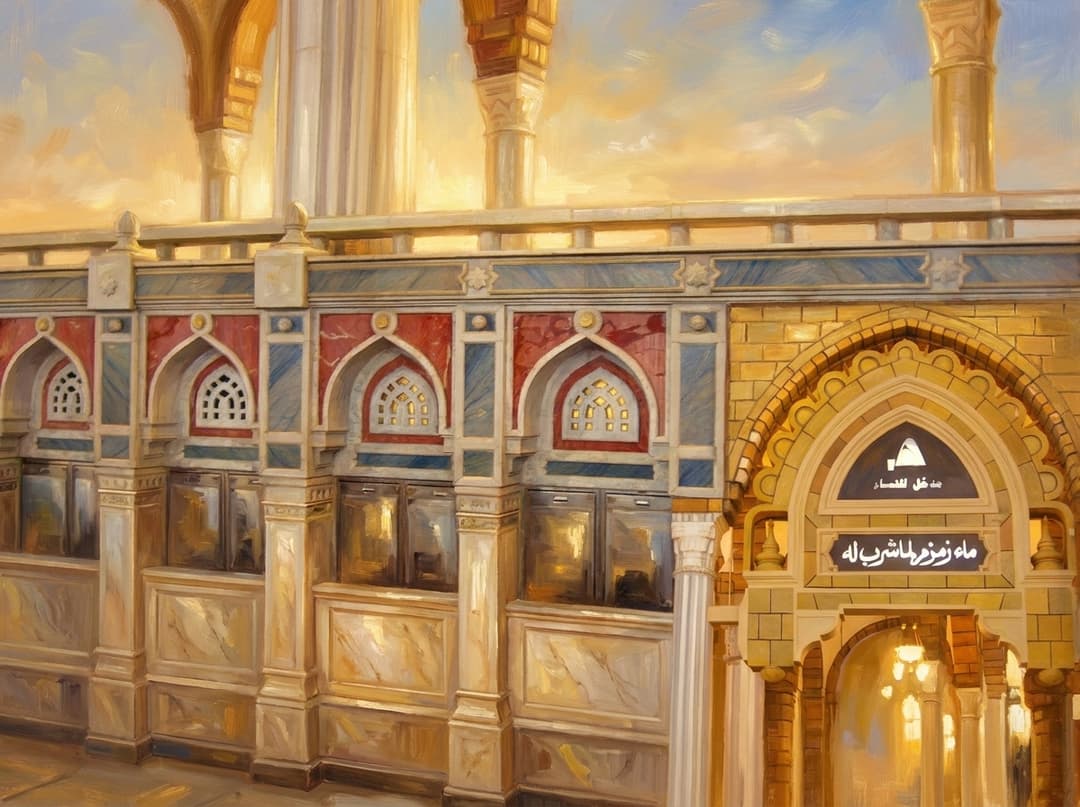
Visitor Insights
Visiting Well of Zamzam
The Well of Zamzam, located within the Masjid al-Haram, is a deeply revered site for Muslims worldwide. Visitors can expect a spiritual atmosphere as they partake of the blessed water, often with prayers for health and forgiveness. Access to Zamzam water is available throughout the day via dispensers and fountains, though it is advisable to visit during off-peak hours to avoid large crowds.
Highlights
- Drinking the blessed Zamzam water
- Experiencing the spiritual atmosphere of Masjid al-Haram
- Reflecting on the historical significance of the well
Things to Know
- Crowds can be heavy, especially during peak pilgrimage seasons.
- Dress modestly and respectfully when visiting the mosque.
- Be mindful of the religious practices and customs of other visitors.
Location
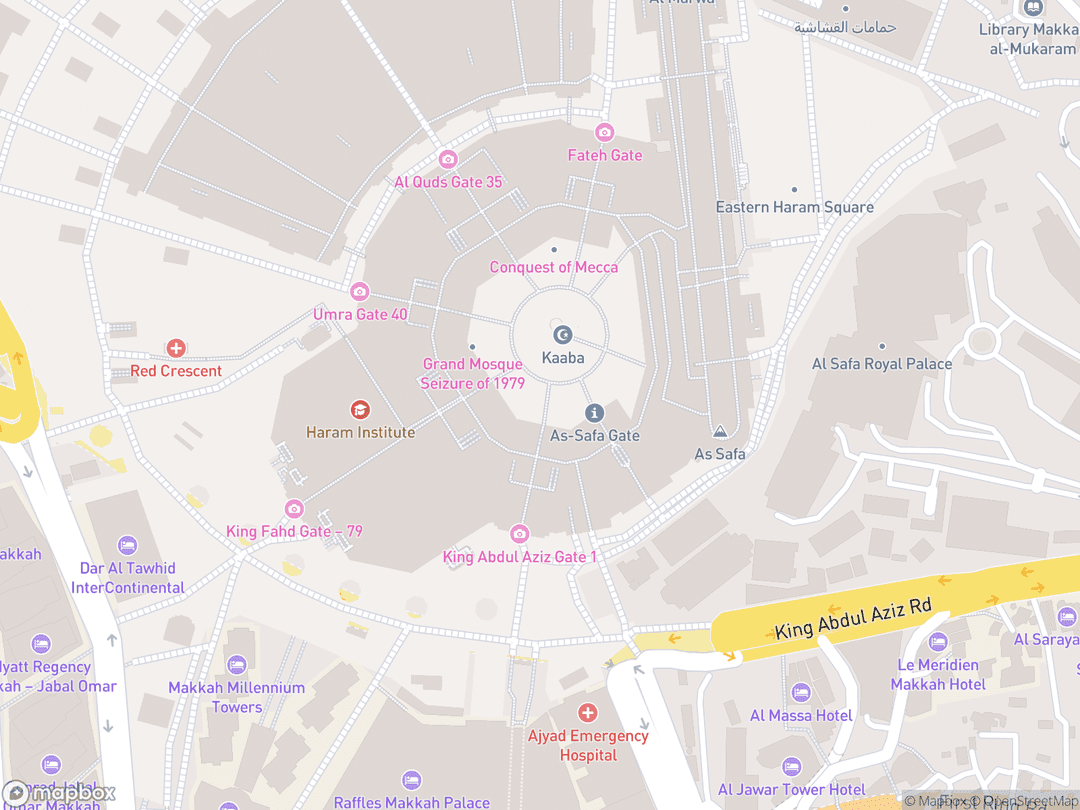
Masjid al-Haram, Mecca, Saudi Arabia
Hours: Open 24 hours a day
Getting There: Located within the Masjid al-Haram in Mecca. Accessible to pilgrims performing Hajj or Umrah.
Get DirectionsTips for Your Visit
Best Time to Visit
Visit early morning or late at night to avoid crowds.
Respectful Attire
Dress modestly and respectfully when visiting the mosque.
About
The Well of Zamzam is a well located within the Masjid al-Haram (Grand Mosque) in Mecca, Saudi Arabia, just 20 meters east of the Kaaba. It is a sacred site in Islam, with a history stretching back nearly 4,000 years to the time of Ibrahim (Abraham), his wife Hajar (Hagar), and their son Ismail (Ishmael). According to Islamic tradition, the well miraculously appeared to provide water for Hajar and Ismail when they were in the desert.
The well is not a dedicated structure, but it is revered as a divinely provided source of water. Over the centuries, the area around the well has been developed to accommodate the millions of pilgrims who visit Mecca each year. The Well of Zamzam holds a central place in Islamic tradition and is an integral part of the Hajj and Umrah pilgrimages.
As part of the Abrahamic tradition, the Well of Zamzam is a testament to divine mercy and the fulfillment of God's promise to Hajar and Ismail. The water from the well is believed to have healing properties and is consumed by pilgrims with prayers for health, forgiveness, and knowledge. It is a symbol of purity, sustenance, and spiritual cleansing, deeply embedded in the faith and practices of Muslims worldwide.
Gallery
Symbolic Elements
The temple's exterior features intricate carvings, each rich with spiritual meaning:

The Wellspring
The wellspring itself symbolizes divine provision and the miraculous nature of God's blessings. It represents the quenching of thirst and the sustaining of life in the face of adversity, as demonstrated by Hajar and Ismail's story.

The Kaaba Proximity
Its location just 20 meters from the Kaaba, the holiest site in Islam, signifies its integral role in the spiritual practices of Muslims. The proximity emphasizes its sacredness and its connection to the central focus of Islamic worship.

Zamzam Water
The water itself is a symbol of purity, healing, and spiritual cleansing. It is believed to have unique properties that can satisfy both thirst and hunger, and is often consumed with prayers for health and forgiveness.

The Story of Hajar and Ismail
The story of Hajar's desperate search for water and God's miraculous provision through the well is a powerful symbol of faith, perseverance, and divine mercy. It reminds Muslims of God's unwavering support in times of need.

Pilgrimage Ritual
Drinking Zamzam water is an essential part of the Hajj and Umrah pilgrimages, symbolizing the renewal of faith and the cleansing of sins. It is a ritual that connects pilgrims to the historical and spiritual roots of Islam.

The Continuous Flow
The continuous flow of water for over 4,000 years symbolizes the enduring nature of God's blessings and the unbroken connection between the past, present, and future of Islam. It represents the timeless relevance of faith and divine provision.

Spiritual Cleansing
Muslims believe that drinking Zamzam water cleanses the heart and soul, bringing them closer to God. It is a symbol of spiritual purification and renewal, helping believers to strengthen their faith and devotion.

Divine Provision
The Well of Zamzam is a testament to God's promise to provide for those who trust in Him. It symbolizes the idea that even in the most desolate circumstances, divine help is always available for those who seek it with faith and sincerity.
Interesting Facts
Islamic tradition says the Zamzam Well originated when the angel Jibreel (Gabriel) struck the ground, causing water to gush forth for Hajar and Ismail.
The name 'Zamzam' is believed to be derived from Hajar's attempt to contain the spring by saying 'Zome Zome,' meaning 'stop flowing'.
The water has flowed continuously for over 4,000 years, providing sustenance to millions of pilgrims.
Zamzam water is considered the purest and cleanest water on Earth, containing no fungus, bacteria, or impurities.
The water has a distinct taste due to its rich mineral content, setting it apart from other water sources.
The Zamzam well is monitored in real-time using digital sensors that track water level, pH, temperature, and conductivity.
The water is naturally alkaline, with a pH between 7.9 and 8.0, contributing to its unique properties.
The well pumps between 11 and 18.5 liters of water per second, ensuring a constant supply for pilgrims.
The water is believed to have the ability to satisfy both thirst and hunger, providing both physical and spiritual nourishment.
Muslims believe that drinking Zamzam water with good intentions can lead to the fulfillment of those intentions, making it a powerful symbol of faith.
Common Questions
What is the significance of the Well of Zamzam?
The Well of Zamzam is a sacred site in Islam, believed to have originated when Hajar and Ismail were in the desert and miraculously received water from God. It is a symbol of divine provision and is revered for its historical and spiritual importance.
Where is the Well of Zamzam located?
The Well of Zamzam is located within the Masjid al-Haram (Grand Mosque) in Mecca, Saudi Arabia, approximately 20 meters east of the Kaaba.
How can visitors access Zamzam water?
Visitors can access Zamzam water through dispensers and fountains spread throughout the Grand Mosque. Bottled Zamzam water can also be purchased from authorized outlets.
What are the believed benefits of drinking Zamzam water?
Zamzam water is believed to have healing properties and is often consumed with prayers for health, forgiveness, and knowledge. It is considered pure and spiritually cleansing.
Is the Well of Zamzam open to the public?
Yes, the Well of Zamzam is open and accessible to pilgrims and visitors as part of the Masjid al-Haram. It is a vital part of the Hajj and Umrah pilgrimages.
Featured Stories
The Miracle of Zamzam: Hajar's Faith and Divine Provision
Pre-Islamic Era
In the arid desert of Mecca, Hajar, the wife of Ibrahim (Abraham), found herself in dire straits with her infant son Ismail (Ishmael). As they wandered in search of water, their desperation grew with each passing moment. Hajar's unwavering faith in God led her to run between the hills of Safa and Marwa seven times, a testament to her relentless determination.
Exhausted and heartbroken, Hajar collapsed, praying for a miracle. In response to her unwavering faith, the angel Jibreel (Gabriel) appeared and struck the ground, causing a spring of pure water to gush forth. This miraculous event not only saved Hajar and Ismail from certain death but also established the Well of Zamzam as a symbol of divine provision and unwavering faith.
The story of Hajar and Ismail at Zamzam is a powerful reminder that even in the most challenging circumstances, faith and perseverance can lead to divine intervention. It is a story that resonates deeply with Muslims, inspiring them to trust in God's mercy and provision in all aspects of their lives.
Source: https://www.maainternational.org.au/the-story-of-zam-zam-well/
The Rediscovery of Zamzam: Abd al-Muttalib's Vision and Restoration
6th Century
Centuries after the miraculous origin of the Well of Zamzam, its location was lost to time, buried beneath the sands of Mecca. Abd al-Muttalib, the grandfather of the Prophet Muhammad, was troubled by the neglect of this sacred site and yearned to restore it to its former glory. One night, he received a vision guiding him to the well's hidden location.
Following the divine guidance, Abd al-Muttalib and his son Harith began to excavate the area, facing resistance from the Quraysh tribe who questioned his motives. Despite the challenges, Abd al-Muttalib persevered, driven by his unwavering belief in the well's significance. As they dug deeper, the signs of the ancient well began to emerge, confirming the truth of his vision.
With the rediscovery of Zamzam, Abd al-Muttalib not only restored a vital source of water for the people of Mecca but also reaffirmed the well's spiritual importance. His dedication and faith in the face of adversity serve as an inspiring example of leadership and devotion, solidifying Zamzam's place as a central symbol in Islamic tradition.
Source: https://www.islamiclandmarks.com/makkah/zamzam
Zamzam Today: A Source of Sustenance and Spiritual Connection
Present Day
Today, the Well of Zamzam continues to flow, providing sustenance and spiritual connection to millions of pilgrims who visit Mecca each year. The water is distributed through dispensers and fountains throughout the Masjid al-Haram, allowing visitors to partake of this blessed water and experience its unique properties.
The Saudi government has invested significantly in maintaining and improving the well, ensuring its purity and accessibility for future generations. Modern technology is used to monitor the water level, pH, and other parameters, guaranteeing its quality and safety. The King Abdullah bin Abdulaziz Zamzam Water Project bottles and distributes Zamzam water, making it available to Muslims worldwide.
The Well of Zamzam remains a powerful symbol of faith, divine provision, and the enduring legacy of Ibrahim, Hajar, and Ismail. It is a testament to the miraculous nature of God's blessings and the unwavering devotion of those who trust in Him. As pilgrims drink from its waters, they connect with the rich history and spiritual significance of this sacred site, renewing their faith and strengthening their bond with Islam.
Source: https://www.aljazeera.com/features/2023/6/27/zamzam-the-story-of-islams-miraculous-well
Timeline
Origin of the Well
According to Islamic tradition, the well originated when Hajar and Ismail were in the desert, and water miraculously appeared to quench their thirst.
MilestoneRediscovery of the Well
Islamic narratives state that the well was rediscovered and re-established by Abd al-Muttalib, the grandfather of the Prophet Muhammad.
MilestonePaving Around Zamzam
The Abbasid caliph al-Mansur sponsored construction projects in the Masjid al-Haram, including paving the area around Zamzam with marble.
RenovationRebuilding of the Well
Caliph al-Mahdi rebuilt the well with a dome covered in mosaic. In 835 CE, Caliph al-Mu'tasim restored the dome and covered it with marble.
RenovationAttack on Mecca
The Qarmatians attacked Mecca, disrupting the sanctity of the well.
EventOttoman Restoration
During one of the most extensive restorations of Masjid al-Haram, Ottoman Sultan Abdul Hamid II moved the building housing the Zamzam well to facilitate crowd control.
RenovationInstallation of Pump
King Abdulaziz Al Saud ordered the installation of a pump to lift water into upper tanks.
RenovationExpansion of Mataf Area
King Saud expanded the Mataf area, lowering the opening of the well into a basement.
RenovationAddition of Pulley System
A pulley system was added to the well.
RenovationCleaning of the Well
King Khalid ordered the cleaning of the well using modern methods.
RenovationNew Water System
A new water system for drinking and drainage was included during the second phase of the Saudi expansion of the Grand Mosque.
RenovationClosure of Basement Entrances
The basement entrances were closed, and drinking fountains were relocated.
RenovationPurification and Bottling Plant
King Abdullah directed the establishment of a water purification and bottling plant.
RenovationRenovation of Surrounding Areas
The Saudi authorities renovated the areas around the well, removing debris.
RenovationContinued Access to Pilgrims
The Well of Zamzam remains open and accessible to pilgrims as a vital part of their religious rituals.
EventReligious Significance
The Well of Zamzam holds immense religious significance in Islam, deeply rooted in its historical and spiritual context. It is not merely a source of water but a symbol of divine mercy, provision, and the fulfillment of God's promise to Hajar and Ismail.
The core spiritual purpose of the Well of Zamzam is to provide sustenance, purification, and healing to those who partake of its blessed water. It serves as a reminder of God's unwavering support and the importance of faith and perseverance in the face of adversity.
Sacred Ordinances
Drinking Zamzam Water
Muslims drink Zamzam water with prayers for health, forgiveness, and knowledge, believing it to have healing properties and the ability to fulfill their intentions. It is a ritual that connects them to the historical and spiritual roots of Islam.
Spiritual Cleansing
The water is believed to cleanse the heart and soul, bringing believers closer to God. It symbolizes spiritual purification and renewal, helping them to strengthen their faith and devotion.
The Abrahamic Tradition
As part of the Abrahamic tradition, the Well of Zamzam is a testament to the shared heritage of faith and the belief in one God. It connects Muslims to the stories and values of Ibrahim (Abraham) and his family, emphasizing the importance of faith, sacrifice, and divine guidance.
Symbol of Divine Provision
The Well of Zamzam is a powerful symbol of divine provision, reminding Muslims that God is always there to provide for those who trust in Him. It represents the idea that even in the most desolate circumstances, divine help is always available for those who seek it with faith and sincerity.
Sources & Research
Every fact on Temples.org is backed by verified Sources & Research. Each piece of information is rated by source tier and confidence level.
View All Sources (2)
| Field | Source | Tier | Retrieved |
|---|---|---|---|
| Historical Timeline | Madain Project (opens in a new tab) | B | 2024-02-29 |
| Interesting Facts | Islamic Landmarks (opens in a new tab) | C | 2024-02-29 |