Visitor Insights
Visiting Durban South Africa Temple
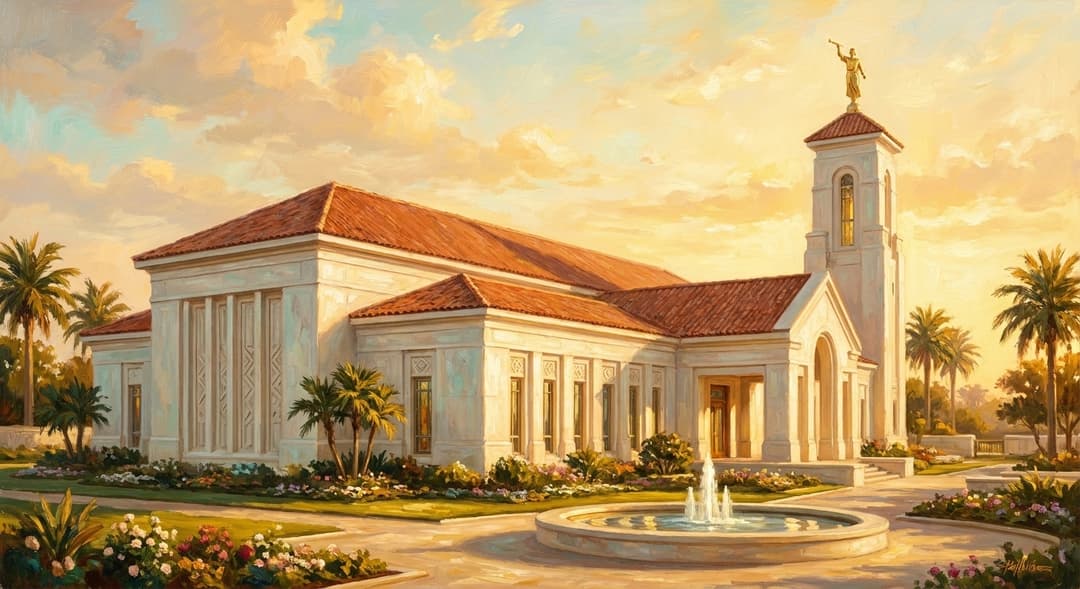
The Durban South Africa Temple grounds and an on-site visitors' center are open to the public for quiet contemplation and learning. The temple interior is reserved for members of The Church of Jesus Christ of Latter-day Saints with a current temple recommend. Temple housing and a distribution center are available for patrons.
Highlights
- Explore the beautifully landscaped temple grounds.
- Visit the on-site visitors' center to learn about temples.
- Enjoy views of sugarcane fields from the grassy knoll.
Things to Know
- The temple interior is not open to the general public after dedication.
- No clothing rental or arrival center is available at this temple.
- Consider visiting Durban from February to mid-May for more comfortable weather.
Location
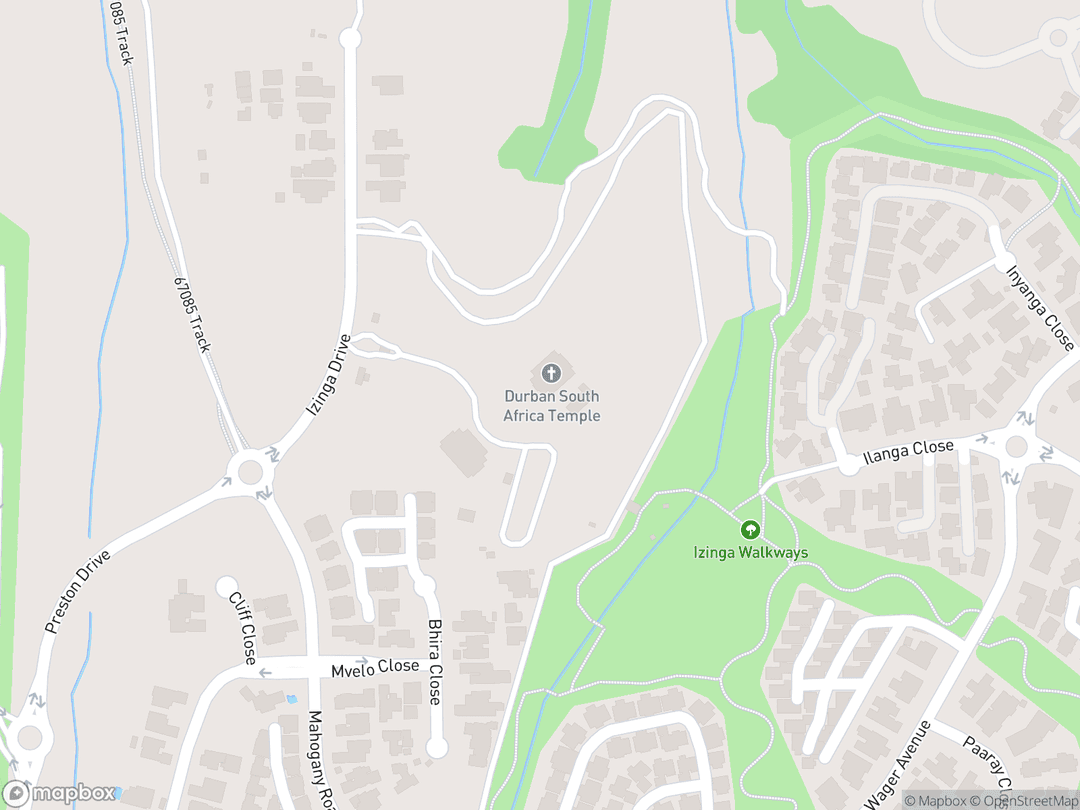
2 Izinga Drive, Izinga Ridge, Umhlanga, KwaZulu-Natal 4021, South Africa
Hours: Visitors' center hours vary; temple grounds are generally open during daylight hours.
Getting There: The temple is located approximately 19 kilometers (12 miles) north of the Umhlanga city center, within the Izinga development.
Get DirectionsTips for Your Visit
Respect Sacred Space
Maintain a reverent demeanor while on the temple grounds, as it is considered a sacred space.
Explore the Visitors' Center
Take time to visit the visitors' center for exhibits and information on the temple's purpose.
Enjoy the Gardens
Walk through the meticulously maintained indigenous gardens, featuring local flora.
About
The Durban South Africa Temple stands as a sacred edifice for members of The Church of Jesus Christ of Latter-day Saints, a Christian faith within the broader Abrahamic traditions. Dedicated to the worship of God and the performance of eternal ordinances, its architecture and design reflect both its spiritual purpose and the rich cultural heritage of its South African setting.
The temple serves Latter-day Saints in the KwaZulu-Natal and Eastern Cape provinces of South Africa, as well as the countries of Lesotho and Mozambique. It provides a place for members to participate in sacred covenants and rituals, strengthening their commitment to Jesus Christ and their families. The temple's presence underscores the Church's growth and commitment to its members across the African continent.
Gallery
Symbolic Elements
The temple's exterior features intricate carvings, each rich with spiritual meaning:
Angel Moroni Statue
A prominent feature atop the tower, symbolizing the restoration of the gospel of Jesus Christ to the earth.

African Geometric Patterns
Geometric carvings on exterior stone panels and tribal patterns in interior marble celebrate indigenous African roots.

South African Basket-Weaving Design
Custom-made rugs feature this design, symbolizing unity and communal spirit found in local traditions.

King Protea Motifs
The national flower of South Africa is integrated into entry gates, stone benches, and art glass, connecting the temple to its national identity.

Sapele Mahogany
Extensively used for interior millwork, casework, and doors, showcasing diamond-shaped patterns that accentuate the wood's natural grain.

Indigenous Landscaping
The 14.49-acre site features over 800 trees, including king palms and coral trees, along with thousands of local shrubs and flowers.
Art Depicting Jesus Christ
Over 50 exquisite art pieces adorn the interior, many portraying the life and ministry of Jesus Christ, reinforcing the temple's central purpose.

Pitched Red Clay Tile Roof
A design element common in local residential architecture, contributing to the temple's harmonious blend with the neighborhood.
Interesting Facts
The Durban South Africa Temple is the second Latter-day Saint temple built in South Africa and the fifth on the African continent (Tier A).
It was the last temple dedicated globally before a 20-month pause in temple dedications due to the COVID-19 pandemic (Tier A).
Prior to its dedication, Elder Ronald A. Rasband conducted a special tour for a contingent of the Zulu nation's royal family (Tier A).
The temple district serves members in KwaZulu-Natal, Eastern Cape, Lesotho, and Mozambique (Tier A).
The indigenous landscaping features over 800 trees, including symbolic king palms and vibrant coral trees (Tier B).
The temple's interior houses more than 50 exquisite art pieces, many depicting scenes from the life of Jesus Christ and African landscapes (Tier B).
Italian marble flooring is uniquely adorned with tribal geometric patterns, celebrating African culture (Tier B).
Custom-made rugs feature a distinct South African basket-weaving design in gold, white, and cream colors (Tier B).
The King Protea, South Africa's national flower, is incorporated as a decorative motif throughout the temple (Tier B).
The temple is strategically situated atop a beautiful grassy knoll, offering unobstructed views of sugarcane fields (Tier C).
Common Questions
What is the purpose of the Durban South Africa Temple?
The temple is a sacred space for Latter-day Saints to make covenants with God and perform eternal ordinances.
Who can enter the temple?
After dedication, the interior is reserved for members of the Church who hold a current temple recommend.
Are the temple grounds open to the public?
Yes, the Durban South Africa Temple grounds and an on-site visitors' center are open to the public for quiet enjoyment and learning.
What is unique about the temple's architecture?
Its design blends inspiration from downtown Durban buildings with indigenous African geometric patterns and local materials.
When was the temple dedicated?
The Durban South Africa Temple was dedicated on February 16, 2020, by Elder Ronald A. Rasband.
Featured Stories
A Prophetic Announcement for South Africa
October 1, 2011
During the 181st Semiannual General Conference, President Thomas S. Monson announced the construction of a temple in Durban, South Africa. This joyous declaration brought hope and anticipation to Latter-day Saints across the region, marking a significant step in the Church's expansion on the African continent. The announcement underscored the Church's commitment to providing sacred spaces for its growing global membership.
Groundbreaking: A Spiritual and Physical Foundation
April 9, 2016
The groundbreaking ceremony for the Durban South Africa Temple was a momentous occasion, presided over by Elder Carl B. Cook of the Seventy. He emphasized the importance of spiritual preparation alongside the physical construction, inviting members to deepen their faith as the temple rose. This event symbolized the laying of both a physical and spiritual foundation for the sacred edifice.
Dedication and a Royal Visit
February 16, 2020
Elder Ronald A. Rasband of the Quorum of the Twelve Apostles dedicated the Durban South Africa Temple in three sessions, marking it as the 168th operating temple worldwide. Prior to the dedication, Elder Rasband conducted a special tour for a contingent of the Zulu nation's royal family, including His Majesty King Goodwill Zwelithini. This visit highlighted the temple's cultural integration and its significance within the broader community.
Timeline
Temple Announced
President Thomas S. Monson announced the construction of a temple in Durban, South Africa.
component.timeline.announcementGroundbreaking Ceremony
Elder Carl B. Cook presided over the groundbreaking, officially commencing construction.
component.timeline.groundbreakingConstruction Completed
The Durban South Africa Temple reached its final completion.
MilestonePublic Open House Begins
A public open house began, allowing people of all faiths to tour the temple interior.
EventTemple Dedicated
Elder Ronald A. Rasband dedicated the Durban South Africa Temple in three sessions.
Dedication168th Operating Temple
The Durban South Africa Temple became the 168th operating temple worldwide.
MilestoneLast Pre-Pandemic Dedication
It was the last temple dedicated globally before a 20-month pause due to the COVID-19 pandemic.
EventZulu Royal Family Tour
Prior to dedication, Elder Rasband conducted a special tour for a contingent of the Zulu nation's royal family.
EventHistory by Decade
2010s — Announcement and Construction
The decade began with the exciting announcement of the Durban South Africa Temple on October 1, 2011, by President Thomas S. Monson. This sparked immense joy among Latter-day Saints in the region. Construction officially commenced with a groundbreaking ceremony on April 9, 2016, and the temple reached its final completion by November 14, 2019, preparing it for its sacred purpose.
2020s — Dedication and Operation
The new decade ushered in the temple's public open house, which ran from January 22 to February 1, 2020, allowing thousands to tour its sacred interior. The Durban South Africa Temple was formally dedicated on February 16, 2020, by Elder Ronald A. Rasband, becoming the 168th operating temple worldwide. It was notably the last temple dedicated globally before the onset of the COVID-19 pandemic led to a temporary pause in dedications.
Architecture & Facilities
The architectural design of the Durban South Africa Temple draws inspiration from the buildings of downtown Durban, creating a harmonious blend with the surrounding residential neighborhood. It incorporates simple, elegant detailing and geometric carvings that highlight the rich African roots of the region, adapted to a modern context with a pitched red clay tile roof common in local residential architecture.
Building Materials
Exterior Facade
Crafted from high-quality marble, providing a durable and aesthetically pleasing white finish for the temple's exterior.
Exterior Accents
Fluted stone panels accent the window openings, incorporating geometric carvings that reflect African cultural heritage.
Roofing
A pitched red clay tile roof is used, a design element common in the local residential architecture of Durban.
Interior Millwork
Sapele mahogany is extensively used for millwork, casework, and doors, showcasing diamond-shaped patterns.
Interior Flooring
Italian marble flooring is inscribed with tribal geometric patterns, further celebrating the African theme.
Interior Textiles
Custom-made rugs, imported to South Africa, feature a South African basket-weaving design in gold, white, and cream colors.
Interior Features
Millwork and Casework
Sapele mahogany is extensively used, featuring diamond-shaped patterns that accentuate the wood's natural grain.
Flooring
Italian marble flooring throughout the temple is inscribed with tribal geometric patterns, celebrating African culture.
Rugs
Custom-made rugs feature a South African basket-weaving design in gold, white, and cream colors, symbolizing unity.
Art Collection
Over 50 exquisite art pieces adorn the interior, many depicting scenes from the life of Jesus Christ and African landscapes.
Temple Grounds
The 14.49-acre site features indigenous landscaping with over 800 trees, including symbolic king palms and flowering coral trees, along with thousands of shrubs, vines, and flowers like South African aloes and strelitzia juncea, all meticulously maintained.
Additional Facilities
Temple housing is available for patrons traveling from a distance, and a distribution center is located on-site for the purchase of temple garments and clothing.
Religious Significance
As a temple of The Church of Jesus Christ of Latter-day Saints, the Durban South Africa Temple is considered a House of the Lord, a sacred space dedicated to God. It is a place where members of the Christian faith can draw closer to Jesus Christ and participate in eternal covenants.
The core spiritual purpose of the temple is to provide a sacred sanctuary where individuals can make and renew covenants with God, receive divine instruction, and perform saving ordinances for themselves and on behalf of their deceased ancestors.
Sacred Ordinances
Baptism for the Dead
Proxy baptisms are performed for deceased individuals who did not have the opportunity to be baptized during their lifetime, offering them the choice to accept this ordinance.
Endowment
Members receive sacred instruction and make covenants to live righteously, follow Christ, and dedicate their lives to God's service, preparing them for eternal life.
Sealing
Families are sealed together for time and all eternity, a sacred ordinance that binds spouses and children in an everlasting covenant relationship.
Celestial Room
This room represents a return to God's presence, a place of profound peace and contemplation, symbolizing the eternal glory and joy promised to the faithful.
Instruction Rooms
Here, members receive teachings about God's plan of salvation, the purpose of life, and the path to eternal progression through sacred presentations and covenants.
Sealing Rooms
These rooms are where families are united for eternity through sacred sealing ordinances, emphasizing the everlasting nature of family relationships.
Similar Temples

Sources & Research
Every fact on Temples.org is backed by verified Sources & Research. Each piece of information is rated by source tier and confidence level.
View All Sources (7)
| Field | Source | Tier | Retrieved |
|---|---|---|---|
| Dedication & Historical Context | The Church of Jesus Christ of Latter-day Saints (opens in a new tab) | A | 2024-07-30 |
| Architectural Details & Interior | The Church of Jesus Christ of Latter-day Saints (opens in a new tab) | A | 2024-07-30 |
| Visitor Information & Facilities | The Church of Jesus Christ of Latter-day Saints (opens in a new tab) | A | 2024-07-30 |
| Temple Facts & Timeline | ChurchofJesusChristTemples.org (opens in a new tab) | C | 2024-07-30 |
| Groundbreaking Ceremony | Photogent (opens in a new tab) | C | 2024-07-30 |
| Site Development & Architecture | Izinga Estate (opens in a new tab) | D | 2024-07-30 |
| General Tourism Information | Frommer's (opens in a new tab) | D | 2024-07-30 |