Visitor Insights
Visiting Busan Korea Temple
The Busan Korea Temple is currently in its planning and approval phase, meaning the site is not yet open for public worship or tours. Once construction is finalized, a public open house will be announced, offering a rare opportunity for visitors of all faiths to tour the sacred interior. The temple grounds, designed as a peaceful public sanctuary, will eventually feature beautifully manicured gardens with native Korean flora, providing a quiet space for contemplation. Visitors are encouraged to explore the peaceful atmosphere of the exterior grounds once completed, while weekly worship services remain open to all at nearby local meetinghouses.
Highlights
- Future public open house will allow visitors of all backgrounds to tour the interior.
- Beautifully landscaped grounds featuring native Korean flora and quiet stone pathways.
- A dedicated sanctuary of peace designed to offer respite from the bustling port city.
Things to Know
- Currently in the planning phase; construction has not yet commenced.
- Entry to the interior after dedication will be reserved for members holding a temple recommend.
- Weekly Sunday services are held at local meetinghouses, not at the temple.
Location
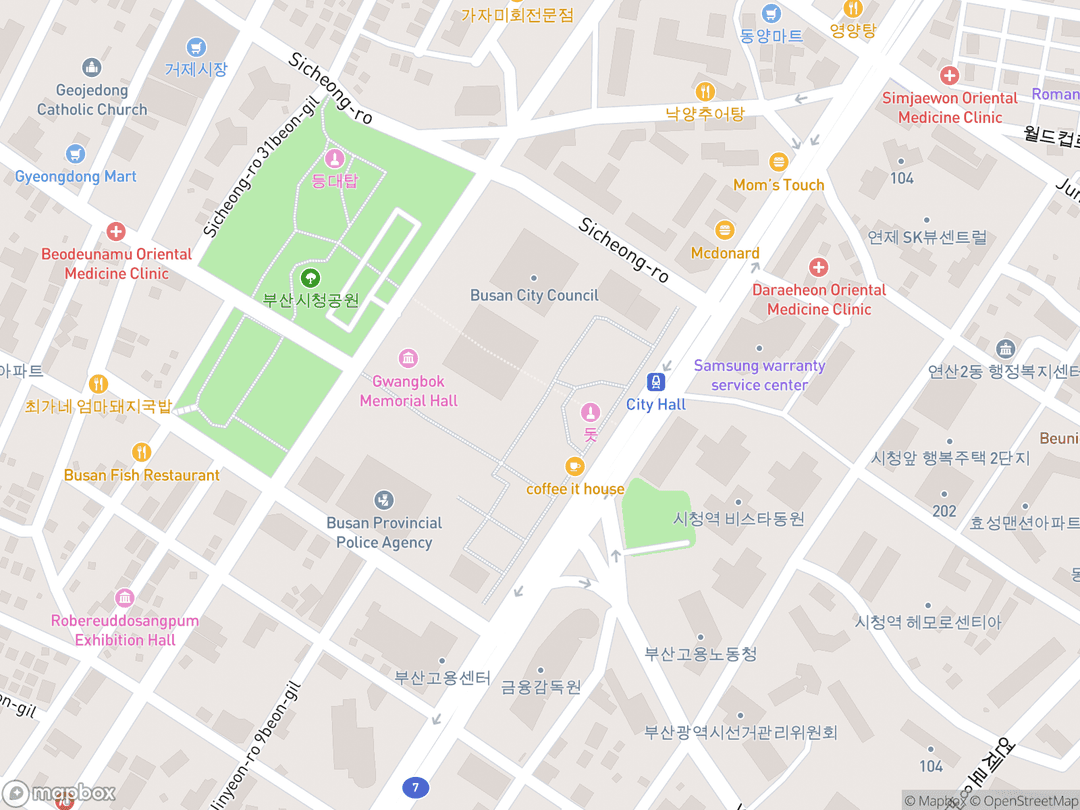
Busan, South Korea
Hours: Not yet open to the public. Operating hours will be established following dedication.
Getting There: Located in Busan, South Korea. Specific transit routes via the Busan Metro and local bus networks will be published once the official site is finalized.
Get DirectionsTips for Your Visit
Monitor Official Announcements
Keep an eye on official Church news channels for updates on the site selection, groundbreaking ceremony, and future public open house dates.
Visit Local Chapels
If you wish to experience Latter-day Saint worship services in Busan today, visitors are always welcome at local ward and branch meetinghouses throughout the city.
Respect the Sacred Space
Once the temple grounds are completed, they will be open to the public. Visitors are asked to maintain a quiet, reverent demeanor while on the property.
About
The Busan Korea Temple stands as a historic milestone for Latter-day Saints in East Asia, representing the fulfillment of decades of devotion, sacrifice, and spiritual growth. Announced on October 2, 2022, by President Russell M. Nelson, this sacred structure will become the second temple of The Church of Jesus Christ of Latter-day Saints in South Korea, joining the landmark Seoul Korea Temple dedicated in 1985. For the members living in the southern provinces, the temple represents the culmination of a spiritual journey that began during the tumultuous years of the mid-twentieth century, establishing a permanent sanctuary of peace in South Korea's bustling, high-energy second city.
Rooted in the broader Christian and Abrahamic traditions, the temple is a literal "House of the Lord." It serves as a modern counterpart to the ancient biblical tabernacle of Moses and the grand Temple of Solomon, designed as a sacred space set apart from the world where individuals can commune directly with God. Within its walls, patrons participate in sacred covenants that bind them to the Savior, Jesus Christ, and to their families across generations. This theological framework emphasizes the eternal nature of the human soul and the continuity of the family unit beyond the grave, bridging traditional Christian teachings on grace and salvation with distinctive Latter-day Saint doctrines of eternal progression.
The establishment of a temple in Busan carries profound historical resonance. During the Korean War, Busan served as a vital refuge for early Korean converts fleeing conflict in the north, making the city the spiritual cradle of the domestic Church. For over forty years, local members have made the arduous, 200-mile pilgrimage north to Seoul to participate in sacred ordinances. The construction of the Busan Korea Temple will eliminate this geographic barrier, bringing the highest sacraments of the restored gospel directly to the vibrant, faithful communities of the southeastern coast, and marking a new era of spiritual growth for the Church in Asia.
Interesting Facts
The very first Latter-day Saint baptisms on the Korean Peninsula occurred on August 3, 1952, at Songdo Beach in Busan during the height of the Korean War. (Tier B)
During the Korean War, Busan served as a vital refuge for early Korean Saints fleeing the conflict in the north, making it the spiritual heart of the early domestic Church. (Tier B)
On November 28, 1953, a massive fire destroyed the military base chapel in Busan where the local Saints met, but the resilient congregation resumed services the next Sunday at the Port Chapel. (Tier A)
For over four decades, Latter-day Saints in southern South Korea had to travel approximately 200 miles north to Seoul to participate in temple worship. (Tier C)
Dr. Kim Ho Jik, the first Korean convert, was a brilliant agricultural scientist who specialized in soybean nutrition to address severe postwar food shortages. (Tier B)
Upon his baptism in New York on July 29, 1951, Kim Ho Jik reported hearing a distinct voice command him to 'Feed my sheep,' inspiring his lifelong devotion to the Church. (Tier A)
Busan is South Korea's second-largest metropolis and busiest seaport, making the temple a prominent global landmark in a highly influential city. (Tier B)
The Busan Korea Temple traces its lineage to the Seoul Korea Stake, which was organized on March 8, 1973, as the very first stake on the mainland of Asia. (Tier A)
By 1991, the Church had printed over one million copies of the Book of Mormon in the Korean language, reflecting the rapid growth of the faith on the peninsula. (Tier A)
The temple's design will harmonize modern Latter-day Saint temple architecture with traditional Korean cultural motifs, similar to the Seoul temple. (Tier C)
Common Questions
When will the Busan Korea Temple be completed?
An official completion date has not yet been announced. The temple is currently in the planning and approval phase, which involves site selection, architectural design, and local government approvals before construction can begin.
Who will be able to enter the Busan Korea Temple once it is dedicated?
Following its formal dedication, entry to the temple's interior will be reserved for baptized members of the Church of Jesus Christ of Latter-day Saints who hold a current temple recommend. However, during the public open house prior to dedication, the general public is welcome to tour the entire interior.
How does a temple differ from a regular Latter-day Saint meetinghouse?
Latter-day Saint meetinghouses (chapels) are open to the public and are used for weekly Sunday worship services, youth activities, and community events. Temples, by contrast, are sacred spaces dedicated to quiet, individual worship and sacred ordinances such as eternal marriages and baptisms for ancestors. Temples are closed on Sundays.
What is the significance of building a temple in Busan?
Busan holds deep historical significance as the cradle of the Church in South Korea, where the first baptisms on Korean soil were performed in 1952. Building a temple here brings sacred ordinances directly to the members of southern South Korea, eliminating the need for them to travel 200 miles north to the temple in Seoul.
Will the temple grounds be open to the public?
Yes, once construction is complete, the beautifully landscaped temple grounds will be open to the public. They are designed to be a peaceful sanctuary of quiet beauty, featuring native Korean flora, stone pathways, and water features where anyone can come to enjoy the peaceful atmosphere.
Featured Stories
The Songdo Beach Baptisms
August 3, 1952
During the height of the Korean War, a small group gathered on the shores of Songdo Beach in Busan for a historic event. Dr. Kim Ho Jik, the first native Korean convert, baptized four individuals, including two of his own children, in the ocean waters. This sacred ordinance marked the first official baptisms performed on Korean soil, establishing Busan as the foundational cradle of the domestic Church. Despite the surrounding conflict and uncertainty of the war, this simple service planted the seeds of a faith that would grow to encompass tens of thousands of members across the nation. Today, the Busan Korea Temple stands as a monument to the courage and vision of those early pioneers who found hope in the restored gospel.
Source: The Church of Jesus Christ of Latter-day Saints
Rising from the Ashes of the Busan Fire
November 28, 1953
On a cold November night in 1953, a devastating fire swept through downtown Busan, destroying the military base chapel where the local Latter-day Saint congregation regularly met. The fire consumed the physical structure and many early records, leaving the small community of approximately 300 members and investigators without a place of worship. Rather than falling into despair, the local Saints demonstrated remarkable resilience and faith. By the very next Sunday, they had secured the nearby Port Chapel and resumed their regular congregation meetings without interruption. This triumph over adversity solidified the bond of the local members and proved that the true Church is built on the faith of its people rather than physical walls, a spirit that will culminate in the construction of the Busan temple.
Source: The Church News
Kim Ho Jik's Heavenly Commission
July 29, 1951
While conducting graduate agricultural research at Cornell University in New York, Kim Ho Jik was introduced to the restored gospel and baptized on July 29, 1951. Upon emerging from the baptismal waters, he reported hearing a distinct, quiet voice command him to 'Feed my sheep,' a biblical charge that would define the rest of his life. Returning to his war-ravaged homeland, Dr. Kim used his scientific expertise in soybean nutrition to physically nourish his country while simultaneously sharing his spiritual testimony. He dedicated his remaining years to establishing the Church in Korea, translating sacred texts, and mentoring the youth who would become the future leaders of the faith. His legacy of physical and spiritual nourishment remains a guiding light for the Saints who will worship in the Busan Korea Temple.
Source: The Church of Jesus Christ of Latter-day Saints
Timeline
First Korean Convert Baptized
Kim Ho Jik, a South Korean agricultural scientist, is baptized in New York, becoming the first documented native Korean convert to the faith.
EventFirst Baptisms on Korean Soil
Dr. Kim Ho Jik performs the first baptisms in Korea at Songdo Beach in Busan, establishing the city as the cradle of the domestic Church.
MilestoneDowntown Busan Fire
A devastating fire sweeps through Busan, destroying the military base chapel where the local Latter-day Saint congregation regularly met.
EventDedication of the Land
Elder Joseph Fielding Smith of the Quorum of the Twelve Apostles formally dedicates Korea for the preaching of the restored gospel.
DedicationFirst Full-Time Missionaries Arrive
Elders Don G. Powell and Richard L. Detton arrive on the peninsula to begin formal proselytizing efforts.
EventKorean Mission Organized
The Korean Mission is officially organized, separating the administration of the peninsula from the Northern Far East Mission.
MilestoneKorean Book of Mormon Published
The first Korean translation of the Book of Mormon is published, translated primarily by Han In Sang.
MilestoneFirst Stake in Mainland Asia
The Seoul Korea Stake is organized, signaling the transition of the local Church to a self-sustaining ecclesiastical unit.
MilestoneKorea Busan Mission Organized
The Korea Busan Mission is organized to oversee missionary efforts in the southern provinces, with Han In Sang as president.
MilestoneBusan Korea Stake Organized
The Busan Korea Stake is organized, providing localized leadership and a permanent stake center for southern Saints.
MilestoneSeoul Korea Temple Dedicated
President Gordon B. Hinckley dedicates the Seoul Korea Temple, the first temple in mainland Asia, serving all South Korean members.
DedicationOne-Millionth Korean Book of Mormon
Reflecting decades of steady growth, the Church prints its one-millionth copy of the Book of Mormon in the Korean language.
EventRevised Korean Translation Published
A newly revised and updated Korean translation of the Book of Mormon is published, utilizing contemporary language.
EventBusan Korea Temple Announced
President Russell M. Nelson announces the construction of the Busan Korea Temple during General Conference.
component.timeline.groundbreakingLocal Celebrations
Members across southern South Korea celebrate the historic announcement, which will eliminate the 200-mile journey to Seoul.
EventPlanning and Approval Phase
The temple remains in the active planning and approval phase as site selection and architectural designs are finalized.
MilestoneHistory by Decade
1940s — Seeds in a Time of Transition
The introduction of Latter-day Saint teachings to the Korean Peninsula began informally during the late 1940s. United States military servicemen stationed in Korea after World War II held informal group meetings and shared their faith with local residents. These early, unstructured interactions planted the first seeds of the restored gospel in a nation undergoing profound political and social transitions, setting the stage for formal missionary work in the decades to follow.
1950s — The Cradle of Faith in Busan
The 1950s marked the formal establishment of the Church on Korean soil, with Busan serving as its primary cradle. Following the baptism of Dr. Kim Ho Jik in New York in 1951, the first baptisms in Korea were performed at Busan's Songdo Beach on August 3, 1952. During the Korean War, Busan became a sanctuary for refugees, including early Saints fleeing conflict in the north. Despite a devastating fire on November 28, 1953, which destroyed their meeting place, the local congregation of 300 members quickly resumed services. The decade closed with the formal dedication of the land for missionary work by Elder Joseph Fielding Smith in 1955 and the arrival of the first full-time missionaries in 1956.
1960s — Translation and Organization
The 1960s were characterized by rapid organizational growth and linguistic milestones. On July 8, 1962, the Korean Mission was officially organized, separating the administration of the peninsula from the Northern Far East Mission and providing localized direction. A monumental spiritual milestone was achieved on March 29, 1967, with the publication of the first Korean translation of the Book of Mormon, translated primarily by Han In Sang, which allowed local members to study the scriptures in their native tongue.
1970s — Establishing Stakes and Southern Missions
During the 1970s, the Church in Korea transitioned from a mission-dependent branch to a self-sustaining ecclesiastical unit. The Seoul Korea Stake, the first stake in mainland Asia, was organized in 1973. To support the growing membership in the south, the Korea Busan Mission was organized on July 1, 1975, with Han In Sang serving as the first native Korean mission president. This was followed by the organization of the Busan Korea Stake on September 6, 1979, establishing a permanent stake center and localized leadership.
1980s–1990s — The Long Pilgrimage to Seoul
The dedication of the Seoul Korea Temple on December 14, 1985, by President Gordon B. Hinckley brought temple blessings to mainland Asia for the first time. However, for members living in Busan and the southern provinces, participating in temple ordinances required a long-distance, 200-mile pilgrimage north to Seoul. Throughout the late 1980s and 1990s, local congregations in Busan continued to mature, focusing on strengthening families and developing local leadership while dreaming of a temple of their own.
2020s — A Promised Temple for the South
The long-awaited dream of the southern Saints was realized on October 2, 2022, when President Russell M. Nelson announced the construction of the Busan Korea Temple. The announcement was met with immense joy, promising to bring a dedicated house of the Lord directly to the southeastern coast. As of 2026, the temple remains in the active planning and approval phase, with local members preparing themselves spiritually to welcome a sacred sanctuary of peace to their historic city.
Architecture & Facilities
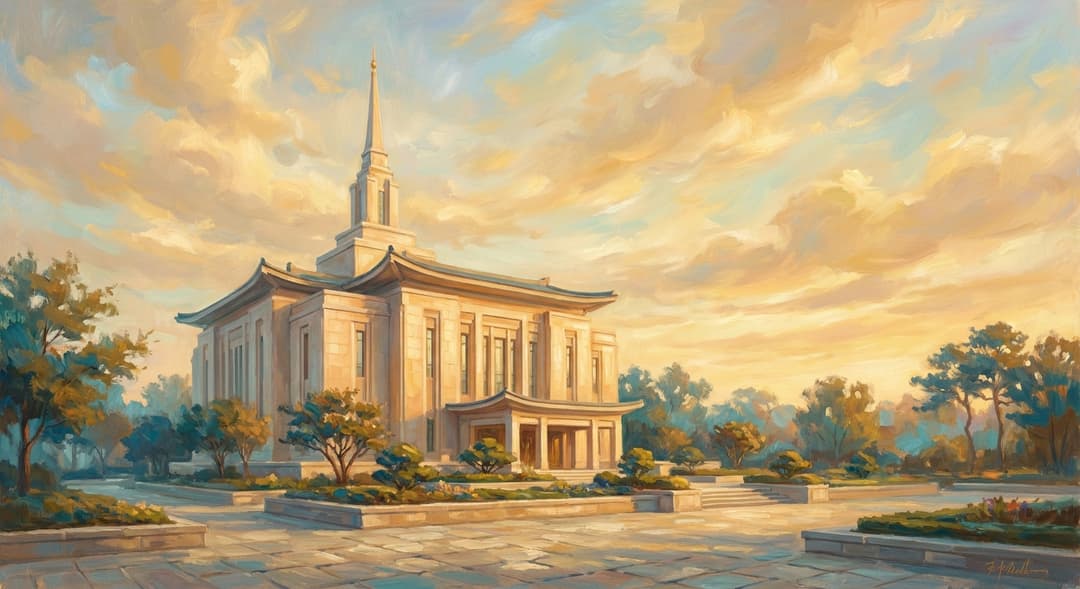
The architectural style of the Busan Korea Temple is designed to harmonize modern Latter-day Saint temple design with traditional Korean cultural motifs. It features a clean, symmetrical, and vertical structure that emphasizes ascension toward heaven, a common motif in historic Christian cathedral architecture. The design elegantly incorporates subtle curves and geometric patterns inspired by traditional Korean pavilions, creating a beautiful bridge between sacred Christian worship and local heritage.
Building Materials
Granite Cladding
High-quality granite selected for its durability and deep cultural resonance in Korea, where it has been used for centuries in sacred and monumental architecture.
Custom Art Glass
Hand-carved and stained glass windows designed to filter natural light into the interior, creating a serene and reverent atmosphere.
Fine Hardwoods
Premium hardwoods utilized throughout the interior millwork and furniture, selected to evoke warmth, beauty, and permanence.
Stone Tile
Custom-cut stone tile flooring in high-traffic areas, selected for its longevity and elegant, polished finish.
Interior Features
The Baptistry
A sacred room located on the lower level, featuring a large baptismal font resting on the backs of twelve sculpted oxen, symbolizing the twelve tribes of Israel.
Instruction Rooms
Beautifully appointed rooms where members participate in the Endowment ceremony, learning of the creation, the fall, and the Atonement of Jesus Christ.
Sealing Rooms
Sacred spaces containing simple altars and opposing mirrors where couples and families are united in marriage covenants for eternity.
The Celestial Room
A quiet, beautifully adorned hall representing the peace, purity, and glory of the celestial kingdom of heaven, designed for silent prayer and meditation.
Temple Grounds
The temple grounds will be designed as a public-facing sanctuary of peace, open to members of all faiths. The landscaping will incorporate native Korean flora, including cherry blossoms, maples, and manicured pines, alongside quiet water features and stone pathways. This creates a physical and visual transition zone, isolating the sacred structure from the bustling, high-energy environment of Korea's largest port city.
Additional Facilities
The temple complex will include a patron housing facility or waiting area, along with utility and administrative offices to support temple operations.
Religious Significance
For Latter-day Saints, the temple is the most sacred place of worship on earth—a literal House of the Lord. Rooted in the Christian and Abrahamic traditions, the temple stands as a modern counterpart to the ancient biblical tabernacle and the Temple of Solomon. It is a place where heaven and earth meet, allowing individuals to step away from the noise of the world and enter into a sacred covenant relationship with God.
To provide a sacred sanctuary where members can make eternal covenants with God, receive saving ordinances, and unite families for eternity through the authority of the priesthood.
Sacred Ordinances
Baptism for the Dead
A proxy ordinance performed on behalf of deceased ancestors who did not have the opportunity to receive baptism in life, reflecting the Christian doctrine of God's universal love and desire for all to be saved.
The Endowment
A sacred ceremony where members receive instruction regarding God's plan of salvation, make covenants to keep His commandments, and are endowed with spiritual power.
Eternal Marriage (Sealing)
An ordinance performed in the sealing room where a husband and wife are united not just for this life, but for all eternity, establishing an eternal family unit.
The Covenant Path
The temple ordinances represent a progressive journey along the covenant path, leading individuals back to the presence of God. Each covenant made in the temple reinforces the member's commitment to follow Jesus Christ, live a life of holiness, and serve others.
Redeeming the Dead
A central aspect of temple worship is the performance of ordinances on behalf of deceased ancestors. This practice reflects the Latter-day Saint doctrine of the continuity of life after death and the opportunity for all of God's children to accept or reject the gospel in the spirit world.
Similar Temples
Sources & Research
Every fact on Temples.org is backed by verified Sources & Research. Each piece of information is rated by source tier and confidence level.
View All Sources (5)
| Field | Source | Tier | Retrieved |
|---|---|---|---|
| About & Historical Background | The Church of Jesus Christ of Latter-day Saints (opens in a new tab) | A | 2026-02-18 |
| Timeline & Announcement | The Church News (opens in a new tab) | B | 2026-02-18 |
| Temple Status & Planning | ChurchofJesusChristTemples.org (opens in a new tab) | C | 2026-02-18 |
| Early Korean Church History | Ensign Peak Foundation (opens in a new tab) | B | 2026-02-18 |
| Latter-day Saint Community Growth | LDS Living (opens in a new tab) | B | 2026-02-18 |