Visitor Insights
Visiting Haeinsa
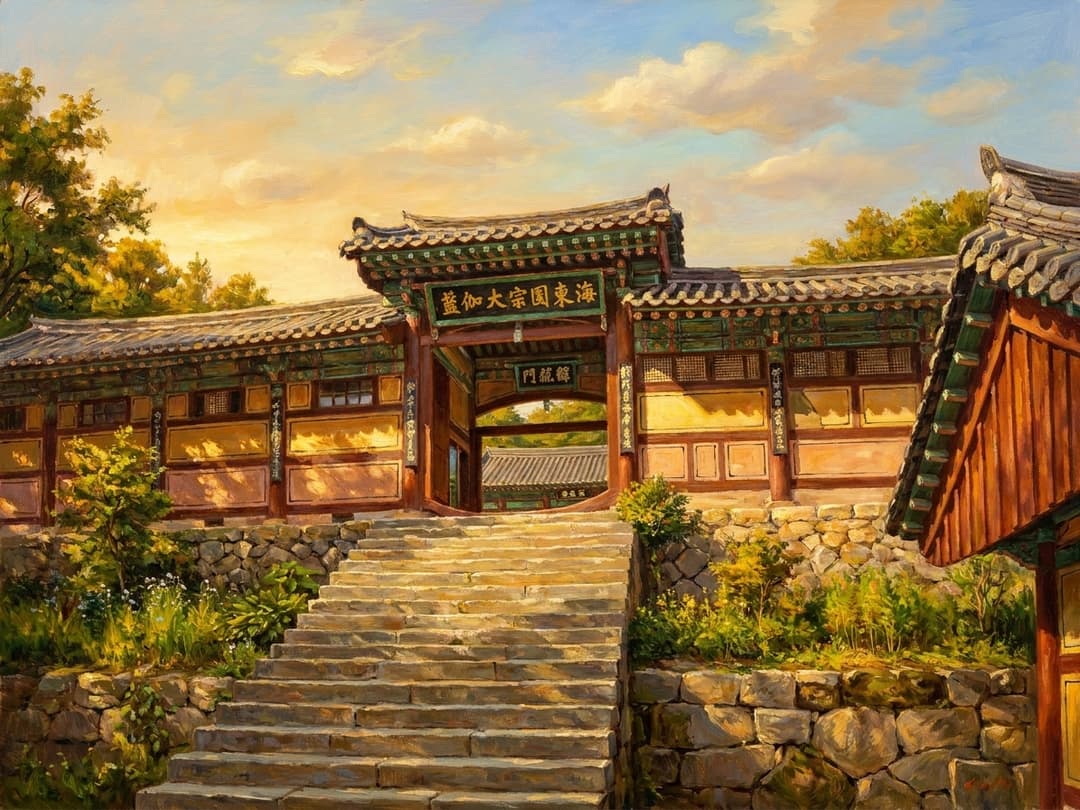
Perched at 655 meters elevation inside Gayasan National Park, Haeinsa offers a serene pilgrimage through forested mountain trails. Visitors pass traditional courtyard gates before reaching the revered fifteenth-century scriptural depositories. The monastery remains a vigorous center of active Seon meditation and daily temple life.
Highlights
- Gazing through the wooden slats of the fifteenth-century Janggyeong Panjeon halls
- Exploring the colorful Dancheong paintings in the central Daejeokgwangjeon shrine
- Walking the tranquil, shaded Hongnyudong Valley trail along the mountain stream
- Experiencing the immersive chanting and monastic meals of the overnight Templestay
Things to Know
- Interior entry to the woodblock storage rooms is strictly restricted to preserve the wood
- Photography is forbidden inside worship halls and directly through repository window slats
- The approach requires walking up moderate inclines and climbing stone staircases
- Monastic courtyards require quiet reverence and modest dress covering shoulders and knees
Location
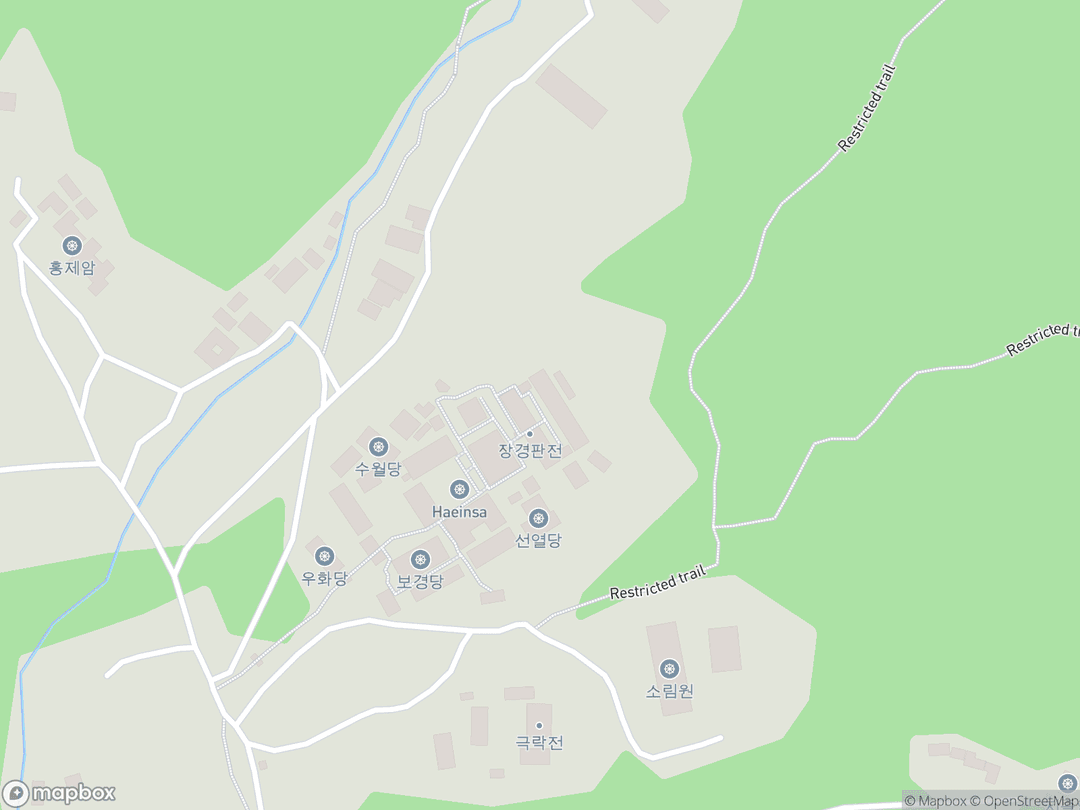
122 Haeinsa-gil, Gaya-myeon, Hapcheon-gun, Gyeongsangnam-do, 50200, Republic of Korea
Hours: March to October: 08:30–18:00; November to February: 08:30–17:00
Getting There: Take an intercity express bus from Daegu Seobu Terminal directly to Haeinsa Bus Terminal, followed by a scenic 20-minute uphill walk.
Get DirectionsTips for Your Visit
Arrive Early for Chanting
Visit during early morning or book a Templestay to witness the evocative Yebul dawn chanting and drumming ceremony.
Respect Fragile Microclimates
Do not touch wooden slats or attempt flash photography near the ancient woodblock depositories.
Wear Sturdy Walking Shoes
The historical mountain terraces feature natural granite walkways and stone steps that can be slippery when wet.
About
Haeinsa, situated high on Mount Gaya, is revered across East Asia as the Dharma Jewel Monastery of Korean Buddhism. Founded in 802 during the Unified Silla Dynasty, the complex physically and spiritually enshrines the cosmic law and Buddhist teachings.
Within the broader Dharmic heritage, the preservation of the sacred canon is an act of cosmic merit that sustains balance across all realms of existence. Haeinsa translates this spiritual mandate into living practice through centuries of contemplation and scholarship.
The temple is internationally renowned for housing the Tripitaka Koreana, an extraordinary archive of 81,352 thirteenth-century printing woodblocks. Stored in the naturally ventilated 15th-century Janggyeong Panjeon depositories, the collection represents a pinnacle of scientific design and spiritual devotion.
Gallery
Symbolic Elements
The temple's exterior features intricate carvings, each rich with spiritual meaning:

Ocean Seal Samadhi
Reflects the Avatamsaka doctrine that a serene, wave-free mind mirrors cosmic truth without distortion.

Iljumun Gate
The single row of pillars symbolizes the unified mind that casts off worldly dualism.
Vairocana Cosmic Buddha
The presiding central deity embodies the universal Dharmakaya truth that illuminates all reality.

Asymmetric Lattice Windows
Cleverly calculated timber grilles harmonize natural winds to prevent moisture accumulation and decay.
Dancheong Five Elements
Vibrant mineral pigments in five cosmic colors safeguard timber buildings against physical decay.

Three-Story Stone Pagoda
The courtyard granite spire symbolizes the Three Jewels and the threefold training in morality, meditation, and wisdom.

Lotus Eaves Motifs
Intricately carved lotus pedals express pure spiritual awakening emerging untainted from worldly illusions.
Interesting Facts
A modern government storage facility built with electric air conditioning warped test woodblocks and was swiftly abandoned. (Tier B)
Scholars have discovered virtually zero typographical errors or missing characters across more than fifty-two million carved letters. (Tier B)
Calligraphers and carvers performed three full prostrations to the earth before carving every individual Chinese character. (Tier A)
The magnolia and birch wood was soaked in ocean brine for three years and boiled before carving began. (Tier C)
South Korean pilot Kim Young-hwan intentionally defied military orders in 1951 to bomb the temple, saving the scriptures. (Tier A)
Haeinsa holds dual UNESCO listings: World Heritage for the halls and Memory of the World for the woodblocks. (Tier B)
If placed end-to-end, the 81,352 woodblocks would stretch over sixty kilometers and weigh roughly 280 tons. (Tier C)
The depository halls survived seven severe fires over centuries due to natural mountain valley air drafts. (Tier B)
In 2026 the Jogye Order initiated a century-long project to hand-carve an identical complementary woodblock canon. (Tier A)
Common Questions
Why is Haeinsa called the Dharma Jewel Temple?
It permanently houses the Tripitaka Koreana, making it the principal sanctuary for the Buddha's teachings in Korea.
Can visitors view the 81,352 woodblocks inside the depository?
Visitors view the woodblocks through external latticed windows to protect the strictly controlled microclimate.
How have the woodblocks survived without modern climate control?
The fifteenth-century halls utilize asymmetric windows and a charcoal-rich earthen floor for passive ventilation.
Can foreigners join the Haeinsa Templestay program?
Haeinsa welcomes international visitors for one-night meditative retreats featuring meditation and tea ceremonies.
What is the best season to explore Mount Gaya and Haeinsa?
Autumn in October and November offers brilliant mountain foliage that frames the temple's classical architecture.
Featured Stories
The Sovereign Vow Carved in Wood
1237
When the Mongol armies overran Goryeo in 1232 and incinerated the original Buddhist canon, the royal court took refuge on Ganghwa Island. Believing that preserving the sacred Dharma would summon protective cosmic energies, scholars and monks spent sixteen years carving 81,352 error-free woodblocks. This monumental effort turned scriptural preservation into a spiritual act of national defense.
Source: National Heritage Portal
The Pilot Who Defied Orders
December 18, 1951
During the bitter mountain fighting of the Korean War, North Korean partisans took shelter around Haeinsa. Republic of Korea Air Force pilot Kim Young-hwan received direct orders to drop bombs and napalm onto the compound. Recognizing that the strike would permanently destroy Korea's supreme treasure, Kim boldly dropped his ordnance onto surrounding ridges instead.
Source: Korea Heritage Service
The Humility of Three Prostrations
1248
Monks and scribes tasked with carving the Tripitaka Koreana observed a rigorous spiritual discipline over decades of labor. Before chiseling a single Chinese character into seasoned birch, the carver dropped to the timber floor to perform three full prostrations. This quiet liturgy of devotion ensured that every stroke across fifty-two million characters was infused with reverence.
Source: Jogye Order Cultural Archives
Timeline
Founding by Suneung and Ijeong
Monks Suneung and Ijeong establish the monastery with royal support during the reign of King Aejang.
MilestoneRoyal Goryeo Patronage
Master Heegrang counsels King Taejo of Goryeo, securing imperial protection and land endowments.
EventDestruction of the First Canon
Mongol invasion forces burn the original eleventh-century Silla-Goryeo Tripitaka blocks at Buinsa.
MilestoneCompletion of the Tripitaka Koreana
Master Sugi completes the supervision and carving of 81,352 replacement woodblocks on Ganghwa Island.
DedicationWoodblocks Relocated to Mount Gaya
King Taejo of Joseon transfers the entire woodblock canon to Haeinsa to escape coastal pirate raids.
MilestoneConstruction of Janggyeong Panjeon
Master Gakcheon completes the sophisticated four-building natural ventilation depository complex.
DedicationDefense During the Imjin War
Buddhist warrior monks defend Mount Gaya, shielding the scripture halls from Japanese invasion fires.
EventGreat Monastery Fire
Catastrophic flames destroy several lower worship halls while the elevated woodblock depositories survive intact.
RenovationKim Young-hwan Saves the Temple
A South Korean pilot disobeys orders to bomb the monastery, preserving the Tripitaka from destruction.
EventUNESCO World Heritage Inscription
UNESCO inscribes the Janggyeong Panjeon complex on the World Heritage List for its unique engineering.
MilestoneMemory of the World Recognition
The Tripitaka Koreana printing woodblocks are inscribed into the UNESCO Memory of the World Register.
MilestoneCentennial Recarving Initiative
Haeinsa initiates a generational project to hand-carve a complementary edition of all 81,352 woodblocks.
MilestoneHistory by Decade
800s–900s — Foundation and Silla Patronage
Monks Suneung and Ijeong founded Haeinsa in 802 on Mount Gaya with imperial patronage from Unified Silla King Aejang. Scholar Choe Chiwon soon composed influential inscriptions that anchored the monastery as a core center of Avatamsaka philosophy.
930s–1230s — Goryeo Flourishing and Catastrophe
Master Heegrang provided counsel to King Taejo of Goryeo, establishing the monastery as a premier scholastic center. This era of prosperity ended abruptly in 1232 when Mongol armies burned the first national woodblock canon at Buinsa.
1230s–1390s — Recarving and Mountain Relocation
The Goryeo court painstakingly recarved the complete Buddhist canon on Ganghwa Island between 1237 and 1248. In 1398, King Taejo of Joseon relocated the 81,352 woodblocks to Mount Gaya to protect them from Japanese coastal pirates.
1480s–1590s — Scientific Depositories and War
Royal architect Master Gakcheon oversaw the construction of the sophisticated Janggyeong Panjeon natural ventilation depositories in 1488. A century later, brave Buddhist warrior monks defended the mountain sanctuary from destruction during the Imjin War.
1600s–1890s — Fires, Resilience, and Reconstruction
Despite seven catastrophic fires that ravaged the lower devotional halls over subsequent centuries, the elevated depositories never caught fire. Faithful patrons and monastics repeatedly rebuilt the main halls, completing the present Daejeokgwangjeon in the late Joseon era.
1950s–2020s — Wartime Deliverance and Global Honor
During the Korean War, pilot Kim Young-hwan heroically spared the monastery from aerial bombardment. Haeinsa gained international acclaim with UNESCO World Heritage inscription in 1995, followed by Memory of the World recognition in 2007.
Architecture & Facilities
Haeinsa exemplifies classical Korean Buddhist mountain monastery architecture, stepping upward along the natural terrain to reflect the soul's gradual ascent to enlightenment. Its fifteenth-century Janggyeong Panjeon halls merge austere timber construction with an extraordinary understanding of passive thermodynamics, wind dynamics, and natural hygroscopic moisture control.
Building Materials
Korean Red Pine
Harvested locally for structural pillars and interlocking roof brackets that flexibly withstand earth tremors.
Silver Magnolia and Birch
Seasoned in sea brine for three years to create warp-resistant plates for the 81,352 scripture blocks.
Hygroscopic Earthen Subfloor
Layered with charcoal, coarse salt, sticky clay, and quicklime to regulate seasonal humidity swings.
Baked Clay Roof Tiles
Deep overhanging eaves shed torrential monsoon rains while allowing low winter sun to warm foundations.
Interior Features
Sudarajang (South Scripture Hall)
Long open timber gallery containing towering open pine shelving that holds thousands of canonical sutra woodblocks.
Beopbojeon (Dharma Treasure Hall)
Twin north repository chamber housing the remaining scripture panels and an ancient seated Buddha icon.
Daejeokgwangjeon (Cosmic Light Hall)
Main prayer hall enshrining Vairocana Buddha beneath coffered ceilings adorned with colorful Dancheong art.
Gugwangru (Nine Light Pavilion)
Spacious elevated portal pavilion historically reserved for public lectures and monastic Dharma assemblies.
Temple Grounds
Steep granite terraces stepping through ancient pine forests with courtyards containing Silla-era lanterns and stone pagodas.
Additional Facilities
An experiential Templestay retreat complex, monastic seminary classrooms, a communal dining hall, and cultural heritage research offices.
Religious Significance
Within the Dharmic world, spiritual liberation from samsara requires preserving the authentic teachings of the Awakened One across generations.
To serve as the living Dharma Jewel sanctuary, physically safeguarding the sacred canon while cultivating Seon meditation and scholastic inquiry.
Sacred Ordinances
Yebul Chanting Ceremony
Daily dawn and twilight monastic liturgy offering reverence to the Three Jewels through sutra recitation.
Chamseon Meditation
Silent seated contemplation practiced by monastics to realize the luminous Buddha-nature within.
Dharma Transmission and Woodblock Veneration
Ceremonial honoring and printing of the sacred canon to generate spiritual merit for world peace.
The Ocean Seal Meditation
The temple's name derives from the Avatamsaka Sutra's Ocean Seal Samadhi, in which an undisturbed mind mirrors all cosmic phenomena without attachment or distortion.
State-Protection Buddhism
The carving of the Tripitaka Koreana embodies the Korean concept of Hoguk Bulgyo, uniting spiritual devotion with cosmic alignment to safeguard the realm from devastation.
Sources & Research
Every fact on Temples.org is backed by verified Sources & Research. Each piece of information is rated by source tier and confidence level.
View All Sources (7)
| Field | Source | Tier | Retrieved |
|---|---|---|---|
| About & Historical Background | UNESCO World Heritage Centre (opens in a new tab) | B | 2026-03-31 |
| Historical Timeline | Korea Heritage Service (opens in a new tab) | A | 2026-03-31 |
| Religious Significance | Cultural Corps of Korean Buddhism (opens in a new tab) | A | 2026-03-31 |
| Visitor Insights | Korea Tourism Organization (opens in a new tab) | D | 2026-03-31 |
| Timeline & Featured Stories | The Chosun Ilbo (opens in a new tab) | C | 2026-03-31 |
| Interesting Facts | The Korea Herald (opens in a new tab) | C | 2026-03-31 |
| Symbolic Elements | Smarthistory (opens in a new tab) | B | 2026-03-31 |