Visitor Insights
Visiting Umayyad Mosque
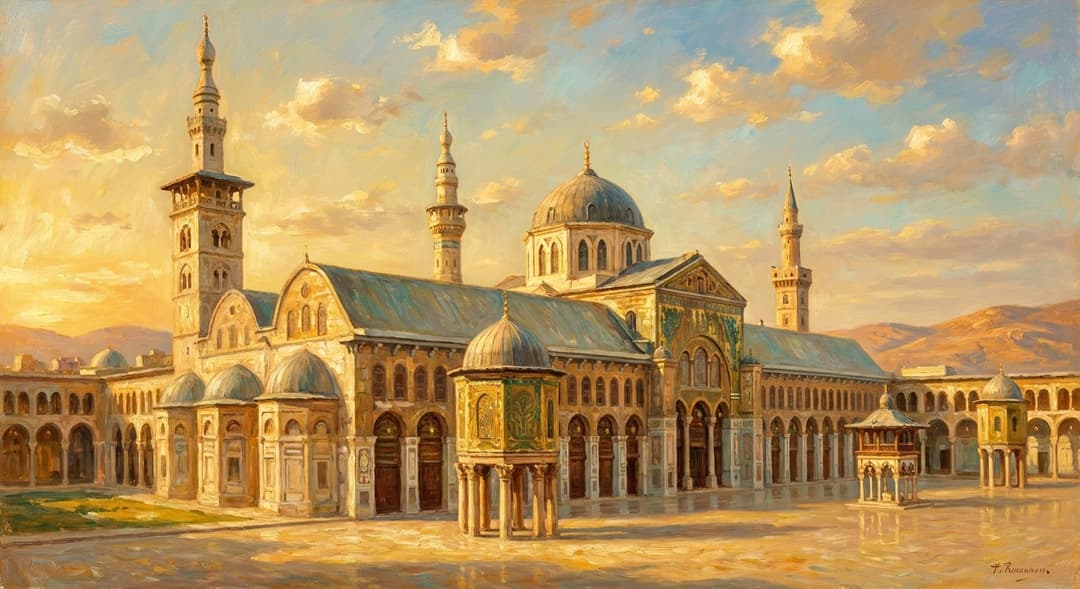
Visiting the Umayyad Mosque offers a profound experience, immersing visitors in centuries of religious history and architectural grandeur. The mosque's serene atmosphere and spacious courtyard provide a tranquil escape from the bustling city, inviting contemplation and reflection. Expect to witness a blend of architectural styles, from its Roman and Byzantine foundations to its Islamic embellishments, and to encounter a diverse community of worshippers and visitors from around the world.
Highlights
- Marvel at the intricate mosaics and architectural details that adorn the mosque's walls and ceilings.
- Visit the shrine of John the Baptist, a revered figure in both Christianity and Islam.
- Experience the collective call to prayer, a unique tradition where multiple muezzins chant simultaneously.
Things to Know
- Dress modestly, covering arms and legs. Women may be asked to wear a robe provided at the entrance.
- Be mindful of prayer times and avoid disrupting worshippers.
- Photography may be restricted in certain areas of the mosque.
Location
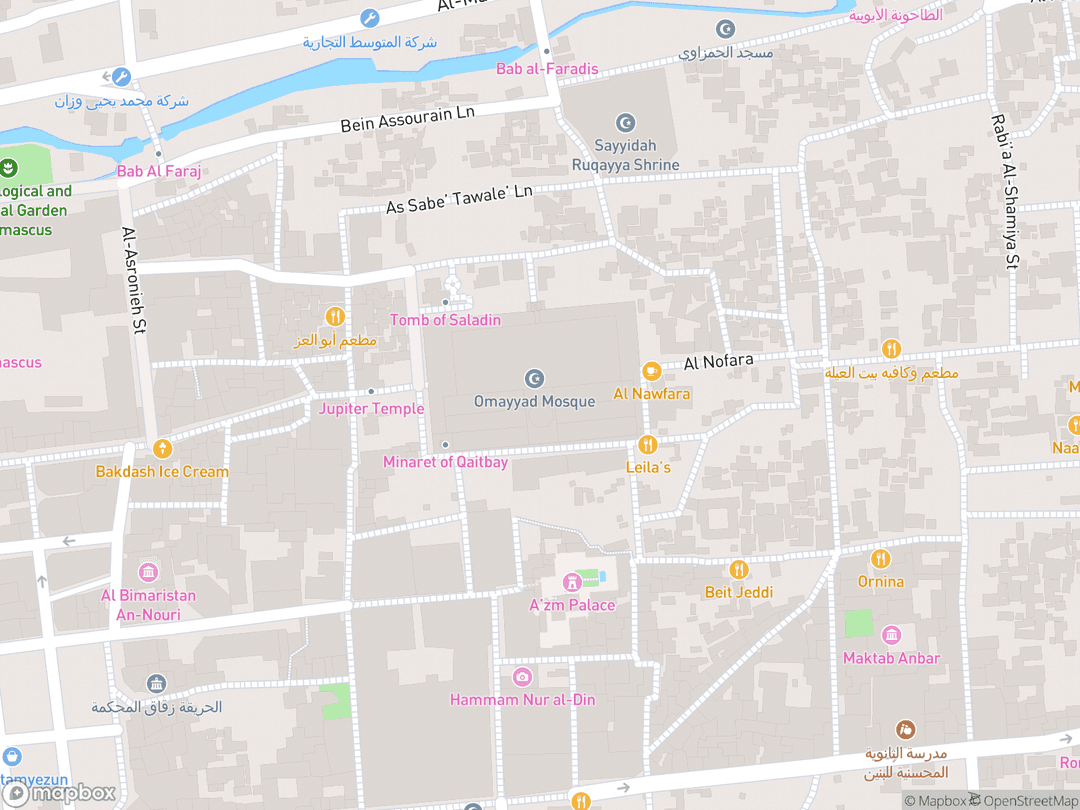
Damascus, Syria
Hours: Open from 9am to 9pm daily.
Getting There: Located in the heart of the Old City of Damascus, accessible by taxi or public transportation.
Get DirectionsTips for Your Visit
Dress Code
Remember to dress modestly out of respect for the religious significance of the site.
Photography
Be aware of photography restrictions inside the mosque.
About
The Umayyad Mosque, also known as the Great Mosque of Damascus, stands as a testament to the rich tapestry of religious history in the region. Its origins trace back to an Iron Age temple dedicated to the Aramean god Hadad, later evolving into a temple for the Greek god Zeus and subsequently a Roman temple dedicated to Jupiter. In the 4th century, it was transformed into a Christian basilica honoring John the Baptist, reflecting the diverse religious influences that have shaped its identity.
Following the Muslim conquest of Damascus in 634 CE, the basilica served as a shared prayer space for both Christians and Muslims, symbolizing a period of religious coexistence. However, in the early 8th century, Umayyad Caliph Al-Walid I commissioned the construction of the grand Umayyad Mosque, incorporating Byzantine and Roman architectural elements into its design. This marked a significant transition, establishing the site as a prominent center of Islamic worship while preserving traces of its multi-layered past.
Today, the Umayyad Mosque is considered the fourth holiest site in Islam and continues to be a place of reverence for both Muslims and Christians. It is believed to be the burial place of John the Baptist's head, revered as Prophet Yahya in Islam. The mosque also commemorates Husayn ibn Ali, the grandson of the Prophet Muhammad, further solidifying its importance within the Islamic faith. Its enduring presence serves as a reminder of the interconnectedness of Abrahamic traditions and the potential for interfaith understanding.
Gallery
Symbolic Elements
The temple's exterior features intricate carvings, each rich with spiritual meaning:
Mihrab
The mihrab is a niche in the wall of a mosque that indicates the direction of Mecca, towards which Muslims pray. The Umayyad Mosque contains four mihrabs, including the world's second concave mihrab, symbolizing the focus of prayer and connection to the Kaaba.
Minaret of Isa (Jesus)
The Minaret of Isa, also known as the Minaret of Jesus, is the tallest minaret in the mosque and is believed to be the place where Jesus will return at the end of times. Its presence symbolizes the shared prophetic tradition between Islam and Christianity and the anticipation of a future divine intervention.

Dome of the Eagle
The Dome of the Eagle is a prominent feature of the mosque's architecture, rising 36 meters high. Its soaring structure symbolizes the power and majesty of God and the spiritual ascent of the soul towards the divine.
Mosaics
The Umayyad Mosque is renowned for its extensive gold mosaics, covering some 4,000 square meters. These intricate mosaics depict vegetal motifs and architectural scenes, symbolizing the beauty of creation and the divine artistry that permeates the world.
Courtyard (Sahn)
The spacious courtyard, or sahn, is a central feature of the mosque, providing a gathering place for worshippers and visitors. Surrounded by a portico on three sides, the open courtyard can hold up to 30,000 people, symbolizing the communal nature of Islamic worship and the welcoming embrace of the mosque.

Shrine of John the Baptist
The mosque houses the shrine containing the tomb of John the Baptist, known in Islam as the Prophet Yahya. This shrine symbolizes the shared reverence for prophetic figures between Islam and Christianity and the interconnectedness of Abrahamic traditions.

Corinthian Columns
The prayer hall is supported by columns in the Corinthian order, reflecting the influence of Roman architecture on the mosque's design. These columns symbolize the enduring legacy of classical civilization and the integration of diverse cultural elements into Islamic architecture.

Minaret of the Bride
The Minaret of the Bride is the first minaret built for the mosque, representing the earliest known minaret of its kind in Muslim architecture. Its square shape symbolizes the foundational role of the mosque in the development of Islamic architectural traditions.
Interesting Facts
The Umayyad Mosque is one of the oldest mosques in the world.
It was once the largest mosque in the world.
Craftsmen from across the empire—Greeks, Romans, Persians, and Arabs—were hired to build it.
The mosque has been damaged several times by earthquakes and fires but was always restored.
The mosque also acted as a center of science and learning in the 12th century, with schools for medicine, astronomy, and engineering.
The Umayyad Mosque introduced groundbreaking elements to Islamic architecture, featuring a transverse plan with a central dome over the mihrab area.
Remarkably, it also hosted the first public lavatories in the Islamic world.
The Umayyad Mosque is a living chronicle of Damascus' history.
The mosque preserves sacred relics, including the revered head of Prophet John.
The Umayyad Mosque has a tradition of the “collective call to prayer” or “choir adhan,” where a group of muezzins simultaneously perform the call to prayer.
Common Questions
What is the significance of the Umayyad Mosque?
The Umayyad Mosque is one of the largest and oldest mosques in the world, holding significance for both Muslims and Christians. It is believed to be the burial place of John the Baptist's head and commemorates Husayn ibn Ali, the grandson of the Prophet Muhammad.
What was the site of the Umayyad Mosque before it became a mosque?
The site has a rich history, having been a temple dedicated to the Aramean god Hadad, later evolving into a temple for the Greek god Zeus and subsequently a Roman temple dedicated to Jupiter. In the 4th century, it was transformed into a Christian basilica honoring John the Baptist.
What architectural styles are reflected in the Umayyad Mosque?
The mosque's architectural style is considered to be Byzantine, incorporating Byzantine and Roman architectural elements, blending them with Islamic aesthetics. It innovated and influenced nascent Islamic architecture by introducing a more organized and monumental design.
What are some of the key features of the Umayyad Mosque?
Key features include a large basilical plan, a spacious courtyard, intricate mosaics, three minarets (Minaret of the Bride, Minaret of Isa, and Minaret of Qaytbay), the Dome of the Eagle, and a prayer hall with four mihrabs.
What is the dress code for visiting the Umayyad Mosque?
Modest clothing is required. Women will be asked to wear a robe provided at the entrance. It's important to dress respectfully out of reverence for the religious significance of the site.
Featured Stories
The Shared Heritage of the Umayyad Mosque
7th Century
The Umayyad Mosque stands on a site with a rich history, having been a temple dedicated to various deities before becoming a Christian basilica. Following the Muslim conquest of Damascus, the basilica served as a shared prayer space for both Christians and Muslims, symbolizing a period of religious coexistence and mutual respect. This shared heritage underscores the interconnectedness of Abrahamic traditions and the potential for interfaith understanding.
When Caliph al-Walid I commissioned the construction of the Umayyad Mosque, he sought to create a grand and monumental structure that would reflect the power and glory of Islam. However, he also recognized the importance of preserving the site's historical legacy, incorporating elements of the previous basilica into the mosque's design. This decision ensured that the Umayyad Mosque would not only be a center of Islamic worship but also a testament to the diverse religious influences that had shaped the region.
Source: https://middleeasteye.net
The Mosaics of the Umayyad Mosque
8th Century
The Umayyad Mosque is renowned for its exquisite mosaics, which cover some 4,000 square meters and depict a variety of scenes, including landscapes, buildings, and geometric patterns. These mosaics are considered to be among the finest examples of early Islamic art, showcasing the skill and artistry of the craftsmen who created them. The use of gold and other precious materials adds to the mosaics' splendor, creating a dazzling visual effect that inspires awe and wonder.
According to historical accounts, Caliph al-Walid I spared no expense in commissioning the mosaics, hiring the most talented artists and artisans from across the empire. These craftsmen, who came from diverse cultural backgrounds, brought their unique skills and perspectives to the project, resulting in a truly cosmopolitan work of art. The mosaics of the Umayyad Mosque not only serve as a decorative element but also as a visual representation of the Umayyad Caliphate's power, wealth, and cultural sophistication.
Source: https://archnet.org
The Minarets of the Umayyad Mosque
Various Eras
The Umayyad Mosque features three minarets, each with its own unique history and architectural style. The Minaret of the Bride, the oldest of the three, is believed to be the first minaret built for the mosque. The Minaret of Isa, also known as the Minaret of Jesus, is the tallest minaret in the mosque and is believed to be the place where Jesus will return at the end of times. The Minaret of Qaytbay, constructed in the late 15th century, reflects the architectural style of the Mamluk period.
The minarets of the Umayyad Mosque serve not only as a functional element, from which the call to prayer is issued, but also as a symbolic representation of the mosque's presence and influence in the city. Their towering structures dominate the Damascus skyline, reminding residents and visitors alike of the importance of faith and spirituality in their lives. Over the centuries, the minarets have been damaged by earthquakes and fires, but they have always been rebuilt, symbolizing the resilience and enduring spirit of the Umayyad Mosque.
Source: https://muslimheritage.com
Timeline
Temple to Hadad
The site was originally a temple dedicated to the Aramean god of rain, Hadad.
MilestoneTemple to Zeus
The site was associated with the Greek god Zeus.
MilestoneTemple to Jupiter
The site was converted into the center of the imperial cult of Jupiter under Roman rule.
MilestoneChristian Basilica
The temple was transformed into a Christian basilica dedicated to John the Baptist.
MilestoneMuslim Conquest of Damascus
Damascus was conquered by Muslims, and the cathedral served as a prayer space for both Christians and Muslims.
MilestoneConstruction of Umayyad Mosque Begins
Umayyad Caliph Al-Walid I commissioned the construction of the Umayyad Mosque, demolishing the basilica.
component.timeline.groundbreakingCompletion of Umayyad Mosque
The Umayyad Mosque was completed, becoming one of the largest and most ornate mosques in the world.
DedicationAddition of the Treasury
Al-Mahdi added the Treasury (Bayt -al-Mal) building.
EventFire Consumes the Mosque
A fire consumed most of the mosque, except the walls.
RenovationRestoration by Seljuks
The mosque was restored by the Seljuk leader, Tutuch and his vizier Malik Shah.
RenovationFire Destroys Eastern Gate
A second fire destroyed the eastern gate of Bab Jayrun.
RenovationFire Consumes Northern Minaret
Another fire consumed the northern minaret, Midhanat al-Arus.
RenovationEarthquake Damages Mosque
An earthquake destroyed parts of the mosque.
RenovationSanctuary Floor Covered with Marble
The sanctuary floor was covered with marble.
RenovationTimur's Forces Invade Damascus
Timur's forces invaded Damascus and started a fire in the mosque.
RenovationFire Consumes Western Minaret
Another fire consumed the western minaret, Bab Al-Ziyada and Bab al-Barid.
RenovationConstruction of Minaret of Qaytbay
The Minaret of Qaytbay was constructed on the orders of Sultan Qaytbay.
MilestoneRebuilding of Minaret of Issa
The Minaret of Issa (Jesus, peace be upon him) was rebuilt.
RenovationMajor Fire Causes Extensive Damage
A major fire caused extensive damage, and Ottoman artisans repaired the columns and roof.
RenovationVisit by Pope John Paul II
Pope John Paul II visited the mosque, marking a significant moment of interfaith dialogue.
EventHistory by Decade
Iron Age
The site of the Umayyad Mosque was originally a temple dedicated to Hadad, the Aramean god of rain and storms. This temple served as a center of religious worship for the local Aramean population, reflecting their beliefs and practices. The temple's location in Damascus, a city with a long and rich history, underscores the importance of the site as a sacred space for millennia.
Hellenistic Period
During the Hellenistic period, the site was associated with the Greek god Zeus, reflecting the influence of Greek culture and religion in the region. The temple was likely adapted and modified to suit the needs of the Greek community, incorporating elements of Greek architecture and religious practices. This transition highlights the evolving religious landscape of Damascus and the interaction between different cultural traditions.
Roman Rule (64 CE onwards)
Under Roman rule, the site was transformed into a grand temple dedicated to Jupiter, the chief Roman god. This temple became one of the largest and most important religious centers in Roman Syria, reflecting the power and influence of the Roman Empire. The temple's construction involved significant modifications to the site, including the addition of monumental columns, elaborate sculptures, and spacious courtyards. The current walls of the mosque were the inner walls of the Temple of Jupiter.
4th Century
In the 4th century, with the rise of Christianity, the temple was converted into a Christian basilica dedicated to John the Baptist. This transformation marked a significant shift in the religious landscape of Damascus, reflecting the growing influence of Christianity in the region. The basilica became a center of Christian worship, attracting pilgrims and devotees from across the region.
7th Century (634 CE)
In 634 CE, Damascus was conquered by Muslim forces, bringing the city under Islamic rule. Initially, the Christian basilica was allowed to continue functioning as a place of worship, with both Christians and Muslims sharing the space for their respective religious practices. This period of coexistence reflects the early Islamic policy of religious tolerance and the recognition of shared Abrahamic traditions.
8th Century (705-715 CE)
In the early 8th century, Umayyad Caliph Al-Walid I commissioned the construction of the Umayyad Mosque, demolishing the existing basilica to make way for the new structure. This decision marked a significant turning point in the site's history, establishing it as a prominent center of Islamic worship. The construction of the Umayyad Mosque involved the use of skilled craftsmen and artisans from across the empire, resulting in a magnificent and ornate structure that reflected the power and wealth of the Umayyad Caliphate.
11th-15th Centuries
Over the centuries, the Umayyad Mosque has experienced numerous challenges, including fires, earthquakes, and invasions. Despite these setbacks, the mosque has always been restored and rebuilt, reflecting its enduring importance to the Muslim community. Various rulers and patrons have contributed to the mosque's upkeep and embellishment, adding new features and architectural elements that reflect the changing styles and tastes of different eras.
Modern Era (2001 onwards)
In recent times, the Umayyad Mosque has continued to serve as a center of Islamic worship and a symbol of Damascus' rich cultural heritage. The mosque has also become a popular tourist destination, attracting visitors from around the world who come to admire its architectural splendor and learn about its fascinating history. Despite the challenges posed by the Syrian civil war, the Umayyad Mosque has remained open, providing a sense of continuity and stability in a time of turmoil.
Religious Significance
The Umayyad Mosque holds immense religious significance for both Muslims and Christians, reflecting its long and multifaceted history as a sacred site.
The mosque serves as a place of worship, prayer, and spiritual reflection for Muslims, while also honoring the shared Abrahamic traditions that connect Islam, Christianity, and Judaism.
Sacred Ordinances
Salah (Prayer)
Muslims perform the five daily prayers in the mosque, facing towards the Kaaba in Mecca. These prayers are a fundamental pillar of Islam, providing a direct connection to God and a means of seeking guidance and blessings.
Visiting the Shrine of John the Baptist
Both Muslims and Christians visit the shrine of John the Baptist, known as Prophet Yahya in Islam, to pay their respects and seek blessings. This shared reverence for a prophetic figure underscores the interconnectedness of Abrahamic faiths.
Reflection on Shared History
Visitors to the mosque are encouraged to reflect on the site's long and diverse history, recognizing the contributions of different cultures and religions that have shaped its identity. This reflection promotes interfaith understanding and appreciation for the shared values that unite humanity.
Theological Context
The Umayyad Mosque's significance stems from its location on a site revered across Abrahamic faiths, its role in Islamic history, and its architectural representation of Islamic beliefs. It serves as a reminder of the interconnectedness of these traditions and the importance of respecting diverse religious expressions.
Eschatological Significance
Islamic tradition holds that the Minaret of Isa (Jesus) is the place where Jesus will return at the end of times, adding an eschatological dimension to the mosque's religious significance. This belief underscores the importance of the mosque as a site of anticipation and hope for the future.
Sources & Research
Every fact on Temples.org is backed by verified Sources & Research. Each piece of information is rated by source tier and confidence level.
View All Sources (9)
| Field | Source | Tier | Retrieved |
|---|---|---|---|
| About & Historical Background | Nawafir Tours (opens in a new tab) | C | 2024-01-10 |
| About & Historical Background | EBSCO (opens in a new tab) | B | 2024-01-10 |
| Religious Significance | Islamic Landmarks (opens in a new tab) | C | 2024-01-10 |
| Historical Timeline | History Hit (opens in a new tab) | B | 2024-01-10 |
| Historical Timeline | Middle East Eye (opens in a new tab) | C | 2024-01-10 |
| Architectural Description | Syrian Guides (opens in a new tab) | D | 2024-01-10 |
| Visitor Information | SANA (opens in a new tab) | A | 2024-01-10 |
| Historical Timeline | Muslim Heritage (opens in a new tab) | B | 2024-01-10 |
| Architectural Description | Archnet (opens in a new tab) | B | 2024-01-10 |