Visitor Insights
Visiting Wat Phra That Doi Suthep
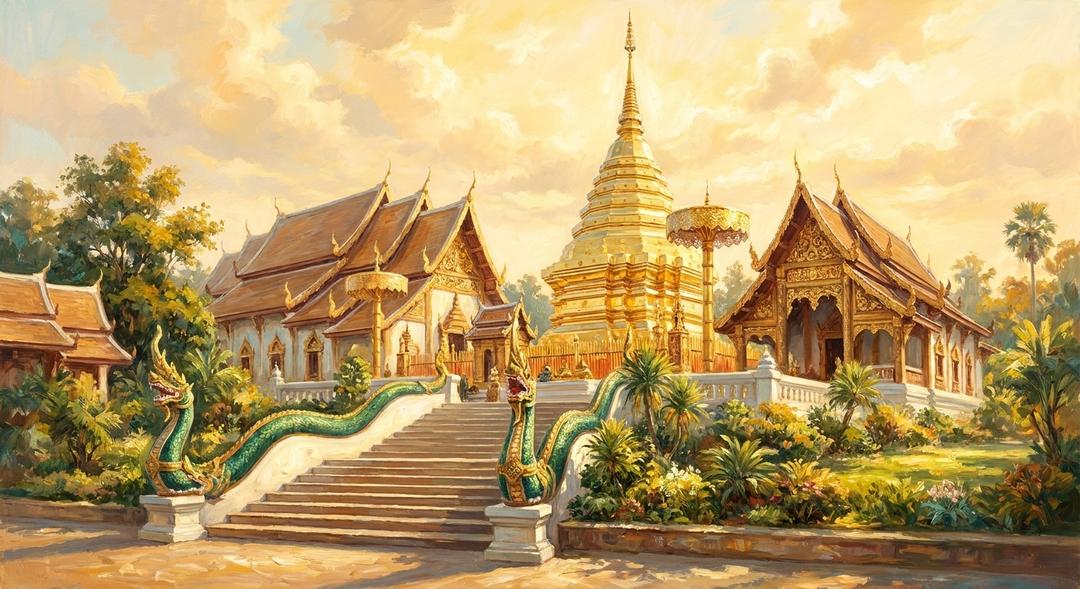
Wat Phra That Doi Suthep sits high upon the mountain crest overlooking Chiang Mai valley. Pilgrims and travelers may ascend via the steep 306-step staircase flanked by glazed serpents or use an enclosed cable car lift. Visiting during early morning provides cool mountain air, panoramic views, and an atmosphere of peaceful contemplation.
Highlights
- Circumambulating the radiant 24-meter gilded octagonal chedi
- Climbing the legendary 306-step ceramic Naga balustrade staircase
- Sweeping scenic panoramas over Chiang Mai city and valley
- Intricate narrative murals detailing Jataka tales along the inner cloister
Things to Know
- Strict dress code requires shoulders and knees to be fully covered
- Footwear and hats must be removed before stepping onto the inner marble terrace
- Early morning visits avoid tropical midday heat and large tour crowds
- Modesty wraps are available for rent at the lower entrance
Location
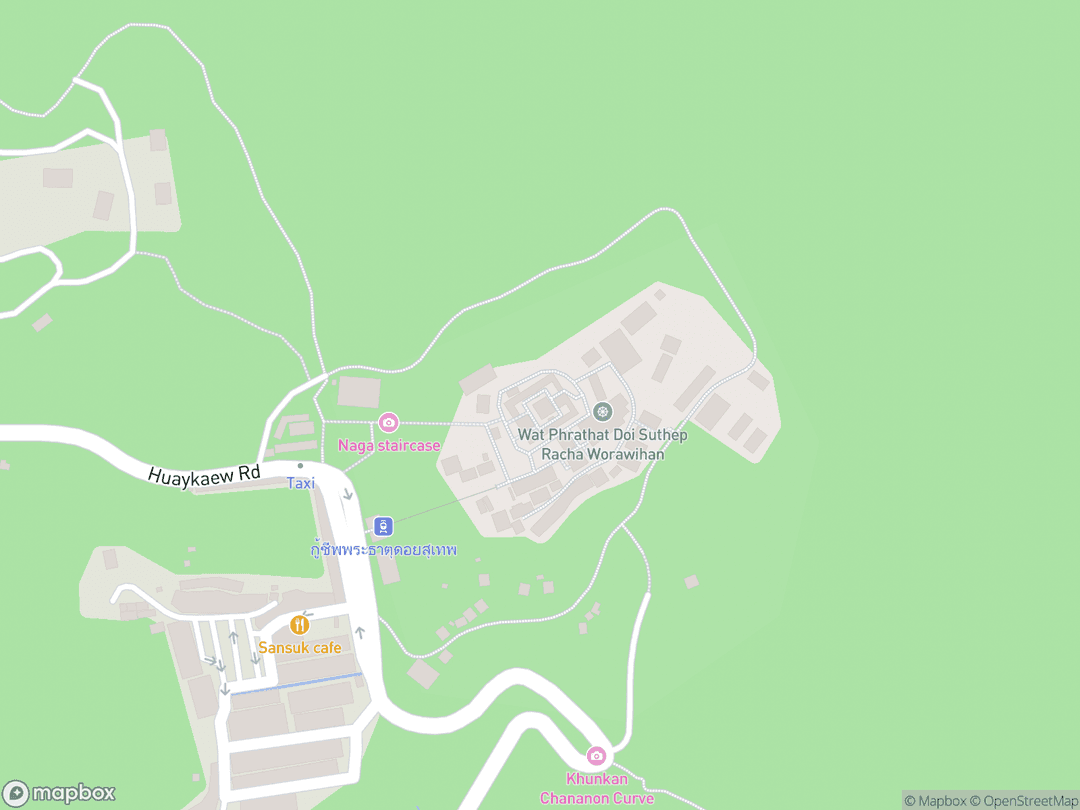
9 Moo 9, Mueang Chiang Mai District, Chiang Mai Province 50200, Thailand
Hours: Daily from 06:00 to 20:00 (Inner cloister closes at 18:30 for evening chanting)
Getting There: Located along Route 1004, accessible via a 40-minute red songthaew ride from Chang Phueak Gate or on foot via the historic Pilgrim's Trail.
Get DirectionsTips for Your Visit
Arrive at Sunrise
Experience the dawn chanting of resident monks while avoiding the heat and crowds.
Prepare for Step Climb
The 306 steps are moderately steep; use the modern funicular lift if mobility is limited.
Carry Small Notes
Bring small Thai Baht denominations for merit-making donations and traditional lotus offerings.
Respect Sacred Silence
Maintain a reverent demeanor around pilgrims making prayerful circumambulations.
About
Wat Phra That Doi Suthep crowns the emerald heights above Chiang Mai, serving as one of northern Thailand's most revered Theravada Buddhist sanctuaries. Rooted in the wider Dharmic tradition, the monastery embodies the timeless veneration of the Three Jewels—the Buddha, the Dhamma, and the Sangha.
Established in the late fourteenth century under King Kue Na, the mountain temple was consecrated to enshrine a holy bodily relic of Gautama Buddha. The monastery integrates universal Buddhist cosmology with ancient Lanna kingship, transforming the forested peak into an earthly manifestation of Mount Meru.
Today, the sanctuary remains a vibrant center of living Buddhist practice, welcoming pilgrims who ascend its monumental dragon staircase to circumambulate the gilded stupa. The complex stands as both a testament to northern Thai craftsmanship and a radiant beacon of spiritual devotion.
Gallery
Symbolic Elements
The temple's exterior features intricate carvings, each rich with spiritual meaning:

The Sacred White Elephant (Chang Samkhan)
Symbolizes royal purity and divine selection, commemorating the celestial animal that chose the temple's mountaintop site.

Emerald Naga Balustrades (Phaya Nak)
Represents protective aquatic deities that guard the Dhamma and mark the crossing from mundane to sacred ground.

Five-Tiered Golden Umbrellas (Pha Sa Chat)
Signifies spiritual sovereignty and cosmic protection radiating across the four cardinal quarters of the universe.

Octagonal Reliquary Stupa
Reflects the Noble Eightfold Path leading upward from material attachment toward transcendent spiritual liberation.

Cloister Bronze Bells (Rakang)
Resonant bells struck by pilgrims to cultivate mindful awareness and share earned spiritual merit across the cosmos.

Sacred Bodhi Tree (Ton Pho)
A living branch grown from the enlightenment tree at Bodh Gaya, symbolizing the awakening of Siddhartha Gautama.

Reclining Buddha Image
Depicts the Buddha entering final Parinirvana, offering devotees an iconographic focus on detachment and peace.

Hermit Sudeva Shrine
Honors the legendary pre-Buddhist mountain ascetic who protected the wilderness before the relic's formal enshrinement.
Interesting Facts
The sanctuary's exact mountaintop location was selected by an unguided white elephant that climbed the peak, trumpeted, and rested. (Tier A)
The 11.5-kilometer access road was built entirely by fifty thousand volunteers using hand tools in less than six months in 1935. (Tier A)
A massive multi-headed Naga balustrade containing exactly 306 stone steps forms the longest serpentine stairway in Thailand. (Tier B)
The central reliquary stupa is sheathed in thick beaten copper-brass alloy plates known traditionally as Thong Changko. (Tier B)
Northern Thai Buddhist tradition designates Doi Suthep as the essential karmic sanctuary for individuals born in the Year of the Goat. (Tier A)
The temple grounds shelter a sacred Bodhi tree cultivated from a direct cutting of the enlightenment tree at Bodh Gaya. (Tier A)
A detailed replica of Thailand's sacred Emerald Buddha is enshrined within one of the inner assembly wihans. (Tier B)
The complex sits at an altitude of 1,053 meters, frequently floating above dense morning cloud inversions pooling in the valley. (Tier B)
Common Questions
Why is Wat Phra That Doi Suthep so sacred to Buddhists?
It enshrines a holy shoulder bone relic of Gautama Buddha brought to northern Thailand during the fourteenth century.
How many steps must visitors climb to reach the inner terrace?
The monumental emerald Naga stairway features exactly 306 stone steps from the road to the temple gate.
Is there an elevator or cable car available for ascending?
An enclosed funicular cable-lift operates daily alongside the staircase for the elderly and mobility-impaired.
What is the proper dress code when visiting the temple?
Shoulders and knees must be completely covered, and footwear must be removed before entering the inner terrace.
What is the significance of ringing the bells around the courtyard?
Ringing the bronze bells sequentially awakens mindful concentration and dedicates spiritual merit to all living beings.
Featured Stories
The Royal White Elephant's Ascent
1383
When King Kue Na sought a permanent resting place for the divided shoulder bone relic of the Buddha, he placed the jeweled casket upon a sacred royal elephant. The white beast climbed the wild slopes of Doi Suthep, trumpeted three times across the valley, and circled the peak before gently kneeling to yield its holy burden. This miraculous mountaintop selection consecrated the summit as the spiritual crown of the entire Lanna realm.
Source: Lanna Royal Chronicles (Tamnan Doi Suthep)
Kruba Srivichai's Miracle Highway
April 30, 1935
Faced with an arduous five-hour mountain trek that hindered elderly pilgrims, the charismatic monk Kruba Srivichai called upon ordinary villagers across northern Thailand to build a modern road. Armed only with hand picks, woven baskets, and selfless devotion, more than fifty thousand Buddhist volunteers completed the eleven-kilometer winding highway in just under six months without modern machines or state funding.
Source: Chiang Mai Historical Society Archives
The Relic That Divided
1371
According to northern Buddhist chronicle tradition, the venerable monk Maha Sumana Thera brought a single ancient bone fragment discovered at Ban Pang Cha to the king at Lamphun. Before it could be interred at Wat Suan Dok, the relic miraculously duplicated itself, providing a second divine fragment that demanded a dramatic natural sanctuary far above the earthly royal capital.
Source: Northern Monastic Chronicle Records
Timeline
Arrival of the Relic
Monk Maha Sumana Thera brings Gautama Buddha's shoulder bone relic from Sukhothai to the Lanna Kingdom.
MilestoneSanctuary Foundation
King Kue Na enshrines the sacred divided relic on the mountain summit following the guidance of a white elephant.
DedicationSixteenth-Century Expansion
King Muang Kaew enlarges the central chedi to 24 meters and encases it in gilded copper plates.
RenovationNaga Stairway Installation
Master artisans construct the monumental stone staircase framed by ceramic-tiled Naga serpents.
MilestonePost-Burmese Restoration
King Kawila leads civic restorations to re-establish the mountaintop monastery as Chiang Mai's spiritual protector.
RenovationGroundbreaking of Access Road
Venerable monk Kruba Srivichai initiates construction of the 11.5-kilometer access highway.
component.timeline.groundbreakingCompletion of the Miracle Road
Tens of thousands of volunteers finish the hand-carved mountain road in under six months without machinery.
MilestoneNational Park Establishment
The surrounding forest watershed is officially protected as Doi Suthep-Pui National Park.
EventFunicular Rail Opening
An electric cable-car lift is installed adjacent to the stairs to facilitate accessible pilgrimage.
RenovationFine Arts Department Restoration
Specialists complete structural conservation of the chedi plates and restore historic cloister murals.
RenovationUNESCO Candidacy Monitoring
Chiang Mai includes the monastery as a core site in its Lanna cultural nomination dossier.
MilestoneHistory by Decade
1380s — Foundation on the Celestial Summit
King Kue Na sought a worthy mountaintop sanctuary to house the second portion of the Buddha's miraculously divided bone relic. Chroniclers record that a royal white elephant bore the relic up Doi Suthep, circled the peak, and trumpeted before peacefully kneeling. Recognizing the celestial omen, the king commanded the excavation of a stone-lined crypt and erected the original reliquary chedi.
1520s–1540s — The Golden Age of Lanna Craft
During the reign of King Muang Kaew, the monastery experienced its most magnificent architectural embellishment. The brick chedi was heightened to its current soaring profile, sheathed in thick gold-plated copper plates, and encircled by an elegant royal balustrade. Around 1540, sculptors created the legendary multi-headed emerald Naga staircase guarding the final ceremonial ascent.
1770s–1790s — Resurgence and Royal Renewal
Following decades of regional conflict and Burmese occupation, King Kawila restored Chiang Mai as a flourishing independent principality. The monarch prioritized the repair of Doi Suthep's mountain stupa to renew the spiritual destiny and protective merit of northern Thailand. Royal ceremonies revived communal circumambulations and reinforced the monastery's vital civic role.
1930s — Kruba Srivichai and the Volunteer Road
Until the twentieth century, ascending Doi Suthep required an exhausting five-hour trek through dense montane rainforest. In late 1934, the revered northern monk Kruba Srivichai rallied over fifty thousand Buddhist faithful to hand-carve a paved motor road. Working without public funds or industrial machines, volunteers completed the eleven-kilometer winding passage in fewer than six months.
1980s–Present — Conservation and Living Pilgrimage
The designation of Doi Suthep-Pui National Park in 1981 protected the mountain's delicate cloud-forest ecology from urban development. Modern cable lifts and advanced structural monitoring systems were added to balance heavy pilgrim traffic with physical preservation. The sanctuary today remains the premier cultural monument anchoring Chiang Mai's global heritage identity.
Architecture & Facilities
The architecture of Wat Phra That Doi Suthep exemplifies the classical Lanna ecclesiastical style, characterized by multi-tiered sweeping timber roofs, intricate floral woodcarvings, and octagonal brick reliquaries clad in gilded brass plate. Rising upon a prepared mountain terrace, the complex is oriented along an east-west axis designed to align the central golden stupa with the rising sun across the Chiang Mai valley.
Building Materials
Foundation Plinth
Massive cut granite blocks anchored directly into the mountain bedrock.
Chedi Sheathing (Thong Changko)
Thick beaten copper and brass alloy plates fastened with bronze pins and gilded in pure gold leaf.
Staircase Balustrades
High-fired glazed terracotta and stoneware tiles finished in brilliant emerald green and gold.
Vihara Structures
Hand-carved regional teak timber posts and trusses supporting layered terracotta clay roof tiles.
Interior Features
Main Assembly Hall (Wihan Luang)
Spacious assembly hall sheltering large Chiang Saen-style gilded Buddha statues against deep red lacquered pillars.
Inner Chedi Cloister (Phra Rabieng)
Square colonnaded gallery lined with polished granite flooring and vibrant narrative Jataka wall paintings.
Emerald Buddha Replica Chapel
Intimate shrine pavilion housing a meticulously crafted jade-toned replica of Thailand's sacred palladian statue.
Monastic Chanting Hall
Elevated devotional chamber where resident Theravada monks gather twice daily for sacred Pali chanting.
Temple Grounds
The temple complex occupies terraced mountain stone platforms landscaped with fragrant frangipani trees, sacred Bodhi groves, and perimeter observation decks overlooking the forested Chiang Mai basin.
Additional Facilities
Visitor facilities include an enclosed funicular cable-car system, a cultural heritage museum, traditional herbal rest pavilions, and a designated international meditation center.
Religious Significance
Within the broader Dharmic theological tradition, sacred space acts as a bridge between cyclic existence (Samsara) and spiritual liberation (Nirvana). Wat Phra That Doi Suthep fulfills this role through the enshrinement of Gautama Buddha's bodily relics (Dhatu), establishing an earthly axis mundi where merit-making directly supports the continuity of the Buddhist dispensation (Sasana).
To safeguard holy relics of Gautama Buddha, support monastic contemplative practice, and offer a sacred pilgrimage center for merit-making.
Sacred Ordinances
Pradaksina (Triple Circumambulation)
Devout pilgrims walk clockwise three times around the golden stupa holding lit candles, incense, and fresh lotus blossoms to venerate the Three Jewels.
Tak Bat (Morning Almsgiving)
Lay devotees offer prepared food to resident monks at dawn, cultivating selflessness and sustaining the monastic community.
Phra That Prajam Pi Koed (Zodiac Pilgrimage)
Pilgrims born in the Year of the Goat undertake ritual veneration here to anchor their spiritual life force and secure auspicious karmic protection.
The Dharmic Bridge and Mountain Veneration
Long before Buddhist arrival, indigenous Mon and Lawa inhabitants revered Doi Suthep as the home of the sage Hermit Sudeva. Rather than extinguishing local spirituality, Theravada kings harmonized mountain reverence into an enlightened Buddhist framework, identifying the peak with cosmic Mount Meru.
Merit-Making and Karma
Central to northern Thai Buddhist life is the doctrine of Kamma. Generous offerings of gold leaf, communal bell-ringing, and sacred circumambulation at Doi Suthep purify mental defilements, yielding spiritual blessings for both living and deceased ancestors.
Sources & Research
Every fact on Temples.org is backed by verified Sources & Research. Each piece of information is rated by source tier and confidence level.
View All Sources (8)
| Field | Source | Tier | Retrieved |
|---|---|---|---|
| Religious Significance & Zodiac Pilgrimage | Thailand Foundation (opens in a new tab) | A | 2026-03-30 |
| Historical Timeline & Monastic Lineage | The Buddhist Channel (opens in a new tab) | A | 2026-03-30 |
| Sacred Relics & Enshrinement Chronicles | National Cultural Heritage Directory (opens in a new tab) | A | 2026-03-30 |
| Temple Administration & Monastic Protocols | Sacred Destinations Heritage Sacred Sites (opens in a new tab) | B | 2026-03-30 |
| Mountain Geography & Royal Chronicle Origins | Encyclopaedia Britannica (opens in a new tab) | B | 2026-03-30 |
| Road Construction & Kruba Srivichai Engineering | Chiang Mai Cultural Heritage Tours (opens in a new tab) | C | 2026-03-30 |
| Architectural Layout & Naga Stairway Survey | Siam Map Cultural Studies (opens in a new tab) | C | 2026-03-30 |
| Visitor Etiquette & Pilgrim Protocols | Aleenta Cultural Travel Guide (opens in a new tab) | D | 2026-03-30 |