Visitor Insights
Visiting Mount Kailash
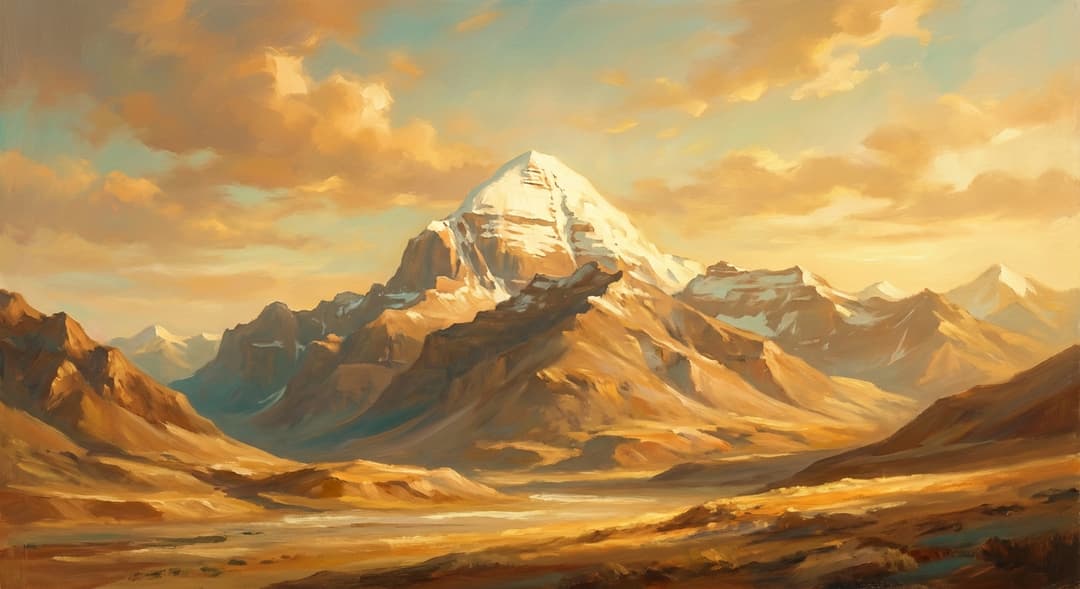
Visiting Mount Kailash is a profound spiritual journey, requiring significant physical and mental preparation. The remote location in western Tibet offers a unique and awe-inspiring experience, surrounded by breathtaking landscapes and a deeply spiritual atmosphere. Pilgrims and travelers alike undertake the challenging trek around the mountain, known as the Kora, to connect with the sacred energy of this revered site.
Highlights
- Witnessing the majestic pyramid-like shape of Mount Kailash.
- Experiencing the spiritual energy and peaceful atmosphere.
- Trekking the challenging but rewarding circumambulation path.
Things to Know
- Obtaining necessary travel permits and visas for Tibet.
- Acclimatizing to the high altitude to avoid altitude sickness.
- Being physically fit to undertake the strenuous trek.
Location
Ngari Prefecture, Tibet Autonomous Region, China
Hours: Open year-round, but the best time to visit is from April to June and September to October.
Getting There: The mountain is accessible via land travel from Lhasa or Kathmandu, followed by trekking.
Get DirectionsTips for Your Visit
Prepare for High Altitude
Spend several days acclimatizing to the altitude before starting the trek.
Obtain Necessary Permits
Ensure you have all required travel permits and visas for Tibet.
About
Mount Kailash, also known as Kailasa, Gang Tise, and Gang Rinpoche, is a majestic mountain located in the Ngari Prefecture of the Tibet Autonomous Region, China. Part of the Transhimalaya's Gangdise Shan range, this peak stands at an elevation of 6,638 meters (21,778 feet). More than just a geographical landmark, Mount Kailash is a deeply sacred site revered by multiple religions, including Hinduism, Buddhism, Jainism, and the Bon religion.
For thousands of years, Mount Kailash has been a central pilgrimage destination and a symbol of spiritual significance. In Hinduism, it is considered the abode of Lord Shiva, while Buddhists identify it with Mount Meru, the center of the universe. Jains revere it as Mount Ashtapada, where the founder of their faith attained enlightenment. The Bon religion sees it as the home of a sky goddess. Despite numerous attempts, no one has ever successfully climbed Mount Kailash due to its religious importance and the prohibition by the Chinese government.
The mountain's striking pyramid-like shape and the spiritual energy it exudes make it a unique and awe-inspiring destination. Pilgrims from around the world undertake the arduous journey to circumambulate the mountain, a trek known as the Kora or Parikrama, which is believed to cleanse sins and bring good fortune. The journey to Mount Kailash is not just a physical one but a profound spiritual experience that connects devotees to the divine.
Gallery
Symbolic Elements
The temple's exterior features intricate carvings, each rich with spiritual meaning:
Abode of Shiva
In Hinduism, Mount Kailash is revered as the abode of Lord Shiva and his consort Parvati. It is considered the most sacred place on Earth for Hindus, symbolizing spiritual power and divine presence. The mountain's serene and majestic presence reinforces its significance as a place of ultimate devotion and enlightenment.
Mount Meru
Buddhists identify Mount Kailash with Mount Meru, the center of the universe in Buddhist cosmology. It represents the axis around which the world revolves, symbolizing stability and spiritual balance. The mountain's association with Mount Meru underscores its importance as a place of meditation and enlightenment for Buddhists.
Mount Ashtapada
Jains revere Mount Kailash as Mount Ashtapada, the place where Rishabhadeva, the first Tirthankara, attained liberation from the cycle of rebirth. It is a site of great spiritual importance for Jains, symbolizing the ultimate goal of achieving moksha. The mountain's serene and untouched nature reflects the Jain principles of non-violence and detachment.
Sipaimen's Abode
The Bon religion considers Mount Kailash the abode of the sky goddess Sipaimen, representing the divine feminine energy and the connection between the earthly and celestial realms. It is a sacred place for Bonpos, symbolizing the power of nature and the importance of maintaining harmony with the environment. The mountain's natural beauty and spiritual energy reinforce its significance as a place of worship and reverence.
Pyramid Shape
The striking pyramid-like shape of Mount Kailash is believed to represent the connection between the physical and spiritual worlds. Its symmetrical form and distinct faces symbolize balance and harmony, reflecting the spiritual principles of the religions that revere it. The mountain's unique shape makes it a powerful symbol of spiritual ascent and enlightenment.

Swastika Symbol
A natural swastika symbol formed by the intersection of vertical ice channels and horizontal rock layers on Mount Kailash is considered sacred. The swastika is an ancient symbol of good fortune and well-being, representing the cyclical nature of life and the interconnectedness of all things. Its presence on the mountain reinforces its significance as a place of spiritual power and positive energy.

Lake Manasarovar
Located near Mount Kailash, Lake Manasarovar is a freshwater lake considered sacred in Hinduism and Buddhism. It is believed to be the embodiment of purity and is associated with the divine. Pilgrims often bathe in its waters to cleanse their sins and attain spiritual merit. The lake's serene beauty and spiritual significance enhance the sacredness of the Kailash region.

Unclimbed Peak
The fact that Mount Kailash remains unclimbed adds to its mystique and spiritual significance. The prohibition of climbing the mountain respects the religious beliefs of those who consider it sacred, preserving its untouched and pristine nature. This reverence for the mountain's sanctity reinforces its importance as a place of spiritual pilgrimage and devotion.
Interesting Facts
Mount Kailash is the source of four major Asian rivers: the Indus, Sutlej, Brahmaputra, and Karnali.
The mountain is considered the axis of the universe, linking the physical and metaphysical realms.
Mount Kailash is believed to be a link between Earth and Heaven, a gateway to the divine.
The shape of Mount Kailash is like a man-made pyramid, surrounded by more than 100 smaller pyramids.
The snow cap of Mount Kailash never melts.
The distance from Stonehenge to Mount Kailash is 6,666 kilometers, which is also the distance to the North Pole.
Two lakes lie at the foot of Mount Kailash: the freshwater Lake Manasarovar and the saline Lake Rakshastal, representing yin and yang energies.
Accelerated aging is believed to occur in the Kailash Range.
A sacred swastika symbol appears naturally on Mount Kailash, formed by the mountain's vertical ice channels intersecting with horizontal rock layers.
Mount Kailash is considered the energy center of the Earth.
Common Questions
Why is Mount Kailash considered sacred?
Mount Kailash is considered sacred because it is revered by Hindus as the abode of Lord Shiva, by Buddhists as Mount Meru, by Jains as Mount Ashtapada, and by the Bon religion as the home of a sky goddess.
Can you climb Mount Kailash?
No, climbing Mount Kailash is prohibited by the Chinese government due to its religious significance and to respect the beliefs of the multiple religions that consider it sacred.
What is the Kora or Parikrama?
The Kora or Parikrama is the circumambulation of Mount Kailash, a 52 km (33 miles) trek that pilgrims undertake to cleanse sins and bring good fortune.
What is the best time to visit Mount Kailash?
The best time to visit Mount Kailash is from April to June and September to October, when the weather is relatively dry and the temperatures are more moderate.
What do I need to travel to Mount Kailash?
Travelers need a Chinese Visa and Tibet Travel Permit, as well as other local travel documents. It is also recommended to be physically fit before undertaking the Kailash Yatra.
Featured Stories
The Legend of Shiva's Abode
Ancient Times
According to Hindu mythology, Mount Kailash is the eternal abode of Lord Shiva, where he resides with his consort Parvati and their divine children, Ganesha and Kartikeya. This sacred mountain is not merely a geographical location but a cosmic symbol representing the center of the universe and the ultimate destination for souls seeking liberation. The serene and majestic presence of Kailash reinforces its significance as a place of profound spiritual power and divine connection.
Pilgrims undertake the arduous journey to Kailash to seek the blessings of Shiva and to experience the divine energy that permeates the region. The circumambulation of the mountain, known as the Kora, is believed to cleanse sins and bring spiritual merit, allowing devotees to draw closer to the divine. The legend of Shiva's abode continues to inspire millions of Hindus to embark on this sacred pilgrimage, seeking enlightenment and union with the divine.
Source: Hindu Mythology
Kailash as Mount Meru in Buddhism
Ancient Times
In Buddhist cosmology, Mount Kailash is identified with Mount Meru, the central mountain around which the universe is structured. This sacred mountain is considered the axis of the world, symbolizing stability, balance, and spiritual harmony. The association of Kailash with Mount Meru underscores its importance as a place of meditation, contemplation, and the pursuit of enlightenment for Buddhists.
The mountain's serene and untouched nature provides a conducive environment for spiritual practice, allowing practitioners to connect with the deeper truths of existence. Pilgrims from various Buddhist traditions travel to Kailash to pay homage to this sacred site and to engage in practices that lead to inner peace and wisdom. The legend of Kailash as Mount Meru continues to inspire Buddhists to seek spiritual growth and to cultivate compassion for all beings.
Source: Buddhist Cosmology
Rishabhadeva's Liberation on Mount Ashtapada
Ancient Times
Jains revere Mount Kailash as Mount Ashtapada, the place where Rishabhadeva, the first Tirthankara, attained liberation from the cycle of rebirth. This sacred mountain is a site of great spiritual significance for Jains, symbolizing the ultimate goal of achieving moksha, or liberation from suffering. The mountain's serene and untouched nature reflects the Jain principles of non-violence, detachment, and self-discipline.
Pilgrims from the Jain community undertake the challenging journey to Kailash to pay homage to Rishabhadeva and to engage in practices that promote spiritual growth and inner peace. The circumambulation of the mountain is believed to bring devotees closer to the path of liberation, allowing them to transcend the limitations of the material world. The legend of Rishabhadeva's liberation on Mount Ashtapada continues to inspire Jains to pursue spiritual excellence and to live a life of compassion and integrity.
Source: Jain Texts
Timeline
Sacred Site
Mount Kailash has been a sacred site for thousands of years, revered by multiple religions.
MilestoneMention in Hindu Epics
Kailash and Manasarovar are mentioned in the Ramayana and Mahabharata.
EventPadmasambhava
Padmasambhava is credited with establishing Tantric Buddhism in Tibet.
EventMilarepa's Meditation
Milarepa, a Buddhist saint, is said to have meditated at Mount Kailash.
EventClimbing Prohibited
Climbing is prohibited by the Chinese government due to its religious significance.
EventBest Time to Visit
The best time to visit Mount Kailash is during these months due to favorable weather conditions.
EventBon Religion Significance
The Bon religion considers Mount Kailash the abode of the sky goddess Sipaimen.
MilestoneJainism Significance
In Jainism, Kailash is known as Mount Ashtapada, where Rishabhadeva attained freedom from rebirth.
MilestoneBuddhism Significance
In Buddhism, Mount Kailash is identified with Mount Meru, the center of the universe.
MilestoneHinduism Significance
In Hinduism, Mount Kailash is the abode of Lord Shiva.
MilestoneCircumambulation Path Length
The path around Mount Kailash is 52 km (33 miles) long and typically takes three days to complete.
MilestoneSource of Major Rivers
Mount Kailash is the source of four major Asian rivers: the Indus, Sutlej, Brahmaputra, and Karnali.
MilestoneAxis of the Universe
The mountain is considered the axis of the universe, linking the physical and metaphysical realms.
MilestoneGateway to the Divine
Mount Kailash is believed to be a link between Earth and Heaven, a gateway to the divine.
MilestoneNatural Swastika Symbol
A sacred swastika symbol appears naturally on Mount Kailash, formed by the mountain's vertical ice channels intersecting with horizontal rock layers.
MilestoneReligious Significance
Mount Kailash holds profound religious significance for Hindus, Buddhists, Jains, and followers of the Bon religion. It is considered a sacred place, embodying spiritual power and divine presence.
The core spiritual purpose of Mount Kailash is to serve as a center for pilgrimage, meditation, and spiritual transformation. It is a place where devotees seek enlightenment, purification, and union with the divine.
Sacred Ordinances
Circumambulation (Kora/Parikrama)
The circumambulation of Mount Kailash is a sacred practice in Hinduism, Buddhism, and Jainism. Pilgrims walk around the mountain, typically clockwise, as an act of devotion and spiritual cleansing.
Meditation
Mount Kailash is a place for meditation and contemplation. The serene and untouched environment provides a conducive atmosphere for practitioners to connect with their inner selves and the divine.
Prayer
Prayer is a common practice at Mount Kailash. Devotees offer prayers to the deities they revere, seeking blessings, guidance, and spiritual growth.
Significance in Hinduism
In Hinduism, Mount Kailash is the abode of Lord Shiva and is considered the most sacred place on Earth. It symbolizes spiritual power and divine presence.
Significance in Buddhism
In Buddhism, Mount Kailash is identified with Mount Meru, the center of the universe. It represents the axis around which the world revolves, symbolizing stability and spiritual balance.
Significance in Jainism
In Jainism, Kailash is known as Mount Ashtapada, where Rishabhadeva attained freedom from rebirth. It is a site of great spiritual importance, symbolizing the ultimate goal of achieving moksha.
Sources & Research
Every fact on Temples.org is backed by verified Sources & Research. Each piece of information is rated by source tier and confidence level.
View All Sources (8)
| Field | Source | Tier | Retrieved |
|---|---|---|---|
| About & Historical Background | Dream Tibet (opens in a new tab) | C | 2024-01-26 |
| About & Historical Background | Tibet Travel (opens in a new tab) | D | 2024-01-26 |
| Religious Significance | Britannica (opens in a new tab) | B | 2024-01-26 |
| Symbolic Elements | Himalayan Trekking (opens in a new tab) | C | 2024-01-26 |
| Interesting Facts | Ace the Himalaya (opens in a new tab) | C | 2024-01-26 |
| Architectural Description | Trip to Temples (opens in a new tab) | C | 2024-01-26 |
| Historical Timeline | Pithoragarh (opens in a new tab) | B | 2024-01-26 |
| Pilgrimage & Circumambulation | Himalayan Windows (opens in a new tab) | D | 2024-01-26 |