Visitor Insights
Visiting Sakya Monastery
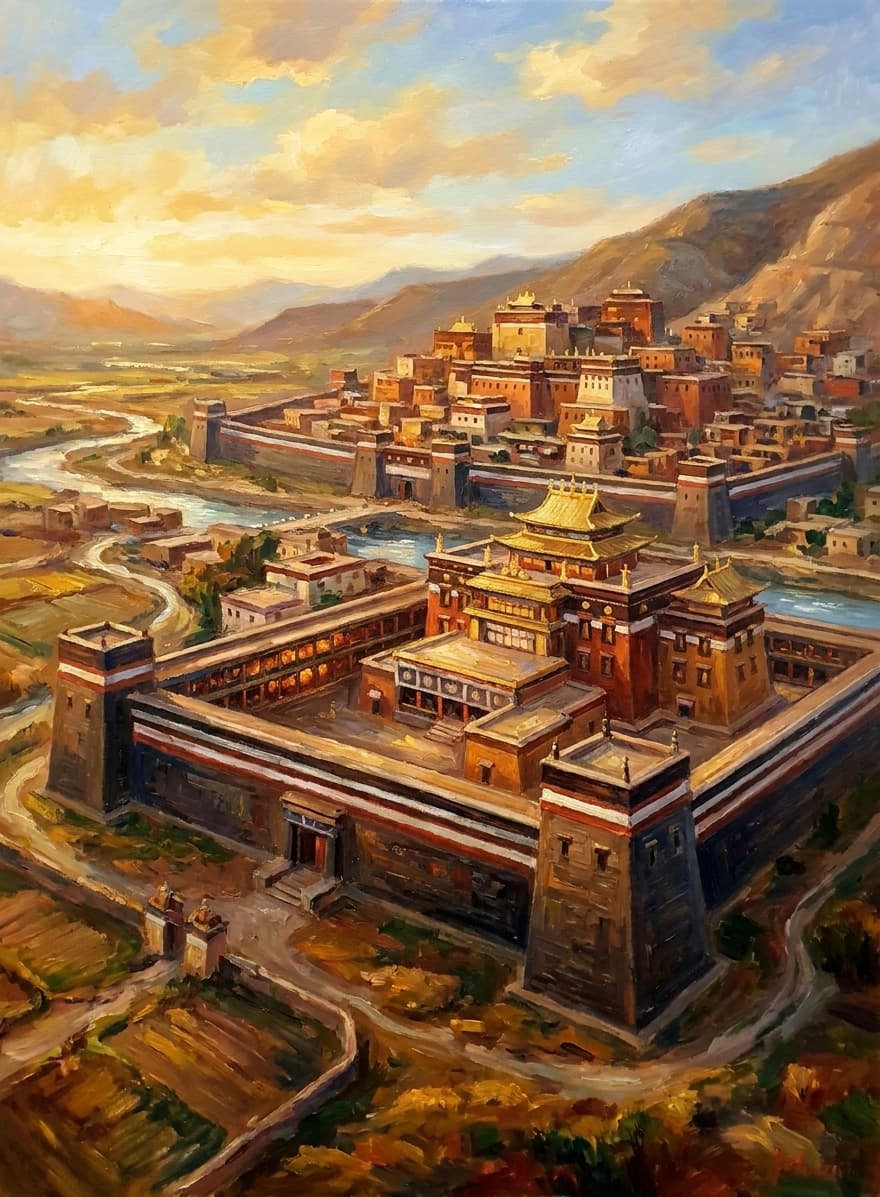
Located at an elevation of 4,300 meters southwest of Shigatse, Sakya Monastery offers an awe-inspiring glimpse into Tibet's medieval scholastic and defensive architecture. Visitors can explore the towering Lhakhang Chenmo assembly hall, view ancient murals, and observe monastic assemblies. Due to high altitude and remote conditions, acclimatization and proper regional travel permits are required.
Highlights
- Lhakhang Chenmo (Main Assembly Hall) with its colossal wooden pillars
- Immense library wall containing tens of thousands of sacred Tibetan scriptures
- Distinctive tricolor fortress ramparts and panoramic mountain views
- Vibrant monastic rituals and Cham sacred dance festivals held in summer
Things to Know
- Altitude exceeds 4,300 meters; travel slowly and stay well hydrated
- Foreign travelers require a Tibet Travel Permit and an Aliens' Travel Permit
- Interior photography of holy shrines and scriptures is strictly regulated
- Local accommodations and dining facilities in Sa'gya Town are basic
Location
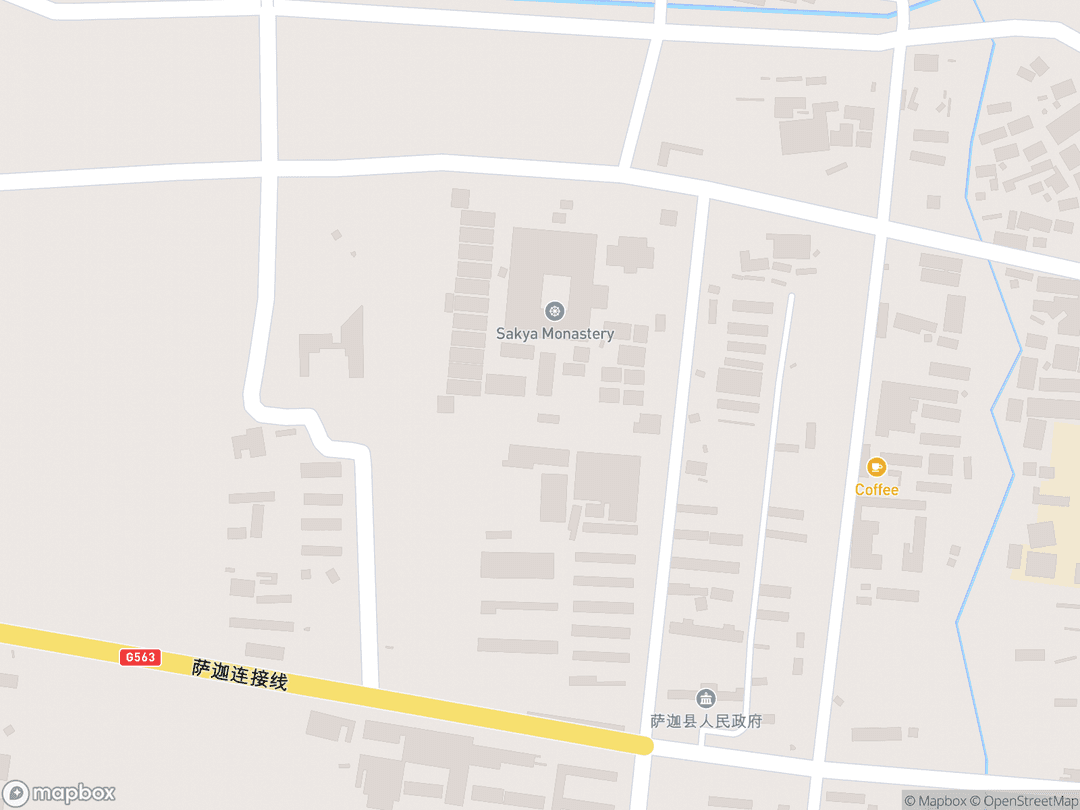
Sa'gya Town, Sa'gya County, Shigatse Prefecture, Tibet Autonomous Region, China
Hours: 9:00 - 18:30
Getting There: Regular buses run from Shigatse Station (approx. 2.5 hours), or visitors can travel via private hired transport along the southern Tibet overland route.
Get DirectionsTips for Your Visit
Acclimatize Gradually
Spend several days in Lhasa and Shigatse before ascending to Sakya to minimize altitude sickness risks.
Respect Sacred Protocols
Circumambulate temples and chortens clockwise and refrain from touching ancient manuscript surfaces.
Bring Modest Layers
Monastery assembly halls remain chilly year-round, requiring warm, modest clothing.
About
Sakya Monastery, known traditionally as Pel Sakya ('Auspicious Grey Earth'), is the spiritual center and ancestral seat of the Sakya tradition, one of the four principal lineages of Tibetan Buddhism rooted in ancient Dharmic transmissions. Founded in 1073 by Khön Könchok Gyalpo on the hillside flanking the Trum-chu River, the complex expanded into an immense administrative and theological bastion that shaped Tibetan political and religious life for centuries.
During the thirteenth century under Drogön Chögyal Phagpa and the Mongol Yuan dynasty, Sakya functioned as the de facto administrative capital of Tibet. The surviving southern fortress monastery stands as a massive monument of defensive Tibetan-Mongolian-Indian architectural syncretism, characterized by its thick battered grey walls, imposing watchtowers, and distinct tricolor painting honoring the Three Bodhisattvas.
Celebrated globally as the 'Second Dunhuang', Sakya houses thousands of ancient murals and an extraordinary monastic library. Sealed behind immense hall walls for centuries and rediscovered in 2003, tens of thousands of sacred palm-leaf manuscripts and illuminated block-prints preserve vital Sanskrit and Tibetan scriptures, perpetuating essential Buddhist teachings on wisdom, compassion, and liberation.
Gallery
Symbolic Elements
The temple's exterior features intricate carvings, each rich with spiritual meaning:

Tricolor Striped Facade
Vertical stripes of red, white, and dark slate-blue represent the Three Protective Bodhisattvas: Manjushri, Avalokiteshvara, and Vajrapani.
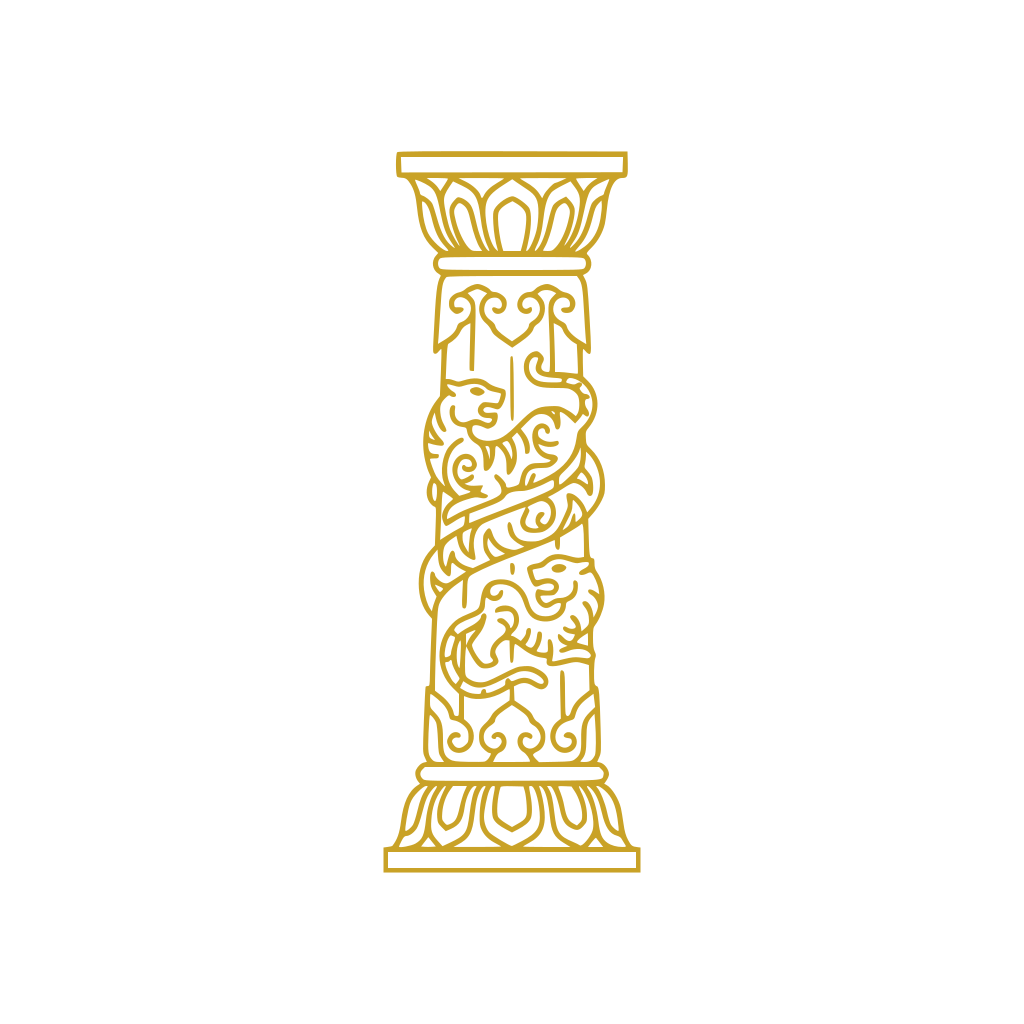
Pillar of the Yellow Tiger
A massive central pillar in Lhakhang Chenmo given by Kublai Khan, carved from an entire ancient tree trunk.

Sacred White Conch
An auspicious ceremonial conch shell gifted from India via the Yuan court, blown to inaugurate major Dharmic assemblies.

Battered Fortress Walls
Thick sloping ramparts with defensive corner turrets symbolize unshakeable protection of the Dharma against adversity.
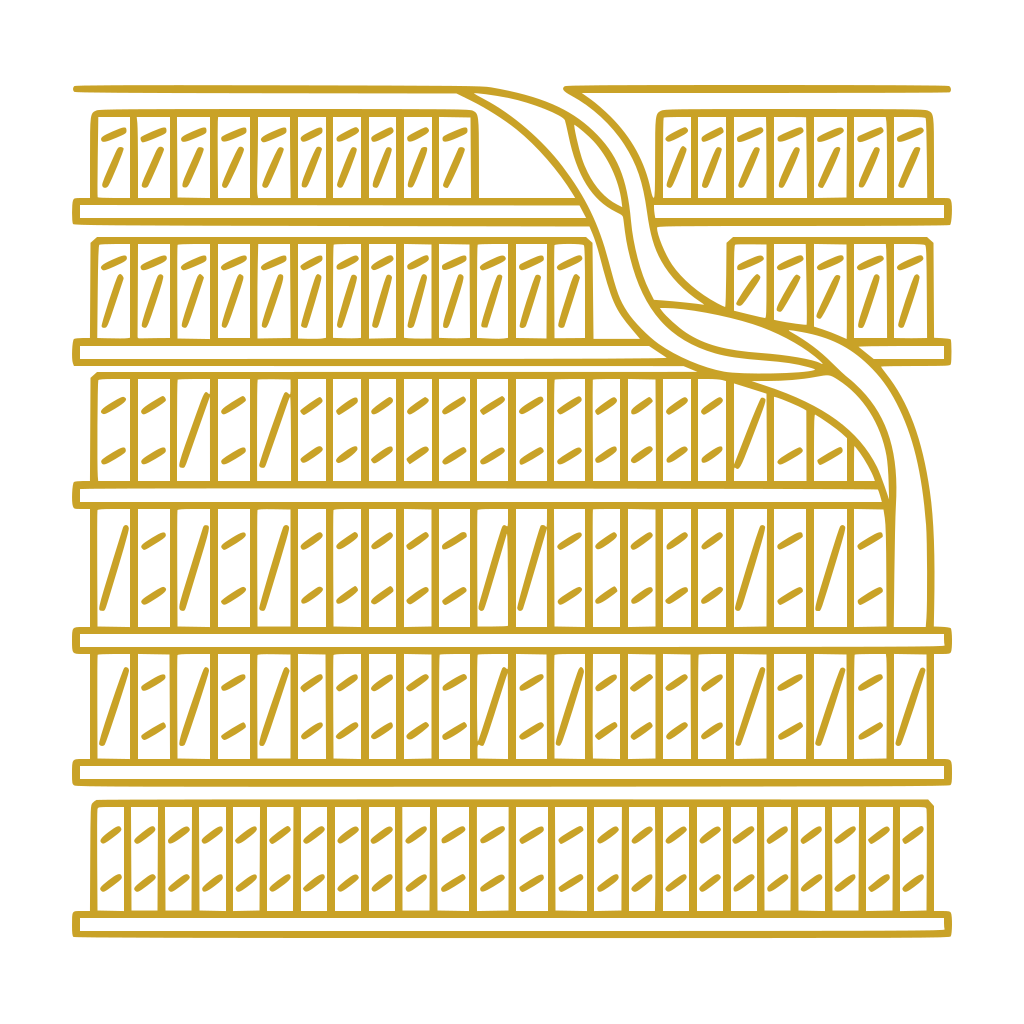
Immense Scripture Wall
Floor-to-ceiling shelves holding thousands of wrapped sacred folios represent the living body of enlightened Buddhist teachings.

Gilded Dharma Wheel and Deer
Perched above the main entrance, the gilded wheel and two flanking deer evoke the Buddha's first sermon at Sarnath.

Silver Chortens of the Khön Lineage
Precious reliquary stupas enshrine the physical remains and consecrated relics of historic Sakya throne-holders.
Interesting Facts
The monastery library houses roughly 84,000 sacred texts, earning it the title of the 'Second Dunhuang' (Tier A).
The heaviest scripture block preserved in the Main Assembly Hall weighs over 500 kilograms (Tier B).
The monastery is named Sakya ('grey earth') due to the distinctive mineral soil of the surrounding Ponpori hill (Tier A).
The Main Assembly Hall features four massive sacred pillars crafted from intact giant tree trunks, including one gifted by Kublai Khan (Tier B).
A hidden scripture library measuring sixty meters in length was discovered sealed inside a massive hall wall in 2003 (Tier B).
Between 1268 and 1354, Sakya served as the political and administrative capital of Tibet under Yuan Mongol patronage (Tier B).
The exterior walls are painted in red, white, and dark blue stripes representing the Three Protective Bodhisattvas (Tier A).
An ancient sacred white conch shell gifted by Kublai Khan remains among the monastery's holiest ritual treasures (Tier B).
Common Questions
Why is Sakya Monastery painted in red, white, and blue stripes?
The colors symbolize the Rig Sum Gompo: Manjushri (wisdom), Avalokiteshvara (compassion), and Vajrapani (spiritual power).
Why is it known as the 'Second Dunhuang'?
It holds tens of thousands of ancient, immaculately preserved Buddhist manuscripts and thousands of medieval murals.
Can foreign visitors enter the Main Assembly Hall and view the library?
Yes, travelers with valid Tibet permits can visit Lhakhang Chenmo and view the immense scripture wall during operating hours.
What is the best season to visit Sakya Monastery?
The ideal months are May through October when temperatures are milder and mountain highways are clear of snow.
Featured Stories
The Discovery of the Secret Scripture Wall
2003
During structural assessments of Lhakhang Chenmo in 2003, conservators discovered a sealed wall over sixty meters long packed tight with scriptures. Untouched for centuries, over 84,000 individual sacred texts—written in Tibetan, Sanskrit, and Mongolian—had survived dampness and political upheavals in the dry Himalayan air. The momentous find confirmed Sakya's enduring role as the world's greatest surviving treasury of medieval Mahayana and Vajrayana literature.
Source: Sakya Heritage Project
The Great Pillars of Drogön Chögyal Phagpa
1268
When constructing the southern fortress, Drogön Chögyal Phagpa oversaw the transport of colossal tree trunks across steep mountain passes without modern transport. According to monastic chronicles, Emperor Kublai Khan sent imperial laborers and exceptional timber trunks to support the sixty-meter hall. Named individually after mythical protectors and imperial benefactors, the four central pillars continue supporting the monastery's soaring roof eight centuries later.
Source: Historical Annals of Sakya
Atisha's Prophecy upon the Grey Hill
1040
Three decades before the monastery's founding, the renowned Bengali master Atisha stopped by the grey-hued Ponpori hill during his journey across western Tibet. Seeing auspicious visionary syllables of the Three Bodhisattvas glowing against the earth, he predicted that a renowned monastery would arise to illuminate the world. In 1073, the Khön family patriarch fulfilled the prophecy by founding Pel Sakya upon the very slopes Atisha had blessed.
Source: Biographical Treasury of Tibetan Masters
Timeline
Prophecy of Master Atisha
The Indian scholar Atisha passes the region and prophesies that great Bodhisattva emanations will appear here.
MilestoneFounding of Sakya Monastery
Khön Könchok Gyalpo establishes the northern monastery, initiating the Sakya lineage of Tibetan Buddhism.
DedicationConstruction of Southern Fortress
Drogön Chögyal Phagpa orders the building of the fortified southern monastery complex and Lhakhang Chenmo.
MilestoneImperial Preceptor Appointment
Phagpa becomes the Imperial Preceptor to Yuan Emperor Kublai Khan, establishing Sakya governance over Tibet.
EventShift of Political Authority
The Phagmodrupa dynasty ascends, concluding Sakya's direct administrative reign while spiritual primacy remains.
EventFire and Rebuilding
Substantial portions of the southern monastery sustain fire damage and undergo reconstruction by lineage masters.
RenovationSouthern Complex Restoration
Major structural renovations restore the southern gompa to its historic footprint and structural integrity.
RenovationDestruction of Northern Complex
The historic northern buildings across the river are largely destroyed during the Cultural Revolution.
EventNational Heritage Renovation
Comprehensive restoration works commence on the southern fortress and Lhakhang Chenmo halls.
RenovationDiscovery of the Scripture Wall
Architectural investigations reveal an immense sealed wall containing approximately 84,000 ancient manuscripts.
MilestoneManuscript Digitization Launch
A monumental archival project initiates digital preservation of rare palm-leaf and parchment texts.
MilestoneCataloging Milestone
Scholars complete comprehensive indexing of the library, fully digitizing over twenty percent of the texts.
MilestoneHistory by Decade
1070s — Founding of the Northern Monastery
Here upon the grey earth, the profound transmissions of India shall take permanent root in Tibet.
Khön Könchok Gyalpo founded the initial Sakya monastery in 1073 upon the northern bank of the Trum-chu River, establishing hereditary spiritual leadership within the noble Khön clan. The settlement rapidly became a preeminent scholastic center, refining distinctive Vajrayana teachings based on the Indian Mahasiddha Virupa's Lamdré system.
1260s–1270s — Construction of the Southern Fortress
Following close religious-political alliances with the Mongol Yuan dynasty, Drogön Chögyal Phagpa mobilized immense resources to construct the southern fortified monastery. Anchored by the cavernous Lhakhang Chenmo, this complex established Sakya as Tibet's sovereign imperial seat and intellectual focal point.
1350s–1550s — Scholastic Resilience and Transition
While central political rule over Tibet transferred to the Phagmodrupa dynasty in 1354, Sakya remained an undisputed beacon of monastic scholarship and scriptural translation. Masters gathered, copied, and preserved thousands of Dharmic manuscripts, fortifying library collections following periodic fire damages.
1940s–1950s — Pre-Modern Renovation and Upheaval
The southern monastery underwent comprehensive structural restorations in 1948, stabilizing its ancient stone ramparts and pillar foundations. Following the events of 1959, monastic leadership and many resident monks relocated to India, establishing exile monastic centers while a resident core remained in Sa'gya.
1960s–1980s — Destruction and Preservation
The northern monastery complex across the river was demolished during the Cultural Revolution, but the monumental southern fortress survived largely intact due to its fortress-grade walls and remote location. Monastic life cautiously revived in the 1980s as monks and scholars returned to protect surviving altars and texts.
2000s–Present — Rediscovery and Digital Stewardship
Major state-supported preservation efforts in 2002 were followed by the miraculous 2003 discovery of the sealed library wall. Modern preservation teams, partnered with traditional scholars, have systematically cataloged and digitized tens of thousands of folios to ensure their eternal protection for world Buddhist heritage.
Architecture & Facilities
Sakya Monastery exemplifies a formidable fortress-monastery design that synthesizes classical Tibetan fortified masonry with Yuan-dynasty imperial planning and Nepalese decorative motifs. Designed both as an inviolable sanctuary for holy scriptures and a defensible citadel, its immense sloping outer ramparts are crowned with perimeter parapets and watchtowers, creating a profound visual statement of spiritual and worldly authority.
Building Materials
Local Grey Sandstone and Granite
Quarried locally to build the 3.5-meter-thick battered fortress ramparts capable of withstanding seismic tremors.
Rammed Earth and Slate
Compacted regional soil and slate slabs form durable upper defensive walls and battlements.
Giant Himalayan Cedar and Pine Timber
Massive single-tree trunks hauled from distant forests form the load-bearing interior pillars and structural rafters.
Mineral and Gold Leaf Pigments
Natural pulverized malachite, lapis lazuli, cinnabar, and gold leaf decorate thousands of square meters of interior murals.
Interior Features
Lhakhang Chenmo (Great Assembly Hall)
A monumental hall covering over 5,000 square meters supported by forty massive wooden pillars.
The Great Scripture Library Wall
A colossal grid of wooden shelving holding over 84,000 consecrated Buddhist manuscripts and palm-leaf texts.
The Silver Reliquary Chapel
An auspicious sacred chamber enshrining the silver chortens of historical Sakya Trizins and lineage founders.
The Protector Chapel (Gonkhang)
A dimly illuminated sanctuary dedicated to wrathful lineage protectors like Mahakala and Shri Devi.
Temple Grounds
The sprawling 18,000-square-meter complex encompasses vast flagstone courtyards for sacred Cham dances, flanked by high defensive perimeter walls, monk quarters, and circumambulation pathways overlooking the Trum-chu valley.
Additional Facilities
Visitor facilities include a basic reception center, a scriptural preservation workshop, and designated circumambulation routes around the outer fortress battlements.
Religious Significance
Within the Dharmic traditions of Mahayana and Vajrayana Buddhism, Sakya Monastery holds supreme importance as the origin and mother seat of the Sakya lineage. Its founding established a unique hereditary lineage of realized masters who systematized Buddhist tantric practices into the complete path to enlightenment.
To preserve and transmit the uncorrupted Buddha Dharma, particularly the profound Lamdré ('Path with Its Fruit') teachings, while safeguarding sacred scriptures and training monastic scholars.
Sacred Ordinances
Lamdré Transmissions
Comprehensive esoteric initiations and meditation instructions systematically guiding practitioners from basic renunciation to full Buddhahood.
Cham Sacred Dances
Monastic ritual dances embodying wrathful protectors to dispel spiritual obstacles and promote worldly harmony.
Daily Chanting and Puja Assemblies
Regular recitation of sutras, sadhanas, and protector prayers performed continuously by resident monks.
Scripture Veneration and Circumambulation
The meritorious practice of circumambulating sacred texts and shrines while generating compassionate bodhicitta.
The Three Protectors (Rig Sum Gompo)
The iconic tricolor paint adornment of Sakya reflects deep theological reverence for the Bodhisattvas of Wisdom (Manjushri), Compassion (Avalokiteshvara), and Power (Vajrapani), uniting the three essential virtues required for supreme awakening.
The Living Dharmic Treasury
Sakya's preservation of Sanskrit palm-leaf manuscripts represents one of humanity's closest connections to the ancient monastic universities of Nalanda and Vikramashila, keeping classical Indian Buddhist scholasticism alive.
Sources & Research
Every fact on Temples.org is backed by verified Sources & Research. Each piece of information is rated by source tier and confidence level.
View All Sources (8)
| Field | Source | Tier | Retrieved |
|---|---|---|---|
| Monastery History & Lineage Origins | Sakya Heritage Foundation (opens in a new tab) | A | 2026-02-18 |
| Sakya Throne-Holder Lineage & Spiritual Mission | Office of Sakya Trizin (opens in a new tab) | A | 2026-02-18 |
| Foundational History of the Sakya Tradition | Berzin Archives / Study Buddhism (opens in a new tab) | A | 2026-02-18 |
| Sakya Scholastic History and Monastic Training | Khenchen Appey Foundation (opens in a new tab) | A | 2026-02-18 |
| Historical Architecture and Phagpa Administration | Buddhistdoor Global (opens in a new tab) | B | 2026-02-18 |
| Ancient Scripture Library Digitization Project | China Daily (opens in a new tab) | B | 2026-02-18 |
| Archaeological Analysis of Sakya Library Wall | The Archaeologist (opens in a new tab) | B | 2026-02-18 |
| Visitor Itineraries and Regional Logistics | Tibet Travel Information (opens in a new tab) | D | 2026-02-18 |