Visitor Insights
Visiting El Ghriba Synagogue
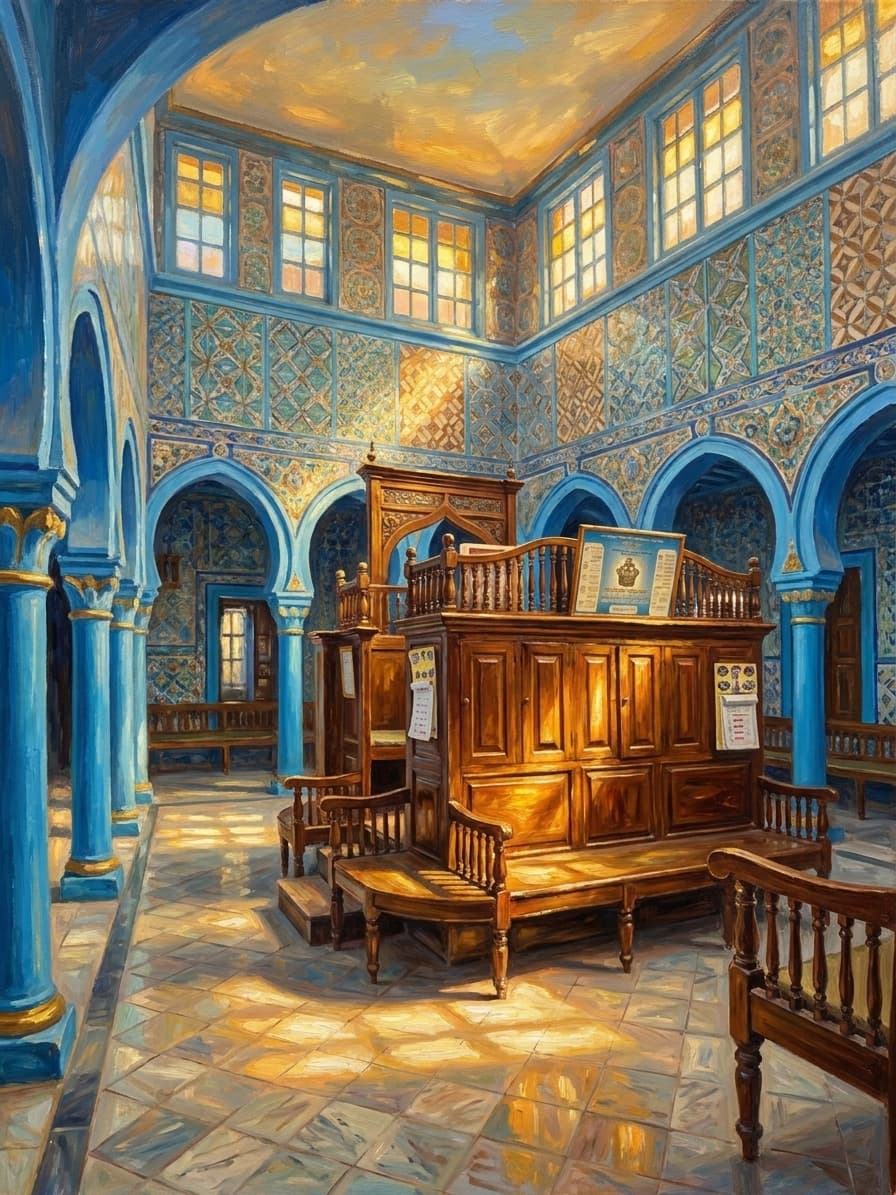
Visiting El Ghriba offers an evocative journey into the living spiritual heritage of North African Jewry. Guests experience brilliant blue-and-white tilework, reverent prayer halls, and the historic caravanserai courtyard.
Highlights
- Exquisite Moorish horseshoe arches coated in cobalt blue and emerald green
- The subterranean crypt of the Ghriba illuminated by dozens of flickering votive candles
- Intricate hand-painted faience ceramic tiles depicting floral arabesques and interlocking stars
- Historic two-story caravanserai courtyard historically used to house international pilgrims
Things to Know
- Security checkpoints with bag inspection and metal detectors are mandatory at outer gates
- Modest dress covering shoulders and knees is strictly enforced for all guests
- Men must wear head coverings and shoes must be removed before entering carpeted prayer areas
- The sanctuary is strictly closed to sightseeing on Shabbat and solemn Jewish holy days
Location
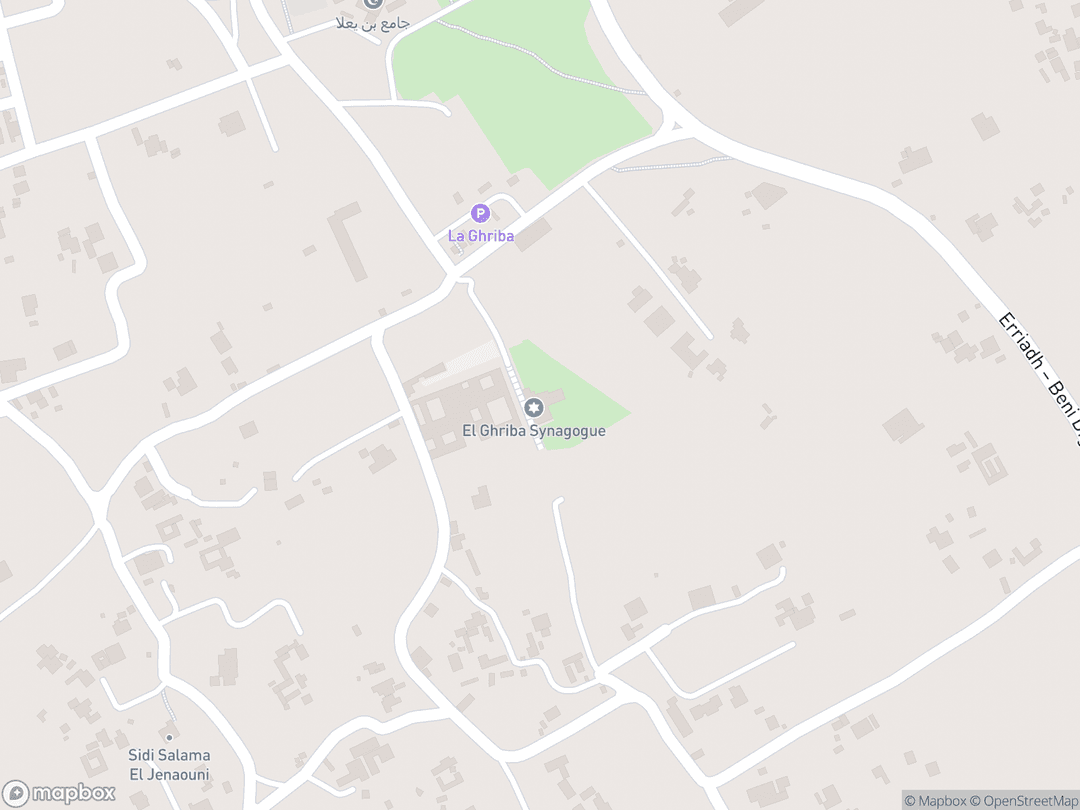
Erriadh, Hara Seghira, Djerba Island, Medenine Governorate, Tunisia
Hours: Sunday to Thursday 9:00 AM to 5:00 PM; Friday closes early at 2:00 PM; Closed Saturday for Shabbat
Getting There: Located in Erriadh, approximately 7 kilometers southwest of Houmt Souk and easily accessible via taxi or guided transport.
Get DirectionsTips for Your Visit
Plan Around Prayer Services
Visit mid-morning on weekdays between Tuesday and Thursday to enjoy quiet reflection without interrupting daily prayers.
Bring Modest Attire
Wear loose-fitting clothing that covers legs and shoulders, and be prepared to slip off shoes at the prayer hall threshold.
Head Coverings Provided
Men are provided with complimentary kippahs at the entrance, while women are encouraged to wear headscarves inside.
Pilgrimage Season Crowds
Visiting during Lag Ba'Omer in May offers remarkable cultural vitality but entails extensive security delays and dense crowds.
About
El Ghriba Synagogue stands in the historic village of Erriadh on the island of Djerba. As one of the oldest Jewish places of worship in the Mediterranean basin, it represents an unbroken chain of communal devotion dating back to antiquity. The sanctuary embodies a profound synthesis of North African Islamic vernacular craft and traditional Sephardic-Mizrahi liturgical design.
According to long-standing communal tradition, the sacred enclave was founded by Jewish priests fleeing the destruction of the First Temple in Jerusalem. Within the wider Abrahamic monotheistic landscape of North Africa, El Ghriba serves as a vibrant testimony to spiritual continuity. The current architectural complex reflects major rebuildings from the nineteenth and early twentieth centuries, crowned by its inclusion as a UNESCO World Heritage site.
Each year during the festival of Lag Ba'Omer, thousands of pilgrims journey across continents to participate in the sacred Hillula. Devotees offer prayers, light votive candles, and deposit handwritten petitions beneath the holy ark. Despite centuries of regional geopolitical change, the synagogue remains a beacon of coexistence and resilient living faith.
Gallery
Symbolic Elements
The temple's exterior features intricate carvings, each rich with spiritual meaning:

Foundation Stone from Jerusalem
An ancient relic embedded beneath the sacred ark representing direct physical continuity with the First Temple in Zion.

Twelve-Window Lantern
A square cupola above the reader's desk symbolizing the Twelve Tribes of Israel while funneling natural daylight inside.

Cobalt Blue and Turquoise Hues
Vibrant Mediterranean pigmentation evoking the celestial throne of God while traditionally offering spiritual protection.

Crypt of the Solitary Maiden
A low arched niche beneath the prayer hall honoring the memory of the righteous woman who sanctified the site.
Inscribed Votive Eggs
Hen eggs marked with handwritten prayers deposited into the sacred niche to seek divine favor for health and marriage.

Cylindrical Silver Tik
Heavy cylindrical wooden and hammered silver cases protecting sacred Torah scrolls in the North African tradition.
Moorish Horseshoe Arches
Curved keyhole archways that embody centuries of shared aesthetic harmony between Jewish and Islamic artisans.
Interesting Facts
Communal memory holds that fleeing priests brought a stone from Solomon's destroyed Temple to anchor this sanctuary (Tier A).
The sanctuary's title honors a righteous solitary maiden discovered miraculously preserved following a historic fire (Tier B).
Pilgrims write personal wishes on hen eggs and place them deep inside the subterranean crypt beneath the holy ark (Tier B).
According to oral history, Djerba has no Levite families because local priests declined Ezra's call to return to Jerusalem (Tier B).
The interior architecture shares key decorative elements such as horseshoe arches and cobalt faience with Maghrebi mosques (Tier B).
The sanctuary has maintained active Jewish worship through Roman, Byzantine, Arab, Ottoman, and colonial epochs (Tier A).
The annual Hillula pilgrimage culminates in the joyful street procession of the monumental multi-tiered candelabrum (Tier B).
UNESCO formally recognized the synagogue in 2023 as an indispensable component of Djerba's settlement landscape (Tier B).
Djerba sustains one of the few contiguous, vibrant Jewish enclaves remaining in the Arab-speaking world (Tier A).
Common Questions
What does the name El Ghriba mean?
In Arabic, 'El Ghriba' translates to 'the stranger' or 'the solitary one,' referencing the holy maiden linked to the site.
Is El Ghriba Synagogue open to non-Jewish visitors?
Yes, respectful visitors of all backgrounds are welcome Sunday through Friday during designated visitor hours.
Why do visitors remove their shoes before entering the sanctuary?
Removing footwear follows an ancient Middle Eastern tradition of revering consecrated ground as holy space.
What is the custom of placing inscribed eggs in the niche?
Women write prayers for fertility and marriage on eggs, placing them near the holy stone to receive spiritual blessings.
What language is used during liturgical services at El Ghriba?
Services are conducted primarily in Biblical Hebrew, interspersed with traditional Judeo-Arabic liturgical melodies.
Featured Stories
The Stone from Zion
586 BCE
According to enduring island memory, priests fleeing the destruction of Jerusalem carried an altar stone across the Mediterranean Sea to southern Tunisia. They placed this consecrated relic into the bedrock of Hara Seghira to serve as the spiritual foundation of their diaspora sanctuary. To this day, pilgrims pray at the subterranean niche believing the stone forms a physical bridge to the ancient Holy of Holies.
Source: Djerban Rabbinic Oral Tradition and Communal Chronicles
The Legacy of the Holy Maiden
16th Century
Local tradition recounts that a solitary, pious young woman lived quietly in a modest hut outside the village, respected by Jewish and Muslim neighbors alike. When a sudden fire swept through her dwelling, the villagers feared the worst but found her body completely untouched by the flames. Recognizing her righteous life and miraculous sanctity, the island community consecrated the ground and erected the sanctuary of El Ghriba in her honor.
Source: North African Jewish Hagiographical Lore
Procession of the Great Candelabrum
1920
The high point of the annual Lag Ba'Omer pilgrimage is the festive parade of the Manara, an enormous wooden candelabrum mounted on wheels and draped in vibrant scarves and silver ornaments. Accompanied by traditional Maghrebi liturgical songs and ululations, the community wheels the illuminated tower through the narrow village streets. The ritual brings together generations of families in a radiant celebration of spiritual renewal and communal perseverance.
Source: Historical Records of the Djerba Jewish Community
Timeline
Traditional Founding
Priests escaping the destruction of Solomon's Temple arrive on Djerba and establish the sanctuary.
MilestoneSixteenth-Century Synagogue
Earliest surviving documentary references record an active synagogue and regional pilgrimage destination at the site.
EventHusainid Era Reconstruction
The sanctuary undergoes major structural restoration under the Ottoman Beylik of Tunisia to expand pilgrim capacity.
RenovationFrench Protectorate Expansion
Modern travel connections increase the influx of Mediterranean and European pilgrims to the annual festival.
EventTwentieth-Century Architectural Overhaul
Master artisans enclose the courtyard, erect the raised bimah, and install the iconic blue faience tilework.
RenovationWorld War II Survival
The synagogue fabric survives undamaged despite Axis military occupation of Tunisia and punitive financial levies.
EventTunisian Independence
President Habib Bourguiba guarantees religious protections for the historic Jewish minority community of Djerba.
MilestoneSimchat Torah Security Incident
A tragic shooting during festival services prompts the state to establish permanent perimeter security protocols.
EventPerimeter Bombing Defense
A terrorist truck bombing outside the gates leads to worldwide solidarity and extensive defensive fortifications.
EventPilgrimage Attack and Resilience
A security breach at the outer perimeter is repelled as community leaders reaffirm their commitment to worship.
EventUNESCO World Heritage Inscription
El Ghriba is officially inscribed as a key component of the Djerba Island cultural heritage landscape.
DedicationHistory by Decade
Antiquity — Priestly Origins
Following the Babylonian destruction of Solomon's Temple, Aaronite priests sought refuge along the Mediterranean coast of southern Tunisia. The community established an enduring sanctuary at Hara Seghira, laying deep spiritual foundations that survived centuries of regional political upheaval.
1840s–1850s — Husainid Restoration
Under Ottoman Tunisia's Husainid beys, the expanding pilgrimage necessitated a major structural overhaul of the aging sixteenth-century prayer hall. Master builders rebuilt the load-bearing masonry walls and enlarged the interior prayer spaces to receive regional pilgrims safely.
1920s–1930s — The Modern Transformation
A comprehensive renovation campaign transformed the sanctuary into its present hypostyle form with cobalt horseshoe arches and a raised bimah. Artisans tiled the walls in vibrant faience and expanded the adjacent caravanserai hostel to lodge thousands of overseas guests.
1940s–1950s — Wartime Survival and Statehood
The sanctuary survived Axis military occupation in World War II without physical harm before liberation by Allied forces. Following Tunisian independence in 1956, the island community retained its unique religious autonomy under state legal protections.
1980s–2000s — Defending the Sanctuary
Security challenges led the Tunisian government and communal leadership to establish extensive perimeter protections around the compound. The community demonstrated remarkable resilience, welcoming international diplomats and cultural leaders in persistent gestures of solidarity.
2010s–2020s — Global Heritage and Renewal
In September 2023, UNESCO inscribed the sanctuary on the World Heritage List as a vital component of Djerba's island settlement pattern. The community continues to celebrate daily services and the annual pilgrimage, exemplifying enduring religious freedom.
Architecture & Facilities
El Ghriba Synagogue exemplifies an extraordinary regional synthesis of Moorish Revival, Maghrebi Islamic, and Sephardic liturgical architecture, utilizing whitewashed masonry, internal colonnades, horseshoe arches, and radiant cobalt faience tilework to create an atmosphere of Mediterranean contemplative reverence.
Building Materials
Whitewashed Lime Plaster
Thick load-bearing stone walls coated in brilliant white lime wash to deflect the intense Mediterranean sun.
Faience Ceramic Tiles
Hand-painted blue, turquoise, and ochre glazed tiles lining the lower walls with arabesque and floral motifs.
Carved Stone Columns
Slender structural masonry pillars finished in vibrant blue and emerald paints accented by gilded plaster capitals.
Polished Marble Paving
Patterned marble slabs paving the central aisles and liturgical platforms beneath traditional woven prayer runners.
Interior Features
Hypostyle Prayer Hall
The primary rectangular sanctuary measuring 24 by 25 meters and structured into parallel vaulted aisles.
The Central Bimah
An elevated polished timber platform where the cantor leads daily liturgy and rolls open the Torah scrolls.
The Twelve-Window Lantern
A raised square clerestory lantern pouring natural daylight directly onto the reader's desk from above.
The Heikhal Ark
An arched eastern wall recess screened by embroidered velvet parochet curtains housing antique silver-cased Torah scrolls.
Temple Grounds
A fortified perimeter enclosure surrounding an expansive whitewashed caravanserai courtyard wrapped in shaded arcades for welcoming pilgrims.
Additional Facilities
The historic Oukil provides guest accommodations, assembly halls, and kosher communal kitchens for seasonal festival pilgrims.
Religious Significance
Within the shared monotheistic cradle of the Mediterranean, El Ghriba serves as a sacred sanctuary dedicated to the eternal God of Abraham, orienting every prayer toward the Holy City of Jerusalem.
The synagogue functions as an active center of daily communal prayer, Torah study, and an international pilgrimage shrine celebrating righteous memory and divine healing.
Sacred Ordinances
Daily Prayer Services (Shacharit, Mincha, and Arvit)
Liturgical assemblies centered on the recitation of the Shema and Amidah facing east toward the Temple Mount.
Torah Reading Liturgy
The ritual cantillation of the handwritten parchment scroll unfurled from cylindrical silver tikim at the bimah.
Lag Ba'Omer Hillula
A joyful annual festival honoring Rabbi Shimon bar Yochai through prayer petitions, candle lighting, and communal singing.
The Priestly Heritage of Djerba
Djerban Jewry maintains a unique rabbinic tradition as an enclave founded directly by Aaronite priests, preserving ancient liturgical customs and blessing formulas passed down continuously across generations.
The Sacred Votive Tradition
Pilgrims visit the subterranean niche beneath the ark to light candles and place inscribed eggs, reflecting an authentic regional expression of Jewish spiritual piety seeking divine compassion.
Sources & Research
Every fact on Temples.org is backed by verified Sources & Research. Each piece of information is rated by source tier and confidence level.
View All Sources (8)
| Field | Source | Tier | Retrieved |
|---|---|---|---|
| About & Historical Background | UNESCO World Heritage Centre (opens in a new tab) | B | 2026-03-31 |
| Architecture & Facilities | Center for Jewish Art, Hebrew University of Jerusalem (opens in a new tab) | B | 2026-03-31 |
| Religious Significance & Liturgy | Diarna Geo-Museum of North African Jewish Life (opens in a new tab) | B | 2026-03-31 |
| Visitor Insights & Security | U.S. Department of State (opens in a new tab) | B | 2026-03-31 |
| Historical Timeline & Community | Bertelsmann Stiftung Transformation Index (opens in a new tab) | B | 2026-03-31 |
| Architectural Description & Tilework | Academia Architectural Survey Archive (opens in a new tab) | B | 2026-03-31 |
| Symbolic Elements & Pilgrimage Customs | ResearchGate Academic Repository (opens in a new tab) | B | 2026-03-31 |
| Visitor Etiquette & Access | Unusual Nomad Cultural Guides (opens in a new tab) | D | 2026-03-31 |