Visitor Insights
Visiting Blue Mosque
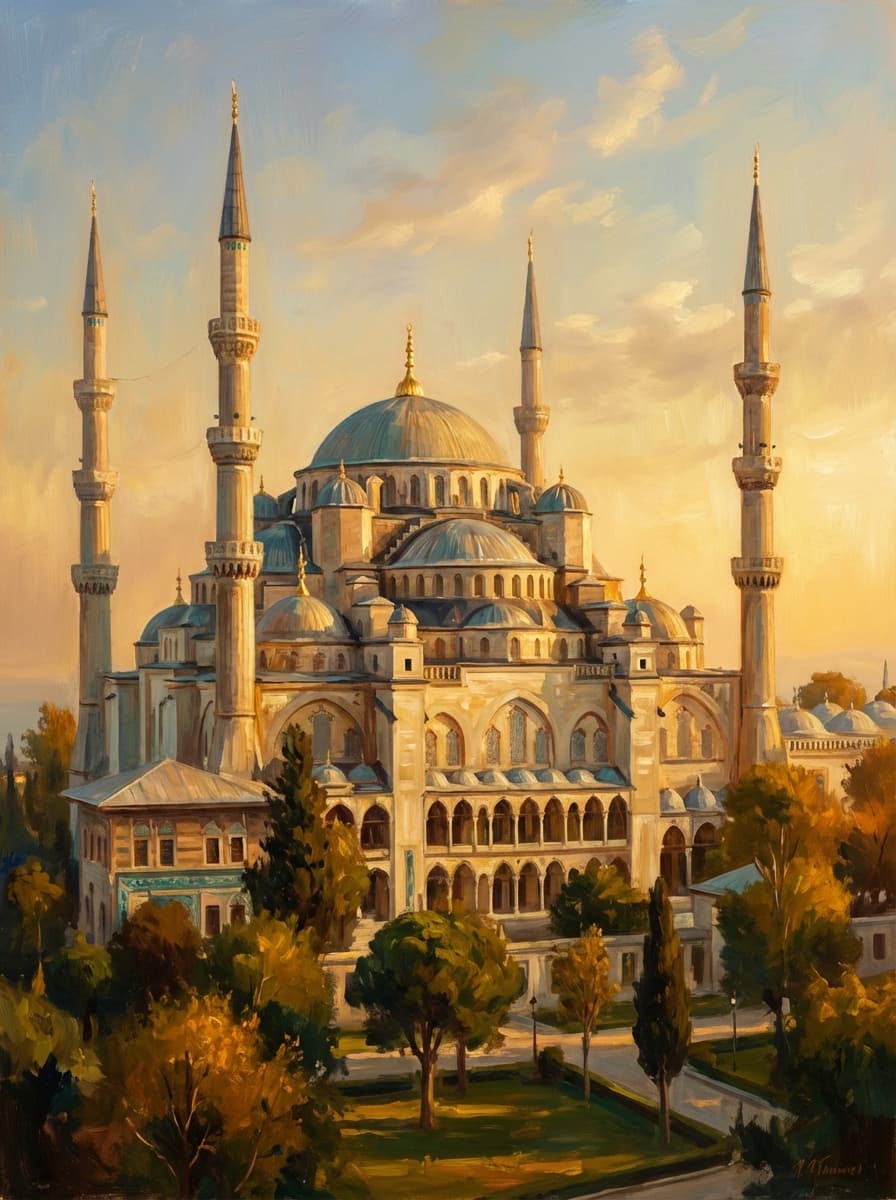
Visiting the Blue Mosque offers a captivating experience, immersing you in the grandeur of Ottoman architecture and Islamic artistry. As an active mosque, it exudes a serene and spiritual atmosphere, inviting visitors to appreciate its historical and religious significance. Be prepared to remove your shoes and dress modestly, embracing the cultural norms of this sacred space.
Highlights
- Marvel at the intricate blue Iznik tiles that adorn the interior walls.
- Admire the cascading domes and six minarets that define the mosque's skyline.
- Experience the spiritual ambiance of the prayer hall, illuminated by natural light.
Things to Know
- Dress modestly, covering shoulders and knees, and women must wear a headscarf.
- Be mindful of prayer times, as the mosque is closed to visitors during these periods.
- Remove shoes before entering and maintain silence inside the prayer hall.
Location
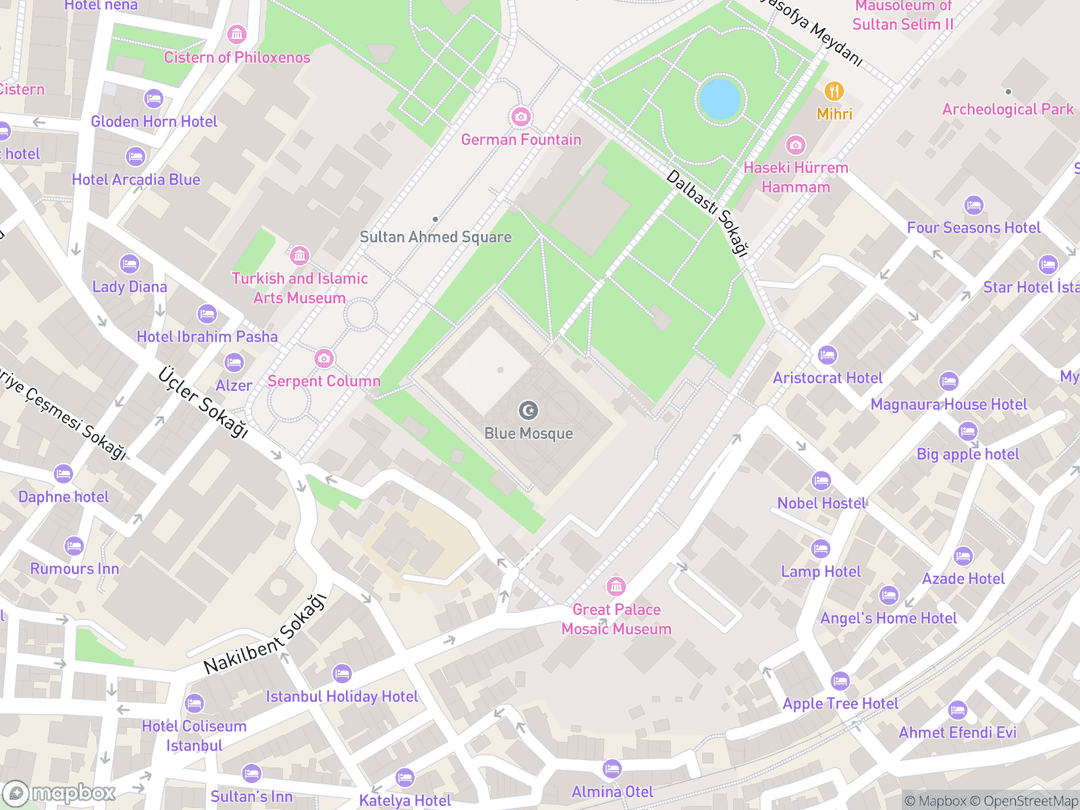
Sultan Ahmet, Atmeydanı Cd. No:7, 34122 Fatih/İstanbul, Turkey
Hours: Open daily, except during prayer times. Summer (April 1 – September 30): 8:30 AM to 7:00 PM. Winter (October 1 – March 31): 8:30 AM to 5:00 PM. Closed on Friday mornings until 2:30 PM for Jumu'ah prayer.
Getting There: Located in the Sultanahmet district, easily accessible by tram (T1 line to Sultanahmet Station) or bus (37Y, 77A, BN1). Taxis are also available.
Get DirectionsTips for Your Visit
Plan Your Visit
Visit early in the morning or late afternoon to avoid crowds and prayer closures.
Dress Appropriately
Ensure you are dressed modestly, covering shoulders and knees. Women must wear a headscarf, which is available at the entrance.
Respect Prayer Times
Be aware of prayer times and avoid visiting during these periods to respect worshippers.
About
According to bluemosqueistanbul.com, the Blue Mosque, officially known as the Sultan Ahmed Mosque, is a historical and active mosque in Istanbul, Turkey, that was commissioned by Sultan Ahmed I and constructed between 1609 and 1616 by architect Sedefkar Mehmed Agha. Designed to rival the Hagia Sophia, it incorporates both Islamic and Byzantine architectural elements and continues to attract a large number of tourists today.
The mosque's name comes from the over 21,000 blue Iznik ceramic tiles that adorn its interior walls. These tiles feature traditional floral and geometric patterns, creating a serene and visually stunning atmosphere. The interior is further illuminated by 260 windows, allowing natural light to enhance the beauty of the tilework. The mosque's design also includes a large central dome, surrounded by cascading semi-domes, and six minarets, a feature that was controversial at the time of its construction.
Throughout its history, the Blue Mosque has undergone several restorations, including significant efforts in the 18th and 19th centuries, as well as a comprehensive restoration between 2015 and 2023. Today, it stands as a symbol of Istanbul and a testament to the rich cultural and religious heritage of the Ottoman Empire. Visitors are welcome to experience the mosque's beauty and spiritual atmosphere, while adhering to the dress code and etiquette guidelines.
Gallery
Symbolic Elements
The temple's exterior features intricate carvings, each rich with spiritual meaning:

Minarets
The Blue Mosque features six minarets, which act as beacons of faith, with the 'adhan' (call to prayer) emanating from them, calling the faithful to unite in worship. Their form represents an aspiration towards the heavens, linking earth and the divine.

Dome
The dome symbolizes the vault of heaven. Quranic verses are inscribed in a circular arrangement to complement the dome’s geometry, symbolizing the unity of God. The central dome is 23.5 meters in diameter and 43 meters high, surrounded by four semi-domes.

Mihrab
The 'mihrab' is a niche in the wall that indicates the direction of Mecca, towards which Muslims pray. It is a focal point of the mosque, guiding worshippers in their devotion and connection to the Kaaba.

Minbar
The 'minbar' is a pulpit where the Imam delivers sermons. Its staircase symbolizes the ascent to receive and deliver divine guidance. The carved marble minbar is positioned so that the imam can be heard from anywhere in the mosque.

Iznik Tiles
The blue Iznik tiles transform the walls into a representation of the gardens of Paradise (Jannah) promised to the faithful in the Quran. Blue represents the sky and heaven, creating a serene atmosphere and enhancing the mosque's spiritual ambiance.

Calligraphy
Quranic verses are inscribed on the walls, arches, and domes, serving as a constant reminder of the divine teachings and principles of Islam. The calligraphy adds to the mosque's aesthetic beauty and spiritual significance.

Courtyard
The large courtyard provides a serene space for reflection and contemplation before entering the prayer hall. It is a place for worshippers to prepare themselves spiritually and connect with the divine.

Windows
The 260 windows allow natural light to illuminate the interior, enhancing the beauty of the tilework and creating a peaceful atmosphere. The light symbolizes divine guidance and enlightenment.
Interesting Facts
The Blue Mosque was built between 1609 and 1616 by the architect Mehmet Ağa, under the instruction of Sultan Ahmed I.
It was constructed on the site of the former Byzantine Hippodrome.
The mosque contains some 260 windows.
Over 21,000 handmade ceramic Iznik tiles decorate the interior.
The design incorporates elements of Byzantine architecture from the neighboring Hagia Sophia.
The Blue Mosque is one of the few mosques in the world that was originally constructed with six minarets.
Legend says the six minarets were due to a misunderstanding: the Sultan asked for 'altın minare' (gold minarets), but the architect heard 'altı minare' (six minarets).
The mosque is supported by four 'elephant foot' pillars.
Sultan Ahmed I, who died young in 1617, is buried within the mosque's courtyard.
The mosque's külliye (religious complex) included Ahmed's tomb, a madrasa, and other buildings.
Common Questions
What is the Blue Mosque known for?
The Blue Mosque is renowned for its stunning blue Iznik ceramic tiles that adorn the interior walls, its impressive cascading domes, and its six minarets. It is a significant example of Ottoman architecture and a symbol of Istanbul.
What is the dress code for visiting the Blue Mosque?
Modest dress is required. Both men and women must cover their shoulders and knees. Women must also wear a headscarf, which is available at the entrance.
When is the Blue Mosque open to visitors?
The Blue Mosque is open daily, except during prayer times. The hours vary depending on the season, with longer hours in the summer and shorter hours in the winter. It is also closed on Friday mornings until 2:30 PM for Jumu'ah prayer.
Is there an entrance fee to visit the Blue Mosque?
No, there is no entrance fee to visit the Blue Mosque. However, donations are welcome.
How can I get to the Blue Mosque?
The Blue Mosque is located in the Sultanahmet district and is easily accessible by tram (T1 line to Sultanahmet Station) or bus (37Y, 77A, BN1). Taxis are also available.
Why is it called the Blue Mosque?
The mosque is called the Blue Mosque because of the over 21,000 blue Iznik ceramic tiles that decorate its interior walls. These tiles create a serene and visually stunning atmosphere.
Related Stories
Explore the rich history, traditions, and people connected to this sacred site.
Featured Stories
The Vision of Sultan Ahmed I
Early 17th Century
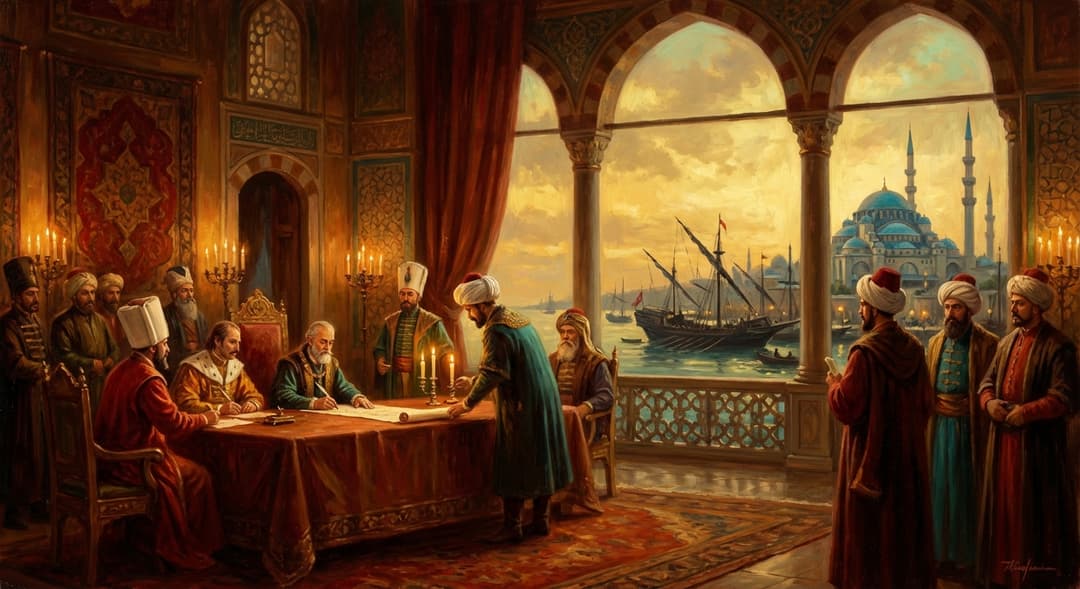
Sultan Ahmed I, a young and ambitious ruler, envisioned a grand mosque that would not only serve as a place of worship but also rival the splendor of the Hagia Sophia. His desire was to create a lasting legacy that would reflect the glory of the Ottoman Empire and his devotion to Islam. Despite facing challenges and criticisms, he remained steadfast in his commitment to this ambitious project.
The Sultan personally oversaw the construction, ensuring that the mosque was built with the finest materials and craftsmanship. He entrusted the design to Sedefkar Mehmed Agha, a talented architect who skillfully blended Islamic and Byzantine elements. The result was a masterpiece that embodied the Sultan's vision and became a symbol of Istanbul.
The completion of the Blue Mosque marked a significant achievement for Sultan Ahmed I, solidifying his place in history as a patron of the arts and a devout Muslim. The mosque stood as a testament to his vision, ambition, and unwavering faith, inspiring generations to come.
Source: Historical accounts of Sultan Ahmed I's reign
The Controversy of Six Minarets
1616
The construction of six minarets for the Blue Mosque sparked controversy, as only the Grand Mosque in Mecca had that many at the time. This decision was seen as a challenge to the sanctity of the holiest site in Islam, causing concern among religious leaders and the wider Muslim community. Sultan Ahmed I sought to address this issue diplomatically.
To resolve the controversy, Sultan Ahmed I ordered the construction of a seventh minaret at the Grand Mosque in Mecca, ensuring its continued primacy. This act demonstrated his respect for the holy site and his commitment to maintaining religious harmony. The addition of the seventh minaret quelled the criticism and allowed the Blue Mosque to stand as a unique and revered place of worship.
The incident highlighted the delicate balance between artistic expression and religious sensitivity, showcasing the challenges faced by rulers in navigating cultural and spiritual norms. Sultan Ahmed I's response demonstrated his wisdom and leadership, preserving the integrity of both the Blue Mosque and the Grand Mosque in Mecca.
Source: Ottoman historical records and religious commentaries
Restoration and Renewal
2015–2023
Over the centuries, the Blue Mosque has faced numerous challenges, including fires, earthquakes, and the wear and tear of time. Recognizing the need to preserve this historical treasure, a comprehensive restoration project was undertaken between 2015 and 2023. Skilled artisans and engineers worked diligently to repair and restore the mosque's architectural and artistic features.
The restoration involved meticulous cleaning and repair of the Iznik tiles, structural reinforcement of the domes and minarets, and modernization of the mosque's infrastructure. The project aimed to preserve the mosque's original character while ensuring its safety and accessibility for future generations. The restoration efforts were a testament to the enduring value of the Blue Mosque and its significance to the world.
The reopening of the Blue Mosque in 2023 marked a moment of celebration and renewal, reaffirming its role as a vibrant center of worship and a symbol of Istanbul's rich cultural heritage. The restored mosque stood as a beacon of hope and resilience, inspiring visitors to appreciate the beauty of the past and embrace the promise of the future.
Source: Reports from the Turkish Ministry of Culture and Tourism and UNESCO
Timeline
Construction Begins
Construction of the Blue Mosque commences under the patronage of Sultan Ahmed I.
MilestoneMosque Completed and Inaugurated
The Blue Mosque is completed and officially inaugurated, becoming a prominent place of worship in Istanbul.
DedicationDeath of Sultan Ahmed I
Sultan Ahmed I, the commissioner of the Blue Mosque, passes away a year after the mosque is completed.
EventFire Damage and Restoration
A fire causes damage to parts of the mosque, leading to restoration efforts by the Ottoman government.
RenovationMultiple Renovations
The Blue Mosque undergoes several renovations under various sultans to maintain its structural integrity and beauty.
RenovationUNESCO World Heritage Site
The Blue Mosque is included in UNESCO's Historic Areas of Istanbul as a World Heritage Site, recognizing its cultural significance.
MilestoneVisit by Pope Benedict XVI
Pope Benedict XVI visits the Blue Mosque, emphasizing interfaith dialogue and promoting religious understanding.
EventComprehensive Restoration
Extensive restoration efforts are undertaken to preserve the mosque's architectural and artistic features.
RenovationReopening After Restoration
The Blue Mosque reopens for worship after the completion of the comprehensive restoration project.
DedicationActive Mosque and Tourist Attraction
The Blue Mosque continues to function as an active mosque, welcoming worshippers and attracting tourists from around the world.
EventUse of Iznik Tiles
Over 21,000 handmade ceramic Iznik tiles are used to decorate the interior, giving the mosque its distinctive blue appearance.
MilestoneArchitectural Design
The mosque's design incorporates elements of Byzantine architecture from the neighboring Hagia Sophia, blending Islamic and Byzantine styles.
MilestoneSix Minarets Controversy
The construction of six minarets sparks controversy, as only the Grand Mosque in Mecca had that many at the time.
EventElephant Foot Pillars
The mosque is supported by four large pillars, often referred to as 'elephant foot' pillars, providing structural stability.
MilestoneKülliye Complex
The mosque's külliye (religious complex) includes Ahmed's tomb, a madrasa, and other buildings, serving various community needs.
MilestoneArchitecture & Facilities
The Blue Mosque represents a harmonious blend of Classical Ottoman and Byzantine architectural styles, reflecting the culmination of over two centuries of Ottoman mosque design evolution. It incorporates elements from the neighboring Hagia Sophia, showcasing a seamless integration of Islamic and Byzantine traditions. The mosque's design emphasizes symmetry, grandeur, and spiritual harmony, creating a visually stunning and spiritually uplifting space.
Building Materials
Iznik Ceramic Tiles
Over 21,000 handmade ceramic Iznik tiles, predominantly in blue hues, adorn the interior walls, creating intricate floral and geometric patterns. These tiles are a hallmark of Ottoman art and craftsmanship, adding to the mosque's aesthetic beauty and spiritual ambiance.
Marble
High-quality marble is used extensively in the mosque's construction, particularly in the courtyard, mihrab, and minbar. The marble adds to the mosque's grandeur and elegance, reflecting the wealth and power of the Ottoman Empire.
Red Granite
Red granite is used in the construction of the mosque's pillars and other structural elements, providing strength and durability. The granite's reddish hue adds warmth and richness to the mosque's overall design.
Pudding Stone
Pudding stone, a type of conglomerate rock, is used in the mosque's construction, adding to its unique texture and visual appeal. The pudding stone's varied colors and patterns create a distinctive and eye-catching effect.
Interior Features
Prayer Hall
The prayer hall is the main space for worship, featuring a large central dome, intricate tilework, and numerous windows that allow natural light to flood the interior. The hall is designed to create a sense of awe and reverence, inspiring worshippers to connect with the divine.
Mihrab
The mihrab, a niche in the wall indicating the direction of Mecca, is a focal point of the prayer hall. It is adorned with intricate carvings and calligraphy, guiding worshippers in their devotion and connection to the Kaaba.
Minbar
The minbar, a pulpit where the Imam delivers sermons, is a prominent feature of the prayer hall. Its staircase symbolizes the ascent to receive and deliver divine guidance, and its design reflects the mosque's overall architectural style.
Courtyard
The large courtyard provides a serene space for reflection and contemplation before entering the prayer hall. It is a place for worshippers to prepare themselves spiritually and connect with the divine.
Temple Grounds
The Blue Mosque is surrounded by a well-maintained landscape, featuring gardens, fountains, and pathways that enhance the mosque's beauty and tranquility. The grounds provide a peaceful oasis in the heart of Istanbul, inviting visitors to relax and reflect.
Additional Facilities
The Blue Mosque complex includes a madrasa (religious school), a hospice, and a fountain, providing various services to the community. These facilities reflect the mosque's role as a center of religious and social life in Istanbul.
Religious Significance
The Blue Mosque holds immense religious significance as a central place of worship for Muslims and a symbol of Islamic faith. Its architecture, design, and decorative elements reflect the core principles and values of Islam, inspiring worshippers to connect with the divine and live according to Islamic teachings.
The primary purpose of the Blue Mosque is to provide a sacred space for Muslims to perform their daily prayers, seek spiritual guidance, and strengthen their connection with Allah. It serves as a center for religious education, community gatherings, and charitable activities, promoting the well-being of the Muslim community.
Sacred Ordinances
Salah (Prayer)
Salah, the daily prayers, is the most important ordinance in Islam. Muslims gather at the Blue Mosque to perform their prayers in congregation, following the Imam's guidance and reciting verses from the Quran. The prayers are a time for reflection, gratitude, and seeking forgiveness from Allah.
Zakat (Charity)
Zakat, the giving of charity, is a fundamental principle of Islam. The Blue Mosque serves as a center for collecting and distributing zakat to those in need, supporting the poor and vulnerable members of the community. Zakat promotes social justice and economic equality.
Sawm (Fasting)
Sawm, fasting during the month of Ramadan, is a time for spiritual reflection and self-discipline. Muslims gather at the Blue Mosque to break their fast together, sharing meals and engaging in religious activities. Fasting promotes empathy and compassion for those less fortunate.
The Importance of Mosques in Islam
Mosques, also known as 'masjids,' are central places of worship for Muslims, serving as community centers, educational institutions, and symbols of Islamic faith. They provide a space for Muslims to connect with Allah, strengthen their faith, and build community bonds. Mosques play a vital role in preserving and promoting Islamic culture and values.
The Significance of the Kaaba
The Kaaba, located in Mecca, is the holiest site in Islam and the direction towards which Muslims pray. The mihrab in the Blue Mosque indicates the direction of the Kaaba, guiding worshippers in their devotion and connection to the sacred site. The Kaaba symbolizes the unity of the Muslim community and their shared faith in Allah.
Sources & Research
Every fact on Temples.org is backed by verified Sources & Research. Each piece of information is rated by source tier and confidence level.
View All Sources (7)
| Field | Source | Tier | Retrieved |
|---|---|---|---|
| Basic Facts | bluemosqueistanbul.com (opens in a new tab) | A | 2024-01-02 |
| Historical Timeline | bluemosque.gen.tr (opens in a new tab) | A | 2024-01-02 |
| Symbolic Elements | bluemosque.tr (opens in a new tab) | A | 2024-01-02 |
| Visitor Information | Istanbul Tours (opens in a new tab) | D | 2024-01-02 |
| Interesting Facts | Study.com (opens in a new tab) | B | 2024-01-02 |
| Historical Context | Advantour (opens in a new tab) | B | 2024-01-02 |
| Architectural Style | Islamic University of Indonesia (opens in a new tab) | B | 2024-01-02 |