Visitor Insights
Visiting BAPS Hindu Mandir Abu Dhabi
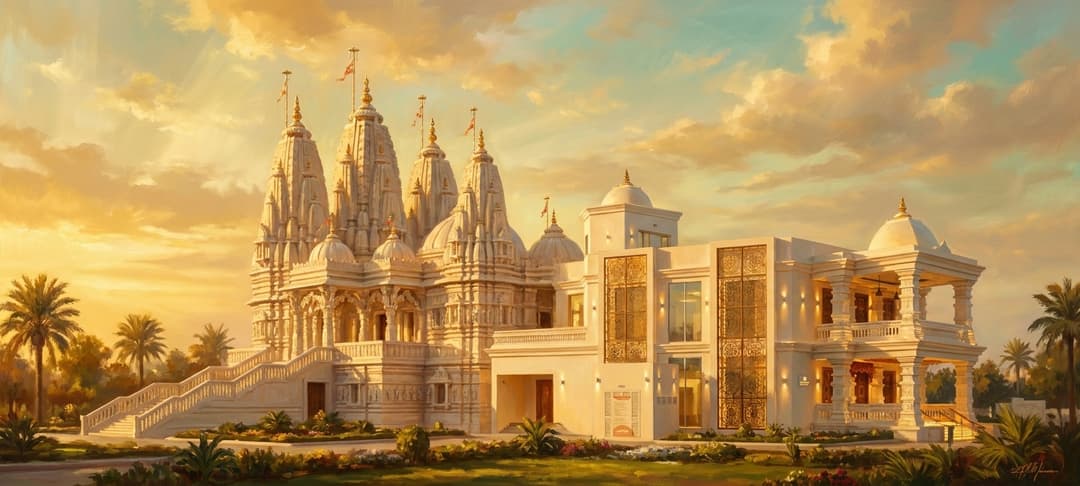
Visiting the BAPS Hindu Mandir in Abu Dhabi offers a serene and culturally enriching experience. The temple welcomes visitors of all faiths to explore its intricate architecture and learn about Hindu traditions. The atmosphere is one of peace and reverence, with detailed carvings and symbolic elements that tell stories of harmony and spirituality.
Highlights
- Marvel at the intricate carvings on the Rajasthani pink sandstone exterior.
- Explore the seven spires, each representing one of the Emirates of the UAE.
- Discover the Dome of Harmony, symbolizing the five natural elements.
Things to Know
- Visitors must adhere to a modest dress code, covering the neck, elbows, and ankles.
- Photography is not permitted inside the Mandir.
- Bags, food, and drinks are not allowed inside the Mandir.
Location
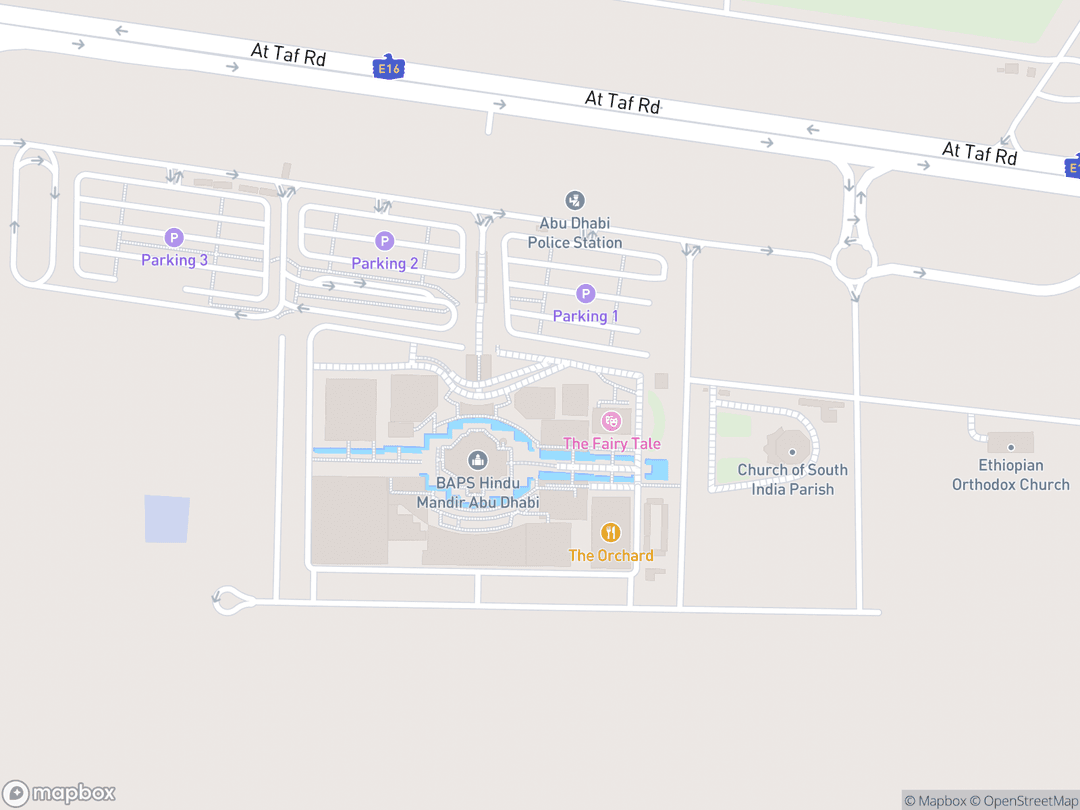
Abu Mureikhah, near Al Rahba off the Dubai-Abu Dhabi Sheikh Zayed Highway, Abu Dhabi, UAE
Hours: Please check the official website for the most up-to-date visiting hours.
Getting There: The temple is located near the Dubai-Abu Dhabi highway. A new bus service facilitates travel to the temple.
Get DirectionsTips for Your Visit
Dress Modestly
Ensure clothing covers the neck, elbows, and ankles out of respect for the sacred space.
Plan Ahead
Check the official website for visiting hours and any pre-registration requirements.
About
The BAPS Hindu Mandir in Abu Dhabi is a traditional Hindu stone temple built by the BAPS Swaminarayan Sanstha. Consecrated on February 14, 2024, by Mahant Swami Maharaj, it stands as the first traditional Hindu temple in Abu Dhabi and the largest in West Asia. This temple is dedicated to fostering interfaith harmony and embodies the principle of 'Vasudhaiva Kutumbakam,' signifying that the world is one family.
Envisioned in 1997 by Pramukh Swami Maharaj, the temple's realization came with the support of Sheikh Mohammed bin Zayed Al Nahyan, who gifted 27 acres of land in August 2015. Indian Prime Minister Narendra Modi also supported this initiative, recognizing it as a symbol of peace and inclusivity. The temple's construction, which began in December 2019, involved over 2,000 artisans and 200 volunteers from around the world.
Built according to the Shilpa Shastras, ancient Hindu treatises on temple construction, the BAPS Hindu Mandir is designed to last over 1,000 years. Its architectural features include seven spires, two domes, and 402 intricately carved pillars. The exterior is made of Rajasthani pink sandstone, while the interior features Italian Carrara marble. The temple integrates over 300 high-tech sensors to monitor temperature, pressure, and seismic activity, ensuring its longevity and safety.
Gallery
Symbolic Elements
The temple's exterior features intricate carvings, each rich with spiritual meaning:

Shikharas
The seven spires (shikhars) represent the seven Emirates of the UAE, symbolizing unity and harmony among the Emirates. Each spire is intricately designed and reflects the unique cultural and architectural elements of the region.
Deities
The temple houses seven shrines dedicated to various deities, including Swaminarayan, Krishna, Rama, Shiva, Venkateshwara, Jagannath, and Ayyappan. These deities represent the diverse traditions within Hinduism and offer devotees a space for worship and reflection.

Dome of Harmony
The Dome of Harmony represents the five natural elements: earth, water, fire, air, and space. This dome symbolizes the interconnectedness of all life and the importance of maintaining balance and harmony with nature.

Rivers Ganga and Yamuna
Water streams symbolize the Rivers Ganga and Yamuna, representing the confluence of potential and spiritual purification. These rivers are revered in Hinduism and symbolize the flow of divine grace and blessings.

Vasudhaiva Kutumbakam Carvings
Carvings depict moral stories from various civilizations, emphasizing the principle that the world is one family (Vasudhaiva Kutumbakam). These stories promote universal values and encourage understanding and compassion among people of all cultures and backgrounds.

Rajasthani Pink Sandstone
The exterior of the temple is made of Rajasthani pink sandstone, known for its durability and aesthetic appeal. This material was chosen to reflect the traditional architectural styles of Hindu temples and to create a visually stunning and enduring structure.

Italian Carrara Marble
The interior of the temple features Italian Carrara marble, prized for its purity and elegance. This marble enhances the beauty of the temple's interior spaces and creates a serene and uplifting atmosphere for worship and meditation.

Intricately Carved Pillars
The temple features 402 intricately carved pillars, each showcasing detailed artwork and symbolic motifs. These pillars represent the rich artistic heritage of Hinduism and add to the temple's grandeur and spiritual significance.
Interesting Facts
The BAPS Hindu Mandir is the first traditional Hindu stone temple in the Middle East.
The land for the temple was gifted by the Crown Prince of Abu Dhabi, showcasing interfaith harmony.
The temple's construction involved over 2,000 artisans and 200 volunteers from around the world.
No metal was used in the temple's construction; fly ash was used in the foundation to reduce the carbon footprint.
The temple features carvings of moral stories from 14 ancient civilizations, emphasizing global harmony.
The design incorporates elements representing the UAE, such as carvings of horses and camels.
The temple has received recognition as the best cultural project in the MENA and UAE for 2024.
The BAPS Hindu Mandir serves as a 'spiritual consulate,' promoting the idea that the 'World is One Family'.
The temple integrates over 300 high-tech sensors to monitor temperature, pressure, and seismic activity.
The BAPS Hindu Mandir hosted an Iftar during Ramadan to promote harmony.
Common Questions
What is the BAPS Hindu Mandir in Abu Dhabi?
The BAPS Hindu Mandir in Abu Dhabi is the first traditional Hindu stone temple in Abu Dhabi and the largest in West Asia. It is built by the BAPS Swaminarayan Sanstha and is dedicated to fostering interfaith harmony and embodying the principle of 'Vasudhaiva Kutumbakam' (the world is one family).
Where is the temple located?
The temple is located in Abu Mureikhah, near Al Rahba off the Dubai-Abu Dhabi Sheikh Zayed Highway, Abu Dhabi, UAE.
When was the temple consecrated?
The temple was consecrated on February 14, 2024, by Mahant Swami Maharaj.
What is the architectural style of the temple?
The temple is built according to the Shilpa Shastras, ancient Hindu treatises on temple construction. It features seven spires, two domes, and 402 intricately carved pillars. The exterior is made of Rajasthani pink sandstone, while the interior features Italian Carrara marble.
What are the visiting guidelines for the temple?
Visitors must wear clothing that covers the neck, elbows, and ankles. Photography is not permitted inside the Mandir, and bags, food, and drinks are not allowed. Pre-registration may be required for entry.
Featured Stories
The Vision of Pramukh Swami Maharaj
1997
In 1997, during a visit to Sharjah, Pramukh Swami Maharaj envisioned a traditional Hindu temple in Abu Dhabi. This vision was rooted in his deep commitment to fostering interfaith harmony and promoting the universal values of Hinduism. He believed that a temple in Abu Dhabi would serve as a beacon of peace and spirituality, welcoming people of all faiths to experience the rich cultural and philosophical traditions of Hinduism.
His dream began to materialize with the support of the UAE government and the dedication of countless volunteers and artisans. The BAPS Hindu Mandir stands as a testament to his visionary leadership and unwavering dedication to serving humanity. It embodies his message of 'Vasudhaiva Kutumbakam,' the world is one family, and serves as a spiritual home for people from all walks of life.
Source: https://mandir.ae
The Gift of Land and Interfaith Harmony
August 2015
A pivotal moment in the temple's journey came in August 2015 when Sheikh Mohammed bin Zayed Al Nahyan, Crown Prince of Abu Dhabi, generously gifted 27 acres of land for the temple's construction. This act of generosity symbolized the UAE's commitment to interfaith harmony and its respect for the diverse religious traditions of its residents. The gift of land was a powerful message of inclusivity and acceptance, paving the way for the realization of Pramukh Swami Maharaj's vision.
The support of the UAE government was instrumental in ensuring the smooth progress of the temple project. The BAPS Hindu Mandir stands as a symbol of the strong relationship between India and the UAE, and their shared commitment to promoting peace and understanding in the world.
Source: https://www.indiatimes.com/news/india/baps-abu-dhabi-mandir-facts-533169.html
Consecration and Inauguration: A Historic Moment
February 14, 2024
The consecration and inauguration of the BAPS Hindu Mandir on February 14, 2024, marked a historic moment for the Hindu community in the UAE and around the world. The ceremony was led by Mahant Swami Maharaj, the spiritual leader of the BAPS Swaminarayan Sanstha, and was attended by dignitaries, community leaders, and devotees from various countries. The event was a celebration of faith, culture, and unity, symbolizing the culmination of years of planning, construction, and dedication.
The presence of Indian Prime Minister Narendra Modi at the inauguration underscored the significance of the temple as a symbol of the strong ties between India and the UAE. The BAPS Hindu Mandir stands as a testament to the power of collaboration and the shared commitment to building a more peaceful and harmonious world.
Source: https://www.asianimage.co.uk/news/national/24114249.abu-dhabi-temple-symbol-harmony-says-pm-modi/
Timeline
Pramukh Swami Maharaj Envisions Temple
Pramukh Swami Maharaj first envisioned a Hindu temple in Abu Dhabi during a visit to Sharjah.
MilestoneLand Gifted by Crown Prince
Sheikh Mohammed bin Zayed Al Nahyan, Crown Prince of Abu Dhabi, gifted 27 acres of land for the temple.
MilestoneMemorandum of Understanding Signed
A memorandum of understanding was signed, marking a significant step towards the temple's construction.
MilestoneFoundation Stone Consecration
The foundation stone consecration took place, setting the stage for the temple's construction.
MilestoneOfficial Foundation-Laying Ceremony
The official foundation-laying ceremony was held, commencing the physical construction of the temple.
MilestoneConstruction Commenced
Construction officially commenced, marking the beginning of the temple's physical realization.
MilestoneTemple Consecrated and Inaugurated
The temple was consecrated and inaugurated by Mahant Swami Maharaj and Narendra Modi, marking its official opening.
DedicationIndian PM Supports Temple Project
Indian Prime Minister Narendra Modi supported the temple as a symbol of peace and inclusivity.
EventOver 2,000 Artisans Involved
The temple's construction involved over 2,000 artisans and 200 volunteers from around the world.
EventTemple Opens to the Public
The BAPS Hindu Mandir officially opened its doors to the public, welcoming visitors of all faiths.
EventTemple Recognized as Best Cultural Project
The temple received recognition as the best cultural project in the MENA and UAE for 2024.
EventTemple Hosts Iftar
The BAPS Hindu Mandir hosted an Iftar during Ramadan to promote harmony and interfaith dialogue.
EventTemple Promotes 'Vasudhaiva Kutumbakam'
The temple serves as a 'spiritual consulate,' promoting the idea that the 'World is One Family'.
EventHigh-Tech Sensors Monitor Temple
The temple integrates over 300 high-tech sensors to monitor temperature, pressure, and seismic activity.
MilestoneMahant Swami Maharaj Consecrates Temple
Mahant Swami Maharaj consecrated the BAPS Hindu Mandir, marking a significant milestone in its spiritual journey.
DedicationHistory by Decade
1990s — Vision and Early Planning
The seeds of the BAPS Hindu Mandir were sown in the late 1990s when Pramukh Swami Maharaj, during a visit to Sharjah, envisioned a traditional Hindu temple in Abu Dhabi. This vision was driven by his desire to create a spiritual haven for the growing Hindu community in the UAE and to promote interfaith harmony. Initial discussions and planning began within the BAPS Swaminarayan Sanstha to explore the feasibility of constructing a temple that would reflect the rich architectural and cultural traditions of Hinduism.
2000s — Conceptualization and Design
The early 2000s saw the conceptualization and design phases of the temple project. Architects and artisans from India and around the world collaborated to create a design that would adhere to the ancient Shilpa Shastras while incorporating modern engineering techniques. The design team studied various temples across India to draw inspiration and ensure that the BAPS Hindu Mandir would be a true representation of Indian art and architecture.
2010s — Land Acquisition and Foundation Laying
A significant milestone was achieved in August 2015 when Sheikh Mohammed bin Zayed Al Nahyan, Crown Prince of Abu Dhabi, gifted 27 acres of land for the temple's construction. This act of generosity paved the way for the project to move forward. In February 2018, the foundation stone consecration took place, followed by the official foundation-laying ceremony in April 2019. These events marked the beginning of the physical construction of the temple.
2020s — Construction and Consecration
The 2020s witnessed the intensive construction phase of the BAPS Hindu Mandir. Over 2,000 artisans and 200 volunteers from around the world worked tirelessly to bring the temple to life. Despite challenges posed by the COVID-19 pandemic, construction progressed steadily, with a focus on quality and attention to detail. The temple was finally consecrated and inaugurated on February 14, 2024, marking a historic moment for the Hindu community in the UAE.
Religious Significance
The BAPS Hindu Mandir in Abu Dhabi holds profound religious significance as a traditional Hindu temple built in accordance with the Shilpa Shastras. It serves as a spiritual center for the Hindu community in the UAE and a symbol of interfaith harmony and cultural exchange.
The core spiritual purpose of the temple is to provide a sacred space for worship, prayer, and reflection, where devotees can connect with the divine and deepen their understanding of Hindu teachings. It also aims to promote the values of peace, compassion, and unity, contributing to the well-being of society.
Sacred Ordinances
Puja
Puja is a central practice in Hinduism, involving the offering of prayers, flowers, and other items to deities. It is a way for devotees to express their devotion and seek blessings.
Darshan
Darshan refers to the act of seeing and being in the presence of a deity or a holy person. It is believed to be a powerful way to receive blessings and spiritual guidance.
Meditation
Meditation is a practice that involves focusing the mind and cultivating inner peace. It is a way for devotees to connect with their inner selves and experience a sense of oneness with the divine.
Theological Context within Dharmic Traditions
The BAPS Hindu Mandir is part of the broader Hindu theological grouping, which encompasses various Dharmic traditions. These traditions share a common emphasis on dharma (righteous conduct), karma (the law of cause and effect), and moksha (liberation). The temple promotes these values and provides a space for devotees to learn and practice them.
Interfaith Harmony and Cultural Exchange
The BAPS Hindu Mandir is dedicated to fostering interfaith harmony and cultural exchange. It welcomes people of all faiths to visit and learn about Hinduism, promoting understanding and respect among different communities. The temple also hosts events and programs that celebrate the diversity of cultures in the UAE.
Sources & Research
Every fact on Temples.org is backed by verified Sources & Research. Each piece of information is rated by source tier and confidence level.
View All Sources (3)
| Field | Source | Tier | Retrieved |
|---|---|---|---|
| About & Historical Background | BAPS Hindu Mandir (opens in a new tab) | A | 2024-05-03 |
| About & Historical Background | BAPS Swaminarayan Sanstha (opens in a new tab) | A | 2024-05-03 |
| Dedication Ceremony | Asian Image (opens in a new tab) | C | 2024-05-03 |