Visitor Insights
Visiting Sheikh Zayed Grand Mosque
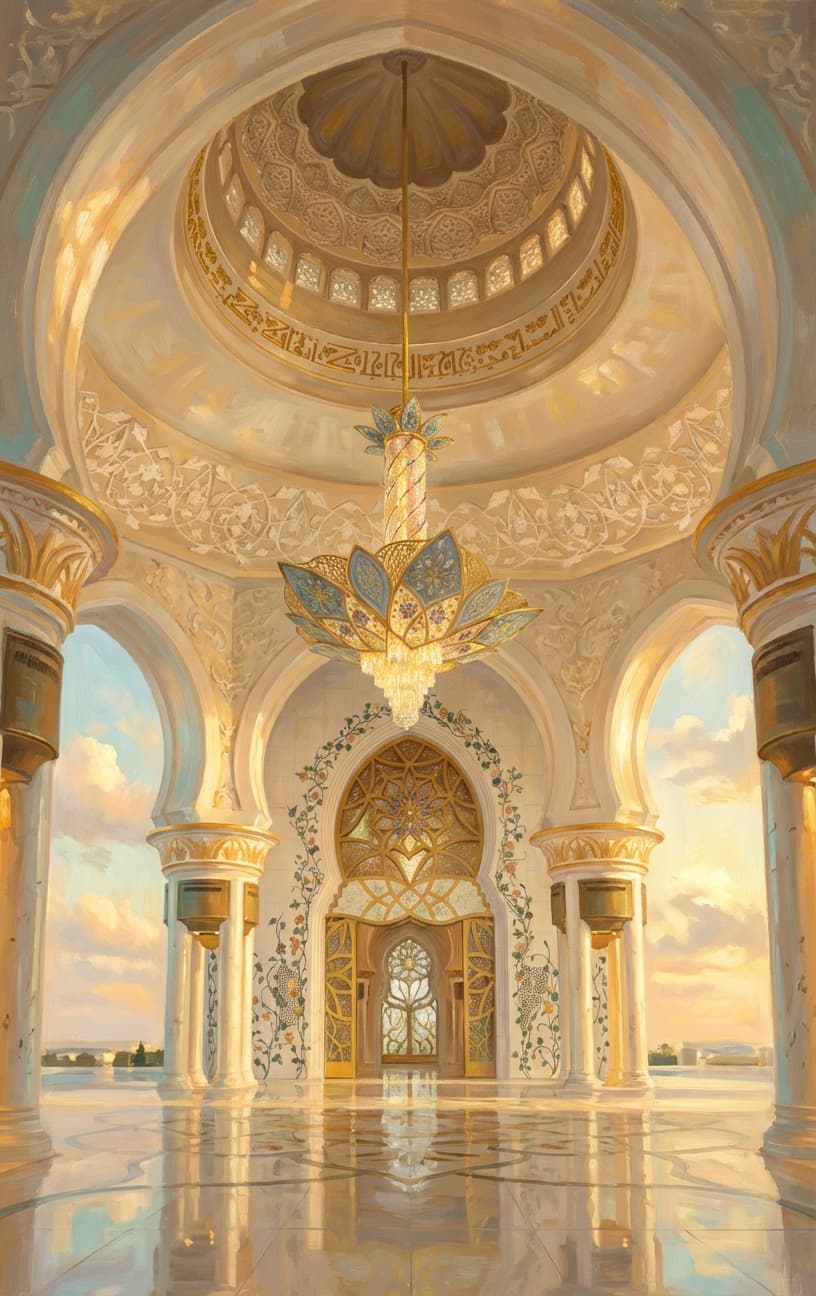
Visiting the Sheikh Zayed Grand Mosque is an awe-inspiring experience, offering a glimpse into Islamic art and architecture. The mosque's serene atmosphere and stunning design create a sense of reverence and wonder. Visitors should be prepared to adhere to a strict dress code, ensuring modest clothing that covers the head, arms, and legs for women, and shoulders and knees for men. Free guided tours are available in both Arabic and English, providing valuable insights into the mosque's history, design, and religious significance.
Highlights
- Marvel at the intricate marble work and stunning floral designs in the courtyard.
- Witness the grandeur of the main prayer hall, home to one of the world's largest hand-knotted carpets.
- Admire the seven imported chandeliers adorned with millions of Swarovski crystals.
Things to Know
- Adhere to the strict dress code to ensure entry.
- Pre-book an entry pass online through the official website to avoid potential delays.
- Be mindful of prayer times and maintain a respectful demeanor throughout the visit.
Location
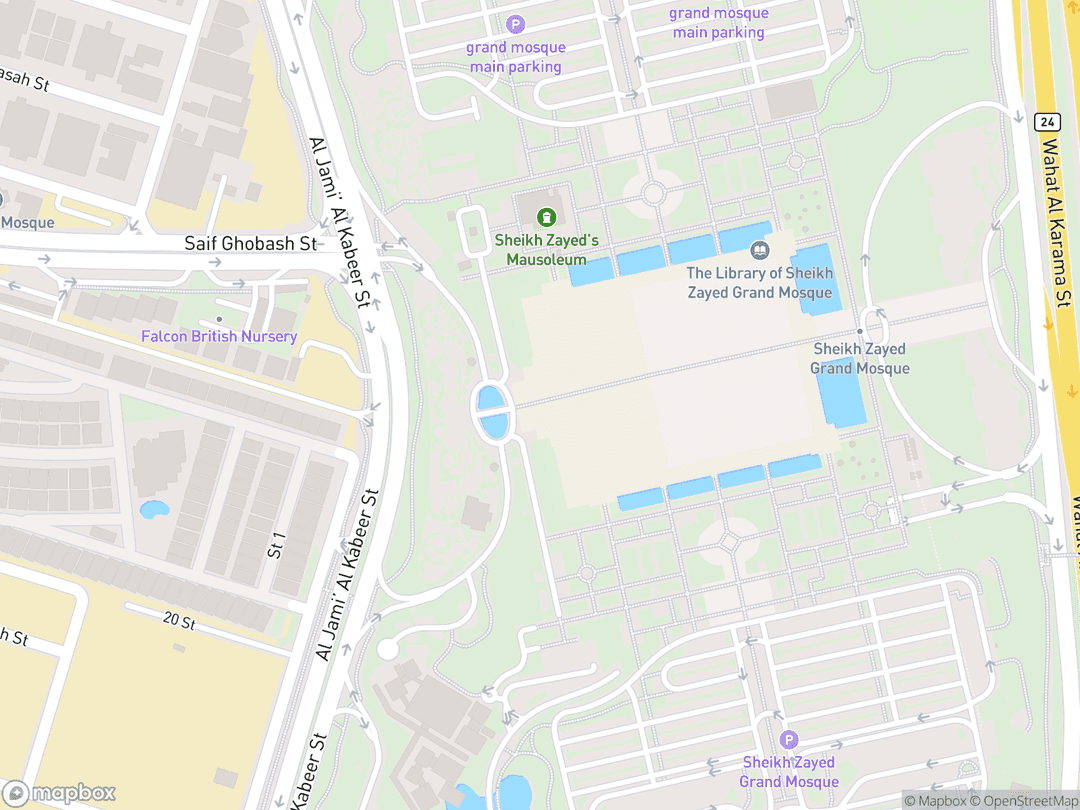
Sheikh Rashid Bin Saeed Street, 5th Street, Abu Dhabi, United Arab Emirates
Hours: Saturday to Thursday: 9:00 AM to 10:00 PM; Friday: 9:00 AM to 12:00 PM and 3:00 PM to 10:00 PM. Hours may vary during Ramadan.
Getting There: The mosque is visible from the three main bridges connecting Abu Dhabi to the mainland: Maqta, Mussafah, and Sheikh Zayed Bridge. Taxis and public transportation are readily available.
Get DirectionsAbout
According to the Sheikh Zayed Grand Mosque Centre, the Sheikh Zayed Grand Mosque is a monumental Islamic place of worship located in Abu Dhabi, United Arab Emirates, that was constructed between 1996 and 2007 to accommodate over 40,100 worshippers. Designed by architect Yusef Abdelki, it stands as a testament to Islamic art, architecture, and the vision of the late Sheikh Zayed bin Sultan Al Nahyan, the founder and first president of the UAE. The mosque's design reflects a harmonious blend of Mughal, Moorish, and Ottoman architectural styles, aiming to unite the cultural diversity of the Islamic world with modern values.
Covering an area of over 12 hectares, the mosque complex is a marvel of engineering and artistry. It features 82 domes of varying sizes, with the largest dome located in the center of the main prayer hall. Four minarets, each approximately 107 meters high, stand at the corners of the courtyard, showcasing diverse Islamic architectural styles. The courtyard itself is one of the largest marble mosaic examples in the world, adorned with intricate floral designs.
The mosque is renowned for its opulent materials and craftsmanship. Natural materials such as marble stone, gold, semi-precious stones, crystals, and ceramics were chosen for their long-lasting qualities. The main prayer hall houses one of the world's largest hand-knotted carpets, created by Iranian artisans. Seven imported chandeliers from Germany, incorporating millions of Swarovski crystals, illuminate the mosque's interior. The Sheikh Zayed Grand Mosque serves not only as a place of worship but also as a center for Islamic sciences and a symbol of tolerance and diversity.
Gallery
Symbolic Elements
The temple's exterior features intricate carvings, each rich with spiritual meaning:

White Marble Cladding
The mosque is clad in pristine white marble, symbolizing purity, peace, and reverence. The marble was sourced from various locations, including North Macedonia and Italy, chosen for its quality and aesthetic appeal. The white marble reflects the sunlight, creating a radiant and serene atmosphere.
Floral Designs
The courtyard and interior spaces are adorned with intricate floral designs, representing paradise and the beauty of nature. These designs were created by British artist Kevin Dean and reflect a blend of Islamic and contemporary artistic styles. The floral motifs symbolize growth, renewal, and the interconnectedness of all living things.

Minarets
The four minarets, each approximately 107 meters high, stand at the corners of the courtyard, symbolizing the call to prayer and the connection between earth and heaven. Their design reflects diverse Islamic architectural styles from different eras, incorporating square, octagonal, and circular layers. The minarets serve as a visual reminder of the mosque's spiritual significance.
Domes
The mosque features 82 domes of varying sizes, with the largest dome located in the center of the main prayer hall. The domes symbolize the heavens and the vastness of God's creation. The interiors of the domes are adorned with intricate Moroccan art, adding to their beauty and spiritual significance.

Swarovski Crystal Chandeliers
The seven imported chandeliers, incorporating millions of Swarovski crystals, illuminate the mosque's interior with their dazzling brilliance. These chandeliers symbolize light, knowledge, and the divine presence. The largest chandelier is one of the largest in the world, with a 10-meter diameter and a 15-meter height.
Hand-Knotted Carpet
The main prayer hall contains one of the world's largest hand-knotted carpets, made by Iran's Carpet Company and designed by Iranian artist Ali Khaliqi. The carpet symbolizes unity, craftsmanship, and the dedication of the artisans who created it. It measures 5,627 square meters and was made by around 1,200-1,300 carpet knotters.
Qibla Wall
The Qibla wall features the 99 names (qualities or attributes) of God (Allah) in traditional Kufic calligraphy, designed by Mohammed Mandi Al Tamimi. The Qibla wall indicates the direction of the Kaaba in Mecca, Saudi Arabia, the holiest site in Islam. Muslims face this direction during prayer, symbolizing their devotion and connection to God.

Columns
The mosque has more than 1,000 columns, clad with marble and inlaid with mother of pearl and semi-precious stones. The columns symbolize strength, support, and the enduring nature of faith. The intricate designs and materials used in the columns reflect the opulence and artistry of Islamic architecture.
Interesting Facts
The mosque is named after Sheikh Zayed bin Sultan Al Nahyan, the founder and first president of the United Arab Emirates, who is buried on the grounds.
The mosque was built to unite the cultural diversity of the Islamic world with the historical and modern values of architecture and art.
The Qibla wall features the 99 names (qualities or attributes) of God (Allah) in traditional Kufic calligraphy, designed by Mohammed Mandi Al Tamimi.
The lighting system was designed by Speirs and Major Associates to reflect the phases of the moon.
The main prayer hall's carpet is considered the world's largest hand-knotted carpet.
The mosque can accommodate over 40,000 worshippers.
The design incorporates Mughal, Moorish, and Ottoman architectural styles.
The building complex measures approximately 290 by 420 meters, covering an area of more than 12 hectares.
The Sheikh Zayed Grand Mosque Center (SZGMC) manages the day-to-day operations and serves as a center of learning and discovery through its educational cultural activities and visitor programs.
The mosque is built 11 meters above sea level and 9.5 meters above street level to be clearly visible from all directions.
Common Questions
What is the Sheikh Zayed Grand Mosque?
The Sheikh Zayed Grand Mosque is a majestic mosque located in Abu Dhabi, United Arab Emirates. It is a key place of worship and a prominent cultural landmark, known for its stunning Islamic art, architecture, and the vision of Sheikh Zayed bin Sultan Al Nahyan.
When was the mosque built?
Construction of the mosque began in 1996 and was completed in 2007. The inner prayer halls were initially opened for worship of Eid Al Adha in 2007.
What architectural styles are reflected in the mosque's design?
The mosque's design reflects a harmonious blend of Mughal, Moorish, and Ottoman architectural styles, aiming to unite the cultural diversity of the Islamic world with modern values.
What are the visiting hours for the mosque?
The visiting hours are Saturday to Thursday: 9:00 AM to 10:00 PM; Friday: 9:00 AM to 12:00 PM and 3:00 PM to 10:00 PM. Hours may vary during Ramadan.
Is there an entry fee to visit the mosque?
No, entry to the Sheikh Zayed Grand Mosque is free for all visitors.
What is the dress code for visiting the mosque?
Modest clothing is required. Women must cover their head, arms, and legs. Men must cover their shoulders and knees. Appropriate attire can also be provided at the entrance.
Related Stories
Explore the rich history, traditions, and people connected to this sacred site.
Featured Stories
The Vision of Sheikh Zayed
Late 1980s
The Sheikh Zayed Grand Mosque stands as a testament to the vision of Sheikh Zayed bin Sultan Al Nahyan, the founder and first president of the United Arab Emirates. He envisioned a grand mosque that would not only serve as a place of worship but also as a symbol of unity, tolerance, and cultural diversity. Sheikh Zayed's dream was to create a mosque that would showcase the best of Islamic art and architecture, uniting the cultural diversity of the Islamic world with modern values.
His dedication to this project was unwavering, and he personally oversaw many aspects of its design and construction. Even after his passing in 2004, his vision continued to guide the completion of the mosque, ensuring that it would become a lasting legacy of his commitment to Islam and the people of the UAE. The mosque is a reflection of his values and his desire to promote understanding and harmony among different cultures and religions.
Source: Sheikh Zayed Grand Mosque Centre
Crafting the World's Largest Carpet
2006–2007
The creation of the main prayer hall's carpet was a monumental undertaking, involving the skills and dedication of over 1,200 carpet knotters from Iran. Designed by Iranian artist Ali Khaliqi, the carpet measures 5,627 square meters and is considered the world's largest hand-knotted carpet. The process of weaving the carpet took nearly a year, with artisans working tirelessly to bring the intricate design to life.
The carpet was transported to Abu Dhabi in multiple pieces and then carefully assembled within the prayer hall. The sheer scale and complexity of the project required meticulous planning and coordination, showcasing the exceptional craftsmanship and artistry of the Iranian carpet makers. The carpet is not only a functional element of the mosque but also a stunning work of art that reflects the rich cultural heritage of Iran.
Source: Daily Art Magazine
Illuminating the Mosque with Swarovski Crystals
2007
The seven imported chandeliers that adorn the Sheikh Zayed Grand Mosque are a testament to the opulence and grandeur of the mosque's design. These chandeliers, crafted by Faustig in Munich, Germany, incorporate millions of Swarovski crystals, creating a dazzling display of light and brilliance. The largest chandelier is one of the largest in the world, with a 10-meter diameter and a 15-meter height.
The installation of the chandeliers required specialized expertise and meticulous attention to detail. Each crystal was carefully placed to maximize the reflection and refraction of light, creating a captivating ambiance within the mosque. The chandeliers symbolize light, knowledge, and the divine presence, adding to the spiritual significance of the space. They are a testament to the collaboration between international artisans and the vision of Sheikh Zayed.
Source: Sheikh Zayed Grand Mosque Centre
Timeline
Initial Considerations
Initial considerations for building the mosque began, driven by Sheikh Zayed's vision to create a grand mosque that would showcase Islamic art and architecture.
MilestoneConstruction Commences
Construction officially commenced on the Sheikh Zayed Grand Mosque, marking the beginning of a monumental project that would take over a decade to complete.
MilestonePassing of Sheikh Zayed
Sheikh Zayed bin Sultan Al Nahyan, the mosque's founder, passed away and was buried in the courtyard, a testament to his vision and dedication to the project.
EventOfficial Inauguration
The mosque was officially inaugurated and opened to the public, becoming a key place of worship and a prominent cultural landmark in Abu Dhabi.
DedicationInner Prayer Halls Open
The inner prayer halls were initially opened for worship of Eid Al Adha, marking a significant milestone in the mosque's completion and accessibility to worshippers.
DedicationDaily Islamic Prayers
The Sheikh Zayed Grand Mosque serves as a key place of worship for daily Islamic prayers, welcoming thousands of worshippers and visitors from around the world.
EventCultural and Educational Activities
The Sheikh Zayed Grand Mosque Centre (SZGMC) manages the day-to-day operations and serves as a center of learning and discovery through its educational cultural activities and visitor programs.
EventPhases of the Moon Lighting System
The lighting system, designed by Speirs and Major Associates, reflects the phases of the moon, creating a unique and captivating ambiance at night.
EventFloral Designs in the Courtyard
The floral designs in the courtyard, created by British artist Kevin Dean, continue to captivate visitors with their intricate beauty and artistry.
EventWorld's Largest Hand-Knotted Carpet
The main prayer hall's carpet, considered the world's largest hand-knotted carpet, remains a testament to Iranian artistry and craftsmanship.
MilestoneSwarovski Crystal Chandeliers
The seven imported chandeliers, incorporating millions of Swarovski crystals, continue to illuminate the mosque's interior with their dazzling brilliance.
MilestoneArchitectural Blend of Styles
The design incorporates Mughal, Moorish, and Ottoman architectural styles, creating a harmonious blend of Islamic cultures and traditions.
MilestoneCenter for Islamic Sciences
The mosque acts as a center for Islamic sciences, promoting learning, understanding, and dialogue among different cultures and religions.
EventSymbol of Tolerance and Diversity
The mosque embodies the core values of Islam, including unity, peace, and compassion, and stands as a symbol of tolerance and diversity.
MilestoneVisible from Main Bridges
The mosque is built 11 meters above sea level and 9.5 meters above street level to be clearly visible from all directions, especially from the three main bridges connecting Abu Dhabi to the mainland.
MilestoneReligious Significance
The Sheikh Zayed Grand Mosque serves as a key place of worship for Muslims, embodying the core values of Islam, including unity, peace, and compassion. It stands as a symbol of tolerance and diversity, welcoming visitors from all faiths and backgrounds.
The core spiritual purpose of the mosque is to provide a space for Muslims to connect with God through prayer, reflection, and community worship. It also serves as a center for Islamic sciences, promoting learning, understanding, and dialogue among different cultures and religions.
Sacred Ordinances
Salah (Prayer)
Salah is the daily ritual prayer in Islam, performed five times a day facing the Kaaba in Mecca. It is a fundamental act of worship and a means of connecting with God.
Zakat (Charity)
Zakat is the practice of giving a portion of one's wealth to the poor and needy. It is a pillar of Islam and a means of promoting social justice and economic equality.
Sawm (Fasting)
Sawm is the practice of fasting during the month of Ramadan. It is a time of spiritual reflection, self-discipline, and increased devotion to God.
Theological Context
Islam is a monotheistic religion, and Muslims believe in one God, Allah, and follow the teachings of the Quran, which they believe to be the word of God. The mosque is oriented towards the Kaaba in Mecca, Saudi Arabia, the holiest site in Islam, and Muslims face this direction during prayer.
Symbolism and Values
The mosque embodies the core values of Islam, including unity, peace, and compassion. It stands as a symbol of tolerance and diversity, welcoming visitors from all faiths and backgrounds. The mosque also acts as a center for Islamic sciences, promoting learning, understanding, and dialogue among different cultures and religions.
Sources & Research
Every fact on Temples.org is backed by verified Sources & Research. Each piece of information is rated by source tier and confidence level.
View All Sources (9)
| Field | Source | Tier | Retrieved |
|---|---|---|---|
| Basic Facts & Historical Timeline | Sheikh Zayed Grand Mosque Centre (opens in a new tab) | A | 2024-01-02 |
| Visitor Information & Dress Code | Visit Abu Dhabi (opens in a new tab) | A | 2024-01-02 |
| Historical Context & Construction | Re-thinking The Future (opens in a new tab) | B | 2024-01-02 |
| Architectural Styles & Design | WikiArquitectura (opens in a new tab) | B | 2024-01-02 |
| Carpet Details & Artistry | Daily Art Magazine (opens in a new tab) | B | 2024-01-02 |
| Construction Timeline & Inauguration | Bayut (opens in a new tab) | C | 2024-01-02 |
| Interesting Facts & Capacity | Islamic Landmarks (opens in a new tab) | C | 2024-01-02 |
| Visiting Hours & Entry Fee | Gentoo Tickets (opens in a new tab) | D | 2024-01-02 |
| Transportation & Visibility | City Tour in Dubai (opens in a new tab) | D | 2024-01-02 |