Visitor Insights
Visiting Durham Cathedral
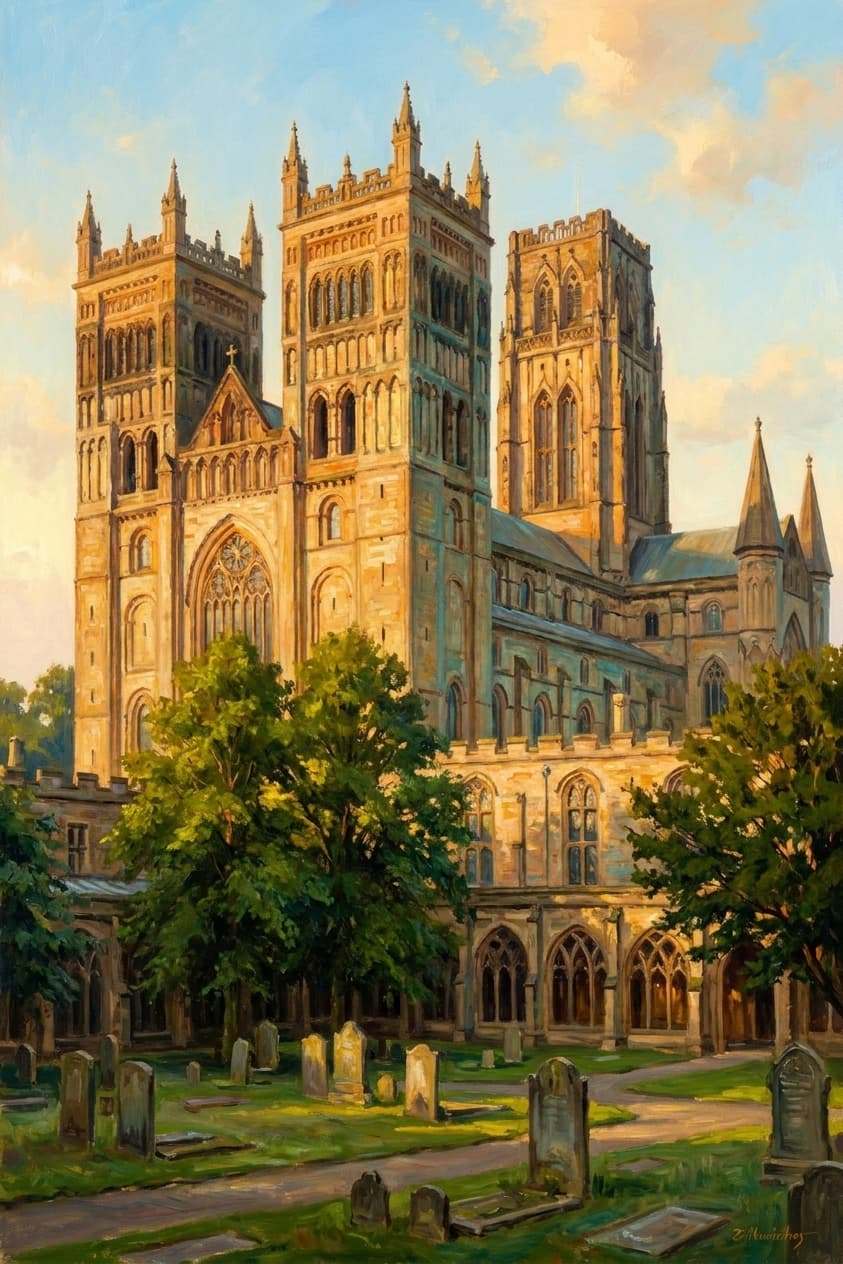
Durham Cathedral offers an inspiring journey through nine centuries of Christian worship, architectural innovation, and monastic history. Visitors encounter soaring Norman stone vaults, sacred saintly shrines, and the UK's most complete intact monastic complex.
Highlights
- The solemn shrine of Saint Cuthbert situated in the elevated eastern feretory
- The Western Galilee Chapel housing the simple marble tomb of the Venerable Bede
- The 12th-century bronze Sanctuary Knocker affixed to the north portal
- Panoramic vistas across the Wear Gorge from the 325-step central tower climb
Things to Know
- The cathedral remains a functioning house of prayer with services held multiple times daily
- Modest attire is requested, and photography may be restricted during active services
- Comfortable footwear is recommended for navigating historic flagstones and steep peninsula hills
- Access to the tower and cathedral museum exhibitions requires separate ticketing
Location
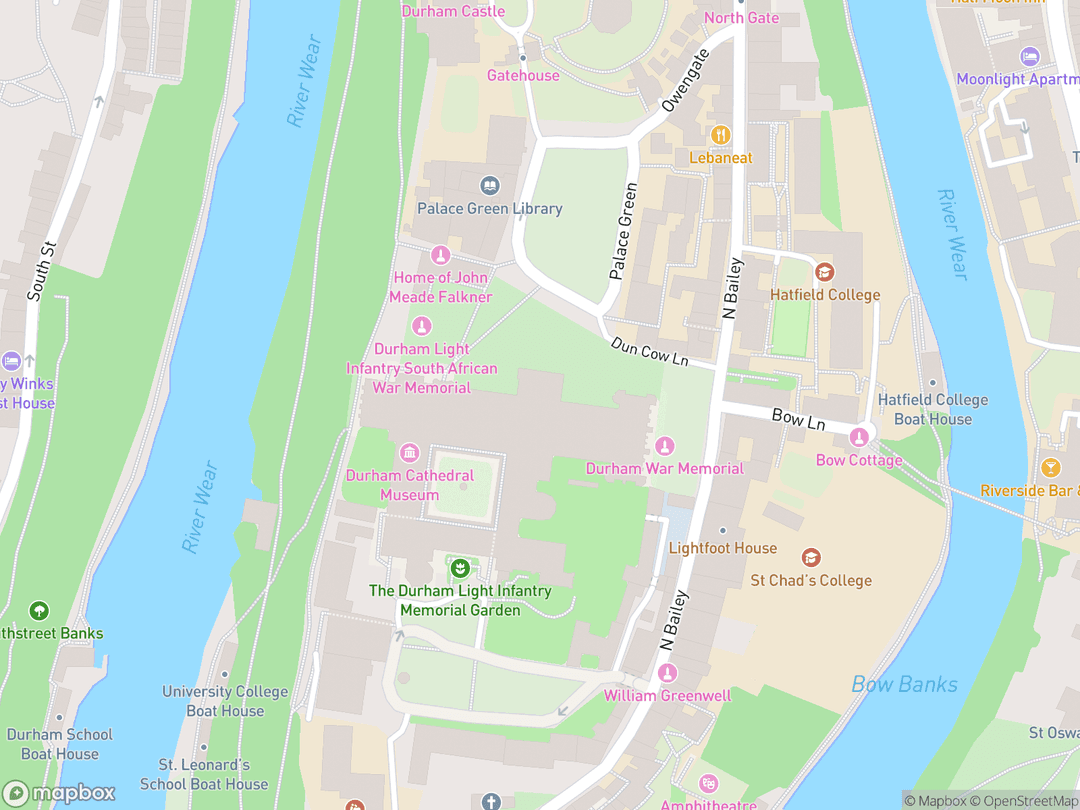
The College, Durham, DH1 3EH, County Durham, England, United Kingdom
Hours: Monday to Saturday 10:00 AM – 4:00 PM, Sunday 12:00 PM – 4:00 PM
Getting There: Located a 15-minute uphill walk from Durham Railway Station, with regular Cathedral Bus links from the marketplace.
Get DirectionsTips for Your Visit
Attend Choral Evensong
Experience the cathedral choir singing beneath 900-year-old stone vaulting for unparalleled spiritual acoustics.
Observe Norman Pillar Carvings
Look closely at the rhythmic chevron, fluting, and lozenge patterns carved directly into the nave drums.
Discover the Monastic Cloister
Stroll the quiet cloister walkways recognizable from early cinematic adaptations of the Harry Potter series.
About
Durham Cathedral stands as one of the preeminent achievements of European sacred architecture, embodying the Christian sanctuary tradition rooted in the Abrahamic archetype of divine dwelling and refuge. Founded in 1093 to house the revered relics of Saint Cuthbert and the Venerable Bede, the cathedral served as both a contemplative Benedictine priory and the ecclesiastical citadel of the Prince-Bishops of Durham.
Architecturally, the cathedral pioneered the revolutionary stone pointed transverse arch and ribbed vaulting system, providing the engineering foundation for the European Gothic style. Its massive incised columns and elevated crossing tower project both physical fortification and spiritual majesty over the wooded peninsula of the River Wear.
Following the sixteenth-century Dissolution, the cathedral seamlessly transitioned from Roman Catholic monasticism to the reformed liturgical life of the Church of England. Today, it remains an active seat of the Bishop of Durham and an enduring center of Christian prayer, world heritage, and choral pilgrimage.
Gallery
Symbolic Elements
The temple's exterior features intricate carvings, each rich with spiritual meaning:

Sanctuary Knocker
A twelfth-century bronze grotesque feline mask granting thirty-seven days of ecclesiastical protection to medieval fugitives.

Saint Cuthbert's Tomb
A dignified dark marble ledger stone marking the resting place of Northumbria's patron hermit and bishop.

Tomb of the Venerable Bede
A sixteenth-century chest tomb commemorating the father of English historical scholarship inside the Galilee Chapel.
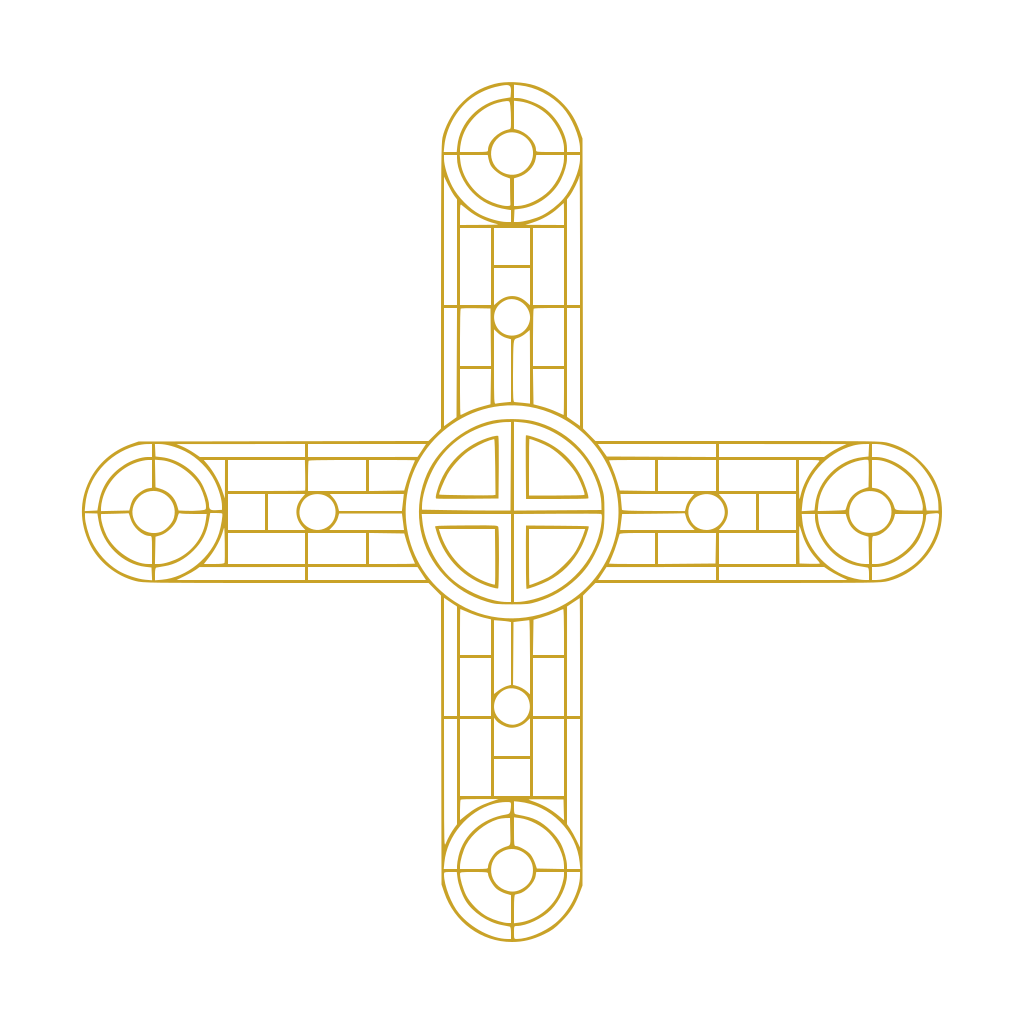
Saint Cuthbert's Pectoral Cross
A seventh-century gold and garnet cloisonné cross recovered from Cuthbert's tomb that symbolizes Northumbrian Christianity.
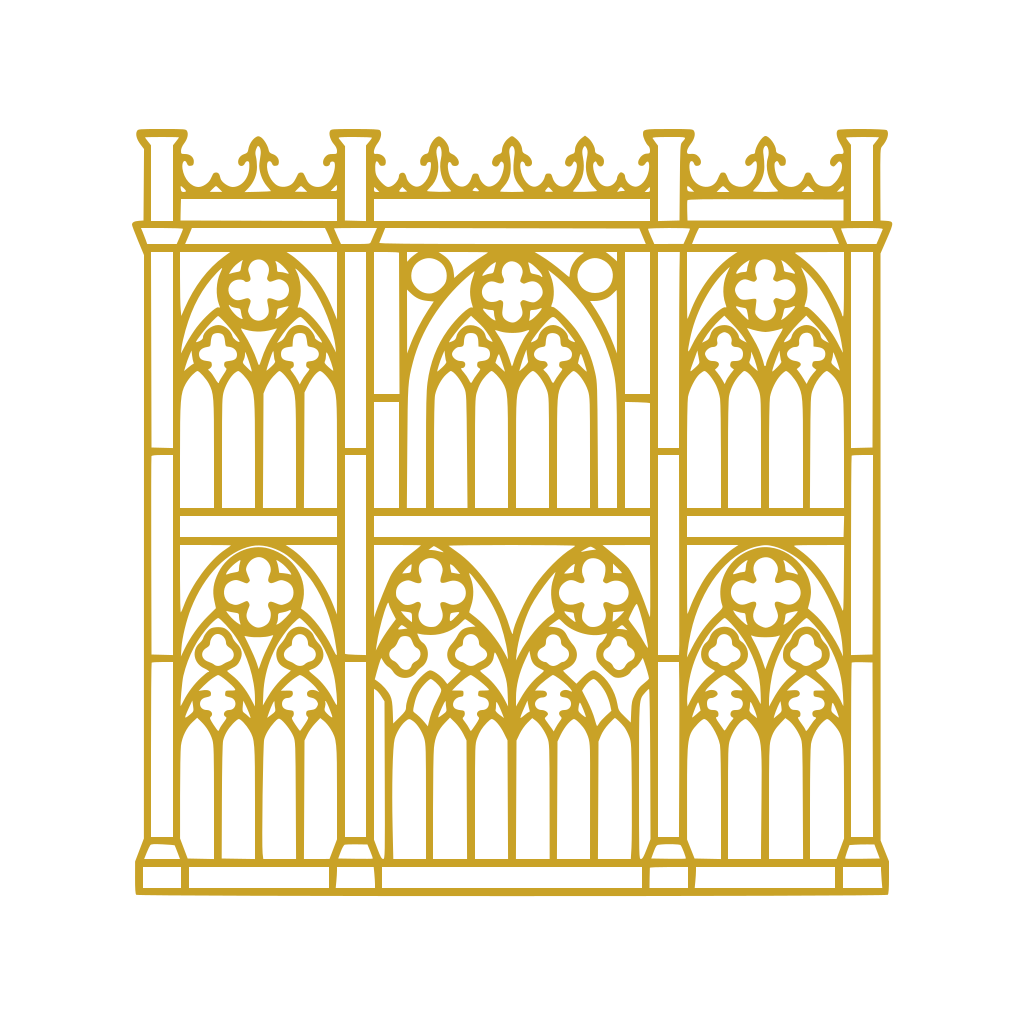
The Neville Screen
A delicate fourteenth-century pierced reredos of Caen stone and alabaster separating the altar from the shrine.

Bishop Hatfield's Cathedra
The highest episcopal throne in Christendom, deliberately constructed above an alabaster tomb to demonstrate palatine sovereignty.

Black Marble Boundary Cross
An inlaid floor band of Frosterley marble demarcating the historic medieval boundary past which women could not proceed.

Incised Cylindrical Piers
Massive masonry drums carved with chevron and diamond motifs that symbolize cosmic order and architectural strength.
Interesting Facts
Medieval tradition relates that wandering monks found the peninsula after following a milkmaid searching for her lost dun cow (Tier C).
Durham is the earliest monumental European church vaulted entirely in stone with pointed ribs and quadrant arches (Tier B).
In 1650, Oliver Cromwell imprisoned approximately 3,000 captured Scottish soldiers inside the cathedral after the Battle of Dunbar (Tier A).
The cathedral cloister and chapter house served as filming backdrops for Hogwarts in the Harry Potter film series (Tier C).
Scottish prisoners burned almost all wooden furnishings for warmth in 1650 but spared the clock because of a carved thistle (Tier B).
Bishop Thomas Hatfield erected his throne directly above his tomb, establishing the highest bishop's seat in the world (Tier A).
When Cuthbert's tomb was examined in 1104, Norman church officials verified his body was completely incorrupt (Tier B).
Between 2013 and 2016, the cathedral built a scale replica containing 300,000 Lego bricks to fund museum spaces (Tier A).
Bishop John Cosin installed an ornate wooden font canopy in 1663 that soars over 40 feet into the western nave (Tier A).
Trade union brass bands and silk banners march into the nave annually for the Durham Miners' Festival Service (Tier A).
Common Questions
Is Durham Cathedral free to enter?
General admission to the cathedral nave, Galilee Chapel, and Cuthbert's shrine is free, though voluntary donations are encouraged.
Whose tombs are located within the cathedral?
The cathedral houses the holy shrines of Saint Cuthbert, the Venerable Bede, and several medieval Prince-Bishops.
Can visitors climb the central tower?
Visitors can climb 325 spiral stone steps to the central tower roof for sweeping views of County Durham.
Are services held every day?
Daily services including Morning Prayer, Holy Communion, and Choral Evensong are open to worshippers of all backgrounds.
Was Durham Cathedral used in the Harry Potter films?
The cloister walkways and chapter house served as memorable Hogwarts locations in the first two Harry Potter movies.
Featured Stories
The Legend of the Dun Cow
995
When the monks carrying Saint Cuthbert's coffin found their cart stuck, they engaged in solemn fasting until a revelation told them to seek Dunholm. Unable to locate the site, they overheard a distressed dairymaid directing a companion toward a wandering dun cow on the rocky promontory. Guided by the milkmaid's directions, the monks reached the heights and established the sanctuary that became Durham Cathedral.
Source: Symeon of Durham, Libellus de Exordio
The 1104 Examination of Saint Cuthbert
August 29, 1104
Before enshrining Cuthbert behind the new Norman high altar, skeptical church officials gathered to resolve doubts regarding the condition of his relics. Under Prior Turgot's direction, examiners lifted the inner coffin lid and found the saint's body fully preserved and flexible after more than four centuries. This dramatic discovery transformed Durham into one of the most revered pilgrimage hubs in medieval Europe.
Source: Reginald of Durham, Libellus de Admirandis Beati Cuthberti
The Imprisonment of the Scottish Soldiers
September 3, 1650
Following the Battle of Dunbar, Oliver Cromwell marched roughly three thousand Scottish prisoners of war south and locked them inside Durham's unheated cathedral. Facing bitter autumn conditions, the desperate men burned nearly all internal woodwork for life-saving heat, sparing only the astronomical clock with its thistle carving. Tragically, hundreds perished from cold and disease before modern excavations uncovered their mass burial pits nearby.
Source: Historic England and Durham University Archaeological Reports
Timeline
Arrival of Cuthbert's Community
The wandering Congregation of St Cuthbert settles upon the high loop of the River Wear.
MilestoneBenedictine Monastery Established
Bishop William of Saint-Calais replaces secular canons with Benedictine monks from Jarrow and Wearmouth.
MilestoneFoundation Stone Laid
Bishop William and Prior Turgot lay the foundation stone of the massive Anglo-Norman cathedral.
component.timeline.groundbreakingTranslation of Saint Cuthbert
The incorrupt body and sacred relics of Saint Cuthbert are enshrined behind the Norman high altar.
DedicationNave Vaulting Completed
Builders finish the pioneering stone ribbed vaults spanning the eight-bay Norman nave.
MilestoneGalilee Chapel Begun
Bishop Hugh de Puiset commences the Western Galilee Chapel to house altars and shrines.
MilestoneChapel of the Nine Altars
Prior Thomas of Melsonby begins an ambitious Gothic eastern transept to accommodate multiple altars.
RenovationNeville Screen Completed
The exquisite Caen stone and alabaster reredos is installed between the choir and Cuthbert's shrine.
MilestoneSurrender of the Priory
The Benedictine monastery is formally dissolved under King Henry VIII and re-founded as an Anglican chapter.
EventScottish Soldiers Imprisoned
Parliamentarian troops confine 3,000 Scottish prisoners of war inside the cathedral after Dunbar.
EventCosin's Restoration Furnishings
Bishop John Cosin installs the soaring wooden font canopy and choir woodwork following the Stuart Restoration.
RenovationUNESCO World Heritage Inscription
Durham Cathedral and Castle are designated as an inaugural UK World Heritage Site.
MilestoneHistory by Decade
990s–1080s — The Anglo-Saxon Shrine and Norman Conquest
Following devastating Viking incursions on Lindisfarne, the monastic community wandered across northern England carrying Saint Cuthbert's relics. In 995, they founded the stone White Church atop Durham's rocky peninsula. After 1066, Norman rulers fortified the promontory, turning the episcopal seat into a strategic palatine buffer against Scottish armies.
1090s–1130s — Norman Foundation and Vaulting Innovation
Bishop William of Saint-Calais initiated the total rebuilding of the cathedral in 1093 on an unprecedented monumental scale. Under Bishop Ranulf Flambard, masons engineered pointed transverse arches and quadripartite stone ribs over the nave. When completed in 1133, Durham stood as the first European cathedral vaulted completely in stone.
1170s–1280s — Gothic Expansions and Saintly Shrines
Bishop Hugh de Puiset constructed the delicate Galilee Chapel on the western cliff in 1175, later receiving the relics of the Venerable Bede. In 1242, structural instability in the eastern apse prompted construction of the Chapel of the Nine Altars. This soaring transept blended Early English Gothic lancets with dark, fossil-rich Frosterley marble.
1370s–1490s — The Neville Screen and Crossing Tower
The cathedral acquired monumental interior furnishings during the fourteenth century, highlighted by the intricate Neville Screen erected behind the high altar in 1380. Following a devastating lightning strike in 1429, the central crossing tower was systematically rebuilt. By 1490, the present 218-foot Perpendicular Gothic lantern tower was successfully raised.
1530s–1650s — Dissolution, Iconoclasm, and Civil War Confinement
The Benedictine priory surrendered to the Crown in 1539, resulting in the stripping of Cuthbert's gold-laden shrine. In 1650, Oliver Cromwell locked 3,000 Scottish Covenanter prisoners inside the cathedral after the Battle of Dunbar, where many died from bitter winter cold and disease. Much of the medieval timber was burned by the captive soldiers for survival.
1660s–1820s — Restoration Furnishings and Antiquarian Discoveries
Bishop John Cosin revitalized the damaged sanctuary in the 1660s, commissioning majestic woodwork and an elaborate 40-foot font canopy. In 1827, antiquarians opened Cuthbert's tomb in the feretory, discovering his seventh-century gold pectoral cross and ancient embroidered vestments. These historic excavations solidified Durham's place in modern British archaeology.
1980s–Present — World Heritage and Contemporary Pilgrimage
In 1986, Durham Cathedral was inscribed as one of the inaugural UNESCO World Heritage Sites in the United Kingdom. Major conservation programs, including the Open Treasure museum initiative in 2016, transformed ancient monastic spaces into modern galleries. The cathedral continues its primary role as a functioning center of worship, welcoming thousands of daily visitors and worshippers.
Architecture & Facilities
Durham Cathedral represents the supreme masterpiece of Anglo-Norman Romanesque architecture, distinguished by the earliest known system of pointed transverse arches and ribbed stone vaults in Europe. Its monumental scale and rhythmic alternate compound piers successfully engineered a transition from heavy Romanesque massing to soaring Gothic lightness.
Building Materials
Durham Sandstone
Local carboniferous yellow-ochre sandstone quarried from the Wear gorge forms the core masonry.
Frosterley Marble
Dark fossiliferous Weardale limestone polished to a rich black sheen accents columns and tomb bases.
Caen Stone and Alabaster
Fine imported French limestone and English alabaster comprise the carved Neville Screen.
English Oak Timber
Ancient northern oak forms the immense fourteenth-century roof trusses of the Monks' Dormitory.
Interior Features
The Norman Nave
A monumental eight-bay stone canyon rising seventy-three feet beneath the world's earliest pointed ribbed vaults.
The Galilee Chapel
A delicate five-aisled western hall supported by Purbeck-style marble piers containing Bede's tomb.
Chapel of the Nine Altars
A high Early English Gothic eastern transept built to accommodate multiple simultaneous monastic celebrations.
Saint Cuthbert's Feretory
An elevated liturgical platform behind the main altar holding the black marble ledger of Saint Cuthbert.
Temple Grounds
Perched dramatically on a fortified rocky loop above the River Wear, the precinct encompasses peaceful cloisters, College greens, and ancient monastic kitchen yards.
Additional Facilities
The Cathedral Museum features the Monks' Dormitory and Treasury, accompanied by a gift shop, cloister cafe, and chorister rehearsal rooms.
Religious Significance
Within the Abrahamic and Christian theological narrative, sacred sanctuaries serve as earthly gates where humanity encounters the holiness of the living God. Durham Cathedral expresses this archetype through centuries of monastic contemplation, sacramental celebration, and saintly veneration.
To serve as the cathedral church of the Bishop of Durham, an enduring sanctuary of prayer, and a holy resting place for Saint Cuthbert and the Venerable Bede.
Sacred Ordinances
Holy Communion (The Eucharist)
The primary Christian sacrament celebrating Christ's sacrifice, offered daily upon the cathedral's high altar.
Choral Evensong
The daily liturgical prayer service uniting scripture readings, Anglican chant, and polyphonic anthems.
Holy Baptism
The foundational rite of Christian initiation performed beneath Bishop Cosin's soaring wooden font canopy.
Pilgrimage and Veneration
Silent personal prayer and reflection offered around the holy tombs of Cuthbert and the Venerable Bede.
The Cult of Saint Cuthbert
As the beloved seventh-century hermit and bishop of Lindisfarne, Cuthbert's incorrupt body established Durham as northern England's foremost medieval pilgrimage destination, illustrating the Christian doctrine of the communion of saints.
The Palatine Prince-Bishops
Vested with military and judicial power to defend the northern border, Durham's bishops governed a County Palatine, blending temporal leadership with pastoral responsibility.
The Anglican Via Media
Durham preserves its ancient monastic foundation within the reformed Church of England, balancing historic liturgical heritage with active scriptural preaching and open public hospitality.
Sources & Research
Every fact on Temples.org is backed by verified Sources & Research. Each piece of information is rated by source tier and confidence level.
View All Sources (8)
| Field | Source | Tier | Retrieved |
|---|---|---|---|
| About & Historical Background | Chapter of Durham Cathedral (opens in a new tab) | A | 2026-03-31 |
| Religious Significance & Worship | Diocese of Durham (opens in a new tab) | A | 2026-03-31 |
| Anglican Heritage & Tradition | The Church of England (opens in a new tab) | A | 2026-03-31 |
| Architecture & Structural Preservation | Historic England (opens in a new tab) | A | 2026-03-31 |
| World Heritage Inscription | UNESCO World Heritage Centre (opens in a new tab) | B | 2026-03-31 |
| Archaeological Excavations & History | Durham University Archives and Special Collections (opens in a new tab) | B | 2026-03-31 |
| Peninsula Heritage & Topography | Durham World Heritage Site Coordinating Committee (opens in a new tab) | B | 2026-03-31 |
| Anglo-Saxon Monastic Sculpture | Corpus of Anglo-Saxon Stone Sculpture, British Academy (opens in a new tab) | B | 2026-03-31 |