Visitor Insights
Visiting London Central Mosque & Islamic Cultural Centre
Visitors to the London Central Mosque are welcomed outside of congregational prayer times to appreciate its architecture and quiet atmosphere. Modest clothing covering arms and legs is required, and shoes must be removed before entering carpeted prayer spaces.
Highlights
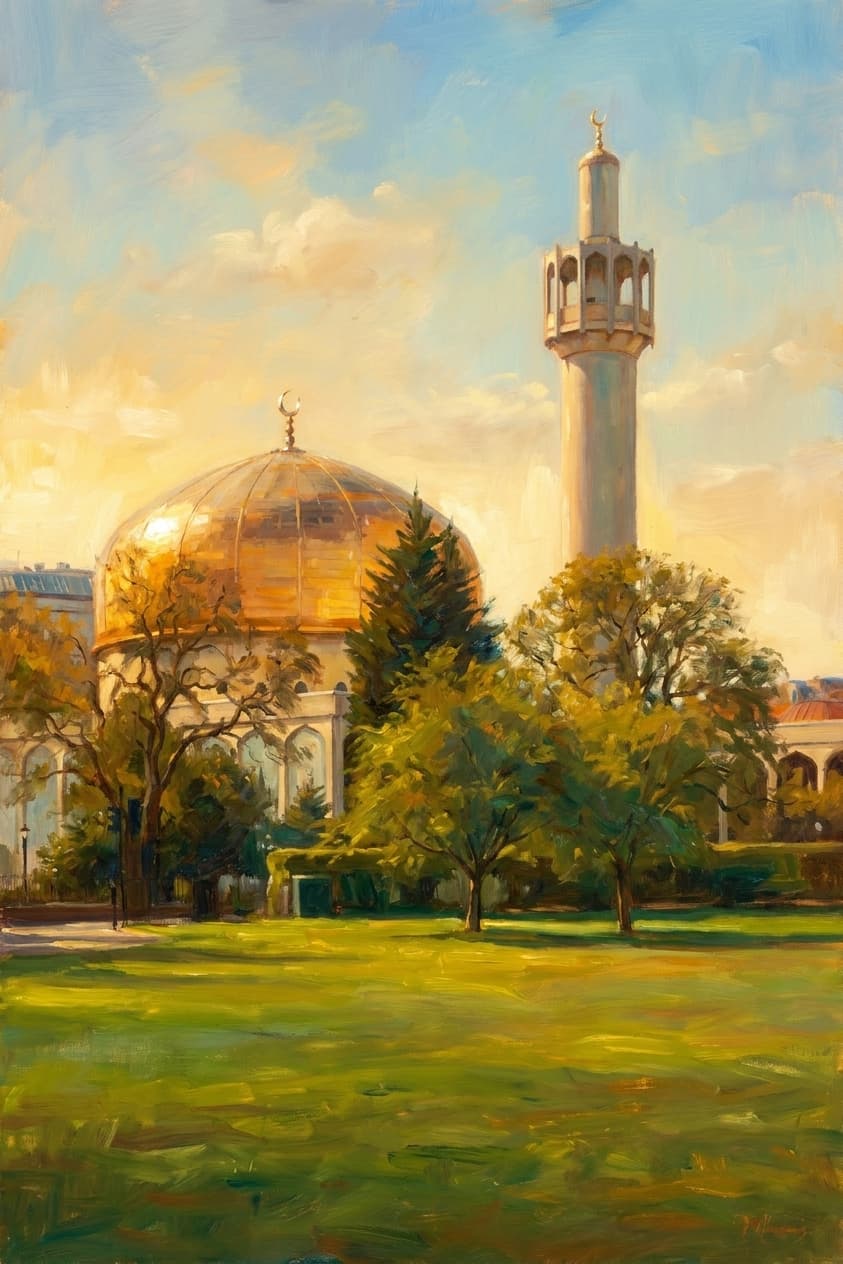
- Gilded copper dome and soaring 140-foot minaret set against Regent's Park
- Exquisite interior brass chandelier and geometric tilework in the main sanctuary
- Comprehensive Islamic library housing over 20,000 theological volumes
Things to Know
- Please dress modestly with arms and legs covered; women should bring a headscarf
- Refrain from photographing individuals engaged in active prayer
- Friday afternoons are extremely busy during Jumu'ah congregational services
Location
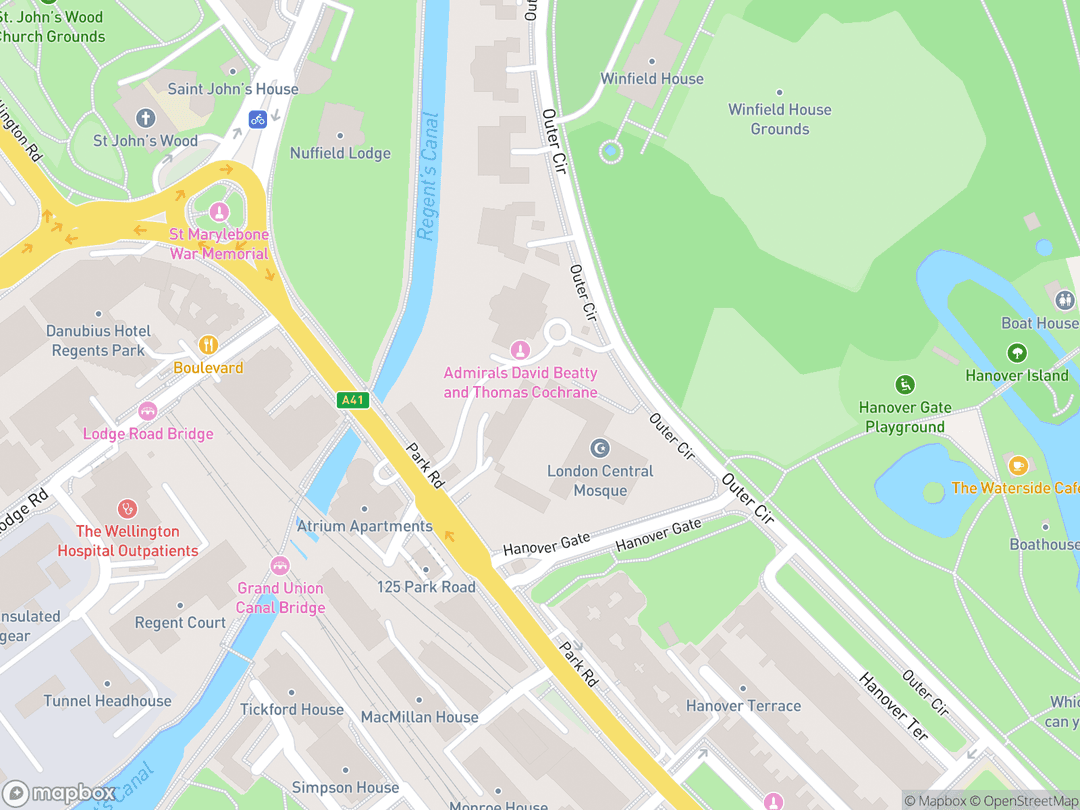
146 Park Road, London, NW8 7RG, United Kingdom
Hours: Open daily from 4:30 AM to 10:00 PM; cultural center offices open 9:00 AM to 5:00 PM.
Getting There: Located a 10-minute walk from Baker Street or St. John's Wood Underground stations, with bus routes 13, 82, 113, and 274 stopping directly outside.
Get DirectionsTips for Your Visit
Respectful Dress Code
Ensure shoulders and legs are covered before entering, and carry a lightweight scarf for head coverage inside prayer halls.
Best Visiting Hours
Plan visits during mid-morning on weekdays between Fajr and Dhuhr prayers for a quiet experience.
About
The London Central Mosque & Islamic Cultural Centre, situated in Regent's Park, stands as one of the most prominent hubs of Islamic life in Western Europe. Rooted in the shared Abrahamic heritage of monotheistic faith, the mosque serves as a sacred place of prostration (masjid) where believers gather for communal worship and spiritual orientation toward Mecca.
Established through a wartime land grant by Prime Minister Winston Churchill's War Cabinet in 1940, the complex acknowledges the historical contributions of millions of Muslim Commonwealth soldiers during World War II. Designed by British modernist architect Sir Frederick Gibberd and inaugurated in July 1977, the structure synthesizes contemporary design with classic Islamic architectural traditions.
Today, the center serves thousands of daily worshippers while fostering interfaith dialogue, educational programs, and social support across London. With its iconic gilded dome and soaring minaret, it remains an enduring symbol of spiritual devotion and cultural harmony within the United Kingdom.
Gallery
Symbolic Elements
The temple's exterior features intricate carvings, each rich with spiritual meaning:

The Golden Dome
Symbolizes the celestial vault of heaven and divine unity (*Tawhid*), gleaming as a golden beacon over Regent's Park.

The Minaret
Reaching a height of 140 feet, this slender tower signifies the call to prayer and bridges heaven and earth.

The Mihrab
Set into the Qibla wall, this prayer niche indicates the precise direction of the Kaaba in Mecca.
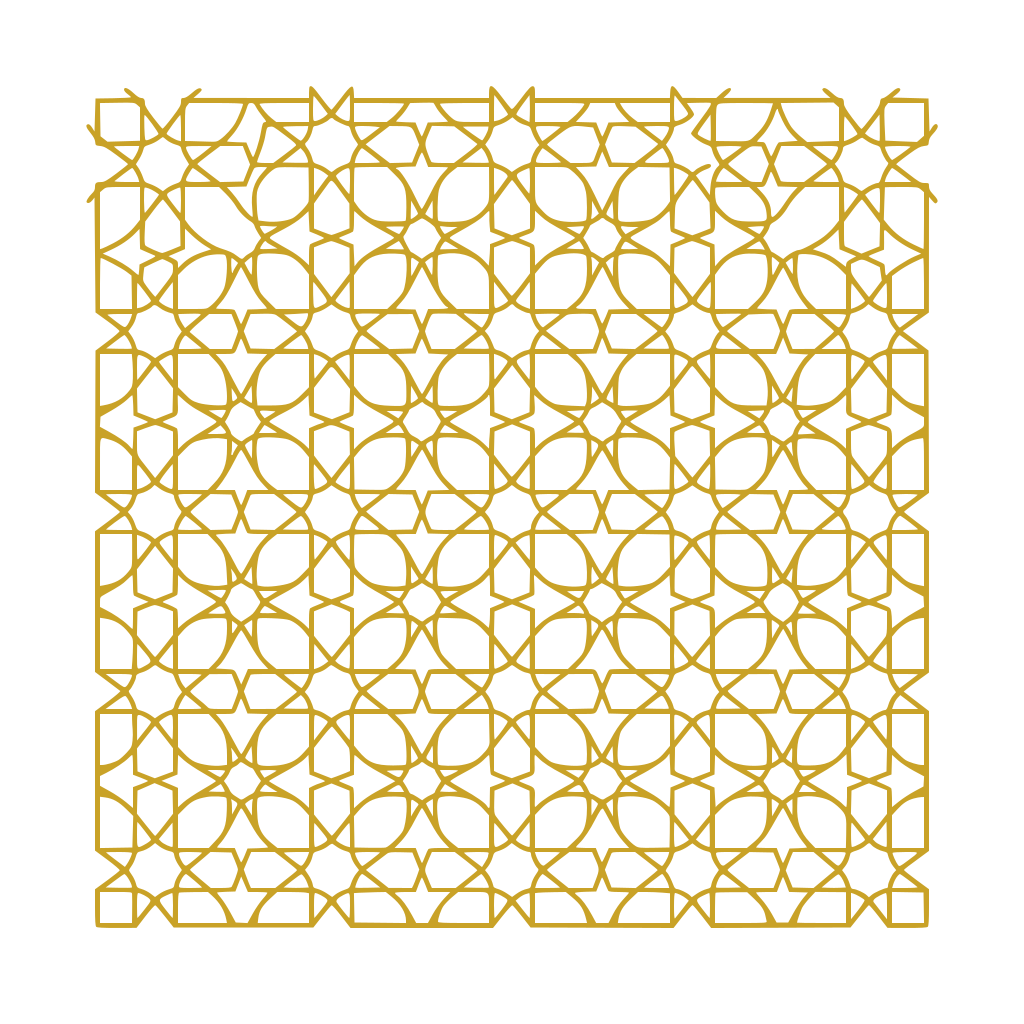
Geometric Arabesque Patterns
Repeating non-figural motifs represent the infinite and orderly nature of divine creation.

The Central Chandelier
A massive brass chandelier hanging beneath the main dome provides physical and spiritual light (*Nur*) to worshippers.

The Crescent Moon
Atop the dome and minaret, the crescent emblem links the complex to the sacred Islamic lunar calendar.

Courtyard Arcade
Surrounding arcades offer a peaceful transition from the urban realm into a quiet sanctuary for reflection.

The Minbar
The elevated wooden pulpit from which the Imam delivers the Friday sermon (*Khutbah*) to the congregation.
Interesting Facts
Winston Churchill's War Cabinet allocated the Regent's Park site in 1940 to honor Commonwealth Muslim soldiers (Tier A).
The land grant was part of a diplomatic arrangement that granted land in Cairo for an Anglican cathedral (Tier A).
Architect Sir Frederick Gibberd was a non-Muslim modernist who also designed Liverpool's Catholic Cathedral (Tier B).
The senior Imam of the mosque is traditionally appointed by Al-Azhar University in Cairo (Tier A).
External concrete panels contain crushed Portland stone aggregate to match nearby 19th-century Regency terraces (Tier B).
The mosque's research library houses over 20,000 volumes, making it one of the largest Islamic collections in Western Europe (Tier A).
In March 2018, Historic England designated the complex as a Grade II* listed building (Tier A).
During Eid celebrations, up to 50,000 worshippers visit the mosque across sequential prayer shifts (Tier A).
Common Questions
Are non-Muslim visitors allowed inside the London Central Mosque?
Yes, non-Muslim visitors are welcome to explore the complex outside of active congregational prayer hours.
What is the dress code for visiting the mosque?
Visitors must wear modest clothing covering arms and legs, remove shoes before entering prayer spaces, and women should cover their heads.
How many worshippers can the mosque hold?
The main indoor prayer hall holds about 1,400 worshippers, while the total complex accommodates 5,400, expanding to 50,000 during Eid shifts.
Who designed the London Central Mosque?
The mosque was designed by prominent British modernist architect Sir Frederick Gibberd.
Featured Stories
Winston Churchill's War Cabinet Land Grant
October 24, 1940
Amid the perils of World War II, Winston Churchill's War Cabinet allocated £100,000 to purchase a 2.3-acre site in Regent's Park for London's Muslim community. This gesture recognized the crucial sacrifices of over 1.5 million Muslim soldiers serving in Allied forces across multiple battlefronts. The acquisition was paired with a reciprocal arrangement allowing the Anglican Church to build a cathedral in Cairo.
Source: UK National Archives & Historic England
Sir Frederick Gibberd's Modernist Vision
1969
Chosen through an international competition, English architect Sir Frederick Gibberd sought to create a building that was unequivocally contemporary while remaining deeply faithful to Islamic tradition. He selected Portland stone aggregate for the exterior walls to harmonize with the neighboring Regency terraces of John Nash. The resulting design earned Grade II* listed status for its successful synthesis of British modernism and traditional sacred forms.
Source: Royal Institute of British Architects
An International Pan-Islamic Collaboration
July 1, 1977
The construction of the mosque brought together diverse nations from across the Islamic world in a spirit of global cooperation. Generous donations came from Saudi Arabia, the United Arab Emirates, Kuwait, Iraq, and local British donors to raise the required £6.5 million. When opened in July 1977, the mosque immediately became a unifying institutional anchor for the United Kingdom's growing Muslim diaspora.
Source: Islamic Cultural Centre Archives
Timeline
Wartime Site Allocation
Winston Churchill's War Cabinet allocates land in Regent's Park for a central mosque in London.
MilestoneCultural Centre Inauguration
King George VI officially inaugurates the Islamic Cultural Centre on the Regent's Park site.
EventArchitectural Competition Won
English architect Sir Frederick Gibberd wins the international competition to design the new complex.
MilestoneGroundbreaking and Construction
Heavy engineering construction begins on site under John Laing Construction.
component.timeline.groundbreakingOfficial Opening
The London Central Mosque opens to the public after reaching completion at a cost of £6.5 million.
DedicationEducational Wing Expansion
A major expansion adds new administrative, educational, and library facilities funded by King Fahd.
RenovationGrade II* Listing Awarded
Historic England awards the complex Grade II* listed status for its architectural and historic significance.
MilestoneHistory by Decade
1940s — Wartime Dedication and Land Grant
In October 1940, Winston Churchill's War Cabinet granted land at Regent's Park to honor the contribution of Muslim soldiers in World War II. King George VI officially inaugurated the Islamic Cultural Centre on the site in November 1944.
1950s–1960s — Design Competition and Modernist Vision
Following post-war planning phase delays, an international architectural competition was launched in 1968. British modernist architect Sir Frederick Gibberd won the commission in 1969 with a design combining modern engineering and classical motifs.
1970s — Construction and Grand Inauguration
Physical construction commenced in 1974 through contractor John Laing Construction with major backing from international donors. The mosque officially opened in July 1977, instantly becoming a prominent cultural landmark in Central London.
1990s — Expansion and Institutional Growth
To accommodate growing congregational needs, a new educational wing and expanded library facilities were added in 1994. The additions were supported by generous gifts from international supporters, expanding educational programs.
2010s–Present — Heritage Recognition and Community Leadership
In March 2018, Historic England awarded the mosque Grade II* listed status, recognizing its architectural achievement. Today, the complex remains a premier UK site for interfaith dialogue and civic engagement.
Architecture & Facilities
The London Central Mosque represents a seminal work of British Modernist Islamic Architecture, blending 20th-century structural engineering with classic sacred Islamic typology. Designed by Sir Frederick Gibberd, the building features clean geometric lines, pre-cast concrete panels containing crushed Portland stone aggregate, and a dramatic gilded copper dome that harmonizes visually with the surrounding 19th-century Regency architecture of Regent's Park.
Building Materials
Exterior Framing
Pre-cast concrete panels containing crushed Portland stone aggregate give the facade a warm cream tone.
Central Dome
A steel framework clad in copper and electro-plated with gold leaf creates an enduring skyline feature.
Interior Columns
Poured structural concrete piers are clad in polished white marble to support the dome.
Fenestration
Dark bronze window frames enclose stylized geometric arched openings across the perimeter facade.
Interior Features
Main Prayer Hall
An expansive carpeted sanctuary beneath the central dome accommodates over 1,400 worshippers for communal prayer.
Ladies' Gallery
A raised mezzanine balcony overlooks the main hall, providing dedicated space for women during services.
Islamic Library
A research repository holding over 20,000 volumes, manuscripts, and reference texts on Islamic theology and history.
Ablution Facilities (Wudu)
Dedicated washing areas equipped with ritual water stations facilitate spiritual preparation before prayer.
Temple Grounds
Spanning 2.3 acres on the edge of Regent's Park, the grounds feature a central courtyard (sahn) enclosed by three-story administrative wings, landscaped gardens, and stone pathways.
Additional Facilities
The complex incorporates an exhibition hall, a halal cafeteria, a religious bookshop, a lecture theater, and administrative offices for the Islamic Cultural Centre.
Religious Significance
Within Islam, a mosque (masjid) is a consecrated sanctuary dedicated to the worship of God (Allah) and community gathering. Grounded in the Abrahamic tradition that affirms the oneness of the Divine, the mosque provides a physical direction (Qibla) toward the Kaaba in Mecca, uniting local worshippers with the global Muslim community (Ummah).
To provide a sanctuary for daily congregational prayer, foster Islamic learning, support community welfare, and facilitate interfaith understanding.
Sacred Ordinances
Daily Prayer (Salah)
The five obligatory daily prayers performed collectively facing the Qibla wall.
Friday Congregational Prayer (Jumu'ah)
A weekly gathering featuring a sermon (Khutbah) and communal prayer that brings together thousands of worshippers.
Ramadan and Night Prayers (Tarawih)
Evening prayers and community fast-breaking (Iftar) held throughout the holy month of Ramadan.
Eid Celebrations
Festival prayers for Eid al-Fitr and Eid al-Adha that welcome up to 50,000 worshippers across multiple shift services.
Education and Interfaith Outreach
The Islamic Cultural Centre hosts thousands of school groups and interfaith delegations annually, providing accurate scholarship and promoting mutual understanding between religious communities in the United Kingdom.
Sources & Research
Every fact on Temples.org is backed by verified Sources & Research. Each piece of information is rated by source tier and confidence level.
View All Sources (8)
| Field | Source | Tier | Retrieved |
|---|---|---|---|
| About & Historical Background | Islamic Cultural Centre & London Central Mosque (opens in a new tab) | A | 2026-02-15 |
| About & Historical Background | Historic England (opens in a new tab) | A | 2026-02-15 |
| Timeline & Featured Stories | UK National Archives (opens in a new tab) | A | 2026-02-15 |
| Architecture & Facilities | Royal Institute of British Architects (RIBA) (opens in a new tab) | B | 2026-02-15 |
| Religious Significance | Al-Azhar University (opens in a new tab) | A | 2026-02-15 |
| Architecture & Facilities | Victoria and Albert Museum (opens in a new tab) | B | 2026-02-15 |
| Timeline & Featured Stories | The British Library (opens in a new tab) | B | 2026-02-15 |
| Visitor Insights & Location | City of Westminster Council (opens in a new tab) | A | 2026-02-15 |