Visitor Insights
Visiting Western Marble Arch Synagogue
Western Marble Arch Synagogue hosts active daily and Shabbat Orthodox prayer services in Central London. Visitors and tour groups are welcome but must register with synagogue security prior to attending.
Highlights
- Monumental 36-panel stained-glass scheme by Israeli artist Nehemia Azaz
- Raoul Wallenberg Memorial Bronze Statue by Philip Jackson on Wallenberg Place
- Traditional central Bimah layout and Jerusalem-facing marble Aron Kodesh
Things to Know
- Advance security clearance and photo ID are mandatory for non-member visits
- Modest attire and head coverings (Yarmulke for men) are expected during services
Location
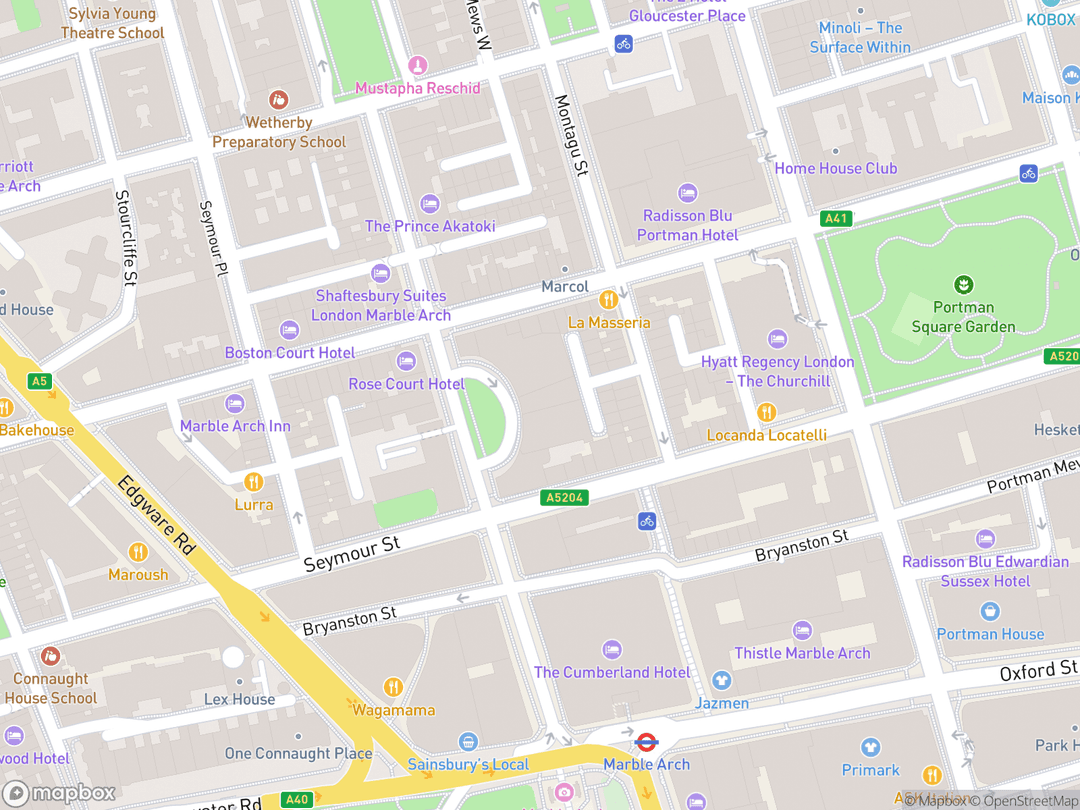
1 Wallenberg Place, City of Westminster, London W1H 7TN, United Kingdom
Hours: Daily Shacharit at 7:30 AM; Mincha and Maariv at dusk; Shabbat Shacharit at 9:15 AM.
Getting There: Located a 2-minute walk from Marble Arch Tube Station (Central line) and a 7-minute walk from Bond Street Station.
Get DirectionsTips for Your Visit
Security Clearance
Contact the synagogue administrative office at least 48 hours before visiting to secure entry authorization.
Service Demeanor
Men and women sit in dedicated seating areas in accordance with Orthodox liturgical custom.
About
The Western Marble Arch Synagogue stands as one of Central London's premier Orthodox Jewish houses of worship. Formed through the historic 1991 merger of the independent Western Synagogue—established in Westminster in 1761—and the Marble Arch Synagogue, the congregation represents an unbroken legacy of British Jewish life spanning more than two centuries.
Rooted in the shared Abrahamic monotheistic tradition, the sanctuary functions as a house of prayer, study, and community gathering. Its landmark building near Marble Arch combines modern architectural craftsmanship with traditional liturgical design, serving as an enduring focal point for London's Jewish community and international visitors.
Gallery
Symbolic Elements
The temple's exterior features intricate carvings, each rich with spiritual meaning:

Aron Kodesh
The Holy Ark situated on the eastern wall facing Jerusalem, housing the congregation's hand-written Torah scrolls.

Central Bimah
The elevated central reading desk highlighting the public reading of the Torah in traditional Ashkenazi worship.

Ner Tamid
The eternal flame suspended above the Ark symbolizing the continuous divine presence and Temple menorah.
Luchot HaBrit
Stylized representations of the Ten Commandments tablets inscribed with Hebrew lettering crowning the Holy Ark.

Nehemia Azaz Festival Windows
A 36-panel abstract slab-glass window cycle depicting Jewish calendar festivals through radiant geometry.

Raoul Wallenberg Memorial Screen
A bronze monument outside the facade composed of stacked Hungarian protective passports honoring Holocaust rescue.

Ezrat Nashim Mechitza
The elevated balcony structure providing separate women's seating during Orthodox liturgical prayer.
Interesting Facts
The Western Synagogue was founded in 1761 as the first Ashkenazi Jewish congregation in London outside the City boundary. (Tier A)
In the 1820s, the Western Synagogue became the first in Great Britain to introduce regular pulpit sermons in English. (Tier A)
The 1991 merger marked the first union between an independent synagogue and a United Synagogue constituent in British history. (Tier A)
Israeli artist Nehemia Azaz worked for 17 years crafting the 36-panel slab-glass window cycle in the main hall. (Tier A)
Queen Elizabeth II unveiled the Raoul Wallenberg bronze monument outside the synagogue entrance in 1997. (Tier A)
Prince William visited the synagogue in February 2024 to meet Holocaust survivors and condemn antisemitism. (Tier A)
Two Chief Rabbis of the Commonwealth, Jonathan Sacks and Ephraim Mirvis, served as senior rabbis for the congregation. (Tier A)
In 2014, Westminster City Council renamed the street address to 1 Wallenberg Place to honor the Holocaust hero. (Tier A)
The Hartog Gallery houses 12 stained-glass windows by David Hillman, brother-in-law to Chief Rabbi Yitzhak HaLevi Herzog. (Tier B)
Common Questions
Can non-Jewish visitors attend services at Western Marble Arch Synagogue?
Yes, visitors are welcome but must contact synagogue administration in advance to obtain mandatory security clearance.
What architectural style is the synagogue building?
The exterior mimics an 18th-century Georgian terrace, while the interior is a modern grand sanctuary built in 1961.
How do I get to Western Marble Arch Synagogue?
The synagogue is located at 1 Wallenberg Place, just two minutes on foot from Marble Arch Tube Station.
What is the Raoul Wallenberg memorial outside the synagogue?
It is a bronze statue depicting Swedish diplomat Raoul Wallenberg before a wall of Schutz-Pass passports that rescued over 100,000 Jews.
Featured Stories
The 17-Year Stained-Glass Commission
1965–1982
Israeli artist Nehemia Azaz dedicated seventeen years to creating the main sanctuary's monumental stained-glass windows. Utilizing thick slab glass chipped by hand and set in reinforced concrete, Azaz synthesized modern abstraction with traditional Jewish holiday themes. Today, his 36 panels fill the grand prayer hall with vivid jewel-toned light during daily services.
Source: Historic England Listing Documentation
Unveiling the Wallenberg Memorial
February 26, 1997
Queen Elizabeth II visited the synagogue in 1997 to unveil Philip Jackson's monument to Swedish diplomat Raoul Wallenberg. Standing opposite the sanctuary, the sculpture features Wallenberg alongside a wall of protective passports that saved over 100,000 Jews in Budapest. In 2014, Westminster City Council officially renamed the street Wallenberg Place in honor of this legacy.
Source: City of Westminster Records
A Historic Merger in British Jewry
1991
In 1991, the independent Western Synagogue and the Marble Arch Synagogue achieved the first-ever merger between an independent and United Synagogue congregation in Britain. This historic union brought together the oldest West End Jewish congregation with a flagship central London sanctuary. The combined institution continues to thrive as an associate member of the United Synagogue network.
Source: Western Marble Arch Synagogue Archives
Timeline
Western Congregation Founded
Ashkenazi merchants establish a prayer circle in Westminster, creating London's first synagogue outside the City boundaries.
MilestoneSt. Alban's Place Synagogue Dedicated
The Western Synagogue opens its purpose-built sanctuary and becomes the first in Britain to deliver sermons in English.
DedicationMove to Crawford Place
The congregation relocates westward to Crawford Place in Marylebone to serve expanding West End Jewish communities.
EventMarble Arch Synagogue Established
A new congregation forms to redevelop bomb-damaged land along Great Cumberland Place in Central London.
MilestoneBuilding Completion and Dedication
The modern crescent building designed by TP Bennett & Son opens for worship near Marble Arch.
DedicationAzaz Stained Glass Commission Begins
Israeli artist Nehemia Azaz begins a 17-year project crafting 36 slab-glass windows for the prayer hall.
EventHistoric Congregational Merger
The Western Synagogue and Marble Arch Synagogue merge, forming the first union between independent and United Synagogue entities.
MilestoneWallenberg Memorial Unveiled
Queen Elizabeth II unveils Philip Jackson's statue of Holocaust hero Raoul Wallenberg outside the entrance.
EventStreet Renamed Wallenberg Place
Westminster City Council formally renames Great Cumberland Place frontage to 1 Wallenberg Place.
MilestoneRoyal Visit by Prince William
Prince William visits the synagogue to meet Holocaust survivors and advocate against antisemitism.
EventGrade II Listing Granted
Historic England officially lists the synagogue complex as a Grade II building of architectural significance.
MilestoneHistory by Decade
1760s–1820s — Pioneer West End Foundations
In 1761, Ashkenazi immigrants led by St. Petersburg merchant Wolf Liepman established a prayer circle in Westminster. Relocating to St. Alban's Place in 1826 as the Western Synagogue, the congregation pioneered regular English-language sermons in British Judaism.
1910s–1950s — Relocation and Post-War Renewal
Following decades in Haymarket, the Western Synagogue moved to Crawford Place in Marylebone during the 1910s. By 1957, post-war redevelopment prompted the creation of Marble Arch Synagogue on bomb-damaged land along Great Cumberland Place.
1960s–1980s — Architectural Completion and Artistic Flowering
Completed in 1961 by architectural firm TP Bennett & Son, the modern sanctuary integrated classical Georgian proportions with modern facilities. Between 1965 and 1982, artist Nehemia Azaz installed a monumental 36-window slab-glass scheme depicting Jewish holidays.
1990s — Unification and Royal Commemoration
In 1991, the Western and Marble Arch congregations formally merged in a landmark union between independent and United Synagogue bodies. In 1997, Queen Elizabeth II unveiled a bronze statue of Holocaust rescuer Raoul Wallenberg outside the main entrance.
2000s–2020s — Civic Distinction and Historic Listing
Westminster City Council renamed the address to Wallenberg Place in 2014. In 2024, the complex received Grade II listed status from Historic England following a high-profile visit by Prince William.
Architecture & Facilities
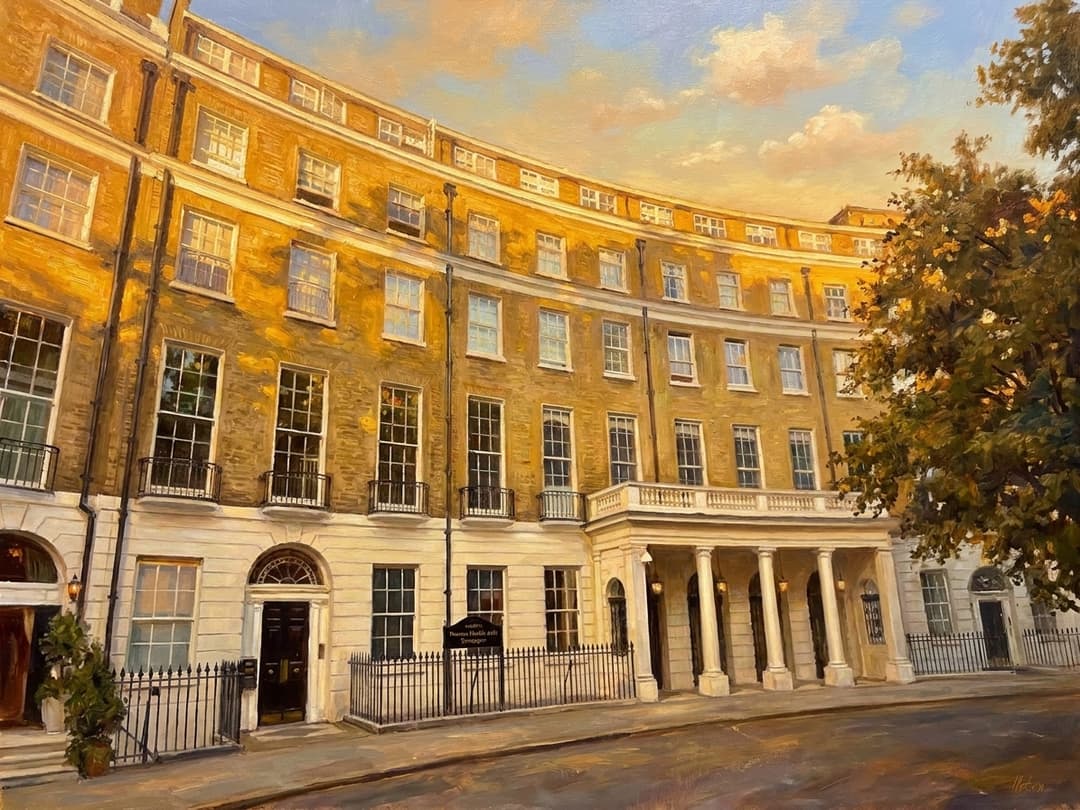
The Western Marble Arch Synagogue features an understated mid-century modern aesthetic skillfully wrapped within an 18th-century classical Georgian crescent replica facade designed by TP Bennett & Son to harmonize with the historic Portman Estate terrace.
Building Materials
Portland Stone
Carved Portland stone forms the exterior ground-floor colonnade and main entrance portico.
Stock Brickwork
Traditional yellow London stock brick matches the historical 1790 Portman Estate facade design.
Marble Wall Paneling
Polished Italian marble frames the elevated Aron Kodesh along the eastern sanctuary wall.
Dalle de Verre Glass
Thick slab-cut colored glass set in concrete matrixes forms the 36 festival windows.
Interior Features
Main Sanctuary
A grand prayer hall seating over 1,000 congregants around a traditional central Bimah platform.
Ezrat Nashim Balcony
A sweeping horseshoe-shaped balcony providing elevated ladies' seating around three sides.
Hartog Gallery
A secondary gallery displaying 12 historic biblical stained-glass windows by David Hillman.
Mintz Beit Midrash
An intimate study hall dedicated to daily prayers and Talmudic instruction.
Temple Grounds
The immediate grounds feature a paved plaza along Wallenberg Place featuring Philip Jackson's bronze monument to Raoul Wallenberg.
Additional Facilities
The subterranean complex houses the King David Suite for major receptions and the Bloomstein Communal Hall for social gatherings.
Religious Significance
As a landmark Orthodox Jewish sanctuary within the monotheistic Abrahamic family, Western Marble Arch Synagogue operates as a sacred space focused on God's revelation, scriptural study, and communal prayer facing Jerusalem.
To provide a consecrated sanctuary for public prayer, Torah reading, lifecycle celebrations, and Jewish learning in Central London.
Sacred Ordinances
Kriat HaTorah (Torah Reading)
Public chanting of the weekly Torah portion from hand-written parchment scrolls from the central Bimah.
Tefillah (Daily Prayer)
Recitation of morning, afternoon, and evening prayers maintaining ancient liturgical routines.
Kiddush and Chagim
Communal sanctification of the Sabbath and biblical festival celebrations throughout the Jewish year.
The Shared Abrahamic Legacy
In alignment with the broader monotheistic tradition, the synagogue centers on the worship of the One God, communal ethical responsibility, and the sacred preservation of divine scriptures.
Sources & Research
Every fact on Temples.org is backed by verified Sources & Research. Each piece of information is rated by source tier and confidence level.
View All Sources (8)
| Field | Source | Tier | Retrieved |
|---|---|---|---|
| About & Historical Background | Historic England (opens in a new tab) | A | 2026-02-15 |
| Architecture & Interior Design | Western Marble Arch Synagogue (opens in a new tab) | A | 2026-02-15 |
| Community & Historical Timeline | Patrick Comerford Historical Research (opens in a new tab) | B | 2026-02-15 |
| Visitor Insights & Facilities | Marble Arch BID (opens in a new tab) | B | 2026-02-15 |
| Symbolic Elements & Significance | Jewish News UK (opens in a new tab) | B | 2026-02-15 |
| Featured Stories & Royal Visits | The Times of Israel (opens in a new tab) | B | 2026-02-15 |
| Architecture & Stained Glass Heritage | Nehemia Azaz Estate Archive (opens in a new tab) | B | 2026-02-15 |
| Civic History & Renaming | Westminster City Council (opens in a new tab) | A | 2026-02-15 |