Visitor Insights
Visiting Berkeley Zen Center
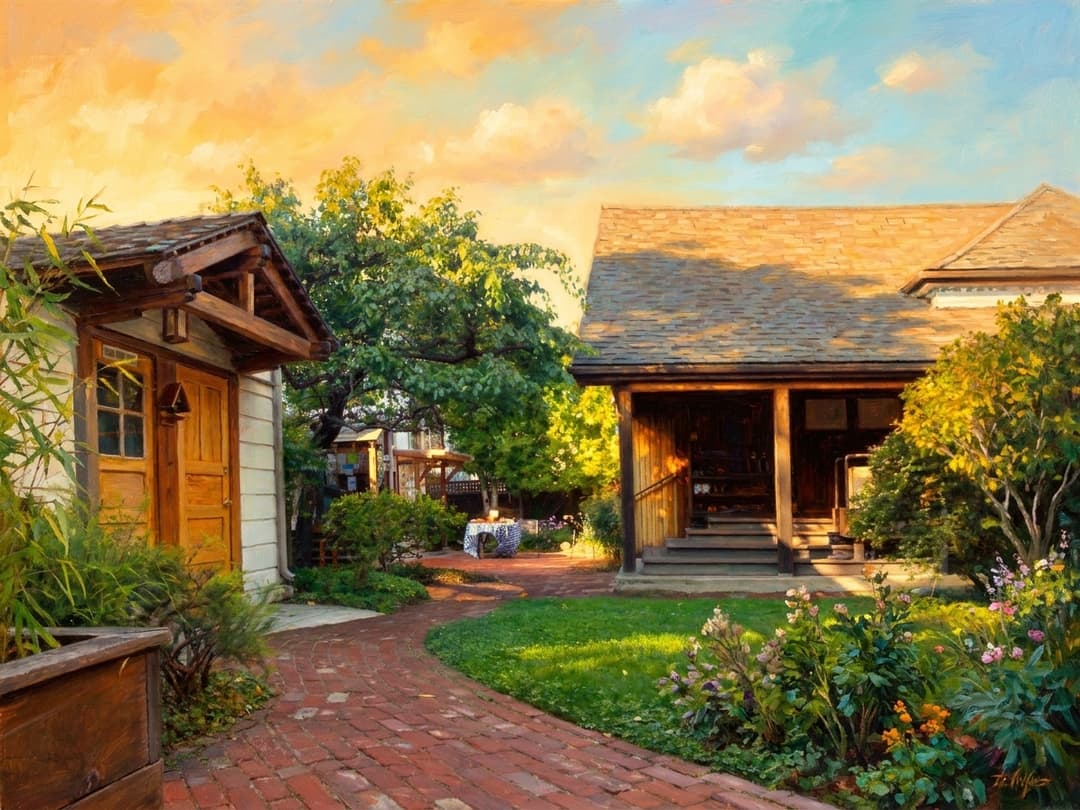
Berkeley Zen Center offers an authentic urban monastic sanctuary framed by lush Japanese gardens. Visitors are welcomed during public Saturday morning orientations for zazen instruction, liturgy, and community Dharma discussions.
Highlights
- Traditional wall-facing zazen inside a handcrafted timber zendo
- Saturday morning public meditation instruction and Dharma talks
- Tranquil courtyard gardens connecting residential practice buildings
Things to Know
- Remove shoes immediately upon entering residential buildings
- Wear modest, muted, dark-colored clothing suitable for seated posture
- Maintain silent contemplation and bow in gassho across thresholds
Location
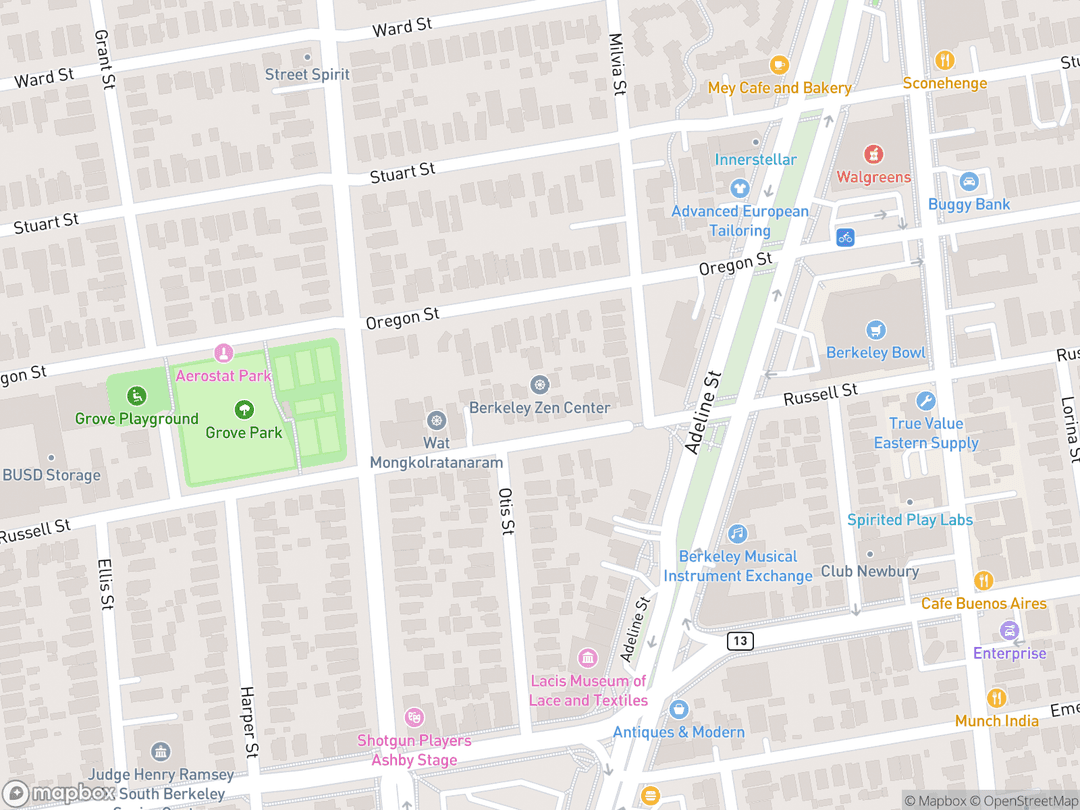
1931-1933 Russell Street, Berkeley, CA 94703, USA
Hours: Monday through Friday morning meditation from 6:00 AM; public Saturday program starts at 8:40 AM
Getting There: Located a half-mile walk east of Ashby BART Station with neighborhood bicycle racks and residential street parking.
Get DirectionsTips for Your Visit
Arrive Early for Saturday Instruction
Beginners should arrive before 8:40 AM on Saturdays to receive posture and etiquette guidance.
Dress in Muted Solids
Choose loose, dark, unpatterned pants and tops to avoid visual distraction in the hall.
Observe Hall Movement
Walk with hands folded across the chest in shashu and avoid crossing directly before altars.
About
Berkeley Zen Center (Shogaku-ji, 'Auspicious Mountain Temple') is an urban Soto Zen Buddhist temple and residential training center located in South Berkeley, California. Founded in 1967 by Hakuryu Sojun Mel Weitsman and Shunryu Suzuki Roshi, it stands as one of the earliest seedbeds of Zen Buddhism in North America.
Rooted deeply in Dharmic antiquity and classical Mahayana Buddhist philosophy, the temple shares foundational commitments to karma, ethical conduct, and universal liberation. Within this stream, the Soto tradition emphasizes the innate presence of Buddha-nature across everyday human activity.
Originally operating from an attic flat on Dwight Way, the community relocated to Russell Street in 1979, adapting vernacular Craftsman residences into an integrated urban monastery. The center combines silent seated meditation (zazen) with socially engaged peacework and egalitarian family life.
Gallery
Symbolic Elements
The temple's exterior features intricate carvings, each rich with spiritual meaning:

Manjusri Bodhisattva Altar
Enshrined on the central altar to personify the transcendent wisdom realized through meditation.

The Han Sounding Board
A thick wooden hanging board struck in accelerating rhythms to summon practitioners to meditation.

Zafu and Zabuton
Round black cushions and square mats representing physical grounding and non-referential awakening.

Mokugyo Wooden Fish Drum
A carved slit drum sounded to maintain rhythmic cadence during sutra chanting services.

Keisu Bronze Singing Bowl
A hammered brass bell struck to mark formal prostrations and liturgical transitions.

Incense Koro Altar
A ceramic burner offering sandalwood incense to honor the Buddha, Dharma, and Sangha.

Hand-Sewn Rakusu
A miniature patchwork clerical robe sewn by students receiving the Bodhisattva precepts.
Interesting Facts
Donations in the original attic zendo on Dwight Way were collected in an old tobacco tin. (Tier A)
To add ground-floor residences at Russell Street, volunteers jacked a two-story house up on mechanical lifts. (Tier A)
Founding Abbot Sojun Mel Weitsman was an accomplished mid-century abstract painter before ordaining. (Tier A)
Second Abbot Hozan Alan Senauke was a celebrated bluegrass musician who picked banjo alongside folk legends. (Tier A)
The small dokusan interview hut in the garden was hand-built by Weitsman out of recycled lumber. (Tier A)
Berkeley Zen Center served for years as the administrative base for the international Buddhist Peace Fellowship. (Tier A)
On March 1, 2026, Linda Galijan became the center's first female abbot in its sixty-year history. (Tier A)
Unlike Rinzai halls that face inward, practitioners here sit directly facing bare cedar walls. (Tier A)
Common Questions
Can non-Buddhists attend meditation at Berkeley Zen Center?
Yes, visitors of any religious background are welcome to attend meditation and community talks.
Why do meditators face the wall during meditation?
Soto Zen tradition practices wall-facing shikantaza to eliminate external distraction and cultivate inner awareness.
Is there instruction available for first-time visitors?
Comprehensive beginner orientation and posture instruction take place every Saturday morning at 8:40 AM.
Does the center house full-time monastic residents?
The residential quarters house staff priests, students, and lay families living in an integrated community.
Featured Stories
Raising a House on Mechanical Jacks
1980
When the sangha purchased the Russell Street property, they needed residential quarters for practicing priests. Rather than demolishing the rear Victorian house, member contractors hoisted the two-story building on manual house jacks. Sangha volunteers excavated the earth below, poured fresh foundations, and framed lower apartments entirely by hand.
Source: Berkeley Zen Center Archives
The Banjo-Picking Abbot of Social Justice
1991
Second Abbot Hozan Alan Senauke lived a life uniting old-time folk music with radical peacework. Leading the Buddhist Peace Fellowship from Russell Street, he trained activists and advocated for Dalit civil rights across India. He famously demonstrated that a Zen life embraces artistic passion, nonviolent protest, and meditation simultaneously.
Source: Buddhist Peace Fellowship
Ordinary Mind in the Garden Hermitage
1985
Founding Abbot Mel Weitsman insisted that Zen was 'nothing special' and firmly rooted in domestic chores. In the corner of the courtyard, he hand-framed a miniature dokusan hut out of salvaged neighborhood timber. In this modest wooden cell, he met students face-to-face for decades, transmitting the Dharma through straightforward warmth.
Source: Branching Streams Heritage
Timeline
Dwight Way Attic Zendo Opens
Mel Weitsman opens a neighborhood meditation flat in Berkeley under Shunryu Suzuki's guidance.
MilestonePriest Ordination of Mel Weitsman
Shunryu Suzuki formally ordains Mel Weitsman as a Soto Zen priest in the attic zendo.
EventPassing of Shunryu Suzuki
Suzuki Roshi passes away, entrusting the ongoing Berkeley sangha directly to Weitsman.
EventRelocation to Russell Street
The sangha purchases property on Russell Street and dedicates the temple as Shogaku-ji.
MilestoneConstruction of Dedicated Zendo
Community carpenters complete the detached courtyard meditation hall and residential retrofits.
MilestoneDharma Transmission in Japan
Sojun Mel Weitsman receives formal transmission from Hoitsu Suzuki at Rinso-in temple.
EventFirst Abbot Installation
Sojun Mel Weitsman is formally installed as the founding abbot of Berkeley Zen Center.
DedicationBuddhist Peace Fellowship Hub
Alan Senauke becomes director of the Buddhist Peace Fellowship, anchoring global activism at BZC.
EventFiftieth Anniversary Celebration
The sangha celebrates five decades of lay practice with special retrospectives and publications.
EventPassing of Sojun Weitsman & New Abbot
Founding Abbot Weitsman dies at 91, and Hozan Alan Senauke assumes the abbacy.
EventPassing of Abbot Alan Senauke
Abbot Alan Senauke passes away at age 77 following cardiac complications.
EventInstallation of Abbot Linda Galijan
Shinchi Linda Galijan is installed as the third abbot and first female leader of the center.
DedicationHistory by Decade
1960s — The Attic Zendo on Dwight Way
Do not squander your life; awaken to the matter of birth and death.
East Bay students originally commuted across the Bay Bridge to sit with Shunryu Suzuki in San Francisco. To support them, Mel Weitsman rented an uninsulated Victorian attic on Dwight Way in 1967. Suzuki ordained Weitsman in 1969, cementing an energetic neighborhood hub.
1970s — Relocation and Lay Identity
Following Suzuki Roshi's passing in 1971, the Berkeley sangha established an independent identity focused on householders. By 1979, the community raised funds to purchase two residential parcels on Russell Street. The site was dedicated as Shogaku-ji in memory of Suzuki.
1980s — Crafting the Urban Zendo
During the early 1980s, temple carpenters constructed the detached meditation hall and renovated surrounding residential units. Weitsman traveled to Japan in 1984 to receive Dharma transmission from Hoitsu Suzuki. He was formally installed as the temple's first abbot in 1985.
1990s — Engaged Buddhism and Peace Alliances
In the 1990s, BZC became an international center for socially engaged Buddhism under the leadership of Alan Senauke. Temple members actively supported prison meditation ministries, racial justice movements, and international human rights advocacy across Southeast Asia.
2000s–2010s — Institutional Maturation
The campus underwent courtyard restorations and soundproofing upgrades while sustaining daily morning and evening practice. In 2017, the temple marked its 50th anniversary celebrating five decades of lay practice. Abbot Weitsman stepped down as guiding teacher in late 2020.
2020s — Transition and Modern Leadership
Sojun Weitsman passed away in January 2021, succeeded by Alan Senauke until Senauke's death in late 2024. In 2025, senior teachers Linda Galijan and Greg Fain guided the sangha. On March 1, 2026, Linda Galijan was installed as the temple's third abbot.
Architecture & Facilities
The complex illustrates vernacular Craftsman residential adaptation paired with an authentic Japanese Soto Zen garden zendo. Designed to integrate contemplative monastic disciplines into residential urban fabric, the compound blends domestic Bay Area shingle architecture with clean Japanese interior joinery.
Building Materials
Cedar Shingles
Exterior walls are clad in split cedar shingles matching early twentieth-century Bay Area residential architecture.
Douglas Fir Timber
Exposed clear Douglas fir framing provides quiet structural warmth inside the detached zendo.
Redwood Trim
Interior mouldings and baseboards utilize locally sourced redwood finished in subtle natural sealants.
Reed Tatami Mats
Perimeter raised platforms are surfaced with woven reed mats supporting meditation cushions.
Interior Features
Meditation Hall (Zendo)
A tranquil timber space featuring raised tan platforms where practitioners sit facing bare wooden walls.
Central Manjusri Altar
The primary shrine supporting an icon of the Bodhisattva of Wisdom flanked by offering bowls and incense burners.
Dokusan Hut
A tiny detached garden hermitage dedicated exclusively to private student-teacher Dharma interviews.
Community Library & Lounge
A welcoming Craftsman living room in the front house housing Buddhist texts and study spaces.
Temple Grounds
A lush, contemplative courtyard garden of Japanese maples, bamboo, and winding brick paths connecting campus buildings.
Additional Facilities
Residential apartments for practicing priests and students, communal kitchen, and administrative temple offices.
Religious Significance
As part of the Mahayana Buddhist lineage, Berkeley Zen Center views all beings as endowed with innate awakened nature. Practice centers on realizing non-duality and dependent arising through daily stillness and ethical community service.
To provide an authentic urban sanctuary for the realization of awakening through silent sitting meditation and compassionate action in everyday life.
Sacred Ordinances
Zazen (Seated Meditation)
The foundational practice of silent, wall-facing shikantaza actualizing enlightenment in present posture.
Kinhin (Walking Meditation)
Slow, focused walking meditation between seated periods integrating mindful awareness into physical motion.
Jukai (Bodhisattva Precepts Ceremony)
Formal lay initiation wherein students take ethical refuge in the Three Treasures and receive a hand-sewn rakusu.
Morning Liturgy & Chanting
Daily recitations of the Heart Sutra and lineage ancestral verses to reaffirm vow and gratitude.
Sources & Research
Every fact on Temples.org is backed by verified Sources & Research. Each piece of information is rated by source tier and confidence level.
View All Sources (11)
| Field | Source | Tier | Retrieved |
|---|---|---|---|
| About & Historical Background | Berkeley Zen Center (opens in a new tab) | A | 2026-03-30 |
| Soto Zen Lineage & Affiliations | Sotoshu Official Center (opens in a new tab) | A | 2026-03-30 |
| Institutional History & Leadership | Austin Zen Center (opens in a new tab) | A | 2026-03-30 |
| Engaged Buddhism & Lineage Obituaries | Upaya Zen Center (opens in a new tab) | A | 2026-03-30 |
| Zendo Etiquette & Practice Guidelines | Minnesota Zen Meditation Center (opens in a new tab) | A | 2026-03-30 |
| Mother Temple Archival History | San Francisco Zen Center (opens in a new tab) | A | 2026-03-30 |
| Biographical Records & Lineage | Encyclopedia.com (opens in a new tab) | B | 2026-03-30 |
| Shunryu Suzuki Archival Records | Cuke Archives (opens in a new tab) | C | 2026-03-30 |
| Community News & Neighborhood History | Berkeleyside (opens in a new tab) | C | 2026-03-30 |
| Contemporary Buddhist Commentary | Tricycle: The Buddhist Review (opens in a new tab) | B | 2026-03-30 |
| Zen Practices & Lineage Reflections | Lion's Roar (opens in a new tab) | B | 2026-03-30 |