Visitor Insights
Visiting Gurdwara Sahib Fremont
Gurdwara Sahib Fremont welcomes visitors of all backgrounds every day of the year into a peaceful atmosphere of devotional music and shared hospitality. Guests are invited to experience sacred worship in the Darbar Sahib and enjoy a complimentary vegetarian meal in the Langar Hall.
Highlights
- Lively congregational hymn singing accompanied by traditional harmonium and tabla in the main sanctuary.
- Continuous community meals prepared entirely by volunteers and served freely across shared floor runners.
- Picturesque hillside grounds offering expansive views of southern Alameda County and Mission Peak.
Things to Know
- All visitors must remove their shoes and cover their heads completely before entering the campus buildings.
- Tobacco, alcohol, e-cigarettes, and outside meat products are strictly forbidden anywhere on the property.
- Guests sit directly on the carpeted floor as a visual affirmation of human equality before the Creator.
Location
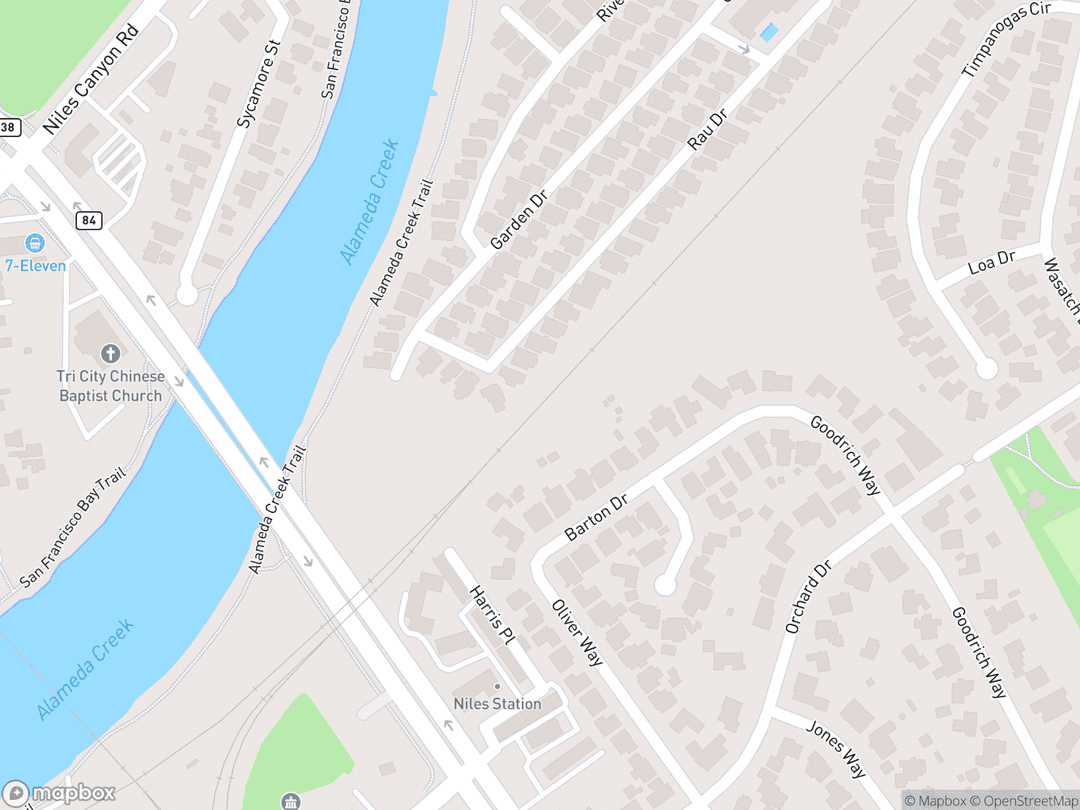
300 Gurdwara Road, Fremont, CA 94536, USA
Hours: Open 24 hours daily; main congregational services occur Sundays between 9:00 AM and 2:00 PM
Getting There: Accessible via Interstate 680 or Interstate 880 connecting to Mission Boulevard, with parking available along Gurdwara Road.
Get DirectionsTips for Your Visit
Head Coverings
Scarves are available in collection bins near the entryways for guests who do not bring their own covering.
Footwear Protocol
Remove shoes at the designated shoe room and wash your hands at the entry sinks before entering the prayer hall.
Langar Etiquette
Accept offered food with both hands and finish everything on your plate to honor the sacred volunteer labor.
Peaceful Seating
When seated in the sanctuary, cross your legs comfortably and avoid pointing your feet directly at the holy scriptures.
About
Established in 1978 against the backdrop of the Mission Peak foothills, Gurdwara Sahib Fremont stands as one of the most prominent Sikh religious institutions in North America. Following the passage of the Immigration and Nationality Act of 1965, growing numbers of Punjabi Sikhs settled in Northern California, creating an urgent need for an East Bay spiritual and cultural anchor.
Within the broader family of Dharmic faiths, Sikhism shares philosophical concepts like karma, dharma, and mukti while radically emphasizing householder devotion and the elimination of caste hierarchies. Fremont Gurdwara preserves this living faith through perpetual congregational singing of scripture and open community hospitality.
The gurdwara complex serves as a bustling hub of civic empowerment, educational programs, and humanitarian relief. From its 24-hour communal kitchen to its free health clinic, the campus exemplifies the sacred ideal of sharing blessings with all humanity.
Interesting Facts
The City of Fremont formally renamed the hillside access thoroughfare to Gurdwara Road in honor of the gurdwara's enduring civic impact (Tier A).
The gurdwara's commercial solar installation produces more than 150,000 kWh of clean electricity annually, aligning with Sikh environmental teachings (Tier A).
The volunteer kitchen operates every single day of the year, providing fresh vegetarian nourishment to anyone who arrives hungry (Tier A).
The campus houses the Sri Gur Harkrishan Health Clinic, which delivers free primary medical care to uninsured community members (Tier B).
The Fremont Khalsa School is recognized as one of the earliest and largest continuously operating weekend Sikh educational centers in North America (Tier B).
During Northern California wildfire emergencies, the gurdwara's Sikhs for Humanity team mobilized thousands of disaster relief care packages (Tier B).
The primary worship hall intentionally omits pews and reserved chairs so that corporate executives and manual laborers sit side by side on the floor (Tier A).
The gleaming golden cupolas of the gurdwara serve as a visible landmark for hikers traversing the Mission Peak regional trails (Tier B).
Common Questions
Are non-Sikh visitors permitted inside the Fremont Gurdwara?
Yes, visitors of every background and faith tradition are warmly welcomed into both the sanctuary and dining hall.
Is there any cost for the meal served in the Langar Hall?
No, all meals are completely free and funded entirely through voluntary community contributions.
What should I wear when planning a visit?
Modest attire covering the shoulders and knees is recommended, as guests sit cross-legged on the floor.
What is the proper protocol upon entering the main prayer hall?
Visitors remove shoes, cover their hair, and may sit quietly on the carpet to enjoy the devotional singing.
Featured Stories
Sanctuary for a Displaced Community
1984
In the traumatic aftermath of the 1984 military assault on the Harmandir Sahib (Golden Temple) in Amritsar, Fremont Gurdwara transformed into an indispensable humanitarian sanctuary for thousands of newly arrived Punjabi immigrants. Community members established legal aid clinics, gathered emergency relief funds, and helped displaced families rebuild their lives in the San Francisco Bay Area. The gurdwara's rapid mobilization established its enduring international reputation as a fearless defender of human rights and immigrant dignity.
Source: Fremont Gurdwara Historical Archive
Renaming the Mountain Road
1999
Originally addressed along Hillside Drive, the gurdwara grew into such a central cultural landmark that local civic leaders formally petitioned for official street recognition. On October 15, 1999, the City of Fremont officially redesignated the thoroughfare as Gurdwara Road, celebrating the gurdwara's deep philanthropic contributions. The dedicated street sign stands as an enduring public testament to the successful integration of Sikh Americans into California civic life.
Source: City of Fremont Municipal Records
Sunlight as Spiritual Stewardship
2014
Embracing the scriptural mandate from Guru Nanak that reveres nature as a divine teacher, Fremont Gurdwara became an early faith-based adopter of clean energy by commissioning an 82 kW rooftop solar array. The project generates clean electricity while preventing tons of greenhouse gas emissions each year over the East Bay foothills. Worshippers view the solar panels not merely as modern infrastructure, but as a living expression of spiritual harmony with the Earth.
Source: Sikh24 News Service
Timeline
Congregation Established
Local Sikh families formally organize the religious nonprofit corporation to serve the East Bay.
MilestoneScriptural Installation
The ceremonial installation of Sri Guru Granth Sahib Ji establishes the original Darbar Sahib on Hillside Drive.
DedicationKhalsa School Founded
Weekend instruction begins in the Gurmukhi script, devotional hymn singing, and Sikh history.
MilestoneSanctuary and Relief Mobilization
The gurdwara becomes a crucial diaspora hub for legal advocacy and human rights following political violence in Punjab.
EventElectoral Reform
The congregation implements transparent electoral procedures for its governing Supreme Council.
MilestoneStreet Renamed Gurdwara Road
Municipal leaders officially rename the access avenue to recognize the temple's central community presence.
MilestonePost-9/11 Interfaith Leadership
The gurdwara organizes educational open houses and interfaith vigils to counter bias crimes against turbaned Sikhs.
EventInternational Tsunami Relief
The congregation coordinates medical supplies and financial aid for survivors of the Indian Ocean tsunami.
EventHealth Clinic Expansion
The on-site volunteer clinic expands its diagnostic facilities to serve low-income and uninsured residents.
MilestoneCampus Expansion Approval
The Fremont Planning Commission approves a two-story expansion enlarging the facility to 41,740 square feet.
MilestoneClean Energy Array Commissioned
An 82 kW commercial rooftop solar system begins generating renewable power for the entire temple campus.
RenovationCOVID-19 Food Relief Network
The Sikhs for Humanity brigade launches drive-through food distributions and emergency provisions.
EventHistory by Decade
1970s — Founding and Foothill Roots
Our founders envisioned a haven where the teachings of Guru Nanak could flourish freely in the New World.
Following immigration reforms in the late 1960s, Sikh professionals and families established Fremont Gurdwara in 1978 as a permanent place of worship. The property was secured along the scenic foothills of the Niles district, offering a peaceful setting for scriptural study. The ceremonial installation of Sri Guru Granth Sahib Ji consecrated the site as a sanctuary for the growing Northern California congregation.
1980s — Refuge and Educational Expansion
The rapid growth of the Silicon Valley technology economy brought thousands of new Sikh residents into southern Alameda County. In response, the gurdwara established the Fremont Khalsa School to instruct young generations in language, music, and moral ethics. The decade also saw the gurdwara evolve into a critical diaspora refuge providing legal and material aid following political violence in northern India.
1990s — Institutional Maturation and Civic Renaming
During the 1990s, the gurdwara expanded its physical facilities to accommodate weekend gatherings that routinely exceeded several thousand congregants. Transparent democratic election procedures were established to govern the gurdwara's board and oversee its growing charitable programs. The decade concluded with the City of Fremont formally renaming the hillside approach to Gurdwara Road.
2000s — Interfaith Outreach and Global Relief
In the tense climate following the September 11 attacks, the Fremont congregation opened its doors to civic leaders, law enforcement, and neighbors to foster interfaith trust and protect civil rights. The community launched extensive humanitarian initiatives, shipping emergency aid to victims of international disasters and Hurricane Katrina. In 2008, the campus opened the Sri Gur Harkrishan Health Clinic to offer free medical checkups to the public.
2010s — Architectural Modernization and Clean Energy
Facing surging holiday attendance, the gurdwara secured municipal planning approvals in 2013 to enlarge its footprint to 41,740 square feet. The ambitious expansion incorporated a modern industrial kitchen, enlarged dining facilities, and upgraded educational classrooms. In 2014, the gurdwara installed an 82 kW rooftop solar photovoltaic system to advance environmental sustainability.
2020s — Crisis Response and Enduring Fellowship
During the COVID-19 pandemic and regional California wildfire crises, the gurdwara's Sikhs for Humanity initiative distributed emergency food boxes and hot meals across the East Bay. Today, the institution remains a vibrant center of spiritual fellowship, democratic civic dialogue, and unbroken hospitality beneath the Mission Peak ridgeline.
Architecture & Facilities
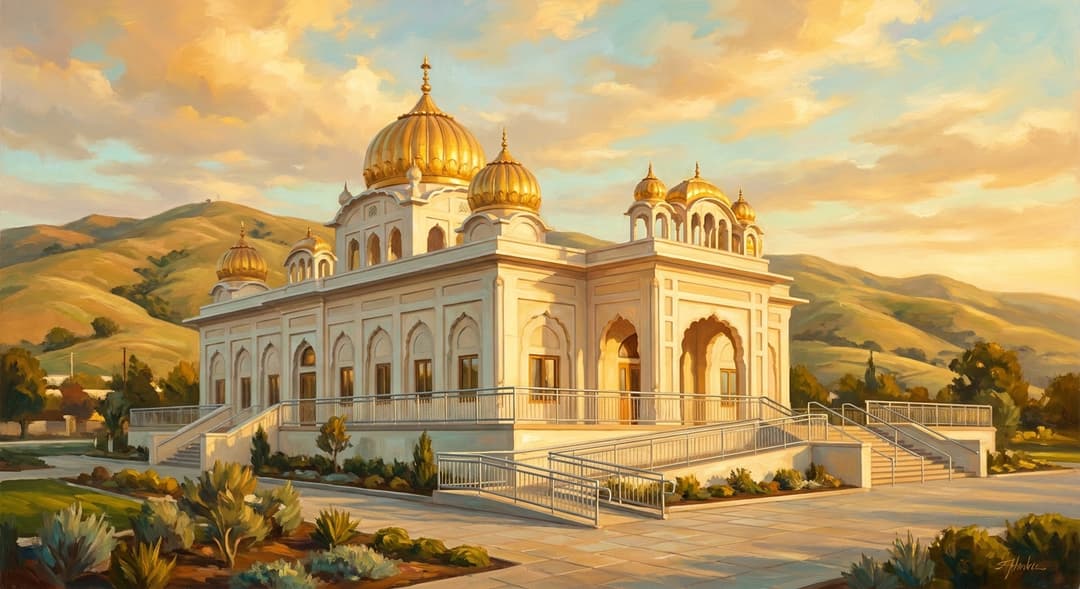
The architecture of Gurdwara Sahib Fremont blends traditional Indo-Islamic Sikh ecclesiastical forms with contemporary California institutional construction. Designed with circular and radial egalitarian floor plans rather than traditional axial basilica layouts, the building provides an open, non-hierarchical setting that houses thousands of worshippers on a single level beneath gleaming golden ribbed domes.
Building Materials
Gumbad Finishes
Ribbed structural domes surfaced in bright gold leaf paint crowned with inverted lotus petals.
Exterior Stucco
Durable off-white and cream architectural stucco engineered to withstand Northern California temperature swings.
Ceramic Pavers
Slip-resistant plaza tiles facilitating large outdoor congregational gatherings and processional walks.
Stainless Steel Railings
Polished metal balustrades providing accessible support along exterior ramps and foothill stairways.
Interior Features
Darbar Sahib
The primary worship sanctuary covered in wall-to-wall carpeting where congregants gather on the floor.
Palki Sahib
An intricately carved elevated wooden throne supporting the enthroned holy scripture.
Langar Hall
An expansive dining room equipped with continuous floor runners for communal vegetarian meals.
Industrial Kitchen
Heavy-duty commercial preparation space capable of producing thousands of fresh flatbreads daily.
Temple Grounds
The campus occupies an elevated foothill bench along the Mission Peak ridgeline, featuring terraced parking, open concrete plazas, and panoramic vistas overlooking southern Alameda County and the Niles district.
Additional Facilities
The complex includes the volunteer-staffed Sri Gur Harkrishan Health Clinic, the multi-room Fremont Khalsa School, a reference library, and an administrative rotunda.
Religious Significance
As an integral part of the Dharmic theological family, Sikhism embraces the shared cosmic principles of moral duty, righteous karma, and spiritual liberation from cycle-bound existence. However, the Sikh Gurus introduced a transformative spiritual bridge: rejecting monastic renunciation and caste distinctions in favor of an active householder life grounded in the worship of the formless Divine.
To serve as a sanctuary of spiritual contemplation, communal equality, and selfless service where the living word of the Guru is revered through devotional music and shared charity.
Sacred Ordinances
Gurbani Kirtan
The continuous melodic singing of sacred scriptural verses set to classical Indian musical raags.
Langar
The universal preparation and distribution of free vegetarian meals eaten equally on the floor.
Katha
The scholarly exposition and historical narration of Sikh scriptures to educate the congregation.
Matha Tekna
The reverent act of bowing one's forehead to the floor before the holy scripture upon entering the sanctuary.
The Word as Living Guru
Rather than venerating an anthropomorphic deity or stone icon, Sikh tradition directs spiritual devotion solely toward the eternal Shabad Guru compiled in Sri Guru Granth Sahib Ji. The text incorporates divinely inspired hymns from Sikh Gurus as well as Hindu and Muslim saints, emphasizing universal divine truth over sectarian boundaries.
Miri and Piri
The architecture and daily operations of the gurdwara reflect the saint-soldier doctrine of Miri and Piri, introduced by Guru Hargobind. Spiritual contemplation must be directly balanced by temporal responsibility, compelling Sikhs to defend human rights, shelter the persecuted, and alleviate hunger in the surrounding world.
Sources & Research
Every fact on Temples.org is backed by verified Sources & Research. Each piece of information is rated by source tier and confidence level.
View All Sources (7)
| Field | Source | Tier | Retrieved |
|---|---|---|---|
| About & Historical Background | Gurdwara Sahib Fremont (opens in a new tab) | A | 2026-03-30 |
| Timeline & Campus Expansion | Patch Media (opens in a new tab) | C | 2026-03-30 |
| Architecture & Structural Engineering | Alan Kropp & Associates, Inc. (opens in a new tab) | B | 2026-03-30 |
| Post-9/11 Civil Liberties & Protocol | Sikh American Legal Defense and Education Fund (opens in a new tab) | B | 2026-03-30 |
| Renewable Energy & Community History | Sikh24 Media Network (opens in a new tab) | C | 2026-03-30 |
| Dharmic Traditions & Diaspora Studies | The Pluralism Project at Harvard University (opens in a new tab) | B | 2026-03-30 |
| Civic History & Street Renaming | Hinduism Today Magazine (opens in a new tab) | B | 2026-03-30 |