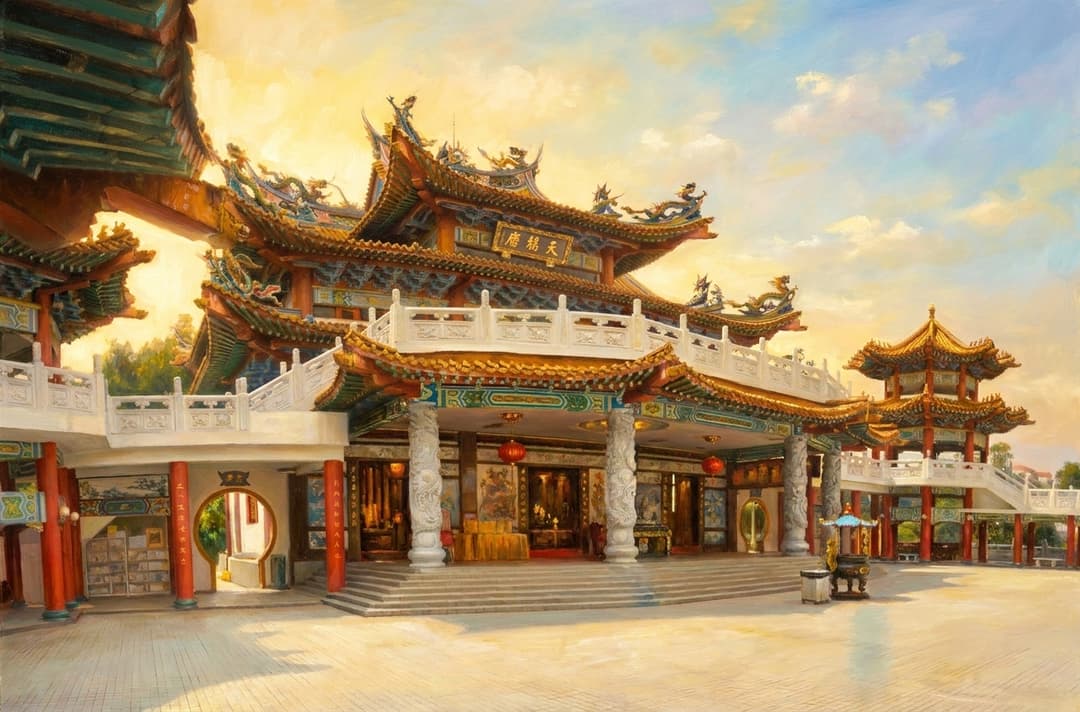
Visitor Insights
Visiting Tien Hau Temple
Tien Hau Temple offers an authentic, quiet spiritual atmosphere located four flights above Chinatown's lively Waverly Place. Visitors should prepare to walk up three long staircases and observe strict sanctuary etiquette.
Highlights
- Intricate gilded primary altar housing the historic Mazu statue.
- Canopy of hundreds of glowing red hanging lanterns.
- Fourth-floor balcony view over historic Waverly Place.
Things to Know
- Photography and video recording inside the temple are strictly prohibited.
- Access requires climbing three flights of stairs; no elevator is available.
Location
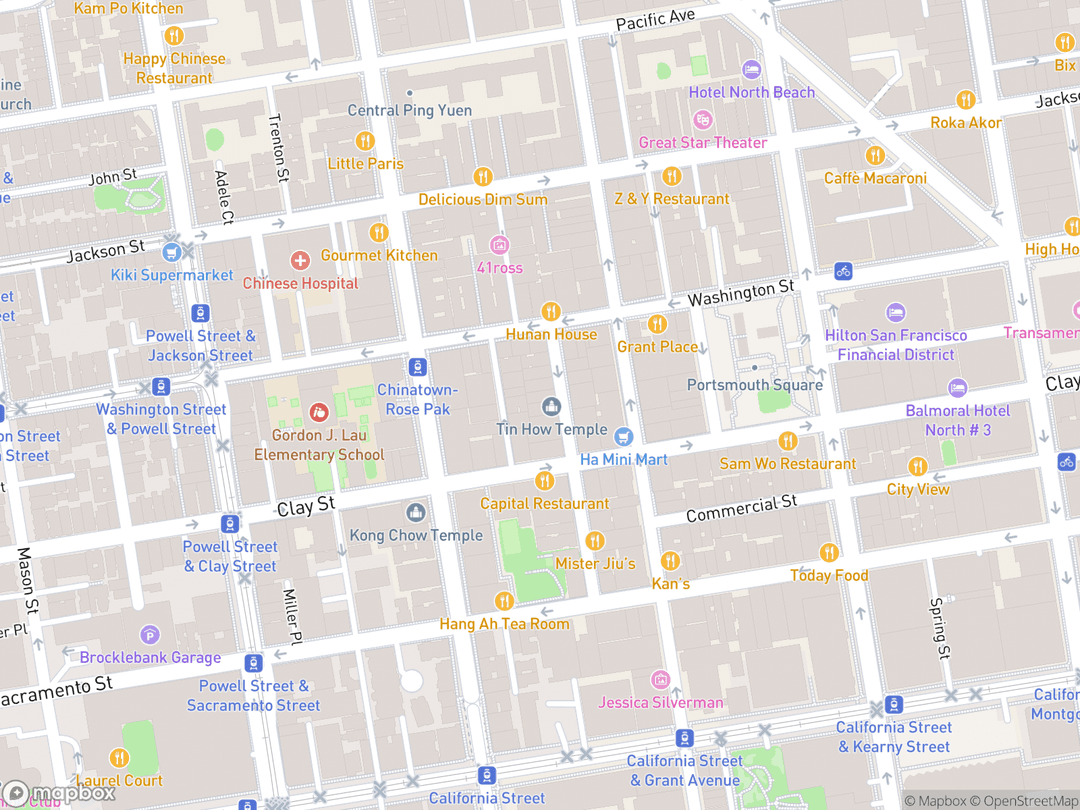
125 Waverly Place, 4th Floor, San Francisco, CA 94108, United States
Hours: Daily, 10:00 AM – 4:00 PM
Getting There: Located at 125 Waverly Place between Clay and Washington Streets in San Francisco Chinatown, accessible via public transit.
Get DirectionsTips for Your Visit
Respect Active Worship
Maintain a quiet demeanor, remove hats upon entering, and refrain from using mobile phones or cameras.
Incense Donations
Admission is free, but purchasing incense or leaving a cash donation supports temple preservation.
About
Founded in 1852 during the height of the California Gold Rush, the Tien Hau Temple (Tin How Temple, 天后古廟) in San Francisco’s Chinatown is the oldest continuously operating Chinese sanctuary in the United States. Established by Cantonese immigrants under the Sam Yup Association, the temple served as a spiritual haven for sailors, merchants, and laborers seeking divine protection after surviving perilous Pacific Ocean voyages.
Rooted in Taoism and East Asian sacral traditions, the sanctuary centers on the veneration of Mazu (Tien Hau, "Empress of Heaven"), the deified 10th-century protector of seafarers and coastal communities. Within Taoist cosmology, Mazu embodies divine compassion and cosmic harmony, maintaining order over turbulent natural forces and offering blessings of safety, health, and family prosperity.
After the original wooden shrine on Waverly Place was destroyed in the 1906 San Francisco Earthquake and firestorm, brave devotees salvaged key sacred artifacts from the ashes, including the principal carved statue of Mazu and the bronze temple bell. Rebuilt in 1910–1911 by the Sue Hing Benevolent Association, the temple was placed on the fourth floor to preserve sacred vertical alignment according to Feng Shui principles. Following a mid-century hiatus, community leaders fully restored and reopened the sanctuary on May 4, 1975, ensuring its role as a living monument of Chinese-American heritage.
Gallery
Symbolic Elements
The temple's exterior features intricate carvings, each rich with spiritual meaning:
Mazu Shrine Statue
The central carved wooden icon depicting Tien Hau in imperial robes and a beaded crown.
Hanging Red Lanterns
Suspended glass lanterns bearing red prayer cards with family blessings and petitions.

Spiral Incense Coils
Conical incense spirals burning continuously to symbolize uninterrupted prayer ascent.

Thousand-Mile Eye & Wind-Accompanying Ear
Supernatural attendant generals symbolizing divine omniscience and prompt relief.

Bamboo Divinity Sticks
Traditional Kau Cim fortune cylinders used by worshippers to receive written guidance.
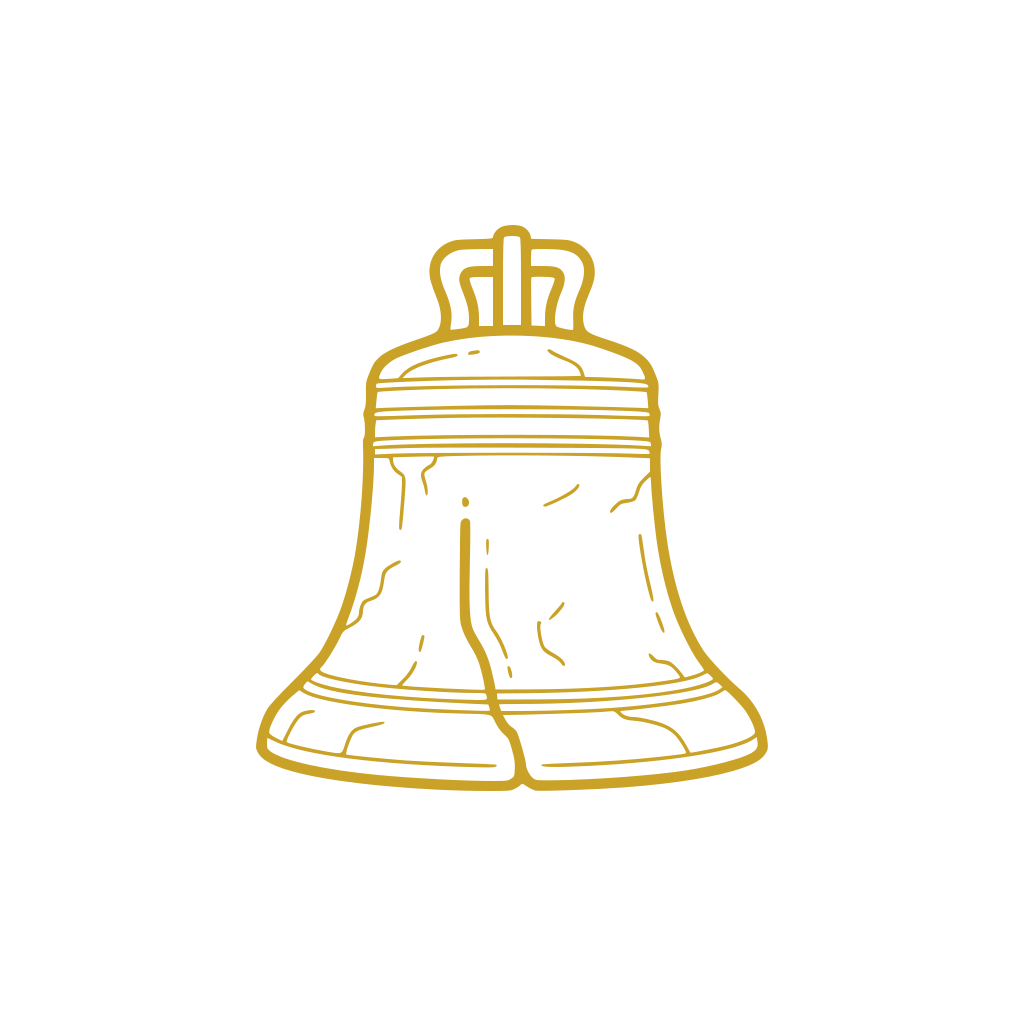
Historic Temple Bell
A heavy cast bronze bell salvaged from the 1906 fire and rung during major rituals.
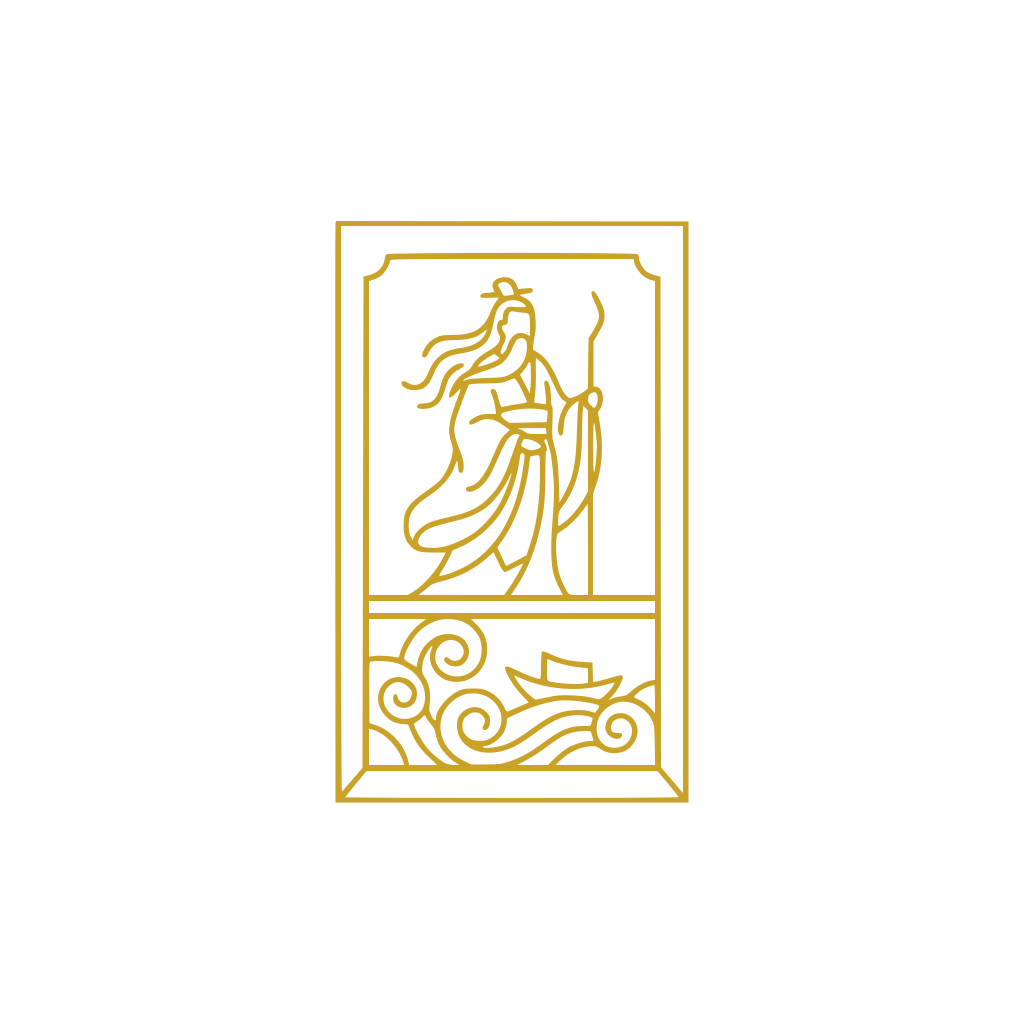
Gilded Wood Carvings
Intricate Qing-era wooden panels portraying legendary immortals and maritime scenes.
Interesting Facts
It is documented as the oldest continuously operating Chinese temple in the United States. (Tier A)
Waverly Place is known in Cantonese as 'Tien Hou Miu Gai', meaning 'Tien Hou Temple Street'. (Tier A)
Devotees risked their lives during the 1906 earthquake firestorm to rescue the main Mazu statue. (Tier B)
The temple resides on the top floor so that no human activities occur directly above the deities. (Tier B)
Hundreds of red lanterns with individual prayer cards hang suspended from the ceiling. (Tier A)
Worshippers continue to practice Kau Cim divinity stick fortune divination daily. (Tier B)
The fourth-floor balcony offers direct framing views of Chinatown and the Transamerica Pyramid. (Tier B)
The temple reopened on May 4, 1975, after a twenty-year mid-century public closure. (Tier A)
Common Questions
What is the primary deity worshipped at Tien Hau Temple?
The primary deity is Mazu (Tien Hau), the Empress of Heaven and Taoist patron protector of sea travelers.
Is photography allowed inside the sanctuary?
No, photography and videography are strictly prohibited to respect active worshippers and sacred tradition.
Why is the temple located on the fourth floor?
Under Feng Shui principles, Taoist deities must reside beneath open sky without living spaces above them.
Is there an elevator available to reach the temple?
No, visitors must ascend three flights of stairs from the street level entrance on Waverly Place.
Featured Stories
Rescuing Mazu from the 1906 Inferno
April 18, 1906
As roaring firestorms consumed Chinatown following the 1906 earthquake, courageous temple guardians rushed into the burning sanctuary on Waverly Place. Ignoring imminent collapse, they salvaged the sacred principal statue of Mazu, the heavy bronze bell, and carved altar components. These miraculous relics were preserved in safety and reinstalled when the current brick shrine opened in 1911.
Source: Chinese Historical Society of America Archives
The Fourth-Floor Elevation
1910
When designing the rebuilt association building, elders mandated that the sanctuary be situated on the uppermost fourth floor. In Taoist spatial theology, sacred deities must exist beneath open skies without human living space above them to maintain uncorrupted Qi flow. This elevated placement created an urban oasis of tranquility overlooking Waverly Place.
Source: San Francisco Heritage Architectural Survey
The Reawakening of Waverly Place
May 4, 1975
After resting behind closed doors for twenty years due to post-war shifts, the temple underwent an extensive restoration by community elders and preservationists. On May 4, 1975, rededication ceremonies featuring Taoist chants, incense offerings, and lion dances officially reopened the doors to global pilgrims and neighborhood worshippers alike.
Source: Sue Hing Benevolent Association Records
Timeline
Gold Rush Arrivals
Chinese sailors and travelers carry portable Mazu shrines across the Pacific Ocean.
EventSanctuary Founded
The Sam Yup Association establishes the original Tien Hau Temple on Pike Street.
MilestoneStreet Naming
Pike Street becomes colloquially known in Chinese as Tien Hou Miu Gai.
EventEarthquake and Firestorm
The catastrophic earthquake and fire burn the original wooden shrine to the ground.
EventSacred Artifacts Rescued
Devotees rescue the main Mazu statue, bronze bell, and altar core from the ashes.
EventReconstruction Begins
The Sue Hing Benevolent Association begins building the present brick structure.
component.timeline.groundbreakingNew Shrine Opens
Tien Hau Temple re-opens on the fourth floor at 125 Waverly Place.
DedicationPublic Operations Suspended
Regular public access is temporarily closed due to shifting neighborhood demographics.
EventRestoration Project
Community elders initiate a thorough multi-year restoration of sacred icons and hall.
RenovationGrand Reopening
The temple rededicates its doors to public worship with Taoist ceremonies and lion dances.
DedicationOngoing Legacy
The temple marks nearly a century at Waverly Place as America's oldest Chinese shrine.
MilestoneHistory by Decade
1850s
Gold Rush pioneers under the Sam Yup Association establish the original Tien Hau Temple on Pike Street in 1852. The shrine provides immediate spiritual support and gratitude for immigrants surviving dangerous ocean crossings.
1880s
The sanctuary flourishes as the spiritual anchor of San Francisco Chinatown. The surrounding street is colloquially named Tien Hou Miu Gai in recognition of the shrine's cultural prominence.
1900s
The 1906 earthquake and firestorm completely destroy the original wooden temple structure. Devotees successfully salvage core sacred icons and historical altars from the glowing ruins.
1910s
The Sue Hing Benevolent Association completes the present four-story brick building at 125 Waverly Place in 1911. The temple reopens on the fourth floor, restored with salvaged relics and Guangdong woodcraft.
1950s–1970s
Public operations close in 1955 amid urban demographic shifts. Community elders undertake a thorough multi-year restoration in the early 1970s, culminating in a festive public reopening on May 4, 1975.
2000s–Present
Tien Hau Temple maintains continuous daily operations as an active house of worship and historic monument, welcoming local devotees and international visitors to Waverly Place.
Architecture & Facilities
The temple represents the Cantonese Urban Association Shrine Hall style, situated on the top floor of a four-story brick commercial building to ensure sacred elevation and uninhibited circulation of vital energy above urban streets.
Building Materials
Structural Envelope
Post-1906 unreinforced brick construction with decorative wooden exterior brackets.
Gilded Teak Wood
Hand-carved altar frameworks imported from Guangdong province finished in gold leaf.
Cast Bronze
Heavy ritual bells and antique incense burners designed to withstand high temperatures.
Glass and Brass
Ornamental hanging red lanterns mounted on brass framework ceiling grids.
Interior Features
Main Shrine Altar
A multi-tiered gilded pavilion housing the principal seated statue of Tien Hau.
Lantern Canopy Space
A dense ceiling grid supporting hundreds of suspended red prayer lanterns.
Secondary Deities Hall
Side shrines dedicated to Guan Gong, Tu Di Gong, Hua Tuo, and Taoist Immortals.
Incense Table Area
Antique pewter and brass tables holding ash vessels for daily joss stick offerings.
Temple Grounds
Occupying the fourth floor of 125 Waverly Place, the sanctuary features a recessed balcony overlooking Chinatown's historic alleyway.
Additional Facilities
Includes an entry foyer on Waverly Place, administrative association rooms, and ritual supply staging areas.
Religious Significance
In Taoism and Chinese folk belief, sanctuaries connect physical life with cosmic order and ancestral protection. Tien Hau Temple centers on Mazu, the deified 10th-century woman Lin Moniang, who achieved transcendence and became the patron guardian of maritime travelers. Within Taoist theology, the temple operates as a sacred nexus where incense smoke conveys human petitions to the divine realm.
To offer spiritual protection, express gratitude for safe transit, and foster communal harmony through Taoist veneration.
Sacred Ordinances
Incense Veneration (Xiang Huo)
Offering lighted joss sticks to communicate prayers and show reverence to deities.
Divination Consulting (Kau Cim)
Shaking bamboo fortune tubes to obtain numbered poetic guidance from divine guardians.
Lantern Dedication (Deng Chuan)
Sponsoring red prayer lanterns inscribed with family names to invoke annual blessings.
Pantheon of Guiding Deities
In addition to Mazu, the sanctuary houses shrines to Guan Gong for moral integrity and commerce, Tu Di Gong for local earthly protection, and Hua Tuo for physical healing, reflecting the comprehensive syncretic nature of Taoist devotion.
Sources & Research
Every fact on Temples.org is backed by verified Sources & Research. Each piece of information is rated by source tier and confidence level.
View All Sources (8)
| Field | Source | Tier | Retrieved |
|---|---|---|---|
| About & Historical Background | California Office of Historic Preservation (opens in a new tab) | A | 2026-02-18 |
| About & Historical Background | San Francisco Planning Department (opens in a new tab) | A | 2026-02-18 |
| Architecture & Interior Features | National Register of Historic Places (opens in a new tab) | A | 2026-02-18 |
| Architecture & Interior Features | San Francisco Heritage (opens in a new tab) | B | 2026-02-18 |
| Religious Significance & Deities | Chinese Historical Society of America (opens in a new tab) | B | 2026-02-18 |
| Religious Significance & Deities | San Francisco Public Library Historical Center (opens in a new tab) | B | 2026-02-18 |
| Visitor Information & Timeline | FoundSF Digital History Archive (opens in a new tab) | B | 2026-02-18 |
| Visitor Information & Timeline | San Francisco Travel Association (opens in a new tab) | B | 2026-02-18 |