Visitor Insights
Visiting Louisville Kentucky Temple
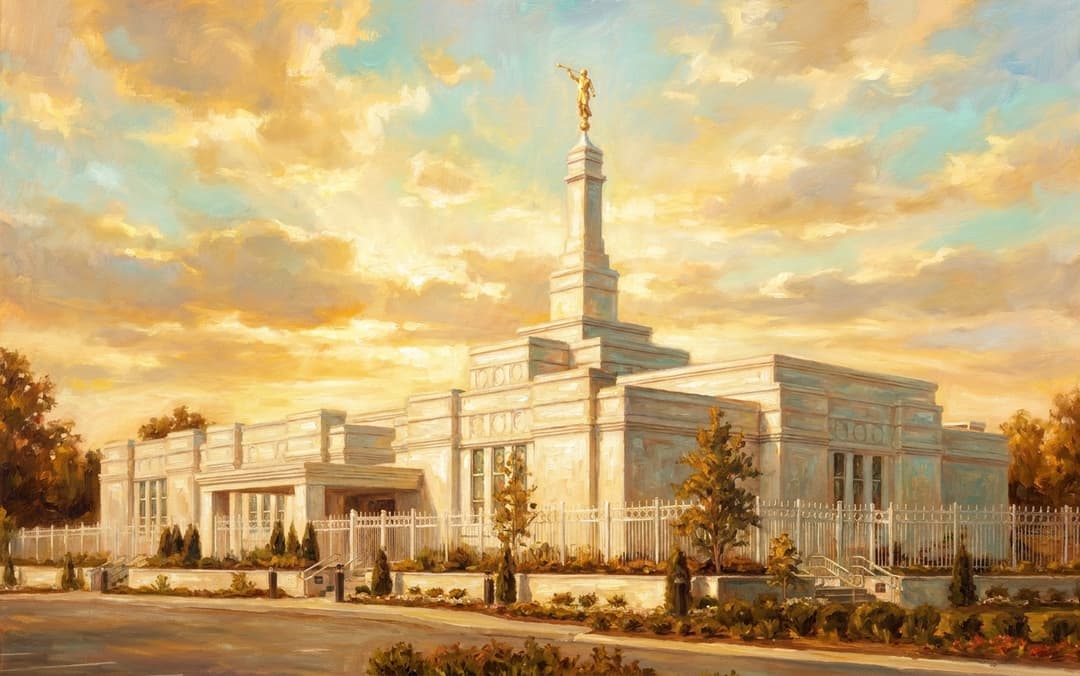
The Louisville Kentucky Temple is nestled in a tranquil wooded setting in Oldham County northeast of Louisville. The landscaped grounds offer a serene atmosphere where visitors of all faiths can walk the perimeter pathways, admire the Vermont marble masonry, and reflect.
Highlights
- Lush landscaped gardens framed by mature native Kentucky hardwood trees.
- Exterior facade finished with pristine Imperial Danby White marble.
- Gilded Angel Moroni statue crowning the 71-foot central spire.
- Traditional baptismal font resting upon twelve sculpted brass oxen.
Things to Know
- Interior admittance is reserved exclusively for Church members with valid temple recommends.
- Public visitors are warmly welcomed to explore the surrounding grounds from sunrise to sunset.
- Commercial, drone, and intrusive media photography on the grounds is strictly prohibited.
- No on-site cafeteria or visitor housing is available on the property.
Location
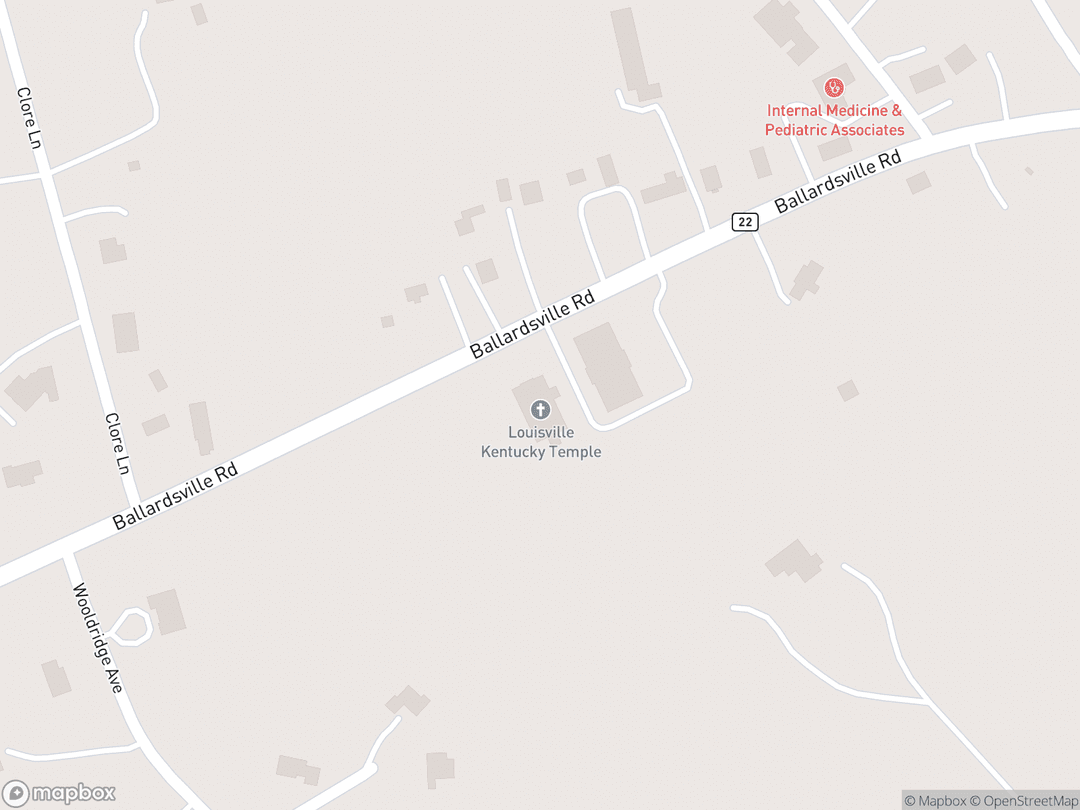
7118 West Highway 22, Crestwood, Kentucky 40014, United States
Hours: Tuesday through Saturday by appointment; exterior grounds open daily from dawn to dusk.
Getting There: Located approximately 20 miles northeast of downtown Louisville via Interstate 71 North to Exit 14, following Highway 329 to West Highway 22.
Get DirectionsTips for Your Visit
Golden Hour Exterior Photos
Visit during late afternoon when the warm Kentucky sun filters through the woodland canopy onto the white marble.
Grounds Etiquette
Dress respectfully and maintain quiet contemplation while walking the manicured garden paths.
Adjacent Meetinghouse
Public Sunday services and congregational worship are held in the neighboring meetinghouse on the shared campus.
About
The Louisville Kentucky Temple stands as the 76th operating temple of The Church of Jesus Christ of Latter-day Saints and the first constructed in the Commonwealth of Kentucky. Dedicated in March 2000, the edifice serves members across Kentucky, southern Indiana, southwestern Ohio, and western West Virginia.
Conceived as part of an initiative to bring sacred ordinances closer to dispersed congregations, the temple reflects the Abrahamic heritage of sacred sanctuaries set apart from the secular world. Unlike standard meetinghouses open for regular Sabbath worship, this holy sanctuary is dedicated exclusively to sacred priesthood ordinances that bind families eternally.
Surrounded by mature native hardwoods and manicured grounds in Oldham County, the temple features a single spire topped with the Angel Moroni. Clad in brilliant white Imperial Danby marble from Vermont, the structure offers an enduring haven of peace, prayer, and divine worship.
Gallery
Symbolic Elements
The temple's exterior features intricate carvings, each rich with spiritual meaning:

Angel Moroni
The gilded statue atop the spire heralds the restoration of the everlasting gospel.

Holiness to the Lord
The biblical inscription above the entrance signifies consecration as the Lord's house.

Oxen-Supported Font
Twelve sculpted oxen supporting the baptistery represent the tribes of ancient Israel.

Opposing Mirrors
Facing mirrors in sealing rooms visually illustrate eternal family continuity without end.

Imperial Danby Marble
The pure white Vermont stone evokes purity, holiness, and divine light.

Central Spire
The soaring vertical tower points hearts and minds upward toward heaven.

Progressive Rooms
Advancing from instructional spaces to the Celestial Room portrays man's spiritual journey to God.
Interesting Facts
The temple was the very first house of the Lord erected in the Commonwealth of Kentucky. (Tier A)
Project inspectors rejected over 40% of the Vermont marble slabs to guarantee pure white uniformity. (Tier B)
A severe spring thunderstorm swept the area during dedication, contrasting with the peace felt inside. (Tier A)
Groundbreaking coincided with ceremonies in Adelaide, Australia, and Veracruz, Mexico, on the same day. (Tier A)
Local Latter-day Saint young women helped assemble thousands of delicate crystal chandelier pendants. (Tier B)
A county inspector remarked that Church engineering standards were far more rigorous than local building codes. (Tier B)
An unusual winter drought enabled construction crews to complete the temple in less than ten months. (Tier A)
The building sits physically in Pewee Valley while its official postal mailing address is Crestwood. (Tier A)
Common Questions
Can visitors of other faiths tour the interior of the temple?
Interior access is reserved for faithful Latter-day Saints, though all are welcome to enjoy the surrounding grounds.
Why is the temple located in Crestwood rather than Louisville?
Oldham County offered a peaceful, wooded setting easily accessible to members across the multi-state region.
What is the primary spiritual purpose of the temple?
Temples facilitate sacred covenants, priesthood endowments, and eternal family sealings under divine authority.
What stone was used for the exterior cladding?
The building is faced with meticulously graded Imperial Danby White marble quarried in Vermont.
Is there a public visitors' center on site?
There is no formal visitor center, but an adjacent meetinghouse hosts weekly Sunday worship open to the public.
Featured Stories
Peace Amidst the Storm
March 19, 2000
During the sacred dedicatory services conducted by President Thomas S. Monson, a violent spring thunderstorm swept across Oldham County, unleashing torrential rains and booming thunder. Inside the newly consecrated sanctuary, patrons were enveloped in a profound sense of calm and reverent stillness. The tempest outside stood as a dramatic reminder of the temple's role as a spiritual refuge from worldly turmoil.
Source: Church News Dedication Report
Young Hands Assembling Light
February 2000
In the final weeks of construction, local Latter-day Saint young women were invited to assist the interior finishing team by assembling the delicate crystal chandeliers. Singing church hymns in soft harmony, the youth carefully hung thousands of faceted crystal pendants piece by piece. Their joyful labor left an indelible imprint of personal devotion upon the sacred fixtures of the Celestial Room.
Source: LDS Living Historical Feature
A Decade of Longing Answered
March 17, 1999
For decades, faithful members across Kentucky drove hundreds of miles to distant temples in Atlanta, Chicago, or Washington, D.C., to participate in temple ordinances. When the First Presidency announced a temple for Louisville, congregations wept with joy and gratitude. The announcement fulfilled the lifelong prayers of generations of regional pioneers who had long yearned for a house of the Lord near home.
Source: First Presidency Historical Dispatches
Timeline
Early Missionary Work
Missionaries preach along the Ohio River valley, establishing the earliest Latter-day Saint presence in Kentucky.
MilestoneLouisville Stake Formed
Rapid regional growth leads to the organization of the Louisville Kentucky Stake.
MilestoneSmall Temple Initiative
President Gordon B. Hinckley announces plans to bring smaller temples closer to dispersed memberships.
MilestoneTemple Announced
The First Presidency officially announces the construction of Kentucky's first temple.
MilestoneGroundbreaking Ceremony
Elder John K. Carmack presides over the groundbreaking ceremony in Oldham County.
component.timeline.groundbreakingDignitary Preview Tour
Kentucky Governor Paul E. Patton and community leaders tour the completed building.
MilestonePublic Open House
More than 21,000 visitors tour the interior during a weeklong public open house.
MilestoneTemple Dedication
President Thomas S. Monson dedicates the sacred edifice in four dedicatory sessions.
DedicationPandemic Precautionary Closure
Operations are temporarily suspended worldwide, later resuming under phased safety protocols.
RenovationHistory by Decade
1830s–1960s — Pioneer Roots and Regional Growth
Early missionary labors along the Ohio River established a small presence in Kentucky during the 1830s. Most converts moved westward with the main body of the Church, leaving small scattered branches that gradually matured into sustained congregations by the mid-twentieth century.
1970s–1990s — Stake Organization and Temple Need
The organization of the Louisville Kentucky Stake in 1971 anchored regional church administration and fueled steady convert baptisms. Members regularly organized lengthy bus caravans to out-of-state temples, inspiring prayers for a dedicated local sanctuary.
2000s–Present — A Consecrated House of the Lord
Dedicated on March 19, 2000, by President Thomas S. Monson, the temple has anchored spiritual worship across Kentucky and adjacent states for over two decades. The sanctuary continues to provide a sacred center for covenants, worship, and vicarious family ordinances.
Architecture & Facilities
The Louisville Kentucky Temple represents a classic modern interpretation of Latter-day Saint ecclesiastical architecture, derived from the smaller temple typology introduced under President Gordon B. Hinckley. Symmetrically proportioned with clean horizontal sightlines, the single-story pavilion features an attached central tower rising 71 feet that seamlessly harmonizes sacred grandeur with intimate regional scale.
Building Materials
Exterior Cladding
Finished in pristine Imperial Danby White marble quarried and selected in Vermont.
Spire and Statuary
Capped by a fiberglass tower and gilded statue of the Angel Moroni.
Art Glass
Custom insulated window lites featuring subtle geometric patterns and regional flora.
Perimeter Fencing
White ornamental steel fencing encircles the wooded property boundary.
Interior Features
Celestial Room
Features delicate cream wool carpeting, ornate crown molding, and imported crystal chandeliers.
Ordinance Rooms
Two instruction rooms designed for progressive theological teaching and spiritual progression.
Sealing Rooms
Two rooms furnished with central altars and opposing infinity mirrors for eternal marriages.
Baptistery
Houses an elevated font resting upon the backs of twelve sculpted oxen.
Temple Grounds
The three-acre wooded site is landscaped with native Kentucky dogwoods, seasonal flowerbeds, and meandering walkways.
Additional Facilities
The temple grounds share a campus with a standard Latter-day Saint meetinghouse providing local congregational facilities.
Religious Significance
Within the broader Abrahamic tradition, sacred sanctuaries are consecrated as an earthly point of communion with God, echoing ancient biblical temples.
The Louisville Kentucky Temple stands as the House of the Lord, serving as a dedicated haven for sacred priesthood ordinances and covenants.
Sacred Ordinances
Baptism for the Dead
Vicarious water immersion on behalf of deceased ancestors, fulfilling Christ's universal offer of salvation.
The Endowment
Sacred instruction and bilateral covenants concerning obedience, sacrifice, and devotion to God.
Eternal Marriage and Sealings
Sacred ordinances binding husband, wife, and children in eternal familial relationships through divine authority.
Sacred Ordinances and Covenants
Inside the temple, members enter into solemn bilateral covenants through Jesus Christ, promising to keep God's commandments and consecrate their lives to righteousness.
Vicarious Service and Ancestral Bonds
Reflecting divine love for all humanity, temple patrons vicariously perform saving sacraments for ancestors who passed without the opportunity to hear the gospel.
Sources & Research
Every fact on Temples.org is backed by verified Sources & Research. Each piece of information is rated by source tier and confidence level.
View All Sources (8)
| Field | Source | Tier | Retrieved |
|---|---|---|---|
| About & Historical Background | The Church of Jesus Christ of Latter-day Saints (opens in a new tab) | A | 2026-03-31 |
| Dedication & Temple History | Church News (opens in a new tab) | B | 2026-03-31 |
| Temple Milestones & Ordinances | LDS Newsroom (opens in a new tab) | A | 2026-03-31 |
| Architectural Overview & Sizing | ChurchofJesusChristTemples.org (opens in a new tab) | C | 2026-03-31 |
| Construction Details & Marble Selection | LDS Living (opens in a new tab) | B | 2026-03-31 |
| Local Stake History & Demographics | StudyLib Academic Archives (opens in a new tab) | B | 2026-03-31 |
| Fine Art Photography & Site Analysis | LDS Temple Photography (opens in a new tab) | C | 2026-03-31 |
| Grounds Access & Travel Context | Photogent Travel Guides (opens in a new tab) | D | 2026-03-31 |