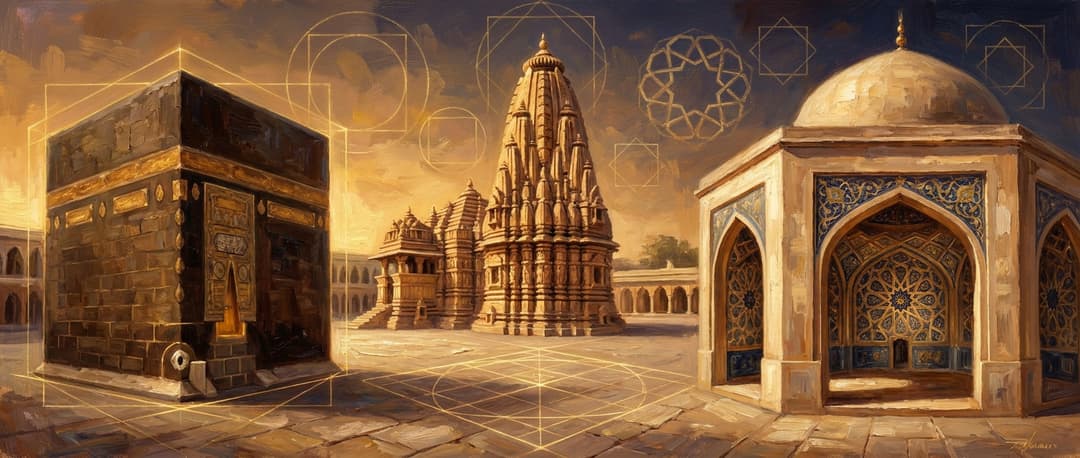
পবিত্র ভাষা হিসেবে জ্যামিতি
স্থপতিরা কম্পিউটারে নকশা করার অনেক আগে থেকেই, মন্দির নির্মাতারা দড়ি, ওলন দড়ি এবং পবিত্র বলে বিবেচিত অল্প কিছু সংখ্যা ও আকৃতি নিয়ে কাজ করতেন। প্রাচীন মানুষের কাছে জ্যামিতি কোনো সাধারণ হাতিয়ার ছিল না। একটি বৃত্ত, একটি বর্গক্ষেত্র, দুটি দৈর্ঘ্যের অনুপাত — প্রতিটিই ধর্মীয় ও আধ্যাত্মিক গুরুত্ব বহন করত। একটি পবিত্র ভবনের নকশা তৈরি করা নিজেই একটি আচার ছিল, যা পৃথিবীর একটি নির্দিষ্ট অংশে মহাজাগতিক শৃঙ্খলাকে খোদাই করার একটি উপায় ছিল।
এই কারণেই সম্পূর্ণ ভিন্ন সংস্কৃতির মন্দিরের নকশাগুলোতে বারবার একই রূপ ফিরে আসে। বর্গক্ষেত্র। বৃত্ত। ঘনক। ক্রুশ। তিন, সাত এবং বারো সংখ্যাগুলো। মেসোপটেমিয়া, মেসোআমেরিকা এবং মধ্যযুগীয় ইউরোপে যখন একই আকৃতির পুনরাবৃত্তি ঘটে, তখন তা সবসময় ধার করা বিষয় নয় — এটি চিরন্তন কিছুর প্রতিনিধিত্ব করার জন্য তৈরি করা স্থাপত্যের একটি সর্বজনীন ব্যাকরণ।
বর্গক্ষেত্র এবং বৃত্ত: পৃথিবীর সাথে স্বর্গের মিলন
প্রায় প্রতিটি ঐতিহ্যেই, বর্গক্ষেত্র পার্থিব জগতের এবং বৃত্ত স্বর্গীয় জগতের প্রতিনিধিত্ব করে। বর্গক্ষেত্রের চারটি দিক রয়েছে যা চারটি প্রধান দিক, চারটি উপাদান এবং পৃথিবীর চার কোণকে নির্দেশ করে। বৃত্তের কোনো শুরু বা শেষ নেই, যা ঈশ্বরের চিরন্তন রূপকে প্রতিফলিত করে।
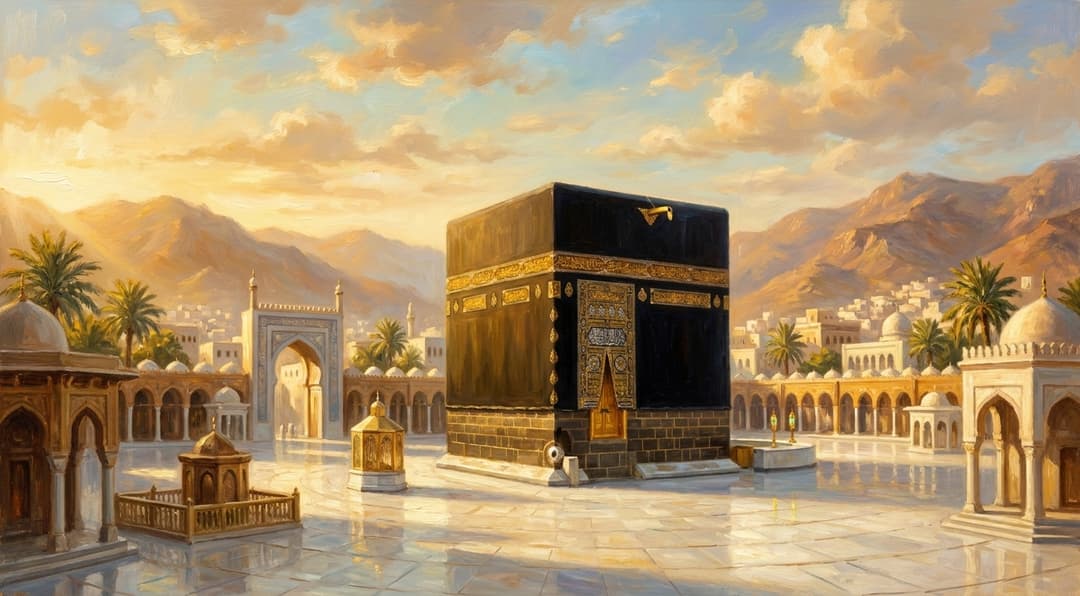
পবিত্র ভবনগুলোতে প্রায়শই এই দুটি আকৃতিকে একে অপরের পরিপূরক হিসেবে ব্যবহার করা হয়। হাজিয়া সোফিয়ার মতো বাইজেন্টাইন গির্জাগুলো একটি বর্গাকার ভিত্তির ওপর একটি বিশাল বৃত্তাকার গম্বুজ তুলে ধরে, যা পৃথিবীতে স্বর্গের অবতরণকে চিত্রিত করে। রোমের প্যান্থিয়ন গাণিতিক নির্ভুলতার সাথে একই কাজ করে: একটি গোলক ঠিক ভবনের ভেতরে খাপ খেয়ে যায়, যার ব্যাস তার উচ্চতার সমান। মক্কার কাবা এই নীতিটিকে তার চরম সীমায় নিয়ে গেছে — একটি প্রায় নিখুঁত ঘনক, যা আকৃতিগুলোর মধ্যে সবচেয়ে স্থিতিশীল এবং সুদৃঢ়, এবং এটি এমন এক স্থানকে চিহ্নিত করে যার দিকে বিশ্বের এক-চতুর্থাংশ মানুষ প্রার্থনার জন্য মুখ ফেরায়।
পবিত্র সংখ্যা: ৩, ৭, ১২, ৪০, ১০৮
মানুষ যতদিন ধরে গণনা করছে, ততদিন ধরেই সংখ্যাগুলো ধর্মীয় গুরুত্ব বহন করে আসছে। তিন সংখ্যাটি খ্রিস্টান ত্রিত্ব (ট্রিনিটি), হিন্দু ত্রিমূর্তি এবং বৌদ্ধধর্মের ত্রিরত্নে দেখা যায় — এবং কাঠামোগতভাবে তিন-আইল বিশিষ্ট ব্যাসিলিকা এবং তিন তলা প্যাগোডায় দেখা যায়। সাত সৃষ্টির দিনগুলো, ইসলামের সপ্ত আকাশ এবং যোগ ঐতিহ্যের চক্রগুলোকে চিহ্নিত করে; মেনোরাতে সাতটি শাখা থাকে এবং একজন মুসলিম তীর্থযাত্রী কাবার চারপাশে সাতবার তাওয়াফ (প্রদক্ষিণ) করেন।
- বারো স্বর্গকে পৃথিবীর সাথে যুক্ত করে: ইস্রায়েলের বারোটি গোষ্ঠী, বারো জন প্রেরিত (অ্যাপোস্টল), বারোটি রাশিচক্রের চিহ্ন, বারো মাস। দ্য চার্চ অব জিজাস ক্রাইস্ট অব ল্যাটার-ডে সেন্টস-এর মন্দিরগুলোর বাপ্তিস্মের পাত্রগুলো বারোটি ষাঁড়ের পিঠের ওপর স্থাপিত, যার মধ্যে তিনটি প্রতিটি প্রধান দিকের মুখোমুখি — যা জেরুজালেমের প্রথম মন্দিরে শলোমনের স্থাপন করা ব্রোঞ্জের সমুদ্রের একটি সরাসরি প্রতিফলন। হিব্রু বাইবেল এবং কুরআনে চল্লিশ রূপান্তরকে চিহ্নিত করে: চল্লিশ দিনের বন্যা, চল্লিশ বছরের মরুভূমির জীবন, চল্লিশ দিনের উপবাস। এবং হিন্দু ও বৌদ্ধ সাধনায়, ১০৮* হলো জপমালার পুঁতির সংখ্যা, কোনো দেবতার নামের সংখ্যা, নির্দিষ্ট কিছু মন্দিরের সিঁড়ির সংখ্যা — যার গুণকগুলো জ্যোতির্বিদ্যা এবং আধ্যাত্মিক চক্রের প্রতিধ্বনি করে।
গোল্ডেন রেশিও এবং পশ্চিমা ঐতিহ্য
গ্রীকরা আবিষ্কার করেছিল যে একটি নির্দিষ্ট অনুপাত — প্রায় ১ থেকে ১.৬১৮ — প্রকৃতিজুড়ে দেখা যায়, নটিলাস শামুকের সর্পিল আকৃতি থেকে শুরু করে সূর্যমুখীর বীজের বিন্যাস পর্যন্ত। তারা এটিকে ‘ঐশ্বরিক অনুপাত’ বলত এবং তারা এটি পার্থেনন তৈরিতে ব্যবহার করেছিল। ভবনটির প্রস্থ ও উচ্চতার অনুপাত এবং এর ভেতরের অনেকগুলো উপবিভাগের অনুপাত এই সংখ্যার খুব কাছাকাছি।
মধ্যযুগীয় ক্যাথেড্রাল নির্মাতারাও একই প্রবৃত্তি উত্তরাধিকারসূত্রে পেয়েছিলেন, যদিও তারা এটিকে একটি ভিন্ন ব্যবস্থার মাধ্যমে প্রকাশ করেছিলেন: ‘অ্যাড কোয়াড্রেটাম’ (বর্গক্ষেত্রের মাধ্যমে) এবং ‘অ্যাড ট্রায়াঙ্গুলাম’ (ত্রিকোণের মাধ্যমে) পদ্ধতি, যা একটি একক প্রারম্ভিক বর্গক্ষেত্র বা ত্রিকোণ থেকে একটি ভবনের সমস্ত অনুপাত তৈরি করত। এই কারণেই গথিক ক্যাথেড্রালগুলো সম্পূর্ণ হতে তিন শতাব্দী সময় লাগলেও এবং বহু দক্ষ রাজমিস্ত্রির হাত বদল হলেও সেগুলোর মধ্যে একটি সুসংগত ভাব বজায় থাকে। জ্যামিতিই ছিল মূল স্থপতি — ব্যক্তিগত নির্মাতারা কেবল মূল বর্গক্ষেত্রের মধ্যে যা ছিল তা উন্মোচন করেছিলেন।
বাস্তুশাস্ত্র: মহাজাগতিক গ্রিড
হিন্দু মন্দির স্থাপত্য বাস্তুশাস্ত্র দ্বারা পরিচালিত হয়, যা একটি প্রাচীন গ্রন্থসমষ্টি যেখানে একটি পবিত্র ভবনের নকশা কীভাবে তৈরি করতে হবে তা নির্ধারণ করা হয়েছে। এর কেন্দ্রে রয়েছে বাস্তুপুরুষ মন্ডল — সাধারণত এটি একটি বর্গক্ষেত্র যা ৬৪ (৮×৮) বা ৮১ (৯×৯)টি ছোট বর্গক্ষেত্রে বিভক্ত এবং গ্রিড জুড়ে একটি মহাজাগতিক চিত্র অঙ্কিত থাকে। প্রতিটি ঘর বা কক্ষ একটি নির্দিষ্ট দেবতার উদ্দেশ্যে উৎসর্গীকৃত। ব্রহ্মা কর্তৃক অধিষ্ঠিত কেন্দ্রটি গর্ভগৃহের স্থান হয়ে ওঠে — যা মন্দিরের প্রধান বিগ্রহ ধারণকারী ‘গর্ভকক্ষ’।
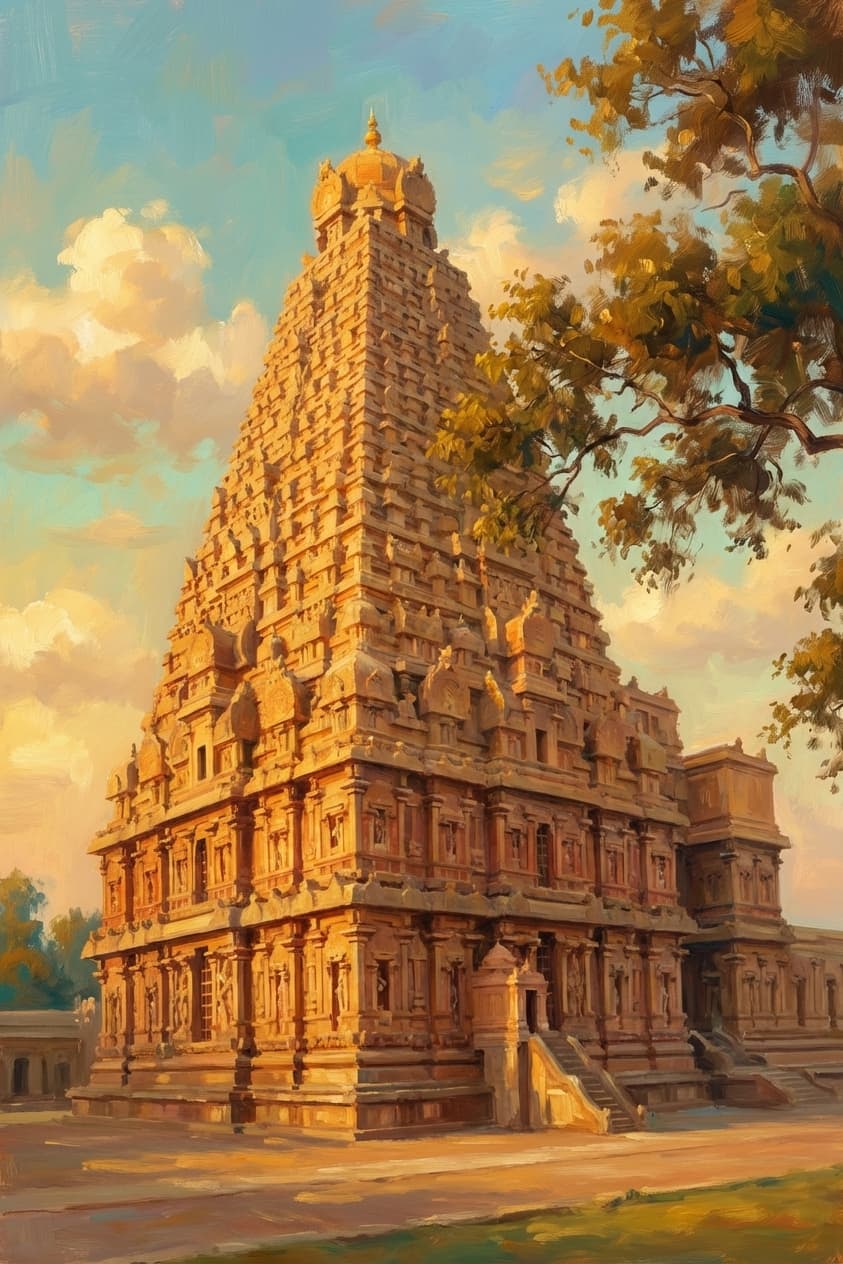
এর ফলে প্রতিটি হিন্দু মন্দির, একটি ছোট গ্রামীণ উপাসনালয় থেকে শুরু করে তামিলনাড়ুর বিশাল বৃহদীশ্বর মন্দির পর্যন্ত, মহাবিশ্বের একটি প্রতিরূপ হিসেবে কল্পনা করা হয়। গর্ভগৃহের উপরে অবস্থিত শিখর (চূড়া) সুমেরু পর্বত বা মহাজাগতিক অক্ষের প্রতিনিধিত্ব করে। মন্দিরে প্রবেশ করা মানে বাস্তবের একটি জ্যামিতিক চিত্রের মধ্য দিয়ে হাঁটা — এবং এর কেন্দ্রের দিকে এগিয়ে যাওয়া মানে মহাবিশ্বের কেন্দ্রে অবস্থিত স্থির বিন্দুর দিকে অগ্রসর হওয়া।
ইসলামী জ্যামিতিক নকশা: মূর্তিমুক্ত অনন্তের প্রকাশ
যেহেতু ঐতিহ্যবাহী ইসলামী শিল্পকলা ধর্মীয় ক্ষেত্রে জীবন্ত প্রাণীর চিত্রায়ন এড়িয়ে চলে, তাই জ্যামিতি তাদের ভক্তির অন্যতম প্রধান ভাষা হয়ে উঠেছে। কর্ডোবা থেকে ইসফাহান পর্যন্ত মসজিদের দেয়ালে শোভা পাওয়া আন্তঃসংযুক্ত তারার নকশাগুলো কেবল আলংকারিক উপাদান নয়। এগুলো টালির মাধ্যমে প্রকাশিত এক ধরণের ধর্মতত্ত্ব।
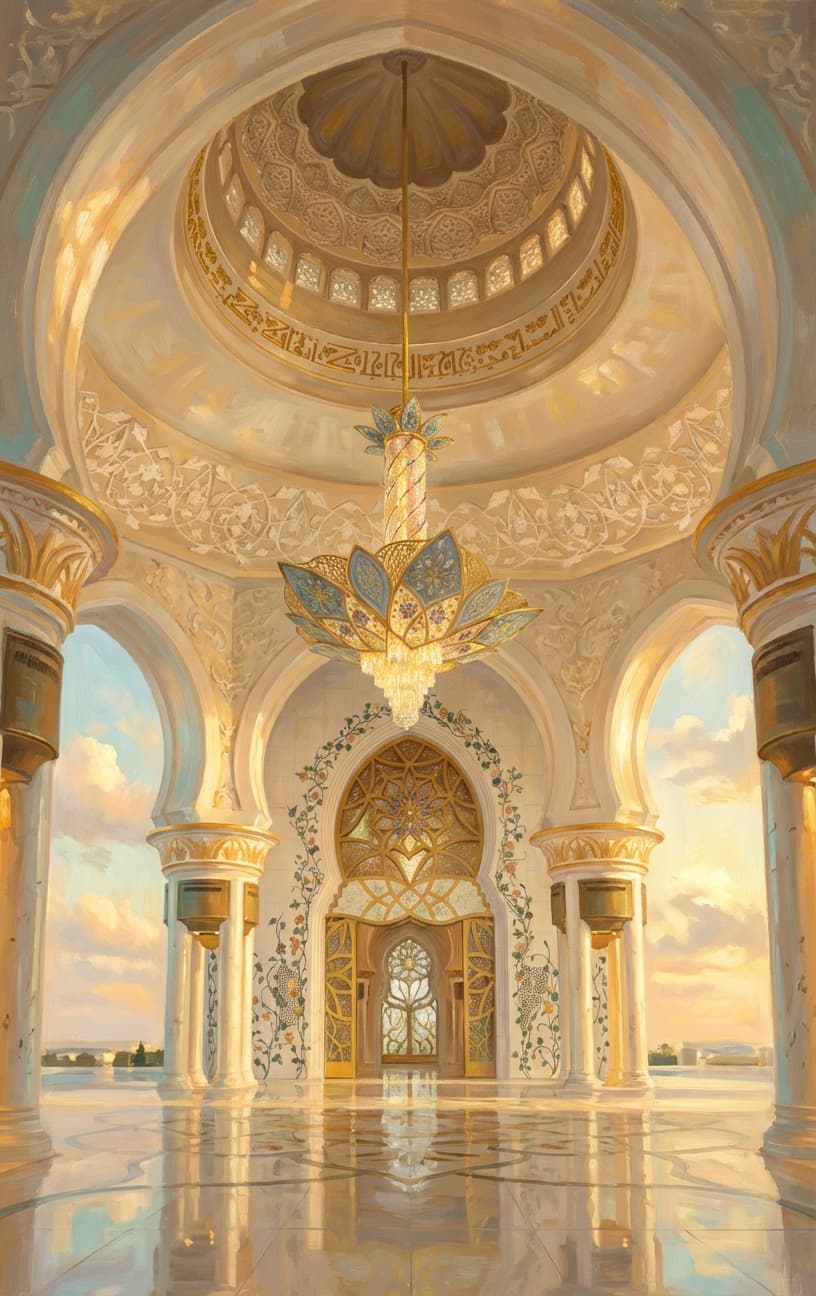
এই নকশাগুলো কয়েকটি বহুভুজের পুনরাবৃত্তির মাধ্যমে তৈরি হয় — যা সাধারণত বর্গক্ষেত্র, ষড়ভুজ বা বারো-কোণ বিশিষ্ট তারার গ্রিডের ওপর ভিত্তি করে গঠিত — এবং এগুলো কোনো সীমানা ছাড়াই প্রতিটি দিকে প্রসারিত হতে পারে। একটি বিশাল মসজিদের প্রাঙ্গণে দাঁড়িয়ে ওপরের অলঙ্করণের দিকে তাকানো মানে এমন কিছু দেখা যা সরাসরি চিত্রিত না করেই অনন্তের আভাস দেয়। আবুধাবির শেখ জায়েদ গ্র্যান্ড মসজিদ একবিংশ শতাব্দীতেও এই ঐতিহ্যকে ধরে রেখেছে, যেখানে হাজার হাজার বর্গমিটার জুড়ে বিস্তৃত পৃষ্ঠে ফুলের নকশা এবং জ্যামিতিক কারুকাজ করা হয়েছে, যেখানে প্রতিটি নকশা কোনো জোড়াতালি বা অসঙ্গতি ছাড়াই একটির সাথে অন্যটি মিশে গেছে।
শৈলীর অন্তরালে জ্যামিতি
ভিন্ন ভিন্ন ঐতিহ্য বিভিন্ন স্থাপত্যশৈলীতে কথা বলে — যেমন সূক্ষ্ম খিলান, পেঁয়াজ আকৃতির গম্বুজ, বক্ররেখাযুক্ত শিখর, বহুতল প্যাগোডা — তবে এই শৈলীগত পার্থক্যের অন্তরালে একই ধরণের কিছু জ্যামিতিক ধারণা বারবার প্রকাশ পায়। কেন্দ্র এবং পরিধি। বর্গক্ষেত্র এবং বৃত্ত। একটি একক মূল আকৃতি থেকে প্রাপ্ত অনুপাত। এমন কিছু সংখ্যা নির্বাচন করা যা একটি নির্দিষ্ট ভবনকে আরও বৃহত্তর মহাজাগতিক কাহিনীর সাথে সংযুক্ত করে।
এই পুনরাবৃত্তিই মন্দিরগুলোকে মন্দিরের মতো অনুভূতি দেয়, এমনকি যখন বাহ্যিক শৈলীর কোনো কিছুই পরিচিত মনে হয় না। জ্যামিতি হলো ধর্মীয় স্থাপত্যের গভীরতর স্তর, প্রতিটি শৈলীর অন্তরালে থাকা কাঠামোগত ব্যাকরণ। একবার আপনি এটি খুঁজতে শুরু করলে, কোনো পবিত্র ভবনই আর আপনার কাছে উদ্দেশ্যহীন বা এলোমেলো মনে হবে না।
সংশ্লিষ্ট মন্দিরসমূহ
Sources & Research
Every fact on Temples.org is backed by verified Sources & Research. Each piece of information is rated by source tier and confidence level.
View All Sources (4)
| Field | Source | Tier | Retrieved |
|---|---|---|---|
| Vastu Shastra and Hindu temple architecture | Encyclopædia Britannica (opens in a new tab) | B | 2026-05-08 |
| Islamic geometric pattern systems | The Metropolitan Museum of Art (opens in a new tab) | B | 2026-05-08 |
| The Parthenon and the golden ratio | Encyclopædia Britannica (opens in a new tab) | B | 2026-05-08 |
| Symbolism of the twelve oxen in LDS baptismal fonts | The Church of Jesus Christ of Latter-day Saints (opens in a new tab) | A | 2026-05-08 |