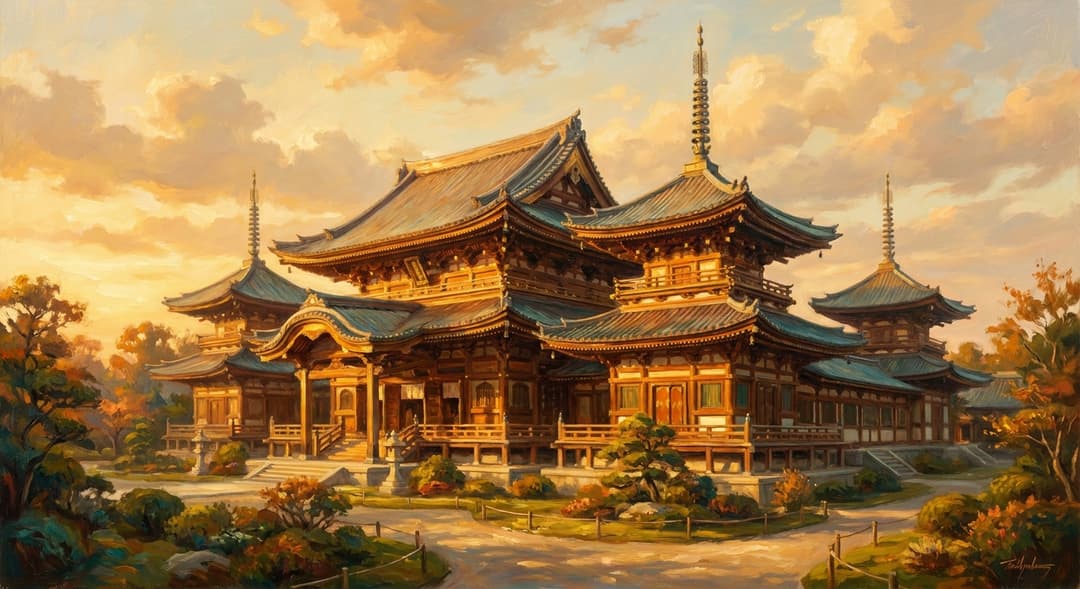
訪問者情報
訪問 出羽三山
The Three Mountains of Dewa offer a unique pilgrimage experience, blending Shinto and Shugendo traditions. Visitors can anticipate a spiritual journey through serene landscapes, encountering ancient shrines and sacred sites. The atmosphere is one of reverence and tranquility, inviting contemplation and connection with nature. Be prepared for varying levels of physical activity, from climbing stone steps to hiking mountain trails, and respect the local customs and prohibitions, especially on Mount Yudono.
ハイライト
- Climbing the 2,446 stone steps on Mount Haguro, lined with ancient cedar trees.
- Visiting the Gassan Shrine at the summit of Mount Gassan, accessible during the summer months.
- Experiencing the sacred hot spring on Mount Yudono, the most holy of the three mountains.
知っておくべきこと
- Mount Yudono prohibits photography and video recordings to maintain its sanctity.
- The mountains are located in a region with heavy snowfall, so access to Mount Gassan and Mount Yudono is limited to certain times of the year.
- Pilgrims should be prepared for physical exertion, especially when climbing Mount Haguro and Mount Gassan.
所在地

Yamagata Prefecture, Japan
開館時間: Mount Haguro is accessible year-round. Mount Gassan and Mount Yudono are accessible from late spring to early fall.
アクセス: The Three Mountains of Dewa are accessible by train and bus from major cities in Japan. Mount Haguro is the most easily accessible, with regular bus service from Tsuruoka Station.
ルート案内概要
The Three Mountains of Dewa (Dewa Sanzan) are Mount Haguro, Mount Gassan, and Mount Yudono, located in Yamagata Prefecture, Japan. These mountains have been sacred to the Shinto religion and the syncretic faith of Shugendo for over 1,400 years. Shugendo uniquely combines ancient mountain worship, Shinto, Taoism, and esoteric Buddhist beliefs, creating a profound spiritual landscape. The Dewa Sanzan are a popular pilgrimage site, drawing many visitors seeking spiritual renewal and connection with nature.
In Shinto, mountains, rivers, trees, stones, and animals have long been revered as deities, dwelling places of gods, or creations of the gods. It's believed that humans receive their souls from the mountains, are born into this world, and return to the mountains after death. The Three Mountains of Dewa embody this belief, offering a profound spiritual experience rooted in the natural world. The integration of Shinto traditions with Taoic influences is evident in the reverence for nature and the pursuit of harmony with the environment.
The Three Mountains of Dewa are not only significant for their natural beauty but also for their role as a center of Shugendo practice. This syncretic faith combines elements of Shinto, Taoism, and Buddhism, emphasizing the importance of ascetic practices and communion with nature. Pilgrims who visit the Dewa Sanzan often participate in rituals and ceremonies that reflect this unique blend of traditions, seeking spiritual enlightenment and purification. The mountains serve as a place where Shinto traditions intertwine with the unique practices of Shugendo, offering a profound spiritual experience.
ギャラリー
象徴的な要素
寺院の外観には精巧な彫刻が施されており、それぞれが深い精神的意味を持っています:

Mount Haguro
Mount Haguro represents the present and is associated with the Bodhisattva Kannon (Goddess of Mercy). The mountain is known for its 2,446 stone steps, lined with ancient cedar trees, leading to Dewa Shrine at its summit. This path symbolizes the journey through life, with each step representing a moment in time.

Mount Gassan
Mount Gassan represents the past or the afterlife and is associated with Amida Nyorai (Amithaba). The summit houses Gassan Shrine, accessible only from late spring to early fall due to heavy snowfall. This mountain symbolizes the transition from life to death, inviting contemplation on the impermanence of existence.

Mount Yudono
Mount Yudono represents the future or rebirth and is associated with Dainichi Nyorai (Vairocana Buddha). Known for its sacred hot spring, it is considered the most holy of the three mountains. This mountain symbolizes the cycle of rebirth, offering hope for renewal and spiritual transformation.

Five-Story Pagoda
The five-story pagoda on Mount Haguro is a National Treasure of Japan, representing the harmony between heaven and earth. Its architectural design reflects the principles of Shinto and Buddhist beliefs, symbolizing the interconnectedness of all things. The pagoda stands as a testament to the enduring spiritual significance of the Dewa Sanzan.

Stone Steps
The 2,446 stone steps on Mount Haguro are a defining feature of the pilgrimage route, guiding visitors through a serene landscape of ancient cedar trees. Each step represents a moment in time, inviting contemplation and reflection on the journey through life. The stone steps symbolize the path to enlightenment and spiritual growth.

Cedar Trees
The ancient cedar trees lining the stone steps of Mount Haguro are 350-500 years old, creating a sacred atmosphere of tranquility and reverence. These trees symbolize the enduring presence of nature and the interconnectedness of all living things. Their towering presence inspires awe and respect for the natural world.

Sankan Sando
The *Sankan Sando* ritual, or 'three gates, three passages,' represents a journey of rebirth, with each mountain symbolizing a different stage in the cycle of life and death. This pilgrimage emphasizes the cyclical nature of existence and the importance of spiritual renewal. The *Sankan Sando* ritual is a central practice in Shugendo, seeking enlightenment through mountain worship.
興味深い事実
The Dewa Sanzan have been a site for mountain worshippers for over 1,400 years.
The mountains are located in what was formerly Dewa Province.
*Yamabushi* are mountain ascetic devotees who pay reverence to the Dewa Sanzan.
Mount Haguro is the only mountain accessible throughout the year due to heavy snowfall on the other two.
The five-story pagoda on Mount Haguro is a recognized national treasure of Japan.
The traditional pilgrimage route starts at Mount Haguro, proceeds to Mount Gassan, and concludes at Mount Yudono.
Mount Yudono is considered the most sacred of the three mountains.
The cedar trees lining the stone steps of Mount Haguro are 350-500 years old and have been awarded 3 stars in the Michelin Green Guide Japan.
Dewa Shrine on Mount Haguro enshrines the deities of all three mountains, making it possible to worship all three even when Gassan and Yudono are inaccessible.
The Dewa Sanzan are part of Bandai-Asahi National Park.
よくある質問
What are the Three Mountains of Dewa?
The Three Mountains of Dewa (Dewa Sanzan) are Mount Haguro, Mount Gassan, and Mount Yudono, located in Yamagata Prefecture, Japan. These mountains have been sacred to the Shinto religion and the syncretic faith of Shugendo for over 1,400 years, serving as a popular pilgrimage site.
What is Shugendo?
Shugendo is a syncretic faith that uniquely combines ancient mountain worship, Shinto, Taoism, and esoteric Buddhist beliefs. It emphasizes ascetic practices and communion with nature, seeking spiritual enlightenment and purification through mountain pilgrimages.
What does each mountain represent?
Mount Haguro represents the present, Mount Gassan represents the past or the afterlife, and Mount Yudono represents the future or rebirth. The pilgrimage through the three mountains symbolizes a journey of rebirth, reflecting the cyclical nature of life and death.
When are the mountains accessible?
Mount Haguro is accessible year-round, while Mount Gassan and Mount Yudono are accessible from late spring to early fall due to heavy snowfall. Visitors should check the specific dates and conditions before planning their pilgrimage.
What is the significance of Mount Yudono?
Mount Yudono is considered the most holy of the three mountains and is known for its sacred hot spring. Photography and video recordings are prohibited to maintain its sanctity, emphasizing the importance of reverence and respect for the mountain's spiritual energy.
注目のストーリー
The Founding of Dewa Sanzan
593
In the year 593, Prince Hachiko, son of Emperor Sushun, sought refuge in the Dewa Mountains, fleeing the turmoil of the Soga clan's political machinations. Deep within these remote peaks, he discovered a profound spiritual resonance, dedicating his life to ascetic practices and the worship of Haguro Gongen, the deity of Mount Haguro. This marked the establishment of the Dewa Sanzan as a sacred site, drawing mountain ascetics and worshippers seeking enlightenment.
Prince Hachiko's devotion laid the foundation for the mountains' enduring spiritual significance, attracting pilgrims and establishing a tradition of mountain worship that would continue for centuries. The prince's legacy is still revered today, as his actions transformed the Dewa Mountains into a place of refuge, spiritual growth, and connection with the divine.
出典: https://www.nihonisan-dewasanzan.jp/
The Pilgrimage of Rebirth
Edo Period
During the Edo period, climbing the Three Mountains of Dewa became a popular pilgrimage among the general public, symbolizing a journey of rebirth. The Sankan Sando ritual, or 'three gates, three passages,' became known as a 'journey of rebirth,' emphasizing the cyclical nature of life and death. Pilgrims would embark on this arduous journey seeking spiritual renewal and purification, leaving behind the burdens of their past and embracing the promise of a new beginning.
This tradition reflects the deep-seated belief in the interconnectedness of life, death, and rebirth, as well as the transformative power of nature. The pilgrimage to the Dewa Sanzan offered a unique opportunity for individuals to confront their mortality, reflect on their lives, and emerge with a renewed sense of purpose and direction.
出典: https://www.hagurokanko.jp/
The Sacred Hot Spring of Mount Yudono
Ongoing
Mount Yudono, considered the most sacred of the three mountains, is renowned for its sacred hot spring, believed to possess healing and purifying properties. Pilgrims who visit Mount Yudono often immerse themselves in the hot spring, seeking physical and spiritual rejuvenation. The act of bathing in the sacred waters is seen as a way to cleanse oneself of impurities and connect with the mountain's spiritual energy.
The hot spring is a symbol of the mountain's life-giving force, representing the power of nature to heal and transform. The experience of bathing in the sacred waters is often described as deeply moving and transformative, leaving pilgrims feeling refreshed, renewed, and connected to the divine.
出典: https://www.japan.travel/
年表
Establishment as a Religious Center
Prince Hachiko establishes the mountains as a religious center after fleeing the Soga clan, dedicating his life to religious pursuits and the worship of Haguro Gongen.
節目Significant Pilgrimage Site
The mountains become a significant site for religious pilgrimage, attracting visitors seeking spiritual renewal and connection with nature.
できごとFirst Written Documentation
The mountains are first mentioned in written documentation in the *Azuma Kagami*, solidifying their historical significance.
節目Popular Pilgrimage of Rebirth
Climbing the three mountains becomes popular among the general public as a pilgrimage of rebirth, with the *Sankan Sando* ritual becoming well-known.
できごとMeiji Government Separation of Shinto and Buddhism
The Meiji government separates Shinto and Buddhism, impacting the syncretic practices of Shugendo and transitioning Daigongen to Shinto kami.
節目Designated as a Japan Heritage Site
Dewa Sanzan is designated as a 'Japan Heritage' site, recognizing its cultural and historical importance.
節目Mount Gassan Accessibility
Mount Gassan is accessible from July to October due to heavy snowfall, allowing pilgrims to visit the Gassan Shrine at its summit.
できごとMount Yudono Accessibility
Mount Yudono is accessible from June to late October, offering visitors the opportunity to experience the sacred hot spring and connect with the mountain's spiritual energy.
できごとMount Haguro Accessibility
Mount Haguro is accessible year-round, allowing visitors to climb the 2,446 stone steps and visit the Dewa Shrine at its summit.
できごとPrince Hachiko's Dedication
Prince Hachiko dedicates himself to religious pursuits and the worship of Haguro Gongen, establishing the foundation for the mountains' spiritual significance.
節目Growth of Pilgrimage Culture
The mountains experience a surge in religious pilgrimage, attracting individuals seeking spiritual enlightenment and connection with nature.
できごとSankan Sando Ritual
The *Sankan Sando* ritual, or 'three gates, three passages,' becomes known as a 'journey of rebirth,' emphasizing the cyclical nature of life and death.
できごとImpact of Shinto-Buddhism Separation
The separation of Shinto and Buddhism by the Meiji government leads to changes in the syncretic practices of Shugendo, requiring adjustments in religious traditions.
改修Recognition of Cultural Significance
The designation of Dewa Sanzan as a 'Japan Heritage' site highlights its enduring cultural and historical importance, ensuring its preservation for future generations.
節目Continued Pilgrimage Tradition
The Three Mountains of Dewa continue to be a popular pilgrimage site, attracting visitors from around the world seeking spiritual renewal and connection with nature.
できごと年代別の歴史
590s — Establishment as a Sacred Site
In 593, Prince Hachiko, son of Emperor Sushun, established the Three Mountains of Dewa as a religious center after fleeing the Soga clan. He dedicated his life to religious pursuits and the worship of Haguro Gongen, the deity of Mount Haguro, marking the beginning of the mountains' spiritual significance.
Heian Era (794-1185) — Growth of Pilgrimage
During the Heian Era, the Three Mountains of Dewa became a significant site for religious pilgrimage. The mountains attracted visitors seeking spiritual renewal and connection with nature, solidifying their role as a sacred destination.
Edo Period (1603-1868) — Pilgrimage of Rebirth
Climbing the three mountains became popular among the general public as a pilgrimage of rebirth during the Edo Period. The Sankan Sando ritual, or "three gates, three passages," became known as a "journey of rebirth," emphasizing the cyclical nature of life and death.
Meiji Era (1868-1912) — Separation of Shinto and Buddhism
The Meiji government's separation of Shinto and Buddhism impacted the syncretic practices of Shugendo. Daigongen, manifestations of Buddha in the form of Shinto kami, were transitioned to Shinto kami, leading to changes in religious practices.
2010s — Recognition as Japan Heritage
In 2016, Dewa Sanzan was designated as a "Japan Heritage" site, recognizing its cultural and historical importance. This designation highlighted the mountains' enduring spiritual significance and their role in preserving traditional Japanese beliefs.
Present — Continued Pilgrimage Tradition
The Three Mountains of Dewa continue to be a popular pilgrimage site, attracting visitors from around the world seeking spiritual renewal and connection with nature. The mountains remain a sacred destination, preserving their rich history and cultural significance.
宗教的意義
The Three Mountains of Dewa hold profound religious significance in both Shinto and Shugendo traditions, embodying the cycle of life, death, and rebirth through mountain worship and ascetic practices.
The core spiritual purpose of the Three Mountains of Dewa is to provide a place for pilgrims to connect with nature, seek spiritual renewal, and experience the transformative power of mountain worship.
神聖な儀式
Mountain Pilgrimage
The act of climbing the three mountains is a central ordinance, symbolizing a journey of spiritual growth and transformation. Pilgrims seek to purify themselves and connect with the divine through physical exertion and contemplation.
Purification Rituals
Purification rituals are performed at various points along the pilgrimage route, cleansing pilgrims of impurities and preparing them for deeper spiritual experiences. These rituals often involve water, fire, and other natural elements.
Offerings and Prayers
Pilgrims make offerings and offer prayers at the shrines and sacred sites on each mountain, expressing their gratitude and seeking blessings from the deities. These acts of devotion strengthen their connection with the spiritual realm.
Shugendo Practices
Shugendo practices, which combine elements of Shinto, Taoism, and Buddhism, are central to the religious significance of the Three Mountains of Dewa. These practices emphasize asceticism, communion with nature, and the pursuit of spiritual enlightenment through mountain worship.
Taoic Influences
Taoic traditions influence the reverence for nature and the pursuit of harmony with the environment. The mountains are seen as a place where humans can connect with the natural world and find balance in their lives.
類似の寺院
出典と研究
Temples.orgのすべての事実は 出典と研究により裏付けられています。各情報はソースレベルと信頼性で分類されています。
すべての出典を見る (9)
| フィールド | 出典 | レベル | 取得日 |
|---|---|---|---|
| About & Historical Background | Dewa Sanzan Shrine (新しいタブで開きます) | A | 2024-01-02 |
| About & Historical Background | Haguro Tourist Association (新しいタブで開きます) | A | 2024-01-02 |
| Historical Timeline | Tsuruoka City (新しいタブで開きます) | A | 2024-01-02 |
| Architectural Description | Yamagata Prefectural Government (新しいタブで開きます) | A | 2024-01-02 |
| Visitor Information | Japan National Tourism Organization (新しいタブで開きます) | A | 2024-01-02 |
| Interesting Facts | The Hidden Japan (新しいタブで開きます) | A | 2024-01-02 |
| Historical Timeline | Unseen Japan (新しいタブで開きます) | B | 2024-01-02 |
| Symbolic Elements | Sacred Natural Sites Initiative (新しいタブで開きます) | B | 2024-01-02 |
| Architectural Description | Japan-Guide.com (新しいタブで開きます) | B | 2024-01-02 |