Visitor Insights
Visiting Dazaifu Tenman-gū
Visiting Dazaifu Tenman-gū offers a sublime journey through ancient Shinto sacred groves, vermilion footbridges, and ornate Momoyama architecture. Pilgrims engage in traditional purification rites before offering prayers for educational pursuits and cultural enrichment.
Highlights
- Crossing the three vermilion Taiko-bashi bridges representing past, present, and future
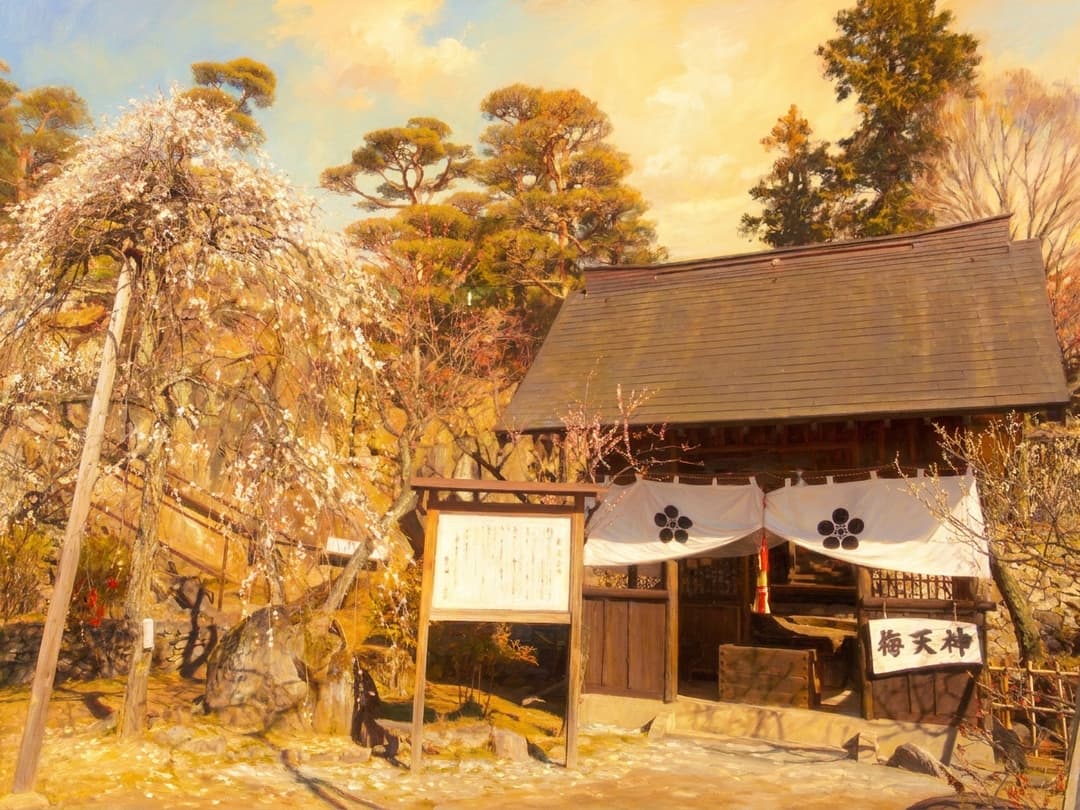
- Viewing the legendary Tobiume flying plum tree beside the grand sanctuary
- Touching the polished bronze and stone ox statues for wisdom and health
- Sampling fresh hot umegae mochi pastries along the bustling historic approach
Things to Know
- The historic Main Hall undergoes major restoration through 2026, with deities venerated in the modern temporary hall
- Grounds become extremely crowded during New Year festivities and school examination seasons
- Admission to the outdoor shrine precincts is free, while museums require nominal fees
Location
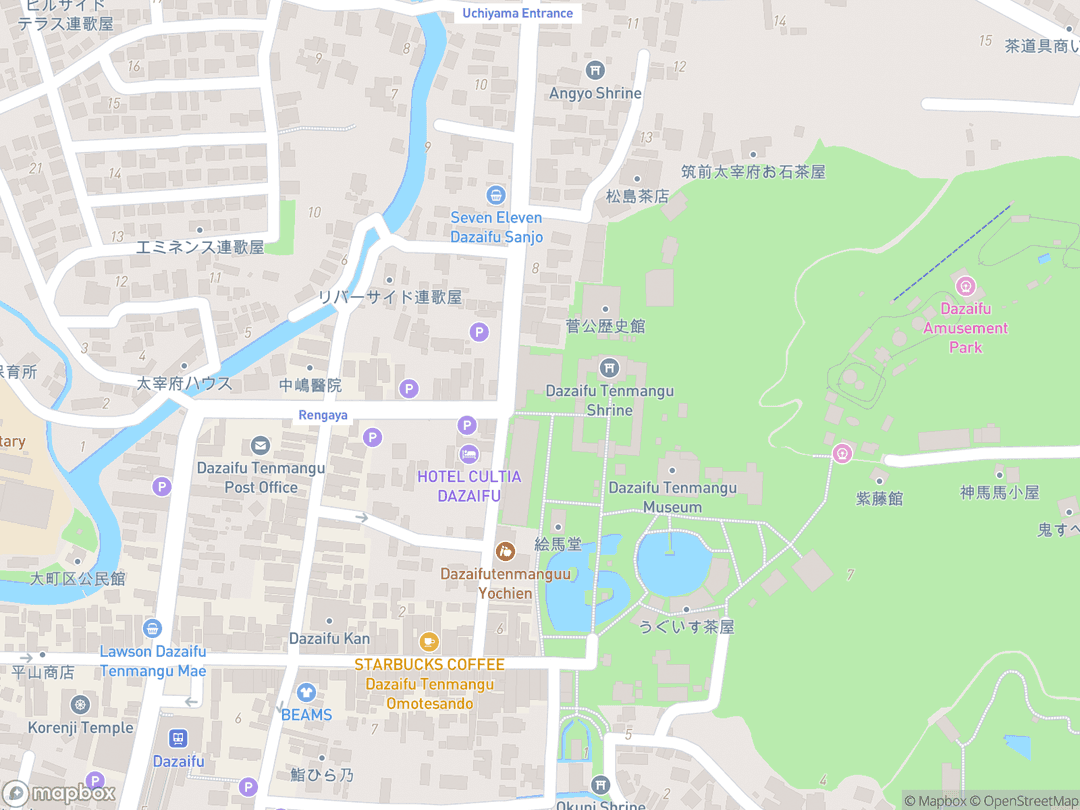
4-7-1 Saifu, Dazaifu, Fukuoka 818-0117, Japan
Hours: 6:00 AM to 7:00 PM (Opens 6:00 AM spring equinox through autumn; 6:30 AM other seasons)
Getting There: Located a five-minute walk east of Dazaifu Station along the Nishitetsu Dazaifu Railway Line.
Get DirectionsTips for Your Visit
Bow and Purify
Perform the traditional water purification ritual at the temizuya water pavilion before crossing the sacred bridge.
Taste Umegae Mochi
Enjoy warm, freshly grilled azuki bean rice cakes stamped with the sacred plum blossom emblem from the shrine approach shops.
Rub the Sacred Ox
Gently touch the horns and head of the recumbent ox statue to pray for mental clarity and academic success.
Explore Contemporary Art
Take time to admire modern outdoor sculptures displayed throughout the ancient woodland paths.
About
Dazaifu Tenman-gū stands as the preeminent head shrine among approximately 12,000 Tenjin shrines across Japan. Located in Fukuoka Prefecture, it honors Sugawara no Michizane, the revered ninth-century scholar, poet, and statesman deified as Tenjin. Built upon his actual final resting place, the sanctuary radiates deep historical reverence.
Within the broader East Asian Taoic and Shinto traditions, sacred nature and human virtue harmoniously converge. Shinto focuses on venerating kami (divine spirits) residing within the natural landscape and extraordinary historical ancestors. Tenjin embodies profound devotion to literary arts, wisdom, and ethical scholarship.
The grounds encompass thousands of sacred plum trees, centuries-old stone torii, and picturesque vermilion bridges crossing heart-shaped ponds. Today, millions of pilgrims, scholars, and students journey here each year to seek spiritual purification and divine blessing for academic and personal growth.
Gallery
Symbolic Elements
The temple's exterior features intricate carvings, each rich with spiritual meaning:

Tobiume (Flying Plum Tree)
A sacred white plum tree said to have flown from Kyoto out of pure devotion to Michizane.

Shingyu (Sacred Ox)
Statues commemorating the ox that stopped at Michizane's resting site, touched by pilgrims for wisdom.

Taiko-bashi (Three Arched Bridges)
A trio of vermilion bridges representing past, present, and future that spiritually purify travelers.

Shinji-ike (Heart Character Pond)
A serene water garden sculpted in the shape of the kanji character for heart to evoke inner contemplation.
Stone Torii Gates
Monumental stone gateways marking the transition from the mundane outer world into sacred sanctuary precincts.

Ume Blossom Crest
The five-petaled plum blossom crest adorning shrine tiles, symbolizing resilience, purity, and scholarship.

Kariden Living Roof
An architectural canopy supporting living flora that expresses Shinto's profound unity with organic nature.
Interesting Facts
Dazaifu Tenman-gū serves as the head shrine over roughly 12,000 Tenjin shrines throughout Japan (Tier A).
The sacred Shinji-ike pond is intentionally landscaped in the precise calligraphic shape of the Chinese kanji character for 'heart' (Tier B).
The famed Tobiume plum tree is celebrated in folklore for miraculously flying from Kyoto to rejoin Michizane in exile (Tier B).
The number 25 holds mystical significance at the shrine because Michizane was both born and passed away on the 25th day of the month (Tier B).
A modern temporary hall designed by architect Sou Fujimoto features a living forest growing upon its sweeping roof (Tier A).
Students from across East Asia purchase symbolic wooden pencils and ema plaques to pray for entrance examinations (Tier B).
The shrine hosts an acclaimed contemporary art program integrating global modern artworks into its sacred landscapes (Tier A).
Recumbent bronze and stone ox statues throughout the grounds commemorate the draft animal that selected Michizane's grave (Tier B).
Common Questions
Who is the primary deity venerated at Dazaifu Tenman-gū?
The shrine venerates Tenjin, the deified Shinto spirit of the brilliant Heian period scholar Sugawara no Michizane.
Why is Dazaifu Tenman-gū so popular with students?
Tenjin is revered as the patron kami of scholarship, exams, and academic achievement.
What is unique about the Kariden temporary hall?
Designed by architect Sou Fujimoto, its undulating roof holds an entire living forest of regional plants and trees.
What are the three arched bridges meant to signify?
They represent the past, present, and future, symbolically purifying visitors as they cross the heart pond.
What traditional treat is associated with the shrine?
Visitors traditionally eat umegae mochi, a hot grilled rice cake stamped with a plum blossom emblem.
Featured Stories
The Miracle of the Flying Plum Tree
901
Before departing Kyoto into bitter political exile, Michizane composed a tender waka poem bidding farewell to his beloved garden plum tree. Legend recounts that the devoted tree uprooted itself and flew across Japan overnight to land at Dazaifu beside its exiled master. Today, the revered Tobiume blooms earliest every spring beside the main sanctuary, embodying unwavering fidelity.
Source: Dazaifu Tenman-gū Shrine Historical Annals
The Faithful Ox and the Sacred Grave
903
Following Michizane's death in exile, an ox cart transported his casket along the countryside road toward burial. The ox suddenly collapsed to its knees and refused to take another step despite all urgings. Recognizing the animal's halt as a divine portent, his loyal followers buried him on that exact spot, founding this sacred shrine.
Source: Dazaifu Tenman-gū Shrine Tradition
The Living Forest of the Kariden
2023
To accommodate the deity during a monumental three-year restoration of the sixteenth-century Honden, architect Sou Fujimoto crafted a visionary temporary sanctuary. Floating overhead, an undulating roof forest composed of indigenous trees and flowers reflects ancient Shinto sensibilities in a striking contemporary form. Pilgrims witness a sacred dialogue where nature, antiquity, and modernity seamlessly unite.
Source: Dazaifu Tenman-gū Cultural Affairs
Timeline
Birth of Sugawara no Michizane
Michizane is born into a distinguished line of Heian court scholars and literati.
MilestoneEarly Literary Brilliance
Michizane writes accomplished classical Chinese poetry by the age of eleven.
EventPolitical Exile to Dazaifu
Rival political factions orchestrate Michizane's demotion and banishment to the western outpost of Dazaifu.
EventPassing of Michizane
Sugawara no Michizane dies in exile and is interred at the present shrine location.
MilestoneFirst Shrine Erected
Follower Umasake no Yasuyuki builds the initial memorial shrine above Michizane's grave.
component.timeline.groundbreakingImperial Shrine Establishment
The imperial court commissions a grand shrine structure to honor and pacify Michizane's spirit.
MilestoneConstruction of Current Honden
Lord Toyotomi Hideyoshi aids the reconstruction of the lavish Momoyama-style main sanctuary.
DedicationErection of Kariden Hall
Renowned architect Sou Fujimoto constructs an innovative temporary hall with a living forest roof.
RenovationCompletion of Honden Restoration
Specialists finalize sweeping structural conservation on the historic sixteenth-century main hall.
Renovation1125th Grand Memorial Festival
The shrine hosts significant commemorative ceremonies celebrating 1,125 years of Michizane's legacy.
MilestoneHistory by Decade
900s — Divine Deification
East wind blowing, bring me your fragrance, O blossom of the plum.
Following the unjust exile and death of Sugawara no Michizane in 903, his follower erected a modest tomb shrine. After mysterious lightning strikes and court calamities struck the imperial capital, Michizane was posthumously exonerated and revered as the kami Tenjin. The imperial court officially sanctioned grand shrine construction in 919 to placate and honor his mighty spirit.
1590s — Momoyama Splendor
Civil conflicts repeatedly damaged medieval shrine halls until regional unification under Toyotomi Hideyoshi revived temple patronage. In 1591, daimyo Kobayakawa Takakage spearheaded construction of the magnificent Momoyama-style Honden. Featuring curved Chinese gables and brilliant painted carvings, this masterpiece stands as the primary sanctuary today.
1900s — Modern Scholarly Center
During Japan's modernization, Dazaifu Tenman-gū gained nationwide renown as the supreme bastion for academic success. Millions of high school and university students began traveling from every prefecture to seek blessings before vital entrance examinations. The shrine grounds simultaneously expanded to host educational exhibitions, botanical reserves, and treasure archives.
2020s — Renovation and Rejuvenation
Approaching the 1,125th grand anniversary of Michizane's passing, the shrine launched its most ambitious structural restoration in a century. A floating temporary hall designed by Sou Fujimoto sheltered the sacred spirit while artisans painstakingly repaired ancient bark roofs. This bold synergy between avant-garde art and sacred tradition reasserted Dazaifu's enduring cultural vigor.
Architecture & Facilities
The architecture of Dazaifu Tenman-gū epitomizes late sixteenth-century Momoyama style, distinguished by opulent wood carvings, dynamic roof contours, and lavish polychromatic ornamentation. Built with an imposing five-bay nagare-zukuri flowing roofline, the sanctuary masterfully integrates classical Japanese joinery with majestic Chinese gable elements.
Building Materials
Hinoki Cypress Bark
Thick layers of harvested native cypress bark form the sweeping curves of the main sanctuary roof.
Japanese Zelkova Timber
Durable Japanese zelkova wood provides monumental support columns and intricately sculpted load-bearing brackets.
Gilded Bronze Accents
Polished gold-leaf bronze caps protect structural timber ends while imparting an aura of radiant majesty.
Carved Local Granite
Chiseled Kyushu granite forms foundational pillar footings, ceremonial stairways, and centuries-old boundary torii.
Interior Features
Honden (Inner Sanctuary)
The deeply sacred inner chamber housing the divine spirit of Tenjin directly above Michizane's resting place.
Haiden (Worship Hall)
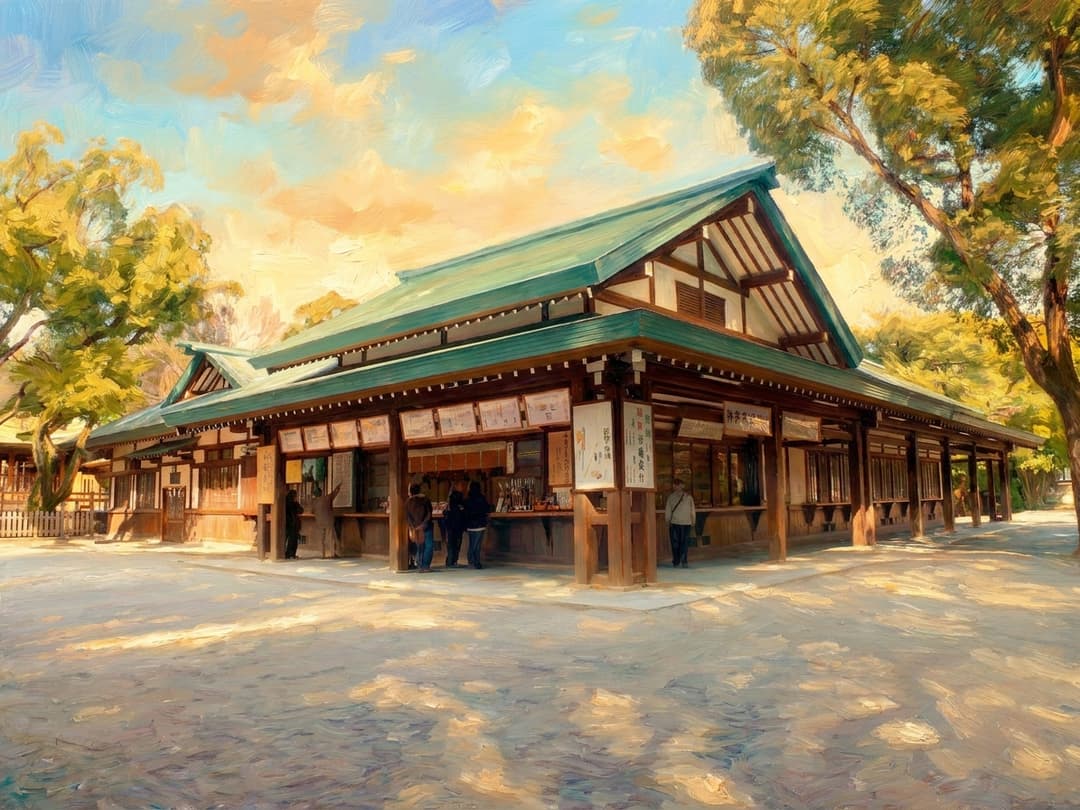
An expansive ceremonial hall where priests conduct purification rites and pilgrims present formal prayers.
Heiden (Offering Chamber)
The connective hall linking worshipers to the inner sanctum where sacred food and fabric offerings reside.
Kariden Modern Sanctuary
A visionary temporary prayer space featuring a living, soil-bearing roof planted with regional mountain flora.
Temple Grounds
The sprawling sacred landscape encompasses approximately 6,000 plum trees, towering centuries-old camphor trees, stone lantern-lined pathways, and the emblematic heart-shaped Shinji-ike pond crossed by vermilion bridges.
Additional Facilities
The complex hosts the Homotsuden Treasure Hall exhibiting imperial treasures, the Kanko Historical Museum, tea houses, and educational assembly halls.
Religious Significance
In Shinto, nature is imbued with kami, and righteous human ancestors of sublime talent and moral integrity can be elevated to divine status. Within Taoic and East Asian philosophical harmony, Sugawara no Michizane represents the supreme apotheosis of literature, moral governance, and intellectual virtue.
Dazaifu Tenman-gū serves as the central spiritual home where seekers cultivate spiritual purity, academic diligence, creative wisdom, and protection from misfortune.
Sacred Ordinances
Temizu (Water Purification)
Rinsing hands and mouth at stone water basins to cleanse mind and body before meeting the deity.
Ni-rei, Ni-hai, Ichi-rei (Worship Etiquette)
Offering two formal bows, two claps, and one final bow to announce one's respectful presence to Tenjin.
Gogan (Votive Prayer)
Inscribing heartfelt educational and personal aspirations onto wooden ema plaques hung within the shrine groves.
Yakuyoke (Ward against Evil)
Priestly recitations and waving of sacred onusa wands to dispel negative influences and grant divine clarity.
Similar Temples
Sources & Research
Every fact on Temples.org is backed by verified Sources & Research. Each piece of information is rated by source tier and confidence level.
View All Sources (7)
| Field | Source | Tier | Retrieved |
|---|---|---|---|
| About & Historical Background | Dazaifu Tenman-gū Official Website (opens in a new tab) | A | 2026-03-31 |
| Historical Timeline & Lineage | Dazaifu Japan Heritage Promotion Council (opens in a new tab) | B | 2026-03-31 |
| Visitor Insights & Ground Regulations | Japan National Tourism Organization (opens in a new tab) | A | 2026-03-31 |
| Kariden Contemporary Architecture | Arup Engineering (opens in a new tab) | B | 2026-03-31 |
| Cultural Heritage & Traditions | Ministry of Land, Infrastructure, Transport and Tourism (opens in a new tab) | B | 2026-03-31 |
| Regional Geography & Practical Access | Japan-Guide (opens in a new tab) | C | 2026-03-31 |
| Visitor Experience & Local Confections | Kyushu Tourism Organization (opens in a new tab) | D | 2026-03-31 |