Visitor Insights
Visiting Itsukushima Shrine
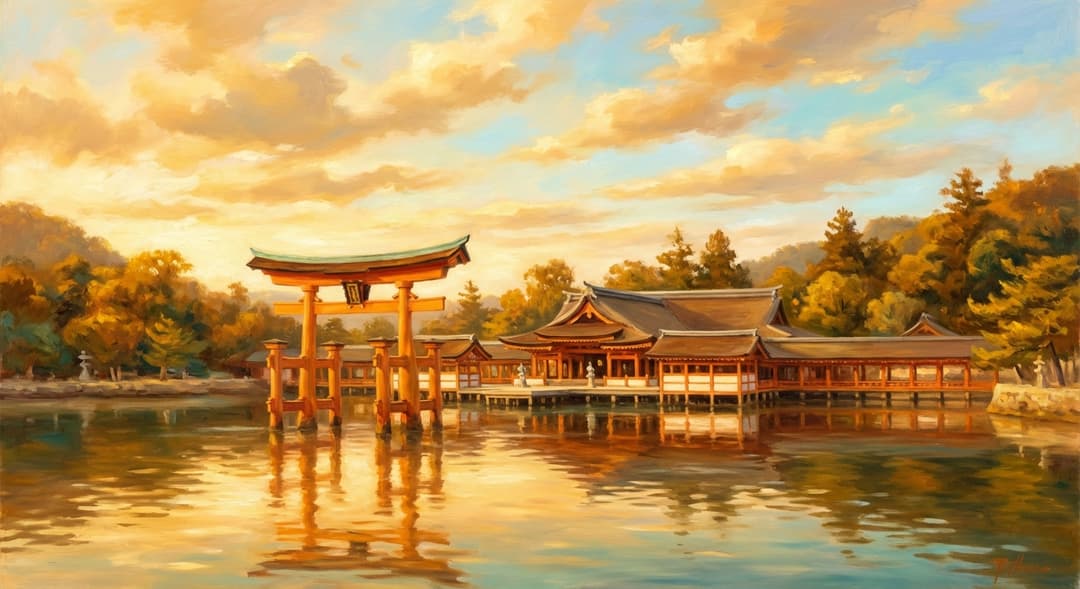
Visiting Itsukushima Shrine is a unique and unforgettable experience. The shrine's stunning architecture, combined with the natural beauty of Miyajima Island, creates a serene and awe-inspiring atmosphere. Visitors can explore the shrine complex, walk along the boardwalks, and marvel at the iconic floating torii gate. The island also offers opportunities for hiking, wildlife viewing, and enjoying local cuisine.
Highlights
- Witness the iconic floating torii gate, especially during high tide.
- Explore the main shrine complex, including the prayer hall, stage, and treasure hall.
- Enjoy panoramic views of the Seto Inland Sea from the island's summit, Mount Misen.
Things to Know
- Check the tide schedule in advance to see the torii gate at high tide.
- Be prepared for crowds, especially during peak tourist seasons and festivals.
- Respect the sacred nature of the shrine and dress modestly.
Location
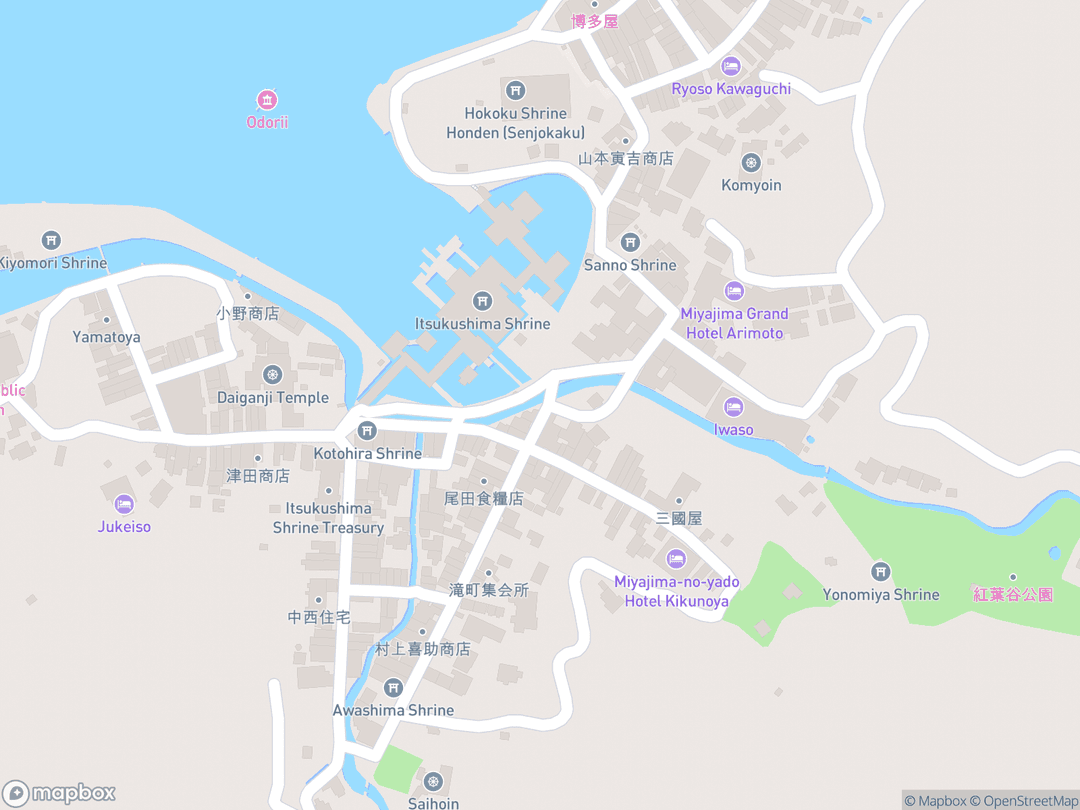
1-1 Miyajimacho, Hatsukaichi, Hiroshima 739-0588, Japan
Hours: Open daily from 6:30 AM to 6:00 PM (hours vary by season)
Getting There: Take a ferry from Hiroshima to Miyajima Island. The shrine is a short walk from the ferry terminal.
Get DirectionsTips for Your Visit
Best Time to Visit
Spring (cherry blossom season) and autumn (fall foliage) offer the most scenic views, but also attract the largest crowds.
Wear Comfortable Shoes
You'll be doing a lot of walking, so comfortable shoes are essential.
About
Itsukushima Shrine, a UNESCO World Heritage Site, is one of Japan's most iconic and spiritually significant Shinto shrines. Located on Miyajima Island in Hiroshima Bay, the shrine is famous for its "floating" torii gate, which appears to rise majestically from the sea during high tide. The shrine complex is a testament to the harmonious blend of natural beauty and architectural ingenuity, reflecting the deep reverence for nature that is central to Shinto beliefs.
The history of Itsukushima Shrine dates back to the 6th century, but its present form largely reflects the vision of Taira no Kiyomori, a powerful samurai leader who sponsored extensive renovations in the 12th century. The shrine's design incorporates elements of both Shinto and Buddhist traditions, reflecting the syncretic religious practices that were common in Japan for many centuries. The vermilion-lacquered structures, connected by boardwalks, create a visually stunning and spiritually evocative landscape.
Itsukushima Shrine is dedicated to the three daughters of Susano-o-no-Mikoto, the Shinto god of sea and storms. These deities are believed to protect sailors, fishermen, and travelers, ensuring safe passage and prosperity. The shrine's location on Miyajima Island, which has long been considered a sacred place, further enhances its spiritual significance. The island's natural environment, including its ancient forests and scenic coastline, is an integral part of the shrine's sacred landscape.
Today, Itsukushima Shrine continues to be a place of worship and pilgrimage, attracting visitors from around the world who come to experience its unique beauty and spiritual atmosphere. The shrine's enduring appeal lies in its ability to connect people with the natural world and with the rich cultural heritage of Japan. Ongoing preservation efforts ensure that this iconic landmark will continue to inspire and enchant future generations.
Gallery
Symbolic Elements
The temple's exterior features intricate carvings, each rich with spiritual meaning:
Floating Torii Gate
The iconic vermilion torii gate stands in the sea, appearing to float during high tide. It symbolizes the boundary between the sacred and secular worlds, inviting purification before entering the shrine. Its presence is a powerful reminder of the interconnectedness of nature and spirituality in Shinto belief.

Vermilion Lacquer
The vibrant vermilion lacquer that coats the shrine's structures is not only aesthetically pleasing but also symbolically significant. In Japanese culture, vermilion is believed to ward off evil spirits and protect sacred spaces. The color also represents vitality and life, reflecting the life-affirming power of the deities enshrined here.

Prayer Hall (Haiden)
The Prayer Hall is where visitors offer prayers and express their reverence to the enshrined deities. Its design incorporates traditional Japanese architectural elements, such as a gabled roof and wooden construction. The hall provides a space for quiet contemplation and connection with the divine.

Noh Stage
The Noh stage is a testament to the importance of performing arts in Japanese culture. Noh is a classical form of Japanese drama that combines music, dance, and storytelling. The stage provides a venue for sacred performances that honor the deities and transmit cultural values.
Five-Story Pagoda
The five-story pagoda, located near the shrine, is a symbol of Buddhist influence and represents the five elements: earth, water, fire, wind, and void. Its towering presence adds to the spiritual atmosphere of the island and serves as a reminder of the interconnectedness of different religious traditions.

Stone Lanterns
The numerous stone lanterns that line the pathways of the shrine are both functional and symbolic. They provide light and guide visitors through the sacred space, while also representing offerings to the deities. The lanterns are often adorned with intricate carvings and inscriptions, reflecting the artistic skill and devotion of their creators.
Mount Misen
Mount Misen, the highest peak on Miyajima Island, is considered a sacred mountain and an integral part of the shrine's landscape. Its ancient forests and scenic trails offer opportunities for hiking and contemplation. The mountain is believed to be inhabited by spirits and deities, further enhancing its spiritual significance.

Reefs
The reefs surrounding the island are considered sacred and are part of the natural beauty of the shrine. They are home to a variety of marine life and provide a habitat for many different species. The reefs are a reminder of the importance of protecting the natural environment and preserving the balance of nature.
Interesting Facts
Itsukushima Shrine is famous for its 'floating' torii gate, which appears to rise from the sea during high tide. (Tier A)
The shrine is dedicated to the three daughters of Susano-o-no-Mikoto, the Shinto god of sea and storms. (Tier B)
Taira no Kiyomori, a powerful samurai leader, sponsored extensive renovations of the shrine in the 12th century. (Tier B)
Itsukushima Shrine was designated as a UNESCO World Heritage Site in 1996. (Tier A)
The shrine complex includes a prayer hall, a stage, and a treasure hall, all connected by boardwalks. (Tier C)
The vermilion-lacquered structures of Itsukushima Shrine are a striking example of traditional Japanese architecture. (Tier C)
Miyajima Island, where the shrine is located, has long been considered a sacred place. (Tier B)
The shrine hosts several special events and festivals throughout the year, including the Kangensai Festival. (Tier C)
The five-story pagoda on Miyajima Island is a prominent landmark near Itsukushima Shrine. (Tier C)
Ongoing preservation efforts are in place to protect the shrine and its surrounding environment. (Tier A)
The shrine's design incorporates elements of both Shinto and Buddhist traditions. (Tier B)
Itsukushima Shrine has been a place of worship and pilgrimage for centuries. (Tier B)
Common Questions
What is the significance of the floating torii gate?
The floating torii gate is the most iconic symbol of Itsukushima Shrine. It marks the boundary between the spiritual and the human worlds, and its location in the sea is believed to purify those who pass through it. The gate appears to float during high tide, creating a magical and awe-inspiring sight.
Why is Itsukushima Shrine a UNESCO World Heritage Site?
Itsukushima Shrine was designated as a UNESCO World Heritage Site in 1996 because of its outstanding universal value. The shrine is a unique example of a religious complex that integrates seamlessly with its natural environment. Its architecture, history, and cultural significance make it a treasure of global importance.
What deities are enshrined at Itsukushima Shrine?
Itsukushima Shrine is dedicated to the three daughters of Susano-o-no-Mikoto, the Shinto god of sea and storms. These deities are Ichikishima-hime, Tagorihime, and Tagitsuhime. They are believed to protect sailors, fishermen, and travelers, ensuring safe passage and prosperity.
How do I get to Itsukushima Shrine?
To get to Itsukushima Shrine, you need to take a ferry from Hiroshima to Miyajima Island. Ferries depart regularly from Hiroshima Port and Miyajimaguchi Ferry Terminal. The shrine is a short walk from the ferry terminal on Miyajima Island.
What is the best time to visit Itsukushima Shrine?
The best time to visit Itsukushima Shrine is during the spring (cherry blossom season) and autumn (fall foliage). These seasons offer the most scenic views, but also attract the largest crowds. It's also important to check the tide schedule in advance to see the torii gate at high tide.
Are there any special events or festivals held at Itsukushima Shrine?
Yes, Itsukushima Shrine hosts several special events and festivals throughout the year. One of the most famous is the Kangensai Festival, a traditional boat festival held in the summer. Other events include New Year's celebrations, cherry blossom viewing parties, and autumn harvest festivals.
Related Stories
Explore the rich history, traditions, and people connected to this sacred site.
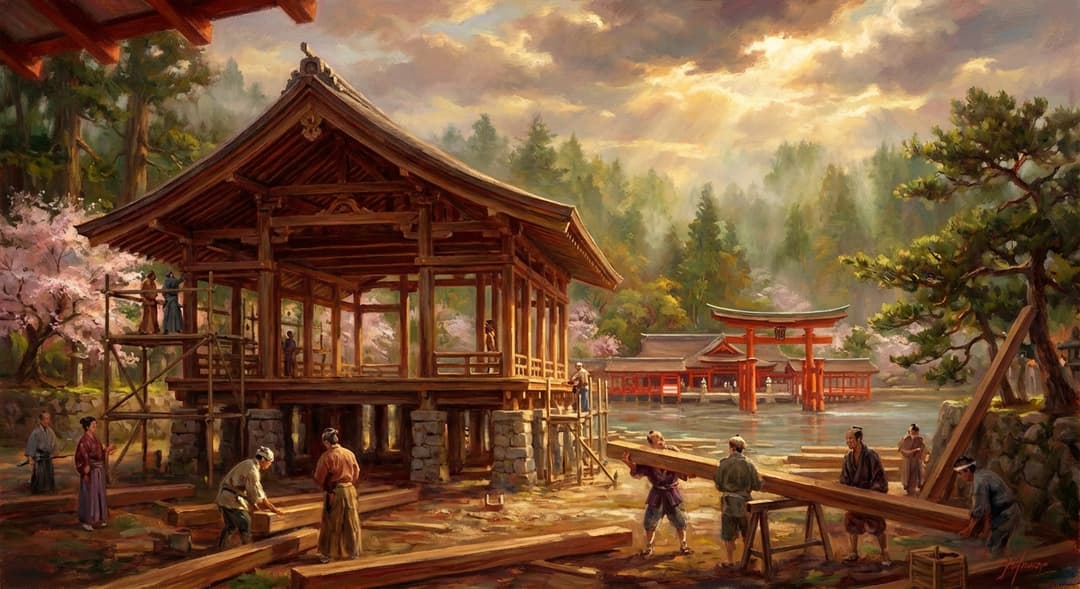
Timeline
Foundation of the Shrine
According to tradition, Itsukushima Shrine was first established during the reign of Empress Suiko.
MilestoneMajor Renovations by Taira no Kiyomori
Taira no Kiyomori, a powerful samurai leader, sponsored extensive renovations, giving the shrine much of its present form.
RenovationReconstruction of the Main Hall
The main hall (Honden) was rebuilt after a fire, reflecting the architectural style of the Muromachi period.
RenovationSeparation of Shinto and Buddhism
Following the Meiji Restoration, efforts were made to separate Shinto and Buddhist elements within the shrine complex.
EventDesignation as a Special Historic Site
Itsukushima Shrine was designated as a Special Historic Site by the Japanese government.
MilestoneDesignation as a UNESCO World Heritage Site
Itsukushima Shrine was inscribed on the UNESCO World Heritage List, recognizing its outstanding universal value.
MilestoneDamage from Typhoon Songda
Typhoon Songda caused significant damage to the shrine, including the torii gate and surrounding structures.
EventMajor Renovation of the Torii Gate Begins
A major renovation project began on the iconic floating torii gate to repair damage from weathering and marine life.
RenovationEarly Shrine Construction
The first structures were erected on Miyajima Island, marking the beginning of Itsukushima Shrine's history as a sacred site.
MilestoneAddition of the Noh Stage
A Noh stage was added to the shrine complex, reflecting the importance of performing arts in Japanese culture.
EventConstruction of the Five-Story Pagoda
The five-story pagoda, a prominent landmark on Miyajima Island, was constructed near the shrine.
MilestoneOuchi Clan's Influence
The Ouchi clan, a powerful feudal family, supported the shrine and contributed to its development.
EventReconstruction of the Prayer Hall
The prayer hall (Haiden) was reconstructed, showcasing the architectural style of the Edo period.
RenovationTorii Gate Renovation Completed
The extensive renovation of the iconic floating torii gate was completed, restoring it to its former glory.
RenovationPreservation Efforts
Ongoing preservation efforts are in place to protect the shrine and its surrounding environment for future generations.
EventArchitecture & Facilities
Heian-period Shinden-zukuri palace-style Shinto architecture, built over the tidal flats of Miyajima Island so the entire shrine complex appears to float during high tide. The vermilion-lacquered structures rest on wooden stilts and are connected by covered corridors and open boardwalks extending over the sea. The iconic O-torii gate, standing approximately 16.6 meters tall, is constructed from camphor wood and rises from the water roughly 200 meters offshore, marking the sacred boundary between the secular and spiritual worlds. The main hall (Honden), prayer hall (Haiden), and purification hall (Haraiden) are arranged in a courtly progression reflecting aristocratic residential layouts of the 12th century, largely the vision of samurai patron Taira no Kiyomori. A Noh stage — one of only five remaining over-water stages in Japan — and the nearby five-story pagoda (1407) further blend Shinto and Buddhist elements. The shrine integrates organically with sacred Mount Misen and the surrounding ancient forests.
Religious Significance
Itsukushima Shrine holds a place of deep reverence within the Shinto tradition, Japan's indigenous spiritual path that celebrates the sacred presence of kami — divine spirits that inhabit natural phenomena, ancestors, and sacred places. Shinto shrines are not merely places of worship but are understood as dwelling places of the kami, where the boundary between the visible and invisible worlds grows thin and humans can commune with the divine forces that animate all of creation.
The shrine serves as a sacred meeting point between humanity and the kami, providing a consecrated space where visitors can offer prayers, express gratitude, seek purification, and receive blessings for health, prosperity, and spiritual harmony. It preserves ancient Shinto rituals that have been practiced for centuries, maintaining the living connection between the Japanese people and the spiritual forces that sustain the natural world.
Sacred Ordinances
Sanpai (Shrine Worship)
Visitors follow the traditional worship protocol of bowing, clapping twice, offering a silent prayer, and bowing again before the main hall. This ritual sequence, practiced by millions of Japanese each year, establishes a personal connection between the worshipper and the enshrined kami.
Harae (Purification Rites)
Before approaching the inner shrine, visitors perform temizu — the ritual washing of hands and mouth at the chozuya (purification fountain). This act of cleansing symbolizes the purification of body and spirit necessary to enter sacred space and commune with the kami.
Norito (Ritual Prayers)
Shinto priests recite formal prayers (norito) during ceremonies, using ancient Japanese that has been preserved for centuries. These prayers invoke the kami, express gratitude for blessings received, and petition for continued divine protection and guidance.
Matsuri (Festivals)
The shrine hosts seasonal festivals that celebrate the kami through processions, music, dance, and communal offerings. These matsuri are among the most vibrant expressions of Japanese spiritual culture, blending reverence for the divine with community celebration and cultural continuity.
Kami and the Sacred Landscape
In Shinto belief, kami are not distant, transcendent beings but immanent spiritual presences that dwell within nature — in mountains, rivers, trees, rocks, and storms. The shrine's location was chosen because the kami were believed to be especially present here, making the site a natural nexus of spiritual power. The surrounding landscape is not merely a backdrop but an integral part of the sacred precinct, reflecting the Shinto conviction that nature itself is inherently divine and worthy of reverence.
Harmony Between Humanity and Nature
Shinto teaches that human beings exist in an interdependent relationship with the natural world and the kami who sustain it. Visiting the shrine is an act of acknowledging this relationship — of expressing gratitude for the blessings of nature, seeking forgiveness for transgressions against the natural order, and renewing one's commitment to living in harmony with the world. The shrine thus serves not only as a place of personal devotion but as a reminder of humanity's sacred responsibility to protect and honor the living world.
Similar Temples
Sources & Research
Every fact on Temples.org is backed by verified Sources & Research. Each piece of information is rated by source tier and confidence level.
View All Sources (5)
| Field | Source | Tier | Retrieved |
|---|---|---|---|
| UNESCO World Heritage Listing | UNESCO (opens in a new tab) | B | 2024-01-30 |
| Official Website of Itsukushima Shrine | Itsukushima Shrine (opens in a new tab) | A | 2024-01-30 |
| Japan Guide - Itsukushima | Japan Guide (opens in a new tab) | C | 2024-01-30 |
| Sacred Destinations - Itsukushima Shrine | Sacred Destinations (opens in a new tab) | B | 2024-01-30 |
| Details on Taira no Kiyomori | Samurai Archives (opens in a new tab) | B | 2024-01-30 |