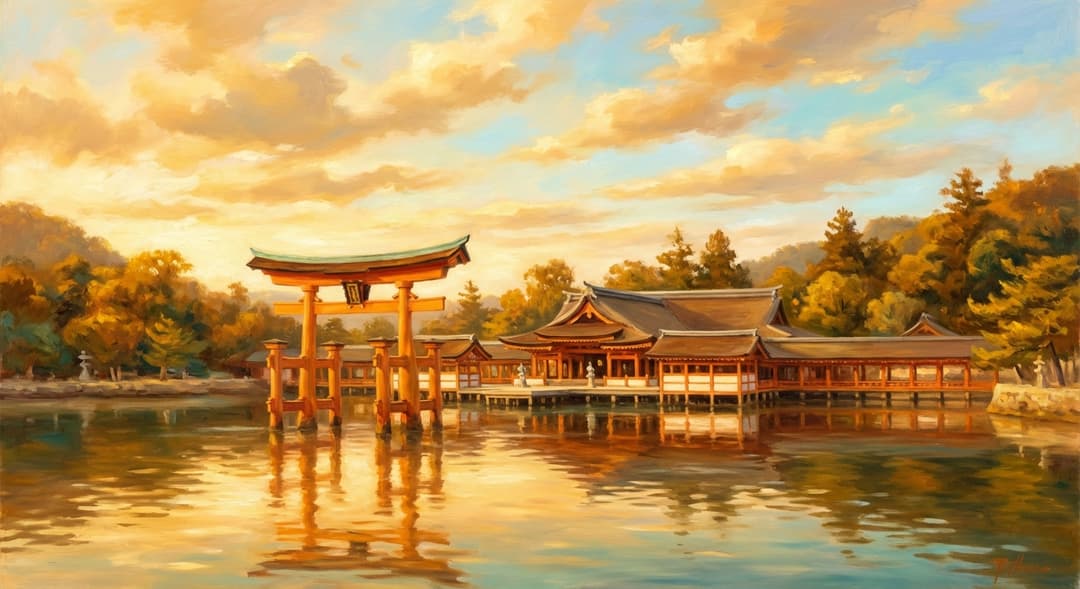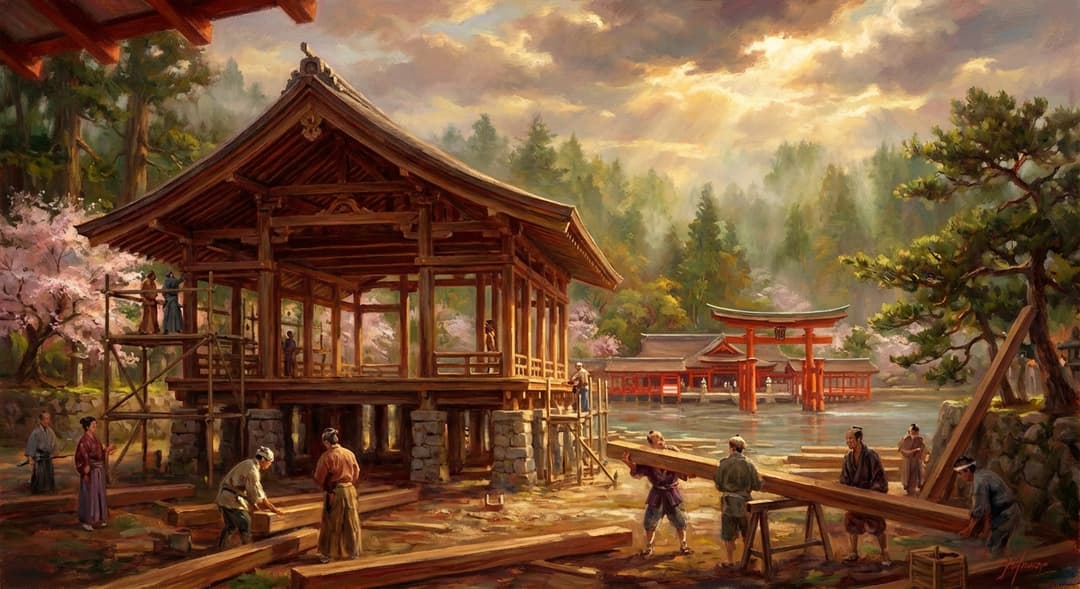
The Senjokaku Pavilion, also known as the "Hall of 1000 Mats," stands as a testament to the ambition of Toyotomi Hideyoshi, a pivotal figure in Japanese history. In 1587, at the height of his power, Hideyoshi initiated the construction of this grand structure near the sacred Itsukushima Shrine on Miyajima Island. His vision was to create a space for memorial services honoring soldiers who had perished in his campaigns to unify Japan after a century of civil war.
The pavilion's construction was overseen by Hideyoshi's trusted vassals, including the monk Ankokuji Ekei. The sheer scale of the project reflected Hideyoshi's desire to leave a lasting legacy, a monument that would commemorate his achievements and pay tribute to the fallen. Designed as a vast, open-air hall, the Senjokaku was intended to accommodate a thousand tatami mats, a symbol of its immense size and capacity. Massive wooden pillars were erected to support a raised platform, creating a space for solemn ceremonies and gatherings.
However, fate intervened, and the Senjokaku Pavilion remained unfinished at the time of Hideyoshi's death in 1598. The project was abruptly halted, leaving the structure without a proper roof and exposed to the elements. This unfinished state, rather than diminishing its significance, adds to its unique charm and historical weight. It serves as a poignant reminder of the transience of power and the impermanence of even the most ambitious human endeavors.
Today, the Senjokaku Pavilion stands as a historical landmark, drawing visitors from around the world. Its weathered appearance and vastness evoke a sense of awe and wonder, offering a tangible connection to the past. The pavilion's presence near Itsukushima Shrine highlights the complex interplay between political power and religious institutions in Japanese history, a story etched in wood and time. It is a place to reflect on the past, honor the fallen, and contemplate the enduring legacy of Toyotomi Hideyoshi.
Key Details
- Construction Start 1587
- Intended Purpose Memorial services for fallen soldiers
- Overseer Ankokuji Ekei
- Unfinished Status No roof was ever completed
- Alternative Name Hall of 1000 Mats
- Location Miyajima Island, near Itsukushima Shrine
Timeline
Construction Begins
Toyotomi Hideyoshi initiates the construction of the Senjokaku Pavilion near Itsukushima Shrine.
component.timeline.groundbreakingHideyoshi's Death
Toyotomi Hideyoshi dies, and the construction of the Senjokaku Pavilion is halted, leaving it unfinished.
component.timeline.historicalSources & Research
Every fact on Temples.org is backed by verified Sources & Research. Each piece of information is rated by source tier and confidence level.
View All Sources (3)
| Field | Source | Tier | Retrieved |
|---|---|---|---|
| Montgomery County Sentinel (Rockville, MD.) 1855-1974 | Library of Congress (opens in a new tab) | C | 2024-01-01 |
| Evening Star (Washington, D.C.) 1854-1972 | Library of Congress (opens in a new tab) | C | 2024-01-01 |
| Imperial Valley Press (El Centro, Calif.) 1907-current | Library of Congress (opens in a new tab) | C | 2024-01-01 |