1. What is the official name of the 'Mormon' Church?
“The correct name of the Church is The Church of Jesus Christ of Latter-day Saints. It was given by revelation to the Prophet Joseph Smith in 1838.”
— Official Church Style Guide
When people search for "top questions about Mormons" or "Mormon temples," they are typically looking for information about members of The Church of Jesus Christ of Latter-day Saints.
In 2018, the Church's leadership emphasized a shift back to its official, revealed name, encouraging the use of "Latter-day Saints" or "members of The Church of Jesus Christ of Latter-day Saints" rather than "Mormons." Similarly, the sacred buildings they construct are correctly referred to as Latter-day Saint (or LDS) temples rather than "Mormon temples." This gentle correction helps focus on the central figure of the faith: Jesus Christ.
3. Do Latter-day Saints believe in Jesus Christ?
Emphatically, yes. Jesus Christ is the cornerstone of the faith and the Savior and Redeemer of the world. Members believe that He is the Son of God, that He suffered and died for the sins of mankind, and that He was literally resurrected.
All teachings, scriptures, and ordinances in the Church are centered on Christ's role in the plan of salvation and His invitation for all to come unto Him. The official name, The Church of Jesus Christ of Latter-day Saints, reflects this devotion.
4. Who was Joseph Smith?
Joseph Smith Jr. (1805–1844) was the founding prophet of The Church of Jesus Christ of Latter-day Saints. Members believe that God the Father and Jesus Christ appeared to Joseph in a vision in 1820 in upstate New York, calling him to restore the ancient Church of Jesus Christ to the earth.
Under divine guidance, Joseph Smith translated the Book of Mormon, organized the Church, received numerous revelations, and built the first temples of this dispensation before his martyrdom in 1844.
5. What is the Book of Mormon?
The Book of Mormon is a volume of holy scripture comparable to the Holy Bible. It is a record of God's dealings with the ancient inhabitants of the American continent between about 600 BC and 400 AD.
Translated by Joseph Smith by the gift and power of God, its primary purpose is to testify that Jesus is the Christ, the Savior of all nations. Latter-day Saints study it alongside the Bible to gain a fuller understanding of God's love and teachings.
6. Do members of the Church use the Holy Bible?
Yes. The Holy Bible is revered as the word of God. Latter-day Saints study, teach from, and believe in the Bible. In English-speaking countries, the Church officially uses the King James Version of the Bible.
Members believe that both the Bible and the Book of Mormon work in harmony to testify of the divinity of Jesus Christ and to clarify the doctrines of His gospel.
7. What is the primary purpose of Latter-day Saint temples?
Temples serve as sacred spaces where members of the Church make formal promises, or covenants, with God. It is also where the highest sacraments—or ordinances—of the faith are performed.
These include baptisms on behalf of deceased ancestors and eternal marriages (sealings) that unite families for eternity. The temple is designed to be a place of quiet reflection, learning, and escape from the noise of the world.
8. Can anyone go inside a Latter-day Saint temple?
Yes, but only during certain times. Before a newly built or renovated temple is dedicated, the Church hosts a public open house. During this time, anyone is welcome to tour the temple interior.
Once dedicated, access is limited to members of the Church who live the principles of the gospel and hold a valid temple recommend. For a detailed guide on temple access, you can read our article: Can I go inside a Latter-day Saint temple? (opens in a new tab).
9. What is a 'temple recommend' and how is it obtained?
A temple recommend is a small card that allows a member of the Church to enter operating temples. It indicates that the holder is living according to the standards of the gospel of Jesus Christ.
To receive a recommend, members participate in private interviews with their local leaders (the bishop and stake president). They are asked about their faith in God and Jesus Christ, their support of Church leaders, and their adherence to commandments like tithing, the Word of Wisdom, and moral cleanliness.
10. Why does the Church practice baptisms for the dead?
Latter-day Saints believe that a loving Heavenly Father desires all of His children to have the opportunity to receive the saving ordinance of baptism. Because many people throughout history have died without hearing of Jesus Christ or being baptized, the Church performs proxy baptisms in temples.
Living members are baptized on behalf of their deceased ancestors. This practice follows the biblical pattern mentioned by the Apostle Paul (1 Corinthians 15:29). Crucially, the Church teaches that spirits in the afterlife have full agency and can choose to accept or reject the baptism performed for them.
11. What is an 'eternal sealing' or temple marriage?
In a Latter-day Saint temple, a marriage ceremony is referred to as a "sealing." Unlike conventional weddings where vows are made "until death do you part," a temple sealing is performed by priesthood authority and binds the husband, wife, and their children together for all eternity.
Members believe that family relationships are meant to continue beyond the grave, provided they keep the covenants they make in the temple.
12. What is the Celestial Room?
The Celestial Room is the symbolic heart of the temple. Beautifully decorated with elegant furnishings, warm light, and quiet art, it represents the peace, harmony, and joy of heaven (the celestial kingdom) and the presence of God.
No ordinances are performed in this room. Instead, it is a place where patrons sit in reverent silence to pray, read scriptures, ponder, and feel the quiet peace of the Holy Spirit.
13. Why do members wear sacred temple garments?
Adult members of the Church who have made sacred covenants in the temple wear a simple, white undergarment known as the temple garment. It serves as a personal, physical reminder of the sacred promises they have made to God to live Christlike lives.
Similar to religious clothing worn in other world faiths (like the yarmulke, hijab, or habits), the garment is kept private and treated with deep respect. It is worn under regular clothing as a reminder of spiritual protection and commitment.
14. Do Latter-day Saints practice polygamy?
No. The Church of Jesus Christ of Latter-day Saints strictly prohibits plural marriage. While polygamy was practiced by a minority of early Church members in the 19th century, the practice was officially discontinued by revelation in 1890, more than 135 years ago.
Anyone practicing polygamy today cannot be a member of the Church and is subject to excommunication.
15. Who leads The Church of Jesus Christ of Latter-day Saints?
Members believe that Jesus Christ Himself leads the Church through revelation. He directs the Church through a living prophet, who serves as the President of the Church, along with two counselors (forming the First Presidency) and the Quorum of the Twelve Apostles.
This leadership structure mirrors the organization of the ancient Christian Church established by Jesus during His earthly ministry.
16. What is the Word of Wisdom?
The Word of Wisdom is a health code received by revelation by Joseph Smith in 1833. It advises against the consumption of alcohol, tobacco, tea, coffee, and harmful drugs or substances.
It encourages the eating of wholesome grains, fruits, vegetables, and herbs, along with moderate meat consumption. Members view their bodies as sacred gifts from God and believe that keeping the Word of Wisdom brings physical health and spiritual clarity.
17. What do Latter-day Saints believe about life after death?
Latter-day Saints believe that our spirits existed before we were born and will continue to exist after we die. Upon physical death, the spirit enters a state of peace and learning (the spirit world) to await the Resurrection.
Eventually, all people will be resurrected with perfect physical bodies and judged by Jesus Christ. Based on their desires and choices, they will inherit a place in one of three kingdoms of glory, where families can be reunited in the presence of God.
18. How is the Church structured and funded?
The Church is funded through the biblical principle of tithing—the voluntary donation of one-tenth of one's income to support the Church's global operations, including temple construction, meetinghouse maintenance, missionary work, and humanitarian aid.
Administratively, the Church operates on a lay ministry. There is no professional paid clergy at the local level. Bishops, youth leaders, and teachers volunteer their time and talents without financial compensation to serve their congregations.
19. Why do members serve full-time missions?
Following Christ's commission to go and teach all nations, tens of thousands of young men, young women, and senior couples serve full-time missions.
Missionaries voluntarily devote 18 to 24 months to teaching the gospel and performing community service. They receive no pay and typically fund their missions themselves or with the help of their families and local congregations.
20. How can visitors experience a temple and learn more?
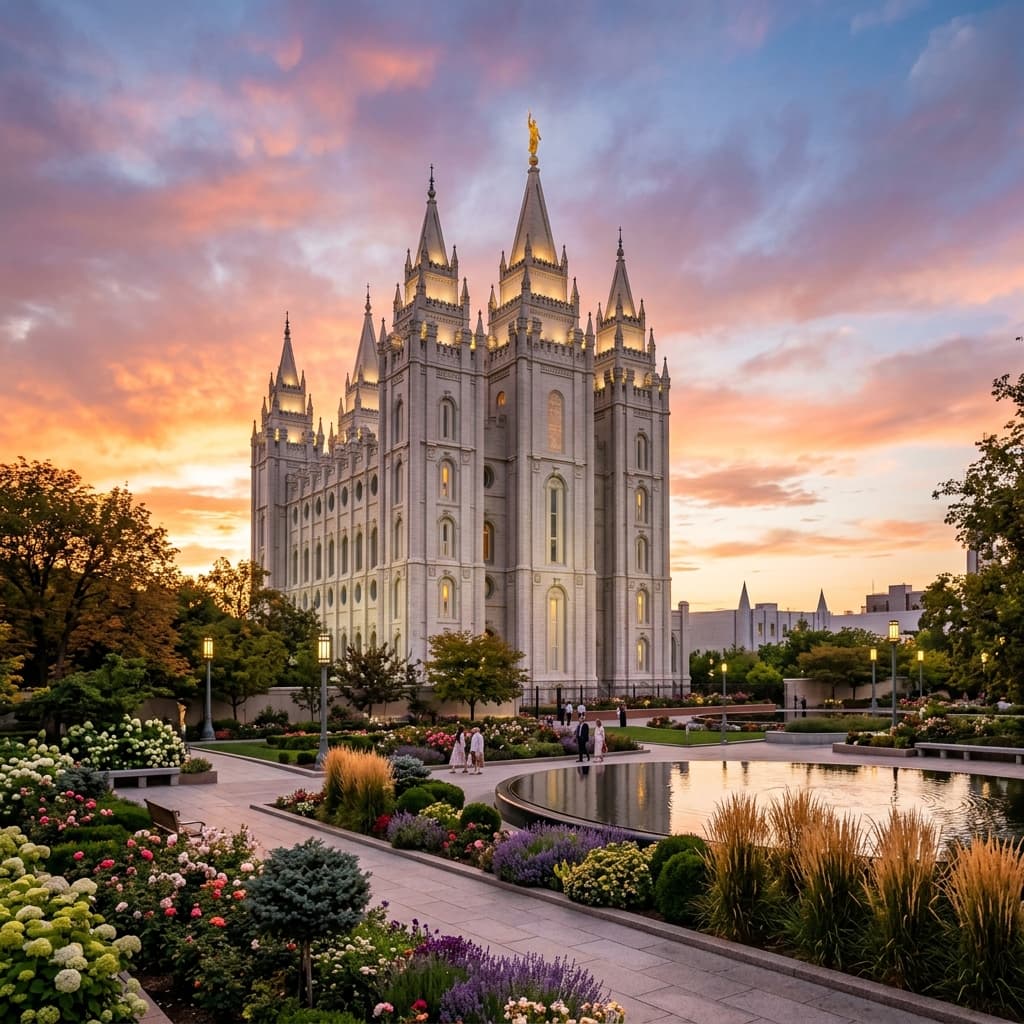
Even if you cannot go inside an operating temple, there are several ways to experience their beauty and peace. Visitors are always welcome to walk the manicured temple grounds, which feature quiet gardens and reflecting pools.
Many temples also have adjacent Visitors' Centers that are completely free to the public, offering interactive displays, historical exhibits, scale models of temple interiors, and friendly guides who are happy to answer questions.
Ancient Temples Comparison
Related Temples
Sources & Research
Every fact on Temples.org is backed by verified Sources & Research. Each piece of information is rated by source tier and confidence level.
View All Sources (4)
| Field | Source | Tier | Retrieved |
|---|---|---|---|
| Oficial Name of the Church (Doctrine and Covenants 115:4) | The Church of Jesus Christ of Latter-day Saints (opens in a new tab) | A | 2026-05-28 |
| Official Church Style Guide on Terminology | The Church of Jesus Christ of Latter-day Saints (opens in a new tab) | A | 2026-05-28 |
| Temples of The Church of Jesus Christ of Latter-day Saints | The Church of Jesus Christ of Latter-day Saints (opens in a new tab) | A | 2026-05-28 |
| Core Beliefs and Doctrines | The Church of Jesus Christ of Latter-day Saints (opens in a new tab) | A | 2026-05-28 |