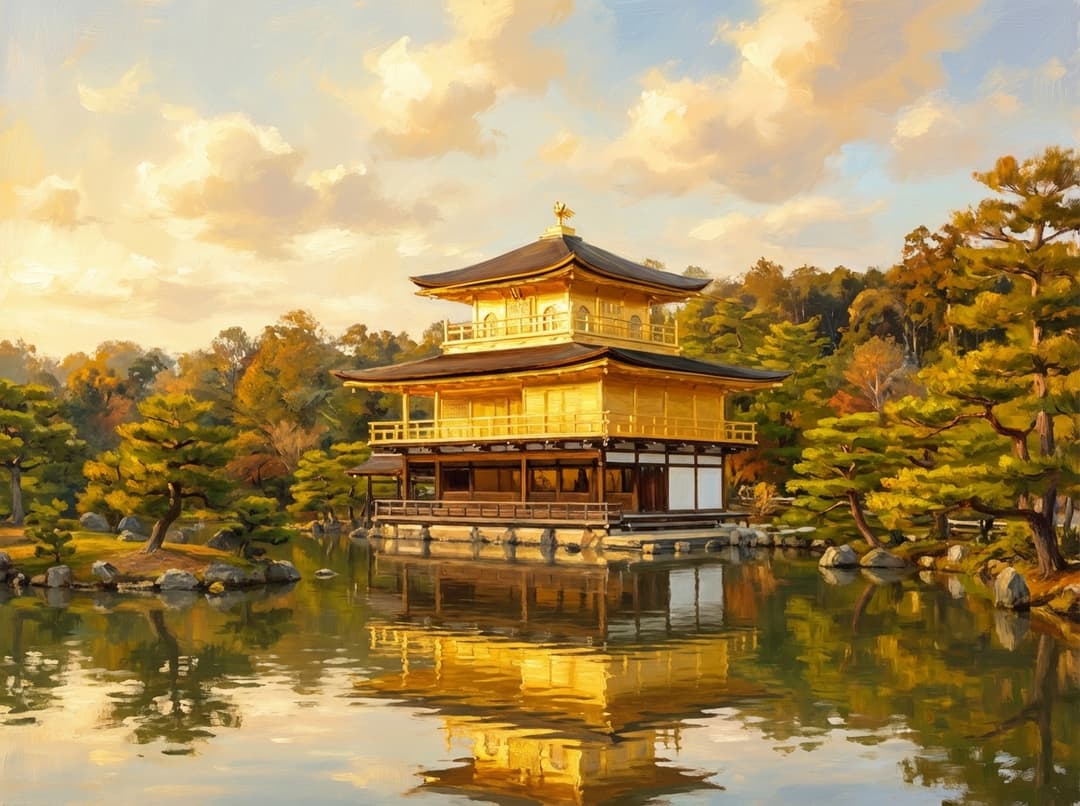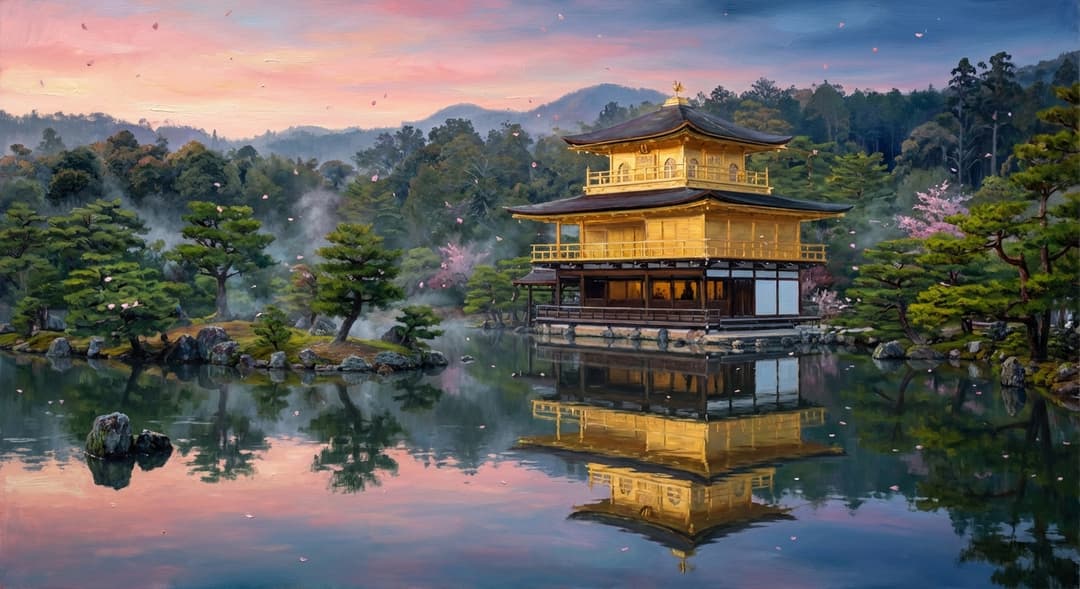
Ashikaga Yoshimitsu, the third Ashikaga Shogun, reigned during a tumultuous period in Japanese history, yet his vision transcended political maneuvering. He sought to create a harmonious society, a physical manifestation of the Pure Land, deeply influenced by Buddhist cosmology. This aspiration culminated in Kinkaku-ji, the Golden Pavilion, a structure that embodies Yoshimitsu's unique blend of governance, religious belief, and aesthetic sensibilities.
Kinkaku-ji, initially Yoshimitsu's retirement villa, Kitayama-den, reflects this syncretic approach. Its architecture seamlessly blends different styles: the first floor evokes Heian-period aristocratic residences, the second mirrors samurai houses, and the third resembles a Zen Buddhist temple hall. This combination symbolizes Yoshimitsu's ambition to unite diverse social classes and religious traditions under his leadership, fostering a sense of unity and shared purpose.
The pavilion's exterior, adorned with shimmering gold leaf, further reinforces its symbolic significance. Gold, a symbol of purity and enlightenment in Buddhism, evokes the radiant splendor of the Pure Land. The phoenix atop the roof, a mythical bird associated with immortality and rebirth, reinforces the theme of spiritual transformation. The surrounding gardens, meticulously designed to evoke natural landscapes, create a serene and contemplative atmosphere, inviting visitors to reflect on the beauty and impermanence of the world.
More than just a private retreat, Kinkaku-ji served as a vibrant center for diplomatic receptions, religious ceremonies, and artistic performances. Foreign dignitaries were received in the pavilion, showcasing the shogunate's power and sophistication. Buddhist monks conducted religious services, promoting spiritual growth and social harmony. Artists and poets gathered to create works inspired by the beauty of the surroundings. In this way, Kinkaku-ji became a microcosm of Yoshimitsu's ideal society, a place where political authority, religious faith, and artistic expression coexisted in perfect harmony, leaving an enduring legacy for generations to come.
Key Details
- Era Muromachi Period
- Founder Ashikaga Yoshimitsu
- Original Purpose Retirement Villa
- Architectural Style Syncretic (Shinden-zukuri, Buke-zukuri, Zen)
- Current Status Zen Buddhist Temple
- Key Feature Gold Leaf Exterior
Timeline
Birth of Ashikaga Yoshimitsu
Ashikaga Yoshimitsu, the future Shogun and patron of Kinkaku-ji, is born.
component.timeline.historicalConstruction of Kitayama-den Begins
Ashikaga Yoshimitsu begins construction of his retirement villa, Kitayama-den, which would later become Kinkaku-ji.
component.timeline.groundbreakingDeath of Ashikaga Yoshimitsu
Ashikaga Yoshimitsu dies, and Kinkaku-ji is converted into a Zen Buddhist temple according to his wishes.
component.timeline.historicalKinkaku-ji Burns Down
Kinkaku-ji is burned down by a mentally disturbed monk.
EventReconstruction of Kinkaku-ji
The current structure of Kinkaku-ji is completed, a faithful reconstruction of the original.
RenovationSources & Research
Every fact on Temples.org is backed by verified Sources & Research. Each piece of information is rated by source tier and confidence level.
View All Sources (4)
| Field | Source | Tier | Retrieved |
|---|---|---|---|
| Newspaper - The Columbus Journal (Columbus, Neb.) | Library of Congress (opens in a new tab) | C | 2024-01-01 |
| Kinkaku-ji (Golden Pavilion) | Shokoku-ji Temple (Official Website) (opens in a new tab) | A | 2024-01-01 |
| Ashikaga Yoshimitsu | Kotobank (opens in a new tab) | B | 2024-01-01 |
| Kinkaku-ji: History and Design | Japan-Guide.com (opens in a new tab) | A | 2024-01-01 |