Balinese Hinduism, known locally as Agama Hindu Dharma, is a distinctive form of Hinduism practiced predominantly on the island of Bali, Indonesia. Unlike the Hinduism practiced on the Indian subcontinent, Balinese Hinduism is a rich syncretic blend of Indian Hindu traditions, indigenous animistic beliefs, and Buddhist influences that has evolved over more than a millennium into a uniquely Balinese spiritual system.
At the heart of Balinese Hinduism lies the concept of Tri Hita Karana — the three causes of well-being — which emphasizes harmony between humans and God (Parahyangan), harmony among people (Pawongan), and harmony with nature (Palemahan). This guiding philosophy pervades all aspects of Balinese life, from daily offerings of flowers and incense placed on the ground and at family shrines, to the grand temple ceremonies that punctuate the island's calendar.
The Balinese recognize a supreme deity, Sang Hyang Widhi Wasa, who manifests in various forms including the Hindu Trimurti of Brahma (creator), Vishnu (preserver), and Shiva (destroyer). Ancestors play a central role — the Balinese believe that the spirits of the deceased continue to influence the living and must be honored through elaborate ceremonies. Cremation rituals (Ngaben) are among the most important ceremonies, believed to release the soul from the body and allow it to be reincarnated or achieve moksha.
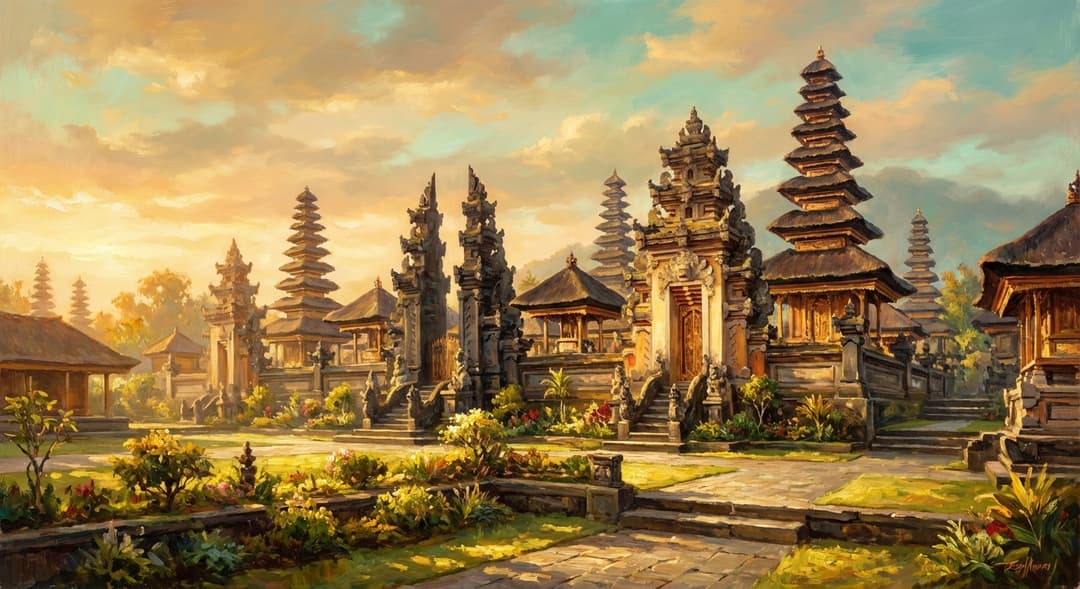
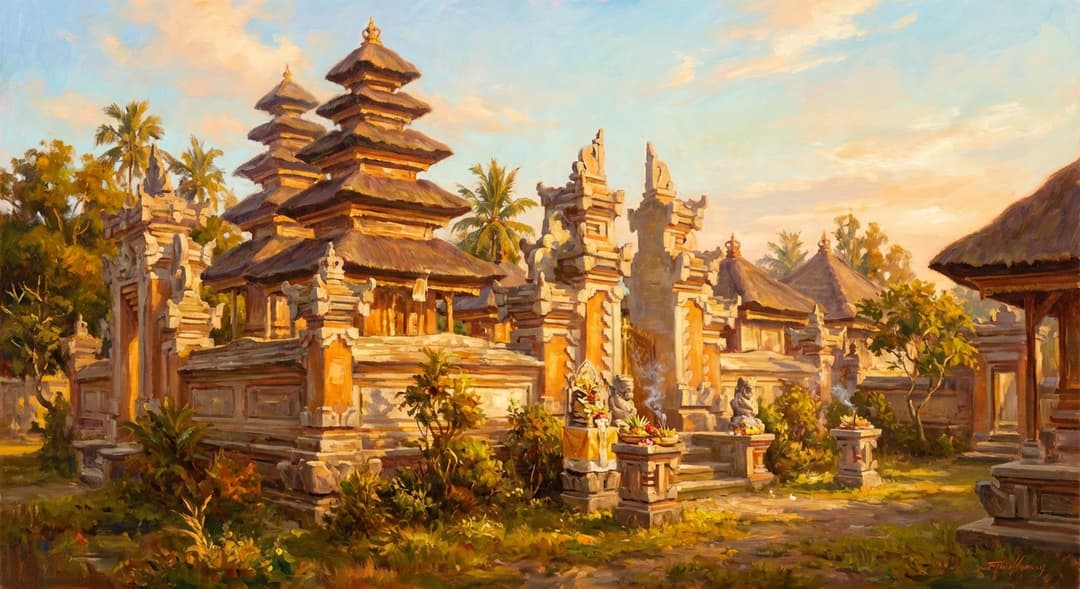
Bali's landscape is dotted with over 20,000 temples (pura), each serving different functions in the spiritual hierarchy. From family temples in every household compound to village temples and the great directional temples like Besakih, these sacred spaces form an intricate network that binds community, nature, and the divine. The Balinese calendar is filled with religious observances, from daily offerings to major festivals like Galungan, Kuningan, and Nyepi (the Day of Silence), each reinforcing the island's deep spiritual identity.
Key Details
- Official Name Agama Hindu Dharma
- Practitioners Approximately 4 million (mostly on Bali)
- Guiding Philosophy Tri Hita Karana (Three Causes of Well-Being)
- Supreme Deity Sang Hyang Widhi Wasa
- Number of Temples Over 20,000 on Bali
- UNESCO Recognition Subak water system inscribed in 2012 as manifestation of Tri Hita Karana
Timeline
Indian Contact Begins
Hindu-Buddhist Kingdoms Flourish
Javanese-Balinese Royal Unions
Majapahit Influence
Balinese Hindu Identity Crystallizes
Official Recognition
UNESCO Subak Inscription
Sources & Research
Every fact on Temples.org is backed by verified Sources & Research. Each piece of information is rated by source tier and confidence level.
View All Sources (3)
| Field | Source | Tier | Retrieved |
|---|---|---|---|
| Tri Hita Karana Philosophy | UNESCO World Heritage Centre (opens in a new tab) | A | 2026-02-13 |
| Religion in Bali | Encyclopaedia Britannica (opens in a new tab) | B | 2026-02-13 |
| Balinese Religious Practices | Atlas Obscura (opens in a new tab) | C | 2026-02-13 |