Visitor Insights
Visiting Besakih Temple
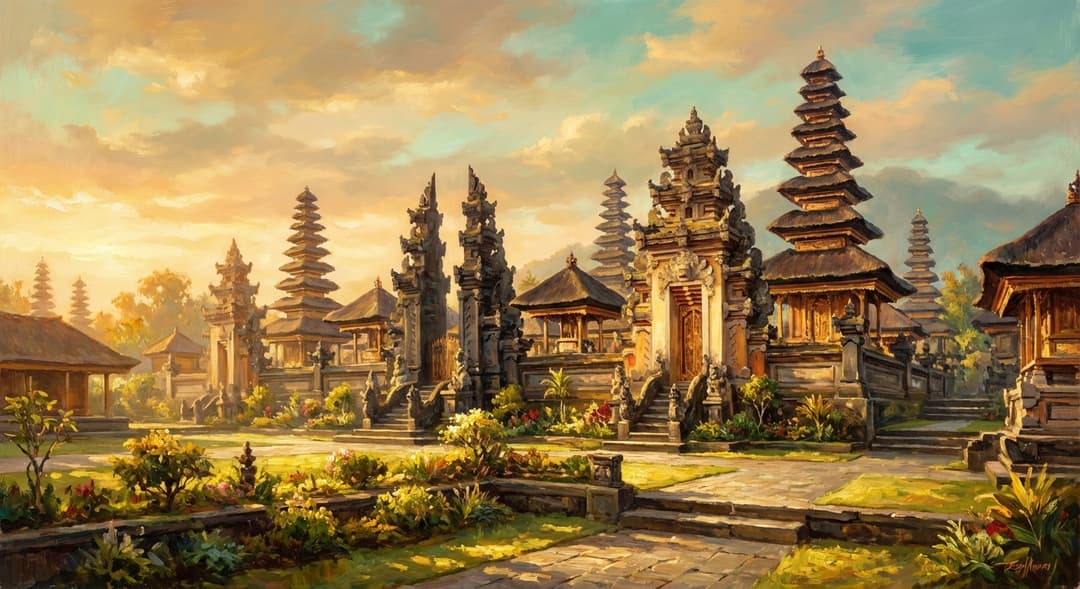
Visiting Besakih Temple offers a profound immersion into Balinese culture and spirituality. As the Mother Temple of Bali, it is a central pilgrimage site and a place of deep reverence. The temple complex is vast, with numerous shrines and courtyards to explore, each offering unique insights into Balinese Hindu traditions. Visitors can witness vibrant ceremonies, admire intricate architecture, and experience the serene atmosphere of this sacred site.
Highlights
- Explore the 23 separate temples within the complex, each dedicated to different deities and ancestral spirits.
- Witness traditional Balinese ceremonies and rituals, offering a glimpse into the island's rich religious practices.
- Admire the intricate Balinese architecture, including split gates, lotus thrones, and carved stone sculptures.
Things to Know
- Dress modestly, wearing a sarong and sash, which are often available for rent at the entrance.
- Be prepared for crowds, especially during major festivals and ceremonies.
- Some areas of the temple complex require climbing steep steps, which may be challenging for those with mobility issues.
Location
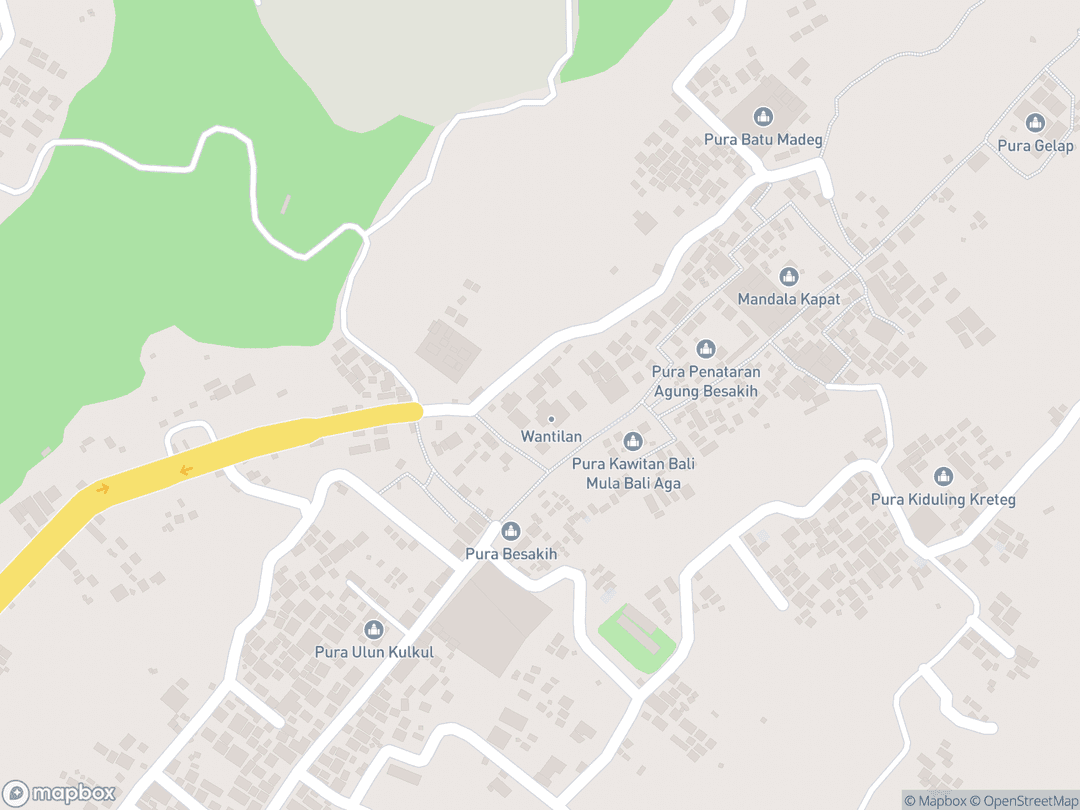
Besakih Village, Rendang District, Karangasem Regency, Bali 80863, Indonesia
Hours: The temple is open 24 hours, but ticket sales for tourists are from 7:00 AM to 6:00 PM.
Getting There: Located about a 2-hour drive from Kuta or Seminyak and 1.5 hours from Ubud. Renting a car or hiring a local driver is recommended.
Get DirectionsTips for Your Visit
Hire a Local Guide
A local guide can provide valuable insights into the temple's history, symbolism, and religious significance.
Visit During the Dry Season
The dry season (April to October) offers clear skies and pleasant weather for exploring the temple complex.
About
Besakih Temple, known as Pura Besakih, is the largest and holiest Hindu temple in Bali, Indonesia. Perched on the slopes of Mount Agung, Bali's highest volcano, it is a complex of 23 separate but related temples, making it a significant spiritual and cultural landmark. The temple's history stretches back over a thousand years, with some structures possibly dating back two millennia, reflecting the island's rich Hindu heritage.
The temple's terraced design, rising up the volcanic slopes, symbolizes the spiritual ascent towards Mount Agung, considered the center of the universe by the Balinese people. Each temple within the complex is dedicated to different aspects of Hindu deities and ancestral spirits, creating a vibrant tapestry of religious practices and traditions. Pura Penataran Agung, the main temple, is dedicated to the Trimurti – Brahma, Vishnu, and Shiva – representing the cosmic balance of creation, preservation, and destruction.
Besakih Temple plays a vital role in unifying various sects of Balinese Hinduism and serves as a focal point for major religious ceremonies and rituals. The temple's survival through the devastating 1963 eruption of Mount Agung, with lava flows miraculously stopping just short of the complex, is considered a sacred event, reinforcing its importance in Balinese spiritual life. Visitors to Besakih can witness the harmonious blend of nature, architecture, and religious devotion that defines Balinese culture.
Gallery
Symbolic Elements
The temple's exterior features intricate carvings, each rich with spiritual meaning:

Mount Agung
Mount Agung, an active volcano, is the highest point in Bali and holds immense spiritual significance. It is considered the abode of the gods and a sacred axis connecting the earthly and divine realms. The temple's location on its slopes reinforces this connection.
Pura Penataran Agung
Pura Penataran Agung is the main temple within the Besakih complex and is dedicated to the Trimurti – Brahma, Vishnu, and Shiva. It symbolizes the cosmic balance of creation, preservation, and destruction, reflecting the cyclical nature of the universe in Hindu cosmology.

Meru Towers
The tiered Meru towers are distinctive architectural features of Balinese temples, representing the sacred mountains of Bali and the abodes of the gods. They are used in offerings and ceremonies to honor the deities and seek their blessings, symbolizing spiritual elevation.
Candi Bentar
Candi Bentar, or split gates, are traditional Balinese entranceways that symbolize the division between the outer world and the sacred inner sanctum. Passing through these gates represents a transition into a more spiritual and purified space, preparing visitors for worship.

Padmasana Shrine
The Padmasana is a lotus throne dedicated to the supreme deity Sang Hyang Widhi Wasa, representing the ultimate source of creation and the highest form of divinity. It is a central focus of worship and symbolizes the divine presence in the temple complex.
Stone Carvings
Intricate stone carvings depicting Hindu deities, mythological creatures, and ancestral figures adorn the temple structures, reflecting the rich artistic heritage of Bali. These carvings serve as visual narratives of religious stories and cultural traditions, enhancing the temple's spiritual atmosphere.

Tri Hita Karana
The temple's layout and design embody the Balinese philosophy of Tri Hita Karana, which emphasizes the interconnectedness of the divine, nature, and humanity. This principle is reflected in the harmonious integration of the temple with its natural surroundings, promoting balance and well-being.

Kulkul Tower
The Kulkul Tower is a traditional Balinese bell tower used to summon devotees for prayer and announce important events. The kulkul, a wooden slit drum, is sounded to signal the start of ceremonies and to alert the community to gatherings, playing a vital role in temple life.
Interesting Facts
Besakih is the largest and holiest temple in Bali, known as the 'Mother Temple'.
The temple complex comprises 23 separate but related temples.
It is located on the slopes of Mount Agung, Bali's highest volcano, at nearly 1,000 meters above sea level.
The name 'Besakih' is derived from the Sanskrit word 'Wasuki,' meaning 'salvation'.
The temple's origins date back at least 1,000 years, with some structures possibly dating back 2,000 years.
Besakih survived the devastating 1963 eruption of Mount Agung, with lava flows stopping just short of the temple.
The temple is dedicated to the Hindu trinity: Brahma, Vishnu, and Shiva.
Major religious ceremonies and rituals are held at Pura Penataran Agung, attracting thousands of devotees.
The temple's layout follows the Balinese concept of Tri Hita Karana, aiming for harmony between God, humans, and nature.
Besakih plays a vital role in unifying various sects of Balinese Hinduism.
Common Questions
What is the significance of Besakih Temple?
Besakih Temple is the largest and holiest Hindu temple in Bali, known as the 'Mother Temple.' It is a complex of 23 separate but related temples and is considered the spiritual center of the island.
Where is Besakih Temple located?
Besakih Temple is located in Besakih Village, Rendang District, Karangasem Regency, Bali, Indonesia, on the slopes of Mount Agung, Bali's highest volcano.
What is the dress code for visiting Besakih Temple?
Visitors are required to dress modestly, wearing a sarong and sash. These are often available for rent at the entrance.
What are the opening hours for Besakih Temple?
The temple is open 24 hours, but ticket sales for tourists are from 7:00 AM to 6:00 PM.
How much does it cost to enter Besakih Temple?
The entrance fee is IDR 150,000 for international visitors.
What is the best time to visit Besakih Temple?
The best time to visit is early morning or late afternoon to avoid crowds and heat. The dry season (April to October) offers clear skies.
Related Stories
Explore the rich history, traditions, and people connected to this sacred site.
 Location
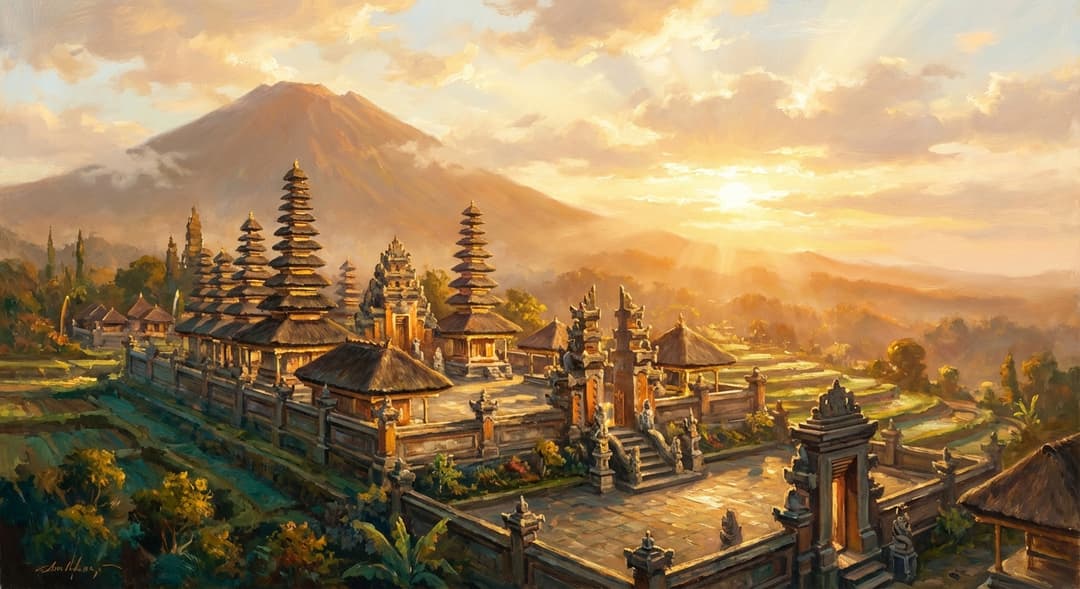
 Mount Agung: The Sacred Mountain
Discover the spiritual significance of Mount Agung, Bali's highest volcano and a revered symbol of the divine.
Explore Story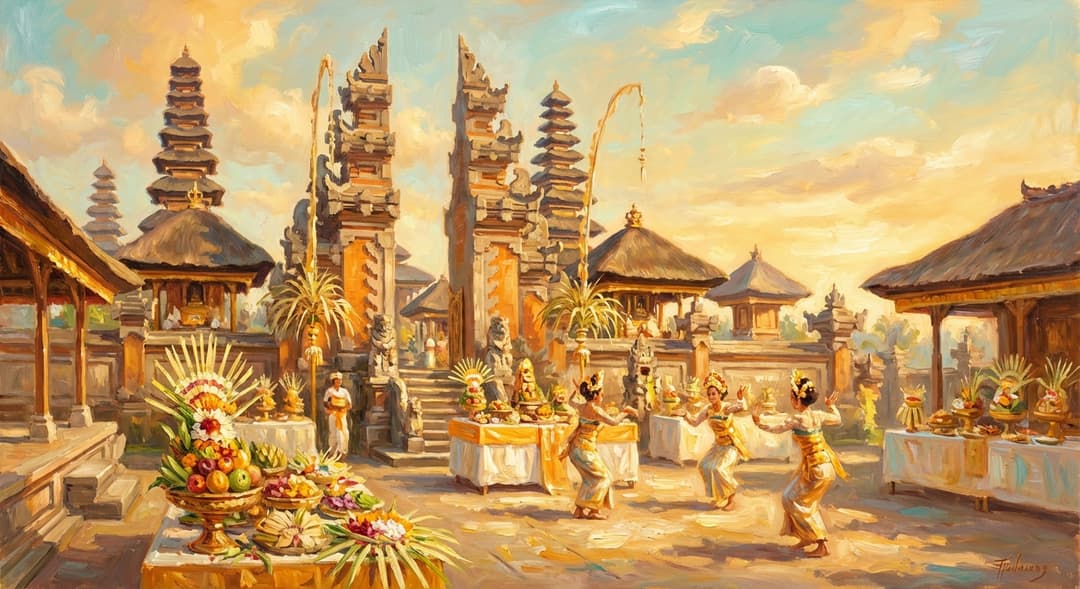 Historic Event
 The Vibrant Balinese Ceremonies
Witness the colorful and elaborate ceremonies that are an integral part of Balinese religious life.
Explore Story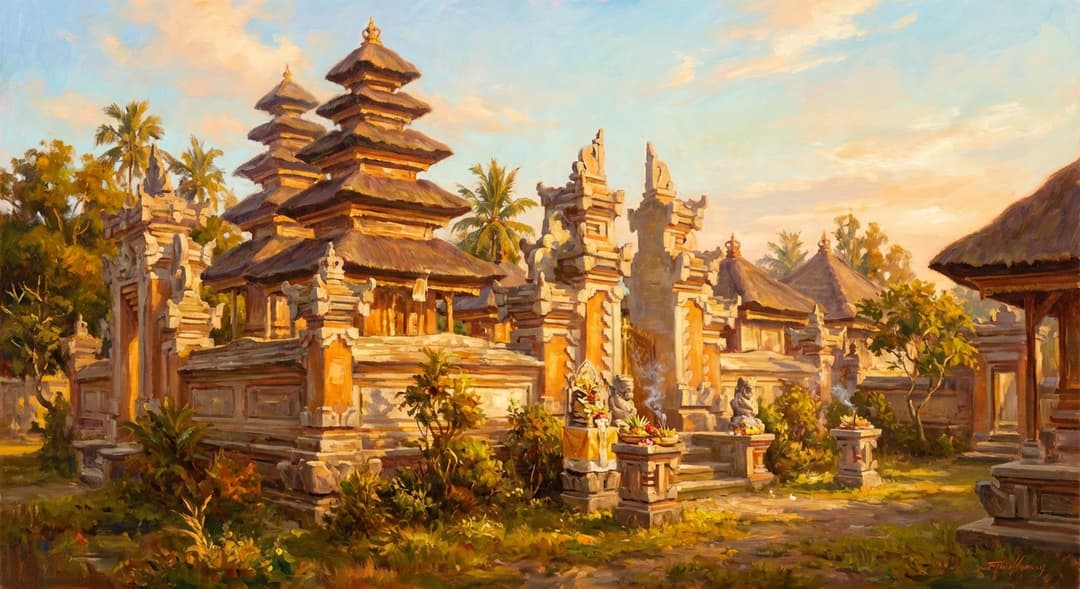 Heritage
 The Essence of Balinese Hinduism
Explore the unique blend of Hindu beliefs and Balinese traditions that shape the island's spiritual landscape.
Explore StoryFeatured Stories
The Miracle of 1963
1963
In 1963, Mount Agung erupted with devastating force, blanketing Bali in ash and lava. Villages were destroyed, and countless lives were lost. As the lava flowed down the mountain slopes, it seemed inevitable that Besakih Temple, the island's most sacred site, would be consumed.
Yet, miraculously, the lava flows stopped just short of the temple complex, sparing the ancient shrines and sacred grounds. This event was seen as a divine intervention, a sign that the gods had protected their sacred home. The Balinese people interpreted it as a testament to the temple's spiritual power and the enduring strength of their faith.
The survival of Besakih Temple during the 1963 eruption solidified its status as the 'Mother Temple' of Bali, a symbol of resilience and divine grace. It continues to inspire awe and reverence, drawing pilgrims and visitors who seek to witness the power of faith in the face of natural disaster.
Source: Atlas Obscura
Royal Patronage Through the Centuries
11th–16th Centuries
From the 11th to the 16th centuries, Besakih Temple enjoyed the patronage of Balinese kings and rulers, who recognized its importance as a spiritual and political center. Royal support led to the expansion and embellishment of the temple complex, with new shrines, courtyards, and ceremonial spaces added to reflect the power and devotion of the ruling dynasties.
Kings commissioned skilled artisans to create intricate stone carvings, towering Meru structures, and ornate decorations, transforming Besakih into a magnificent showcase of Balinese art and architecture. Royal ceremonies and festivals were held at the temple, attracting dignitaries and devotees from across the island and beyond.
The patronage of Balinese royalty cemented Besakih's position as the 'State Temple,' a symbol of royal authority and the spiritual heart of the kingdom. This legacy continues to shape the temple's identity, attracting visitors who seek to experience the grandeur and sacredness of Bali's royal past.
Source: Bali Holiday Secrets
Unifying Balinese Hinduism
Present Day
Besakih Temple plays a vital role in unifying the diverse sects of Balinese Hinduism, bringing together different traditions and beliefs under one sacred umbrella. The temple complex is home to shrines dedicated to various deities and ancestral spirits, reflecting the multifaceted nature of Balinese religious practices.
Major religious ceremonies and festivals are held at Besakih throughout the year, attracting devotees from all corners of Bali. These events provide opportunities for different communities to come together, share their traditions, and strengthen their collective identity as Balinese Hindus.
As the 'Mother Temple' of Bali, Besakih serves as a symbol of unity and harmony, fostering a sense of shared heritage and spiritual purpose among the island's diverse population. It continues to be a place where people from all walks of life can come together to worship, celebrate, and connect with their cultural roots.
Source: Ubud Center
Timeline
Early Significance
The site's importance likely dates back to prehistoric times, with stone bases resembling megalithic stepped pyramids.
MilestonePotential Establishment
Some historical records suggest the temple's establishment around this time, potentially by the sage Rsi Markandeya.
MilestoneFirst Historical Mention
The first historical mention of the temple dates back to an inscription from 1007 AD, marking its early recognition.
MilestoneHindu Place of Worship
Used as a Hindu place of worship following the Javanese conquest of Bali, solidifying its religious role.
MilestoneState Temple of Gelgel Dynasty
Became the state temple of the Gelgel dynasty, elevating its status and influence in Balinese society.
MilestoneMount Agung Eruption
Mount Agung erupted, causing widespread devastation. The lava flows narrowly missed the temple complex, considered a miraculous sign.
EventVital Center of Worship
Besakih remains a vital center of worship and pilgrimage, considered the 'Mother Temple' of Bali, attracting devotees and visitors from around the world.
MilestoneTemple Foundation
Legend attributes the temple's founding to Rishi Markandeya, who brought Hinduism to Bali and established the first temple structures.
MilestoneRoyal Patronage
Balinese kings began to patronize and expand the temple complex, adding new shrines and ceremonial spaces to reflect their power and devotion.
MilestoneMajapahit Influence
The Majapahit Empire's influence on Bali led to further architectural and religious developments at Besakih, incorporating Javanese elements into the temple's design.
MilestoneGelgel Kingdom
Besakih became the central temple for the Gelgel Kingdom, solidifying its role as the spiritual heart of Bali and a symbol of royal authority.
MilestoneEarthquake Damage
A major earthquake caused significant damage to the temple complex, requiring extensive restoration efforts to preserve its historical and cultural significance.
RenovationTourism Development
Increased tourism to Bali led to the development of infrastructure around Besakih, making it more accessible to international visitors while also posing challenges to its preservation.
EventOngoing Preservation
Ongoing efforts to preserve and maintain Besakih Temple continue, balancing the needs of religious practice, tourism, and cultural heritage.
RenovationHistory by Decade
Prehistoric Times
The site of Besakih Temple has been considered sacred since prehistoric times. Archaeological evidence suggests that the area was likely used for religious rituals and ceremonies by the indigenous people of Bali long before the arrival of Hinduism. Stone bases resembling megalithic stepped pyramids have been found, indicating that the site held spiritual significance for ancient Balinese communities. These early structures may have been dedicated to ancestor worship or nature spirits, reflecting the animistic beliefs of the time.
8th Century AD
According to some historical records, the establishment of Besakih Temple dates back to the 8th century AD. Legend attributes the temple's founding to Rishi Markandeya, a Hindu sage who is said to have brought Hinduism to Bali. Markandeya is believed to have established the first temple structures at Besakih, laying the foundation for its future development as a major religious center. His arrival marked a significant turning point in Balinese history, introducing new religious beliefs and practices that would shape the island's cultural identity.
11th Century
The first historical mention of Besakih Temple dates back to an inscription from 1007 AD, providing concrete evidence of its existence during this period. Balinese kings began to patronize and expand the temple complex, adding new shrines and ceremonial spaces to reflect their power and devotion. The temple became a symbol of royal authority and a focal point for religious activities, attracting devotees and pilgrims from across the island. This era marked a period of growth and prosperity for Besakih, solidifying its position as a central religious site in Bali.
15th Century
Besakih Temple became the state temple of the Gelgel dynasty in the 15th century, elevating its status and influence in Balinese society. The Gelgel kingdom was a major power in Bali during this time, and its patronage of Besakih further enhanced the temple's prestige. The temple complex was expanded and embellished with new structures and decorations, reflecting the wealth and power of the Gelgel rulers. Besakih became a symbol of the kingdom's spiritual authority and a center for religious ceremonies and festivals.
1963
The devastating eruption of Mount Agung in 1963 had a profound impact on Besakih Temple and the surrounding area. The eruption caused widespread destruction, blanketing Bali in ash and lava. Miraculously, the lava flows stopped just short of the temple complex, sparing the ancient shrines and sacred grounds. This event was seen as a divine intervention, a sign that the gods had protected their sacred home. The survival of Besakih during the eruption solidified its status as a symbol of resilience and divine grace.
Present Day
Besakih Temple remains a vital center of worship and pilgrimage, considered the "Mother Temple" of Bali. It attracts devotees and visitors from around the world who come to experience its spiritual atmosphere and admire its architectural beauty. The temple complex is constantly being maintained and renovated to preserve its historical and cultural significance. Besakih continues to play a central role in Balinese religious life, serving as a focal point for major ceremonies and festivals.
Architecture & Facilities
Traditional Balinese Hindu temple architecture, comprising a terraced complex of 23 separate but related shrines ascending six levels up the slopes of Mount Agung. The layout follows the Tri Mandala concept, dividing the sacred space into outer, middle, and innermost zones of increasing spiritual significance. Characteristic elements include candi bentar (split gates), multi-tiered meru towers representing the cosmic mountains, padmasana lotus throne shrines, and intricately carved stone sculptures depicting Hindu mythology — all embodying the Balinese philosophy of Tri Hita Karana and the harmonious integration of divine, natural, and human realms.
Building Materials
Stone
The primary building material is volcanic stone, sourced locally and intricately carved with religious motifs.
Wood
Wood is used for structural elements, roofs, and decorative details, adding warmth and texture to the temple complex.
Interior Features
Shrines
The interior spaces are dominated by shrines dedicated to various Hindu deities, adorned with offerings and sacred objects.
Courtyards
Open-air courtyards provide spaces for ceremonies, gatherings, and contemplation, connecting the temple structures with the natural environment.
Temple Grounds
The temple complex is set amidst lush greenery, with terraced gardens and sacred trees adding to its serene atmosphere.
Religious Significance
Besakih Temple is the most sacred and important Hindu temple in Bali, serving as the spiritual center of the island.
The temple is dedicated to the worship of Hindu deities and ancestral spirits, promoting harmony and balance in the universe.
Sacred Ordinances
Offerings
Devotees bring offerings of flowers, fruit, and incense to the shrines, expressing their gratitude and seeking blessings.
Prayers
Prayers are recited to invoke the deities and seek guidance, protection, and spiritual enlightenment.
Ceremonies
Elaborate ceremonies are held throughout the year, celebrating important religious events and honoring the gods.
The Trimurti
The central temple, Pura Penataran Agung, is dedicated to the Trimurti – Brahma, Vishnu, and Shiva – representing the cosmic balance of creation, preservation, and destruction.
Ancestor Worship
Many shrines are dedicated to ancestral spirits, reflecting the Balinese belief in the importance of honoring and appeasing the deceased.
Similar Temples
Sources & Research
Every fact on Temples.org is backed by verified Sources & Research. Each piece of information is rated by source tier and confidence level.
View All Sources (12)
| Field | Source | Tier | Retrieved |
|---|---|---|---|
| Location and Basic Information | Bali Cheapest Tours (opens in a new tab) | D | 2026-02-13 |
| Location and Basic Information | Bali Backpacker (opens in a new tab) | D | 2026-02-13 |
| Temple Status | Pilgrim Map (opens in a new tab) | D | 2026-02-13 |
| Temple Significance | The Club Villa Seminyak (opens in a new tab) | B | 2026-02-13 |
| Visitor Information | Bali Holiday Secrets (opens in a new tab) | D | 2026-02-13 |
| General Information | Temples.org (opens in a new tab) | C | 2026-02-13 |
| Temple History | Finns Beach Club (opens in a new tab) | B | 2026-02-13 |
| Architectural Significance | Re-Thinking the Future (opens in a new tab) | B | 2026-02-13 |
| Temple Layout and Design | Merah Putih Bali (opens in a new tab) | D | 2026-02-13 |
| Religious Significance | Enjoy Travel (opens in a new tab) | B | 2026-02-13 |
| Temple History and Survival | Atlas Obscura (opens in a new tab) | B | 2026-02-13 |
| Temple Name Origin | Ubud Center (opens in a new tab) | B | 2026-02-13 |